-

This event is co-sponsored by the European Security Initiative

* Please note all CISAC events are scheduled using the Pacific Time Zone


Seminar Recording: https://youtu.be/1rkTwxnf2Fg


About this Event: Russia has employed the semi-state Wagner Group security company in Ukraine, Syria, the Central African Republic, Libya, Mozambique, and Mali (so far). Wagner is tightly connected to Russia's military intelligence organization (the GRU), and partially funded by one of Vladimir Putin's cronies, Evgeny Prigozhin, who also uses it for private duties. So why is Wagner technically illegal (and even unconstitutional) in Russia? Its use is less costly in budgetary and political terms than using the uniformed military, and it provides (limited) plausible deniability for Russian actions. But it is also unclear what Russia wants from impoverished sub-Saharan Africa. Using the best available evidence, this presentation explores these mysteries.


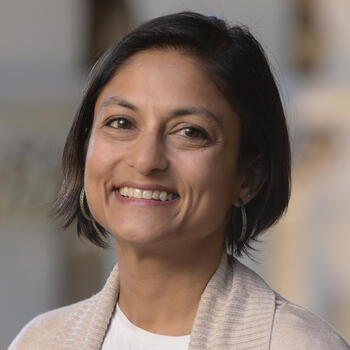
About the Speaker: Kimberly Marten is a professor of political science (and the department chair) at Barnard College, Columbia University, and a faculty member of Columbia’s Harriman Institute and Saltzman Institute. She has written four books, including Warlords: Strong-Arm Brokers in Weak States (Cornell, 2012), and Engaging the Enemy: Organization Theory and Soviet Military Innovation (Princeton, 1993) which received the Marshall Shulman Prize. The Council on Foreign Relations (where she is a member) published her special report, Reducing Tensions between Russia and NATO (2017). She is a frequent media commentator, and appeared on “The Daily Show” with Jon Stewart. She earned her A.B. at Harvard and Ph.D. at Stanford, and was a CISAC post-doc.

Virtual Seminar

Kimberly Marten Professor of Political Science (and the department chair) at Barnard College, Columbia University Barnard College, Columbia University
Seminars
-

Seminar Recording: https://youtu.be/qanfBvhmTQM


About this Event: In Do Morals Matter?, Joseph S. Nye, Jr., one of the world's leading scholars of international relations, provides a concise yet penetrating analysis of the role of ethics in US foreign policy during the post-1945 era.

Working through each presidency from Truman to Trump, Nye scores their foreign policy on three ethical dimensions: their intentions, the means they used, and the consequences of their decisions. Alongside this, he evaluates their leadership qualities, elaborating on which approaches work and which ones do not.

Since we so often apply moral reasoning to foreign policy, Nye suggests how to do it better. Crucially, presidents must factor in both the political context and the availability of resources when deciding how to implement an ethical policy--especially in a future international system that presents not only great power competition from China and Russia, but transnational threats as borders become porous to everything from drugs to infectious diseases to terrorism to cyber criminals and climate change.


About the Speaker: Joseph S. Nye, Jr. is University Distinguished Service Professor Emeritus and former Dean of Harvard’s Kennedy School of Government. He received his bachelor's degree summa cum laude from Princeton University, won a Rhodes Scholarship to Oxford, and earned a Ph.D. in political science from Harvard. He has served as Assistant Secretary of Defense for International Security Affairs, Chair of the National Intelligence Council, and a Deputy Under Secretary of State, and won distinguished service awards from all three agencies. His books include The Future of Power,  The Power Game: A Washington Novel, and (forthcoming) Do Morals Matter? He is a fellow of the American Academy of Arts and Sciences, the British Academy, and the American Academy of Diplomacy. In a recent survey of international relations scholars, he was ranked as the most influential scholar on American foreign policy, and in 2011, Foreign Policy named him one of the top 100 Global Thinkers. In 2014, Japan awarded him the Order of the Rising Sun.

Joseph S. Nye, Jr. University Distinguished Service Professor Emeritus Harvard’s Kennedy School
Seminars
-

Seminar Recordinghttps://youtu.be/AJxhy6pf95U


About this Event: Rampant disinformation threatens democracy, security, and even public health worldwide. As malicious actors weaponize social media, societies worldwide are being challenged to find solutions. Technology and regulatory measures must be part of the solution but, especially in free societies, these solutions often fail to keep pace with rapidly evolving and escalating threats. Dr. Kristin Lord, President and CEO of IREX, an international non-profit organization focused on education and development, will argue that at a time when the cost of producing disinformation is effectively zero, building citizen resilience to misinformation and disinformation must also be part of the solution.

Dr. Lord will discuss concrete approaches to building citizen resilience to disinformation, and present and review data showing its impact. She will also highlight the research agenda needed to advance the field of media literacy if its interventions are to be effective. IREX’s own flagship media literacy program, “Learn to Discern” is currently operational in more than a dozen countries, including the US, and has demonstrated lasting behavior change in a rigorous evaluation. Such approaches can be an effective part of a counter-disinformation strategy – but only if they are urgently brought to scale.


About the Speaker: Kristin Lord is President and CEO of IREX, a global non-profit organization that promotes more just, prosperous, and inclusive societies by developing leaders, extending access to quality education and information, empowering youth, and supporting accountable governance and civic participation. She brings more than twenty years of experience in the fields of education, foreign policy, global development, and security and peacebuilding to this role. Prior to joining IREX in 2014, Dr. Lord served in leadership roles at the United States Institute of Peace, Center for a New American Security, Brookings Institution, and The George Washington University's Elliott School of International Affairs. She also served at the U.S. Department of State and is currently a board member of the U.S. Global Leadership Coalition.

Kristin M. Lord President and CEO IREX
Seminars
-

President Xi Jinping is scheduled to pay a state visit to Japan this spring. How have the relations between Japan and China been evolving during the last several years? How has the U.S.-China “trade war” been affecting the Japan-China relations? What is the best way for us to address China’s trade issues? The U.S. and Japan have been promoting cooperation under the Free and Open Indo Pacific (FOIP). Will Japan cooperate with China’s Belt and Road Initiative? How can the U.S. and Japan expand the cooperation under the FOIP?

Image
shitaka headshot

Speaker:

Noriyuki Shikata, Former Envoy Extraordinary and Minister Plenipotentiary, Deputy Chief of Mission, Embassy of Japan in Beijing

Bio:

Noriyuki Shikata holds a B.A. in Law from Kyoto University and Master of Public Policy (MPP) from Harvard Kennedy School of Government. Most recently, he was the Envoy Extraordinary and Minister Plenipotentiary, Deputy Chief of Mission, Embassy of Japan in China. His other prior positions include: Deputy Director General, Asian and Oceanian Affairs Bureau; Director, Economic Treaties Division, International Legal Affairs Bureau; and Director, Second North America Division, North America Bureau. Mr. Shikata has also been a Visiting Professor at Kyoto University’s Graduate School of Law/Public Policy. He is currently at Harvard conducting research on an emerging U.S. policy toward China and the Indo-Pacific region. His Twitter handle is: @norishikata.

Noriyuki Shikata, Former Envoy Extraordinary and Minister Plenipotentiary, Deputy Chief of Mission, Embassy of Japan in Beijing
Seminars
-

This event is made possible by generous support from the Korea Foundation and other friends of the Korea Program.

Asia has made remarkable progress over the past decades and is now at the forefront of the global economy in growth terms. That said, there are several near-term risks that could derail Asia’s growth momentum, including trade tensions and too-low-for-long global interest rates. In this talk, Changyong Rhee will discuss the Asian economic outlook, focusing on Korea in the context of regional and global challenges.

Image
Changyoung Rhee

Rhee is the Director of the Asia and Pacific Department at the International Monetary Fund (IMF), where he oversees the Fund’s work on the region, including its lending operations and bilateral and multilateral surveillance of economies ranging from China, Japan, and India to the Pacific Islands. Prior to joining the IMF in 2014, Rhee was Chief Economist of the Asian Development Bank (ADB); Secretary General and Sherpa of the Presidential Committee for the 2010 G-20 Seoul Summit; Vice Chairman of the Financial Services Commission (FSC) and Chairman of the Securities and Futures Commission of Korea; professor of economics at Seoul National University and the University of Rochester. He has also been a frequent policy advisor to the government of Korea, including in the Office of the President, the Ministry of Finance and Economy, the Bank of Korea, the Korea Securities Depository, and the Korea Development Institute. Rhee has published widely in the fields of macroeconomics, financial economics, and on the Korean economy. He holds a PhD from Harvard University and an undergraduate honors degree from Seoul National University, both in economics.


Changyong Rhee <i>Director, Asia and Pacific Department, IMF</i>
Seminars
-

This event is co-sponsored with The Abbasi Program in Islamic Studies.

ABSTRACT

Benazir Bhutto in Pakistan, Roza Otunbayva in Kyrgystan, Megawati Sukarno Putri in Indonesia: female Muslim leaders are seen as pioneers at the forefront of the empowerment of women in Muslim-majority countries and more generally the empowerment of women on a global scale. The younger generation of women Muslim leaders have forged their political struggle and discourse in the post-9/11 context. More recently, they have surfed the wave of hope and disillusion of the Spring revolution(s). A major difference with the first generation of female Muslim leaders is that the younger generation’s political identity is strongly grounded in Islamic references. They are (or have labelled themselves) as Islamists, Islamist democrats or Muslim democrats that propose an alternative to the exclusive secular discourse.

Through the experience of Sayida Ounissi, we explore the genuine and challenging role of a new generation of female leaders, in Muslim democrats or Islamist parties. This discussion goes beyond the common assumptions and clichés of the veil oppressed Muslim women, the question of the compatibility between Islam and democracy or Islam and feminism. It rather looks at the rise of young women Muslim democrats in Islamist or Muslim parties in a way to grasp the feminine, and sometimes feminist, re-definition of the Islamic tradition and Islamist or Muslim democrats discourse. It explores the modes of transmission of political struggle and ideologies, from fathers to daughters, and from mothers, whether passive or active Islamists, to daughters. Finally, it examines the challenges posed to their ascensions within their parties and society by analysing how these women are re-appropriating conservative Islamic codes, other cultural or religious practices, and the social and political concepts inherent to their respective local and global context, in order to secure legitimate ascension in their parties and societies.

SPEAKRER BIO

Image
86744 1
Sayida Ounissi is a member of the Tunisian Assembly of People’s Representatives and Minister for Employment and Vocational Training.  She represents Tunisians living in the North of France for the Ennahdha Party and was first elected in October 2014 and reelected in October 2019.  In 1993, her family fled the dictatorship of Ben-Ali for France where she completed all of her schooling. In 2005, she joined the University of Paris 1 Panthéon Sorbonne for a double degree in History and Political Science. She obtained her Masters at the Institute for the Study of Economic and Social Development, and completed her studies with an internship at the African Development Bank in Tunis. In 2016, she was recruited by Prime Minister Youssef Chahed to join his Cabinet as Secretary of State in the Ministry of Employment and Vocational Training, charged with vocational training and private initiative. In 2018, she was promoted as the Minister for Employment and Vocational Training, becoming the youngest minister in Tunisia.

MODERATOR BIO

Image
Portrait of Sophie Lemiere
Sophie Lemiere is a Political Anthropologist and FSI-Humanities Center International Visitor, 2019-20, at Stanford University. She is a former Fellow for the Democracy in Hard Places Initiative at the Ash Center for Democracy, Harvard University. In 2014, she received her PhD from Sciences-Po, France. Her thesis was the first study on the political role of gangs through umbrella NGOs in Malaysia. In 2019-2020, Sophie has been awarded the Visiting Fellowship at the Center for Southeast Asian Studies at Kyoto University and the Reagan-Fascell Democracy Fellowship at the International Forum for Democratic Studies (National Endowment for Democracy-NED), in Washington, D.C.

Encina Commons Room 123
Encina Commons
615 Crothers Way
Stanford, CA

Seminars
-

Livestream: Registration is required and will close 24 hours before the event. Click here to register.

This event is available only to CISAC faculty, fellows, staff, and honors students.


About this Event: Jeopardizing U.S. research enterprises, provoking regional nationalism, and building a technological panopticon to rate every citizen's behavior: these assumptions about China fuel US foreign policy shadow-boxing with misplaced concerns. Our panel challenges prevalent narratives on China, providing informed, nuanced investigations that cut across a range of research methods. Julien de Troullioud's argues that the rise of China in science and technology is not a threat to the US but instead an opportunity to jointly work to solve global issues. Data shows that the current policies to protect the US research enterprise in science is hurting American and international scientific research. Xinru Ma finds that nationalism in China and in Southeast Asia are not necessarily all anti-foreign, and is more of a liability rather than an asset for domestic regimes, according to evidences from formal modeling and social media data. Shazeda Ahmed's interviews with Chinese government officials, tech firm representatives, and legal scholars reveal that the Chinese social credit system is more limited in its data collection and fragmented in its on-the-ground implementation than the dystopic institution its foreign critics presume it to be. Our research presents new data and fresh perspectives for rethinking US-China dynamics.


About the Speakers:

Shazeda Ahmed is a Ph.D. student at the University of California, Berkeley who researches how tech firms and the Chinese government are collaboratively constructing the country's social credit system. She will be joining CISAC and the Stanford Institute for Human-Centered Artificial Intelligence in Fall 2019 as a pre-doctoral Fellow. Shazeda has worked as a researcher for the Citizen Lab, the Mercator Institute for China Studies, and the Ranking Digital Rights corporate transparency review by New America. In the 2018-19 academic year she was a Fulbright fellow at Peking University's law school.


Xinru Ma is currently a Ph.D. candidate at Political Science and International Relations (POIR) program at University of Southern California, and will join CISAC as a Postdoctoral Fellow for 2019-2020. Originally from China, Xinru is interested in combining formal modeling and computational social science with research on nationalist protests and maritime disputes, with a regional focus on East and Southeast Asia. Her research is informed by extensive field research in Vietnam, Philippines and China, during which she interviewed protestors, think tanks, diplomats, government officials, and foreign business owners that were impacted by nationalist protests. In addition to informing her of the complicated strategic interaction between mass mobilization, government repression and foreign policy-making, the field research further motivated her to focus on the methodological challenges for causal inference that stem from strategic conflict behavior. More broadly, Xinru is interested in public opinion and new methods of measuring it, foreign policy formation, alliance politics, East Asian security dynamics, and the historical relations of East Asia. 


Julien de Troullioud de Lanversin will be joining CISAC as a Stanton Postdoctoral Fellow. Julien is finishing his Ph.D. at Princeton University’s Program on Science and Global Security. He is interested in how to verify and reconstruct past fissile material production programs with scientific tools. To that end, he developed innovative methods that use isotopic analysis from nuclear reactors to gain information on their past operation (nuclear archeology) and designed an open source software that can compute the istopic composition of fissile materials from nuclear reactors. His current research looks at the various modalities of the production of plutonium and tritium in production reactors and how transparency on tritium could be used to improve estimates on plutonium stockpiles. Julien also studies security questions related to civil and military nuclear programs in Northeast Asia through the lens of fissile material, with a focus on China and North Korea. Julien visited the Institute of Nuclear and New Energy Technologies at Tsinghua University for one semester in 2018 to collaborate with Chinese experts on work related to nuclear engineering and arms control. Julien’s work on nuclear archaeology has been published in the Journal of Science and Global Security. He received his Diplôme d’Ingénieur (M.Sc. And B.Sc.Eng.) from Ecole Centrale de Marseille in 2014. The same year he also obtained a M.Sc. in Nuclear Science and Engineering from the University of Tsinghua where he was a recipient of the Chinese Government Scholarship. Julien speaks and uses Chinese in his research and is a native French speaker.

Virtual Seminar

Shazeda Ahmed, Xinru Ma, Julien de Troullioud de Lanversin
Seminars
-

Co-sponsored by Shorenstein Asia-Pacific Research Center (APARC) and US-Asia Technology Management Center

We need alternative metrics to complement GDP in order to get a more comprehensive view of development and ensure informed policy making that doesn’t exclusively prioritize economic growth. As a step in this direction, India is also beginning to focus on the ease of living of its citizens. Ease of living is the next step in the development strategy for India, following the push towards ease of doing business that the country has achieved over the last few years. The Ministry of Housing and Urban Affairs has developed the Ease of Living Index to measuring quality of life of its citizens across Indian cities, as well as economic ability and sustainability. It is as well expected to evolve into a measurement tool to be adopted across districts. The end goal is to have a more just and equitable society that is economically thriving and offering citizens a meaningful quality of life. The talk will focus on how we can bridge the divide between economic objectives and social objectives.

Image
Amit Kapoor
Amit Kapoor, PhD  In addition to the roles listed above, Dr. Kapoor is also president of India Council on Competitiveness, and chair for the Social Progress Imperative & Shared Value Initiative in India. He is also affiliate faculty for the Microeconomics of Competitiveness & Value Based Health Care Delivery courses of Harvard Business School’s Institute of Strategy and Competitiveness, and an instructor with Harvard Business Publishing in the area of Strategy, Competitiveness and Business Models.

Amit is the author of bestsellers Riding the Tiger: How to Execute Business Strategy in India (Random Business) and The Age of Awakening: The Story of the Indian Economy Since Independence (Penguin Books), and editor-in-chief of the quarterly thought leadership magazine Thinkers.

For his full biography, visit amitkapoor.com.

Amit Kapoor, PhD, <i>Honorary Chairman at Institute for Competitiveness, India; Visiting Scholar at Stanford University</i>
Seminars
-

THIS EVENT HAS BEEN CANCELED
In keeping with Stanford University's guidance to event hosts


Over the last three years, the United States has done an about-face in terms of engaging North Korea on human rights. Some have argued that if we are to make progress on denuclearization with North Korea, we cannot press Pyongyang on human rights issues because we must develop a cooperative relationship. Raising human rights abuses will only make it more difficult to deal with security issues they argue. On the other hand, Ambassador King believes that human rights are not an issue that we raise after we have achieved our security goals. It is not just the right thing to do, it is an important and critical part of achieving real progress with North Korea on security issues and it is key to a better relationship between Washington and Pyongyang. Internal pressure from the North Korean elites and the public is necessary for positive change on security issues by the North, and this will only come about if there is progress on human rights.  Furthermore, North Korea, like all UN member states, has agreed to observe UN human rights obligations. If the North fails to carry out its commitments on human rights, what assurance do we have that it will fulfill security obligations it accepts?

Image
robert king
Ambassador Robert King is former Special Envoy for North Korean human rights issues at the Department of State (2009-2017).  Since leaving that position, he has been senior advisor to the Korea Chair at the Center for Strategic and International Studies (CSIS), a senior fellow at the Korea Economic Institute (KEI), and a board member of the Committee for Human Rights in North Korea (HRNK) in Washington, D.C.  Previously, Ambassador King served for 25 years on Capitol Hill (1983-2008) as chief of staff to Congressman Tom Lantos (D-California), and staff director of the House Foreign Affairs Committee (2001-2008). Most recently, he was a 2019-20 Koret Fellow for the fall quarter at Stanford University.

This public event is part of the 12th annual Koret Workshop, "The Role of Human Rights in Policy Toward North Korea," and open to the general public with registration.

The event is made possible through the generous support of the Koret Foundation.

Advisory on Novel Coronavirus (COVID-19)

In accordance with university guidelines, if you (or a spouse/housemate) have returned from travel to mainland China or South Korea in the last 14 days, we ask that you DO NOT come to campus until 14 days have passed since your return date and you remain symptom-free. For more information and updates, please refer to Stanford's Environmental Health & Safety website.


Robert R. King Former Special Envoy for North Korean Human Right Issues
Seminars
-

More than 80% of cardiovascular diseases (CVD) and diabetes mellitus (DM) burden now lies in low and middle-income countries. Thus, there is an urgent need to identify and implement the most cost-effective interventions, particularly in the resource-constraint South Asian settings. A 2018 systematic review evaluated the cost-effectiveness of individual-level, group-level and population-level interventions to control CVD and DM in South Asia. Of the 2949 identified studies through a search of 14 electronic databases up to 2016, 42 met full inclusion criteria. Critical appraisal of studies revealed 15 excellent, 18 good and 9 poor quality studies. Most studies were from India (n=37), followed by Bangladesh (n=3), Pakistan (n=2) and Bhutan (n=1). The economic evaluations were based on observational studies (n=9), randomised trials (n=12) and decision models (n=21). Together, these studies evaluated 301 policy or clinical interventions or combination of both. We found a large number of interventions were cost-effective aimed at primordial prevention (tobacco taxation, salt reduction legislation, food labelling and food advertising regulation), and primary and secondary prevention (multidrug therapy for CVD in high-risk group, lifestyle modification and metformin treatment for diabetes prevention, and screening for diabetes complications every 2–5 years). Significant heterogeneity in analytical framework and outcome measures used in these studies restricted meta-analysis and direct ranking of the interventions by their degree of cost-effectiveness. The cost-effectiveness evidence for CVD and DM interventions in South Asia is growing, but most evidence is from India and limited to decision modelled outcomes. There is an urgent need for formal health technology assessment and policy evaluations in South Asia and other low- and middle- income countries using local research data.

Image
kavita
I am Dr. Kavita Singh, interested in global cardiometabolic disease epidemiology and economic evaluations of interventions for prevention and control of chronic diseases in low- and middle- income countries. I am an Epidemiologist by training, and work as a research scientist at the Public Health Foundation of India. My research work has primarily focused on evaluating the long-term effectiveness and cost-effectiveness of a multicomponent quality improvement intervention (consisting of decision-support electronic health records to enhance physician’s responsiveness and care coordinators to improve patient’s adherence to therapy) in 1,146 patients with type 2 diabetes attending 10 tertiary care clinics in India and Pakistan as part of the National Heart Lung Blood Institute funded CARRS Trial. Recently, I have been awarded the Emerging Global Leader Award (K43 grant, 2019-2024), funded by the National Institutes of Health, Fogarty International Centre to conduct a research project that aims to develop and test the feasibility of a multicomponent cardiovascular quality improvement strategy for patients with established cardiovascular diseases (CVD) in India.

Kavita Singh 2019-2020 Walter H. Shorenstein Asia-Pacific Research Center Visiting Scholar
Seminars
Subscribe to Seminars