-

Many observers, and many investors, believe that young people are especially likely to produce the most successful new firms. Integrating administrative data on​ firms, workers, and owners, we study startups systematically in the U.S. and find​ that successfull entrepreneurs are middle-aged, not young. The mean age at​ founding for the 1-in-1,000 fastest growing new ventures is 45.0. The findings are​ similar when considering high-technology sectors, entrepreneurial hubs, and​ successful firm exits. Prior experience in the specific industry predicts much greater​ rates of entrepreneurial success. These findings strongly reject common hypotheses​ that emphasize youth as a key trait of successful entrepreneurs.

Speaker:

Image
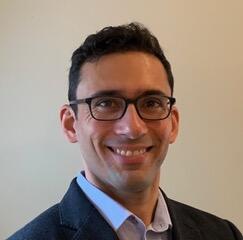
dsc 0355 javier miranda

Javier Miranda, Principal Economist, Economy-Wide Statistics Division, US Census Bureau

Bio:

Javier Miranda is Principal Economist at the U.S. Census Bureau where he began his career in 1998. Javier received his Ph.D. in Economics from American University in 2004. Previous to joining the Census Javier was a research consultant at the World Bank and the Urban Institute. Javier has published papers in the areas of industrial organization, technological change, job creation, entrepreneurship and firm financing. Among his publications are articles in the American Economic Review, Journal of Economic Literature, American Economic Journal Macroeconomics, Review of Economic and Statistics, IMF Review, World Bank Economic Review, Journal of Business Valuation and Economic Loss, NBER Macroeconomics Annual, and multiple books and chapters.  Javier received the Director's Award for Innovation (2007) and the U.S. Department of Commerce Bronze Medal (2011). His contributions to data infrastructure are notable. Javier Miranda is responsible for the development of the Longitudinal Business Database and the Business Dynamics Statistics and is the Synthetic Longitudinal Business Database v3. Together with the USPTO Javier has led the development the Business Dynamics Statistics of Innovative Firms a longitudinal database of firms, patents, and inventors. Javier Miranda is also President of the Board of SEM an adult education and job readiness program designed to address the root causes of poverty, illiteracy, and violence in Washington DC.

Advisory on Novel Coronavirus (COVID-19)

In accordance with university guidelines, if you (or a spouse/housemate) have returned from travel to mainland China or South Korea in the last 14 days, we ask that you DO NOT come to campus until 14 days have passed since your return date and you remain symptom-free. For more information and updates, please refer to the Stanford Environmental Health & Safety website: https://ehs.stanford.edu/news/novel-coronavirus-covid-19.


Javier Miranda, Principal Economist, Economy-Wide Statistics Division, US Census Bureau
Seminars
-

Title: Modeling Gastric Cancer Into The 21st Century 

Dr. Fernando Alarid-Escudero

PhD, Assistant Professor of the Drug Policy Program at the Center for Research and Teaching in Economics (CIDE) 
Aguascalientes Area, Mexico 

Dr. Alarid-Escudero received his Master's Degree in Economics fromthe Center for Research and Teaching in Economics in Mexico City. He then moved to the United States where he received his PhD from the University of Minnesota on Health Services Research, Policy, & Administration. He specializes in Health Decision Sciences, Health Economics, Public Health, and Health Policy. 


Advisory on Novel Coronavirus (COVID-19)

In accordance with university guidelines, if you (or a spouse/housemate) have returned from travel to mainland China and/or South Korea in the last 14 days, we ask that you DO NOT come to campus until 14 days have passed since your return date and you remain symptom-free. For more information and updates, please refer to the Stanford Environmental Health & Safety website: https://ehs.stanford.edu/news/novel-coronavirus-covid-19

CHP/PCOR Conference Room
Encina Commons, Room 119
615 Crothers Way, Stanford, CA 94305

Fernando Alarid-Escudero
Seminars
-

Seminar Recording: https://youtu.be/BGjRsO0fKds


About this Event: Germany plays a key role in shaping European and Western policy toward Russia.  Berlin is a leading voice within the European Union on Russian issues, and Chancellor Angela Merkel co-chairs with the French president the "Normandy" effort that seeks to broker a setttlement between Ukraine and Russia to the conflict in Donbas.  Emily Haber, the German ambassador to the United States, will join us for a conversation on how Berlin sees the Russian challenge and how the West should respond.


About the Speaker: Emily Margarethe Haber has been German Ambassador to the United States since June 2018. 

Immediately prior to this, Haber, a career foreign service officer, was deployed to the Federal Ministry of the Interior, serving as State Secretary overseeing security and migration at the height of the refugee crisis in Europe. In this capacity, she worked closely with the US administration on topics ranging from the fight against international terrorism to global cyberattacks and cybersecurity. In 2009, she was appointed Political Director and, in 2011, State Secretary at the Foreign Office, the first woman to hold either post. 

Emily Haber is married to Hansjörg Haber. The couple has two sons. 

Emily Margarethe Haber German Ambassador to the United States
Seminars
-

Seminar Recording: https://youtu.be/YQU4cuywdK8


About this Event: What sort of narrative defines the American experience with nuclear weapons? National security expert Joe Cirincione argues that it is not a triumph, but a tragedy - one ripe with themes the ancient Greeks would have recognized. He will guide us through the paradoxes and pitfalls of U.S. nuclear policy and expose the costs - political, financial, and moral - of our search for an all-too illusory security in the atomic age.


About the Speaker: Joseph Cirincione is president of Ploughshares Fund, a global security foundation. He is also the host of Press The Button, a weekly podcast from Ploughshares Fund dedicated to nuclear policy and national security. A new episode is available every Tuesday.

Cirincione is the author of the books Nuclear Nightmares: Securing the World Before It Is Too LateBomb Scare: The History and Future of Nuclear Weapons and Deadly Arsenals: Nuclear, Biological and Chemical Threats. He has worked on nuclear weapons policy in Washington for over 35 years and is considered one of the top experts in the field. He served previously as vice president for national security at the Center for American Progress, director for non-proliferation at Carnegie Endowment, and senior associate at Stimson. He worked for nine years as professional staff on the U.S. House of Representatives Committees on Armed Services and Government Operations. He is a member of the Council on Foreign Relations and a former member of the International Security Advisory Board for Secretaries of State John Kerry and Hillary Clinton. He also teaches at the Georgetown University Graduate School of Foreign Service.

Cirincione's commentary has been featured in The New York Times, The Washington Post, The Los Angeles Times, MSNBC, CNN, The Boston Globe, The Philadelphia Inquirer, The Financial Times, Kyodo News, Moscow Times, Foreign Policy, The Hill, Daily Beast, and Huffington Post.


Joseph Cirincione President Ploughshares Fund
Seminars
-

This event is co-sponsored with the Center on Democracy, Development, and the Rule of Law


Seminar Recording: https://youtu.be/cPaeCJiRWuM


About this Event: In 2011, the impact of the Arab Spring and the emergence of YouTube videos evidencing ballot stuffing during Russian parliamentary elections, which nearly led to a revolution in Russia, forced Kremlin strategists to suddenly realize that the Internet had become a major media — and a major power. This was the case not only in Russia, but everywhere on the planet. The Kremlin spent years and billions of dollars [or rubles?] to subdue this power, and  to learn how to make use of it. Was this crusade successful? Is it true that Putin is now capable of influencing elections everywhere in the world? Will he be able to cut Russia off from the global internet? And what are the troll farms trying to achieve? Leonid Volkov, an internet expert and the founder of the Internet Protection Society, the leading Russian digital rights NGO—and, simultaneously, Chief of Staff for Alexey Navalny, the leader of Russian opposition—is known for his optimistic view on these issues. While Putin is far from possessing almighty internet warfare, the situation has complex implications for Russian society and democracy.


About the Speaker: Leonid Volkov is a Russian politician and IT-expert. He oversees regional political operations, IT and electoral campaigns for the leader of Russian opposition Alexey Navalny. Previously Volkov served as campaign manager and chief of staff for Alexei Navalny’s 2013 mayoral campaign for Moscow, as well as for Navalny’s attempt to get registered for the 2018 presidential election. Leonid Volkov is a former deputy of the Yekaterinburg City Duma. He has over 20 years of experience as an IT professional, running and consulting several of Russia’s largest software firms. Since 2016 Leonid is active also as founder and chairman of the Internet Protection Society, a NGO focused on internet freedom and digital rights in Russia.

Virtual Seminar

Leonid Volkov Russian Politician and IT-Expert
Seminars
-

Seminar Recording: https://youtu.be/Se8UcB6HFNo


About this Event: Based on his recent experience in Kyiv, Ambassador Taylor will evaluate current US policy toward Ukraine and make recommendations for future initiatives.  He will argue that now is the time to re-engage with Ukraine to strengthen US-Ukrainian relations and boost US security.  He will address the two main threats to the Zelenskyy administration — the Kremlin and corrupt oligarchs.


About the Speaker:

Ambassador William B. Taylor served as the Chargé d'Affaires at the US embassy in Kyiv from June 2019 to January 2020. Previously, he served as the executive vice president at the U.S. Institute of Peace and the special coordinator for Middle East Transitions in the U.S. State Department during the Arab Spring.  He served as the U.S. ambassador to Ukraine from 2006 to 2009.

He also served as the U.S. government’s representative to the Mideast Quartet, which facilitated the Israeli disengagement from Gaza and parts of the West Bank, led by Special Envoy James Wolfensohn in Jerusalem. Prior to this assignment, he served in Baghdad as Director, Iraq Reconstruction Management Office (2004-2005), in Kabul as coordinator of USG and international assistance to Afghanistan (2002-2003) and in Washington with the rank of ambassador as coordinator of USG assistance to the former Soviet Union and Eastern Europe (1992-2002).

Ambassador Taylor spent five years in Brussels as the Special Deputy Defense Advisor to the U.S. Ambassador to NATO, William Taft and earlier directed an in-house Defense Department think tank at Fort McNair in Washington, D.C.  He served for five years on the staff of Senator Bill Bradley and earlier directed the Department of Energy’s Office of Emergency Preparedness.

In the Army, he fought in Vietnam as a rifle platoon leader and combat company commander in the 101st Airborne Division and flew reconnaissance missions along the West German border with Czechoslovakia in the 2nd Armored Cavalry Regiment.

William B. Taylor Former Chargé d'Affaires at the US embassy in Kyiv
Seminars
-

This event is co-sponsored with The Abbasi Program in Islamic Studies.

ABSTRACT

Organized groups with cross class networks and institutional links to different social constituencies have often been behind revolutionary mobilizations. The Egyptian case in 2011 conveys a different dynamic. Small youth groups played leading roles in organizing and strategizing for the mass protests attracting large numbers of participants? How was that possible? And why were middle-class employees, the white-collar and professional sectors, overrepresented in the mobilizations? Finally, how could we understand the rise of these movements at this juncture. I argue that the Egyptian mass protests could be understood by adopting a middle ground approach between organization and spontaneity. There are cases when prior militancy, demands for union democracy, and political links with the democracy movement prepared middle-class employees to join in larger numbers. In other cases, participation was spontaneous resulting from growing grievances against the state. I also show that political realignments in the early 2000s created openings that led to both a rise in labor unrest and invigorated the democracy movement - eventually culminating in the 2011 mass mobilizations.

SPEAKER BIO

Image
86826 1
Nada Matta is an assistant professor in the Departments of Global Studies and Modern Languages and Sociology at Drexel University. Her research interests are in political economy, social movements and gender studies; and she primarily investigate questions of structural inequality and social change in the Middle East. Nada is the co-author of “the Second Intifada: A dual Strategy Arena” published in the European Journal of Sociology, and is writing a book about the Egyptian Revolution of 2011. 

Seminars
-

IMPORTANT EVENT UPDATE: 

In keeping with Stanford University's March 3 message to the campus community on COVID-19 and current recommendations of the CDC, the Asia-Pacific Research Center is electing to postpone this event until further notice. We apologize for any inconvenience this may cause, and appreciate your understanding and cooperation as we do our best to keep our community healthy and well. 


Data-intensive technologies such as AI may reshape the modern world. We propose that two features of data interact to shape innovation in data-intensive economies: first, states are key collectors and repositories of data; second, data is a non-rival input in innovation. We document the importance of state-collected data for innovation using comprehensive data on Chinese facial recognition AI firms and government contracts. Firms produce more commercial software and patents, particularly data-intensive ones, after receiving government public security contracts. Moreover, effects are largest when contracts provide more data. We then build a directed technical change model to study the state's role in three applications: autocracies demanding AI for surveillance purposes, data-driven industrial policy, and data regulation due to privacy concerns. When the degree of non-rivalry is as strong as our empirical evidence suggests, the state's collection and processing of data can shape the direction of innovation and growth of data-intensive economies.

Image
Portrait of David Yang
David Yang’s research focuses on political economy, behavioral and experimental economics, economic history, and cultural economics. In particular, David studies the forces of stability and forces of changes in authoritarian regimes, drawing lessons from historical and contemporary China. David received a B.A. in Statistics and B.S. in Business Administration from University of California at Berkeley, and PhD in Economics from Stanford. David is currently a Prize Fellow in Economics, History, and Politics at Harvard and a Postdoctoral Fellow at J-PAL at MIT. He also joined Harvard’s Economics Department as an Assistant Professor as of 2020.

David Yang Prize Fellow in Economics, History, and Politics; Department of Economics, Harvard University
Seminars
-

Seminar Recording: https://youtu.be/liv27EFoFWA


About this Event: The phenomenon of “fake news” has become a highly political issue not only in the United States but also in other parts of the world. In this talk, we focus on the politics of fighting disinformation in post-communist Central Europe, specifically in the Czech Republic. In the Czech public debate, the problem of disinformation started to be treated by many politicians, journalists, and analysts as an existential threat, as they see the spread of “fake news” as a part of Russia-led hybrid warfare waged against the West, aiming at undermining the trust in the current political system and its elites. We explain the emergence and wide-spread popularity of this military narrative around disinformation and suggest that using the language of war in this context is a highly political move, which changes our way of thinking about the problem of disinformation, gives room for repressive solutions rather than civilian ones, and by itself threatens the fundamental values of a democratic society more than paid Russian “trolls”. We argue instead for understanding the problem of disinformation as a part of a broader condition of “information chaos”, characterized by sociotechnical transformations of news production and consumption, occasional malign interference by state- as well as non-state actors, all this taking place in the context of growing inequalities and cultural backlash against traditional elites in Western societies.


About the Speaker:

Dagmar Rychnovská is Marie Sklodowska-Curie Fellow at the Techno-science and societal transformation group at the Institute for Advanced Studies in Vienna. She holds a PhD in International Relations (Charles University in Prague), an MA in Comparative and International Studies (ETH Zurich and University of Zurich), and an LLM in Law and Politics of International Security (VU University Amsterdam). Her research interests lie at the intersection of international relations, security studies, and science and technology studies. Her current research explores security controversies in research and innovation governance, with a focus on bioweapons, biotechnologies, and biobanks.


Michal Smetana is currently a Visiting Scholar at the Center for International Security and Cooperation (CISAC), Stanford University, as well as Research Associate and Assistant Professor at the Faculty of Social Sciences, Charles University, and Coordinator of the newly established Peace Research Center Prague. He holds a PhD in International Relations from Charles University in Prague, and he was previously a Visiting Research Fellow at the Stockholm International Peace Research Institute (SIPRI) and Peace Research Institute Frankfurt (PRIF). His main research interests lie at the intersection of security studies, international relations, and political psychology, with a specific focus on issues related to nuclear weapons in world politics, arms control and disarmament, proliferation of weapons of mass destruction, deterrence theory, and norms and deviance in international affairs. His most recent articles have been published in International Affairs, The Washington Quarterly, Journal of International Relations and Development, International Relations, Asia Europe Journal, Bulletin of the Atomic ScientistsCambridge Review of International Affairs, The Nonproliferation Review, and other academic and policy journals. He is the author of Nuclear Deviance: Stigma Politics and the Rules of the Nonproliferation Game (Palgrave Macmillan) and co-editor of Global Nuclear Disarmament: Strategic, Political, and Regional Perspectives (Routledge) and Indirect Coercion: Triangular Strategies and International Conflict (Charles University Press). 

Dagmar Rychnovská & Michal Smetana
Seminars
-

Seminar Recording: https://youtu.be/yIthWPC99bI


About this Event: Since the United States left the Iran nuclear deal in May 2018, the Trump administration has pursued a maximum economic pressure campaign toward Iran. The U.S. use of sanctions has gone far beyond what previous administrations have done to try to change Iran's policies, targeting large swathes of the Iranian economy, high-ranking Iranian government officials, and threatening other countries if they do not curtail their own private sector's activities with Iran. The economic consequences of these measures, particularly for Iran's domestic economy, Iran's ability to procure food and medicine from abroad, and for Iran's flagship energy industry, have been profoundly disruptive. The U.S. economic pressure strategy has also had direct impacts on the global shipping and energy industries. To better understand the impacts of the current U.S. strategy toward Iran, Elizabeth Rosenberg will discuss how the Trump administration has used unprecedented economic coercion, and how U.S. partners and adversaries have responded. She will focus on what role sanctions are likely to play going forward and whether they will be used now as a form of deescalation or escalation in U.S.-Iran tensions, which are particularly heightened following the U.S. killing of Qods Force commander Qasem Soleimani. 


About the Speaker: Elizabeth Rosenberg is a Senior Fellow and Director of the Energy, Economics, and Security Program at the Center for a New American Security. In this capacity, she publishes and speaks on the national security and foreign policy implications of the use of sanctions and economic statecraft as well as energy market shifts. Current geographic areas of focus include Iran, Russia, China, North Korea, and Venezuela. She has testified before Congress on an array of banking and trade issues, and on energy geopolitics and markets topics. She is widely quoted by leading media outlets in the United States and abroad.

From May 2009 through September 2013, Ms. Rosenberg served as a Senior Advisor at the U.S. Department of the Treasury, to the Assistant Secretary for Terrorist Financing and Financial Crimes, and then to the Under Secretary for Terrorism and Financial Intelligence. In these senior roles, she helped to develop and implement financial and energy sanctions. Key initiatives she helped to oversee include the tightening of global sanctions on Iran, the launching of new, comprehensive sanctions against Libya and Syria and modification of Burma sanctions in step with normalization of diplomatic relations. She also helped to formulate anti-money laundering and counter-terrorist and counter-proliferation financing policy and oversee financial regulatory enforcement activities.

Prior to her service in the U.S. government Ms. Rosenberg was an energy policy correspondent at Argus Media in Washington D.C., analyzing U.S and Middle Eastern energy policy, regulation and trading. She spoke and published extensively on OPEC, strategic reserves, energy sanctions and national security policy, oil and natural gas investment and production, and renewable fuels.

Ms. Rosenberg received an MA in Near Eastern Studies from New York University and a BA in Politics and Religion from Oberlin College.

Outside CNAS, Elizabeth Rosenberg is providing exclusive advice on foreign policy and national security as an informal advisor to the Elizabeth Warren campaign.

Elizabeth Rosenberg Senior Fellow and Director of the Energy, Economics, and Security Program Center for a New American Security
Seminars
Subscribe to Seminars