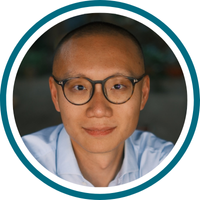
-

Gendered Impacts of Privatization: A Life Cycle Perspective from China


Speaker: Yuli Xu, Ph.D. Candidate, Economics Department, University of California San Diego

Women at different life stages may respond differently to economic shocks as they face varying trade-offs. This paper examines the impact of privatization on gender inequality across the life cycle. We leverage a unique event in China: the privatization of state-owned enterprises (SOEs) in the 1990s, which resulted in over 35 million layoffs and disrupted the previously enforced gender equality in employment. Leveraging both regional variations in reform intensity, proxied by initial differences in SOE employment share, and temporal variation in the reform, our event study analysis shows that older women were more likely to be laid off and had greater difficulty finding re-employment than men. Middle-aged women were less likely than men to transition into the emerging private sector or pursue entrepreneurship. Younger women faced reduced opportunities in SOEs and prioritized education more than men. Both young men and women postponed marriage. Further mechanism analysis suggests that privatization has increased demand for high-skilled workers and reinforced traditional gender role attitudes.


About the Workshops


Our Young Researcher Workshops offer emerging China scholars an opportunity to engage directly with interdisciplinary faculty and peers from across campus to discuss and receive feedback on their research. Each workshop features one or several PhD students presenting their latest empirical findings on issues related to China’s economy. Past topics have included college major selection as an obstacle to socioeconomic mobility, the effect of a cooling-off period on marriage outcomes, and factors contributing to government corruption. Faculty and senior scholars provide comments and feedback for improvement. This event series helps to build and strengthen Stanford’s community of young researchers working on China.

Workshops are held on select Fridays starting at 12 pm. Lunch will be provided! 

Visit the Young Researcher Workshops webpage for more information on the content and format of the series and to learn how to sign up to present. 

Goldman Room, Encina Hall, E409

Yuli Xu, Ph.D. Candidate, Economics Department, UC San Diego
Workshops
Date Label
News Type
News
Date
Paragraphs
2024 SCCEI Summer Study Program group photo at Peking University.

In 2024, SCCEI launched its inaugural Summer Study Program, marking the center’s first intensive field excursion in China with Stanford undergraduate students. To gain a deeper understanding of China, program participants traveled across urban and rural China, embarking on field visits focusing on a wide cross-section of issue areas, including education, healthcare, retail technology, and manufacturing.

Under the guidance of SCCEI’s faculty directors Hongbin Li and Scott Rozelle, program participants explored the key issues, challenges, and opportunities that China faces today. Sixteen students participated in this year’s program and hailed from multidisciplinary backgrounds, including economics, international relations, electrical engineering and computer science. Each student exhibited a passion for gaining a nuanced understanding of China and its role on the global stage as the world’s second largest economy.  

On June 24, the student cohort gathered in Shanghai for the program’s kickoff. While in Shanghai, students toured the store and warehouse of the innovative grocery chain model, Freshippo. Next, students learned about cutting-edge environmental initiatives and spoke directly with young professionals at Ant Finance. The Shanghai leg of the trip also featured a tour of the Luckin Coffee factory, which is the largest roastary in Asia, and a networking dinner with local Stanford alumni.

“It was incredible talking to people in very high positions of power in these digital companies that we took tours of, for example, the Ant group or even some of the manufacturing companies we went to...that the core thesis of their drive for profit, it's underpinned by, ‘we need to be environmentally friendly.’” Arshia Mehta, a management science and engineering major going into consulting, reflected on these visits. 

It was incredible talking to people in very high positions of power in these digital companies that we took tours of.
Arshia Mehta

From Shanghai, students traveled to Deqing, a prosperous rural county in the Yangtze river delta region, where they explored a local health clinic and a pearl farm responsible for a sizable portion of global pearl production. From Deqing, students traveled to the nearby township of Tongxiang, where they dove into China’s dynamic manufacturing sector through informative conversations with factory personnel and tours of a conveyor belt factory and fiber glass company. 

The program cohort then traveled to Xi’an, where they had the opportunity to marvel at the Terracotta Warriors and explore the city’s Muslim Quarter. From urban Xi’an, students rode a bus through tunnels and over mountains towards the rural county of Ningshan, where they visited a local parenting center, rural agricultural communities, and local hospitals. Students also visited local households where they conversed with villagers and families to learn more about rural life in Ningshan.

“Everybody wanted their children to go to college, everybody wanted to see a better future and how to help for that future,” said first year political science major Garrett Molloy, “that reminds me – no matter how distant we seem politically, people are actually very similar.”

Finally, after traveling overnight on a sleeper train, students arrived in Beijing. While in China’s capital, the cohort toured the newly operational Xiaomi EV factory, engaged with students from Tsinghua University High School and Peking University, and spoke directly with the country’s stock market regulators. Students also joined the 4th of July celebration hosted by the U.S. Embassy, where they were greeted by the U.S. Ambassador to China, Nicholas Burns.

Reflecting on her conversation with the Ambassador, Amaya Marion, a junior studying international relations, said, “This trip makes me more certain that I do want to do something in the future with U.S.-China relations.”

The student cohort also had ample opportunity to explore China’s culture and history throughout the program. They visited a paleolithic archaeological site, learned to make traditional Chinese rice cakes, practiced the art of Chinese calligraphy, and visited the Zhujiajiao Water Town. The cohort also explored traditional indigo tie-dyeing practices and cloisonné, an ancient technique for decorating metalwork with colored enamel material.

This is a really remarkable opportunity to see parts of China that otherwise wouldn't be accessible to me.
Stella Meier

Students not only gained new insights from the cultural and business visits, they also learned from one another. Stella Meier, Stanford junior studying international relations, remarked, “this is a really remarkable opportunity to see parts of China that otherwise wouldn't be accessible to me.”

This trip has altered my perception in a way that's constructive, in a way that's helping me think more critically about the information that's being fed to me.
Rahul Ajmera

Having experienced urban and rural China firsthand over the course of two weeks, students walked away with a deeper and more nuanced understanding of China’s economy and people that, according to one student, “fundamentally reshaped my global perspective.” To continue facilitating transformative student exchanges with China, planning for SCCEI’s second annual Summer Program is already well underway.


Watch the Program Highlights 


Visit the program page for more program details and future program announcements.


Read More

Shipping containers at a loading dock
News

Decoding China’s Economic Slowdown: A Roundtable Discussion

The Stanford Center on China’s Economy and Institutions and Asia Society Policy Institute’s Center for China Analysis co-organized a closed-door roundtable on China's recent economic slowdown and produced summary report of the discussion.
Decoding China’s Economic Slowdown: A Roundtable Discussion
Craig Allen speaks at SCCEI 2024 conference
News

Silicon Showdown: Craig Allen Unpacks the Competition for Technology Leadership between the U.S. and China

Craig Allen, the President of the U.S.-China Business Council, spoke on the evolving dynamics of technological leadership between the U.S. and China and their implications for the rest of the world.
Silicon Showdown: Craig Allen Unpacks the Competition for Technology Leadership between the U.S. and China
Peking University scenic view with tower.
News

Track 2 Diplomacy Effort on U.S.-China Scholarly Exchange Publishes Final Report

The newly released report explains the benefits of U.S.-China scholarly cooperation to the two societies and the world at large, identifies the obstacles to greater exchanges, and outlines practical strategies for overcoming these challenges.
Track 2 Diplomacy Effort on U.S.-China Scholarly Exchange Publishes Final Report
All News button
1
Subtitle

Under the guidance of SCCEI’s faculty directors, 16 students traveled across urban and rural China, embarking on field visits including education, healthcare, retail technology, and manufacturing to gain a deeper understanding of China’s economy.

Date Label
-
Flyer for the 2024 Shorenstein Journalism Award with headshots of award winner Chris Buckley and panel speakers Oriana Skylar Mastro, Xueguan Zhou, and William Dobson.

*This event is at capacity and registration has closed*

“There is no 'why?' here”: Memory, forgetting and reporting on China


The 2024 Shorenstein Journalism Award Honors New York Times’ Chief China Correspondent Chris Buckley


In three decades of reporting in China, and now Taiwan, Chris Buckley has often grappled with how memories of war, revolution, famine, massacre and extraordinary change are preserved, erased, rewritten and fought over. In this talk, he will discuss the power of the past in China under Xi Jinping, and the challenges and rewards of reporting on — and trying to understand — China in an age of shrinking access.

Join APARC as we honor Buckley, winner of the 2024 Shorenstein Journalism Award for his exemplary reporting on societal, cultural, political, foreign policy, and security issues in China and Taiwan.

Buckley's keynote will be followed by a conversation with two experts: Oriana Skylar Mastro, a center fellow at the Freeman Spogli Institute for International Studies, and Xueguang Zhou, the Kwoh-Ting Li Professor in Economic Development, a professor of sociology, and a Freeman Spogli Institute for International Studies senior fellow. The event will conclude with an audience Q&A session.

Moderator: William Dobson, coeditor of the Journal of Democracy and a member of the selection committee for the Shorenstein Journalism Award.


Speakers   
 

Chris Buckley

Chris Buckley grew up in Sydney, Australia, and began studying Chinese at the University of Sydney and the Australian National University. After graduating with a degree in history and abandoning the beginnings of a law degree, he went to Renmin University in Beijing, where he studied Chinese Communist Party history. He later returned to the Australian National University where he did graduate studies at the Contemporary China Center.

Chris has been the Chief China Correspondent for the New York Times since 2019. Before joining the Times in 2012, he was a senior correspondent in Beijing for Reuters News Agency for 7 years, and before that worked as a researcher and reporter for the New York Times and International Herald Tribune in Beijing. He has covered Chinese politics, foreign policy, social change and environmental issues for over 20 years, but is a newcomer to Taiwan where he now lives.

Chris was with colleagues a finalist for the Pulitzer Prize in international reporting in 2020 for coverage of mass detentions and repressive controls on Uyghurs and other ethnic groups in Xinjiang region. He was also one of the team of reporters that won the Pulitzer Prize in Public Service in 2021 for coverage of the COVID pandemic. Chris spent 76 days in Wuhan during the COVID lockdown there and was then obliged to leave China in May 2020. He spent two and half years working from southern Sydney, where he grew up, and moved to Taiwan in late 2022.

Oriana Skylar Mastro

Oriana Skylar Mastro is a Center Fellow at the Freeman Spogli Institute for International Studies and Courtesy Assistant Professor of Political Science at Stanford University, where her research focuses on Chinese military and security policy, Asia-Pacific security issues, war termination, and coercive diplomacy. She is also a nonresident scholar at the Carnegie Endowment for International Peace. She was previously an assistant professor of security studies at Georgetown University. Mastro continues to serve in the United States Air Force Reserve, for which she currently works at the Pentagon as Deputy Director of Reserve Global China Strategy. For her contributions to U.S. strategy in Asia, she won the Individual Reservist of the Year Award in 2016 and 2022 (FGO).

She has published widely, including in International Security, Security Studies, Foreign Affairs, the Journal of Strategic Studies, The Washington Quarterly, the Economist, and the New York Times. Her most recent book, "Upstart: How China Became a Great Power" (Oxford University Press, 2024), evaluates China’s approach to competition. Her book, "The Costs of Conversation: Obstacles to Peace Talks in Wartime" (Cornell University Press, 2019), won the 2020 American Political Science Association International Security Section Best Book by an Untenured Faculty Member.

She holds a B.A. in East Asian Studies from Stanford University and an M.A. and Ph.D. in Politics from Princeton University.

Headshot of Xueguang Zhou

Xueguang Zhou is the Kwoh-Ting Li Professor in Economic Development, a professor of sociology, and a Freeman Spogli Institute for International Studies senior fellow. His main area of research is on institutional changes in contemporary Chinese society, focusing on Chinese organizations and management, social inequality, and state-society relationships.

One of Zhou's current research projects is a study of the rise of the bureaucratic state in China. He also studies patterns of career mobility and personnel flow among different government offices to understand intra-organizational relationships in the Chinese bureaucracy. Another ongoing project is an ethnographic study of rural governance in China.

The latest book, "The Logic of Governance in China: An Organizational Approach," draws on more than a decade of fieldwork to offer a unified theoretical framework to explain how China's centralized political system maintains governance and how this process produces recognizable policy cycles that are obstacles to bureaucratic rationalization, professionalism, and the rule of law.

His other recent publications examine the role of bureaucracy in public goods provision in rural China, interactions among peasants, markets, and capital, access to financial resources in Chinese enterprises, multiple logics in village elections, and collusion among local governments in policy implementation.

Before joining Stanford in 2006, Zhou taught at Cornell University, Duke University, and Hong Kong University of Science and Technology. He is a guest professor at Peking University, Tsinghua University, and the People's University of China. Zhou received his Ph.D. in sociology from Stanford University in 1991.

Moderator
 

William Dobson

Will Dobson is the coeditor of the Journal of Democracy. Previously, he was the Chief International Editor at NPR where he led the network’s award-winning international coverage and oversaw a team of editors and correspondents in 17 overseas bureaus and Washington, DC. He is the author of The Dictator’s Learning Curve: Inside the Global Battle for Democracy, which examines the struggle between authoritarian regimes and the people who challenge them. It was selected as one of the “best books of the year” by Foreign Affairs, the AtlanticThe Telegraph, and Prospect, and it has been translated into many languages, including Chinese, German, Japanese, and Portuguese.

Prior to joining NPR, Dobson was Slate magazine’s Washington Bureau Chief, overseeing the magazine’s coverage of politics, jurisprudence, and international news. Previously, he served as the Managing Editor of Foreign Policy, overseeing the editorial planning of its award-winning magazine, website, and nine foreign editions. Earlier in his career, Dobson served as Newsweek International’s Asia Editor, managing a team of correspondents in more than 15 countries. His articles and essays have appeared in the New York TimesWashington PostFinancial TimesWall Street Journal, and elsewhere. He has also served as a Visiting Scholar at the Carnegie Endowment for International Peace. Dobson holds a law degree from Harvard Law School and a Master’s degree in East Asian Studies from Harvard University. He received his Bachelor’s degree, summa cum laude, from Middlebury College.

William Dobson

Bechtel Conference Center
Encina Hall Central (First Floor)
616 Jane Stanford Way, Stanford, CA 94305

Chris Buckley, New York Times’ Chief China Correspondent

Stanford CISAC
Stanford University
Encina Hall
Stanford,  CA  94305-6055

0
Center Fellow at the Freeman Spogli Institute for International Studies
Courtesy Assistant Professor of Political Science
Faculty Affiliate at the Walter H. Shorenstein Asia-Pacific Research Center
OrianaSkylarMastro_2023_Headshot.jpg PhD

Oriana Skylar Mastro is a Center Fellow at the Freeman Spogli Institute for International Studies and Courtesy Assistant Professor of Political Science at Stanford University, where her research focuses on Chinese military and security policy, Asia-Pacific security issues, war termination, and coercive diplomacy. She is also a nonresident scholar at the Carnegie Endowment for International Peace and a member of the Council on Foreign Relations. She was previously an assistant professor of security studies at Georgetown University. Mastro continues to serve in the United States Air Force Reserve, for which she currently works at the Pentagon as Deputy Director of Reserve Global China Strategy. For her contributions to U.S. strategy in Asia, she won the Individual Reservist of the Year Award in 2016 and 2022 (FGO).

She has published widely, including in International Security, Security Studies, Foreign Affairs, the Journal of Strategic Studies, The Washington Quarterly, the Economist, and the New York Times. Her most recent book, Upstart: How China Became a Great Power (Oxford University Press, 2024), evaluates China’s approach to competition. Her book, The Costs of Conversation: Obstacles to Peace Talks in Wartime (Cornell University Press, 2019), won the 2020 American Political Science Association International Security Section Best Book by an Untenured Faculty Member.

She holds a B.A. in East Asian Studies from Stanford University and an M.A. and Ph.D. in Politics from Princeton University.

Her publications and commentary can be found at orianaskylarmastro.com and on Twitter @osmastro.

Selected Multimedia

CV
Date Label
Oriana Skylar Mastro

Shorenstein APARC
Stanford University
Encina Hall, E301
Stanford, CA 94305-6055

(650) 725-6392 (650) 723-6530
0
Senior Fellow at the Freeman Spogli Institute for International Studies
Kwoh-Ting Li Professor in Economic Development
Professor of Sociology
Graduate Seminar Professor at the Stanford Center at Peking University, June and July of 2014
Faculty Affiliate at the Stanford Center on China's Economy and Institutions
Xueguang Zhou_0.jpg PhD

Xueguang Zhou is the Kwoh-Ting Li Professor in Economic Development, a professor of sociology, and a Freeman Spogli Institute for International Studies senior fellow. His main area of research is on institutional changes in contemporary Chinese society, focusing on Chinese organizations and management, social inequality, and state-society relationships.

One of Zhou's current research projects is a study of the rise of the bureaucratic state in China. He works with students and colleagues to conduct participatory observations of government behaviors in the areas of environmental regulation enforcement, in policy implementation, in bureaucratic bargaining, and in incentive designs. He also studies patterns of career mobility and personnel flow among different government offices to understand intra-organizational relationships in the Chinese bureaucracy.

Another ongoing project is an ethnographic study of rural governance in China. Zhou adopts a microscopic approach to understand how peasants, village cadres, and local governments encounter and search for solutions to emerging problems and challenges in their everyday lives, and how institutions are created, reinforced, altered, and recombined in response to these problems. Research topics are related to the making of markets, village elections, and local government behaviors.

His recent publications examine the role of bureaucracy in public goods provision in rural China (Modern China, 2011); interactions among peasants, markets, and capital (China Quarterly, 2011); access to financial resources in Chinese enterprises (Chinese Sociological Review, 2011, with Lulu Li); multiple logics in village elections (Social Sciences in China, 2010, with Ai Yun); and collusion among local governments in policy implementation (Research in the Sociology of Organizations, 2011, with Ai Yun and Lian Hong; and Modern China, 2010).

Before joining Stanford in 2006, Zhou taught at Cornell University, Duke University, and Hong Kong University of Science and Technology. He is a guest professor at Peking University, Tsinghua University, and the People's University of China. Zhou received his Ph.D. in sociology from Stanford University in 1991.

CV
Date Label
Xueguang Zhou
Panel Discussions
Date Label
0
Visiting Scholar at APARC, 2024-2025
China Policy Fellow, 2024-2025
tiejun_yu_2024_headshot.jpg Ph.D.

Professor Yu Tiejun joined the Walter H. Shorenstein Asia-Pacific Research Center (APARC) as China Policy Fellow for the 2024 fall quarter. He currently serves as President of the Institute of International and Strategic Studies (IISS) and Professor at the School of International Studies (SIS), all at Peking University (PKU). Previously, he studied at the University of Tokyo in 1998-2000. He served as visiting fellow at the Center for International Security and Cooperation at Stanford University in 2005, and also as visiting scholar at the Fairbank Center for East Asian Research at Harvard University in 2005-06.

Dr. Yu has co-edited The Sino-Japanese Security and Defense Exchange: Past, Present, and Prospect (Beijing: World Affairs Press, 2012, with Zhu Feng and Akiyama Masahiro). He is also the Chinese translator of Myths of Empire by Jack Snyder (2007) and Discord and Collaboration: Essays on International Politics by Arnold Wolfers (2006). His research interests include International Security, China-U.S.-Japan Relations, and China’s National Defense Policy. He won the Excellent Teaching Award of Peking University in 2010. Dr. Yu received his Ph.D., M.A. and B.A. from Peking University.

While at APARC, he conducted research on contemporary China affairs and U.S.-China policy.

Date Label
1
Visiting Scholar at APARC, 2024-2025
Stanford Next Asia Policy Fellow, 2024-2025
brandon_yoder_2024_headshot.jpg Ph.D.

Brandon Yoder joined the Walter H. Shorenstein Asia-Pacific Research Center (APARC) as Stanford Next Asia Policy Fellow for the 2024-2025 academic year. He currently serves as Senior Lecturer at Australian National University in the School of Politics and International Relations, Australian Centre on China in the World, as well as non-resident Research Fellow at National University of Singapore's Lee Kuan Yew School of Public Policy, Centre on Asia and Globalisation. While at APARC, he worked with the Stanford Next Asia Policy Lab (SNAPL) on U.S.-Asia relations.

Date Label
0
Visiting Student Researcher, 2024-2025
xinxin_lu_2024_headshot.jpg

Xinxin Lu joined the Walter H. Shorenstein Asia-Pacific Research Center (APARC) as visiting student researcher in the fall of 2025 until winter 2026. She is currently a doctoral student in Sociology at Tsinghua University. Her dissertation focuses on "The Dying and the Chinese Family: The Economic, Moral, and Cultural Logic of End-of-Life Care in China."

Date Label
0
Visiting Scholar at APARC, 2024-2026
matthew_dolbow1_2024_headshot.jpg

Matthew Dolbow joins the Walter H. Shorenstein Asia-Pacific Research Center (APARC) as visiting scholar from 2024 to 2026 from the U.S. Department of State.  Before coming to APARC, Mr. Dolbow strengthened U.S. military deterrence capabilities in Asia as the U.S. Consul General in Okinawa, Japan.  As Chief of Staff in the U.S. National Security Council’s international economics office during the first Trump administration, Mr. Dolbow helped compile the 2017 U.S. National Security Strategy, which declared for the first time that "economic security is national security," and thus helped to establish a new bipartisan U.S. consensus on innovative trade, investment screening, and energy policies that increased U.S. competitiveness and secured the U.S. defense industrial base. As head of economic strategy at the U.S. Embassy in Beijing from 2013 to 2016, Mr. Dolbow created a Department of State-wide training program that taught colleagues to track and assess China's Belt and Road Initiative projects.  While at APARC, he will be conducting research on competition with China related to technology, innovation, human capital, and national security.

Date Label
1
Shorenstein Postdoctoral Fellow on Contemporary Asia, 2024-2025
shilin_jia_2024_headshot.jpg Ph.D.

Shilin Jia joined the Walter H. Shorenstein Asia-Pacific Research Center (APARC) as Shorenstein Postdoctoral Fellow on Contemporary Asia for the 2024-2025 academic year.  He was previously a postdoctoral teaching fellow in computational social science at the University of Chicago, where he received his Ph.D. degree in sociology. He received an M.A. degree in sociology from National Chengchi University, Taiwan and a B.A. degree in Philosophy from the University of California at Berkeley. His scholarly interest lies in applying computational methods to the study of political culture and organizations, with a special focus on post-reform China.

Jia has spent years analyzing job transfers of communist party elites in China. It is a project that he built up from scratch by using machines to code party elites’ CVs. His goal is to understand how the party-state has evolved through the division of labor and circulation of its elite members. He is also working on a computational content analysis project tracking ideological changes in the full text of 60 years of the People’s Daily, the official mouthpiece of the Communist Party of China. The aim of that project is to understand how incompatible ideas in an ideological system can be gradually reconciled and how the concept of “market” was unfettered in that process. More recently, He has started a new project building word-embedding models based on multiple languages of Google N-grams and studying identity formation across language communities.

At APARC, while continuing to work on his existing projects, Jia began a book manuscript that provides a comprehensive analysis of the changing career patterns of CCP elites over 30 years of China’s economic reform. 

Date Label
Paragraphs
Cover of book "Beyond Power Transitions" showing a Chinese painting of officials

Questions about the likelihood of conflict between the United States and China have dominated international policy discussion for years. But the leading theory of power transitions between a declining hegemon and a rising rival is based exclusively on European examples, such as the Peloponnesian War, as chronicled by Thucydides, as well as the rise of Germany under Bismarck and the Anglo-German rivalry of the nineteenth and early twentieth centuries. What lessons does East Asian history offer for both the power transitions debate and the future of U.S.-China relations?

Examining the rise and fall of East Asian powers over 1,500 years, Beyond Power Transitions offers a new perspective on the forces that shape war and peace. Xinru Ma and David C. Kang argue that focusing on the East Asian experience underscores domestic risks and constraints on great powers, not relative rise and decline in international competition. They find that almost every regime transition before the twentieth century was instigated by internal challenges, and even the exceptions deviated markedly from the predictions of power transition theory. Instead, East Asia was stable for a remarkably long time despite massive power differences because of common understandings about countries’ relative status. Provocative and incisive, this book challenges prevailing assumptions about the universality of power transition theory and shows why East Asian history has profound implications for international affairs today.


About the Authors


Xinru Ma is a Research Fellow on the Stanford Next Asia Policy Lab research team at Stanford University’s Walter H. Shorenstein Asia-Pacific Research Center. Her scholarship focuses on nationalism, great power politics, and East Asian security.

David C. Kang is Maria Crutcher Professor of International Relations at the University of Southern California, where he also directs the Korean Studies Institute. His Columbia University Press books include East Asia Before the West: Five Centuries of Trade and Tribute (2010) and, with Victor D. Cha, Nuclear North Korea: A Debate on Engagement Strategies (revised and updated edition, 2018).


Book Review


By Stefan Messingschlager, Helmut-Schmidt-University Hamburg, Germany
International Studies Review, Volume 28, Issue 1, March 2026


"Beyond Power Transitions distinguishes itself through its theoretical originality, empirical rigor, and incisive critique of dominant IR paradigms. By adeptly integrating meticulous historical scholarship with critical theoretical insights, Ma and Kang not only challenge entrenched Eurocentric perspectives but significantly advance discourse on the normative underpinnings of international stability."


Extract


Amid escalating geopolitical tensions between the USA and China, Xinru Ma and David C. Kang’s Beyond Power Transitions thoughtfully engages one of the most pivotal contemporary debates in International Relations (IR): How can shifts between established and rising powers be conceptualized without presuming an inevitable conflict? Critically examining “power transition theory”—a paradigm famously articulated by A.F.K. Organski and recently popularized through Graham Allison’s concept of the “Thucydides Trap,” which contends that rapid shifts in relative power between a declining hegemon and an ascending challenger significantly heighten the risk of war—Ma and Kang persuasively argue that the theory’s predominantly materialist and Eurocentric foundations severely limit its explanatory power beyond Western historical contexts. By disproportionately emphasizing cases such as the Anglo-German rivalry of the late nineteenth century, traditional analyses systematically obscure alternative historical experiences and non-Western mechanisms for managing power shifts.

To redress this imbalance, Ma and Kang propose a theoretical recalibration that emphasizes the crucial role of normative and culturally embedded structures in managing interstate relations (Chapter 1). Central to their reconceptualization is the innovative notion of the “common conjecture,” defined as a socially constructed consensus among East Asian states regarding legitimate leadership roles, recognized hierarchies, and accepted status positions within the regional order (p. 5). Significantly, the authors stress that this normative consensus was not merely an abstract ideal but rather a concretely institutionalized system maintained through culturally embedded diplomatic rituals and tributary practices. Korea’s regular tribute missions to the Ming and Qing courts, involving highly formalized ceremonies, exemplify how these normative practices symbolically enacted legitimacy and mutual recognition, thereby actively reinforcing and stabilizing regional hierarchies. Ma and Kang convincingly argue that these normative frameworks functioned as “snap-back mechanisms,” effectively restoring regional stability after major disruptions, such as dynastic transitions or external invasions. Additionally, they underscore the strategic agency exercised by smaller states within these normative orders, demonstrating how such actors carefully balanced hierarchical obligations with their own political autonomy—thus highlighting the tangible political significance and practical effectiveness of normative diplomacy.

Continue reading via International Studies Review >

All Publications button
1
Publication Type
Books
Publication Date
Subtitle

The Lessons of East Asian History and the Future of U.S.-China Relations

Authors
Xinru Ma
David Kang
Book Publisher
Columbia University Press
Paragraphs
Cover of the book "Walking Out," showing a group of Asian flags, with the American flag set apart from them.

About the Book

From tariff wars to torn-up trade agreements, Michael Beeman explores America's recent and dramatic turn away from support for freer, rules-based trade to instead go its own new way. Focusing on America's trade engagements in the Asia-Pacific, he contrasts the trade policy choices made by America's leaders over several generations with those of today–decisions that are now undermining the trading system America created and triggering new tensions between America and its trading partners, allies and adversaries alike.

With keen insight as a former senior U.S. trade official, Beeman argues that America's exceptionally deep political divisions are driving its policy reversals, giving rise to a new trade policy characterized by zero-sum beliefs about the kind of trade America wants with the world and about new rules for trade that it wants for itself. With enormous implications for the future of regional and global trade, this timely analysis unravels the implications of America's seismic shift in approach for the future of the rules-based trading order and America's role in it.

Walking Out is essential reading for anyone interested in the domestic and international political economy of trade, international relations, and the future of America's role in the global economy.

See also New Book Unravels the Shift in America's Trade Policy and Its Global Consequences 
APARC website, October 1, 2024

About the Author

Michael L. Beeman is a visiting scholar at the Walter H. Shorenstein Asia-Pacific Research Center and has taught international policy as a lecturer at Stanford University. From 2017–23, he was the Assistant U.S. Trade Representative for Japan, Korea, and APEC at the Office of the U.S. Trade Representative (USTR), where he led negotiations for the U.S.-Japan Trade Agreement and for the updated U.S.-Korea Free Trade Agreement, among other initiatives. Prior to this, he served for over a decade in other positions at USTR, including as Deputy Assistant U.S. Trade Representative for Japan. He holds a DPhil in politics (University of Oxford) and an MA in international relations (Johns Hopkins University).

Desk, examination, or review copies can be requested through Stanford University Press.

"Beeman's timely volume Walking Out helps us understand how and why the US has retreated from this system. A practitioner who spent considerable time in the trenches negotiating US trade deals with several Asian partners during the first Trump and the Biden administrations, Michael Beeman brings to the topic of American trade policy the unique combination of scholarly analysis and policy-making experience. With this potent combination, he unpacks two core questions: why has the US retreated from the global free trade agenda, and what are the implications of this turn for US influence? In addition to helping the reader understand these two central issues, Beeman's scholar-practitioner experience shows itself to be invaluable in helping to demystify how rules, schedules, and side letters work in the world of trade negotiations, and why details like dispute settlement and rules of origin matter greatly."

— Joseph Chinyong Liow, Dean and Wang Gungwu Professor of East Asian Affairs, Lee Kuan Yew School of Public Policy, National University of Singapore

Read the full review article via Asian Security >

In the Media


Trump Second Term May Consider Deleting KORUS FTA Government Procurement Chapter 
The Korea Herald Business, January 24, 2025 (interview)

Trump to Push for Universal Tariffs through Legislation, Not Executive Order: Ex-USTR Official
Korea Economic Daily, November 27, 2024 (interview)

On Korea-U.S. Economic Cooperation in the Era of Walking Out
Yonhap News, November 20, 2024 (featured)

Trump Administration to "Reset Relations on the Assumption of Tariffs," Former USTR Official Says
Nikkei, November 15, 2024 (interview)
English version/ Japanese version

If Trump Is Re-elected, It Will be Impossible to Avoid Re-revision of the Korea-US FTA
JoongAng, October 31, 2024 (interview)

Can Democrats Win Back Voters from Trump on Trade Policy?
The New York Times, October 30, 2024 (quoted)

Multimedia from Book-Related Talks


US-South Korea Economic Cooperation in the Era of Walking Out
Korea Economic Institute, November 19, 2024
Watch > 

Book Talk: Walking Out
Wilson Center, October 28, 2024
Watch >

All Publications button
1
Publication Type
Books
Publication Date
Subtitle

America’s New Trade Policy in the Asia-Pacific and Beyond

Authors
Michael Beeman
Book Publisher
Shorenstein APARC
Subscribe to China