News Type
News
Date
Paragraphs

Stanford e-Japan is an online course that teaches Japanese high school students about American society and culture and U.S.–Japan relations. The course introduces students to both American and Japanese perspectives on many historical and contemporary issues. It is offered biannually by the Stanford Program on International and Cross-Cultural Education (SPICE). The Fall 2018 cohort was the seventh group of students to complete Stanford e-Japan.


In August 2019, three of the top students of the Fall 2018 Stanford e-Japan distance-learning course will be honored at an event at Stanford University. The three Stanford e-Japan Day honorees—Sakura Hayakawa (Katoh Gakuen Gyoshu Senior High School), Ryotaro Homma (Kaisei Senior High School), and Taiki Yamamoto (Ritsumeikan Uji Senior High School)—will be recognized for their coursework and exceptional research essays that focused respectively on “Importance of Youth Political Participation and Citizenship Education,” “The Abolition of the Electoral College: A Synthesis of the Positive Aspects,” and “The U.S.-Japan Alliance: Is a New Framework Necessary?”

Mayu Fujinami (Keio Girls Senior High School) and Tatsuya Sugiyama (Saitama Prefectural Urawa High School) received Honorable Mentions for their research papers on “The Importance of Paternity Leave for Gender Equality” and “Design Thinking: Lessons from the U.S.,” respectively.

Applications for the next session of Stanford e-Japan (Spring 2019) are currently being accepted through February 24, 2019. More information is available at stanfordejapan.org.

To stay informed of SPICE news, join our email list or follow us on Facebook and Twitter.


SPICE offers separate courses for U.S. high school students. For more information, please see the Reischauer Scholars Program (online course about Japan), Sejong Scholars Program (online course about Korea), or China Scholars Program (online course about China).


Hero Image
Stanford e-Japan honoree Sakura Hayakawa presents her final research paper at her school
All News button
1
-

Since its establishment, DNX Ventures (formerly Draper Nexus Ventures) has acted as a bridge between growing Silicon Valley businesses and large Japanese firms. Since 2011, DNX Ventures has created more than 100 partnerships between its portfolio companies and its over 25 large Japanese corporate LPs. During this seminar, Managing Director of DNX Ventures Hiro Rio Maeda will extrapolate from his over 15 years of experience in both corporate venture capital and venture capital and extensive experience working with both startups and large Japanese corporations to discuss the basics of venture capital, and how Japanese corporations leverage venture capital to push forward open innovation initiatives. From a VC perspective: how are decisions about strategic investments made? How does money flow? What ratio of successful investments to non-successful investments do VCs aim for? From a large Japanese corporate perspective: how do large Japanese firms use VC to achieve open innovation goals? What are some of the obstacles to Japanese large firm-startup partnerships, and what are some of the ways to overcome these challenges? Maeda will answer these questions and more, as well as share examples of successful partnerships and large Japanese firms that are successfully harnessing Silicon Valley to further open innovation efforts.  

SPEAKER:

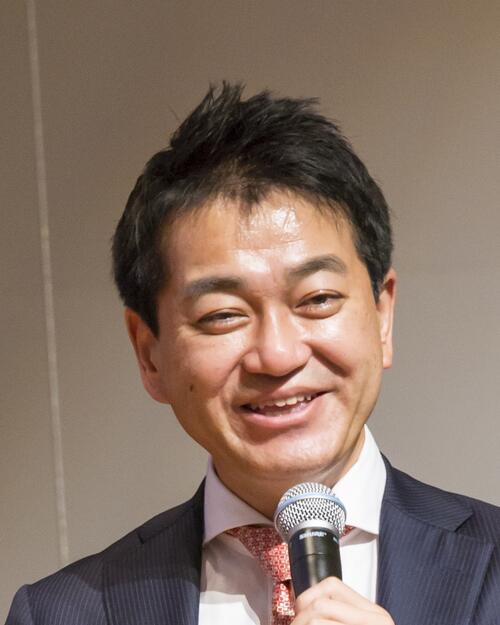
Hiro Rio Maeda, Managing Director, DNX Ventures (formerly Draper Nexus)

BIO:

Hiro Rio Maeda is a Managing Director at venture capital firm DNX Ventures (formerly Draper Nexus). Rio focuses on investing in innovative companies in Cyber Security, mobile, storage, and retail tech area that could work on a global scale. His portfolio companies include Cylance, SafeBreach, JASK, vArmour, AppDome, Ayasdi, Remotium, Klout, Fyde, JoyMode, and Hom.ma. 

Prior to joining DNX Ventures (formerly Draper Nexus), Rio spent six years at Globespan Capital Partners where he had put his resource on both investment and business development of Japan/US portfolio companies. Palo Alto Networks(NYSE: PANW) was a good example portfolio company that he took a lead on taking them to the Japanese market.

Prior to Globespan, Rio spent seven years at Sumitomo Corporation, a Japanese conglomerate trading company in which he had built expertise his international business skill in IT technologies and consumer web services in Tokyo and his capitalist career at Presidio Ventures (Sumitomo’s corporate venture capital arm) in Santa Clara.Japanese conglomerate trading company in which he had built expertise his international business skill in IT technologies and consumer web services in Tokyo and his capitalist career at Presidio Ventures (Sumitomo’s corporate venture capital arm) in Santa Clara.

AGENDA:

4:15pm: Doors open
4:30pm-5:30pm: Talk and Discussion
5:30pm-6:00pm: Networking

RSVP REQUIRED:

Register to attend at http://www.stanford-svnj.org/22819-public-forum

For more information about the Silicon Valley-New Japan Project please visit: http://www.stanford-svnj.org/


Hiro Rio Maeda, Managing Director, DNX Ventures (formerly Draper Nexus)
Seminars
Authors
Gary Mukai
News Type
News
Date
Paragraphs

Stanford e-Tottori is a distance-learning course sponsored by the Tottori Prefectural Board of Education and the Stanford Program on International and Cross-Cultural Education (SPICE), Freeman Spogli Institute for International Studies at Stanford University. Tottori Governor Shinji Hirai and Superintendent Hitoshi Yamamoto of the Tottori Prefectural Board of Education were instrumental in its establishment. Offered for the first time in 2016, Stanford e-Tottori presents a creative and innovative approach to teaching Japanese high school students about U.S. society and culture.


Stanford e-Tottori student Hana Hirosaka of Tottori Higashi High School with SPICE Director Gary Mukai Hana Hirosaka of Tottori Higashi High School with SPICE Director Gary Mukai

Stanford e-Tottori instructor Jonas Edman recently recognized three of his top performing students for their exceptional coursework. They are James Banville (Tottori Keiai High School; Principal Shigeo Nikaido), Hana Hirosaka (Tottori Higashi High School; Principal Masato Omuro), and Kosei Kamada (Tottori Nishi High School; Principal Eiju Yamamoto). Since the launching of Stanford e-Tottori, Edman has encouraged his students to think in an internationally minded manner—that is, to consider different points of view and to realize the importance of diversity and cross-cultural communication. Reflecting upon his former students over the first two years of Stanford e-Tottori, Edman noted that “James, Hana, and Kosei were always open-minded to various points of view and demonstrated strong critical thinking skills… and I was also impressed with their regular attendance in class despite their extremely busy schedules. I am so proud of all of the Tottori students’ accomplishments, but those of James, Hana, and Kosei especially stood out.”


Stanford e-Tottori student James Banville with Principal Shigeo Nikaido of Tottori Keiai High School James Banville with Principal Shigeo Nikaido of Tottori Keiai High School


Each of the honorees received a plaque from SPICE/Stanford University, and Edman expressed his hope that this honor would help them with university admissions as well as inspire them to someday study in the United States. As part of the admissions process to Waseda University, Banville spoke about what he learned in Stanford e-Tottori during an interview. He was admitted to Waseda and will begin his freshman year this spring. Hirosaki and Kamada are now in the midst of the university application process and they, too, plan to showcase their participation in Stanford e-Tottori.

Takuya Fukushima, Office Director of the English Education Advancement Office of the High School Division at the Tottori Prefectural Board of Education, expressed his profound gratitude to Edman and feels that these honors have made Stanford e-Tottori more visible in Tottori Prefecture. “With wonderful guidance and skilled facilitation, Edman-sensei has done a great job to foster the students’ interest and participation in discussions… the students’ positive attitude and willingness to participate in lessons was something that I had been long waiting for. It was the moment when I could feel, ‘Oh, Stanford e-Tottori rose one step higher.’”

To stay informed of SPICE news, join our email list or follow us on Facebook and Twitter.


Related articles:


Hero Image
Stanford e-Tottori student Kosei Kamada with Principal Eiju Yamamoto of Tottori Nishi High School
Kosei Kamada with Principal Eiju Yamamoto of Tottori Nishi High School
Tottori Nishi High School
All News button
1
-

The event is sponsored by the Japan Society for Promotion of Science and
the Japan Foundation Center for Global Partnership.


abe 6364 Japanese Prime Minister Shinzo Abe speaks at Stanford about innovation in Japan and Silicon Valley. He was also joined on stage by Stanford President John Hennessy and George Shultz, the former U.S. Secretary of State and a distinguished fellow at the Hoover Institution (below).
When the Liberal Democratic Party in Japan regained the power led by Prime Minister Shinzo Abe in December 2012, Japan’s government embarked on a set of economic policies dubbed “Abenomics.” Abenomics aimed at bringing Japan back from stagnation and restoring its growth potential.  The Abe administration entered its 7th year and Prime Minister Abe looks most likely to become the prime minister with the longest reign in the post war era.  Abenomics looks seemingly successful as well.  Japan’s economy has been in the longest expansion phase in the post war era.  The unemployment rate is so low that many employers claim they cannot find workers.  Yet, the major goals of Abenomics set at the beginning, such as 2% inflation rate and 2% real economic growth, have not been achieved.  Has Abenomics really succeeded?

This panel features four experts who have been closely watching Abenomics’s impacts on the Japanese economy.  They evaluate what Abenomics has accomplished so far in various areas.


Panelists:

Joshua Hausman, Assistant Professor of Public Policy; Assistant Professor of Economics, University of Michigan

Takatoshi Ito, Professor of International and Public Affairs, Columbia University

Nobuko Nagase, Professor of Labor Economics and Social Policy, Ochanomizu University, Japan

Steven Vogel, Professor of Asian Studies; Professor of Political Science; Chair of the Political Economy Program, University of California, Berkeley

Takeo Hoshi (moderator), Director of the Japan Program at the Shorenstein Asia Pacific Research Center, Stanford University


Koret-Taube Conference Center
Gunn-SIEPR Building
366 Galvez Street, Stanford University

Panel Discussions
News Type
News
Date
Paragraphs

Stanford e-Japan is currently accepting applications for the Spring 2019 session, which runs from April 22 to August 23, 2019. The deadline to apply is February 24, 2019.

Now in its eighth session, Stanford e-Japan is SPICE’s online course for high school students in Japan. Accepted students engage in an intensive study of U.S. society and culture and U.S.–Japan relations. Ambassadors, top scholars, and experts throughout the United States provide web-based lectures and engage students in live discussion sessions.

The Spring 2019 session is generously supported by the Yanai Tadashi Foundation, Tokyo, Japan.

This year, Stanford e-Japan has moved to an online application system. All applications must be submitted at https://spicestanford.smapply.io/prog/stanford_e-japan/ via the SurveyMonkey Apply platform. Applicants and recommenders will need to create a SurveyMonkey Apply account to proceed. Students who are interested in applying to the program are encouraged to begin their application early.

For more information about Stanford e-Japan, please visit http://stanfordejapan.org.

To stay informed of news about Stanford e-Japan and SPICE’s other student programs, join our email list or follow us on Facebook and Twitter.


SPICE offers separate courses for U.S. high school students. For more information on those, please visit http://reischauerscholars.org (online course on Japan), http://sejongscholars.org (Korea), and http://chinascholars.org (China).


Related articles:


Hero Image
Honorees of the first Stanford e-Japan cohort in 2015, Stanford e-Japan instructor Waka Takahashi Brown, and SPICE director Gary Mukai. The honorees are Seiji Wakabayashi, Hikaru Suzuki, and Haruki Kitagawa.
Honorees of the first Stanford e-Japan cohort in 2015, instructor Waka Takahashi Brown, and SPICE Director Gary Mukai. The honorees are (left to right) Seiji Wakabayashi (now enrolled at Boston University), Hikaru Suzuki (now enrolled at the University of Tokyo), and Haruki Kitagawa (now enrolled at Keio University).
All News button
1
-

The 11th Annual Koret Workshop

A dramatic opening created by the unique strategic outlooks and personalities of Moon Jae-in, Kim Jong Un and Donald Trump instigated a series of highly symbolic summits in the early months of 2018. The process kicked off by those summits has bogged down, however, as the necessary compromises for an agreement between the United States and North Korea have proved elusive. This year's Koret Workshop will therefore invite experts from a variety of areas in order to reflect on what the stumbling blocks have been as well as prospects for overcoming them. Conference participants will work towards better understanding and supporting potential emerging solutions to the persistent conflict on the Korean Peninsula.

The workshop will consist of three sessions:

Session I: Assessments of Summit Diplomacy

Session II: Challenges and Opportunities in Media Coverage

Session III: Prospects and Pitfalls in the Near-Term

NOTE: During the conference, a keynote address is open to the general public. Please click here to register for the public event on March 15.
 
The annual Koret Workshop is made possible through the generous support of the Koret Foundation.

Bechtel Conference Center
Encina Hall, 616 Serra Street
Stanford University

Conferences
Authors
News Type
News
Date
Paragraphs

Stanford e-Japan is a distance-learning course sponsored by the Stanford Program on International and Cross-Cultural Education (SPICE), Freeman Spogli Institute for International Studies (FSI) at Stanford University. The Spring 2018 session was supported by the Capital Group and the Stanford Silicon Valley-New Japan Project, Japan Program, Shorenstein Asia-Pacific Research Center, FSI. Offered for the first time in 2015, Stanford e-Japan presents a creative and innovative approach to teaching Japanese high school students about U.S. society and culture and U.S.–Japan relations, and most importantly, the course introduces both U.S. and Japanese perspectives on many historical and contemporary issues. The Spring 2018 cohort was the sixth group of students to complete Stanford e-Japan.


In August 2019, three of the top students of the Spring 2018 Stanford e-Japan session will be honored at an event at Stanford University. The three Stanford e-Japan Day honorees—Naoya Chonan (Waseda University Senior High School), Miki Fujito (Senri International School of Kwansei Gakuin), and Luana Ichinose (Shibuya Senior High School)—will be recognized for their coursework and exceptional research essays that focused respectively on “Two Possible Ways to Adopt a Flipped Learning Method into Japanese High School Classrooms,” “Differing Views on the A-bomb in Japan and the U.S.,” and “A Comparative Analysis of the Right to Resist in Japan and the U.S.”

Anna Oura (Tokyo Gakugei University International Secondary School) received Honorable Mention for her research paper on “A Comparative Study on Japanese and U.S. History Textbooks.”

Applications for the Spring 2019 session of Stanford e-Japan will be accepted online from January 10 to February 24, 2019.

To stay informed of news about Stanford e-Japan and SPICE’s other programs, join our email list and follow us on Facebook and Twitter.


Related articles:


Hero Image
Research papers of students in the Spring 2018 cohort of Stanford e-Japan
Compilation of the final research papers of students in the Spring 2018 cohort of Stanford e-Japan
All News button
1
-

This is part 2 of a talk presenting how innovative large Japanese companies are harnessing Silicon Valley. It is a review of the fireside chats and panels presented at the Silicon Valley – New Japan Summit last November at Stanford, which was in Japanese. The talk adds some historical context, and introduces through many of the company cases from the summit, including Panasonic, Fuji Film, Itochu, Rakuten, Obayashi, Nomura Holdings, Sourcenext, Komatsu, SMBC, and Toyota Research Institute.

The current surge of large Japanese companies into Silicon Valley is focused on firms aiming to identify new opportunities to collaborate with the startup ecosystem in order to understand future technological and industry trajectories, to facilitate new forms of “open” innovation within the company, and in some cases to even redefine how to add value to their core offerings. However, given a vast differently economic context from their core operations in Japan, many of the large Japanese firms’ initial forays tend to fall into patterns of “worst practices” that are ineffective. Yet, a small but growing number of innovative Japanese companies are producing novel and valuable collaborations with a variety of Silicon Valley firms, investors, and ecosystem players. The talk will survey a range of strategic options available to Japanese companies, with implications for how to better adapt companies from Japan to Silicon Valley, and more broadly from different political economic systems.

SPEAKER:

Kenji Kushida, Research Scholar, Shorenstein APARC Japan Program and Stanford Silicon Valley-New Japan Project Leader

BIO:

Kenji E. Kushida is the Japan Program Research Scholar at the Shorenstein Asia-Pacific Research Center at Stanford University (APARC), Project Leader of the Stanford Silicon Valley – New Japan Project (Stanford SV-NJ), research affiliate of the Berkeley Roundtable on the International Economy (BRIE), International Research Fellow at the Canon Institute for Global Studies (CIGS), and Visiting Researcher at National Institute for Research Advancement (NIRA). He holds a PhD in political science from the University of California, Berkeley, an MA in East Asian studies and BAs in economics and East Asian studies, all from Stanford University.

Kushida’s research streams include 1) Information Technology innovation, 2) Silicon Valley’s economic ecosystem, 3) Japan’s political economic transformation since the 1990s, and 4) the Fukushima nuclear disaster. He has published several books and numerous articles in each of these streams, including “The Politics of Commoditization in Global ICT Industries,” “Japan’s Startups Ecosystem,” “Cloud Computing: From Scarcity to Abundance,” and others. His latest business book in Japanese is “The Algorithmic Revolution’s Disruption: a Silicon Valley Vantage on IoT, Fintech, Cloud, and AI” (Asahi Shimbun Shuppan 2016).

He has appeared in media including The New York Times, Washington Post, Nihon Keizai Shimbun, Nikkei Business, NHK, PBS NewsHour, and NPR.

He is also a trustee of the Japan ICU Foundation, a fellow of the US-Japan Leadership Program, an alumni of the Trilateral Commission David Rockefeller Fellows, and a member of the Mansfield Foundation Network for the Future.

AGENDA:

4:15pm: Doors open
4:30pm-5:30pm: Talk and Discussion
5:30pm-6:00pm: Networking

RSVP REQUIRED:

Register to attend at http://www.stanford-svnj.org/12819

For more information about the Silicon Valley-New Japan Project please visit: http://www.stanford-svnj.org/


0
Former Research Scholar, Japan Program
kenji_kushida_2.jpg MA, PhD
Kenji E. Kushida was a research scholar with the Japan Program at the Walter H. Shorenstein Asia-Pacific Research Center from 2014 through January 2022. Prior to that at APARC, he was a Takahashi Research Associate in Japanese Studies (2011-14) and a Shorenstein Postdoctoral Fellow (2010-11).
 
Kushida’s research and projects are focused on the following streams: 1) how politics and regulations shape the development and diffusion of Information Technology such as AI; 2) institutional underpinnings of the Silicon Valley ecosystem, 2) Japan's transforming political economy, 3) Japan's startup ecosystem, 4) the role of foreign multinational firms in Japan, 4) Japan's Fukushima nuclear disaster. He spearheaded the Silicon Valley - New Japan project that brought together large Japanese firms and the Silicon Valley ecosystem.

He has published several books and numerous articles in each of these streams, including “The Politics of Commoditization in Global ICT Industries,” “Japan’s Startup Ecosystem,” "How Politics and Market Dynamics Trapped Innovations in Japan’s Domestic 'Galapagos' Telecommunications Sector," “Cloud Computing: From Scarcity to Abundance,” and others. His latest business book in Japanese is “The Algorithmic Revolution’s Disruption: a Silicon Valley Vantage on IoT, Fintech, Cloud, and AI” (Asahi Shimbun Shuppan 2016).

Kushida has appeared in media including The New York Times, Washington Post, Nihon Keizai Shimbun, Nikkei Business, Diamond Harvard Business Review, NHK, PBS NewsHour, and NPR. He is also a trustee of the Japan ICU Foundation, alumni of the Trilateral Commission David Rockefeller Fellows, and a member of the Mansfield Foundation Network for the Future. Kushida has written two general audience books in Japanese, entitled Biculturalism and the Japanese: Beyond English Linguistic Capabilities (Chuko Shinsho, 2006) and International Schools, an Introduction (Fusosha, 2008).

Kushida holds a PhD in political science from the University of California, Berkeley. He received his MA in East Asian Studies and BAs in economics and East Asian Studies with Honors, all from Stanford University.
-

Labor market duality refers to the coexistence of temporary workers with low dismissal costs and permanent workers with high dismissal costs within the same firms. The prevalence of temporary employment is a common feature in several countries, such as Continental European countries. Further, since the 1980s, the Japanese labor market has been experiencing a substantial increase in temporary jobs. The quality of temporary jobs tends to be lower than that of permanent jobs (e.g., the former includes lesser job security, lower wages, and fewer training opportunities compared to the latter). For this reason, the causes and consequences of widespread temporary employment have both policy and academic implications. To date, most of the research on this topic has focused on the supply side of labor markets (demographic changes in workforce), macroeconomic impacts (business cycles), and labor-market institutions. However, since the majority of temporary workers tends to be involuntary, the demand-side analysis is important, as well. It has rarely been examined how market competition would affect firms’ demand for temporary and permanent labor, particularly within the context of economic globalization.

Our study attempts to fill this gap. By proposing a heterogeneous-firm trade model with a dual labor market, we examine the relations between the demand for temporary and permanent workers and economic globalization. Our model highlights intensified product market competition as a driving force behind the shift in demand from permanent to temporary workers. In addition, our model demonstrates that international outsourcing effectively reduces labor adjustment costs, which decreases the demand for permanent workers. Using industry-level data from the Japanese manufacturing sector, we empirically test the relations between the demand for temporary and permanent workers and economic globalization and find that they support most of our theoretical predictions.


Image
headshot sato
Hitoshi Sato joins the Walter H. Shorenstein Asia-Pacific Research Center (Shorenstein APARC) during the 2018–2019 academic year from the Institute of Developing Economies (IDE-JETRO), a national research institute in Japan, where he currently serves as a senior chief research fellow. Sato’s field of study is international trade, and his current research interests include the relationships between internationalization of firms and labor markets. His research efforts have been published in journals, books, and policy reports, including the Journal of Japanese and International Economies. Further, Sato has been appointed as a consulting fellow by the Research Institute of Economy, Trade and Industry since 2013. He received his PhD in economics from the University of Wisconsin–Madison in 2006.

Philippines Conference Room Encina Hall, 3rd Floor 616 Serra Mall, Stanford, CA 94305
616 Serra StreetEncina Hall E301Stanford, CA94305-6055
0
hitoshi_sato.jpg Ph.D.
Dr. Hitoshi Sato joins the Walter H. Shorenstein Asia-Pacific Research Center (APARC) for the 2018 year from the Institute of Developing Economies (IDE-JETRO) in Japan, where he serves as Senior Chief Research Fellow.  He will be working on the internationalization of firms, management practices, and development.  Dr. Sato received his Ph.D. from the University of Wisconsin, Madison. 
Visiting Scholar at APARC
Seminars
Authors
Gary Mukai
News Type
Blogs
Date
Paragraphs

During the U.S.-Japan Council annual conference that was held in Tokyo on November 8 and 9, 2018, Rylan Sekiguchi was elected chair of the TOMODACHI Emerging Leaders Program (ELP). The ELP identifies, cultivates, and empowers a new generation of leaders in the U.S.–Japan relationship. Emerging Leaders participate in leadership education, design and implement original USJC programming, and develop powerful, lifelong personal and professional friendships. A new cohort of leaders aged 24–35 is selected annually through a highly competitive process. USJC Senior Vice President Kaz Maniwa, who oversees the ELP, commented, “We are delighted that Rylan Sekiguchi will lead the Emerging Leaders Program next year as the chair of the Steering Committee. Rylan has shown great passion, dedication, and commitment to the Emerging Leaders Program and we look forward to his leadership.”

Secretary Norman Mineta and Rylan Sekiguchi Secretary Norman Mineta and Rylan Sekiguchi

During the conference, Sekiguchi gave an overview of the ELP and shared reflections of how his professional and personal lives have embraced the mission of the ELP. Sekiguchi spoke specifically about his current work at SPICE with USJC Vice Chair Norman Mineta, former Secretary of Commerce under President Bill Clinton and Secretary of Transportation under President George W. Bush. Mineta is the subject of a new documentary—An American Story: Norman Mineta and His Legacy—co-produced by Dianne Fukami and Debra Nakatomi, and Sekiguchi is finalizing web-based lesson plans that focus on the film’s key themes, including immigration, civil liberties, and leadership. The documentary was screened at the conference and is anticipated to air on PBS.

A short video that Sekiguchi shared during his speech brought applause from the audience. The video captured a snippet of a performance that he and other members of San Jose Taiko presented last year. The performance celebrated “swing music and the role it played in lifting people’s spirits amid the harsh reality of the Japanese-American internment,” shared Sekiguchi. “Through music and theater, we transported people back to a 1940s-era ‘camp dance’ to educate audiences about the painful, agonizing choices that incarcerees faced.” Mineta was a young boy when his family was uprooted from San Jose, California, and incarcerated in a camp for Japanese Americans in Heart Mountain, Wyoming. Mineta later became mayor of San Jose in 1971.

Through Sekiguchi’s reflections, audience members from both sides of the Pacific were prompted to reflect upon civil liberties during times of crisis—in this case, the incarceration of Japanese Americans following the Japanese attack on Pearl Harbor. My father was a high school student in a camp in Poston, Arizona, and the video prompted me to recall one of the few things that he shared with me about his life behind barbed wire—that camp dances and baseball brought some sense of normalcy to the lives of Japanese-American youth. By showing the video, Sekiguchi’s implicit message was clear: young Americans today—including of course, ELP members—must be aware of the sometimes fragile nature of civil liberties. I have the good fortune of working with another ELP member, Naomi Funahashi, and during the conference, it was rewarding for me to meet many ELP alumni and members of the newest cohort and to witness the beginnings of personal and professional friendships amongst them. Sekiguchi’s speech set the tone for the year ahead—like a “camp dance,” he wants the ELP members to have fun but to always remember the serious nature of what the ELP represents.


SPICE’s web-based lesson plans will be released soon. To stay informed of SPICE-related news, join our email list or follow SPICE on Facebook and Twitter. SPICE also offers several traditional lesson plans on the Japanese-American internment, the role of baseball in Japanese-American internment camps, and civil liberties in times of crisis.


Hero Image
Secretary Norman Mineta and Rylan Sekiguchi
All News button
1
Subscribe to Japan