0
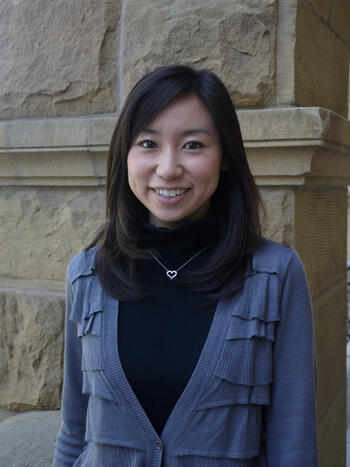
patricia_robinson.jpg Ph.D.

Patricia (Tish) Robinson joined the Walter H. Shorenstein Asia-Pacific Research Center as a visiting scholar from Hitotsubashi University in Tokyo, Japan from May 2019 - April 2020.

Robinson’s research and teaching focus on managerial mediation and managerial coaching. She has published in Administrative Science Quarterly, Academy of Management Perspectives, and Human Resource Management Review, among others, and her research has received the Academy of International Business Farmer Award and the Academy of Management Richman Award. Other awards include a Fulbright Fellowship, a Fulbright Hayes Fellowship, a Fulbright Faculty Fellowship, a Carnegie Bosch grant, a Japan Foundation Faculty Fellowship, and a Shintaro Abe Fellowship, among others.

Robinson has served on the faculty at UC Berkeley, the NYU Stern School of Business and Harvard University, as well as at the Japan Institute of Labor Policy and Training.  She was appointed a Commissioner on the Fulbright Japan-US Educational Commission by Ambassador Caroline Kennedy, was an outside board director to Eisai Pharmaceuticals, elected an elected Governor to the American Chamber of Commerce Board of Governors, and served as a Founding Director of the Society of Organizational Learning Japan under the auspices of Peter Senge.

Robinson received her MBA and Ph.D. from the MIT Sloan School of Management at the Massachusetts Institute of Technology and her BA from Pomona College.

Visiting Scholar, May 2019-April 2020
News Type
News
Date
Paragraphs

The Stanford University Scholars Program for Japanese High School Students or “Stanford e-Japan” is an online course sponsored by the Yanai Tadashi Foundation and the Stanford Program on International and Cross-Cultural Education (SPICE), Stanford University. This online course teaches Japanese high school students about U.S. society and underscores the importance of U.S.–Japan relations. Through Stanford e-Japan, ambassadors, top scholars, and experts throughout the United States provide web-based lectures and engage Japanese high school students in live discussion sessions called “virtual classes.” Stanford e-Japan is now in its 5th year and 8th session overall.


On March 15, 2019, 29 high school students across Japan were notified of their acceptance to the Spring 2019 Stanford e-Japan Program. The online course kicks off today and runs until August 23, and will include students representing Aichi, Chiba, Fukuoka, Gunma, Hiroshima, Hokkaido, Hyogo, Kanagawa, Nagano, Niigata, Okinawa, Osaka, Saitama, Shizuoka, Tokyo, and Toyama. In addition to a diverse geographical representation within Japan, the students themselves bring a diverse set of experiences to the program, many having lived overseas in places such as Canada, China, the Philippines, and the United States.

The selected Stanford e-Japan high school students will listen to lectures by renowned experts in the field including Professors Emeritus Daniel Okimoto and Peter Duus, and Professors Katherine Gin Lum, Phillip Lipscy, and Kenji Kushida (Stanford University) on topics such as “Baseball Diplomacy,” “The Atomic Bombings of Japan,” “The Attack on Pearl Harbor,” “Religion in the U.S.,” “U.S.–Japan Relations,” and “Silicon Valley and Entrepreneurship.” Live virtual classes include guest speakers such as Ms. Suzanne Basalla (Toyota Research Institute), Ms. Maiko Cagno (U.S. Consulate, Fukuoka), and Mr. Andrew Ogawa (Quest Venture Partners).

Many Stanford e-Japan students in the current cohort (as well as past ones) have mentioned their desire to study in the United States. The Stanford e-Japan Program equips many students with the motivation and confidence to do so, in addition to many of the skills they will need to study at U.S. universities and colleges. In addition to weekly lectures, assignments, discussion board posts, and virtual classes, the program participants will complete a final research paper on a topic concerning U.S. society or the U.S.–Japan relationship.

“Through this course, we’ve raised Japanese students’ interest in U.S. society and U.S.–Japan relations, which is fantastic,” commented Brown. “I’ve encouraged them to seriously consider undergraduate studies in the United States and to look into opportunities like the Yanai Tadashi Foundation Scholarships.”

Stanford e-Japan is one of several online courses for high school students offered by SPICE, including the Reischauer Scholars Program, the China Scholars Program, and the Sejong Korean Scholars Program. For more information about Stanford e-Japan, please visit stanfordejapan.org.

To be notified when the next Stanford e-Japan application period opens, join our email list or follow us on Facebook and Twitter.


Related articles:


Hero Image
Stanford University online courses for high school students
SPICE at Stanford University offers several online courses for high school students.
Linda A. Cicero / Stanford News Service
All News button
1
News Type
News
Date
Paragraphs

SPICE is now accepting applications for the 2019 East Asia Summer Institute for High School Teachers. This free three-day institute is SPICE’s premier professional development opportunity for teachers, combining Stanford’s deep content expertise with SPICE’s award-winning lesson plans.

SPICE/NCTA East Asia Summer Institute for High School Teachers
July 8–10, 2019
Stanford University
Application deadline: May 6, 2019

High school teachers of social studies and language arts are especially encouraged to apply.

Participants will learn from Stanford faculty and other experts about the geography, cultures, politics, economics, history, and literature of East Asia, including a special focus on U.S.–Asia relations and the Asian diaspora in the United States. Teachers will also engage in pedagogy-focused discussions and receive training on several SPICE lesson plans on East Asia, in order to help them translate their new content knowledge to the classroom. Teachers who complete the professional development seminar will be eligible for a $250 stipend and three units of credit from Stanford Continuing Studies, and they will leave Stanford with several extensive SPICE curriculum units in hand.

This professional development opportunity will focus largely on China, Japan, and Korea. For example, last year’s speakers included Kathleen Stephens (former U.S. Ambassador to the Republic of Korea), Peter Duus (renowned Stanford scholar of modern Japan), and Clayton Dube (Director of the USC U.S.-China Institute). The institute also featured speakers like author Chun Yu (who grew up in China’s Cultural Revolution) and Joseph Yasutake (who grew up in a Japanese American internment camp), whose rich personal stories brought history to life. SPICE staff led complementary interactive curriculum training sessions on China’s economic development, the atomic bombing of Hiroshima, South Korean pop culture, and East Asia’s “history wars.”

“Every speaker added a new perspective to historical and contemporary events,” remarked participant Kimberly Gavin. “[The] lectures enriched my knowledge base of topics, curriculum demonstrations gave me ideas for effective lessons in the classroom, small group discussions led to rich conversations about primary and secondary sources, and teacher sharing introduced me to new websites. There wasn’t anything that was done that wasn’t valuable to me… I told my administrator yesterday that this was the best conference I have been to as a teacher.”

More information is available at https://spice.fsi.stanford.edu/fellowships/ncta_for_high_school_teachers. Interested high school teachers can apply directly at https://forms.gle/Jd3PP8EowXyPkAyX9. The application deadline is May 6.

The 2019 East Asia Summer Institute for High School Teachers at Stanford University is made possible by the National Consortium for Teaching about Asia.

Stay informed of SPICE news by joining our email list or following us on Facebook and Twitter.


Please note: Due to unexpected funding reductions this year, we are only able to offer our high school institute in 2019. We hope to bring back our middle school institute next year.


Related articles:


Hero Image
Stanford high school teacher professional development
Participants collaborate at the 2018 East Asia Summer Institute for High School Teachers.
Rylan Sekiguchi
All News button
1
Paragraphs

Promotion of inward foreign direct investment (FDI) into Japan has been an important policy in the Abenomics growth strategy. This paper examines if we observe positive impacts of the policy in the data. We first estimate a gravity model of bilateral FDIs using data for 35 OECD countries as destination countries. In estimating the model, we handle zero values for FDI stock explicitly. The model includes (origin and destination) country-specific effects as well as destination-country specific time trends. We take the model prediction as a reasonable counterfactual and compare that to the actual inward FDI stock for Japan. Although the actual inward FDI stock has been growing and is likely to achieve the goal of 35 trillion yen by 2020, the growth under the Abe administration has been comparable to or slightly lower than the counterfactual suggested by the estimated model. We also estimate the model without Japan as a destination country and use the estimated model to calculate the counterfactual level of Japan's inward FDI. Although we expect the gap between the counterfactual and the actual become narrower if Abenomics policy has been successful, we fail to find that. These results cast a doubt on the effectiveness of the Abenomics policies to encourage inward FDI at least as of 2015.

All Publications button
1
Publication Type
Journal Articles
Publication Date
Journal Publisher
Journal of the Japanese and International Economies
Authors
Takeo Hoshi
Number
52
Paragraphs

This paper examines how social isolation in a non-Anglophone context where English is not the main language of instruction for local students but is for international students, has unintended consequences for social capital formation among the latter. What factors influence international student network formation in such places where linguistic barriers are institutionalised and what are their consequences not only during college but beyond, in shaping students’ career plans? Using qualitative interview data with 67 international (originating from Asian countries) and domestic students in Japanese universities, we find that such institutional barriers negatively promote greater isolation of international students but positively encourage the formation of diverse multinational ties – a process through which international students gain ideas, confidence and direction regarding their post-graduation career plans to work transnationally.

All Publications button
1
Publication Type
Journal Articles
Publication Date
Journal Publisher
Comparative Education
Authors
Gi-Wook Shin
Rennie Moon
Paragraphs

The central part of this book is an English version of the memoir of Masahiko Aoki that was published in Japanese in 2008 (青木昌彦『私の履歴書 人生越境ゲーム』日本経済新聞出版社). In this memoir, Aoki goes over his life as a young boy immediately after World War II, as an activist who opposed the rearmament of Japan under the US-Japan Security Alliance, as a student of Marxist economics first and then modern mathematical economics, as a graduate student at Minnesota, as a young economist at Stanford, Harvard, and then Kyoto, as a central faculty member to develop comparative institutional analysis at Stanford, and as an institutional builder who established the Stanford Kyoto Center, the Research Institute of Economy, Trade, and Industry, the Virtual Center for Advanced Studies Institution in Tokyo, and the Center for Industrial Development and Environmental Governance in Beijing. Until now the memoir has been available only in Japanese and in Chinese. The English edition will allow more young social scientists to touch the life and the work of Masahiko Aoki and be inspired to make their own versions of the “transboundary game of life.”

All Publications button
1
Publication Type
Books
Publication Date
Authors
Masahiko Aoki
Number
978-9811327568
Authors
Thomas Holme
News Type
News
Date
Paragraphs

In September 2018, Shinzo Abe won a party election, thereby securing his third consecutive term as president of Japan’s Liberal Democratic Party and getting closer to becoming the longest-serving prime minister in the country’s postwar history. With his current administration now in its seventh year, Abe looks likely to continue implementing the economic policies he started in 2012, dubbed "Abenomics” and based upon “three arrows” of bold monetary policy, flexible fiscal policy, and structural reform to promote private investment.

Seven years in, with growth visible in many measures of the Japanese economy, has Abenomics truly succeeded? Are there, in fact, shortcomings that the administration needs to address before taking the proverbial victory lap, as Abe is considering the legacy he will leave behind? What are the most important challenges facing the Japanese economy in the near future?

These questions were the focus of an expert panel that APARC’s Japan Program recently hosted at Stanford. The event gathered five experts to go beyond the readily apparent successes of Abenomics in order to examine some of its potential shortfalls.

Takeo Hoshi, director of the Japan Program and moderator for the panel, opened the session by recounting many of the acheivements made by Abenomics: the country’s economy was experiencing its longest expansion in the postwar period—73 months and counting; real GDP was increasing; and the unmployment rate had fallen below 2.5%, with significant growth in female workforce participation.

And yet by other measures, Abenomics could be viewed as having missed several of its major goals. Inflation remains around 0.5%, and even after extending the target date from 2020 to 2025, it appears unlikely that the Japanese government can achieve primary balance. Additionally, and even though the government changed the way it calculated nominal GDP (leading to a possibly-inflated bump), the economy was still unlikely to reach the target goals of 600 trillion yen GDP along with 3% nominal growth and 2% real growth as set by Abenomics.

Joshua Hausman, assistant professor of public policy and of economics at the University of Michigan, discussed Abenomics targets for inflation. Hausman explained to the audience that Abenomics expressed goal of raising inflation was meant to achieve three benefits. First, GDP would see growth due to increased domestic spending ahead of inflation. Second, by raising nominal interest rates above 0%, the Bank of Japan would have more leeway to lower rates during a recession. And third, raising the rate of inflation would help erode Japan’s substantial government debt.

However, argued Hausman, while the Bank of Japan was hopeful that their actions would encourage businesses to raise prices, there has yet to be a significant change in the inflation figure. And while there has been growth in the GDP, the amount of change mirrors that of the period between 1993 and 2007, well before Abenomics. The Bank of Japan, concluded Hausman, desserves credit for what it has achieved, but should consider alternative courses of action.

Takatoshi Ito, professor of international and public affairs at Columbia University, noted that the Abe administration was also unlikely to achieve its goal of a primary balance in the next six years. Even after raising the consumption tax in 2014 (and with indications that another tax hike would occur in October of this year), the mark was unlikely to be achieved, because even as tax revenue were increasing, so too were expenditures made by the Abe government.

Another impact area of Abenomics, and focus of previous events by the Japan Program, is “womenomics,” or the economic policies’s influence on women’s presence and roles in the workforce. Nobuko Nagase, professor of labor economics and social policy at Ochanomizu University, Japan, shared several of the ways in which the administration appeared to be successfully addressing gender inequality in the economy. One big achievement has been the increase in the number of female university graduates who have children and are able to obtain better-paying jobs. Previously, as little as 30% of the female workforce in Japan remained employed following either marrage or a first child; the present figure has risen to 48%. And while across all management levels the growth of women has been relatively flat, among the middle and lowest tier management positions, there have been modest improvements in female representation.

Nagase noted, however, that there was still much to be done. Abenomics has not been successful in increasing the participation of fathers in childcare. Additionally, while both men and women had seen reductions in the long work hours for which Japan is notorious, improvement in narrowing the gender pay gap has been slow, especially in large-size firms. The most important challenges, said Nagase, are reforming the japanese labor practice of long-term employment and the seniority-based pay system, changing household models from full-time working husband and dependent housewives to double income households with children, and re-regulating labor rules to protect non-standard employees.

Panelist Steven Vogel, professor of Asian studies and of political science at the University of California, Berkeley, considered the extent to which the third arrow of Abenomics has hit the mark. He suggested that the Japanese government had succumbed to the ideological trap that regulations were a hindrance to the markets. Before Abe, explained Vogel, deregulation models had led to increases in non-regular work, expansion in inequality, and lower overall consumption. And while under Abe there was a continuation of appetite for deregulation—for example, the establishment of 10 dereguation zones over several cities—there is some evidence, albeit mixed, of it having a positive impact: profits are up, but capital investment and labor’s share of income are both down.

“Don’t expect huge economic impact from deregulation per se,” noted Vogel. Japan needs to improve its model of corporate governance, and it needs labor market reform, he concluded.

The panel was cohosted by the Japan Society for the Promotion of Science and the Japan Foundation Center for Global Partnership. For related information, as well as published reports, see the Japan Program’s research project The Political Economy of Japan under the Abe Government.

Hero Image
 Japan's Prime Minister Shinzo Abe (R) celebrates with Shigeru Ishiba, the former defence minister who ran against him, after winning the Liberal Democratic Party leadership contest on September 20, 2018 in Tokyo, Japan.
Japan's Prime Minister Shinzo Abe (R) celebrates with Shigeru Ishiba, the former defence minister who ran against him, after winning the Liberal Democratic Party leadership contest on September 20, 2018 in Tokyo, Japan.
Carl Court/Getty Images
All News button
1
-

Abstract: My research investigates the formal institutionalization of inter-governmental cooperation among the three major Northeast Asian powers – China, Japan, and the Republic of Korea—in the face of a continued North Korean threat. How much of a shadow, if any, has North Korea’s nuclear weapons cast over the development of multilateralism in the region? Since 1999, the Northeast Asian region has seen intensifying institutionalization of cooperation among its major powers. In a region where the realist logic of state-centric nationalism, sovereignty, and balance of power still prevails, this new development of trilateral cooperation among the former and potential adversaries deserves serious scholarly investigation. What started as economic and functional cooperation, trilateral cooperation has since been substantially expanded to include political and security agendas at the highest level of government. What explains the emergence and endurance of trilateral cooperation and to what extent has containing the North Korean nuclear crisis shaped its institutional trajectory and outcomes? By examining the evolution of trilateral cooperation, I address some critical gaps in our understanding of formal institution building and the economic-security nexus in one of the most dynamic regions in the world.


Speaker's Biography: Yeajin Yoon is a 2018-2019 MacArthur Nuclear Security Pre-doctoral Fellow at CISAC and a doctoral candidate in the Blavatnik School of Government at the University of Oxford. Her dissertation examines the evolution of trilateral cooperation among the most militarily and economically dominant states in Northeast Asia, namely, China, Japan and the Republic of Korea, and considers when and how their relations become implicated in the North Korean nuclear crisis.


Prior to entering academia, Yeajin travelled extensively across Asia and worked with national governments, international organisations, and NGOs in the region. She led the development of the inaugural issue of the 'Oxford Government Review’ and helped facilitate a Track II dialogue on wartime history issues in Asia at Stanford University. Previously, she worked as a founding member of the Trilateral Cooperation Secretariat, the official intergovernmental organisation for China, Japan, and the Republic of Korea and managed a development fund focused on the ASEAN region at the Korean Foreign Ministry.


Yeajin received a Bachelor of Arts in Political Science with Honors from Stanford University and a Master of Public Policy degree from Oxford University.

Yeajin Yoon MacArthur Nuclear Security Pre-doctoral Fellow CISAC, Stanford University
Seminars
Authors
Thomas Holme
News Type
News
Date
Paragraphs

An air of uncertainty remains prevalent in the Indo-Pacific region. The South China Sea continues to be in contention, with six governments exerting claims on overlapping areas. The threat of a full-blown trade war between China and the United States puts the stability of the regional (and global) economy in question. Meanwhile, the Korean peninsula appears to swing between the brink of conflict to the possibility of dramatic diplomatic breakthroughs. It was in the midst of this precarious period for the region that the third annual gathering of the U.S.-Japan Security and Defense Dialogue Series took place in Tokyo from January 30 to February 1.

The 2019 meeting was co-sponsored by the Sasakawa Peace Foundation and APARC’s U.S.-Asia Security Initiative (USASI). For the past three years, the series has convened senior Japanese and American policymakers, military leaders, scholars, and regional experts to discuss Japan's security strategy and the alliance between Japan and the United States. Support for the workshop came from the Carnegie Corporation of New York.

Since its inception in 2016, the dialogue series has provided a venue for in-depth discourse on contemporary Asia-Pacific security issues, and has helped build bridges between American and Asian academics, government and military officials, and other defense and security policy specialists. “We have continued to expand the range of attendees from the Japanese and U.S. government and military,” said USASI Director Karl Eikenberry. “This has ensured for our dialogue even greater policy relevance with each iteration.”

“The U.S.-Japan security dialogue is unique because it combines civilians and military officers, both retired and serving, which simply does not take place elsewhere,” observed Stanford Lecturer in International Policy Daniel Sneider, a regular participant. “It also avoids the sometimes-empty rhetoric about our alliance in favor of an operational, but strategically informed, approach that gets at not only what is being accomplished, but where the gaps exist in our alliance.”

Threats, Challenges, and the Appropriate Responses

L to R: Amb. Karl Eikenberry and Lt. General Noboru Yamaguchi (Workshop Co-Chairs)

The 2019 dialogue opened with a day of discussions on many of the challenges facing the U.S.-Japan security alliance, including an assessment of the latest security trends in the Indo-Pacific, as well as Japan’s new National Defense Program Guidelines (NDPG). Passed by the Japanese Cabinet only a month earlier, the NDPG was the focus of two sessions on day one, including a discussion of its implications for Indo-Pacific security, as well as a session on the guideline’s ramifications for concepts of Integrated Air and Missile Defense and Archipelagic Defense

“Unsurprisingly, the global rise of China—along with the U.S. and Japan’s separate and combined responses to PRC strategy in the Indo-Pacific Region—helped shape both our agenda and the selection of participants,” observed Eikenberry. “We were specifically interested in the implications for the maritime domain and certain operational aspects of the U.S.-Japan security alliance.”

The day one closing ceremony featured remarks from the U.S. Ambassador to Japan, the Honorable William Hagerty.


L to R: Dan Sneider, Amb. William Hagerty, and Lt. General Noboru Yamaguchi
 

Developing Policy Recommendations, Meeting with Policymakers

L to R: Major Rodger Welding and Colonel Daniel Munter (United States Pacific Air Forces), and Lt. Colonel Yuka Nakazato, (Japan Air Self-Defense Force)

Days two and three were designed for small group sessions. Referred to as “Core Group”, its U.S. and Japanese members met the morning of January 31 to review the preceding day’s workshop and develop corresponding policy recommendations. The quality and depth of the conversations underscored just how great an impact the expanded range of participants had on the resulting policy.

“Participants weren't afraid to address sensitive, big-picture questions,” said Phillip Lipscy, a Center Fellow at the Freeman Spogli Institute for International Studies at Stanford, “like the slow growth of Japanese military spending in the face of increasing regional threats and the challenges posed by unpredictable US administration policies.”

“Even as an expert of Japanese politics, I found the dialogue extremely informative and stimulating,” shared Lipscy.

Sneider agreed as well. “One thing that stood out this year, in contrast to the previous years, was a greater willingness on the part of our Japanese colleagues to air their sense of unease about and even opposition to the direction of American foreign and security policy under the Trump administration,” he said. “In the past, the American participants were much more open about their criticism of their own government, the Japanese tended to be polite—not so much this year, which made for a lively exchange on many issues.”

In the afternoon, core U.S. participants again met with the US Ambassador, along with his embassy team, as well as with senior Cabinet Office officials from the government of Japan.

Field Testing Ideas

During the second annual gathering in 2018, the dialogue began including a visit by the core workshop participants to a combined U.S. military—Japanese Self Defense facility. As part of the 2019 dialogue, the Core Group spent their third and final day visiting Yokota Air Base, the headquarters of both United States Forces Japan and Japan Air Self Defense Force Air Defense Command.

“These visits allow us to better understand Alliance operational challenges in the field,” noted Eikenberry. “Just as importantly, it affords us an immediate opportunity to test out some of the very ideas discussed during the preceding days.”

http://www.japantimes.co.jp/wp-content/uploads/2015/05/n-yokota-a-20150514.jpg

Yokota Air Base, Japan

Chatham House Rules applied to the dialogue, but a workshop report is forthcoming.

View the reports from the first and second annual workshops.

The U.S.-Asia Security Initiative is part of Stanford University’s Walter H. Shorenstein Asia-Pacific Research Center (APARC). Led by former U.S. Ambassador and Lieutenant General (Retired) Karl Eikenberry, USASI seeks to further research, education, and policy relevant dialogues at Stanford University on contemporary Asia-Pacific security issues.

(L to R: Karl Eikenberry, Michael McFaul, Major Marcus Morgan (U.S. Army LNO to Japan Ground Self Defense Force Northern Army and Stanford University Center for East Asian Studies MA ’18), Phillip Lipscy, Daniel Sneider)


Hero Image
2019 US Japan Defense and Security dialogue 4 1
All News button
1
Authors
Gary Mukai
News Type
News
Date
Paragraphs

Why does cellist Yo-Yo Ma refer to the Silk Road as the ‘Internet of antiquity’? What is globalization? What is economic interdependence? What are diversity and inclusion? These are some of the questions that high school students from Yokohama Science Frontier High School (YSFH) considered during a visit to the San Francisco Bay Area in January 2019. Alumni of the U.S.-Japan Council’s TOMODACHI Emerging Leaders Program (ELP) and SPICE staff encouraged the students to critically consider the questions during their visits to Facebook, Apple, and Stanford University.

Prior to their arrival, YSFH students shared their goals for the trip. YSFH student Ken Horikoshi, who aspires to become a robotics engineer, noted, “I will need communication skills, skills of thinking deeply, and of course, knowledge about space or robotics to make my dreams come true. So, I’d like to make an effort to improve these skills.” With the students’ goals in mind, ELP Chair and SPICE’s Rylan Sekiguchi organized visits to Apple and Facebook and assisted with a one-day seminar at Stanford.

Derek Kenmotsu talks with students and teachers on Apple campus. Derek Kenmotsu talks with students and teachers on Apple campus.
ELP alumnus Derek Kenmotsu, Global Supply Manager of Apple’s World Wide Operations, guided the students on a brief tour of Apple campus and led a discussion that helped them understand the economic interdependence of the world by focusing on Apple’s manufacturing and worldwide sales in countries like China and Japan. The importance of addressing diversity and inclusion in the workforce was underscored by ELP alumna Mana Nakagawa, Diversity & Inclusion Strategy and Operations Lead of Facebook, as she toured the students around Facebook headquarters. Nakagawa has helped to scale Facebook’s women’s community and business resource groups globally. Her comments prompted students to consider the value of inclusivity and cognitive diversity to companies like Facebook that serve a global audience. YSFH student Taishi Chijimatsu, who is involved with his school’s IT club and interested in pursuing computer programming as a career, was especially grateful for having the chance to visit Apple and Facebook as it gave him a first-hand glimpse into what it is like to work for a global company.
Mana Nakagawa gives students and teachers a tour around Facebook headquarters. Mana Nakagawa gives students and teachers a tour around Facebook headquarters.

During the seminar at Stanford, SPICE staff introduced the YSFH students to SPICE lessons from Along the Silk Road to illustrate that globalization is not just a modern phenomenon. The staff noted that in some ways, the ancient Silk Road was the first real conduit of globalization, as it connected vast lands into a trade network that spread goods, beliefs, and technologies far from their areas of origin. ELP alumna Naomi Funahashi, instructor of SPICE’s online course on Japan, illustrated this by showing how musical instruments were carried along the Silk Road and gradually adapted to cultural and geographic features of local environments. She mentioned, for example, similarities and differences of lutes that can be found in Europe, China, Korea, and Japan. She also noted a description of the Silk Road by cellist Yo-Yo Ma, founder of Silkroad, who has described the Silk Road as the “Internet of antiquity”; expounding upon this notion, Sekiguchi and SPICE’s Jonas Edman noted that by studying about the Silk Road, we can gain historical insights into how the contemporary stage of globalization is changing our world and our lives.

A highlight of the seminar featured the YSFH students giving presentations on their science-related research to the SPICE staff and visiting scholars at Stanford from Japan. YSFH student Kazuhiro Okada’s presentation on his ambition to design underwater cities stretched the audience’s notions of globalization and interconnectedness. One commented, “It would be interesting if you could someday design a subway stop under the ocean between Aomori Prefecture and Hokkaido.”

The ELP identifies, cultivates, and empowers a new generation of leaders in the U.S.–Japan relationship. Chair Sekiguchi, other ELP alumni, and SPICE staff extended this mission to the generation behind them. YSFH teacher Nobuyo Uchimura described the experiences that they provided her students as very precious ones that expanded their learning beyond the confines of a classroom, and YSFH teacher Yukimasa Uekusa noted his desire to prioritize programs such as this into the future.


Hero Image
Yokohama Science Frontier High School students at Stanford University
Rylan Sekiguchi
All News button
1
Subscribe to Japan