Medical School Office Building
1265 Welch Road
Stanford, CA 94305

(650) 725-7747
0
Assistant Professor of Medicine
r01palhsm07.r01.med_.va_.govhomedirvhapalzulmadmy_documentsmy_picturesdonna_zulman037_12-13-11.jpg MD, MS

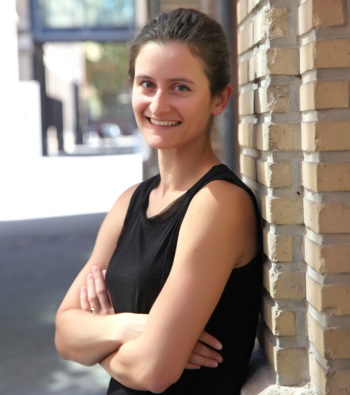
Donna Zulman, MD, MS, is an assistant professor in the Division of General Medical Disciplines at Stanford University, and an investigator at the Center for Innovation to Implementation (Ci2i) in the VA Palo Alto Health Care System. Dr. Zulman received her MD from the University of California, Los Angeles. After completing a residency in Internal Medicine at the University of Michigan, she received a Masters in Health and Health Care Research through the Robert Wood Johnson Clinical Scholars Program at the University of Michigan and the Ann Arbor VA.

Dr. Zulman's research focuses on improving health care delivery for patients with multiple chronic conditions and complex medical and social needs, and optimizing health-related technology to personalize care and improve outcomes for high-risk patients. Dr. Zulman is currently supported by a VA Health Services Research & Development Career Development Award.

Physician Investigator at the VA Palo Alto Health Care System
Authors
News Type
News
Date
Paragraphs

Every Halloween there seems to be another animated brushing campaign to save children from their own sweet tooths. For most, the goal is simple: better oral hygiene for kids.

PLAQUEMONSTER is different.

Developed by Jason Wang, director of the Center for Policy, Outcomes and Prevention (CPOP) and a Center for Health Policy/Center for Primary Care and Outcomes Research (CHP/PCOR) core faculty member, and his team, PLAQUEMONSTER does encourage children to practice good oral hygiene. However, the true purpose of the app is to provide feedback on the user’s engagement that can be used for future forays into mobile health.

Image
Smart phone users can download the application to create a “tooth pet” and help it grow by brushing and flossing daily. Neglect oral hygiene, and the tooth pet will grow dirty, become infected by “plaquemonsters,” and eventually end up in jail.

Using the game’s team mechanic, the app urges children to encourage their friends to brush and floss. Teammates can release a tooth pet from jail, so kids must hold each other accountable if they want their team to progress.

“The social aspect really does make a difference,” said Zara Abraham, a digital media specialist at CPOP and one of the app’s designers. She found that the app’s first child testers “would always be on the phone making sure that each one was doing their work, checking on their teeth.”

The social aspect is likely to engage children more than the average brushing and flossing campaign, according to Abraham. The app’s storyline also helps set PLAQUEMONSTER apart.

Image
“The storyline we came up with was really sticking it to the man,” said Abraham. Developers set tooth pet up as a heroic rogue character who does what he thinks is right by eating healthy despite pressure to give in to Big Candy. Facing peer pressure to subsist on a diet of candy but also more serious pressure from “candy corporation,” tooth pet must expose the company’s nefarious practices so that teeth can be clean again. The game’s darker aspects and complex storyline may help make the game more accessible to older children and hopefully will keep kids engaged longer.

However, PLAQUEMONSTER is more than just a game, more even than a campaign for oral hygiene. Wang’s team hopes to use health literacy games along with demographic and engagement information to develop other mobile health apps. Ultimately, PLAQUEMONSTER is a tool for discovering how people engage with health on a mobile platform and how mobile health apps can improve health care.

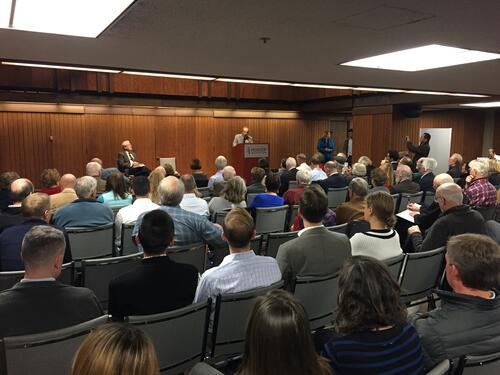
Wang unveiled the mHealth app at Stanford Medicine's Population Health Sciences Colloquium last week.

“The spirit that Jason brings to the app is the game mechanics of behavioral economics,” said Manuel Rivera, product manager at CPOP.

Eventually, Wang’s team hopes to develop other mHealth apps that could aid patients with serious conditions, helping them to track their health and engage in their care plan. Wang’s long-term goal is for “people who are of working age and elderly to improve their quality of life and health trajectories” using mobile health.

If all goes well, PLAQUEMONSTER could be a first step toward active engagement between patients and health care using mobile platforms.

This project is supported by an NIH Director's New Innovator Award.


Hero Image
quest09 Zara Abraham
All News button
1
Authors
News Type
News
Date
Paragraphs

Medical researchers must work together across disciplines to provide better health care to those who need it most, according to panelists at Stanford Medicine’s Annual Population Health Sciences Colloquium.

The symposium, hosted by the Stanford Center for Population Health Sciences, brought together working groups from across the Stanford campus to showcase the latest findings in population health research.

“Population health science at Stanford is likely to make the most important contributions when we cross traditional intellectual expertise disciplines,” said Paul H. Wise, a core faculty member at the Center for Health Policy/Center for Primary Care and Outcomes Research (CHP/PCOR).

Many of the scholars at the daylong conference on Tuesday stressed that an interdisciplinary approach to health care is crucial to understanding and aiding underserved populations.

“To deal with life-course questions we need to create-life course observational windows,” said Mark Cullen, chief of the Division of General Medical Disciplines and director of the Stanford Center for Population Health Sciences.

Instead of trying to create an all-encompassing care plan for the human population as a whole, panelists demonstrated that studying the needs of particular groups, or smaller populations, can better serve individuals within populations that may not receive the best care.

Douglas K. Owens, director of CHP/PCOR, said the U.S.  Preventive Services Task Force, of which he is a member, has “often faced a real paucity of data trying to develop prediction guidelines for both the very young and the old.”

The Task Force, a panel of experts that makes recommendations for medical prevention services, is generally able to make guidelines for large populations like adults, but suggestions for specialized groups like children and the elderly are more challenging. Though Stanford researchers like Wise are working to improve care for particular sectors like children, more study is needed.

Several speakers at the conference said the underserved population of poor children could benefit from research targeted toward their population group.

“We don’t really understand the biology of the life-course, why things taking place in gestation and early life actually affect healthy aging and adult onset disease,” said Wise, adding, “We have a very poor understanding of how to translate this understanding into effective interventions for communities in need.”

Panelists agreed that big data can help them understand smaller, poorly served populations, such as young children in impoverished communities. By collecting large amounts of data from the general population, researchers will increase the amount of data available for more specific groups. This allows researchers to study these populations more closely and help create better outcomes.

Abby King, a professor of health research and policy and of medicine, and Jason Wang, director of the Center for Policy, Outcomes and Prevention (CPOP) and a CHP/PCOR core faculty member, believe life-course digital applications can provide individualized care while collecting data on a large-scale.

According to King, a life-course app, or a device to track health and provide care throughout one’s life, would grow with the user and help them through important developmental stages.

Image
Wang has taken a first step toward creating such an app with PLAQUEMONSTER.  Intended for children eager for Halloween candy, the PLAQUEMONSTER app provides kids with a “tooth pet” they must keep safe from “plaquemonsters” and the so-called evil candy corporation. By flossing and brushing their teeth each day, kids earn points, and Wang’s team hopes the game will encourage good dental hygiene.

Health-care techniques using mobile devices, known as mHealth, could be particularly useful in underserved populations. King notes that even low-income populations have cell phones, so using phones as health-care tools could help decrease the gap between higher- and lower-income populations.

“I think for us one of the major challenges of the century is to really close that health-disparities gap and mHealth can help.”

However, each app must be tailored to the user.

“There’s no reason to believe that an African-American 16-year-old is going to be motivated the same way as a 45-year-old white man,” said Wang. “You need to involve patients in the design of the app.” When the app fits the specific patient’s needs, they are more likely to use it regularly, and knowing the needs of their population helps determine their preferences.

As the world continues to become more connected, the panelists said that reaching across disciplines and incorporating technology may hold the key to effective health care in the 21st century.

Hero Image
img 2419 Lorene Nelson
All News button
1
Authors
News Type
News
Date
Paragraphs


A podcast from the book event on Jan. 15 is available at the link above. An earlier interview with author Michael Armacost was first published in Oct. 2015 and is reposted below.

When it comes to elections, politics can supersede strategy. But what is often overlooked is the process through which the United States selects their commander in chief and its impact on policy – particularly, foreign policy.

What then shapes foreign policy during that time? “Events, my dear boy, events,” Harold Macmillan, a former British prime minister, famously replied when asked what could change a government's directions. To which Michael Armacost agrees and explores the interplay between campaign politics and foreign policy in his new book.

“Since World War II, the United States has consistently pursued a global role, but the tempo of its engagement with the world has been repeatedly adjusted to reflect circumstances and domestic moods,” Armacost wrote.

A veteran scholar, former ambassador and undersecretary of state for political affairs, Armacost is an expert on the U.S. government system and policy process. In the book, he examines ideology and the struggle for power in the six elections that have taken place since 1948, ending with Barack Obama’s re-election in 2012.

The book, which reads somewhat like a guide, largely began as a project for students, he said. 

Armacost initially came to Stanford in 1994, and in 2002, returned as a distinguished fellow at the Walter H. Shorenstein Asia-Pacific Research Center. He co-teaches a graduate course on U.S. policy in Northeast Asia.

“When I left government, I found a lot of literature on how foreign policy affects elections but little in the reverse,” Armacost said. “So my aim behind the research was to not only satisfy my own curiosity but to offer a comprehensive and accessible analysis for students.”

Armacost’s career in government began in 1983 when an advisor encouraged him to apply for a White House fellowship. His fellowship in the deputy secretary of state’s office – which was only set to be a single year in Washington – led to 24 years of public service.

He went on to serve as the U.S. ambassador to Japan from 1989 to 1993 and the Philippines from 1982 to 1984, and was a member of the National Security Council.

Armacost said he remains positive about the electoral system, while also suggesting a few reforms. The system ensures a cyclical chance to step back and assess where America stands in the world, he said.

“Our system provides regular opportunities to put the spotlight on troubling foreign policy problems,” he wrote. “And supplies an incentive to consider course corrections for costly, inconclusive foreign as well as domestic policies, or offers a chance to select new management to fix them.”

Shorenstein APARC asked him a few questions about his research in the context of the 2016 election cycle. His answers are posted below.

Will Obama attempt a “sprint to the finish line” on foreign policy?

He is well embarked on that sprint. In the fourth quarter of his presidency, he is eager to burnish his foreign policy legacy. President Obama’s agenda is clear. It includes the normalization of relations with Cuba, implementation of the Iran nuclear agreement, ratification of the Trans-Pacific Partnership free trade agreement, and promotion of further international cooperation on climate change. He will also seek to avoid losing ground in geopolitical competition with ISIS in Iraq and Syria, the Russians in the Ukraine and elsewhere, and China in the South China Sea.

A president’s power to effectively undertake controversial initiatives at home and abroad tends to ebb as his tenure runs out. Those requiring Congressional support are particularly problematic. And events will play a large role in determining the problems and opportunities that come his way before Jan. 20, 2017.

Does the Trans-Pacific Partnership (TPP) stand a chance of getting ratified?

It stands a chance, but it will not be easy. Fortunately, Trade Promotion Authority has been secured from the Congress. Hence, it will be limited to an up or down vote without amendments.

Opposition from labor unions and environmental groups assures that there will be very limited Democratic support for the TPP, and Hillary Clinton, Bernie Sanders and Martin O’Malley have publicly expressed their opposition. There has also been some erosion of support for free trade among the Republicans, whose leaders have mostly expressed misgivings about some of the TPP’s provisions.

I believe the TPP will advance U.S. economic and strategic interests, but whether its ratification will be achieved before or after the 2016 election is at this point uncertain.

How do the politics of the TPP differ from that of George H.W. Bush’s pursuit of the NAFTA agreement in 1992?

In 1992 President Bush didn’t hesitate to push hard for NAFTA throughout his campaign. And the Mexican and Canadian governments also regarded the U.S. election day as a convenient deadline for getting the agreement finished. The president’s GOP Party believed in free trade, and considered the push for an embryonic hemispheric market a worthy and historic objective. A NAFTA accord could be portrayed as extending a helping hand to a friendly neighbor. The Party’s business constituency was supportive; the bulwark of opposition to the deal were labor and environmental groups, which were unlikely to vote for Bush anyway.

Promoting NAFTA also offered the president a chance to put the Democratic candidate, Bill Clinton, who had made public remarks supporting such an agreement, on the spot. If he reversed his position and opposed the accord, he could be accused of “waffling;” if he didn’t, he would risk alienating his labor and environmental constituencies. Bush nearly got the deal finished, but side letters on labor and environmental issues remained to be completed after Clinton won the election.

This year, a Democratic president is confronting major opposition from his own party, and widespread support from Congressional Republicans is therefore indispensable to his chances of ratifying the agreement. A number of Republican leaders who are generally supportive of free trade, however, contend that President Obama was so eager to wrap up the deal on his own watch, that he missed a chance to drive a harder bargain. Others are reluctant to hand the president a foreign policy victory during a presidential campaign.

And as November 2016 nears, the Democratic candidate is likely to be reluctant to buck unions and environmental groups who not only provide much needed financial support, but supply the volunteers who perform crucial “get out the vote” duties on election day.

Where does foreign policy fit into the 2016 campaign? 

Foreign policy is likely to feature very prominently in the coming election, particularly if the economy continues its steady, if modest, rate of growth. The reason is simple. The United States faces serious challenges in the Middle East, the Ukraine, South Asia and the South China Sea. And many voters who favored retrenchment in 2008, now fear it is now perceived increasingly by friends and adversaries as weakness and/or retreat.

One should not, however, expect the presidential campaign to illumine the strategic choices we face abroad. Presidential contenders typically articulate a wide range of aspirational foreign policy goals. But they rarely outline priorities among these declared aims, let alone their potential costs and risks, or the trade-offs among them. To address these core elements of strategy might offend one or another potential voting bloc. Candidates, therefore, tend to focus upon the appeal of their foreign policy objectives at home, rather than their efficacy abroad.

A wide field of candidates has emerged early on. What foreign policy issues are not being addressed that should figure in the debates?

It’s a bit early to say. The first primaries are still three months away. Few debates have yet been held. The election is likely in any event to be in part a referendum on President Obama’s record. But Hillary Clinton, who served for four years as the Secretary of State, is differentiating her position from that of Obama’s on a number of foreign policy matters. And as I noted above, the focus in most campaigns is on laudable goals rather than the key elements of strategy, i.e. the operational tests of foreign policy for anyone who occupies the Oval Office.

What will happen to the U.S. “pivot back to Asia” strategy?

President Obama performed a useful service in underlining America’s growing stake in Asia. I would expect the candidates of both major parties to affirm their intent to devote more time, attention and resources to the Asia-Pacific region. The problems the current administration has experienced in Asia are a by-product of the policy’s implementation. Many Asian leaders wonder whether the policy has been forgotten or overtaken by events. Adjustments in our regional security policy have been essentially symbolic.

With China, we are still looking for a sustainable balance between constructive engagement and prudent hedging. The diplomatic opening to Myanmar was timely, but progress has been complicated by ethnic struggles in that country. American leaders visit Asia periodically, but the United States is still perceived as primarily preoccupied with problems in the Middle East. Conclusion of the TPP will lend credibility to the policy, but only if the agreement is ratified. So it will be up to the next president to put some meat on the bones of this strategic initiative.

How do election cycles in the United States and South Korea mesh, and what might the coming cycle mean for U.S.-Korean relations?

America has a four-year election cycle for the presidency. The Republic of Korea elects its presidents for a five-year term. We have experienced several occasions when our cycles appeared out of sync, i.e. when the United States elected more conservative candidates to the White House as the Koreans chose more liberal contenders for the Blue House. George W. Bush, a conservative, served during a period when the South Korean presidents – Kim Dae Jung and Roh Moo-Hyun – were both liberals or progressives. American and South Korean perspectives on policy toward North Korea diverged sharply. Nonetheless, they joined hands in launching the U.S.-Korea Free Trade Agreement, and formulated plans for a major redeployment of U.S. military forces away from the Seoul metropolis to bases further south. And President Obama, a liberal, fashioned a close relationship with Presidents Lee Myung-bak and Park Geun-hye, both conservatives.

Thus, shared national interests have a way of tempering the ideological predilections of our respective leaders, enabling them to collaborate when dangers loom or when opportunities beckon.

South Korea now trades twice as much with China as it does with the United States and Japan combined. So its economy is tied more closely to China now, though it still looks to Washington for protection. Seoul will not want to choose between its economic interests and its strategic concerns. The United States has no reason to force such a choice on its ally, but it is clear that Beijing hopes to use its economic leverage to influence the Republic of Korea’s strategic decisions, for example, its readiness to deploy a THAAD, high altitude ballistic missile defense system. This is the kind of issue that could feed back into our election-year politics.

Related links

WNYC Brian Lehrer Show (Audio): How Elections Derail Foreign Policy (Aug. 4, 2015)

Hero Image
rtr3a3uf
Confetti on stage as U.S. President Barack Obama celebrates after winning the U.S. presidential election in Chicago, Illinois, Nov. 7, 2012.
Reuters/Phillip Scott
All News button
1
Date Label
News Type
News
Date
Paragraphs

Forty-eight national security and foreign policy leaders urged U.S. government and businesses to take action to fight climate change in a statement released by the Partnership for a Secure America. Thomas Fingar, a distinguished fellow in the Freeman Spogli Institute for International Studies, is a signatory. The statement can be accessed by clicking here.

Hero Image
5811865885 d45256bd02 o
A sergeant operates a sling on a UH-60 Blackhawk above a swollen Missouri River near North Sioux City, South Dakota. Flight crews are helping deliver sand bags to areas affected by flooding.
Flickr/U.S. Department of Defense
All News button
1
Authors
News Type
News
Date
Paragraphs

The Freeman Spogli Institute for International Studies has welcomed five new senior military fellows, including three active duty lieutenant colonels from the U.S. Air Force and two from the U.S. Army, who will spend the next academic year at Stanford pursuing self-directed study of important national issues.

Former U.S. Secretary of Defense and CISAC faculty member Bill Perry created the program to give military officers the opportunity to take a deep dive into an area of strategic interest.

The fellows will be considering a diverse range of topics, from how to adapt Silicon Valley’s innovative work culture to the Army, to China’s actions in the South China Sea, and the effectiveness of U.S. economic sanctions against North Korea.

You can learn more about our fellows’ military backgrounds and the intended focus of their studies from the brief bios below.

John Cogbill and Scott Maytan will be assigned to the Center for International Security and Cooperation.

John Chu, Ryan Blake and Jose Sumangil will be based at the Walter H. Shorenstein Asia-Pacific Research Center.


LTC John Cogbill

LTC John Cogbill was commissioned as an Infantry officer from the United States Military Academy in 1994 and has held a variety of positions in both conventional and special operations units. John’s first assignment was as a Platoon Leader and Executive Officer in the 82nd Airborne Division. John then served two years in the 1st Battalion, 75th Ranger Regiment as a Platoon Leader and Civil-Military Affairs Officer. Next, John served three years in Alaska as an Airborne Rifle Company Commander and the Aide-de-Camp to the Commanding General. After earning his MPA from the Harvard Kennedy School, John taught Economics in the Social Sciences Department at West Point. Following the Command and General Staff College, he spent two years as a Combined Arms Battalion Executive Officer in the 1st Cavalry Division. He then served as the Strategic Plans and Requirements Officer for the 75th Ranger Regiment. Most recently, John commanded the Reconnaissance and Surveillance Squadron for the U.S. Army Third Corps. John has deployed on three combat and two peacekeeping missions, including two tours in Iraq, one tour in Afghanistan, one tour in Haiti, and a recent tour in Kosovo. He will be exploring how the Army can encourage innovation and use emerging technologies to achieve and maintain a competitive advantage on the battlefield.


lt col scott maytan 5x7 Lt Col Scott Maytan, U.S. Air Force

Lt Col Scott Maytan was the commander of a B-52H operational bomb squadron, responsible for ensuring combat mission readiness for any worldwide nuclear or conventional tasking. Lt Col Maytan is a navigator with over 2500 flying hours, primarily in the B-52H, and is a graduate of both the Command and General Staff College (U.S. Army) and the U.S. Air Force Weapons School. He has served four operational assignments, as an advanced tactics instructor, and also a tour at the Pentagon where he developed Air Force positions concerning long-range strike and aircraft nuclear requirements. Lt Col Maytan has served three combat deployments for Operations Desert Fox (Southern Watch), Allied Force and Iraqi Freedom and has also deployed four times supporting USPACOM’s Continuous Bomber Presence mission. Maytan will be studying the “red-lines” that shape Western deterrence posture, and how strategic action and deterrence posture in one region affects others.


LTC John Chu, U.S. Army

LTC John Chu is an active duty officer in the United States Army. Chu has held a variety of leadership and staff positions in his 20 year career. Most recently, he served as the Chief of Intelligence Training at the Department of the Army. Chu has twice been deployed to Iraq and once to Bosnia, with multiple assignments to South Korea, Germany and Turkey. Born in Seoul, he grew up in California and graduated from West Point in 1995. At Stanford, Chu is researching the Korean armistice agreement and the United Nations mission to South Korea. He will also examine U.S. policy toward North Korea, particularly analyzing the “brink of war” tension and developing strategic deterrence measures to reduce risk of unwanted military escalation on the Korean Peninsula. For both research streams, Chu aims to produce analyses and recommendations that could inform a policy audience.


Lt Col Ryan Blake, U.S. Air Force

Lt Col Ryan Blake is an active duty officer in the United States Air Force. Blake was the commander of a flight test squadron where he was responsible for the flight test of new Air Force programs. He has over 2,400 flying hours in over 40 types of aircraft, and has held two operational F-15E assignments, including combat deployments in support of Operations Southern Watch, Iraqi Freedom and Enduring Freedom. He had also been positioned at the Pentagon in defense acquisition and the Office of Security Cooperation in Baghdad. At Stanford, Blake is researching the U.S. policy toward China and its relation to Northeast Asia. He aims to discover areas of cooperation between the U.S. and Chinese militaries.


Lt Col Jose “Ed” Sumangil, U.S. Air Force

Lt Col Jose “Ed” Sumangil is an active duty officer in the United States Air Force. During his career, Sumangil has served in a range of operational assignments, including joint staff officer at U.S. Strategic Command where he was a lead planner of the command’s space campaign. Before coming to Stanford, he was the commander of a B-1 squadron and led airmen through combat deployments in support of Operations Enduring Freedom, Inherent Resolve and Freedom’s Sentinel. At Stanford, Sumangil is examining China’s actions in the South China Sea and the Philippines arbitration case regarding Chinese actions there. He seeks to offer perspectives and policy and strategy options to maintain peace and stability in the South China Sea.


Hero Image
ennica hall exterior ws
All News button
1
Authors
News Type
News
Date
Paragraphs

Rodney Ewing, senior CISAC fellow and Frank Stanton professor in nuclear security, has been honored with three prestigious awards in the geological and mineralogical sciences.

Ewing will receive two medals at the Geological Society of America’s next annual meeting in Baltimore at the end of this month: the Ian Campbell Medal for Superlative Service to the Geosciences from the American Institute of Geosciences, and the Roebling Medal of the Mineralogical Society of America for scientific eminence.

He is being recognized for his groundbreaking research on nuclear materials and his contributions to nuclear waste management.

“Rod Ewing is a modern mineral scientist at the top of his field who has excelled in both science and service,” according to the citation for the Campbell Medal.

“Dr. Ewing has made seminal contributions to our knowledge of radiation damage in minerals and the design of waste forms for high-level nuclear waste. And he continues to have a major impact on the policies underlying nuclear waste management in the United States.”

The international impact of professor Ewing’s research into nuclear waste storage is also being recognized with the IMA Medal of Excellence in Mineralogical Sciences from the International Mineralogical Association, which will be awarded at a meeting in Rimini, Italy next September.

Hero Image
rod ewing cisac headshot
Rodney Ewing, Frank Stanton professor in nuclear security at Stanford's Center for International Security and Cooperation.
Rod Searcey
All News button
1
Authors
News Type
News
Date
Paragraphs

U.S. Senator John McCain told a select group of Stanford undergraduate students that technological innovation had created both unparalleled opportunities for the United States as well as new national security risks, during a visit to Silicon Valley this week.

“This has changed the world,” Senator McCain told the students as he held up his smart phone.

“This is the biggest change in our ability to inform and educate than any invention since the printing press.”

However, McCain told students that he believed the United States needed to develop a clearer policy for responding to cyber attacks from foreign nations.

Image
img 3458
“You’ve got to accept a fundamental premise, that cyber attacks are an act of war…but that doesn’t mean you’re going to war in a conventional fashion,” he said.

“The people who are doing these cyber attacks have to realize that the costs will be higher than the benefits of the attack. Everybody has to know that there will be a price to pay for it.”

McCain called on the students, who included several computer science majors, to step up and defend the United States in cyber space.

“I would call on the people here to help us develop defensive capabilities, and frankly, offensive capabilities,” McCain said.

In the wide-ranging conversation, McCain fielded questions from students and shared his views on the conflict in Syria, the Iran nuclear deal, Russia’s imperial ambitions and the pullout of U.S. troops from Afghanistan.

“I study international security, and I feel that his dedication to national security and to veterans have been fundamental, and it was an honor to meet him and hear him talk about these issues,” said Chelsea Green.

The forty students who met with McCain were selected for their special interest in international affairs and politics, and included representatives from the Center for International Security and Cooperation’s honors program, Hoover Institution National Security Mentees and Stanford in Government student group.

International relations major Kayla Bonstrom said she was excited to meet the Senator from her home state of Arizona.

“He was very easy to talk to,” she said.

Bonstrom said McCain’s casual style, which included the occasional joke, helped put the students at ease.

“It was nice to see him in a different setting.”

Mathematical and computation science major Varun Gupta said he was touched by the empathy McCain showed when he shared his experiences visiting refugee camps in war zones.

[[{"fid":"220696","view_mode":"crop_870xauto","fields":{"format":"crop_870xauto","field_file_image_description[und][0][value]":"","field_file_image_alt_text[und][0][value]":"","field_file_image_title_text[und][0][value]":"U.S. Senator John McCain gives an impassioned presentation to students about American foreign policy, as CISAC faculty member Coit Blacker looks on.","field_credit[und][0][value]":"Rod Searcey","field_caption[und][0][value]":"","field_related_image_aspect[und][0][value]":"","thumbnails":"crop_870xauto"},"type":"media","attributes":{"title":"U.S. Senator John McCain gives an impassioned presentation to students about American foreign policy, as CISAC faculty member Coit Blacker looks on.","width":"870","style":"width: 400px; height: 267px; float: left; margin-right: 15px","class":"media-element file-crop-870xauto"}}]]“It was good to see his concern, his actual visceral concern for these issues,” Gupta said.

“It was really great to see the more human side.”

Other students were also impressed by McCain’s sincerity.

“He seems to sincerely believe in all of his views,” said Alexa Andaya, a political science major.

“You can tell when he says something he’s genuine about it.”

Matt Nussbaum, another political science major, said that while he disagreed with many of McCain’s hawkish positions on national security, he welcomed the opportunity to hear the opinions of such a seasoned veteran of foreign policy.

“A lot of times, we’re looking at the academic side of things, and I think that’s very interesting, but Senator McCain and other policy makers use the theory to create policy, so it’s useful to see what they think, how they think and why they think that way,” Nussbaum said.

McCain ended his talk by urging the students to get more involved in politics, whether they were “Democrat or Republican, libertarian or vegetarian.”

He told them that he believed the next presidential election was going to be the most important decision point for the country since 1980, when Republican Ronald Regan defeated Democratic incumbent Jimmy Carter.

“Pick the cause that you want to support, pick the candidate you want to support, and be engaged,” he said.

“It’s your future. You’re the ones that are going to live with the person that you choose to be president of the United States.”

Hero Image
img 3457 Rod Searcey
All News button
1
Authors
Beth Duff-Brown
News Type
News
Date
Paragraphs

As more physicians move from solo and small practices, a dozen common medical procedures are becoming more expensive in areas where physicians are clustered into large medical practices, according to a new study.

The October study in Health Affairs assessed the relationships between physician competition and prices paid by private organizations in 2010 for 15 common, high-cost procedures to determine whether high concentrations of physician practices and accompanying increased market power were associated with higher prices for services.

They found that prices were indeed 8 to 26 percent higher in the thousands of counties analyzed, with the highest average physician concentration compared to counties with the lowest. This was for 12 of the 15 procedures they examined, including colonoscopy with lesion removal, vasectomy, laparoscopic appendectomy and knee replacement surgery.

“Our findings are consistent with the hypothesis that greater market power allows physicians to bargain for higher prices from insurers,” wrote Dan Austin, a graduate of the Stanford University School of Medicine and a resident physician at the University of California, San Francisco, and Laurence C. Baker, chair of Health Research and Policy at Stanford and a core faculty member at CHP/PCOR.

“We concluded that physician competition is frequently associated with prices,” they said. “Policies that would influence physician practice organization should take this into consideration.”

The authors studied 15 high-cost, high-volume procedures that generated 7,000 total bills in 2010 and had a mean price of at least $500. They identified nine surgical and medical specialties: dermatology, cardiology, radiation oncology, gastroenterology, otolaryngology, urology, ophthalmology, orthopedics, and general surgery.

Average prices for the procedures studied varied. Total knee replacement surgery and insertion of intracoronary stent were the two most expensive, at  $2,301 and $1,282, respectively. Vasectomy and colonoscopy were the least expensive, at  $576 and $586.

The authors found there was also considerable variation across counties within each specialty. The mean price in the 90th-percentile county was 1.8 to 2.7 times higher than in the 10th-percentile county. The 75th-percentile county was commonly $200 to $300 more expensive than the 25th-percentile county, and in some cases more.

This study adds to the growing body of research that demonstrates wide variation in medical prices for the same procedure or test based on a number of factors, including where a procedure is performed and who performs it.

“We know from some good examples that larger, well-run practices can provide high- quality care," Baker said in an interview. “And many of our current policies are built around the notion that we should encourage the formation of larger organizations in the hope of improving the quality of care and fostering improvements in value."

But, adds Baker: “It is also important that we factor in these kinds of effects on prices and the downstream impacts this can have on our health-care costs.”

Hero Image
hmo illustration
All News button
1
Authors
Beth Duff-Brown
News Type
News
Date
Paragraphs

Health economics expert Laurence C. Baker has been appointed chair of the Department of Health Research and Policy (HRP) in the Stanford School of Medicine. He said he intends to encourage students and faculty within the department to expand the use of emerging data and analytic tools in their health-care research and policy recommendations.

Baker, a professor of health research and policy and a core faculty member at the Center for Health Policy/Center for Primary Care and Outcomes Research, succeeds Philip W. Lavori, who becomes vice chair of the newly established Department of Biomedical Data Science.

“Laurence is a natural and excellent choice for the HRP chair position,” said Stanford Dean of Medicine Lloyd Minor. “Well-respected, trusted, and admired by his peers, Laurence has been chief of Health Services Research within HRP since 2001, during which time the division has grown in strength and reputation.”

Minor called Baker one of the top health economic experts in the world with a strong policy focus, saying he would “bring the unique perspective, energy, and thoughtful guidance needed during this time of change for the department.”

The Health Research and Policy department houses the divisions of Health Services Research and Epidemiology, and provides the analytical foundation for research conducted at the Stanford School of Medicine, offering expertise, research and training on collecting and interpreting the scientific evidence essential to improving human health.

“It’s an exciting time for health policy and the Division of Health Services Research,” Baker said. “The country is facing important challenges in our health-care system, and countries around the globe are looking for insights and new ideas that can improve health care. So  there are real opportunities for Stanford to be a leader and make a difference.”

Baker, who is also a research associate at the National Bureau of Economic Research, said that in his new role he intends to strengthen the epidemiology and the health services research groups at HRP. He will build on Lavori’s efforts to recruit diverse junior and senior faculty, train and retain graduate students and post-MD physician scientists, and make significant contributions to the Stanford Cancer Institute and Population Health Sciences.

“I’ve learned a lot from Phil and have really appreciated his steady and thoughtful leadership of HRP, as well as his insightful approaches to seeking excellence at a time of great change,"  Baker said. “We already have a strong history of making important contributions, and I think we are in an excellent position to make the most of new opportunities — like bigger and better emerging data and analytic tools and new settings for research — to do outstanding work.”

Image
baker small

Baker said that the department successes have also included growing its faculty, establishing  new PhD programs and working on interdisciplinary research projects at the School of Medicine and in collaborations with CHP/PCOR.

“I want to continue looking for opportunities to grow and strengthen the research and education that we offer, in the hope that we can strengthen the overall contribution to national and international health policy that Stanford can make,” he said.

Baker’s research examines the impact of financial incentives, regulations and organizational structures in health care. He also looks at the impact of managed care and related insurance arrangements on health care costs, the pricing of physician services, prices for health insurance and the availability and utilization of medical technologies.

Baker completed his doctoral degree in Economics at Princeton in 1994, and joined the faculty at Stanford in HRP soon after. His research focuses on the way that changes in health-care delivery systems influence the cost and quality of care, with a particular interest in the growth of large, multi-specialty, and hospital-affiliated medical practices.

In addition to his position in HRP, Baker is a professor of economics (by courtesy) at Stanford, a fellow of the Center for Health Policy, and a senior fellow of the Stanford Institute for Economic Policy Research.

He also leads the School of Medicine’s Scholarly Concentration and Medical Scholars programs. Baker has received multiple honors and awards, including the ASHE medal from the American Society of Health Economists, and has helped lead key professional groups, serving on the boards of directors of the International Health Economics Association, AcademyHealth, and the American Society of Health Economists.

“There is growing recognition of the need for well-crafted health policies that can help us deliver quality care and real value,” Baker said. “More and more people are on the lookout for ways to improve population health in the United States and around the world, so I think we’re going to see more interest in the kind of work we do.”

Hero Image
baker small
All News button
1
Subscribe to The Americas