Authors
News Type
News
Date
Paragraphs

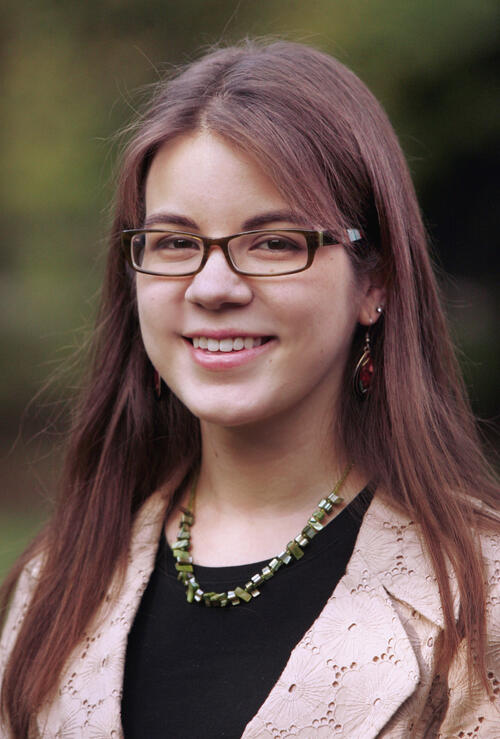
Lynn Eden has announced her retirement after 25 years as a senior research scholar at Stanford’s Center for International Security and Cooperation.

She has also been associate director for research since 2002, except for 2008-2009 when she was acting co-director—with co-director Sig Hecker on the science side.

“All the people who have been associated with CISAC for the last 25 years have benefited from her wise counsel,” said CISAC colleague Sig Hecker, research professor of Management Science and Engineering.

“She really has been the heart and soul of this place.”

Colleagues and former fellows said it would be hard to imagine CISAC without Eden.

“Most of us, even long-timers, have never known CISAC without her,” said CISAC co-director Amy Zegart.

“Lynn has been pivotal to both fostering and embodying the intellectual culture we know and love at CISAC: discussion that is rigorous and kind; candid and constructive; penetrating and interdisciplinary.”

Many said Eden’s most enduring legacy at CISAC would be her mentorship of young scholars during their formative years as CISAC fellows.

“She’s a wonderful mentor and a central figure in creating the intellectual community here at CISAC,” said David Holloway, Raymond A. Spruance Professor of International History.

Michael McFaul, director of the Freeman Spogli Institute for International Studies, said Eden had a tremendous impact on his development as a young academic.

"As a visiting fellow at CISAC very early in my academic career, I benefited tremendously from Lynn Eden's mentorship, intellect, and friendship," McFaul said.

"I am simply amazed at how many people enjoyed the same kind of mentorship with Lynn as I did as a young scholar. I thought I was special! It turned out that I was just one of dozens, if not hundreds, of Lynn's pupils."

Mariano-Florentino Cuéllar, former FSI and CISAC director and current California Supreme Court Associate Justice, said he had also benefited from Lynn's guidance over the years.

"Many dozens of scholars are who they are -- and have achieved as much has they have -- because of Lynn," said Cuellar.

"I am among them. I benefited from Lynn's contributions when I was a graduate student, a junior faculty member, a tenured professor, honors program director, CISAC co-director, and FSI's Director."

FSI/CISAC senior fellow Martha Crenshaw said no matter where she traveled in the world to speak at conferences on international security, she invariably encountered former fellows who recalled the positive influence Eden had on their experiences at CISAC.

“She’ll always be pretty much the first person they mention,” Crenshaw said.

“Her role as a mentor has been so important to the many people who come through this place.”

Crenshaw’s observation was echoed by Rod Ewing, Stanford professor in the School of Earth Sciences and the inaugural Stanton Professor in Nuclear Security Studies at CISAC.

“Before I arrived at Stanford, I already had heard of Lynn from past fellows,” Ewing said.

“All were deeply in debt to Lynn for her efforts to shape their thinking and their projects.  I have never seen any single person have such an impact on so many fellows.”

[[{"fid":"221270","view_mode":"crop_870xauto","fields":{"format":"crop_870xauto","field_file_image_description[und][0][value]":"","field_file_image_alt_text[und][0][value]":"","field_file_image_title_text[und][0][value]":"Lynn Eden talks about nuclear war and fire effects to students at Castilleja School in Palo Alto","field_credit[und][0][value]":"","field_caption[und][0][value]":"","field_related_image_aspect[und][0][value]":"","thumbnails":"crop_870xauto"},"type":"media","attributes":{"title":"Lynn Eden talks about nuclear war and fire effects to students at Castilleja School in Palo Alto","width":"870","style":"width: 450px; height: 299px; float: left; margin-right: 15px;","class":"media-element file-crop-870xauto"}}]]You only need to do a quick survey of the dissertations and books produced by CISAC fellows to understand the scope of Eden’s impact, according to Scott Sagan, Caroline S.G. Munro professor of political science.

“Lynn has been a mentor par excellence for dozens of CISAC fellows over the years,” Sagan said.

“Indeed, if there was an “Social Science Acknowledgement Citation Index” (like the well-known Social Science Citation Index), my guess is that Lynn Eden's count would be the highest in all of international security studies.”

And her mentorship wasn’t limited to the social sciences.

“Lynn has mentored a stunning breadth of scholars, including political scientists, sociologists, anthropologists, physicists, computer scientists, and biologists,” said former CISAC fellow Rebecca Slayton, who is now on the faculty at Cornell University.

Other former fellows said they deeply valued Eden’s thoughtful feedback on their academic work.

“Lynn read my work with great care, and offered commentary that was on point, useful, and kind,” said Kimberly Marten, professor of political science at Barnard College and a faculty member at Columbia University.

“She was also a real friend, who cared about me not only as a budding scholar but as a person. She remains a role-model for me of what mentorship is all about.”

Colleagues said they also admired Eden’s contributions to the field of nuclear scholarship.

Image
“Her own work, notably her award-winning book Whole World on Fire: Organizations, Knowledge and Nuclear Weapons Devastation, has made an original and important contribution to the study of nuclear weapons and nuclear policy through the lens of organizational theory,” Holloway said.

History professor Norman Naimark said he valued Eden’s “uncompromising intellectual honesty.”

“She wants to know; she wants to understand; she does not put up with artifice or entangled arguments; she tries as best she can to barrel in on the “truth,” whatever that might be,” Naimark said.

James E. Goodby first met Eden when they both served on the faculty at Carnegie Mellon University, before he moved to Stanford as an Annenberg distinguished visiting fellow at the Hoover Institution.

“She came as close to pure, unbiased intellect as anyone I have ever worked with,” Goodby said.“

CISAC co-director David Relman said Lynn had helped shape and guide the intellectual discourse at CISAC.

“I’ve deeply valued Lynn for the rigor of her thinking, her love of teaching and mentoring of trainees and students, and the smile she brings to everyone’s face during any conversation,” said David Relman, CISAC co-director.

Elizabeth Gardner, FSI associate director for partnerships and special projects, worked alongside Eden at CISAC for more than a decade.

She said Eden helped make CISAC a place people wanted to come back to.

“CISAC is legendary for its “boomerangs” – people who return to the Center after their initial stint because they liked it so much the first time around,” Gardner said.

“The reason many of those people return is Lynn. It's her warmth, willingness to help with the hardest problems and her laser-like intellect that kept people coming back.”

Eden said she would continue her academic writing after retiring from CISAC, on “how organizational processes have enabled U.S. policymakers and nuclear war planners to make real plans that if enacted would result in the very thing no one possibly wants—the end of the world.”

Eden will also attend a variety of CISAC seminars when she can, and particularly the social science seminar series David Holloway and she founded 20 years ago.

Eden’s retirement party is scheduled to be held in CISAC’s Central Conference Room from 12noon–1:30pm on Thursday, December 3.

Hero Image
14217557985 6349e77a26 o
Lynn Eden talks with alumni attendees of the International Studies Association conference at an event in San Francisco.
All News button
1
Authors
News Type
News
Date
Paragraphs

Former U.S. Secretary of Defense William J. Perry said he was concerned that the Islamic State in Iraq and Syria (ISIS) could buy, steal or build a nuclear weapon capable of killing a hundred thousand or more people in a single strike.

And, he said, stopping the flow of oil money to ISIS should be the main, short-term objective of the United States and its allies in the fight against the terrorist organization.

“They have demonstrated their objective is just killing as many Americans as they can, or Europeans as the case may be…and there is no better way of doing that than with nuclear weapons,” Perry said.

Image
Perry made his comments in front of a crowd gathered at Stanford University to celebrate the launch of his new memoir “My Journey at the Nuclear Brink.”

“If they can buy or steal a nuclear bomb, or if they could buy or steal fissile material, they could probably make a bomb – a crude improvised bomb,” he said.

Even a crude nuclear weapon could have an explosive power equivalent to around fifteen thousand tons of TNT – similar to the bomb that destroyed the Japanese city of Hiroshima near the end of World War II.

Perry said there was evidence that Al Qaeda had actively tried to get nuclear weapons, and he said it was likely that ISIS was also pursuing its own nuclear strategy.

“The big difference between ISIS and Al Qaeda in that respect is that ISIS has access to huge amounts of resources through the oil that they now control,” Perry said.

“I believe that our primary objective in dealing with ISIS should be to stop that flow of money, stop the trading they’re doing in oil which is giving them the resources.”

U.S. warplanes reportedly destroyed 116 trucks in Eastern Syria on Monday that American officials said were being used to smuggle crude oil.

U.S. fighter jets dropped leaflets before the attack, warning the drivers to abandon their vehicles, according to a report in The New York Times.

The Russian Air Force also claimed its planes had struck around 500 oil tankers that were carrying oil from Syria to Iraq for processing.

Perry said that combating ISIS over the long run was a “hugely difficult problem” for Western powers.

“To really stop ISIS completely it would be a long and brutal and ugly fighting on the ground, which I don’t believe we’re going to want to do again,” he said.

“What we can do however, a more limited objective is stopping the resources they’re getting, stopping their access to this oil money. And that limits quite a bit what they can do…That can be done I think in more of a targeted and effective way, and without having to put armies on the ground to do it.”

Hero Image
isis flag reuters rtr4fed5
Smoke rises behind the Islamic State flag after a battle with Iraqi security forces and Shiite militia in the city of Saadiya in November, 2014.
Reuters
All News button
1
Authors
News Type
News
Date
Paragraphs

The deadly terrorist attacks in Paris last Friday that killed 129 people and wounded around 350 more signaled a significant change in strategy for the Islamic State in Iraq and Syria (ISIS), the radical jihadist organization that has claimed responsibility.

“It underscores that this threat is real and that ISIS is not going to be content to consolidate its power in Iraq and Syria,” said Joe Felter, a former Colonel in the U.S. Army Special Forces and senior research scholar Stanford’s Center for International Security and Cooperation (CISAC).

“They have demonstrated their ability to project power into foreign countries and conduct what I would call an “asymmetric strategic bombing capacity” in the form of these home-grown Western citizens who are willing to strap on suicide vests and blow up targets in support of ISIS directed objectives.

“They’re able to launch attacks with centralized planning and decentralized execution in a way that makes anticipating and interdicting them very difficult.”


French President François Hollande said that the attacks were “planned in Syria, organized in Belgium, perpetrated on our soil with French complicity.”

CISAC senior fellow Martha Crenshaw said the Paris attacks represented “a shift in strategy” for ISIS with the group “taking a more Al Qaeda-like stance and striking Western countries.”

However, she emphasized that the carefully planned nature of the coordinated strikes, where multiple teams carried out simultaneous attacks in three locations across downtown Paris, indicated that this new strategy had been secretly underway for some time.

“These attacks were planned a long time ago,” said Crenshaw, whose Mapping Militants Project includes more information on groups like ISIS.

“You shouldn’t think they’re reacting to very recent circumstances…It’s not like we bombed them one day and the next day they planned these attacks.”

Apocalyptic visions

ISIS has long advocated a plan of provoking the West into a larger confrontation that would lead to an apocalyptic victory for Islam, according to Abbas Milani, director of Iranian studies at Stanford and an affiliate at the Center for Democracy Development and the Rule of Law.

“There’s a lot of method to this madness,” Milani said.

“If you read their literature, they have always talked about creating this sort of mayhem.”

ISIS’s propaganda magazine Dabiq, which is available online in Arabic and English, is named after a village in Syria with important symbolism for jihadists.

“They claim that the prophet has predicted that if you can get the West to come and fight the Muslims at Dabiq, then Islam will conquer the world,” Milani said.

Unlike France’s earlier battles against extremists in Algeria, it cannot rely on a proxy state to take the fight to the terrorists, according to Crenshaw.

“When terrorism in France has its origins in Algeria, France could rely on the Algerian state to crack down on these groups,” she said.

“Now you’ve got a situation where the planners are in a country where you don’t have a reliable state to go in and get them for you and wrap up their networks.”

With French warplanes already bombing targets in the Syrian city of Raqqa, Felter warned against the limits of air power in the fight against ISIS.

“There’s a risk that as we ramp up the bombing campaign and increase civilian casualties, this does play into the narrative of these extremists,” he said.

“It’s a very difficult targeting process. ISIS has occupied urban areas full of non-combatants and civilians…It’s the ultimate human shield.”

Felter acknowledged that increasing the number of US ground forces sent to interdict ISIS in Iraq and Syria may ultimately be necessary, but also that this increased presence, if not managed carefully, could backfire.

“At some level, they want to bring Western military forces to occupy these lands, because that will help turn popular opinion against the West and aid in their propaganda and recruitment,” he said.

The fight against ISIS is not limited to the territories it claims in the Middle East. It must be a global effort and include increased international cooperation and information sharing across intelligence, law enforcement and other agencies around the world, Felter said.

ISIS wants to drive a wedge between Europeans and the growing Muslim communities in their countries, so recruiting French citizens to participate in the Paris attacks served a dual purpose, Milani said.

“Using French citizens helps them with logistics, but it also helps them in terms of their strategy in that it makes it difficult for Muslims to live in a non-caliphate context,” he said.

Failed states problem

In the wake of the attacks, European nations are working to create legislation that would toughen criminal penalties for citizens who travel abroad to fight with designated terrorist organizations such as ISIS, or strip them of their citizenship, according to CISAC affiliate Anja Dalgaard-Nielsen, a former executive director of the Danish Security and Intelligence Service.

Individuals who are seen as inciting people to travel to Syria and Iraq to join the jihad could also face tougher sanctions, she said.

The emergence of ISIS and its nihilistic theology is a symptom of broader underlying problems in the Middle East, which is grappling with failed and failing states across North Africa and in Syria, Iraq, Afghanistan and Pakistan, according to Milani.

“ISIS is the most militant and brutal manifestation of something deeper that’s going wrong,” he said.

“I honestly have never seen the Middle East as perilously close to complete chaos as it is now… [and] I don’t think we’ve seen the worst of it yet.”

Resources & links

Get more background on the Islamic State and its leaders from Martha Crenshaw’s Mapping Militants Project

Is There a Sunni Solution to ISIS? – The Atlantic | By Lisa Blaydes & Martha Crenshaw

Airstrikes Can Only Do So Much to Combat ISIS – New York Times | By Joe Felter

The Super Smart Way to Dismantle ISIS – The National Interest | By Eli Berman, Joe Felter & Jacob Shapiro

The Rise of ISIS and the Changing Landscape of the Middle East – Commonwealth Club of California | Abbas Milani

Hero Image
french soldiers patrol eiffel tower reuters rts6zju
Police patrol near the Eiffel Tower the day after a series of deadly attacks in Paris.
Reuters
All News button
1
Authors
Beth Duff-Brown
News Type
Q&As
Date
Paragraphs

A new federal proposal would ban smoking in public housing homes — a move that could impact some 1.2 million households across the nation.

Cigarette smoking kills 480,000 Americans each year, making it the leading preventable cause of death in the United States, according to the Center for Disease Control and Prevention.

The Department of Housing and Urban Development announced last week that the proposal is intended to protect residents from secondhand smoke in their homes, common areas and administrative offices on public housing property.

“We have a responsibility to protect public housing residents from the harmful effects of secondhand smoke, especially the elderly and children who suffer from asthma and other respiratory diseases,” said HUD Secretary Julián Castro in a statement, adding the proposed rule would help public housing agencies save $153 million every year in health-care, repairs and preventable fires.

Stanford Law School professor Michelle Mello, who is also a professor of health research and policy and a core faculty member at Stanford Health Policy, has researched and written about this issue extensively, including in this article in The New England Journal of Medicine.

We asked Mello about her views on the federal smoking ban proposal.

What would be the greatest benefit to banning smoking in public housing?

There are lots of benefits, but to me the greatest benefit is to the 760,000 children living in public housing. Although everyone knows that secondhand smoke exposure is extremely toxic, not everyone knows how much children in multiunit housing are exposed — even when no one in their household smokes. Research shows that smoke travels along ducts, hallways, elevator shafts, and other passages, undercutting parents' efforts to maintain smoke-free homes. Also, chemicals from cigarette smoke linger in carpets and curtains, creating hazardous "third-hand smoke" exposure that especially affects babies and small children.

Do most public housing residents want a ban on smoking?

Yes. Exposure to cigarette smoke is a perennial complaint among public housing residents and surveys of residents show that strong majorities support smoke-free policies. They also show residents frequently report smoke incursions into their living spaces, and that these reports are much lower when multiunit housing buildings have 100 percent smoke-free policies than when they have only partial smoke-free policies or no policies. Secondhand smoke in public housing is also a problem because these residents have few housing choices; they generally can't "vote with their feet" by moving to a smoke-free environment.

Could this help tenants who don't have the political will, time, or financial ability, to sue landlords who ignore their claims of respiratory concerns?

Absolutely — not to mention that those lawsuits, even if they were brought, often would fail.  Generally, tenants' rights are whatever local housing codes and lease agreements say they are, and smoke-free buildings aren't typically part of that package. Smoke-free policies aren't a guarantee, of course, and there have been difficulties enforcing them among some of the local public housing authorities that have implemented them.  But when they're in place, housing authorities have more mechanisms and reason to ensure that residents are protected from smoke exposure than they do without the policies.

Many argue that what they do in their own home is their own business.

That argument fails as soon as a puff of smoke escapes their home and wafts into someone else's air supply.  It also fails whenever there's a dependent in the house, whether a child or an adult relative, who doesn't smoke. Let's not forget, nearly half of all public housing households include children. Finally, most smokers desire to quit. About 7 in 10 say they want to quit completely, and in one study, over 90 percent said they wished they had never started. When we're talking about an addiction, particularly one people generally want to kick, the trope of autonomy doesn't have a lot of traction.

There are those who will say this is another attack on low-income Americans — such as banning sugary drinks or limits to what people can buy with their food stamps — and that this smacks of government shaming the poor.

Although it's reasonable to question policies that disproportionately burden the poor, I don't think this is such a policy. The reason is that only a minority of public housing residents are smokers; most of these low-income residents are benefitted, not burdened, by smoke-free policies.  The majority are vulnerable people, including children and the elderly, who have a higher-than-average incidence of respiratory and other health problems — and who want to breathe clean air in and around their homes.

Could this proposal lead to fewer kids smoking that first cigarette?

Yes. Part of the "tobacco endgame" is to further denormalize smoking, to the point that the next generation of kids will not grow up seeing it as something adults do. This is a hard argument to make when a kid smells smoke every time he walks into the hallway of his building and sees groups of residents smoking on stoops. Smoking bans have really helped to marginalize smoking behavior in other settings, like airports, restaurants, hospitals and schools.  Multiunit housing is the next logical step.

Hero Image
smoking ban
All News button
1
News Type
News
Date
Paragraphs

California’s measles epidemic was no fluke; between 2007 and 2013 the percentage of kindergarteners using a “personal belief” exemption to enroll in school without vaccinations doubled.

In that year, 3 percent of kindergarteners entered school unvaccinated. In some schools, the percentage of vaccinated children was so low that it threatened herd immunity, or the ability for a population to keep a pathogen at bay, according to Stanford health-policy researcher Michelle Mello, PhD, JD.

To understand the rapid increase, Mello worked with a team led by Tony Yang, ScD, with George Mason University. Their research is published on Nov. 12 in the American Journal of Public Health.

They found the highest resistance to vaccinations among white, affluent communities. In contrast to previous studies, however, they did not find a correlation between higher levels of education and vaccine exemptions.

Read More


Hero Image
vaccine U.S. Army Corps of Engineers
All News button
1
-

The Russian System of personalized power has been demonstrating an amazing capacity for survival even in the midst of decay. It has defied many predictions and ruined many analytical narratives. Today the Russian authoritarian rule is trying to prolong its life by turning to repressions at home and by containing the West. Russia, kicking over the global chess board with the war in Ukraine, returns to the international scene as a revisionist and revanchist power. The Russian Matrix demise will be painful, and it already has brought about  Russia’s confrontation with the West.  The challenge posed by Russia’s decaying petro –nuclear state is huge, and it is sure to be one of the dominant problems of the twenty-first century.

RSVP

Lilia Shevtsova is a Non-Resident Fellow at the Brookings Institution (Washington), and an Associate Fellow at the Russia-Eurasia Program, Chatham House - The Royal Institute of International Affairs (London). She is the member of the boards of the Institute for Humanities (Vienna), the Finnish Centre for Excellence in Russian Studies (Helsinki), the Liberal Mission Foundation, and the New Eurasia Foundation (Moscow); a member of the International Forum for Democratic Studies’ Research Council(Washington); a member of the Editorial Boards of the journals: “American Interest,”“Journal of Democracy,” and “New Eastern Europe.“ Shevtsova was Senior Associate at the Carnegie Endowment for International Peace (Washington) and the Moscow Carnegie Center, founding chair of the Davos World Economic Forum Council on Russia’s Future, and a member of the Council on Terrorism. “Foreign Policy” magazine included Shevtsova in the list of 100 Global Public Intellectuals. She was a participant at the Bilderberg Club meetings; served as Chair of the Program on Eurasia and Eastern Europe, SSRC (Washington) and member of the Social Council for Central and Eastern European Studies. She contributes to global leading media, including: Foreign Policy, FT, Washington Post, Le Monde, Monde Diplomatique, Die Zeit, Fokus, El Pais, American Interest, Survival, Journal of Democracy, Diplomaatia. 

Shevtsova is author of twenty books, including Yeltsin’s Russia: Myths and Reality; Putin’s Russia; Russia –Lost in Transition: The Yeltsin and Putin Legacies; Lonely Power (Why Russia Has Failed to Become the West and Why the West Is Weary of Russia), Russia: Change or Decay (in co-authorship with Andrew Wood), Crisis: Russia and the West in the Time of Trouble.

 
Lectures
Authors
News Type
News
Date
Paragraphs

A Stanford-led team has discovered how to estimate crop yields with more accuracy than ever before with satellites that measure a special form of light emitted by plants. This breakthrough will help scientists study how crops respond to climate change. 


As Earth's population grows toward a projected 9 billion by 2050 and climate change puts growing pressure on the world's agriculture, researchers are turning to technology to help safeguard the global food supply.

A research team, led by Kaiyu Guan, a postdoctoral fellow in Earth system science at Stanford's School of Earth, Energy, & Environmental Sciences, has developed a method to estimate crop yields using satellites that can measure solar-induced fluorescence, a light emitted by growing plants. The team published its results in the journal Global Change Biology.


Scientists have used satellites to collect agricultural data since 1972, when the National Aeronautics and Space Administration (NASA) pioneered the practice of using the color – or "greenness" – of reflected sunlight to map plant cover over the entire globe.

"This was an amazing breakthrough that fundamentally changed the way we view our planet," said Joe Berry, professor of global ecology at the Carnegie Institution for Science and a co-author of the study. "However, these vegetation maps are not ideal predictors of crop productivity. What we need to know is growth rate rather than greenness.

The growth rate can tell researchers what size yield to expect from crops by the end of the growing season. The higher the growth rate of a soybean plant or stalk of corn, for instance, the greater the harvest from a mature plant.

"What we need to measure is flux – the carbon dioxide that is exchanged between plants and the atmosphere – to understand photosynthesis and plant growth," Guan said. "How do you use color to infer flux? That's a big gap."  
 

Solar-induced fluorescence

Recently, researchers at NASA and several European institutes discovered how to measure this flux, called solar-induced fluorescence, from satellites that were originally designed for measuring ozone and other gases in the atmosphere.

A plant uses most of the energy it absorbs from the sun to grow via photosynthesis, and dissipates unused energy as heat. It also passively releases between 1 and 2 percent of the original solar energy absorbed by the plant back into the atmosphere as fluorescent light. Guan's team worked out how to distinguish the tiny flow of specific fluorescence from the abundance of reflected sunlight that also arrives at the satellite.

"I think of it like crumbs falling to the ground as people are eating. It's a very small trail," said co-author David Lobell, associate professor of Earth system science at Stanford's School of Earth, Energy, & Environmental Science. "This glow that plants have seems to be very proportional to how fast they're growing. So the more they're growing, the more photosynthesis they're doing, and the brighter they're fluorescing." Lobell is also deputy director of the Center on Food Security and the Environment.

The research team saw an opportunity to use this new data to close the knowledge gap about crop growth, beginning with a major corn- and soybean-producing region of the U.S. Midwest.

"With the fluorescence breakthrough, we can start to directly measure photosynthesis instead of color," Guan said.

The fact that fluorescence can now be detected from space allows researchers to measure plant growth across much larger areas and over long periods of time, giving a much clearer picture of how yields fluctuate under changing weather conditions.

"One of the really cool things about fluorescence is that it opens up a whole new set of questions that we can ask about vegetation, and often times it's these new measurements that drive the science forward," Lobell said.  
 

Next steps

The research team has already identified a number of potential uses of this approach by agricultural scientists, farmers, crop insurance providers and government agencies concerned with agricultural productivity.

If there is a day when the plant is really stressed, the fluorescence will drop significantly, Lobell said. Capturing these short-term responses to environmental changes will help scientists understand what factors plants are responding to on the daily time scale.

"That helps us, for example, figure out what we need to worry about in terms of stresses that crops are responding to," Lobell said. "What should we really be focusing on in terms of the next generation of cropping systems? What should they be able to withstand that the current crops can't withstand?"

At this early stage, fluorescence measurements are relatively low-resolution (a single measurement covers about 50 square kilometers) and because it is only collected once per day, cloudy skies can interfere with the fluorescence signal. For now, researchers have to supplement the data with other information and with on-the-ground observations to refine the measurements.

"Now that we have demonstrated the concept, we hope to soon be orbiting some new satellites specifically designed to make fluorescence measurements with better spatial and temporal resolution," Berry said.

The team plans to continue its research on U.S. crop yields while expanding measurements to other parts of the world.

"In the future, we hope to directly use this technology to monitor global food production, for example in China or Brazil, or even in your backyard," Guan said.

David Lobell is also deputy director of the Center on Food Security and the Environment, and William Wrigley Senior Fellow at the Freeman Spogli Institute for International Studies and the Stanford Woods Institute for the Environment. The study was also co-authored by Youngguan Zhang of the International Institute for Earth System Sciences at Nanjing University and the German Research Center for Geosciences (GFZ); Joanna Joiner of the NASA Goddard Space Flight Center Laboratory for Atmospheric Chemistry and Dynamics; Luis Guanter of GFZ; and Grayson Badgley of Stanford's Department of Earth System Science and Department of Global Ecology at the Carnegie Institution for Science.


CONTACTS:   
 

p> Kaiyu Guan, Stanford School of Earth, Energy, & Environmental Sciences: kaiyug@stanford.edu


Laura Seaman, Stanford's Center on Food Security and the Environment: lseaman@stanford.edu, (650) 723-4920

Hero Image
adobestock 79432282
All News button
1
Authors
Charlotte J. Haug
News Type
Commentary
Date
Paragraphs

In August 2015, the publisher Springer retracted 64 articles from 10 different subscription journals “after editorial checks spotted fake email addresses, and subsequent internal investigations uncovered fabricated peer review reports,” according to a statement on their website. The retractions came only months after BioMed Central, an open-access publisher also owned by Springer, retracted 43 articles for the same reason.

Charlotte J. Haug, MD, PhD, a visiting scholar at Stanford Health Policy, writes in this New England Journal of Medicine perspective that the pressure to publish is huge for scientists, what with rewards such as promotions and financial incentives. This is leading to a growing number of cases of plagiarism and errors.

"The pressure to publish is huge for scientists everywhere, and the competition for space in the best journals harder than ever," she tells Stanford Health Policy. "One reason for this is the rapidly increasing amount of research and number of researchers coming from emerging economies like Brazil, India, Turkey and China — to mention a few. When the rewards for publishing is also very high (promotion, money), one might be more willing to take some short-cuts to get published." Haug, who was the editor-in-chief of The Journal of the Norwegian Medical Association and is a international correspondent for the New England Journal, said that as long as authors are rewarded for publishing many articles, and editors are rewarded for publishing them rapidly, new ways of gaming the traditional publication models will be invented more quickly than new control measures can be put in place. "Science is a collaborative endeavor," she said. "Not only in the sense that most scientific papers have a number of authors, but also in the sense that all science builds on previous science. One — or more — bad apple can have tremendously negative effects by leading other researchers in the wrong direction, wasting their time or directly harming for example patients that get the wrong treatment." You can read her full commentary here
Hero Image
nejm logo
All News button
1
Authors
Beth Duff-Brown
News Type
News
Date
Paragraphs

Jonathan H. Chen was an intern at Stanford Hospital a few years back, admitting patients with unusual medical syndromes or rare diseases.

He wasn’t always sure how to immediately treat these patients.

“I found myself clueless at times,” said Chen. “I thought to myself, I should review the chart of a similar patient who had an experienced clinician care for him so that I can learn from their care plan.”

That triggered Chen’s eureka moment. 

“Why look at just one person’s chart?” he thought. “Why not look at the last thousand charts to see how all doctors take care of their patients in similar cases?”

Doing so, he would have the potential to crowd-source the collective wisdom of physicians all in one central location.

Already having a PhD in computer science and spending a few years as a software developer before medical school, Chen — a wunderkind who started college when he was 13 — knew he had the rare set of skills to marry medicine and technology.

“I thought about how the Amazon product-recommender algorithm works and thought, `Can we do this for medical decision-making?’” said the 34-year-old Chen, a VA Medical Informatics Fellow at Stanford Health Policy.

So instead of, other people who bought this book also liked this book, how about: Other doctors who ordered this CT scan also ordered this medication.

“What if there was that kind of algorithm available to me at the point of care?” he asked. “It doesn’t tell me the right or wrong answer, but I bet this would be really informative and help me make better decisions for my patients.”

The National Institutes of Health agrees. Chen was recently awarded a five-year NIH grant as the principal investigator behind OrderRex, a digital platform that data-mines electronic medical records to learn clinical practice patterns and outcomes to inform concrete medical decisions.

Chen is designing and coding OrderRex with the help of his chief mentor, Russ Altman, a professor of bioengineering, genetics and medicine and director of Stanford’s Biomedical Informatics Training Program. Stanford Health Policy professors of medicine, Mary Goldstein and Steven Asch, round out his core team of grant mentors. Grant collaborators Nigam Shah, Lester Mackey, and Mike Baiocchi are providing additional critical expertise.

“I think OrderRex is a first step towards an entirely new way to provide decision support to physicians,” said Altman. “We will not only have a large database of patients from which we can collect similar patients to create virtual cohorts, but we will also have a database of the decisions that their physicians have made in different clinical situations.”

Altman added: “Each of these capabilities would be transformative — but together they would really change what is possible for a provider sitting with a patient, making decisions about diagnosis and therapy.”

The NIH’s Big Data-to-Knowledge grant will allow Chen to develop and test the platform. Stanford Medicine’s Center for Clinical Informatics provided Chen a year’s worth of Stanford Hospital records, including every medical order for every patient. The more medical data he loads, the more patterns begin to form.

Chen has been using a derivative of Amazon’s algorithm to make his platform scalable with millions of patient records. The broad vision is to eventually integrate this tool with hospital computer networks to assist physicians with their decisions.

“Imagine, technology allowing medical decisions to be informed by the collective experience of thousands of other physicians right at the point-of-care,” Chen said.

There are naysayers who worry such a product will further alienate physicians from their patients and allow doctors to jump to crowd-sourced conclusions about treatment. Chen emphasizes OrderRex would only serve as a tool, which does not substitute for human contact, calculations and conclusions.

“Tools like this are simply to augment the medical decision-making process and hopefully — and I know this is a big goal — improve the quality and efficiencies of health care.”

Altman says the lacking-human-touch argument is imprecise and potentially unethical.

“Of course, providers will always be real people and of course they should be empathetic, listen to the patient, examine the patient, and think about what’s best in the big picture,” he said. “But if there are technological tools that they can use to improve their decision-making, it is probably unethical to replace data-driven decision-making with `touch’ and ‘intuition’ — which often perpetuates the status quo and contributes to variability in practice and variability in outcomes.”

Stanford Medicine is already leading the revolution in precision health and big data to overcome human error and misdiagnosis.

In a 2014 Health Affairs article, Stanford pediatrician Christopher A. Longhurst along with Nigam Shah, MBBS, PhD, assistant professor of biomedical research and assistant director of the Stanford Center for Biomedical Informatics Research, and Robert Harrington, MD, professor and chair of medicine, outlined a vision for drawing medical guidance from day-to-day medical practice in hospitals and doctors’ offices. They called it the Green Button.

The idea is to give doctors access —a green button — to patient data from a vast collection of electronic medical records. They wrote that the instant access to EMRs isn’t a substitute for a clinical trials, but better than resorting to the physician’s own bias-prone memory of one or two previous encounters with similar patients.

Chen is working with those professors, but notes the Green Button concept is to look for “patients like mine” and ask questions about different treatment options that may yield different results. His approach looks for “doctors like me,” and anticipates what the doctor wants before they ask for it.

“The conceit of my approach is that all practicing doctors are already trying to make our best-guess decision to improve our patients' outcomes,” he said. “Rather than trying to directly predict how to change a patient outcome, I look to the records of physician decision-making that already represent a wealth of expertise we are not leveraging in a systematic way.”

Could that wealth of expertise one day make Chen a wealthy man, perhaps the Jeff Bezos of the medical informatics world?

“I wouldn’t complain if I was,” Chen said with a grin. “But if I just wanted to make money, I wouldn’t have gone to medical school,” He gave up a lucrative living as a software developer.

He does recognize, however, that for OrderRex to have a big impact, commercial applications such as licensing the product as an add-on to EMR systems are likely.

“So, having a broad impact that will serve the mission of improving quality and efficiency — that is the ultimate goal.”

Hero Image
chen va
Jonathan H. Chen, a VA Medical Informatics Fellow at Stanford Health Policy, works on his digital records platform, OrderRex, during a break in rounds at the VA Hospital in Palo Alto.
Joseph Matthews/VA Palo Alto
All News button
1
-

ABSTRACT

A common assumption in political economy is that voters are self-regarding maximizers of material goods, choosing their preferred level of social spending accordingly. In contrast, students of American politics have emphasized the key role of an other-regarding motive that makes support for social transfers conditional on the perceived deservingness of recipients. The two motives often conflict as large portions of the poor (rich) find recipients undeserving (deserving). I argue that material self-interest overruns perceptions of deservingness when the share of income affected by social transfers is high. Using European data, I show that low (high) income individuals are less (more) likely to be driven by considerations of deservingness. Cross-nationally, the more working-age benefits are evenly spread across income groups, the less deservingness considerations  permeate public debates on welfare state reform.  This framework has important implications for understanding attitudinal change in two high inequality countries, the United States and Great Britain.


SPEAKER BIO

Image
cavaille
Charlotte Cavaille is a research fellow at the Institute of Advanced Studies in Toulouse. She received a PhD in Government and Social Policy from Harvard University in November 2014. Her work examines changes in mass attitudes toward redistributive policies in advanced capitalist countries. Her dissertation focuses on the disconnect between rising income inequality and stable levels of support for income redistribution in Great Britain and the United States. Some of her findings have been published in the Journal of Politics.

Deservingness, Self-interest and the Welfare State
Download pdf
Charlotte Cavaille Research Fellow, Institute of Advanced Studies in Toulous Research Fellow, Institute of Advanced Studies in Toulous
Seminars
Subscribe to The Americas