In an interview with PBS NewsHour on September 3, Kenji Kushida speaks about the Japanese government's latest efforts to contain the leaking of radioactive water from Fukushima and the possible political fallout for Japan's ruling party.
Encina Hall
616 Serra Street
Stanford, CA 94305-6055
0
amlee@stanford.edu
CDDRL Postdoctoral Fellow, 2013-14
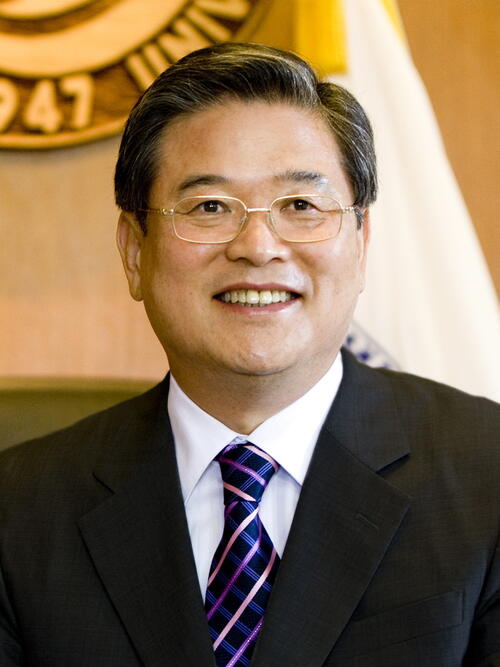
Lee_HS.jpg
Alexander Lee's research focuses on the historical factors governing the success or failure of political institutions, particularly in South Asia and other areas of the developing world. His dissertation examined the ways in which colonialism changed the distribution of wealth in Indian society, and the ways in which these changes affected the development of caste identities. Additional research areas include the study of colonialism and European expansion in a cross- national perspective, and the causes of political violence, especially terrorism. His work has been published in World Politics and the Quarterly Journal of Political Science. Alex earned his PhD from Stanford in 2013. More information on his work can be found on his website: https://people.stanford.edu/amlee/
A tremendous amount of radioactive products were discharged as a result of the accident at the Fukushima nuclear power plant in March 2011, which resulted in radioactive contamination of the plant and surrounding areas. While geographical distribution of radioactive iodine, tellurium, and cesium in the surface soils was smoothly (but not always systematically) widespread all over the region, health risk information by the government, media, and other organizations is most likely to be given in terms of administrative boundaries (cf. prefectures, municipalities, etc.) and/or distance from the radiation source.
This paper estimates the effect of such health risk information rather than the actual health risks of radiation on land and other prices in different locations. We find that the prefecture and municipality border effects – but not the distance effect from the nuclear power plant – are significantly related to a reduction in land and other prices after the accident. This shows that people responded to health risk information based on administrative boundaries rather than the actual health risk of radiation after the disaster. Although health risk information based on prefecture and municipality boundaries has an obvious advantage of distilling large and complex risk information into a simple one, the government, media, and other organizations need to recognize and carefully examine the potential of misclassifying non-contaminated areas into contaminated prefectures. Doing so will avoid unintentional consequences to the region’s economy.
Hiroaki Matsuura is currently Departmental Lecturer in the Economy of Japan in the School of Interdisciplinary Area Studies, University of Oxford and a Junior Research Fellow of St. Antony’s College. His main interests are health economics and demography, with a special interest in the relation between laws and population health. Hiroaki received his B.A. in Economics from Keio University, M.A. in Social Science from the University of Chicago, M.S. in Project Management from Northwestern University’s McCormick School of Engineering and Applied Science, and Sc.D. in Global Health and Population (Economics track) from Harvard University’s School of Public Health. In the past, he was affiliated with Institute of Quantitative Social Sciences, Human Rights in Development, and Takemi Program in International Health at Harvard University. He also worked as a research assistant at the National Bureau of Economic Research. His doctoral dissertation research explores a right to health or to health care in national constitutions of 157 countries and state constitutions of the 50 U.S. states and estimates the impact of introducing (or removing) a right to health or to health care into national and state constitutions on health system and population health outcomes. His most recent article, “The Right to Health in Japan: Challenges of a Super Aging Society and Implication from Its 2011 Public Health Emergency” (with Eriko Sase) will be appeared on “Advancing the Human Right to Health”, edited by José M. Zuniga, Stephen P. Marks, and Lawrence O. Gostin, Oxford University Press, 2013.
Daniel and Nancy Okimoto Conference Room
Hiroaki Matsuura
Departmental Lecturer in the Economy of Japan in the School of Interdisciplinary Area Studies
Speaker
University of Oxford
What if scientists engineer a virus that could help doctors design vaccines to prevent a global pandemic – but a blueprint of that very virus gets into the hands of terrorists who use it to build a biological weapon?
Should – and can – governments step in to mandate controls on such bioengineering? Or is it more effective to rely on the private sector to police itself and develop potentially life-saving biotechnologies without the shackles and bureaucracy of big government?
It’s a classic dual-use dilemma.
These are among the public policy questions Megan Palmer will tackle as an incoming More information on the Perry Fellowship. She intends to research the complex governance challenges accompanying increased access to biotechnology and how countries are directing their innovation and security strategies to favor centralized or distributed control of access to information and materials.
“Developments in biotechnology have been heralded as fueling an industrial revolution in the life sciences with significant economic potential,” said Palmer, who received her PhD in bioengineering from MIT. “Yet biotechnology can both pose and mitigate key security concerns, such as bioweapons development vs. deterrence and preparedness.”
Eikenberry is a retired U.S. Army lieutenant general and the U.S. ambassador to Afghanistan who led the civilian surge directed by President Obama from 2009 to 2011. Roberts, until recently, was the deputy assistant secretary of defense for nuclear and missile defense policy in the Office of the Secretary of Defense.
“Karl, Megan and Brad are an exceptional trio, with expertise ranging from counterinsurgency to nuclear weapons to biosecurity,” said Amy Zegart, co-director of the Center for International Security and Cooperation. “We are delighted that they will be joining the CISAC community and enhancing our efforts to tackle the world's most important security challenges."
Policy Scholars
Perry fellows reside at CISAC for a year of policy-relevant research on international security issues. They join other distinguished scientists, social scientists and engineers who collaborate on security problems that cannot be solved within any single field of study. The fellowship was established to honor Perry, the 19th U.S. secretary of defense and former CISAC co-director, and to recognize his leadership in the cause of peace.
Eikenberry will focus on foreign interventions and counterinsurgency doctrine, as well as U.S.-Asia Pacific strategy and the rise of China and the future of NATO. He will also write and talk about the state of the humanities and social sciences in the United States.
Eikenberry, who has master’s degrees from Harvard in East Asian Studies and Stanford in political science, has become a vocal advocate for the humanities, which are on the wane as students turn toward computer science, technology and engineering. A graduate of the U.S. Military Academy, he also earned an interpreter’s certificate in Mandarin Chinese from the British Foreign Commonwealth Office and has an advanced degree in Chinese history from Nanjing University in China.
Karl Eikenberry
Eikenberry wants students to know that his humanities and social sciences education underpinned a long and meaningful career as an Army officer, diplomat and scholar.
“The humanities and social sciences help us understand the complex historical, geographic, economic, social, cultural and political roots of conflict, and they enable us to better consider the consequences of our policy decisions,” he said.
Roberts intends to explore the question of how to balance efforts to sustain an effective deterrent for the 21st century with efforts to eliminate nuclear weapons altogether.
“Each U.S. president since the end of the Cold War has emphasized the importance of adapting the U.S. nuclear deterrent away from Cold War requirements and toward the future,” Roberts said. “But what does that mean in practice?”
Perry was a tenacious Cold War proponent of nuclear weapons as deterrence. Today, he is a supporter of Global Zero – the movement for a world without nuclear weapons. But how to get there has been a point of contention fueling CISAC research for years.
“How do we balance the effort to sustain an effective deterrent for 21st century purposes with the effort to reduce the number and role of nuclear weapons, while encouraging others to join us in taking steps toward the elimination of nuclear weapons?” Roberts said.
Roberts, who first worked with Perry in 2008 when the former secretary of defense chaired the Congressional Commission on the Strategic Posture of the United States, said the fellowship would provide him the opportunity to develop his thinking on the issue of nuclear strategy and write a “short book for a broad audience.”
Palmer, who was previously a CISAC affiliate while doing postdoctoral studies in the Department of Bioengineering at Stanford, will assess how public sector investments and government regulations related to genetic engineering are legitimized in terms of their prospective economic benefits and national security tradeoffs.
“It’s the intersection of biology and technology and how one navigates public policy,” she said. “How do you think about the changing landscape of power and politics as it becomes increasingly easier to engineer biology? It poses all sorts of complex governance challenges.”
Teachers and Mentors
CISAC’s mission is also to teach and mentor the next generation of security scholars and the three fellows meet that mandate.
Eikenberry will co-lead CISAC’s annual undergraduate honors college in Washington, D.C., in which a dozen seniors meet with politicians, journalists, military analysts, lobbyists and experts from the leading private and government agencies in the nation’s capital. The former general will continue as a pre-major advisor for six undergraduates.
Brad Roberts
Roberts is also looking forward to getting back to an academic environment.
“The fellowship also enables me to return to a significant mentoring role with students, for which there was very little time in government,” he said.
Before joining the government in 2009, Roberts worked full-time at the Institute for Defense Analyses in Alexandria, Va., and served for 15 years as an adjunct professor in the graduate school of international studies at George Washington University. He has also mentored young analysts in the United States and abroad under the auspices of the Project on Nuclear Issues at the Center for Strategic and International Studies.
“In the nuclear policy community, I am part of a bridging generation – not a founding cold warrior but also not of the generation that has no memory of the Cold War – and I am enthusiastic for the opportunity to work with younger scholars to build expertise needed for the future,” Roberts said
Palmer directs policy-related activities at Synberc site, a synthetic biology research consortium of UC Berkeley, UC San Francisco, Stanford, Harvard and MIT. She is also a judge for the International Genetically Engineered Machine (iGEM) competition, where 200 undergraduate teams from around the world design and build living organisms over the course of a summer.
“Because biology is by nature globally distributed, it is critical to train the generation of practitioners to work together to develop best practices that can be diffused across organizations – and borders,” she said.
The Walter H. Shorenstein Asia-Pacific Research Center at Stanford University is pleased to announce its search for two 2014–15 Shorenstein Postdoctoral Fellows in Contemporary Asia-Pacific Studies. Awards will be made to two junior scholars (recent PhDs must have degree conferral by August 31, 2014) for research and writing on Asia.
The primary focus of the fellowship is on contemporary political, economic, or social change in the Asia-Pacific region or on topics in international relations and international political economy. Fellows must be in residence for the duration of the appointment, take part in center activities throughout the academic year, and present their research findings in center seminars. Full details and application details are available at the fellowship page.
Dr. Brad Roberts is director of Lawrence Livermore National Laboratory’s Center for Global Security Research. Previously he served as Deputy Assistant Secretary of Defense for Nuclear and Missile Defense Policy (2009-2013). In this role, he served as Policy Director of the Obama administration’s Nuclear Posture Review and Ballistic Missile Defense Review and had lead responsibility for their implementation. From 1995 to 2009, Dr. Roberts was a member of the research staff at the Institute for Defense Analyses in Alexandria, Virginia and an Adjunct Professor at George Washington University. His book, The Case for U.S. Nuclear Weapons in the 21st Century (Stanford University Press) was recently recognized by the American Library Association as one of the outstanding academic titles of 2016. A member of the Council on Foreign Relations, Roberts has a bachelor’s degree in international relations from Stanford University, a MA. from the London School of Economics and Political Science, and a PhD in international relations from Erasmus University.
From August 18-22, the Japan Studies Program welcomed scholars of political science and economics to the Oksenberg conference room in Encina Hall for the first annual Stanford Summer Juku on the Japanese Political Economy.
The main goal of the program is to attract young researchers who will go on to become leaders in the study of Japanese politics and Japanese economy in the near future. The Summer Juku is distinctive by allowing ample time for informal discussions and interactions beyond the standard presentations and discussions. Juku is a word most commonly associated with the modern Japanese cram schools, but here it actually refers to the private schools at the end of the Edo period, which attracted young, motivated students and ended up producing numerous leaders of the Meiji Restoration.
Image
The first two days focused on political science, while the second two days were on economics.
In the first session, Yusaku Horiuchi from Dartmouth College presented a coauthored paper analyzing the role of the U.S.-Japan security alliance on Japan’s postwar economic growth. They employed a novel statistical method relatively new to political science called the synthetic control method to contend that the acceleration of Japan’s economic growth from 1958 coincided with the consolidation of the alliance. Discussants were Amy Catalinac (Australian National University) and William Grimes (Boston University).
In the second session, Shorenstein APARC fellow and political science faculty Phillip Lipscy presented part of his book project on the question of what explains cross-national variation in energy policy. He contended that electoral incentives best explained variation in energy efficiency policies. Using a new dataset of transportation trends in OECD countries and an in-depth examination of the impact of Japan’s 1994 electoral reform, he finds that energy efficiency-enhancing policies are more feasible in non-majoritarian systems, which allow the imposition of high, diffuse costs on the general public. Discussants were Gregory Noble (University of Tokyo) and Yusaku Horiuchi (Dartmouth College).
In the final session on the first day, Amy Catalinac presented her paper that poses the question of what led to the dramatic rise in conservative Japanese politicians’ attention to national security since 1997. She argued that electoral reform in 1994 led to new incentives for conservative politicians to focus on national security. Her analysis involved applying a statistical model called latent Dirichlet allocation to over 7000 election manifestoes over 8 House of Representatives elections. Discussants were Saori Katada (University of Southern California) and Christina Davis (Princeton University).
Image
Kenji Kushida, research associate at Shorenstein APARC, started off the second day by presenting the main argument of his book project on understanding why Silicon Valley companies have continually disrupted the global information and communications technology (ICT) industry. Analyzing the case of Japan’s ICT sector in comparative international context, he showed that national political settlements at initial stages of liberalization shaped industry structures, which in turn shaped global markets characterized by rapid commoditization. Discussants were Gregory Noble (University of Tokyo) and Ulrike Schaede (University of California, San Diego).
The second presenter was Kay Shimizu from Columbia University, who presented her book project analyzing distributive politics under conditions of fiscal austerity. Focused on the question of what happens to personalistic politics when resources run low, she argued that budget-constrained politicians work to find new resources locally and to secure votes by creating more personal linkages to voters. Her study is based on an analysis of Japan between 1991 and 2011, showing how subnational politicians sought to influence lending practices of private regional banks through publicly funded credit guarantees. Discussants were Steven Vogel (UC Berkeley) and Jonathan Rodden (Stanford University).
The third presenter, Saadia Pekkanen (University of Washington), presented the introduction of her edited volume explaining the construction of external institutions by Asian states. She explained how the project was motivated by the desire to better understand how and why Asian states might shape the contemporary world order, and what kinds of institutionalized rules and structures they might bring into play, along with the consequences for global patterns of governance. She presented a typology of external institutional designs based on formal/informal underlying organizational structures, and hard/soft underlying legal rules, based on a new database of over 6000 international institutions covering Asia’s economic, security, and transnational human security institutions. Discussants were William Grimes (Boston University) and Christina Davis (Princeton University).
Following the second day, a conference dinner was joined by both political science and economics segment participants.
Image
The third day began the economics-focused segment of the Summer Juku, beginning with Ulrike Schaede (UC San Diego) presenting a co-authored paper with Tatsuo Ushijima (Aoyama Gakuin University) analyzing the economic role and valuation effects of subsidiary M&A in Japan between 1996 and 2010. They conducted an event study, pairing and analyzing both sides to the deal, finding that abnormal returns to buyers and sellers both increase with deal size. They find that Japanese firms selling core business subsidiaries lead to negative returns, accentuated in larger deals. They interpret that this penalty was either an uncertainty discount or a signaling effect that the firm was in distress. Discussants were Robert Eberhart (Santa Clara University) and Ayako Yasuda (University of California, Davis).
The second presentation by Hitoshi Shigeoka examined the effects of school entry cut-off ages for children on the timing of births. Given the tradeoff for parents to time births just before and after cutoff dates, his analysis of births from 1974-2010 in Japan led to his finding that more than 1800 births per year were shifted roughly a week before the cut-off date to the week following the cut-off date. He went on to analyze the heterogeneity in responses among mothers along dimensions including work, baby gender, income and skill levels. Discussants were Karen Eggleston (Stanford FSI) and Toshiaki Iizuka (University of Tokyo).
In the third session, Thomas Cargill (University of Nevada) presented a paper co-authored with Jennifer Holt Dwyer (City University of New York) examining the concept of central bank independence and the case of Japan. Their core contention was that the postwar evolution of Bank of Japan policy reveals that de facto central bank independence was neither necessary nor sufficient for price stability. They argue that the causal association between central bank independence and price stability is a myth, with the broader implication that less time should be spent measuring central bank independence in correlation with inflation measures, with efforts instead focused on understanding the political and economic conditions under which central banks are most likely to contribute to price stability and how to design operating frameworks that facilitate this. Discussants were Helen Popper (Santa Clara University) and Ken Kuttner (Williams College)
The fourth day opened with Koichiro Ito (Boston College) presenting his paper co-authored with Takanori Ida (Kyoto University) and Makoto Tanaka (GRIPS) that investigates how consumer responds to marginal prices of dynamic electricity pricing. Their randomized field experiments yield various findings including consumers’ reduction of consumption facing hourly marginal price changes, the effectiveness of dynamic pricing with certain parameters over conservation warnings, and differences across factors such as income levels and the level of electricity usage. Discussants were Aoki Masahiko (Stanford Shorenstein APARC) and Matthew Kahn (University of California, Los Angeles).
Image
The second presentation was by Satoshi Koibuchi (Chuo University) of a paper co-authored with Takatoshi Ito (RIETI), Kiyotaka Sato (Yokohama National University), and Junko Shimizu (Gakushuin University). The paper examined the choice of invoicing currency for Japanese export firms based on an extensive questionnaire. Key findings included variation of yen-invoicing according to arms-length versus intra-firm trade, size and trade type, and the extent of currency hedging that the firm engages in. Discussants were Katheryn Russ (University of California, Davis) and Mark Spiegel (Federal Reserve Bank of San Francisco).
The final presentation was by David Vera (California State University, Fresno) of a paper co-authored with Kazuki Onji (Australian National University) and Takeshi Osada (Bunri University of Hospitality), which examines how capital injections into Japanese banks triggered labor force rejuvenations at those banks. Using a difference-in-difference analysis of a panel of Japanese banks from 1990-2010, they find that for banks receiving public capital injections, the average age of employees got younger. They also find that the number of employees of those banks was reduced on a stand-alone basis, but on a consolidated basis including subsidiaries, the number of employees was not reduced. Their findings suggest that lifetime employment survived, though in a limited form, among restructured banks. Discussants were Masami Imai (Wesleyan University) and Kelly Wang (Federal Reserve Board).
Each day, the sessions finished shortly after two o’clock, leaving ample time for informal discussion and networking. Summer Juku participants could be found around Encina Hall and other parts of campus working on collaborative projects, exchanging information, and discussing ideas for future collaboration. We look forward to future collaborations hatched at this event, and are committed to further developing this Stanford Summer Juku as an ongoing activity at the Shorenstein APARC Japan Studies Program.
JSP director Takeo Hoshi's coauthored article, "Japanese government debt and sustainability of fiscal policy," is the most downloaded article from the Journal of the Japanese and International Economies. In the article, Hoshi and his coauthors construct quarterly series of the revenues, expenditures, and debt outstanding for Japan from 1980 to 2010, and analyze the sustainability of the fiscal policy.
Ling Cao completed her Ph.D. in Natural Resources and Environment at the University of Michigan, Ann Arbor. Trained as an agronomist and environmental scientist, she has focused on interdisciplinary research at the interface between the sustainability of food and natural systems. Her dissertation research quantitatively assessed the sustainability of emerging shrimp farming systems and technologies, and in particular focused on applying these results to producers and consumers in China and US. In early 2018, Cao was selected as a recipient of the “National Thousand Talents Program for Distinguished Young Scholars,” an initiative of the Chinese government to attract high-level talent from overseas to work full-time in China. In addition, she was also selected as a fellow of the “Shanghai Thousand Talents Program” which aims to recruit top-talent who are leaders in their fields to help enhance Shanghai's future development and sustainable competitiveness. Cao currently works as an associate professor in the Institute of Oceanographyat Shanghai Jiao Tung University and continues to work with Roz Naylor and colleagues on fisheries and aquaculture research.
The Obama administration says there is no doubt that Syrian President Bashar al-Assad was responsible for a recent chemical weapons attack near Damascus, which Syrian opposition forces and human rights groups allege killed hundreds of civilians.
Secretary of State John Kerry called the attack a “moral obscenity” and the White House has vowed to respond – though the question of how is still under debate.
The Syrian government denies using nerve agents on its own people and has allowed U.N. weapons inspectors into the country to investigate.
As the U.S. weighs its options and rallies its allies for a possible military strike, Stanford scholars examine the intelligence and discuss the implications of military action against Syria. Those scholars are:
Martha Crenshaw, one of the nation’s leading experts on terrorist organizations and a senior fellow at the Center for International Security and Cooperation and the Freeman Spogli Institute for International Studies
Thomas Fingar, former chairman of the National Intelligence Council and currently the Oksenberg-Rohlen distinguished fellow at FSI
Thomas Henriksen, a senior fellow at the Hoover Institution specializing in U.S. foreign policy and author of the book, “America and the Rogue States”
Anja Manuel a CISAC affiliate, co-founder and principal at RiceHadleyGates LLC, a strategic consulting firm, and lecturer in Stanford's International Policy Studies
Allen S. Weiner, a CISAC affiliated faculty member and co-director of the Stanford Program in International Law at the Stanford Law School
Amy Zegart, an intelligence specialist who is the CISAC co-director and a senior fellow at the Hoover Institution
Does a military strike on Damascus risk further inflaming terrorists operating in Syria who hate the United States?
Crenshaw: I doubt that an American military response to the Assad regime's use of chemical weapons will make al-Qaida and affiliates hate us any more than they already do. The effect on wider public opinion in the Arab and Muslim worlds is what we should be thinking about. As the U.N. noted in a recent report, al-Qaida has a strong presence in Syria and is attracting outside recruits. The Al Nusrah Front in Syria is affiliated with the Iraqi al-Qaida branch. And Hezbollah's involvement has only intensified sectarian violence.
The three-year civil war has claimed some 100,000 lives and forced an estimated 1.9 million Syrians to flee their country, according to the U.N. Why is it taking President Obama so long to take a more assertive policy in Syria?
Manuel: There are no great policy options in Syria. The administration said several times that “stability” in Syria — even if that means a continuing, limited civil war — is more important than a decisive victory over President Bashar al-Assad. The administration also believes that U.S. military intervention short of using ground troops is unlikely to lead to the creation of a new post-Assad regime that will be friendly to the United States. Finally, the Obama administration is understandably hesitant to side with the rebel groups, which — in part due to U.S. unwillingness to actively assist moderate Syrian elements for the past two years — have become increasingly radicalized. Al Qaida-allied extremists now make up a growing segment of the rebel movement and some groups are reportedly creating “safe havens” within Syria and Iraq.
Listen to Manuel on public radio KQED Forum about whether U.S. should intervene.
CISAC's Anja Manuel talks to Al Jazeera America about Syria:
Have past U.S. intelligence failures made Obama skittish about taking a tougher stance against Syria?
Zegart: Iraq's shadow looms large over Syria. The intelligence community got the crucial WMD estimate wrong before the Iraq war and they absolutely don't want to get it wrong now. People often don't realize just how rare it is to find a smoking gun in intelligence. Information is almost always incomplete, contradictory and murky. Intentions – among governments, rebel groups, individuals – are often not known to the participants themselves and everyone is trying to deceive someone.
What is the intelligence gathering that goes into making the determination that nerve agents were used?
Fingar: The first challenge for the U.S. government is to determine whether and what kind of chemical agents were used. Chain-of-custody issues must be addressed to ensure that samples obtained are what they are claimed to be, and once samples have been obtained, what they are can be established with reasonably high confidence using standard laboratory and pathology techniques.
If it is determined that specific chemical agents were used in a specific place and time, then the next step is to determine who used the agents. Analysts would then search previously collected information to discover what is known about the agents in question, which groups were operating in the area, and whether we might have information germane to the specific incident. Policymakers must be informed about any analytical disagreements if they’re to make informed decisions about what to do in response to the incident.
Pressure on decision-makers to “do something” about Syria may influence their decisions, but it should not influence the judgments of intelligence analysts. If they are suspected of cherry-picking the facts and skewing judgments to fit pre-determined outcomes – they are worse than useless.
How do we know the Syrian opposition did not use nerve gas in an effort to provoke military intervention and aid their efforts to topple Assad?
Henriksen: Tracing the precise origin of gas weapons is not an exact forensic science. It is conceivable that a rebel group staged a "black flag" operation of releasing a deadly gas to provoke a U.S. attack on the Assad regime. But in this case, both Israeli and Jordanian intelligence reports appear to confirm U.S. identification of Assad as the perpetrator of the chemical attacks.
If it's confirmed that Syria did use chemical weapons against it own people, is this a violation of the Geneva or Chemical Weapons Conventions?
Weiner: A chemical weapons attack of the kind that's been described in the media certainly violates the laws of war. Syria, as it happens, is one of only a few countries in the world that is not a party to the Chemical Weapons Convention. Nevertheless, the prohibition on the use of chemical weapons in warfare is a longstanding rule. It is reflected in both the 1907 Hague Convention regulating the conduct of war and the 1925 Protocol for the Prohibition of the Use in War of Asphyxiating, Poisonous or Other Gases, and of Bacteriological Methods of Warfare. (Syria is a party to the 1925 Convention.) The use of a weapon like this also violates the prohibition in the 1977 Geneva Protocols and customary international law on indiscriminate attacks that are incapable of distinguishing between permissible military targets, on the one hand, and the prohibited targeting of civilians and civilian objects, on the other.
If Damascus has violated the conventions, are there non-military actions that can be taken?
Weiner: The illegal use of chemical weapons is a violation of a jus cogens norm, i.e., a duty owed to all states, which means states would have the right to respond to the breach. Such an attack would presumably be a basis for the unilateral imposition of sanctions or severance of relations with Syria. There's an open question under international law whether states not directly injured by Syria's actions could take "countermeasures" that would otherwise be illegal as a way of responding to Syria's illegal action. Under a traditional reading of international law, a violation like this does not give rise to the right by other states to use force against Syria absent an authorization under Chapter VII of the U.N. Charter by the Security Council.
Are there legal means for Washington to bypass the Security Council, knowing that Russia and China would veto any call to action against Syria?
Weiner: Under the U.N. Charter, a state may use force against another state without Security Council authorization only if it is the victim of an armed attack. Most commentators believe this has been expanded to include the right to use force against an imminent threat of attack. But under the prevailing reading of the U.N. Charter, a mere "threat" to U.S. national security would not provide a justification for the use of force.
But the Obama administration is arguing that Assad's actions pose a direct threat to U.S. national security?
Weiner: Some international lawyers – but not very many – argue that there is a right of humanitarian intervention under international law that would permit states to use force even without Security Council approval to stop widespread atrocities against its own population. But this remains a contested position, and most states, including the United States, have not to date embraced a legal right of humanitarian intervention.
What are some recent precedents in which the U.S. intervened militarily?
Weiner: The situation in Syria is not unlike the one faced in Kosovo in 1999, when a U.S.-led coalition did use force to stop atrocities that the Milosevic regime was committing against Kosovar Albanians. As part of its justification for the use of force, the United States cited the ongoing humanitarian crisis and the growing security threat to the region. What's interesting is that the U.S. was careful to characterize its use of force in Kosovo as "legitimate," rather than "legal." I am among those observers who think that choice of words was intentional, and that the U.S. during the Kosovo campaign advanced a moral and political justification for a use of force that it recognized was technically unlawful.
How does one know when diplomacy has reached a dead-end and military intervention remains the only course of action?
Henriksen: It has become nearly reflexive in U.S. diplomacy that force is the last resort after painstaking applications of diplomacy. The Obama administration followed that arc dutifully with appeals and hoped that U.N. envoys could persuade Assad to step aside. In retrospect, it seems that U.S. intervention soon after the outbreak of widespread violence in the spring of 2011 would have been a better course of action. Now, Russia, China and Iran have entrenched their support of Damascus. And, importantly, Hezbollah has joined the fight.
Now, with Washington's "red line" crossed by Syria's use of chemical arms, America almost has to strike or lose all credibility in the Middle East and beyond.
Should we be concerned about getting pulled into another long and costly war? Or is there a way to get in, make our point, and get out?
Henriksen: The worry about stepping on a slippery slope into another war in the Middle East is of genuine concern. Obama's intervention into Libya in early 2011 does provide a model for the use of limited American power. President Bill Clinton's handling of the 77-day air campaign during the Kosovo crisis in early 1999 provides an example of limited interventions. Both these interventions can be analyzed for their pluses and minuses to aid the White House in striking a balance. But no two conflicts are ever exactly the same.
What is the endgame here?
Henriksen: American interest in the Syrian imbroglio are to check Iran, the most threatening power in the Middle East, and to curtail the conditions lending themselves to spawning further jihadists who will prey on Americans and their allies. At this juncture, it appears that the fragmentation of Syria will become permanent. It's fracturing like that of Yugoslavia in the 1990s and will result in several small states. One or more of these mini-states might possibly align with the United States; others could become Sunni countries with Salafist governments, and the rump state of Assad will stay tight with Iran. The fighting could subside, leaving a cold peace or the tiny countries could continue to destabilize the region. Any efforts that undercut al-Qaida franchises or aspirants are in American interests.
Hero Image
Children, affected by what activists say was a gas attack, breathe through oxygen masks in the Damascus suburb of Saqba, Aug., 21, 2013.





 2008的6月,超过1000万的考生参加了高考,以竞争570个进入大学的名额。尽管高考的初衷是给予每个学生平等的机会,但严重的不平等依然存在着。同等条件下,北京的考生相对于陕西的考生就有更多的上大学的机会,因为北京有更多大学和招生名额。同世界上其他地方一样,中国的大学也倾于照顾本地的生源。


