
Australia's Age Ban, Three Months In: What We're Learning
News Type
News
Date
Paragraphs
Image
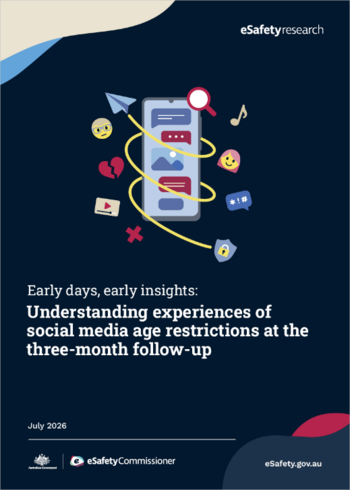
The Tech Impact and Policy Center's Social Media Lab (SML) serves as the Lead Academic Partner on the Australian eSafety Commissioner's two-year evaluation of the policy, working alongside an independent Academic Advisory Group to help design the study, advise on analysis, and peer-review the findings. The Commissioner's first follow-up report, Early days, early insights, is now out, drawing on a nationally representative baseline survey of over 4,000 families collected before the law took effect, and a three-month follow-up with roughly 1,000 of those same families.
If there's one number worth remembering from this report and it's not about kids, it's about platforms. Among children who still held an account on an age-restricted platform three months in, half (50.2%) said the reason was simple: the platform had never asked them to verify their age. Not a workaround. Not a VPN. Not a clever teenager outsmarting the system, just no prompt at all.
That single stat reframes the debate. The law targets platforms, not children or parents, and there are no penalties for under-16s who keep an account. So when the report also finds that overall account ownership on age-restricted platforms dropped from 52.4% at baseline to 42.1% at three months, the honest read is: real, but partial. Many children who had accounts before the law simply kept them.
A second finding deserves more attention than it's gotten: parental awareness of their child's social media use actually declined after the restrictions took effect. At baseline, 23.3% of parents didn't know their child had used social media in the past four weeks; by three months, that had risen to 33.3%, with the shift concentrated among parents of girls and children aged 10–12. This is the kind of unintended consequence a longitudinal evaluation is designed to catch early, and it's worth asking why: are kids disclosing less, are parents checking in less, or both?
Third, there are early signs of redistribution rather than disengagement. Children's daily-or-more use of messaging platforms rose from 40.5% to 52.3%, alongside increases in online gaming and use of a handful of platforms not currently classified as age-restricted, including Pinterest and BeReal. Kids aren't necessarily logging off, some appear to be moving elsewhere.
What this report gives us, ultimately, is a first look at how children and parents are experiencing these restrictions just three months in. Its value isn't in telling us whether the policy has worked; it's too early for that. Instead, it lets us start checking whether the early changes the policy anticipated are actually beginning to show up, and whether the foundations for real, longer-term outcomes are being laid.
SML will continue as Lead Academic Partner through the full two-year evaluation, with the next survey wave due at six months.
All News button
1
Subtitle
Three months after Australia's Social Media Minimum Age (SMMA) restrictions took effect, the first wave of evidence is in, and it complicates the story we've all been telling ourselves about kids and compliance.
Terms
Image

Title
Australia's Social Media Age Ban, Three Months In: What We're Learning
Display Hero Image Wide (1320px)
No
"In the Realm of the Last Man: A Memoir" — Book Launch & Discussion with Francis Fukuyama
-

The Center on Democracy, Development and the Rule of Law (CDDRL) invites the Stanford community to a book talk with Francis Fukuyama in celebration of his new book, In the Realm of the Last Man: A Memoir, which traces his own intellectual and personal journey against the backdrop of the last fifty years of global political history.
Fukuyama's work has shaped how a generation of scholars, students, and policymakers think about the trajectory of democratic governance, from The End of History and the Last Man through The Origins of Political Order and Political Order and Political Decay. In this memoir, he turns that same analytical lens on himself, reflecting on how his thinking about liberalism, state-building, and democratic decay has evolved alongside the events he lived through and helped interpret. Fukuyama's book offers a rare firsthand account of his research, reflection and understanding of the crisis of liberal democracy in our current political climate.
Fukuyama, Olivier Nomellini Senior Fellow at Stanford's Freeman Spogli Institute for International Studies and former Mosbacher Director of CDDRL, will be joined by Kathryn Stoner, current Mosbacher Director of CDDRL, for a wide-ranging conversation about the memoir, his career, and what the last half-century of political change means for the future of democracy. The conversation will be followed by a brief audience Q&A.
This event continues CDDRL's tradition of bringing leading voices in democracy and development scholarship into direct dialogue with the Stanford community, and is open to faculty, students, and members of the public with an interest in comparative politics, democratic governance, and global affairs. A book signing and reception will follow the talk, offering attendees the opportunity to purchase signed copies of the memoir.
SPEAKERS
Francis Fukuyama is the Olivier Nomellini Senior Fellow at Stanford University's Freeman Spogli Institute for International Studies (FSI), and a faculty member of FSI's Center on Democracy, Development and the Rule of Law (CDDRL). He is also Director of Stanford's Ford Dorsey Master's in International Policy, and a professor (by courtesy) of Political Science. Dr. Fukuyama has written widely on issues in development and international politics. His 1992 book, The End of History and the Last Man, has appeared in over twenty foreign editions. His newest book, In the Realm of the Last Man: A Memoir, will be published in fall 2026.
Kathryn Stoner is the Mosbacher Director of the Center on Democracy, Development and the Rule of Law (CDDRL) and the Satre Family Senior Fellow at the Freeman Spogli Institute for International Studies (FSI). From 2017 to 2021, she served as FSI's Deputy Director. She is Professor of Political Science (by courtesy) at Stanford and teaches in the Department of Political Science, the Program on International Relations, and the Ford Dorsey Master's in International Policy Program. She is also a Senior Fellow (by courtesy) at the Hoover Institution.
Kathryn Stoner
Bechtel Conference Center at Encina Hall
Event update: Our in-person event has reached capacity. We invite you to join the event virtually via live stream on Zoom. Registration is required.
Francis Fukuyama
Encina Hall, C148
616 Jane Stanford Way
Stanford, CA 94305
0
f.fukuyama@stanford.edu
Olivier Nomellini Senior Fellow at the Freeman Spogli Institute for International Studies
Director of the Ford Dorsey Master's in International Policy
Research Affiliate at The Europe Center
Professor by Courtesy, Department of Political Science
Francis Fukuyama is the Olivier Nomellini Senior Fellow at Stanford University's Freeman Spogli Institute for International Studies (FSI), and a faculty member of FSI's Center on Democracy, Development and the Rule of Law (CDDRL). He is also Director of Stanford's Ford Dorsey Master's in International Policy, and a professor (by courtesy) of Political Science.
Dr. Fukuyama has written widely on issues in development and international politics. His 1992 book, The End of History and the Last Man, has appeared in over twenty foreign editions. His book In the Realm of the Last Man: A Memoir will be published in fall 2026.
Francis Fukuyama received his B.A. from Cornell University in classics, and his Ph.D. from Harvard in Political Science. He was a member of the Political Science Department of the RAND Corporation, and of the Policy Planning Staff of the US Department of State. From 1996-2000 he was Omer L. and Nancy Hirst Professor of Public Policy at the School of Public Policy at George Mason University, and from 2001-2010 he was Bernard L. Schwartz Professor of International Political Economy at the Paul H. Nitze School of Advanced International Studies, Johns Hopkins University. He served as a member of the President’s Council on Bioethics from 2001-2004. He is editor-in-chief of American Purpose, an online journal.
Dr. Fukuyama holds honorary doctorates from Connecticut College, Doane College, Doshisha University (Japan), Kansai University (Japan), Aarhus University (Denmark), the Pardee Rand Graduate School, and Adam Mickiewicz University (Poland). He is a non-resident fellow at the Carnegie Endowment for International Peace. He is a member of the Board of Trustees of the Rand Corporation, the Board of Trustees of Freedom House, and the Board of the Volcker Alliance. He is a fellow of the National Academy for Public Administration, a member of the American Political Science Association, and of the Council on Foreign Relations. He is married to Laura Holmgren and has three children.
(October 2025)
Global Populisms
A new project examining the global surge in populist movements and what it means for established democratic rules and institutions.
Read More
CV
Document
francis_fukuyama_cv_april_2024.pdf
(223.42 KB)
Hide publication sections
Off
Lectures
News Feed Image
LivestreamRegistration.png
Resisting Electoral Authoritarianism: Five Approaches and Their Pitfalls
News Type
News
Date
Paragraphs
Introduction and Contribution
Nearly half of the world (46%) lives in authoritarian regimes that hold regular elections — compared to 28% who live in autocracies without elections and 26% who live under democracy. In these “electoral autocracies,” the ruling party can theoretically lose power, but its ability to repress and co-opt its opponents makes defeat unlikely. Incumbent executives and parties in electoral autocracies have become increasingly sophisticated in their repressive techniques and increasingly connected to other regimes that share similar fears of democracy. “How can electoral authoritarianism be resisted?” is thus a pressing question for domestic opposition parties and civil society organizations (CSOs) as well as international actors seeking to promote democracy, including governments, nonprofits, think tanks, and academics.
In “Opposition strategies and electoral challenges under autocracy,” Oren Samet analyzes five strategies opposition parties use to fight electoral authoritarianism during campaigns, on election day, and after polls have closed. These are: joining multiparty coalitions, strengthening their party organization, mobilizing mass protests, boycotting elections, and seeking international assistance. Samet shows that each strategy entails tradeoffs, increasing opposition competitiveness while making authoritarian repression more likely or efficient. For example, joining a multiparty coalition can both increase the incumbent’s likelihood of defeat and increase his propensity to repress — insofar as he perceives the opposition as popular and threatening.
Samet shows that each strategy entails tradeoffs, increasing opposition competitiveness while making authoritarian repression more likely or efficient.
Samet offers several prescriptions for international democracy promoters. First, they must collaborate with domestic opposition parties, because only they — and not CSOs — can win elections. Yet many international actors avoid this approach; for instance, some opposition parties may care more about power than democracy, or collaborating with them may invite criticism that democracy promotion is partisan. While these risks cannot be ignored, neither can political parties.
A second prescription follows from the fact that oppositions have at least five tools at their disposal: there can be no single “best practice” in democracy promotion; it requires flexibility, adaptability, and an integrated approach. Finally, because autocrats continue to become more sophisticated, democracy promoters must take steps to prepare for the repression of their partners.
Five Approaches and Their Pitfalls
Otherwise effective strategies for winning democratic elections — such as running savvy campaigns on primetime television that are informed by public opinion polling — will not work for opposition parties under electoral autocracy. This is because the system is structurally biased toward incumbents. As such, one common approach has been for individual opposition parties to join together in a coalition: sharing policy platforms, endorsing joint candidates, and merging their party organizations. And indeed, multiparty coalitions are statistically associated with higher vote shares and a higher likelihood that autocrats are defeated. At the same time, however, such coalitions are difficult to form and sustain due to ideological differences and polarization. In especially repressive electoral autocracies, such as Ethiopia or Cambodia, incumbent parties are often able to neutralize or eliminate coalitions. Finally, when coalitions pose a serious challenge on election day but without winning, autocrats may repress even harder.
A second strategy involves strengthening party organization, for example, by improving its geographic reach or recruiting more professional candidates. These efforts can increase competitiveness and popular appeal, but they risk providing the incumbent with a large amount of information that he can use to more efficiently target his opponents. This includes formal lists of members, candidates, and party branch locations. Meanwhile, more organized opposition parties may inadvertently legitimize the system by affording it some semblance of democracy.
Encouraging mass protests is a third strategy available to opposition parties. As the number of protesters grows, authoritarian repression becomes more costly and more likely to backfire, while the incumbent’s allies become more likely to defect and join the opposition. Parties help with this process by translating protester demands into coherent party platforms. However, and especially after the 2010-12 Arab Uprisings, electoral authoritarian regimes have become highly sensitive to and ready to combat protests. This may be accomplished via surveillance or assistance from powerful third parties such as China or Russia.
A fourth, common strategy has been for parties to boycott the autocrat’s electoral facade. Doing so signals to the international community that the playing field is skewed and the system illegitimate. Yet boycotts can lead to missed opportunities for the opposition to build electoral strength, influence policy change as legislative minorities, or monitor the autocrat from inside government. In addition, they rob oppositions of the chance to take advantage of the autocrat’s miscalculations, which may even lead to his defeat.
Finally, opposition parties can reach out to international actors for support. This may involve requesting that they sanction the regime or intervene in the name of democracy. International pressure can indeed encourage political openings and is especially useful for oppositions with low visibility. However, autocrats are adept at demonizing those who use this strategy as agents of malign foreign influence. These appeals can strengthen the autocrat’s domestic support base among those who see him as protecting the nation. In all, these tradeoffs suggest that effective democracy promotion requires a deep understanding of the political context in which oppositions operate.
*Brief prepared by Adam Fefer.
Hero Image

All News button
1
Subtitle
CDDRL Research-in-Brief [3.5-minute read]
Display Hero Image Wide (1320px)
No
The U.S. Alliance and Public Attitudes Toward China: Evidence from the Asia-Pacific Region
Paragraphs
Abstract
Drawing on the alliance and identity politics literature, we argue that as the U.S.-China tensions intensify, citizens of U.S. allies tend to hold more negative views against China. This is because the strategic competition between the two powers reinforces the perceptual foundation of shared identity, amplifying perceived threats to national security and economic interests as well as values shared between the U.S. and its allies. For the same reason, we further expect public views toward China and the U.S. to be conversely related among citizens of U.S. allies as the bilateral competition grows. We test our propositions in the Asia-Pacific region, where the U.S. has several allies and its tensions with China are most acute. By analyzing the Gallup World Poll (2006–2022) and Asian Barometer Survey (Wave 3-5), we show that as the U.S.-China tensions intensify, citizens of U.S. allies tend to exhibit less favorability toward China as well as contrasting attitudes toward the two powers. However, such patterns are less likely to appear among those living in non-allies. This study provides not only theoretical implications for the study of foreign public opinion but also important policy suggestions.
All Publications button
1
Publication Type
Journal Articles
Publication Date
Journal Publisher
Australian Journal of International Affairs
Fourth Annual Trans-Altai Sustainability Dialogue to Explore Pathways for Revitalizing Partnerships for Sustainable Development
News Type
News
Date
Paragraphs
The Trans-Altai Sustainability Dialogue-2026, jointly organized by the Secretariat of the State Great Hural of Mongolia, the Ban Ki-moon Foundation for a Better Future, and the Walter H. Shorenstein Asia-Pacific Research Center (Shorenstein APARC) at Stanford University, will take place at the State Palace on 3 July 2026. This year's conference will be held under the theme: "SDG 17: Partnerships for the Goals."
This year's conference will be attended by distinguished international scholars and researchers, including the eighth Secretary-General of the United Nations, Ban Ki-moon; Professor Kiyoteru Tsutsui, Director of the Shorenstein Asia-Pacific Research Center at Stanford University; Professor Zhiyun Ouyang of the Chinese Academy of Sciences and Foreign Member of the United States National Academy of Sciences; Mengye Zhu, Senior Scientist at the Natural Capital Alliance of Stanford University; Professor James Fishkin of Stanford University; Professor Leif-Eric Easley of the Division of International Studies at Ewha Womans University, specializing in International Security and Political Economy; and Asset Abdualiyev, Founder and Chief Executive Officer of Silicon Valley's Silkroad Innovation Hub. Members of the State Great Hural and the Government of Mongolia will also participate and share their views.
Within the framework of the theme "Partnership for the Goals," four parallel sessions will be organized under the following main topics: "Artificial Intelligence, Technology and Inclusive Innovation," "Critical Minerals, Mining and Green Technology," "Women's Leadership and Empowerment," and "Democracy and Civil Engagement." Scholars from leading universities around the world, along with representatives of government agencies and international organizations, will deliver presentations and participate in discussions.
For example, Mongolia's 34th Prime Minister, G. Zandanshatar, will speak at the opening session, followed by a discussion on democratic civil participation, featuring former Permanent Representative of the Republic of Korea to the United Nations Kim Sook and Professor James Fishkin of Stanford University.
Since its inception, the Trans-Altai Sustainability Dialogue has been convened on three occasions. Previous conferences addressed global challenges including gender equality, peace and justice, strong institutions, and regional cooperation, resulting in policy recommendations and numerous collaborative initiatives.
According to the Media and Public Relations Department of the State Great Hural, the Trans-Altai Sustainability Dialogue 2026 places particular emphasis on strengthening cooperation among countries, international organizations, academia, and the private sector; accelerating the implementation of the Sustainable Development Goals; and fostering a shared understanding of regional development, security, and good governance.
The Trans-Altai Sustainability Dialogue builds upon the ongoing Trans-Pacific Sustainability Dialogue initiative launched in 2022 by Shorenstein APARC and the Ban Ki-moon Foundation for a Better Future.
Trans-Altai Sustainability Dialogue 2026 Agenda
View the TASD 2026 AgendaRead More


Hero Image

All News button
1
Subtitle
The international forum, jointly organized by the Secretariat of the State Great Hural of Mongolia, Stanford University’s Walter H. Shorenstein Asia-Pacific Research Center, and the Ban Ki-moon Foundation For a Better Future, will be held in Ulaanbaatar on July 3, 2026. The forum will bring together researchers, policy experts, and leaders from the public and private sectors to examine strategies to advance Sustainable Development Goal 17 of the 2030 Agenda for Sustainable Development.
Display Hero Image Wide (1320px)
Yes
Six Lessons from Asia on Using AI for Aging in Place
News Type
News
Date
Paragraphs
Across the world, populations are aging rapidly as people live longer and fertility rates continue to decline. Asia is at the vanguard of this demographic shift. The number of older adults (aged 60 and above) in the region is projected to triple between 2010 and 2050, reaching nearly 1.3 billion people. As Asian economies face this “silver wave,” helping older adults live safely and independently at home – a concept known as aging in place – has become a policy imperative.
At a recent webinar held during Stanford Health AI Week, the Asia Health Policy Program (AHPP) at Shorenstein APARC brought together experts from China, Singapore, and South Korea to share insights into the potential of health AI to allow older adults to enjoy healthy aging and avoid or postpone institutionalization.
Moderated by Stanford health economist Karen Eggleston, the director of AHPP, the webinar featured Hongsoo Kim, a professor of health policy and aging at Seoul National University’s Graduate School of Public Health and director of its Artificial Intelligence Institute’s Center for AI in Health and Care; Xiaochen Ma, an assistant professor of health economics at Peking University’s China Center for Health Development Studies; and Tien Yin Wong, a physician-scientist-innovator and the senior vice-chancellor of Tsinghua Medicine and vice-provost of Tsinghua University, who has also worked and held senior leadership roles in Singapore and Australia as a practicing retinal specialist with a research portfolio on retinal diseases, ocular imaging, AI, and digital technology.
Get APARC event invitations and guest speakers' insights delivered to your inbox >
Here are six lessons from the front lines of Asia’s efforts to integrate AI into elderly health care and advance aging in place:
1. Adopt a Whole Systems Approach
In South Korea, the world's fastest-ageing society, automated systems like "CLOVA CareCall" – an AI-powered well-being dialer – conduct natural-sounding check-ins with solo-dwelling seniors, boasting a 96% response rate. Yet, Professor Kim emphasizes that checking in with people in need of health care is only half the battle.
If an AI flags an isolated senior at risk of depression, cognitive decline, or a physical abnormality, but the local community lacks the social workers or clinical pathways to intervene, then the health care system has failed.
“The question is not only whether AI can detect something, but how a health and care system acts on it,” she says. “Detection by itself changes nothing. A warning that no one follows up on helps no one. So the gap I care about is not the model’s cleverness itself. It is whether the system delivers.”
2. Solve the Entire "Care Cascade"
In rural China, traditional diabetic screening rates hover below 33%, leaving millions at risk of Diabetic Retinopathy (DR), a leading cause of blindness. Professor Ma shared how deploying an AI screening model successfully pushed screening rates past 85%.
The research team, however, discovered a glaring bottleneck: only 21% of high-risk patients actually followed up to receive sight-saving treatments. To fill this gap, Ma’s team designed an "AI Plus” model (v2.0) that integrates immediate, local-language counseling at the point of screening. To keep seniors healthy at home, AI solutions must address the entire clinical journey, from initial scan to final treatment.
“Many of the AI tools have been focused on diagnosis accuracy or validation rather than going downstream to the entire cascade of whether improved screening will translate into improved referral and the ultimate health outcomes,” says Ma.
3. Align with Local Workflows and Incentives
AI and other technology solutions for health often fail because they expect overworked care workers to adopt entirely new habits. Professor Ma noted that digital health interventions in rural China succeeded only when they integrated seamlessly into existing daily routines.
Instead of forcing clinicians to use complex new software, successful pilots utilized WeChat, the ubiquitous messaging app already open on every phone. Furthermore, the technology must align with the financial and professional incentives of frontline health workers. If an AI tool increases their administrative burden without simplifying their day or boosting their clinical efficiency, then it will remain unused.
4. Design Human-Centered AI for Health Equity
Professor Wong highlighted the ethical risk that AI tools will worsen, rather than reduce, health care disparities. This challenge is driven by the dynamics of “Inverse Care Law,” where AI disproportionately benefits the already advantaged, and the “Recursive Care Law,” where this inequality becomes a self-reinforcing cycle embedded in the system.
Because younger, more tech-savvy individuals generate more health data, AI models become better at serving them than the intended users of aging-in-place technologies. This creates a vicious cycle where the very tools designed to support aging populations end up marginalizing them. Governments must devise policies to mandate fair data coverage and usability, ensuring that AI serves society's most vulnerable members equitably, Wong stated.
Professor Kim noted that her team found that only about 38% of community care agencies in Korea have adopted AI and that the adoption rate varied sharply by region. In fact, districts with the greatest need may have the least access to these powerful tools. This challenge is a fundamental design gap rather than a technology gap, Professor Kim argues. To be genuinely equitable, a system must be built from the start to actively track who is missing and automatically route support back to them. This requires two human-centered design key principles:
I. Universal by Default: The hardest-to-reach should not have to be the most persistent in navigating the technology.
II. Connected Across Sectors: Long-term care, social care, and health care must act as one integrated system rather than disconnected silos, each of which sees only part of the person’s needs.
5. Augment, Do Not Replace, the Human Touch
The panelists rejected the trope of robots replacing human caregivers. Instead, they view AI as an essential force multiplier for an overstretched workforce.
Whether it is South Korea’s deployment of 12,000 AI companion robots to combat senior isolation, or automated triage tools in clinics, the goal should be to offload administrative and routine tasks. This frees up human social workers and clinicians to do what they do best: deliver hands-on, empathetic care.
6. Value Real-World Outcomes Over Technical Novelty
Healthcare systems should prioritize rigorous, real-world case studies that prove actual clinical value, such as reduced mortality, lower rates of blindness, or fewer nursing home admissions, rather than celebrating high validation benchmarks in a laboratory.
To build robust future health AI systems, the experts concluded, the academic and tech sectors must also courageously publish and analyze their failed trials to understand what truly works in the chaotic reality of home-based care.
While AI holds immense promise for helping people grow old at home, “age tech” alone cannot solve the elder care crisis, the panelists agreed.
In the Media
Dr. Eggleston joined Jeffrey Snyder, host of the Broadcast Retirement Network, to discuss highlights and takeaways from the webinar discussion. Watch below:
Read More


Hero Image

All News button
1
Subtitle
Top aging and healthy policy experts from China, Singapore, and South Korea agree that helping older adults age at home requires addressing systemic health care bottlenecks rather than racing to build smarter AI models.
Display Hero Image Wide (1320px)
Yes
APARC Names 2026-2028 Incoming Fellows
News Type
News
Date
Paragraphs
Stanford University’s Walter H. Shorenstein Asia-Pacific Research Center (APARC) is delighted to welcome a new cohort of fellows joining us starting in summer 2026.
APARC offers multiple prestigious fellowship opportunities for Stanford doctoral students, emerging scholars of exceptional promise, and accomplished faculty and mid-career experts researching contemporary Asia topics. Supported by these fellowships, our incoming fellows will complete dissertation research, work on book manuscripts, undertake new research projects, and engage with the center's scholarly community.
Meet the Fellows

Herbert Chang
Stanford Next Asia Policy Visiting Fellow, 2026-2027
Herbert Chang is an assistant professor of quantitative social science at Dartmouth College and a Forbes 30 Under 30 honoree in Science for his work on network science and offshore finance. His research examines how emerging technologies reshape democratic behavior, including recent work on AI and misinformation in the 2024 Taiwan and U.S. presidential elections. His work has been featured in the New York Times, the Washington Post, and Scientific American, and has informed both academic and policy debates.
Chang will use his time at APARC to write a monograph on the interdependence of AI infrastructure and information ecosystems, with Taiwan and the United States as central empirical sites. He will also collaborate with SNAPL to quantify its talent-portfolio theory and empirically model how Asian Pacific nations cultivate and retain scientific expertise.

Alicia Chen
APARC Predoctoral Fellow, 2026-2027
Alicia R. Chen is a doctoral candidate in the Department of Political Science at Stanford University. She studies international relations and political economy, with a focus on China. Her dissertation examines the domestic political economy of China's international aid and finance, revealing how domestic politics and institutions shape its overseas economic activities.
Her research is published in the British Journal of Political Science and has been generously supported by Stanford’s King Center on Global Development, the Freeman Spogli Institute for International Studies, the Stanford Center on China’s Economy and Institutions, and the Stanford Institute for Economic Policy Research, among others.
Before her doctoral studies, Chen was a research specialist with the Empirical Studies of Conflict project at Princeton University. She holds a master's degree in international policy from Stanford University and a bachelor's degree in political science from the University of Southern California.

Sheikh Jamal Hossain
Asia Health Policy Program Postdoctoral Fellow, 2026-2027
Dr. Sheikh Jamal Hossain is a researcher and academic specializing in child development, maternal mental health, health promotion, and health economics. His professional interests center on advancing evidence-based interventions through rigorous research, teaching, and capacity strengthening, with a commitment to translating scientific evidence into policies and programs that improve the lives of women and children globally.
With over two decades of experience spanning academia, public health research, and international development, Dr. Hossain has led and contributed to large-scale randomized controlled trials, implementation research, and economic evaluations addressing early childhood development, nutrition, maternal mental health, and health system strengthening. He has successfully secured and managed research grants from international donors, including Grand Challenges Canada, UNICEF, FCDO, and Sida.
Dr. Hossain has authored more than 30 peer-reviewed scientific publications, including 13 as first author, in leading international journals such as The Lancet Regional Health, Pediatrics, Social Science & Medicine, The American Journal of Clinical Nutrition, and BMJ Global Health. He currently mentors multidisciplinary research teams and supervises early-career researchers and graduate students.
He earned his doctorate in women’s and children’s health from Uppsala University, with research focused on the effects of parenting interventions integrated with social protection programs on child development and maternal well-being in Bangladesh. He also holds master's degrees in public health and in health economics from the University of Dhaka.

Angela Ju
Taiwan Program Visiting Fellow, 2026-2027
Angela Ju is an associate professor of international affairs and political science at St. Edward's University in Austin, Texas. She uses mixed-methods approaches to study race/ethnicity, gender, international migration, social determinants of health, the nonprofit sector, and urban politics in North America, Latin America, Europe, and East Asia. Her first book, Identities Matter: The Politics of Immigration and Incorporation (Oxford University Press), was published last year.
While at APARC, Angela will be working on her second monograph, Taiwan's Migration Diplomacy Towards Mainland Chinese Migrants and Refugees. In this book, she will examine why Taiwan has not formed consistent immigration policies for migrants from Mainland China.
Using textual analysis of Taiwanese government legislation and publications, the book's primary argument is that Taiwan uses its migration policies to manage its foreign relations with Mainland China. It also argues that one way in which Taiwan pursues international participation, despite lacking international recognition as a state, is through its migration diplomacy.

Siyu Liang
Stanford Next Asia Policy Lab Postdoctoral Fellow, 2026-2028
Siyu Liang is a doctoral candidate in political science at the University of California, Los Angeles (UCLA). Her research lies at the intersection of political communication, public opinion, and computational social science, focusing on how media and information environments shape political attitudes in both democratic and authoritarian contexts.
Her dissertation examines the role of media in shaping perceptions of China in contemporary U.S.-China relations. In particular, she studies foreign influencer propaganda and the downstream effects of U.S.-China competition on public opinion and intergroup relations. As a computational social scientist, she develops and applies natural language processing and machine learning methods to study political communication and international politics, with particular interests in stance detection, transfer learning, and soft-label modeling.
At the Stanford Next Asia Policy Lab, she will expand this research agenda by examining how digital media and geopolitical conflict shape public opinion and social exclusion, with a particular focus on U.S.-Asia relations. She will also pursue projects on nationalism and racism in East Asia. Together, these projects seek to advance a more global understanding of how international politics shapes social inclusion and group relations across the Asia-Pacific region.
Siyu received master's degrees in statistics and political science from UCLA and holds bachelor's degrees in political science and statistics from the University of Wisconsin–Madison.

Deepika Padmanabhan
Shorenstein Postdoctoral Fellow on Contemporary Asia, 2026-2027
Deepika Padmanabhan is a political scientist whose research examines nationalism, language politics, and self-determination, with a regional focus on South Asia.
Her book project explores how nation-building unfolds not only through grand policies and formal institutions, but also from the ground up, in everyday life. It examines how states promote national languages through routine, informal interactions with citizens, a process she terms the Everyday Imposition of language.
More broadly, her research explores how everyday practices shape political identities and collective belonging. In related projects, she examines the politics of language, food, film, and symbolic rituals as sites through which nationalism is cultivated, contested, and reproduced in daily life.
At APARC, Deepika will revise her book manuscript and develop additional projects on nationalism and political behavior.
She received her doctorate in political science from Yale University in 2025. She holds a bachelor's degree in political science from St. Xavier’s College, Mumbai, and master’s degrees from the School of Advanced International Studies at Johns Hopkins University and the Department of Politics at New York University.

Grace Zeng
Shorenstein Postdoctoral Fellow on Contemporary Asia, 2026-2027
Grace Zeng is a political scientist specializing in international political economy, with a focus on China's use of trade and investment to influence global regulatory governance. Her research examines how states leverage economic tools to shape international rules and institutions. Her work on China's trade practices shows how China uses seemingly technical health and safety regulations to exert pressure on other nations, systematically increasing import restrictions in response to political tensions.
At APARC, she will pursue projects that extend this research agenda by examining China's growing influence in global governance. One project investigates whether China strategically uses infrastructure investment and foreign subsidiaries to shape international environmental standards. Another examines China’s information control system through the lens of its WTO commitments and the global governance of cyberspace.
Before joining Stanford, Grace was a lecturer in the Department of Political Science at the University of California, Berkeley. She received her doctorate in politics from Princeton University. She also holds a master's degree in the social sciences (MAPSS) from the University of Chicago and a bachelor's degree in mathematics from the University of Hong Kong.
Read More


Hero Image

All News button
1
Subtitle
Seven scholars researching diverse topics across contemporary Asian studies will join the APARC community starting this summer.
Image

Display Hero Image Wide (1320px)
Yes
CDDRL Honors Students Recognized for Award-Winning Research and Community Leadership
- Read more about CDDRL Honors Students Recognized for Award-Winning Research and Community Leadership
News Type
News
Date
Paragraphs
The Center on Democracy, Development and the Rule of Law proudly congratulates its 2026 graduating class of honors students on their outstanding original research conducted under CDDRL's Fisher Family Honors Program. Among those graduating are Marco Widodo, a political science major and coterminal M.A. candidate in International Policy, who has won a Firestone Medal for his research on the voter responses to democratic backsliding in Indonesia, and Shayla Fitzsimmons-Call, an International Relations major, who is the winner of the CDDRL Outstanding Thesis Award for her research on how autocrats respond to electoral defeat.

The Firestone Medal for Excellence in Undergraduate Research recognizes Stanford's top 10% of honors theses in the social sciences, science, and engineering among graduating seniors. Marco’s thesis is entitled, “When Democracy Counts: Testing the Demand-Side Micrologics of Backsliding with Evidence from Indonesia.” It poses the question, do Indonesian citizens fail to punish democratic backsliding at the ballot box? Over more than a decade of democratic decline, Indonesian voters have shown remarkably little alarm, continuing to reward leaders associated with democratic erosion while professing support for democracy. This thesis investigates the demand-side foundations of that puzzle, probing whether the content of democracy might itself be the problem. To pinpoint precisely where and how the accountability chain breaks down, Marco fielded an original nationally-representative survey experiment in February 2026 with Indikator Politik Indonesia (N = 1,566), randomly assigning Indonesian respondents to one of three definitions of democracy — electoral, liberal, or substantive — and tracking their responses across four hypothetical scenarios. To measure treatment comprehension and experimental manipulation, he scored open-ended responses using a novel multi-model LLM coding ensemble. Combined, this empirical design enabled him to discriminate between two candidate diagnoses of conceptual failure: that Indonesian citizens hold conceptions of democracy that simply diverge from those of scholars (the divergent conceptions argument), or that “democracy” itself carries too little evaluative content to differentiate governance failures of different kinds (the thinness argument). Ultimately, the evidence points overwhelmingly in support of the latter interpretation — that for many Indonesian citizens, “democracy” functions less as a thick descriptive concept than as a thin term of approval whose application tracks perceived governance quality. The divergent conceptions hypothesis, meanwhile, yields a robust null across thirteen specifications. In this era of backsliding, the conceptual thinning of “democracy” carries severe implications for the validity of cross-comparative survey research, for the elite strategies that exploit the term’s elasticity, and for the resilience of democracy in Indonesia and beyond.

Shayla’s thesis is entitled “Bound by the Ballot? Autocratic Compliance After Electoral Defeat.” When autocrats lose elections, what determines whether they comply with the electorate's judgment? And if they resist, what determines whether they succeed? Despite the frequency and consequences of autocratic electoral crises, electoral compliance decisions remain undertheorized. To address this gap, Shayla proposes a two-stage theory of incumbent compliance. At Stage 1, pre-election structural conditions — military control, elite unity, and international vulnerability — determine whether resistance is viable. At Stage 2, activated only if resistance occurs, two reactive forces — mass mobilization and activated international pressure — become salient. Drawing on an original dataset of elections held in autocratic regimes between 1970 and 2018, the results partially support and partially challenge this theory. While structural weakness reliably precludes resistance, structural strength does not reliably cause it; among cases where resistance occurs, high, cohesive international pressure emerges as the most consistent determinant of whether incumbents ultimately exit. This thesis posits that compliance is best understood as a process shaped by forces operating at different moments, and that this temporal distinction has both implications for how scholars and international actors understand and respond to electoral crises in electoral autocracies.
Honoring a Legacy of Community Building
Zoe Savellos, a Stanford graduate and member of CDDRL’s Fisher Family Honors Class of 2018, passed away in 2025 at the age of 29. She is remembered by those who knew her as brilliant, generous, and deeply committed to others. To honor her memory and the spirit she brought to the CDDRL community, the center has established the Zoe Savellos Memorial Award for Community Building.
“Zoe’s palpable passion for her thesis research and to make a genuine difference in the world inspired a sense of optimism and confidence in our CDDRL cohort to dream bigger and push through when we didn’t think we could,” shared her friend and classmate Kelsey Page ‘18. “As I struggled toward the thesis deadline, Zoe not only helped me with last-minute formatting questions long after she had completed her own thesis, but also brought me a blazer for my presentation when I forgot one. Zoe enthusiastically counting down the minutes to the completion of my thesis so we could celebrate together is just one example of how she placed shared joy over individual accomplishment — she was everyone's biggest cheerleader.”

Presented annually within CDDRL’s Fisher Family Honors Program, the award will recognize a student selected by their peers for their meaningful contributions to the strength of the honors cohort. The class of 2026 has selected Zoya Fasihuddin, an Economics major also studying Human Rights, as the first recipient of this award.
“I'm so honored, and this is entirely a reflection of the cohort we all got to be a part of, as well as Steve and María’s leadership,” shared Zoya. “While I didn't have the privilege of knowing Zoe, everything that’s been shared about her in terms of her warmth and empathy is exactly the kind of person I aspire to be.”
The cohort experience is central to the Honors Program. Students engage deeply with one another’s work and navigate the challenges of independent research together. The Zoe Savellos Memorial Award for Community Building recognizes the important role students play in shaping that experience and honors the individual whose support, enthusiasm, and community-building spirit help create a more connected and meaningful collective experience.
The Class of 2026
Marco, Shayla, and Zoya are part of a cohort of 12 graduating CDDRL honors students who have spent the past year working in consultation with CDDRL-affiliated faculty members and attending honors research workshops to develop their thesis projects. The theses this year covered topics as wide-ranging as democratic resilience and authoritarian elections, feminist mobilization in Pakistan, Indigenous reunification and identity in Oklahoma, net neutrality and regulatory politics, economic protectionism, collective memory in Spain, and the role of retired military leaders in American elections.
"We could not be prouder of this cohort of seniors in the Fisher Family Honors Program and the theses they produced," shared María Ignacia Curiel, a Research Scholar at CDDRL who co-teaches the Honors Program alongside Stephen Stedman. "Born from a year of scholarly perseverance and camaraderie, these projects genuinely advance our understanding of democracy, development, and the rule of law around the world."
In addition to the Firestone Medal, CDDRL Outstanding Thesis Award, and the Zoe Savellos Memorial Award for Community Building, members of the Class of 2026 have received several other honors heading into graduation:
- Anagali Duncan received the 2026 Lloyd W. Dinkelspiel Award, which recognizes distinctive contributions to undergraduate education and the quality of student life.
- Emma Wang and Marco Widodo are among the newest members elected to the Phi Beta Kappa academic honors society.
- Anagali Duncan, Dani Gonzalez-Gaubecka, Emma Wang, Lila Batcheller, Lorraine Cioffi, and Rachel Owens have all received the Award of Excellence. Designed to recognize the top 10% of the class, this award honors graduating seniors who have demonstrated a sincere commitment to the university through involvement, leadership, and extraordinary Stanford spirit.
CDDRL's Fisher Family Honors Program trains students from any academic department at Stanford to write a policy-relevant research thesis with global impact on a subject related to democracy, development, and the rule of law. Honors students participate in research methods workshops, attend Honors College in Washington, D.C., connect to the CDDRL research community, and write their thesis in close consultation with a faculty advisor to graduate with a certificate of honors in democracy, development, and the rule of law.
Explore the rest of the thesis topics of the Fisher Family Honors Program Class of 2026 below:
Anagali Duncan

Ben Kinder

Dani González-Gaubeka

Emma Wang

Garry Piepenbrock

Lila Batcheller

Lorraine Cioffi

Rachel Owens

Sakshi Umrotkar

Zoya Fasihuddin


Read More


Hero Image

All News button
1
Subtitle
Marco Widodo receives a Firestone Medal, Shayla Fitzsimmons-Call wins CDDRL's Outstanding Thesis Award, and Zoya Fasihuddin is named the inaugural recipient of the Zoe Savellos Memorial Award for Community Building.
In Brief
- Marco Widodo received a 2026 Firestone Medal for his thesis on why voters often fail to punish democratic backsliding, drawing on original survey research in Indonesia.
- Shayla Fitzsimmons-Call earned CDDRL’s Outstanding Thesis Award for her research on how autocrats respond to electoral defeat and the conditions that shape electoral compliance.
- CDDRL established the Zoe Savellos Memorial Award for Community Building, honoring the late alumna’s legacy; the inaugural award was presented to Zoya Fasihuddin, selected by her peers for strengthening the honors cohort.
- The Fisher Family Honors Program Class of 2026 produced original research on topics ranging from democratic resilience and authoritarian elections to feminist mobilization in Pakistan, Indigenous reunification in Oklahoma, net neutrality, economic protectionism, and collective memory in Spain.
Display Hero Image Wide (1320px)
Yes
To Counter China's Scale, the U.S. Must Build Allied Scale, Reasons Rush Doshi
News Type
News
Date
Paragraphs
The United States cannot match China's scale alone and pretending otherwise is a strategic mistake. That was the central message Rush Doshi delivered as keynote speaker at the Stanford Center on China's Economy and Institutions' 2026 annual China Conference, where he called on the U.S. to reimagine its alliance system as a platform for building shared capacity across military, economic, and technological domains.
Rush Doshi, the C.V. Starr Senior Fellow for Asia Studies at the Council on Foreign Relations and an assistant professor at Georgetown's Walsh School of Foreign Service, previously served as Deputy Senior Director for China and Taiwan on the National Security Council (2021-24), where, for a portion of his tenure, he was the U.S. government’s lead action officer coordinating the negotiations that launched AUKUS, a trilateral security partnership for the Indo-Pacific region between Australia, the United Kingdom, and the United States. He is also the author of The Long Game: China's Grand Strategy to Displace American Order (Oxford University Press, 2021).
Doshi grounded his address in a historical argument: scale, which Doshi defined as “the ability to generate efficiency and productivity and thereby outcompete rivals,” has been the decisive factor in the rise and fall of great powers. Great Britain's eclipse by larger industrializing rivals in the late nineteenth century, he argued, offers a cautionary parallel for the U.S. today. "Today, that sense of daunting scale belongs to China," Doshi said, "and the United States appears to be in the position that Great Britain was in a century ago."
China's Scale Is Not Abstract
China's economy, measured in purchasing power, is now roughly 30 percent larger than that of the United States, and its share of global manufacturing quintupled in the two decades after joining the WTO, while the U.S. share fell by half. China has two to three times U.S. industrial capacity, 13 times U.S. steel production, and roughly 500 times U.S. shipbuilding capacity. It produces two-thirds of the world's electric vehicles, three-quarters of its batteries, and 90 percent of its solar panels and refined rare earths, and is at the leading edge of six of the ten industries expected to define the next industrial revolution.
That industrial strength is now translating into direct geopolitical leverage. Doshi pointed to China's weaponization of its rare earths dominance in 2025, which effectively forced the U.S. to walk back elements of its own trade and export control policies. "That marked the first time that an export control was used to force open market access," he said. "That's a massive moment in the history of trade.
The Case for Allied Scale
The answer, Doshi argued, is not to retreat into fortress America, a sphere-of-influence arrangement, or a China-led order, but to build what he calls "allied scale." A coalition of the U.S. and its key allies and partners would represent three times China's nominal GDP, twice its defense spending, and one and a half times its share of global manufacturing.
That advantage is entirely theoretical, unlocking its potential, though, is the central task of American statecraft in this century."
Rush Doshi
"That advantage is entirely theoretical," Doshi conceded. "Unlocking its potential, though, is the central task of American statecraft in this century." In practice, that might mean Japan and South Korea investing in American shipbuilding; Taiwan building semiconductor plants in the U.S.; allies co-producing advanced weapons systems; and all parties maintaining a shared tariff or regulatory wall against China's excess industrial capacity. On the economic side, Doshi called for common investment screening, coordinated industrial policy, and an "economic Article 5" ensuring that when China uses economic coercion against one ally, all respond together.
Addressing the Skeptics
Doshi acknowledged "the new pessimism," the view that Trump-era damage to U.S. alliances has made allied scale impossible. The strain is real, he said, but not terminal, for three reasons:
- The alternatives are worse. Spheres of influence, unrestrained multipolarity, and a China-led order all leave the U.S. and its partners poorer and less secure.
- Alliances have absorbed serious shocks before and survived. For example, France's withdrawal from NATO's unified command, Nixon's opening to China, the Plaza Accord.
- The underlying logic of interdependence persists. Allied economies are growing more dependent on U.S. markets as China buys less from them, allies are purchasing record numbers of American weapons, and even the Trump administration has not escaped the pull of allied scale, with Vice President Vance publicly calling for a trading bloc among allies to break China's chokehold on critical minerals.
Allied scale can't just be about balancing China, it has to be about building the kind of world that we want to see and live in.
Rush Doshi
Eight Principles to Achieve Allied Scale
Doshi closed with a practical blueprint — eight principles for building allied scale.
Turn the page on the Trump era. Persuade allies that the most damaging recent policies were products of individual leadership rather than durable features of the American political system.
Begin with humility. Start with small, achievable projects: a joint shipbuilding effort, a critical minerals offtake agreement, a co-production line. Build from there.
Build mutually beneficial bargains. Allies invest in America; America invests in allies. All extend each other more preferential terms than they do to non-market economies like China.
Pay attention to domestic politics. “The danger of the ‘Trump Approach’ is alienation and polarization of allied politics that makes diplomacy impossible.” Any allied scale strategy must be first grounded in domestic politics.
Build ad hoc coalitions. Allied scale does not mean doing everything with everyone. It means assembling the right groupings for specific challenges and opportunities.
Bolster credibility through congressional legislation. Executive orders are too easily reversed. Durable commitments to allies require legislative backing that is harder to undo with a change in administration.
Build on existing platforms. Frameworks like the Quad, AUKUS, the U.S.-Japan-South Korea trilateral, and the G7 already exist. Allied scale should strengthen what works, not start from scratch.
Articulate an affirmative vision. "Allied scale can't just be about balancing China," Doshi said. "It has to be about building the kind of world that we want to see and live in."
“That work is hard,” Doshi concluded, but “it's not impossible. And the alternatives are far more concerning than the future that I’m outlining.” Doshi ended his address on a note of optimism: a call to action for the U.S. to reforge our alliances and rebalance the world order to create a better world for not just the U.S., but for nations across the globe.
A full recording of Dr. Rush Doshi’s talk is available on YouTube and below.
This article was supported by research using Claude. All outputs were reviewed by humans and the final expression was produced by the author.
Read More


Hero Image

All News button
1
Subtitle
Rush Doshi, keynote speaker at the 2026 SCCEI China Conference, laid out an eight-point blueprint for transforming U.S. alliances into an engine of shared economic and industrial capacity.
Terms
Image

Title
To Counter China's Scale, the U.S. Must Build Allied Scale
Display Hero Image Wide (1320px)
No