-

The 5th annual Romanian Film Festival, themed "Travelling Shots: Families Beyond Boundaries," will be held on different dates at Stanford University, UC Berkeley and San Francisco State University starting on Nov. 5th and ending on Nov. 13th. 

Stanford University will host the festival on November 5th and November 8th.


Thursday, November 5, 2015:

  • 6:30pm - 8:30pm  ALIYAH DADA by Oana Giurgiu, documentary, Romaina, 2015
  • 8:30pm - 9:30pm  Q&A with director Oana Giurgiu

For the complete list of other festival dates, times, locations and films, please visit https://rofilmfestival.wordpress.com/program/


Sponsored by Stanford's Center for Russian, East European & Eurasian Studies  (CREEES), and the Special Language Program (SLP), and the Institute of Slavic, East European, and Eurasian Studies at UC Berkeley (ISEEES) and the Department of Cinema at San Francisco State University. 

Co-sponsored by Stanford's The Europe Center,  Department of Slavic Languages and Literatures, and Stanford University Libraries and UC Los Angeles' Department of Slavic, East European and Eurasian Languages and Cultures, Center for European and Eurasian Studies, and the Romanian Student Club, and the “Nicolae Tonitza” High School, Bucharest, Romania, and Fundatia Semn, Romania.

East Asia Library, Room 224
Lathrop Library Building
518 Memorial Way
Stanford University

Film Screenings
-

A Lecture-Concert by

Professor Jindong Cai, Music Director and Conductor, Stanford Symphony Orchestra

In collaboration with members of

The Peking University Symphony Orchestra


NOV 12, 2015

19:30 – 21:00

Stanford Center at Peking University

At the turn of the twentieth century, the foundations of traditional Chinese society were crumbling. Many patriotic and idealistic young people went overseas to seek inspiration and education, determined to learn from the outside world and forge a new path forward for China. Beethoven was introduced to China during this period by a series of remarkable artists and intellectuals who learned about the composer while studying in Japan. The polymath artist, writer, and monk Li Shutong was the first Chinese to write about Beethoven in a short, but revealing, article called  “The Sage of Music.”  Xiao Youmei was the first Chinese to bring the sound of Beethoven to Chinese people.  After his studies in Japan and Germany, Xiao came back to China in 1921 and began promoting music education at Peking University, where he created the first Chinese symphony orchestra to perform Beethoven’s music. Since then, Beethoven has become an iconic figure in China and played a role in many major historical events from the May Fourth Movement to the normalization of US-China relations.  Beethoven became a hero to reformers, intellectuals, music lovers, and party cadres alike. The new Penguin Special “Beethoven in China,” by Stanford professor and orchestra conductor Jindong Cai and culture journalist Sheila Melvin tells the compelling story of Beethoven and the Chinese people.

In the first part of this special lecture-concert, Professor Cai will share his own experience of hearing Beethoven’s music for the first time in the midst of the Cultural Revolution. He will also briefly tell the story of how Beethoven and his music became so deeply rooted in modern China. The second part of the event will feature a 15-member ensemble of musicians from the Peking University Orchestra – a first-ever re-creation of the 1922 orchestra that premiered Beethoven in Beijing. The performance, conducted by Maestro Cai, will give the audience a unique historical experience and allow them to travel back in time and hear how Beethoven’s music sounded when it was first performed at Peking University.  


Stanford Center at Peking University, The Lee Jung Sen Building, Langrun Yuan, Peking University

Peking University is a closed campus, please bring a photo ID and enter PKU through the Northeast Gate. 

Jindong Cai Music Director and Conductor Stanford Symphony Orchestra
The Peking University Symphony Orchestra
Lectures
-


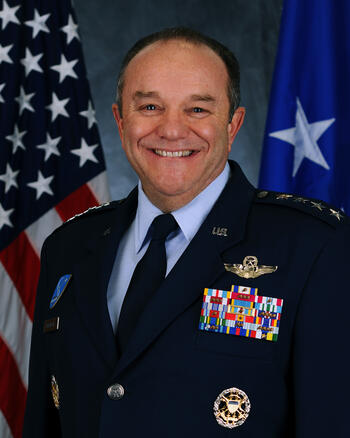
General Philip M. Breedlove will discuss the rapidly evolving geopolitical climate in Europe. Additionally, he will highlight many of the current and future security challenges which the United States and NATO must be prepared for.

Image
Photo of General Philip M. Breedlove


Gen. Breedlove is Commander, Supreme Allied Command, Europe, SHAPE, Belgium and Headquarters, U.S. European Command, Stuttgart, Germany.   

The General was raised in Forest Park, Ga., and was commissioned in 1977 as a distinguished graduate of Georgia Tech's ROTC program. He has been assigned to numerous operational, command and staff positions, and has completed nine overseas tours, including two remote tours. He has commanded a fighter squadron, an operations group, three fighter wings, and a numbered air force. Additionally, he has served as Vice Chief of Staff of the U.S. Air Force, Washington, D.C. Operations Officer in the Pacific Command Division on the Joint Staff; Executive Officer to the Commander of Headquarters Air Combat Command; the Senior Military Assistant to the Secretary of the Air Force; and Vice Director for Strategic Plans and Policy on the Joint Staff. 

Prior to assuming his current position, General Breedlove served as the Commander, U.S. Air Forces in Europe; Commander, U.S. Air Forces Africa; Commander, Air Component Command, Ramstein; and Director, Joint Air Power Competence Centre, Kalkar, Germany.  He was responsible for Air Forces activities, conducted through 3rd Air Force, in an area of operations covering more than 19 million square miles.  This area included 105 countries in Europe, Africa, Asia and the Middle East, and the Arctic and Atlantic oceans.  As Vice Chief, he presided over the Air Staff and served as a member of the Joint Chiefs of Staff Requirements Oversight Council and Deputy Advisory Working Group. He assisted the Chief of Staff with organizing, training, and equipping of 680,000 active-duty, Guard, Reserve and civilian forces serving in the United States and overseas. General Breedlove has flown combat missions in Operation Joint Forge/Joint Guardian. He is a command pilot with 3,500 flying hours, primarily in the F-16.

Koret Taube Conference Center (Room 130)
Gunn-SIEPR Building
366 Galvez Avenue


General Philip M. Breedlove Commander, Supreme Allied Command, Europe, SHAPE, Belgium and Headquarters, U.S. European Command, Stuttgart, Germany Speaker
Lectures
Authors
News Type
News
Date
Paragraphs

Rodney Ewing, senior CISAC fellow and Frank Stanton professor in nuclear security, has been honored with three prestigious awards in the geological and mineralogical sciences.

Ewing will receive two medals at the Geological Society of America’s next annual meeting in Baltimore at the end of this month: the Ian Campbell Medal for Superlative Service to the Geosciences from the American Institute of Geosciences, and the Roebling Medal of the Mineralogical Society of America for scientific eminence.

He is being recognized for his groundbreaking research on nuclear materials and his contributions to nuclear waste management.

“Rod Ewing is a modern mineral scientist at the top of his field who has excelled in both science and service,” according to the citation for the Campbell Medal.

“Dr. Ewing has made seminal contributions to our knowledge of radiation damage in minerals and the design of waste forms for high-level nuclear waste. And he continues to have a major impact on the policies underlying nuclear waste management in the United States.”

The international impact of professor Ewing’s research into nuclear waste storage is also being recognized with the IMA Medal of Excellence in Mineralogical Sciences from the International Mineralogical Association, which will be awarded at a meeting in Rimini, Italy next September.

Hero Image
rod ewing cisac headshot
Rodney Ewing, Frank Stanton professor in nuclear security at Stanford's Center for International Security and Cooperation.
Rod Searcey
All News button
1
-

Abstract

Image
fabbrini jacket book  20151
Professor Sergio Fabbrini will present highlights from his most recent book Which European Union? Europe After the Euro Crisis. He puts forward an argument for interpreting the European Union (EU) from a comparative perspective. The aim is to bring Stein Rokkan to Brussels, that is to interpret the structuring and functioning of the EU according to the basic analytical concepts of the literature on comparative politics. Which European Union? not only repositions the EU in a comparative context, but also conceptually innovates the tool-kit of comparative politics. Based on a reinterpretation of the literature on comparative federalism, the book conceptualizes two species of the ‘federal political system’ genus, i.e. federal states arising from the disaggregation of previously unitary states and federal unions arising from the aggregation of previously independent states.


Speaker Bio

Image
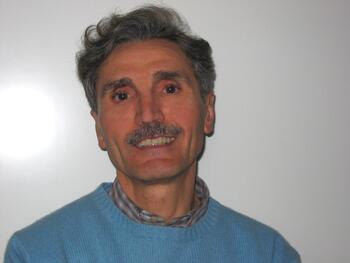
sergio fabbrini photo personal2
Sergio Fabbrini is Director of the School of Government and Professor of Political Science and International Relations at the LUISS Guido Carli University of Rome, where he holds the Jean Monnet Chair. He is also Recurrent Visiting Professor of Comparative Politics at the Department of Political Science and Institute of Governmental Studies, University of California at Berkeley. He has published fourteen books, two co-authored books and fourteen edited or co-edited books. His most recent publications in English include Compound Democracies: Why the United States and Europe Are Becoming Similar, 2nd edn (2010) and America and Its Critics: Vices and Virtues of the Democratic Hyperpower (2008).


This event is hosted by the Bill Lane Center for the American West and co-sponsored by the Center on Democracy, Development and the Rule of Law. 


[[{"fid":"220764","view_mode":"crop_870xauto","fields":{"format":"crop_870xauto","field_file_image_description[und][0][value]":"","field_file_image_alt_text[und][0][value]":"","field_file_image_title_text[und][0][value]":"","field_credit[und][0][value]":"","field_caption[und][0][value]":"","field_related_image_aspect[und][0][value]":"","thumbnails":"crop_870xauto"},"type":"media","attributes":{"width":"870","class":"media-element file-crop-870xauto"}}]]

Sergio Fabbrini LUISS Guido Carli University of Rome LUISS Guido Carli University of Rome
Seminars

U.S. National Security Advisor Susan Rice '86 will give a special public lecture at the Freeman Spogli Institute on Climate Change and National Security.

Doors open at 4:00pm. Space is limited.


Susan Rice U.S. National Security Advisor U.S. National Security Advisor
Lectures

Encina Hall
616 Serra Street
Stanford, CA 94305-6165

(650) 724-9217 (650) 723-0089
0
66b3d82b-4420-408a-a353-979aad60f276_1_201_a.jpeg

Shannon Johnson earned a masters from Stanford's Liberal Arts program, with a thesis entitled "'We were all White once': Race, Polygamy, and the Salvific Mormon Family." Her BA from Brigham Young University is in English literature; she wrote an honors thesis there on "Emily Dickinson: Transcendental Trinitarian." She worked in admin at Columbia University and as an English teacher in Japan and Egypt before taking time away to raise four children. Shannon has been at The Europe Center since 2014, and joined the staff at the Center on Democracy, Development and the Rule of Law in 2020.

CDDRL Administrative Associate
TEC Administrative Associate
Date Label
-

The fate of a soldier serving in the Russian army in the First World War largely depended on luck and circumstances. But even though his own means of influencing his fate were limited, there were available certain active choices – such as shirking and desertion – that could turn his life around in both positive and negative ways. For Russian civil and military authorities, of course, desertion was a nuisance that was fought against by all available means. Sometimes, such as with physical punishment, these means only succeeded in lowering the already low morale and increasing the number of deserters.

Dr. Mart Kuldkepp's presentation will focus on a small and somewhat exceptional group of deserters from the Russian army: the soldiers who served in the border guard regiments in Northern Finland and deserted alone or in small groups over the border to neutral Sweden. He will consider their motivation in doing so, and their subsequent fate, as much as it is known. At the same time, he will also look at how Sweden administratively handled this very unforeseen phenomenon and how the deserters were treated by Swedish authorities.

Mart Kuldkepp completed his PhD dissertation at University of Tartu, Estonia, in 2014 and joined University College London in 2015. Dr. Kuldkepp has been active as an academic in the field of Scandinavian Studies since 2007. Dr. Kuldkepp’s primary research focus is on 20th century Scandinavian political history, with a particular interest in contacts between the Scandinavian and the Baltic states, but also has interest in the history of secret services and espionage and Old Norse-Icelandic literature and culture. His teaching has mostly concerned the history of Scandinavian culture, society, and politics from the earliest times up to today. He has taught subjects related to Old Norse studies and overview courses in humanities.

Organized by the Center for Russian, East European and Eurasian Studies and co-sponsored by The Europe Center and Stanford University Libraries

Mart Kuldkepp Lecturer Speaker Scandinavian Studies, University College London
Lectures
-
This is the second meeting of the workshop series on Civility, Cruelty, Truth. A one-day event hosted by the Stanford Humanities Center, the workshop will explore the genealogies, promises, and limits of civic virtue—at the heart of which is the city, the classical polis, itself— as a universal ideal. European in its moral contours, constituted by a deep fascination with the rule of law, borders, and security, at once coercive and oblique in whom it excludes and includes, how it punishes and protects, the city held out the promise of a humane center for ethical and sovereign life, one upon which anticolonial struggles against European empires too were first conceived and mounted. This workshop will examine the ambiguous foundations and resolutions of that vision in Asia, Europe, and the fatal waters in between; a vision that has come to be marked today by extreme violence and tragic displacements, and which now presses new questions against the very limit of modern political imagination.
 
Faculty Organizer: Aishwary Kumar (Department of History)
Student Assistant: Ahoo Najafian (Department of Religious Studies)
 
Schedule (coming soon)
 

Co-sponsored by the Department of History, Department of Religious Studies, The Europe Center, The France- Stanford Center for interdisciplinary Studies, Program in Global Justice, McCoy Family Center for Ethics in Society, Stanford Global Studies, School of Humanities and Sciences, Stanford Humanities Center, Center for South Asia


Stanford Humanities Center
424 Santa Teresa St.
 

Conferences
News Type
News
Date
Paragraphs

In a recent piece in Stanford News, FSI Senior Fellow Larry Diamond expresses his thoughts on the ebbing of global democratic expansion, highlighting that not all countries have equal opportunities at achieving democracy and that democratic change should be approached multilaterally.

Hero Image
12011158 881826491904431 3526552461415235585 n
Larry Diamond speaks on his new book "In Search of Democracy," at the National Endowment for Democracy (NED) in Washington, D.C.
National Endowment for Democracy
All News button
1
Subscribe to Europe