Authors
News Type
News
Date
Paragraphs

The deadly terrorist attacks in Paris last Friday that killed 129 people and wounded around 350 more signaled a significant change in strategy for the Islamic State in Iraq and Syria (ISIS), the radical jihadist organization that has claimed responsibility.

“It underscores that this threat is real and that ISIS is not going to be content to consolidate its power in Iraq and Syria,” said Joe Felter, a former Colonel in the U.S. Army Special Forces and senior research scholar Stanford’s Center for International Security and Cooperation (CISAC).

“They have demonstrated their ability to project power into foreign countries and conduct what I would call an “asymmetric strategic bombing capacity” in the form of these home-grown Western citizens who are willing to strap on suicide vests and blow up targets in support of ISIS directed objectives.

“They’re able to launch attacks with centralized planning and decentralized execution in a way that makes anticipating and interdicting them very difficult.”


French President François Hollande said that the attacks were “planned in Syria, organized in Belgium, perpetrated on our soil with French complicity.”

CISAC senior fellow Martha Crenshaw said the Paris attacks represented “a shift in strategy” for ISIS with the group “taking a more Al Qaeda-like stance and striking Western countries.”

However, she emphasized that the carefully planned nature of the coordinated strikes, where multiple teams carried out simultaneous attacks in three locations across downtown Paris, indicated that this new strategy had been secretly underway for some time.

“These attacks were planned a long time ago,” said Crenshaw, whose Mapping Militants Project includes more information on groups like ISIS.

“You shouldn’t think they’re reacting to very recent circumstances…It’s not like we bombed them one day and the next day they planned these attacks.”

Apocalyptic visions

ISIS has long advocated a plan of provoking the West into a larger confrontation that would lead to an apocalyptic victory for Islam, according to Abbas Milani, director of Iranian studies at Stanford and an affiliate at the Center for Democracy Development and the Rule of Law.

“There’s a lot of method to this madness,” Milani said.

“If you read their literature, they have always talked about creating this sort of mayhem.”

ISIS’s propaganda magazine Dabiq, which is available online in Arabic and English, is named after a village in Syria with important symbolism for jihadists.

“They claim that the prophet has predicted that if you can get the West to come and fight the Muslims at Dabiq, then Islam will conquer the world,” Milani said.

Unlike France’s earlier battles against extremists in Algeria, it cannot rely on a proxy state to take the fight to the terrorists, according to Crenshaw.

“When terrorism in France has its origins in Algeria, France could rely on the Algerian state to crack down on these groups,” she said.

“Now you’ve got a situation where the planners are in a country where you don’t have a reliable state to go in and get them for you and wrap up their networks.”

With French warplanes already bombing targets in the Syrian city of Raqqa, Felter warned against the limits of air power in the fight against ISIS.

“There’s a risk that as we ramp up the bombing campaign and increase civilian casualties, this does play into the narrative of these extremists,” he said.

“It’s a very difficult targeting process. ISIS has occupied urban areas full of non-combatants and civilians…It’s the ultimate human shield.”

Felter acknowledged that increasing the number of US ground forces sent to interdict ISIS in Iraq and Syria may ultimately be necessary, but also that this increased presence, if not managed carefully, could backfire.

“At some level, they want to bring Western military forces to occupy these lands, because that will help turn popular opinion against the West and aid in their propaganda and recruitment,” he said.

The fight against ISIS is not limited to the territories it claims in the Middle East. It must be a global effort and include increased international cooperation and information sharing across intelligence, law enforcement and other agencies around the world, Felter said.

ISIS wants to drive a wedge between Europeans and the growing Muslim communities in their countries, so recruiting French citizens to participate in the Paris attacks served a dual purpose, Milani said.

“Using French citizens helps them with logistics, but it also helps them in terms of their strategy in that it makes it difficult for Muslims to live in a non-caliphate context,” he said.

Failed states problem

In the wake of the attacks, European nations are working to create legislation that would toughen criminal penalties for citizens who travel abroad to fight with designated terrorist organizations such as ISIS, or strip them of their citizenship, according to CISAC affiliate Anja Dalgaard-Nielsen, a former executive director of the Danish Security and Intelligence Service.

Individuals who are seen as inciting people to travel to Syria and Iraq to join the jihad could also face tougher sanctions, she said.

The emergence of ISIS and its nihilistic theology is a symptom of broader underlying problems in the Middle East, which is grappling with failed and failing states across North Africa and in Syria, Iraq, Afghanistan and Pakistan, according to Milani.

“ISIS is the most militant and brutal manifestation of something deeper that’s going wrong,” he said.

“I honestly have never seen the Middle East as perilously close to complete chaos as it is now… [and] I don’t think we’ve seen the worst of it yet.”

Resources & links

Get more background on the Islamic State and its leaders from Martha Crenshaw’s Mapping Militants Project

Is There a Sunni Solution to ISIS? – The Atlantic | By Lisa Blaydes & Martha Crenshaw

Airstrikes Can Only Do So Much to Combat ISIS – New York Times | By Joe Felter

The Super Smart Way to Dismantle ISIS – The National Interest | By Eli Berman, Joe Felter & Jacob Shapiro

The Rise of ISIS and the Changing Landscape of the Middle East – Commonwealth Club of California | Abbas Milani

Hero Image
french soldiers patrol eiffel tower reuters rts6zju
Police patrol near the Eiffel Tower the day after a series of deadly attacks in Paris.
Reuters
All News button
1
News Type
News
Date
Paragraphs

On November 10, CDDRL and the WSD Handa Center for Human Rights and International Justice welcomed Human Rights Watch's Director of Emergencies Peter Bouckaert and Sareta Ashraph, senior analyst on the UN Commission of Inquiry on the Syrian Arab Republic, for a discussion on the ongoing human rights and refugee crises in Syria. The talk was moderated by Stanford Law School's Beth Van Schaack, Leah Kaplan Visiting Professor in Human Rights.


Photo Album

Hero Image
22971714255 30876bbbb8 o
Human Rights Watch's Peter Bouckaert (left) and Sareta Ashraph (right), senior analyst at the UN Commission of Inquiry for the Syria, with Stanford Law School's Beth Van Schaack.
Christian Ollano
All News button
1
Authors
News Type
News
Date
Paragraphs


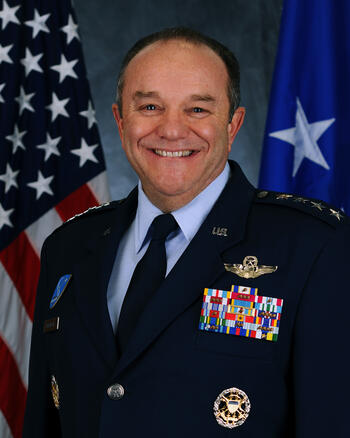
NATO must bolster its presence in Europe as a way to counter Russian aggression in the region.

That was the message from General PHILIP M. BREEDLOVE, the supreme allied commander of the North Atlantic Treaty Organization (NATO), when he visited Stanford on Monday.

“Europe is clearly at a crossroads,” he said.

Breedlove addressed the need for a strong NATO amid the evolving geopolitical climate in Europe. Of great concern are Moscow’s intrusions into Ukraine, Crimea and Georgia in Eastern Europe in recent years.

“We have to recalibrate what we’re thinking,” he said. NATO is building up its troop rotations to deal with hostile moves in the region, for example.

Breedlove spoke to a couple hundred people at the Koret Taube Conference room in the Gunn Building. Breedlove’s speech was sponsored by The Europe Center in the Freeman Spogli Institute for International Studies (FSI).

“Highly dynamic” is how Breedlove described Europe’s security situation as a resurgent Russia seeks to “rewrite” the rules of international order. “They have been aggressive and coercive in their use of diplomatic, military and economic tools,” he said.

Lies and distortions characterize Russia’s attempt to change borders and bully its neighbors, Breedlove added. Russian President Vladimir Putin’s greater goal is to destabilize NATO and chip away at the alliance. Russia is acting in the east, south and north of Europe, including forays into the Arctic Circle and near Japan.

“This is all about extending Russian control” over its neighbors, Breedlove said.

Massive, seemingly endless migration coming from the Middle East into Europe poses a monumental crisis, he added. “The situation is creating serious political problems for political leaders” in European countries, he said. On top of this, possible terrorists and foreign fighters within the sheer numbers of migrants are extremely difficult to track, he added.

These European and NATO challenges intersect in the case of Syria and Russia’s involvement there, Breedlove said. “Russia’s striving to project [itself] as a world power.”

Syria is an opportunity for Putin to shift the world’s attention from his country’s aggressions in the Ukraine to the Middle East, he said. Breedlove disputed Putin’s rationale – fighting ISIS and terrorism – for intervening in Syria. “There’s a clear gap between his words and actions.”

Time will tell if Russia overextends itself in its adventurism, Breedlove said. For NATO, it must “rebuild its capacity” to address such threats. “Defend territory, people and values” is how he defined NATO’s mission.

A free, peaceful and prosperous Europe is much more attractive to the world than a menacing Russia that lacks similar values and attributes, he noted.

The security of Europe is Breedlove’s “daily business,” said MICHAEL MCFAUL, director of FSI. “You could not have a more well informed person speak about European security.”

McFaul noted that a new initiative series on European security, sponsored by the Europe Center, will bring other speakers and events to campus.

Breedlove, a distinguished graduate of Georgia Tech’s ROTC program, has flown combat missions, mostly in the F-16 jet, and has served as vice chief of staff for the U.S. Air Force and commander of the U.S. Air Force in Europe and Africa.

“I feel right at home, because this is the type of weather we have in Belgium,” he quipped on a rainy day at Stanford.


This article was originally published in The Stanford Report on November 9, 2015.

Hero Image
Photo of General Philip M. Breedlove
All News button
1
-

The Russian System of personalized power has been demonstrating an amazing capacity for survival even in the midst of decay. It has defied many predictions and ruined many analytical narratives. Today the Russian authoritarian rule is trying to prolong its life by turning to repressions at home and by containing the West. Russia, kicking over the global chess board with the war in Ukraine, returns to the international scene as a revisionist and revanchist power. The Russian Matrix demise will be painful, and it already has brought about  Russia’s confrontation with the West.  The challenge posed by Russia’s decaying petro –nuclear state is huge, and it is sure to be one of the dominant problems of the twenty-first century.

RSVP

Lilia Shevtsova is a Non-Resident Fellow at the Brookings Institution (Washington), and an Associate Fellow at the Russia-Eurasia Program, Chatham House - The Royal Institute of International Affairs (London). She is the member of the boards of the Institute for Humanities (Vienna), the Finnish Centre for Excellence in Russian Studies (Helsinki), the Liberal Mission Foundation, and the New Eurasia Foundation (Moscow); a member of the International Forum for Democratic Studies’ Research Council(Washington); a member of the Editorial Boards of the journals: “American Interest,”“Journal of Democracy,” and “New Eastern Europe.“ Shevtsova was Senior Associate at the Carnegie Endowment for International Peace (Washington) and the Moscow Carnegie Center, founding chair of the Davos World Economic Forum Council on Russia’s Future, and a member of the Council on Terrorism. “Foreign Policy” magazine included Shevtsova in the list of 100 Global Public Intellectuals. She was a participant at the Bilderberg Club meetings; served as Chair of the Program on Eurasia and Eastern Europe, SSRC (Washington) and member of the Social Council for Central and Eastern European Studies. She contributes to global leading media, including: Foreign Policy, FT, Washington Post, Le Monde, Monde Diplomatique, Die Zeit, Fokus, El Pais, American Interest, Survival, Journal of Democracy, Diplomaatia. 

Shevtsova is author of twenty books, including Yeltsin’s Russia: Myths and Reality; Putin’s Russia; Russia –Lost in Transition: The Yeltsin and Putin Legacies; Lonely Power (Why Russia Has Failed to Become the West and Why the West Is Weary of Russia), Russia: Change or Decay (in co-authorship with Andrew Wood), Crisis: Russia and the West in the Time of Trouble.

 
Lectures
-

ABSTRACT

A common assumption in political economy is that voters are self-regarding maximizers of material goods, choosing their preferred level of social spending accordingly. In contrast, students of American politics have emphasized the key role of an other-regarding motive that makes support for social transfers conditional on the perceived deservingness of recipients. The two motives often conflict as large portions of the poor (rich) find recipients undeserving (deserving). I argue that material self-interest overruns perceptions of deservingness when the share of income affected by social transfers is high. Using European data, I show that low (high) income individuals are less (more) likely to be driven by considerations of deservingness. Cross-nationally, the more working-age benefits are evenly spread across income groups, the less deservingness considerations  permeate public debates on welfare state reform.  This framework has important implications for understanding attitudinal change in two high inequality countries, the United States and Great Britain.


SPEAKER BIO

Image
cavaille
Charlotte Cavaille is a research fellow at the Institute of Advanced Studies in Toulouse. She received a PhD in Government and Social Policy from Harvard University in November 2014. Her work examines changes in mass attitudes toward redistributive policies in advanced capitalist countries. Her dissertation focuses on the disconnect between rising income inequality and stable levels of support for income redistribution in Great Britain and the United States. Some of her findings have been published in the Journal of Politics.

Deservingness, Self-interest and the Welfare State
Download pdf
Charlotte Cavaille Research Fellow, Institute of Advanced Studies in Toulous Research Fellow, Institute of Advanced Studies in Toulous
Seminars

Encina Hall
616 Serra Street
Stanford, CA  94305-6165

0
Visiting Student Researcher at The Europe Center, 2015-2016
massimo_mannino.jpg

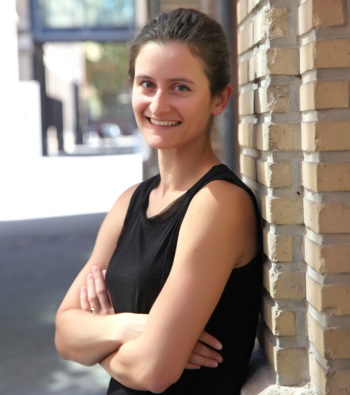
Massimo Mannino is a Visiting Student Researcher from the University of St.Gallen, Switzerland, under the supervision of Michael Bechtel (University of St.Gallen) and Jens Hainmueller (Stanford University). His dissertation explores the political economy of natural disasters and is part of a project funded by the Swiss National Science Foundation.

Authors
News Type
News
Date
Paragraphs

Medical researchers must work together across disciplines to provide better health care to those who need it most, according to panelists at Stanford Medicine’s Annual Population Health Sciences Colloquium.

The symposium, hosted by the Stanford Center for Population Health Sciences, brought together working groups from across the Stanford campus to showcase the latest findings in population health research.

“Population health science at Stanford is likely to make the most important contributions when we cross traditional intellectual expertise disciplines,” said Paul H. Wise, a core faculty member at the Center for Health Policy/Center for Primary Care and Outcomes Research (CHP/PCOR).

Many of the scholars at the daylong conference on Tuesday stressed that an interdisciplinary approach to health care is crucial to understanding and aiding underserved populations.

“To deal with life-course questions we need to create-life course observational windows,” said Mark Cullen, chief of the Division of General Medical Disciplines and director of the Stanford Center for Population Health Sciences.

Instead of trying to create an all-encompassing care plan for the human population as a whole, panelists demonstrated that studying the needs of particular groups, or smaller populations, can better serve individuals within populations that may not receive the best care.

Douglas K. Owens, director of CHP/PCOR, said the U.S.  Preventive Services Task Force, of which he is a member, has “often faced a real paucity of data trying to develop prediction guidelines for both the very young and the old.”

The Task Force, a panel of experts that makes recommendations for medical prevention services, is generally able to make guidelines for large populations like adults, but suggestions for specialized groups like children and the elderly are more challenging. Though Stanford researchers like Wise are working to improve care for particular sectors like children, more study is needed.

Several speakers at the conference said the underserved population of poor children could benefit from research targeted toward their population group.

“We don’t really understand the biology of the life-course, why things taking place in gestation and early life actually affect healthy aging and adult onset disease,” said Wise, adding, “We have a very poor understanding of how to translate this understanding into effective interventions for communities in need.”

Panelists agreed that big data can help them understand smaller, poorly served populations, such as young children in impoverished communities. By collecting large amounts of data from the general population, researchers will increase the amount of data available for more specific groups. This allows researchers to study these populations more closely and help create better outcomes.

Abby King, a professor of health research and policy and of medicine, and Jason Wang, director of the Center for Policy, Outcomes and Prevention (CPOP) and a CHP/PCOR core faculty member, believe life-course digital applications can provide individualized care while collecting data on a large-scale.

According to King, a life-course app, or a device to track health and provide care throughout one’s life, would grow with the user and help them through important developmental stages.

Image
Wang has taken a first step toward creating such an app with PLAQUEMONSTER.  Intended for children eager for Halloween candy, the PLAQUEMONSTER app provides kids with a “tooth pet” they must keep safe from “plaquemonsters” and the so-called evil candy corporation. By flossing and brushing their teeth each day, kids earn points, and Wang’s team hopes the game will encourage good dental hygiene.

Health-care techniques using mobile devices, known as mHealth, could be particularly useful in underserved populations. King notes that even low-income populations have cell phones, so using phones as health-care tools could help decrease the gap between higher- and lower-income populations.

“I think for us one of the major challenges of the century is to really close that health-disparities gap and mHealth can help.”

However, each app must be tailored to the user.

“There’s no reason to believe that an African-American 16-year-old is going to be motivated the same way as a 45-year-old white man,” said Wang. “You need to involve patients in the design of the app.” When the app fits the specific patient’s needs, they are more likely to use it regularly, and knowing the needs of their population helps determine their preferences.

As the world continues to become more connected, the panelists said that reaching across disciplines and incorporating technology may hold the key to effective health care in the 21st century.

Hero Image
img 2419 Lorene Nelson
All News button
1
Authors
News Type
News
Date
Paragraphs

The new European Security Initiative at Stanford will examine the long-term policy issues and trends in Europe's changing geopolitical landscape, especially given Russia's growing aggression in the region.


First, it was the 2014 annexation of Crimea. Then, it was the intervention in eastern Ukraine. Most recently, airstrikes and naval cruise missiles are hitting targets in Syria.

What, many are wondering, is Russian President Vladimir Putin up to?

Russia's spate of aggressive tactics has thrust Europe into a new era of uncertainty and has raised pertinent policy questions that Stanford scholars have set out to explore more deeply with the launch this fall of a new European Security Initiative (ESI).

The working group of a dozen senior faculty members – whose breadth of expertise in Russian and Eurasian affairs spans multiple administrations – portrays Russia's actions as constituting the greatest challenge to European security and stability since the end of the Cold War. At the same time, Russia's own unstable economy and political landscape complicate the matter; policy changes moving forward will be high-stakes decisions, as Russia and the West step into a period of sustained competition.

Stanford, with its heavyweight lineup, is poised to play a role. The European Security Initiative – formed by the Freeman Spogli Institute for International Studies (FSI), the Europe Center, the Hoover Institution and other university partners – will serve as the collaborative framework for the policy research.

"Policymakers in Washington have to react immediately to events in the world, making it difficult to develop longer-term strategies for dealing with ongoing challenges," said FSI's director, Michael McFaul. "At Stanford, we have the luxury of being able to think about longer trends and then recommend more enduring strategies to our colleagues in government.

"We also have deep expertise on Russia and Europe, which assigns us a special responsibility to tackle these new challenges to European security."

The initial group of Stanford faculty involved in the initiative includes: McFaul, former U.S. ambassador to Russia and a professor of political science; Condoleezza Rice, former U.S. secretary of state and a professor of political science; international studies Professor Coit Blacker, former special assistant to President Bill Clinton and director for Russian, Ukrainian and Eurasian Affairs on the National Security Council; David Holloway, professor of history and of political science, and one of the world's leading authorities on Russia's nuclear weapons program and defense policies; and Kathryn Stoner, an expert on Russia's governance and political economy and a senior fellow at FSI. 

Analyzing Russia's actions

One of the first objectives of the initiative is to understand the nature of the conflicts at hand and develop theories on Russia's domestic and international intentions.

For example, is Putin trying to re-establish Russian dominance over former Soviet states? Is he trying to distract internal constituencies from an array of domestic problems? Depending on the answers, the initiative's faculty members say the United States would have to pursue different policy options.

Working group discussions and a series of public events featuring key figures in U.S.-Russian and European policy will facilitate the Stanford-based dialogue and help broaden the academic discussion among students.

In September, for instance, ESI launched the new academic year with a talk at the Europe Center by Anders Fogh Rasmussen, who was at the center of European and global politics as the former secretary-general of NATO.

Other fall quarter ESI events, past and upcoming, include an Oct. 14 talk by Sergey Aleksashenko, a former deputy chairman of the Russian Central Bank; a Nov. 2 visit by Vladimir Milov, the former Russian deputy minister of energy; and a Nov. 9 visit by General Philip M. Breedlove, supreme allied commander, Europe. 

Students, scholarship

In addition, Stanford students are showing a growing interest in Putin's actions and the unfolding refugee crisis in Europe. Applications for new student fellowships on European issues in Brussels this past summer far outstripped the six spaces available. To capitalize on this renewed interest, the initiative will involve students through events, new fellowships and a new seminar.

The initiative aims to rebuild scholarship in an area of academic interest that waned as the Cold War ended.

"At the end of the Cold War, many thought that we no longer needed to study Russia. I myself even stopped teaching courses on Russia and Eastern Europe," McFaul said. "That was a mistake." He noted that Stanford is ideally positioned to seed a new generation of expertise on Russia and Europe.

FSI provided the startup money to create the initiative, but it will be looking for funds to sustain the program.


This article was originally published in The Stanford Report on October 28, 2015.

Hero Image
15803 europe news
All News button
1

Encina Hall

616 Serra St., C100

Stanford, CA 94305-6055

(650) 723-9732
0
sam_rebo_headshot.jpg

Sam Rebo is a Research and Project Assistant at FSI. He aids FSI Director Michael McFaul with background research for his upcoming book and facilitates FSI's new European Security Initiative.

Sam received his B.A. in International Relations with Honors in International Security from Stanford University. In the past, he has worked at the Moscow Carnegie Center, the French Institute of International Relations in Paris, and Global Integrity in Washington, D.C. His interests include Soccer and the Violin. He claims to make the best grilled cheese sandwich known to man.

Research Assistant and Project Coordinator
Subscribe to Europe