Education
-

South Korea's persistent economic growth combined with a democratic political system has transformed the country into a developed nation. While research has often highlighted the role of industrial policies, technological growth and international trade as imperative to Korea’s developmental success, this talk will instead focus on the role that human capital has played. Professor Ju-Ho Lee will discuss how the accumulation of human capital has aided Korea’s transformation and examine the policies, strategies and challenges that the country faces into the future.

Image
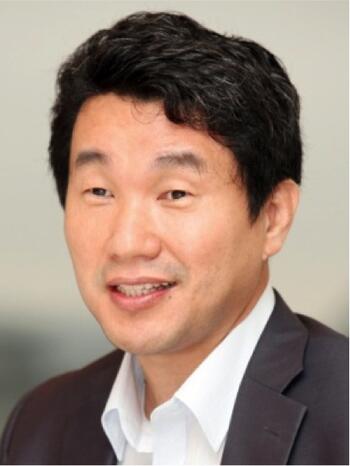
ju ho lee
Before returning to the KDI School of Public Policy and Management in 2013, Professor Lee served as Minister of Education, Science and Technology (2010-13) where he had previously served as Vice Minister (2009). He has been noted for his endeavor to reform education, and for active lawmaking as a member of the National Assembly (2004-08). Utilizing his nine years of experience as a policy maker, he actively resumed his academic research on human capital and innovation policies at KDI. Professor Lee's  recent research has covered a wide range of issues including the measurement of 21st century skills, changes in pedagogies, opening-up strategies in education reforms, and innovation ecosystems. Currently he is also working for the international community as a Commissioner of the International Commission on Financing the Global Educational Opportunities.

Professor Lee received his BA and MA from Seoul National University, and PhD from Cornell University, all in economics.

This lunch time keynote address is part of the ninth annual Koret Workshop, "Korea's Migrants: From Homogeneity to Diversity," and open to the general public.

This event is made possible through the generous support of the Koret Foundation.

Ju-Ho Lee <i>Professor, KDI School of Public Policy and Management; former Minister of Education, Science and Technology, South Korea </i>
Seminars
News Type
News
Date
Paragraphs

The Center on Democracy, Development and the Rule of Law (CDDRL) at Stanford University collaborates widely with academics, policymakers and practitioners around the world to advance knowledge and practice about democracy, broad-based economic development, human rights, and the rule of law. We are deeply concerned by the recent executive order on immigration issued by the new administration. This order impacts members of our community - students, practitioners, academics, and visitors - who come to Stanford to attend our training programs, conferences and conduct research. Ultimately, barring entry into the country of citizens from a specific set of countries compromises the quality of our research, programming and intellectual activities. It also violates our shared values and integrity as an academic research institute.


CDDRL is currently in the process of reviewing the applications for our 2017 Draper Hills Summer Fellowship program and we want to assure everyone that each applicant will be equally considered, regardless of their country of origin.


In over a decade of working and training democracy activists from all over the world – including Muslim majority countries – we have developed friendships with colleagues who are working against great odds to build democratic institutions. The overwhelming majority is risking their lives to do so. These fellows together with students and researchers challenge our theories about democratic development and help inspire new projects and ideas to enrich our research agenda, not only for our center, but also for our broader institute - The Freeman Spogli Institute for International Studies.


We will continue to build our relationships equally with all countries around the world regardless of this new policy, and will stand in solidarity with those who are targeted by the adverse effects. The one lesson that recent events have conveyed is the resounding importance of the work we do to understand how countries become just, democratic and well-governed states.

Hero Image
28921276015 4c65ca1344 o
The class of 2016 Draper Hills Summer Fellows
All News button
1
616 Serra StreetEncina Hall E301Stanford, CA94305-6055
(650) 723-9404 (650) 723-6530
0
rennie_moon.jpg Ph.D.

Rennie J. Moon joins the Walter H. Shorenstein Asia-Pacific Research Center as the 2016-17 Koret Fellow in the Korea Program.  Moon is an associate professor at the Underwood International College at Yonsei University in Seoul, South Korea. Her research explores the interrelationships among globalization, migration and citizenship, and internationalization of higher education.

Moon, a graduate of Stanford’s Graduate School of Education, Ph.D. ‘09, has collaborated with Stanford professor Gi-Wook Shin on a multiyear research project that examines diversity in higher education in East Asia. She co-edited the book Internationalizing Higher Education in Korea: Challenges and Opportunities in Comparative Perspective published earlier this year. Her articles have appeared in academic journals including Comparative Education ReviewComparative EducationAustralian Journal of International Affairs, and Pacific Affairs.

As a Korean-American scholar, Moon has written editorials and columns in both English and Korean on higher education in Korea and Asia for the Nikkei Asian Review, The Conversation, East Asia Forum, Australian Outlook, Dong-A Daily, MK News, and other media outlets.

Supported by the Koret Foundation, the Koret Fellowship brings professionals to Stanford to conduct research on contemporary Korean affairs. In 2015, the fellowship expanded its focus to include social, cultural and educational issues in North and South Korea, and aims to identify emerging scholars working on those areas.

During her fellowship, Moon will also give public talks and be a lead organizer of the Koret Workshop, an international conference held annually at Stanford.

Moon holds a doctorate and master’s degree in international comparative education from Stanford and a bachelor’s degree in French from Wellesley College.

Visiting Associate Professor
2016-2017 Koret Fellow
News Type
News
Date
Paragraphs

Stanford students now can choose Korea track as a major. Dafna Zur, assistant professor of East Asian languages and cultures, says "the major we've created responds to the interest we've sensed on campus and gives students the opportunity to explore Korea in a truly interdisciplinary way."

The full article is available here.

Hero Image
Bukchon Hanok Village with modern buildings in the background in Seoul, South Korea
GoranQ/ Getty Images
All News button
1
Paragraphs

In this paper, we explore a new framework for higher education official development assistance (ODA) with a focus on the transnational bridging benefits of social capital. We first explain why and how a transnational social capital approach can improve the current focus on human resources and local bridges in higher education development. We then illustrate its merits by examining, 1) the transnational bridging potential of social capital formed by foreign students currently studying in Korea; and 2) the actual transnational social capital contributions of foreign professionals who returned home after completing a Korean higher education ODA program. In doing so, we direct particular attention to the value of transnational social capital in promoting development cooperation and public diplomacy. We conclude by discussing how our approach has conceptual importance and practical implications for development cooperation in higher education.

All Publications button
1
Publication Type
Journal Articles
Publication Date
Journal Publisher
Pacific Affairs
Authors
Gi-Wook Shin
Authors
News Type
News
Date
Paragraphs

Alluding to the famous dictum by China’s late leader, Deng Xiaoping, Min Weifang, the executive president of Chinese Society for Education Development Strategies and professor at Peking University (PKU), China, noted that the “water has become very deep, it is difficult to touch the stones [to cross the river].” Min’s comments came at the end of a conference titled “Building World-Class Universities: An Institutional Perspective,” and they specifically referred to the challenges facing Chinese institutions of higher learning. Yet, the phrase nicely captured the challenges facing institutions of higher education worldwide in remolding institutions, social norms and structures to better adapt to the 21st century. Institutions of higher learning – whether “world-class” or not – need to grasp the demands of a rapidly changing future that is hard to discern. Speakers highlighted the complexities of globalization, market pressures, and a contracting public purse which encumber university governance and produce conflicting goals.

The conference, which was hosted at the Stanford Center at Peking University from Nov. 4-5, was part of the Beijing Forum 2016 and brought together over 30 scholars, university presidents and other thought leaders from 11 countries in Europe, Russia, North America and the Asia-Pacific region. The Forum aimed to focus on the institutional contexts that promote the construction and longevity of world-class universities. The second half of the Forum featured debates about the criteria for and, even, the very definition of “world-class.”

The Forum generated cross-cutting themes among a wide range of experts in attendance. The most prominent themes that emerged included the role of the government; government-university relations; and the tensions between education and knowledge production in universities. The Forum first highlighted the various “world-class university-projects” and elite national university-projects around the globe including in China, Russia, South Korea, Japan and Pakistan. Forum discussions then shifted to focus on questions such as “what is a university?” and “what is world-class”? Various university ranking systems drew skepticism, yet were also recognized as a resource used by donors, governments, alumni and prospective students.

As a policy prescription, a heavy role of the government in university education drew the most fire especially from Chinese colleagues who emphasized China’s need for greater university autonomy from government interference. All could agree, however, upon the important role of the government in tertiary education and, in particular, for building world-class universities, even if striking the proper balance between the role of the government and university administration necessarily differed depending on the national context.

Panelists agreed that contemporary challenges facing top-tier universities are many. They include social and economic pressures that favor “multiversities” over smaller, more cohesive universities; tensions among conflicting stakeholders in “multiversities”; intensification of science, technology, engineering and math (STEM) research; commercialization of knowledge; diminishing focus on undergraduate education; overproduction of doctoral degrees; inequality in access to and quality of higher education; and increasing administrative scale and complexity of university management. Many panelists throughout the conference appeared to concur that accelerated knowledge production, a more direct connection to national development goals, increased specialization and commercialization have produced significant benefits in recent years. But they also acknowledged that these benefits have come with a price – perhaps in the form of excellence in undergraduate teaching.

The gains that Peking University and Tsinghua University, in particular, and Chinese universities, in general, have made were widely acknowledged. Increasing numbers of Asian universities, too, have entered the top-tier in global rankings. Yet, solving 21st century demands – as opposed to just managing them – still appeared difficult as experts and thought leaders grappled with what, if any, institutional models can best meet those demands. Some experts suggested providing students access to different kinds of tertiary education (for example, in the form of community colleges, vocational colleges, liberal arts and research universities, as in the U.S. context). Most experts, if not all, agreed that universities need to shore up their educational missions and ensure balanced support for both the humanities and social sciences as well as the sciences and technical fields. In addition, many experts emphasized the need to address societal imbalances and provide better access to quality higher education to all socioeconomic classes.

Related links:

Forum agenda and list of panelists

Photo gallery

Hero Image
world class universities
At a forum hosted at Stanford Center at Peking University, experts gathered to discuss the institutional contexts of building world-class universities, Beijing, Nov. 2016.
All News button
1
News Type
News
Date
Paragraphs

Tottori Prefecture—the least populous prefecture in Japan known for its seafood and stunning natural beauty, including its iconic sand dunes—is now collaborating with Stanford University. The first kanji character of Tottori means “bird” and the recent launching of a new online course, Stanford e-Tottori, is helping high school students to gain a bird’s-eye view of U.S. society and culture with a focus on U.S.–Japan relations.

On July 18, 2016, SPICE Director Gary Mukai participated in an opening ceremony in Tottori for Stanford e-Tottori. The ceremony included opening remarks by Governor Shinji Hirai, greetings from Superintendent of Education Hitoshi Yamamoto, comments by Mukai, and reflections by Tottori native, Takeshi Homma, Founder and CEO at HOMMA, Inc., Silicon Valley. In his comments, Mukai thanked Governor Hirai for his unwavering support of this collaboration between the Tottori Prefectural Board of Education and Stanford University, and also made a historical note about Tottori Prefecture’s relations with the United States by noting, “Hajimu Fujii, who was born in 1886 in Takashiro, Tottori, left Tottori for the United States in 1906. Hajimu Fujii became a Japanese-American community leader in the state of Idaho. In the 1930s, Fujii was recognized as the first Japanese pioneer in large-scale onion farming.”

Mukai was followed by Tottori Nishi High School student Shue Shiinoki, who read a “Resolution Declaration,” representing the 36 students who were selected to participate in the inaugural Stanford e-Tottori course. Mukai and Homma had the pleasure of visiting Tottori Nishi High School as well as Seishokaichi Junior and Senior High School during their visit.

The Stanford e-Tottori course instructor is Jonas Edman, who is an Instructional Designer at SPICE. As of mid-December 2016, Edman has facilitated three “virtual classes” on the following

Image
stanford e tottori student
topics: “Studying in the United States,” “Japanese-American Baseball,” and “The Japanese-American Experience.” “Studying in the United States” was led by Eiko Nakano, an MBA and MA student at Stanford University from Tokyo. In addition to attending a total of ten “virtual classrooms,” students are given assignments and homework and also engage in online discussions with each other through discussion boards.

Edman, an alumnus of the American School in Japan, recently reflected that the rigor of taking a course solely taught in English has proven to be challenging to the Tottori students but that he is clearly noting progress in the students who are willing to take on the challenge. Koji Tsubaki, Teachers’ Consultant, Tottori Prefectural Board of Education, also recently commented, “Students in Tottori Prefecture are full of excitement to learn about the contents of the SPICE Stanford e-Tottori program, accelerating their development of self-expression skills. They are overflowing with questions for deeper understanding.”

Recently, Edman introduced Stanford e-Tottori to a delegation of business people from Tottori Prefecture who visited SPICE on November 16. The delegation was led by Tottori Bank, Ltd. Chairman Masahiko Miyazaki. Homma was not only instrumental in bringing the delegation to Stanford but also suggested the initial idea of developing Stanford e-Tottori. Chairman Miyazaki expressed his gratitude to Homma, Edman, and Mukai for making Stanford e-Tottori a reality.

During the delegation’s tour of Stanford University, many of the business people expressed hopes that their own children or grandchildren will someday be able to enroll in Stanford e-Tottori. Many also expressed agreement with one of the goals of Stanford e-Tottori, that is, to encourage students in Tottori to study in the United States either as exchange students or as undergraduate or graduate students.

Given Japan’s national focus on internationalizing the curriculum and preparing students to “think globally,” the timing of Stanford e-Tottori is ideal. SPICE’s hope is that someday the Tottori students’ birds-eye view of U.S. society and culture with a focus on U.S.–Japan relations—provided through Stanford e-Tottori—will become useful background information for them when they visit the United States as students, as business people, or in other capacities.

Hero Image
stanford e tottori student
All News button
1
Subscribe to Education