


Anna Grzymała-Busse
Encina Hall
616 Jane Stanford Way
Stanford, CA 94305
0
amgbusse@stanford.edu
Senior Fellow at the Freeman Spogli Institute for International Studies
Michelle and Kevin Douglas Professor of International Studies
Professor of Political Science
Senior Fellow, Hoover Institution
Anna Grzymała-Busse is a professor in the Department of Political Science, the Michelle and Kevin Douglas Professor of International Studies, senior fellow at the Freeman Spogli Institute for International Studies and the director of The Europe Center. Her research interests include political parties, state development and transformation, informal political institutions, religion and politics, and post-communist politics.
In her first book, Redeeming the Communist Past, she examined the paradox of the communist successor parties in East Central Europe: incompetent as authoritarian rulers of the communist party-state, several then succeeded as democratic competitors after the collapse of these communist regimes in 1989.
Rebuilding Leviathan, her second book project, investigated the role of political parties and party competition in the reconstruction of the post-communist state. Unless checked by a robust competition, democratic governing parties simultaneously rebuilt the state and ensured their own survival by building in enormous discretion into new state institutions.
Anna's third book, Nations Under God, examines why some churches have been able to wield enormous policy influence. Others have failed to do so, even in very religious countries. Where religious and national identities have historically fused, churches gained great moral authority, and subsequently covert and direct access to state institutions. It was this institutional access, rather than either partisan coalitions or electoral mobilization, that allowed some churches to become so powerful.
Anna's most recent book, Sacred Foundations: The Religious and Medieval Roots of the European State argues that the medieval church was a fundamental force in European state formation.
Other areas of interest include informal institutions, the impact of European Union membership on politics in newer member countries, and the role of temporality and causal mechanisms in social science explanations.
Global Populisms
A new project examining the global surge in populist movements and what it means for established democratic rules and institutions.
Read More
Director of The Europe Center
Hide publication sections
Off
Competing Narratives on Syria amid International Escalation
-
ABSTRACT
By now, those following the news on Syria have been saturated with analysis, data, information, and misinformation on developments there since 2011. Yet we observe an increasing gravitation to mutually exclusive narratives that adorn websites and publications on the situation in Syria: (a) the narrative of pure and consistent revolution versus that of (b) external conspiracy/designs on Syria. Both narratives carry grains of truth, but are encumbered by maximalist claims and fundamental blindspots that forfeit various potentials for enduring cease-fires and/or transitions, let alone mutual understanding. This talk will address these competing narratives in the context of international escalation marked by increasing US-Russian tension and continued multi-layered conflicts on the battlefield. It closes with addressing a framework for understanding and gauging potential prospects despite conflicting declarations by all parties involved.
SPEAKER BIO
Image
*This event is supported by the Stanford Initiative for Religious and Ethnic Understanding and Coexistence
Reuben Hills Conference Room
2nd Floor East Wing E207
Encina Hall
616 Serra Street
Stanford, California 94305
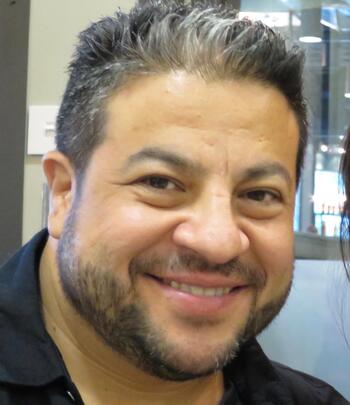
Bassam Haddad
Associate Professor
George Mason University
Seminars
"In Search of Perfect Consonance"
Twenty-five years ago, China was at war with Vietnam, the Chinese and the Japanese were at loggerheads and relations across the Taiwan Strait were frosty.
Directed by Oscar® winner Ruby Yang, In Search of Perfect Consonance profiles the Asian Youth Orchestra, established against this historical backdrop with the aim of connecting the region’s young people through music.
As we watch the budding musicians of today’s Asia learn to work together, we are reminded of the higher ideals that music inspires.
Official Website: consonance-movie.com
For more information, please email to perfectconsonance.movie@gmail.com
Film Screenings
Gerald Sim
616 Serra StreetEncina Hall E301Stanford, CA94305-6055
(650) 723-8429
(650) 723-6530
0
gsim@stanford.edu
gerald_sim.jpg
Ph.D.
Gerald Sim joins the Walter H. Shorenstein Asia-Pacific Research Center for the Autumn 2016 quarter from Florida Atlantic University's School of Communication and Multimedia Studies, where he is an associate professor of film and media studies. He arrived in Palo Alto immediately after a summer as Visiting Senior Research Fellow funded by the Luce Foundation, at the Asia Research Institute's Inter-Asia Engagements cluster in Singapore. It was his second stint at ARI; he was also a Fellow in the Cultural Studies cluster in 2013. During his time at Shorenstein APARC as Lee Kong Chian NUS-Stanford Fellow on Contemporary Southeast Asia, he will be researching and writing for his current book tentatively titled, Besides Hybridity: Postcolonial Poetics of Southeast Asian Cinema, contracted with Indiana University Press. The book uses the region's unique colonial history to conceive of postcolonial aesthetics beyond the usual tropes of hybridity and syncretism, while attending to an understudied but thriving segment of world cinema. Individual chapters explore Singapore's spatial imagination, Malaysian soundscapes, and Indonesian cinema's relationship to genre. Sim is the author of The Subject of Film and Race: Retheorizing Politics, Ideology, and Cinema (Bloomsbury Academic, 2014), a Neo-Marxian evaluation of film studies' engagements with race. His other writing on diverse topics such as Japanese cinema, film music theory, Edward Said, digital cinematography, and CNBC personality Jim Cramer have been published in Asian Cinema, the Quarterly Review of Film and Video, Discourse, Projections, and Rethinking Marxism. He holds a Ph.D. in Film Studies from the University of Iowa, and a BS in Biology from Duke.
Lee Kong Chian NUS-Stanford Fellow on Contemporary Southeast Asia, 2016-17
Visiting Scholar
Walder receives award for Cultural Revolution research
News Type
News
Date
Paragraphs
Image

Stanford professor Andrew Walder has been awarded the Founder’s Prize from the journal Social Science History for his paper, “Rebellion and Repression in China, 1966-1971.” The journal’s editorial board selects one recipient annually for exemplary scholarly work.
Using data from 2,213 historical county and city annals, the paper charts the breadth of the Chinese Cultural Revolution, its evolution through time and the repression through which state structures were rebuilt in the post-Mao era.
Walder, who is a senior fellow in the Freeman Spogli Institute for International Studies and director emeritus of the Shorenstein Asia-Pacific Research Center, has long studied the sources of conflict, stability and change in communist regimes. He recently published China under Mao, a book that explores the rise and fall of Mao Zedong’s radical socialism.
Hero Image

All News button
1
Oil-Gotten Gains: Petrodollars, Abscam, and Arab American Activism, 1973-1981
-
Abstract: In the 1970s, soaring oil prices provided huge revenues to oil producing Arab countries, which, together with private Arab companies and individuals, invested billions of dollars in the U.S. economy. The influx of Arab petodollars drew mixed reactions from Americans. Some feared that wealthy Arabs were “buying up America” and gaining control over the nation’s political, economic, educational, and cultural institutions. Others welcomed Arab investment as a boon to the U.S. economy and to global stability. Petrodollars also played a key role in Arab American history. Demeaning portrayals of oil-rich Arabs in media and government discourse—reaching a crescendo in the FBI’s “Abscam” sting operations of 1978-1980—goaded Arab Americans to adopt more organized methods of combating anti-Arab stereotypes. Salim Yaqub draws on his new book, Imperfect Strangers: Americans, Arabs, and U.S.-Middle East Relations in the 1970s, to explore the complex legacy of Arab petrodollars in American life.
About the Speaker: Salim Yaqub is Professor of History at the University of California, Santa Barbara, and Director of UCSB’s Center for Cold War Studies and International History. He is the author of Containing Arab Nationalism: The Eisenhower Doctrine and the Middle East (University of North Carolina, 2004) and of several articles and book chapters on the history of U.S. foreign relations, the international politics of the Middle East, and Arab American political activism. His second book, Imperfect Strangers: Americans, Arabs, and U.S.-Middle East Relations in the 1970s, was published by Cornell University Press in September 2016.
Encina Hall, 2nd floor
Salim Yaqub
Professor of History
University of California, Santa Barbara
Seminars
Deterrence without Bombs
-
Abstract: Deterrence is one of the most central concepts in international relations scholarship. Countries can dissuade changes to the status quo, according to the logic of deterrence, by threatening an opponent with pain (deterrence by punishment) or by reducing the probability that an opponent will achieve its aims (deterrence by denial). In the realm of international security, most deterrence theorists assume that states need military capabilities to deter by punishment or denial. Deterrence works, based on this line of thinking, because states can use military power to destroy cities, bomb critical military targets, or blunt land invasions. It is also possible, however, to punish an adversary without invoking destruction militarily. Yet deterrence through non-military means remains poorly understood in international relations. This project develops a theory to identify the conditions under which countries can deter opponents without using threats of military force. I explore the implications of this theory in one particular context: the development of dual-use nuclear technology. Having the capability to build nuclear weapons — a condition known as “nuclear latency” — may provide countries with deterrence benefits that we normally associate with having a nuclear arsenal. When states achieve nuclear latency, they (implicitly) threaten to develop nuclear weapons at some point in the future. The threat here is to pursue a policy that others would find undesirable, not to physically destroy things of value on another state’s territory, as in traditional deterrence theory. Does this kind of threat discourage others from meddling in a country’s affairs? This study presents the results of an analysis designed to identify the effects of nuclear latency (and nuclear arsenals) on the onset of international conflict from 1945 to 2000, drawing on a new dataset of sensitive dual-use nuclear plants in 32 countries.
About the Speaker: Matthew Fuhrmann is an associate professor of political science and Ray A. Rothrock `77 Fellow at Texas A&M University. He was named an Andrew Carnegie Fellow in 2016 by the Carnegie Corporation of New York. He is the author of Atomic Assistance: How “Atoms for Peace” Programs Cause Nuclear Insecurity (Cornell University Press, 2012) and the coauthor of Nuclear Weapons and Coercive Diplomacy (Cambridge University Press, 2016). His work has been published or is forthcoming in peer-reviewed journals such as American Journal of Political Science, British Journal of Political Science, International Organization, International Security, International Studies Quarterly, Journal of Conflict Resolution, Journal of Peace Research, and Journal of Politics. He has also written opinion pieces for The Atlantic (online), The Christian Science Monitor, Slate, and USA Today. He is a term member of the Council on Foreign Relations. You can follow him on Twitter @mcfuhrmann.
Encina Hall, 2nd floor
Visiting Associate Professor
CISAC
Seminars
Joy Chen
0
joyychen@stanford.edu
Graduate Student - Economics
SCPKU Pre-Doctoral Fellow, September - December 2016
Medieval songs reflect humor in amorous courtships, Stanford scholar finds
News Type
News
Date
Paragraphs
Through a new translation of medieval songs, Stanford German studies Professor Kathryn Starkey reveals an unconventional take on romance.
Medieval courtship brings to mind images of chivalrous knights worshipping fair damsels, expressing their love for their ladies in refined and poetic language.
But courtship did not play out this way for all medieval knights. Neidhart von Reuental (1190-1237), a medieval German poet, composed songs about a fictional knight whose amorous pursuits were often obstructed by local peasants.
In a forthcoming book entitled Neidhart: Selected Songs from the Riedegg Manuscript, Kathryn Starkey, professor of German Studies and faculty affiliate of The Europe Center, and Edith Wenzel, professor emerita of German literature at the University of Aachen (Germany), offer the first collection of Neidhart’s songs translated into English.
During the Middle Ages, Neidhart was considered one of the Minnesänger (literally “love singers”), or German poets who, like the French troubadours, wrote songs and poems about courtly love. But drenched in slapstick humor and sexual innuendos, Neidhart’s lyrics often defied the high style of his fellow poets.
“Neidhart was the most prolific poet of his time,” Starkey said. “But he’s not well known because he has not been translated into English. And so it was important for me to make his work accessible because he’s such a canonical figure and he’s such an interesting figure.”
Although Neidhart did not criticize elite culture, he mocked it by relocating courtly motifs into the realm of ridiculous rustics. “Nothing is sacred for Neidhart,” Starkey said.
“Neidhart is so clever,” she said. “What is unique about him is his humor, parody, and the way that he takes conventions and turns them on their head and surprises us constantly by twisting expectations.”
Knights and free-thinking maidens
Many of Neidhart’s songs take place in a village where the poet imagines an unwanted encounter with local peasants. They bar access to his beloved lady. These fictive peasants also try to imitate courtiers, parading around in fine clothing or carrying swords as would noblemen. Yet they ultimately contaminate courtliness with their unruly antics, as one of the poems suggests:
Look at Engelwan [a peasant], how high he carries his head.
Whenever he struts at the dance with his sword drawn,
he is not lacking in
Flemish courtliness,
his father Batze has little to do with that.
Now, his son is a vain fool with his rough cap.
I compare his puffing himself up to a fat pigeon
perched with a full gullet on a grain box.
So why was Neidhart, by all accounts of knightly lineage, so obsessed with, and seemingly threatened by, peasants?
“That’s the million-dollar question,” Starkey said.
There is actually no historical evidence that suggests that knights of this era had this level of contact with the lower classes. For recent scholars, Neidhart’s predicaments might point to tensions between the lesser nobility and peasants.
“Neidhart was composing in upper Austria,” Starkey said, “where there were many ministerial families.”
Though noble, these families served an overlord, and were therefore not entirely free. According to Starkey, “it was important for them to continually affirm their nobility and their difference from the peasants who were also un-free, but of an entirely different social estate.”
Moreover, there were laws concerning class-specific clothing. For example, some laws permitted peasants to wear only gray, blue or black – the cheapest colors to produce.
“So we know that this was a contemporary issue in Neidhart’s period,” she said.
In his poems, Neidhart often depicts himself falling in love with a beautiful peasant woman. Perhaps this was part of a medieval male fantasy to dominate women or showcase women as sexually available, rather than virginal and unattainable.
However, Neidhart’s women could appear empowered.
“In terms of gender,” Starkey said, “he does create a space for women to express their sexual desire.”
With this, Neidhart again departs from conventions of courtly love. While traditional medieval love poems feature a male voice who objectifies his lady, some of his poems imagine maidens talking with one another about whom among the knights they like, why and what to do about it – what Starkey considers “an acknowledgement of female sexuality.”
Translation and teaching
Starkey said she believes that her translations will affect how medieval German literature is taught, given that “Neidhart’s songs are so unusual that if they were translated they could be taught in a whole host of courses that deal with medieval culture, sexuality and humor.”
Her translation has also spawned a digital humanities collaboration.
“I’ve just started a project called ‘The Medieval Sourcebook,’” Starkey said, adding, “Together with my graduate students, we are creating online parallel English translations of medieval texts to be used by teachers and students.”
The Medieval Sourcebook reflects some of the challenges Starkey faced when translating Neidhart into English. Some of the terms he uses – chiefly colloquialisms and idiomatic expressions – hinder translation, since they appear solely in Neidhart’s works.
“We don’t know exactly what some of his expressions mean. You have to look at the context and think about what the possibilities are,” Starkey said.
Reflecting on the value of her contribution, Starkey said she hopes that her translations “will get students thinking about their own language, about foreign language and about the relationship between them, as well as the tensions that arise when you try to translate a cultural document in one language into a cultural document in another.”
After working on Neidhart and with her students, Starkey realized that “we as scholars think we know texts. But when you translate them, you get a completely different understanding of them.”
Media Contacts
Chris Kark, director of humanities communication: (650) 724-8156, ckark@stanford.edu
Clifton B. Parker, Stanford News Service: (650) 725-0224, cbparker@stanford.edu
Hero Image

All News button
1