
CDDRL Faculty Headline Fall "Reimagining Democracy" Speaker Series
News Type
News
Date
Paragraphs
This fall, Stanford Continuing Studies will present its third annual Reimagining Democracy course, a six-part speaker series produced with the Office of Community Engagement, the Stanford Democracy Hub, and the Center on Democracy, Development and the Rule of Law (CDDRL). The free public series runs weekly starting October 7 and is hosted by Debra Satz, Vernon R. and Lysbeth Warren Anderson Dean of the School of Humanities and Sciences, and CDDRL's Larry Diamond, Mosbacher Senior Fellow in Global Democracy at the Freeman Spogli Institute for International Studies (FSI).
The series features Stanford scholars who help us understand democracy: how America’s founding 250 years ago shapes public life today, and where we go from here in reimagining and strengthening democratic values and governance, at home and around the world. This year’s series features constitutional, electoral, social science, and humanities experts with conversations connecting to the US November midterm elections and beyond.
The series draws heavily on CDDRL's bench of democracy scholars. Alberto Díaz-Cayeros, Senior Fellow at FSI and Co-Director of CDDRL's Democracy Action Lab, joins Anna Grzymala-Busse, Senior Fellow at FSI, for the October 14 conversation on global democracy and elections, drawing on their comparative work on democratic decline and resilience. Didi Kuo, Center Fellow at FSI and program manager of CDDRL's Program on American Democracy in Comparative Perspective, joins the October 21 session on money in politics, bringing her research on political parties and institutional reform. Nate Persily, James B. McClatchy Professor of Law and Senior Fellow at FSI, brings his expertise in election law to the October 28 session on voting rights and electoral reform. Other sessions bring in Stanford colleagues working across law, history, and public service.
All sessions will be recorded, and videos will be available afterward for those unable to attend live.
Course Details

Hero Image

All News button
1
Subtitle
Weekly conversations hosted by Larry Diamond and Debra Satz will explore America's founding principles and their relevance to the 2026 midterms.
Display Hero Image Wide (1320px)
Yes
Father of the Constitution: Larry Diamond on James Madison
Paragraphs

His insight led to a system that defends rights while it shares and controls power.
All Publications button
1
Publication Type
Commentary
Publication Date
Journal Publisher
Freedom Frequency | Hoover Institution
Civil War in Guangxi
Paragraphs
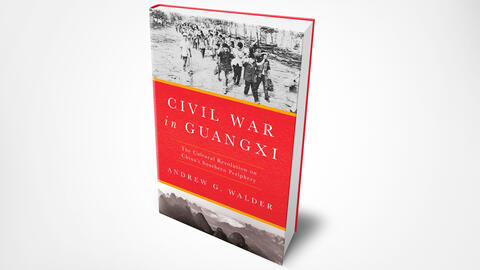
Guangxi, a region on China's southern border with Vietnam, has a large population of ethnic minorities and a history of rebellion and intergroup conflict. In the summer of 1968, during the high tide of the Cultural Revolution, it became notorious as the site of the most severe and extensive violence observed anywhere in China during that period of upheaval. Several cities saw urban combat resembling civil war, while waves of mass killings in rural communities generated enormous death tolls. More than one hundred thousand died in a few short months.
These events have been chronicled in sensational accounts that include horrific descriptions of gruesome murders, sexual violence, and even cannibalism. Only recently have scholars tried to explain why Guangxi was so much more violent than other regions. With evidence from a vast collection of classified materials compiled during an investigation by the Chinese government in the 1980s, this book reconsiders explanations that draw parallels with ethnic cleansing in Rwanda, Bosnia, and other settings. It reveals mass killings as the byproduct of an intense top-down mobilization of rural militia against a stubborn factional insurgency, resembling brutal counterinsurgency campaigns in a variety of settings. Moving methodically through the evidence, Andrew Walder provides a groundbreaking new analysis of one of the most shocking chapters of the Cultural Revolution.
Reviews of Civil War in Guangxi
Review by Donald S. Sutton, Carnegie Mellon University
Published in The China Quarterly, November 6, 2023
"This work is yet another vital contribution to the study of the Cultural Revolution by the sociologist Andrew Walder.... It will be essential reading for scholars of the People's Republic and an accessible source, for informed lay readers and students, on the horrors of the Cultural Revolution."
Review by Yueran Zhang, University of Maryland Global College
Published in Social Forces, March 2024
"What is unique about Civil War in Guangxi. . . is its refreshing emphasis on the geopolitical dimension of the Cultural Revolution's complex twists and turns, concretely tying the tragic unfolding of political processes in China to the war operation in Vietnam. As such, this book is not only of pivotal interest to scholars of collective mobilization, political violence, and Chinese communism, but also firmly places itself in conversation with global and transnational sociology and scholarship on the US empire in the post-war era."
Review by Eddy U, University of California, Davis
Published in International Sociology, April 2, 2024
"The book furnishes a rich, multilayered, and event-based account of politics and governance (or the lack of it) in Guangxi during the Cultural Revolution."
Review by Fei Yan, Tsinghua University
Published in Contemporary Sociology, April 27, 2024
"Enriched with a wealth of fresh data and evidence, Walder's book substantially enhances readers' comprehension of the intricacies of political violence in modern Chinese history. It also makes a substantial and pertinent contribution to the broader dialogues encompassing political sociology and contentious politics."
Review by James J. Hudson, University of North Carolina at Pembroke
Published in Twentieth-Century China, May 2024
"Civil War in Guangxi adds yet another important chapter to the narrative history of China's Cultural Revolution decade. . . . [A] new generation of scholars and students will have access to a valuable resource in Civil War in Guangxi, one that can teach lessons on how moments of intense political unrest can unleash the most horrid of inhuman tendencies in a society."
Review by K. Lynass, University of Maryland Global College
Published in Choice, September 2024
"This is an excellent illustration of sociological study, using newer ideas of analyzing the data in such a way that contextualizes the information provided in the sources. Essential."
Review by Daniel Leese, University of Freiburg, Germany
Published in International Review of Social History, November 5, 2024
"Walder convincingly demonstrates that it is of crucial importance to take the specific chains of events into account in order to understand both the rise of factionalism and the patterns of political violence in Guangxi. Based on this largely historical approach, in combination with state-of-the-art statistical analysis and painstaking empirical detail, Andrew Walder has been able to significantly advance our understanding of why political violence in Guangxi came to be so much more intense than in most other Chinese regions."
Review by Daniel Koss, Harvard University
Published in Pacific Affairs, March 2025
"Cutting through the complexity of events, Walder's theory identifies forces that tie together the dynamics of the Cultural Revolution throughout the province. I am not aware of other analyses about Maoist movements which connect with such precision disparate events in towns and villages to events at higher levels of the state."
Review by Yiching Wu, University of Toronto
Published in China Journal, January 2026
"Civil War in Guangxi builds on an impressive range of archival materials, official reports, and local gazetteers. It uses provincial and county annals, confidential Communist Party documents, and post–Cultural Revolution investigation reports to provide a comprehensive account of political alignments, military interventions, and mass violence. By meticulously analyzing these materials, Walder traces the trajectories of factional conflicts from political struggles to full-scale militarized conflicts. . . . Civil War in Guangxi is set to become a key reference for anyone interested in the Cultural Revolution and the political history of the PRC. The book not only reaffirms Walder’s standing as the leading authority in the field but will also be an indispensable read for anyone hoping to gain a deeper understanding of this turbulent era."
All Publications button
1
Publication Type
Books
Publication Date
Subtitle
The Cultural Revolution on China's Southern Periphery
Book Publisher
Stanford University Press
Book Publisher External URL
A Homecoming for Korean Studies: The Journal of Korean Studies Returns to Stanford
News Type
News
Date
Paragraphs
The Journal of Korean Studies (JKS), the flagship peer-reviewed publication in the field of Korean studies, returns to Stanford University’s Korea Program at the Walter H. Shorenstein Asia-Pacific Research Center (APARC) with the publication of Volume 31, Issue 1. JKS publishes a broad range of original scholarly articles related to Korean history, culture, politics, and society. The journal also publishes reviews of new Korea-related books, making it both a venue for original research and a guide to the field’s expanding literature. Its contributors and readership span disciplines and continents, bringing together historians, literary and cultural scholars, sociologists, political scientists, and anthropologists representing the wide range of disciplinary approaches in Korean studies.
The journal’s institutional history traces the arc of Korean studies in the United States. The journal was originally established in 1969 at the University of Washington in Seattle, the early center of gravity for Korean studies in America. After the publication of two standalone volumes (1969, 1971), James Palais, an influential historian of premodern Korea, shaped the journal's intellectual character through serial publication (1979-1987). Michael Robinson, at Indiana University-Bloomington, carried the journal forward as editor (1988-1992) before a long publication hiatus. In 2004, JKS was revived at Stanford University by co-editors Gi-Wook Shin, the William J. Perry Professor of Contemporary Korea and director of the Korea Program at APARC, and John Duncan, professor of Korean history at UCLA and former director of its Center for Korean Studies. It was housed at Stanford until 2008. The journal has since been guided by editorial leadership at the University of Washington (Clark Sorensen), Columbia University (Theodore Hughes), and The George Washington University (Jisoo Kim). JKS returns to Stanford under the new editorial team of Paul Chang (Shorenstein APARC), Yumi Moon (Department of History), and Dafna Zur (Department of East Asian Languages and Cultures).
JKS welcomes manuscripts from researchers at all career stages, working across the full range of topics, periods, and methodologies reflected in the field of Korean studies. Korean studies is undergoing genuine growth with new generations of scholars producing compelling work that is reshaping our understanding of Korea’s past and present. The Journal of Korean Studies exists to support and disseminate that work.
Kerstin Norris is a research associate at APARC’s Korea Program and managerial editor of The Journal of Korean Studies.
Read More


Hero Image

All News button
1
Subtitle
The Walter H. Shorenstein Asia-Pacific Research Center’s Korea Program welcomes back The Journal of Korean Studies with the publication of Volume 31, Issue 1.
Display Hero Image Wide (1320px)
Yes
Do Transitional Justice Museums Change Minds?
News Type
News
Date
Paragraphs
On March 5, as part of the Center on Democracy, Development and the Rule of Law’s Research Seminar Series, Laia Balcells — the Christopher F. Gallagher Family Professor of Government at Georgetown University — delivered a presentation on the impact of transitional justice museums. Balcells presented a series of co-authored studies that have examined the political and social effects of transitional justice museums — institutions that commemorate victims of past violence and shape collective memory in post-conflict or post-authoritarian societies. These museums were presented as part of broader transitional justice efforts, alongside trials, truth commissions, and reparations, all of which aim to address historical injustices and strengthen democratic values. The central question of the research project is whether these museums actually influence visitors’ political attitudes and beliefs, and under what conditions such influence occurs.
Transitional justice museums have become increasingly common around the world, particularly since World War II, as societies have attempted to confront legacies of violence and authoritarian rule. Despite their growing prevalence, their societal impact has remained contested. Some scholars have argued that museums encourage empathy, tolerance, and greater awareness of human rights. Others have warned that they may generate political polarization, especially when the historical narratives they present challenge existing identities or ideological commitments. The presentation, therefore, emphasized the need for systematic evidence to determine when museums persuade audiences and when they instead reinforce existing divisions.
To investigate this question, the research presented by Balcells relied on multiple field experiments conducted in museums across different political contexts. The first case study (co-authored with Valeria Palanza and Elsa Voytas) examined the Museo de la Memoria y de los Derechos Humanos in Santiago, Chile, which commemorates victims of the Pinochet dictatorship. Participants were randomly assigned either to visit the museum or to a control group, and their attitudes were measured before and after the visit. The results suggested that visiting the museum significantly influenced visitors’ emotions and political attitudes. In particular, exposure to the museum increased emotional responses, such as compassion toward victims, and affected views on transitional justice and democratic institutions. Some of these effects also persisted over time, indicating that museum experiences could have lasting attitudinal consequences.
The second case (co-authored with Elsa Voytas) focused on an exhibit on “The Troubles” at the Ulster Museum in Northern Ireland. This context differed from Chile because the conflict involved multiple groups and remained politically sensitive. The research design combined focus groups, field experiments with university students, and survey experiments with members of the general population. Although the exhibit generated strong emotional reactions among visitors, the findings showed little evidence that it significantly changed attitudes toward out-groups or transitional justice policies. Instead, political identities and sectarian divisions remained largely stable. This suggested that in deeply divided societies, emotional responses to historical narratives do not necessarily translate into meaningful changes in political attitudes.
The third case (co-authored with Francesca Parente and Ethan vanderWilden) examined the United States Holocaust Memorial Museum in Washington, DC. Unlike the previous cases, the Holocaust did not directly implicate the museum’s primary audience in the same way as domestic conflicts. The research tested whether visiting the museum increased support for democratic values and reduced antisemitic attitudes. The findings showed that visits increased agreement with what Balcells and her co-authors described as “inclusive Holocaust lessons,” including stronger support for democracy, human rights, and opposition to genocide and authoritarianism. The museum also increased empathy toward Jewish people and support for Holocaust remembrance, with some effects lasting for at least one month after the visit.
Overall, the comparative analysis suggested that transitional justice museums could shape attitudes, but their effectiveness depended heavily on political and social context. Museums appeared more successful at reinforcing democratic norms and historical awareness than at transforming deeply entrenched intergroup attitudes. The presentation concluded by highlighting what Balcells referred to as the “Transitional Justice Museum Paradox”: societies that most need such institutions to promote reconciliation may also be the places where the likelihood of establishing such museums is lower, and where, if they are built, their impact is most limited.
Read More


Hero Image

All News button
1
Subtitle
Georgetown scholar Laia Balcells's research finds that museums commemorating past atrocities can shift political attitudes — but the extent of that shift depends on context.
In Brief
- Transitional justice museums can shift political attitudes, but their impact depends heavily on social and political context.
- Field experiments in Chile, Northern Ireland, and Washington, D.C., reveal stark differences in how museum visits affect visitors.
- In divided societies, emotional responses to historical narratives rarely translate into changed attitudes toward out-groups or reconciliation.
Display Hero Image Wide (1320px)
No
APARC Visiting Scholar Sheds Light on the Cold War Roots of Contemporary Urban Politics in Southeast Asia
News Type
News
Date
Paragraphs
Southeast Asia’s megacities, long viewed as symbols of progress, are facing crises ranging from floods and ecological damage to displacement and widening inequality. Scholars of contemporary urban politics often attribute these predicaments to rapid globalization that originated in the mid-1980s. Yet APARC Visiting Scholar Gavin Shatkin argues they must be understood in the context of the Cold War era, when urban development agendas were molded by authoritarian regimes exerting political and economic control in the name of anti-communism.
Shatkin, an urban planner specializing in the political economy of urbanization and urban policy and planning in Southeast Asia, is a professor of public policy and architecture at Northeastern University. He recently completed his residency at APARC as a Lee Kong Chian National University of Singapore-Stanford fellow on Southeast Asia. Before heading to Singapore for the second part of his fellowship, he presented research from his new book project, which examines how U.S.-supported authoritarian regimes in Indonesia, the Philippines, and Thailand shaped urban politics in three megalopolises —Jakarta, Bangkok, and Metro Manila — during the 1960s and 1970s, with consequences that reverberate today.
Political Violence as Foundation
Shatkin refers to the period from the mid-1960s to the mid-1970s as Southeast Asia's "hot Cold War." During that time, in tandem with the armed conflict in Vietnam, Laos, and Cambodia, political violence spread through Indonesia, the Philippines, and Thailand, as the three countries witnessed the emergence of authoritarian regimes that cemented their rule by manipulating laws and institutions and deploying targeted, often extreme violence justified as necessary to combat communism.
In Indonesia, a U.S.-backed 1965 military coup, directed particularly at the Communist Party of Indonesia, led to the massacre of 500,000 to one million people, heralding General Suharto's 32-year authoritarian rule.
In the Philippines, amid leftist demonstrations and a communist insurgency, President Ferdinand Marcos declared martial law in 1972, marking the beginning of a decade defined by his administration’s widespread human rights violations, throughout which the United States continued to provide foreign aid to the country, considering Marcos a steadfast anti-communist ally.
And in Thailand, the imposition of the 1958 military dictatorship to counter communist threats and the 1976 crackdown by Thai police and right-wing paramilitaries against leftist protesters were pivotal points in establishing a royalist-nationalist model that defined "Thainess" (khwam pen thai) through loyalty to the monarchy, aligned with military power as well as American military aid and counter-insurgency policy guidance.
According to Shatkin, these were not isolated incidents but defining episodes of political violence that cemented authoritative oligarchic control over urban development. The explosive urbanization in Southeast Asian cities that followed in the mid-1980s must be read through the lens of this earlier period, when authoritarian regimes sought to exploit urban transformation to entrench political and economic power.
Urban development takes the form of the linking up of an archipelago of exclusive spaces that reinforces the spatial dichotomy and segregation characterizing these three cities.
Gavin Shatkin
Oligarchic Politics
The Suharto regime's approach to Jakarta as a source of profit exemplifies this dynamic. Shatkin explains how, between 1985 and 1998, Indonesia's National Land Agency distributed land permits for extensive urban development across the Jakarta metropolitan region to a small network of oligarchic conglomerates, such as the Salim Group. These crony corporations, allied with Suharto through family ties and political patronage, came to dominate Indonesia’s economy. Many of these same corporate interests continue to influence development agendas in Jakarta today, owning exclusive rights to purchase and develop permitted land.
The same pattern of successive waves of government expansion of metropolitan regions through infrastructure development and the distribution of land to selected major conglomerates has repeated itself in Manila and Bangkok, creating in-country profit centers for economic interests and what Shatkin calls “an archipelago of exclusive gated elite spaces” that reinforces spatial dichotomy and segregation as each of these megacities also experiences a housing crisis.
For example, Shatkin’s research in Metro Manila during the late 1990s and early 2000s revealed that approximately 40% of the population lived in dense informal settlements. A significant portion of these residents were employed in the nearby container port, yet their wages were insufficient to afford legal housing near their workplace. This discrepancy highlights a structural dilemma where low-wage workers are effectively compelled to occupy land illegally.
Environmental crises in the three urban giants are also entrenched in political and social structures rooted in oligarchic and authoritarian legacies of the Cold War era, argues Shatkin. Thus, increasingly devastating floods in Jakarta, Metro Manila, and Bangkok have less to do with sea level rise and far more with the rapid spread of impervious surfaces and the extraction of groundwater resulting from uncontrolled urban sprawl on converted watershed lands within a relatively weak regulatory environment. Moreover, flooding mitigation solutions, like Indonesia’s Great Garuda seawall project, have perpetuated the same pattern of land giveaways to major developers.
Movements on the ground evoke Cold War legacies in the way that they contest contemporary urban issues.
Gavin Shatkin
Lessons from Urban Social Movements
Crucially, Shatkin's research shows that Southeast Asian urban activists themselves frame their struggles through the lens of Cold War legacies. For example, when Jakarta residents along the Ciliwung River faced eviction for flood mitigation in 2015, they challenged the Jakarta administration and the Ciliwung-Cisadane Flood Control Office in court, arguing the eviction was based on a Cold War-era law drafted during counterinsurgency operations that had no place in democratic Indonesia. They partially won the case.
In a similar vein, Thailand's Red Shirt movement, representing working-class people from the northeast, deliberately protested on land owned by the Crown Property Bureau, using iconography that critiqued the military-monarchy-elite alliance forged during the Cold War.
An example from Manila is the 2001 mass protests by urban, low-income groups in defense of President Joseph Estrada, who was impeached for corruption. Their support can be interpreted as a reaction against “anti-poor” discourse that originated in the Ferdinand Marcos era. For the urban poor, Estrada represented a powerful counterweight to this legacy of elite disdain.
"We need to listen to these protest movements on the ground,” says Shatkin. They do not primarily critique globalization but rather contest entrenched oligarchy and state paternalism forged by Cold War political violence. Thus, an alternative framework for understanding debates in urban politics of Jakarta, Manila, and Bangkok is to view them not merely as capitals shaped by globalization but as Cold War frontline sites.
Beyond Southeast Asia
The implications of Shatkin’s theoretical framework extend beyond Jakarta, Metro Manila, and Bangkok, and even beyond Southeast Asia. It illuminates how periods of political upheaval create enduring social, economic, and environmental inequalities.
Moreover, these three urban giants, which produce outsized shares of their nations' GDP, rank among the world's largest cities. Their futures will not only affect Southeast Asia but also global urban development patterns. Shatkin's work suggests that this future cannot be charted without reckoning with the past.
Read More


Hero Image

All News button
1
Subtitle
Gavin Shatkin, a Lee Kong Chian NUS-Stanford fellow on Southeast Asia at APARC, argues that prevailing urban development challenges in Jakarta, Metro Manila, and Bangkok stem from Cold War-era political and institutional structures imposed by U.S.-backed authoritarian, anti-communist regimes.
Israel's Foreign Policy Through 3,500 Years of History
News Type
News
Date
Paragraphs
On December 3, 2025, the Jan Koum Israel Studies Program at CDDRL hosted Dr. Emmanuel Navon, a French-born Israeli international relations scholar and author of The Star and the Scepter: A Diplomatic History of Israel, for a webinar moderated by Amichai Magen, Director of the Jan Koum Israel Studies Program. Covering 3,5000 years of Israeli foreign policy, Navon—a lecturer on International Relations at Tel Aviv University and a senior fellow at the Jerusalem Institute for Strategy and Security—explored tensions between political realism (the "scepter") and idealism (the "star") that have shaped Jewish diplomatic thought throughout history. Focused on Vladimir Jabotinsky, David Ben-Gurion, and others, Navon argued that from October 7, 2023, Israeli strategic thinking shifted: facing ideologically-driven enemies willing to sacrifice everything for Israel's destruction, Israelis watched the "iron wall" doctrine of deterrence collapse physically and conceptually.
Navon noted that post-October 7 Israel must move strategically beyond containment and actively dismantle existential threats. He also described a spiritual reawakening among Israelis redefining their Jewish identities in response to unrelenting hatred. He contextualized the global focus on Israel within debates over Western values, democracy, and resistance to Islamist ideology. In response to audience questions about antisemitism, information warfare, and the blurring lines between Israeli foreign policy and diaspora concerns, Navon outlined how, through sophisticated propaganda and rhetoric centered on justice and self-determination, Israel's adversaries project their own colonial ambitions and human rights abuses onto Israel.
A full recording of the webinar can be viewed below:
Read More


Hero Image

All News button
1
Subtitle
Dr. Emmanuel Navon, author of “The Star and the Scepter,” explored the enduring tension between realism and idealism in Jewish diplomacy and the paradigm shift following October 7.
Display Hero Image Wide (1320px)
No
Understanding the Persistence of the Israeli–Palestinian Conflict
News Type
News
Date
Paragraphs
The October 22, 2025, session of the Israel Insights webinar series featured a discussion with Professor Azar Gat, the Ezer Weitzman Chair of National Security and Head of the International and Executive MA Programs in Security and Diplomacy in the School of Political Science, Government and International Affairs at Tel Aviv University. Hosted by the Jan Koum Israel Studies Program (JKISP) at the Center on Democracy, Development and the Rule of Law, the webinar was moderated by JKISP Director Amichai Magen. Gat described “the problem with the Palestinian problem" as outlined in his recent essay for Israel’s Institute for National Security Studies (INSS), detailing his approach to why the Israeli-Palestinian conflict has remained uniquely challenging despite decades of negotiation and apparent consensus around a two-state solution. The primary "Palestinian ethos," he argued, has not centered on creating an independent Palestinian state alongside Israel, but rather it has centered on the rectification of what is perceived as the injustice of 1948, wherein the Jewish state was established. In the Q&A, Gat and Magen explored implications for Israeli strategy, regional normalization, and the balance between realism and hope in future negotiations.
A full recording of the webinar can be viewed below:
Read More


Hero Image

All News button
1
Subtitle
In an Israel Insights webinar, Professor Azar Gat examined how unresolved questions of historical legitimacy have shaped decades of failed negotiations.
Display Hero Image Wide (1320px)
No
The Great Divergence and the Great Reversal: A new approach to global economic history
Paragraphs
The starkly different paths of economic development followed by China and the West leading to the Industrial Revolution is often being attributed to environmental factors. This column argues that institutions and culture played a key role in setting Europe and China on divergent paths well before the onset of the Industrial Revolution, but the role they played was mediated by a critical difference between the two civilizations: the nature of their prevalent social organizations. A key factor behind China’s remarkable economic resurgence has been its capacity to adapt traditional institutions and cultural practices to the needs of a modern economy.
All Publications button
1
Publication Type
Journal Articles
Publication Date
Journal Publisher
VoxEU / CEPR