Climate change
Authors
George Krompacky
News Type
News
Date
Paragraphs
Image
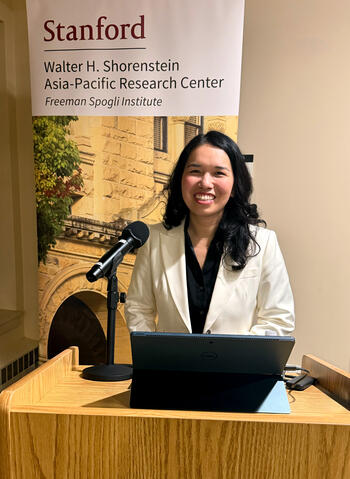
Image of Jessica Chen Weiss at the podium

At a recent seminar hosted by APARCʼs China Program, Professor Jessica Chen Weiss, the David M. Lampton Professor of China Studies at the Johns Hopkins University's School of Advanced International Studies, presented findings from her forthcoming book, Faultlines: The Tensions Beneath China's Global Ambitions (under contract with Oxford University Press), which examines how domestic politics and regime insecurity shape China’s foreign policy ambitions, prospects for peaceful coexistence, and the future of international order. Drawing on research and fieldwork in China, Weiss argued that understanding Beijingʼs behavior on the world stage requires looking beyond ideology to the contested priorities and political calculations that drive decision-making within the Chinese Communist Party (CCP).

Weiss proposed a framework centered on three pillars that have sustained CCP legitimacy since the late 1970s: sovereignty (nationalism), security (civility), and development. Her analysis reveals that China's objectives are not static but moving targets shaped by competing domestic interests, leadership priorities, and international pressures.


Sign up for APARC newsletters to receive our event invitations and programming highlights >


The Sovereignty-Security-Development Paradigm
 

At the heart of Weissʼs argument is the recognition that the CCPʼs foremost concern is domestic survival. In the face of the collapse of most communist regimes, the Party has remained vigilant against what it calls “peaceful evolution” and democratic contagion.

On issues touching core sovereignty concerns – Taiwan, Hong Kong, and maritime territorial claims – China has been “hyperactive” in making demands, even when doing so invites international censure. Weiss explained that the more central an issue is to CCP domestic legitimacy, the harder it becomes to make concessions, and the more likely international pressure is to backfire.

Yet tensions exist between competing priorities. China has compromised on certain border disputes to shore up domestic security, while its evolving stance on climate change reflects a shift from viewing carbon limits as threats to growth to recognizing the greater threat environmental catastrophes present to the nation’s stability.

Beyond the Monolith: China's Internal Contestation
 

Weissʼs research demonstrates that authoritarian China is far from monolithic. Different geographic, economic, institutional, and even ideological interests shape policy debates, even if most actors lack formal veto power. Local governments can resist central directives, as evidenced during the COVID-19 outbreak, when local officials initially withheld information about human-to-human transmission from the central government to prevent panic from disrupting important political meetings.

This pattern of center-local tension extends to China's international commitments. Local officials often game environmental regulations to juice growth and secure promotions, undermining Beijingʼs pledges on carbon emissions. On issues ranging from Belt and Road investments to export controls, implementation frequently diverges from stated policy as local actors pursue their own interests.

Weiss’s framework distinguishes among issues that are both central and uncontested (such as Taiwan), those that are central but contested (like climate change and trade policy), and peripheral issues where Beijing has shown greater flexibility (such as demonstrated by many UN peacekeeping initiatives). This helps explain why international pressure succeeds in some domains but fails spectacularly in others.

"The more central an issue is domestically, the more pressure the government faces to perform, and the harder it is to defy these domestic expectations," Weiss said. As a result, international pressure on these central issues is more likely to backfire, forcing the government to be seen as defending its core interests. She underscored that "even on these central issues, there's often tension with other central priorities, and managing these trade-offs comes with a number of different risks. It also means that sometimes an issue that touches on one pillar of regime support can yield to another."

Nationalism as Constraint and Tool
 

Weiss described nationalism as both a pillar of the CCPʼs legitimacy and a potential vulnerability when the government’s response appears weak. While large-scale anti-foreign protests have become rare, nationalist sentiment remains active online and shapes diplomatic calculations.

During Speaker Nancy Pelosiʼs 2022 visit to Taiwan, Chinese social media erupted with calls for the PLA to shoot down her plane. One interlocutor told Weiss his 14-year-old son and friends had stayed up past bedtime to watch Pelosiʼs plane land, illustrating nationalismʼs penetration into Chinese society.

Survey research reveals Chinese public opinion is quite hawkish, with majorities supporting military spending and viewing the U.S. presence in Asia as a threat. The government often refrains from suppressing nationalist sentiment to avoid backlash, even when doing so creates diplomatic complications. Weissʼs public opinion survey experiments, however, reveal that tough but vague threats can provide the government with wiggle room for de-escalation, although disapproval emerges when action is not sufficiently tough.

China's activities are making autocracy more viable and, to the extent that China is succeeding, making China's example more appealing as a consequence. But its strategy doesn't hinge on defeating democracy around the world.
Jessica Chen Weiss

Regime Security Without Ideological Crusade
 

Weiss pushed back against arguments that China is bent on global domination or that ideology drives conflict with the West. While the CCP seeks a less ideologically threatening environment, it must balance this against development and market access.

This pragmatic calculus explains China's constrained support for Russiaʼs war in Ukraine — Beijing fears secondary sanctions more than it values autocratic solidarity. Rather than exporting revolution, China has worked with incumbents of all political stripes in the service of its national interests.

Chinaʼs strategy focuses on making autocracy viable at home, not on defeating democracy globally. This suggests room for coexistence if both sides can reach a détente on interference in internal affairs.

“China's activities are making autocracy more viable and, to the extent that China is succeeding, making China's example more appealing as a consequence. But its strategy doesn't hinge on defeating democracy around the world,” argued Weiss. This implies, to her view, that “there is more room for coexistence between autocracies and democracies if these different systems can find or reach a potential détente in the realm of ideas about how countries govern themselves, and importantly, they need to pull back their efforts in other societies across boundaries.”

Interdependence and Future Trajectories
 

Weiss concluded by outlining how her framework suggests different engagement strategies depending on where issues fall within the centrality-contestation matrix. On central but uncontested issues like Taiwan, pressure proves counterproductive, and reciprocal restraint may be most promising. On central but contested issues like currency, multilateral pressure can influence certain Chinese constituencies against others. On peripheral issues, such pressure is most effective unless powerful domestic constituencies subvert implementation.

Addressing questions about U.S.-China decoupling, Weiss noted that both sides recognize there are interdependencies that don’t have quick solutions. Even in a critical area like minerals, diversification will take at least a decade, and Chinese processing will still dominate globally. The goal of diversification should be to preempt coercion, not to achieve true decoupling.

Read More

Oriana Skylar Mastro (left), Map of Venezuela (center), and Larry Diamond (right)
Commentary

U.S. Venezuela Operation Likely Emboldens China, Risks Strategic Neglect of Indo-Pacific, Stanford Scholars Caution

Speaking on the APARC Briefing video series, Larry Diamond and Oriana Skylar Mastro analyze the strategic implications of the U.S. operation in Venezuela for the balance of power in the Taiwan Strait, Indo-Pacific security, America’s alliances, and the liberal international order.
U.S. Venezuela Operation Likely Emboldens China, Risks Strategic Neglect of Indo-Pacific, Stanford Scholars Caution
CP_David_Meale
News

The Future of U.S.-China Relations: A Guardedly Optimistic View

Eurasia Group’s David Meale, a former Deputy Chief of Mission at the U.S. Embassy in Beijing, reflects on the last 30 years and describes how the two economic superpowers can maintain an uneasy coexistence.
The Future of U.S.-China Relations: A Guardedly Optimistic View
Stanford campus scene with a palm tree seen through an arch. Text about call for nominations for the 2026 Shorenstein Journalism Award.
News

2026 Shorenstein Journalism Award Open for Nominations

Sponsored by Stanford University’s Shorenstein Asia-Pacific Research Center, the annual award recognizes outstanding journalists and news media outlets for excellence in covering the Asia-Pacific region. News editors, publishers, scholars, and organizations focused on Asia research and analysis are invited to submit nominations for the 2026 award through February 15, 2026.
2026 Shorenstein Journalism Award Open for Nominations
Hero Image
Chinese President Xi Jinping is applauded by senior members of the government and delegates.
Chinese President Xi Jinping is applauded by senior members of the government and delegates as he walks to the podium before his speech during the Opening Ceremony of the 20th National Congress of the Communist Party of China at The Great Hall of People on October 16, 2022 in Beijing, China.
Kevin Frayer/ Getty Images
All News button
1
Subtitle

China studies expert Jessica Chen Weiss of the Johns Hopkins School of Advanced International Studies reveals how the Chinese Communist Partyʼs pursuit of domestic survival, which balances three core pillars, drives Beijingʼs assertive yet pragmatic foreign policy in an evolving international order.

Date Label
In Brief
  • Chinaʼs foreign policy is driven by three domestic pillars: The CCPʼs pursuit of sovereignty, security, and development creates competing priorities that shape Beijingʼs assertiveness on core issues like Taiwan, while allowing flexibility on peripheral concerns such as UN peacekeeping.
  • International pressure often backfires on central issues: The more important an issue is to CCP domestic legitimacy, the harder it becomes to make concessions, meaning external pressure regarding Taiwan or territorial disputes tends to strengthen rather than moderate Beijingʼs position.
  • China is not monolithic: Local governments, industries, and different Party factions contest policy implementation, creating gaps between Beijingʼs stated commitments and actual behavior on issues ranging from environmental regulations to trade.
     
Display Hero Image Wide (1320px)
Yes
Authors
Noa Ronkin
News Type
News
Date
Paragraphs

Southeast Asia’s megacities, long viewed as symbols of progress, are facing crises ranging from floods and ecological damage to displacement and widening inequality. Scholars of contemporary urban politics often attribute these predicaments to rapid globalization that originated in the mid-1980s. Yet APARC Visiting Scholar Gavin Shatkin argues they must be understood in the context of the Cold War era, when urban development agendas were molded by authoritarian regimes exerting political and economic control in the name of anti-communism.

Shatkin, an urban planner specializing in the political economy of urbanization and urban policy and planning in Southeast Asia, is a professor of public policy and architecture at Northeastern University. He recently completed his residency at APARC as a Lee Kong Chian National University of Singapore-Stanford fellow on Southeast Asia. Before heading to Singapore for the second part of his fellowship, he presented research from his new book project, which examines how U.S.-supported authoritarian regimes in Indonesia, the Philippines, and Thailand shaped urban politics in three megalopolises —Jakarta, Bangkok, and Metro Manila — during the 1960s and 1970s, with consequences that reverberate today.

Political Violence as Foundation


Shatkin refers to the period from the mid-1960s to the mid-1970s as Southeast Asia's "hot Cold War." During that time, in tandem with the armed conflict in Vietnam, Laos, and Cambodia, political violence spread through Indonesia, the Philippines, and Thailand, as the three countries witnessed the emergence of authoritarian regimes that cemented their rule by manipulating laws and institutions and deploying targeted, often extreme violence justified as necessary to combat communism.

In Indonesia, a U.S.-backed 1965 military coup, directed particularly at the Communist Party of Indonesia, led to the massacre of 500,000 to one million people, heralding General Suharto's 32-year authoritarian rule.

In the Philippines, amid leftist demonstrations and a communist insurgency, President Ferdinand Marcos declared martial law in 1972, marking the beginning of a decade defined by his administration’s widespread human rights violations, throughout which the United States continued to provide foreign aid to the country, considering Marcos a steadfast anti-communist ally.

And in Thailand, the imposition of the 1958 military dictatorship to counter communist threats and the 1976 crackdown by Thai police and right-wing paramilitaries against leftist protesters were pivotal points in establishing a royalist-nationalist model that defined "Thainess" (khwam pen thai) through loyalty to the monarchy, aligned with military power as well as American military aid and counter-insurgency policy guidance.

According to Shatkin, these were not isolated incidents but defining episodes of political violence that cemented authoritative oligarchic control over urban development. The explosive urbanization in Southeast Asian cities that followed in the mid-1980s must be read through the lens of this earlier period, when authoritarian regimes sought to exploit urban transformation to entrench political and economic power.

Urban development takes the form of the linking up of an archipelago of exclusive spaces that reinforces the spatial dichotomy and segregation characterizing these three cities.
Gavin Shatkin

Oligarchic Politics


The Suharto regime's approach to Jakarta as a source of profit exemplifies this dynamic. Shatkin explains how, between 1985 and 1998, Indonesia's National Land Agency distributed land permits for extensive urban development across the Jakarta metropolitan region to a small network of oligarchic conglomerates, such as the Salim Group. These crony corporations, allied with Suharto through family ties and political patronage, came to dominate Indonesia’s economy. Many of these same corporate interests continue to influence development agendas in Jakarta today, owning exclusive rights to purchase and develop permitted land.

The same pattern of successive waves of government expansion of metropolitan regions through infrastructure development and the distribution of land to selected major conglomerates has repeated itself in Manila and Bangkok, creating in-country profit centers for economic interests and what Shatkin calls “an archipelago of exclusive gated elite spaces” that reinforces spatial dichotomy and segregation as each of these megacities also experiences a housing crisis.

For example, Shatkin’s research in Metro Manila during the late 1990s and early 2000s revealed that approximately 40% of the population lived in dense informal settlements. A significant portion of these residents were employed in the nearby container port, yet their wages were insufficient to afford legal housing near their workplace. This discrepancy highlights a structural dilemma where low-wage workers are effectively compelled to occupy land illegally.

Environmental crises in the three urban giants are also entrenched in political and social structures rooted in oligarchic and authoritarian legacies of the Cold War era, argues Shatkin. Thus, increasingly devastating floods in Jakarta, Metro Manila, and Bangkok have less to do with sea level rise and far more with the rapid spread of impervious surfaces and the extraction of groundwater resulting from uncontrolled urban sprawl on converted watershed lands within a relatively weak regulatory environment. Moreover, flooding mitigation solutions, like Indonesia’s Great Garuda seawall project, have perpetuated the same pattern of land giveaways to major developers.

Movements on the ground evoke Cold War legacies in the way that they contest contemporary urban issues.
Gavin Shatkin

Lessons from Urban Social Movements


Crucially, Shatkin's research shows that Southeast Asian urban activists themselves frame their struggles through the lens of Cold War legacies. For example, when Jakarta residents along the Ciliwung River faced eviction for flood mitigation in 2015, they challenged the Jakarta administration and the Ciliwung-Cisadane Flood Control Office in court, arguing the eviction was based on a Cold War-era law drafted during counterinsurgency operations that had no place in democratic Indonesia. They partially won the case.

In a similar vein, Thailand's Red Shirt movement, representing working-class people from the northeast, deliberately protested on land owned by the Crown Property Bureau, using iconography that critiqued the military-monarchy-elite alliance forged during the Cold War.

An example from Manila is the 2001 mass protests by urban, low-income groups in defense of President Joseph Estrada, who was impeached for corruption. Their support can be interpreted as a reaction against “anti-poor” discourse that originated in the Ferdinand Marcos era. For the urban poor, Estrada represented a powerful counterweight to this legacy of elite disdain.

"We need to listen to these protest movements on the ground,” says Shatkin. They do not primarily critique globalization but rather contest entrenched oligarchy and state paternalism forged by Cold War political violence. Thus, an alternative framework for understanding debates in urban politics of Jakarta, Manila, and Bangkok is to view them not merely as capitals shaped by globalization but as Cold War frontline sites.

Beyond Southeast Asia


The implications of Shatkin’s theoretical framework extend beyond Jakarta, Metro Manila, and Bangkok, and even beyond Southeast Asia. It illuminates how periods of political upheaval create enduring social, economic, and environmental inequalities.

Moreover, these three urban giants, which produce outsized shares of their nations' GDP, rank among the world's largest cities. Their futures will not only affect Southeast Asia but also global urban development patterns. Shatkin's work suggests that this future cannot be charted without reckoning with the past.

Read More

Participants gather for a group photo at the 2025 Trans-Pacific Sustainability Dialogue.
News

Envisioning Cities as Sites and Actors for Sustainable Development: Lessons from the 2025 Trans-Pacific Sustainability Dialogue

Held in Manila, Philippines, the fourth annual Trans-Pacific Sustainability Dialogue generated cross-sectoral insights on complex issues faced by cities and human settlements across the region, from housing and mobility to disaster resilience.
Envisioning Cities as Sites and Actors for Sustainable Development: Lessons from the 2025 Trans-Pacific Sustainability Dialogue
Theara Thun
News

Rebuilding Education After Catastrophe: Theara Thun Examines Cambodia’s Post-Conflict Intellectual Landscape

Theara Thun, APARC’s Lee Kong Chian NUS-Stanford Fellow on Southeast Asia, investigates how educational systems emerged in post-Khmer Rouge Cambodia within the broader context of national recovery and development.
Rebuilding Education After Catastrophe: Theara Thun Examines Cambodia’s Post-Conflict Intellectual Landscape
Thai Ambassador Dr. Suriya Chindawongse
News

Crisis at the Border, Competition in the Region: Thai Ambassador to the US Outlines ASEAN’s Four “T's:” Truce, Tariffs, Technology, and Transnational Crime

Speaking just one day after deadly clashes between Thailand and Cambodia reignited along their shared border, Thai Ambassador Dr. Suriya Chindawongse joined APARC’s Southeast Asia Program to explain how a fragile truce, shifting U.S. tariffs, emerging semiconductor opportunities, and a surge in online scam syndicates are shaping ASEAN’s future.
Crisis at the Border, Competition in the Region: Thai Ambassador to the US Outlines ASEAN’s Four “T's:” Truce, Tariffs, Technology, and Transnational Crime
Hero Image
People walk through the flooded streets at Kampung Pulo on January 18, 2014 in Jakarta, Indonesia.
People walk through the flooded streets of Kampung Pulo in January 2014, in Jakarta, Indonesia. Severe flooding caused by heavy rains displaced over 40,000 people in northern Indonesia that year.
Oscar Siagian via Getty Images
All News button
1
Subtitle

Gavin Shatkin, a Lee Kong Chian NUS-Stanford fellow on Southeast Asia at APARC, argues that prevailing urban development challenges in Jakarta, Metro Manila, and Bangkok stem from Cold War-era political and institutional structures imposed by U.S.-backed authoritarian, anti-communist regimes.

Date Label
Authors
News Type
News
Date
Paragraphs

Introduction & Contribution:


The social and economic costs of climate change are significant, including damage to infrastructure, loss of agriculture, and disruptions to education. Hurricanes and storms, such as Hurricane Katrina or Myanmar’s Cyclone Nargis, are particularly visible and destructive manifestations of climate change. The incidence of these storms varies across places, suggesting that migration from more- to less-exposed areas could be an important form of climate adaptation, alongside, e.g., building more resilient infrastructure. However, our knowledge of climate migration, particularly its causes and frequency, is limited.

In “Understanding the migratory responses to hurricanes and tropical storms in the USA,” A. Patrick Behrer and Valentin Bolotnyy show — perhaps contrary to expectations — that Americans’ migratory response to storms is limited. Most storms do not result in meaningful out-migration from impacted counties. Meanwhile, when people do migrate, they do not necessarily move to areas with less storm exposure. The paper draws on a range of data sources to highlight the deeply economic drivers of migration, which stem from the concentration of economic opportunity in storm-exposed areas.

The paper highlights tensions between two commonplace assumptions: first, that “rational” migration should reduce the risks of climate change, and second, that migration is driven by economic opportunity. These assumptions are in tension precisely because, as Behrer and Bolotnyy show, hurricane risk and economic opportunity are highly correlated in America. One policy implication is that local governments must invest in storm-resilient infrastructure to prevent the destruction of physical capital and the flight of human capital. In addition, permitting more remote work could reduce the economic appeal of productive but vulnerable migration hubs.

A. Patrick Behrer and Valentin Bolotnyy show — perhaps contrary to expectations — that Americans’ migratory response to storms is limited. Most storms do not result in meaningful out-migration from impacted counties.

Prior Research:


Scholars have found evidence that hurricanes and storms both do and do not affect migration, which tends to vary based on the places studied and their levels of economic development. These contradictory findings would seem to call for a deeper investigation of the causal mechanisms underlying climate migration, but our understanding is also limited here. Do individuals and families migrate as a consequence of long-term factors (e.g., frequent, medium-intensity flooding) or short-term ones (e.g., a single severe flood)? Do they migrate on the basis of rational, cost-minimizing calculations, or are they influenced by cognitive biases that lead them to overestimate the true costs of one disaster? And what role do certain amenities (e.g., reliable infrastructure) or forms of protective insurance play in decreasing the incentives to migrate?

It is difficult to sustain a purely instrumental account of migration, which is largely driven by existing social networks and occurs over short distances. For example, many survivors of Hurricane Katrina moved to Houston, which is a similarly exposed city just over 300 miles away. Even long-distance migration tends to be driven by social networks and may offer little protection against storms. Finally, migration is costly, not only in terms of moving but because housing prices in less-exposed areas are often bid up for that very reason.

Data, Methods, and Results:


Behrer and Bolotnyy’s empirical analysis is guided by several questions. First, do we observe greater outmigration after storms? Second, do migrants move to less at-risk counties? And finally, has the overall population of high-risk areas declined over the last 25 years? To answer these questions, the authors utilize migration data from the Internal Revenue Service (IRS) as well as storm exposure data from the National Oceanic and Atmospheric Administration (NOAA), the National Hurricane Center, and the Federal Emergency Management Agency (FEMA). Their regression models estimate the extent of migratory change in storm years relative to non-storm years, including lagged models that estimate changes in the years following storms.


Image
Figures 1C, 1D, 1E, and 1F


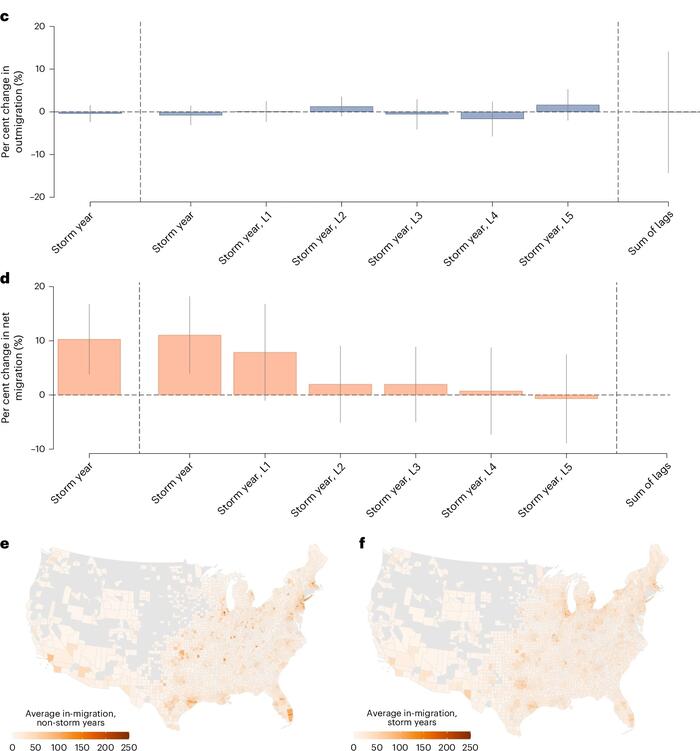
Fig. 1C-F: c,d, Coefficients from a panel fixed-effects regression of outmigration (c) and net migration (d) on whether a county experienced a storm. The first bar plots the coefficient from a regression with only contemporaneous storms. The next six bars show coefficients from a separate regression that includes contemporaneous storms and five year lags (L1–L5). The final bar shows the sum of the coefficients from the lags regression. The light grey lines show the 95% CIs. The sample size for these regressions was 52,514 for the outmigration results and 52,448 for the net migration results. e, Migrant-receiving counties in our sample period and the average number of migrants received in non-storm years. f, The same as e but in storm years.


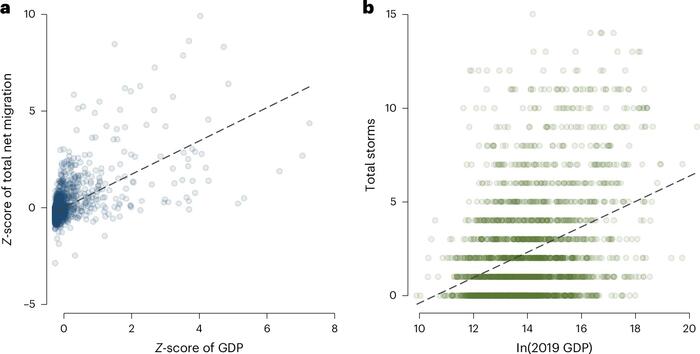
Their results indicate that American outmigration has not increased at statistically significant levels after storms. In addition, there is no evidence that migrants in storm years move to less exposed areas compared to migrants in non-storm years. The most damaging storms are indeed followed by increased outmigration, but there is no evidence that migrants move to low-risk areas. In fact, they often migrate to other high-risk areas and to places with high economic activity. This is because the majority of American GDP is generated in coastal areas where storms are more prevalent. The authors thus uncover a tradeoff, namely that places in the U.S. with more opportunity face more risk. GDP is substantially more predictive of migration than storm risk. The economic and social benefits of moving to high-risk areas appear to outweigh any incentives to reduce one’s storm exposure via relocation. Finally, the authors find that overall population exposure to storms has increased.


Image
Fig. 4: GDP versus net migration and number of storms.


Fig. 4: GDP versus net migration and number of storms. a, Correlation between net migration and GDP. The Z-score of total net migration is the Z-score across all counties of the sum of net migration (in-migration minus outmigration) for each county across all years in the sample. The Z-score of GDP is based on county GDP in 2019, as measured by the Bureau of Economic Analysis. All points are shaded equally, with darker areas on the graph indicating a greater density of counties. We omitted three outliers with GDP Z-scores >10. We show a version of this figure that includes the outliers in Supplementary Fig. 3. b, Correlation between the number of storms and GDP. Total storms is the sum of storms hitting each county across all years in our sample. ln(2019 GDP) is the natural log of county GDP in 2019, as measured by the Bureau of Economic Analysis. All points are shaded equally, with darker areas on the graph indicating a greater density of counties. The x-axis units are log points.
 

Image
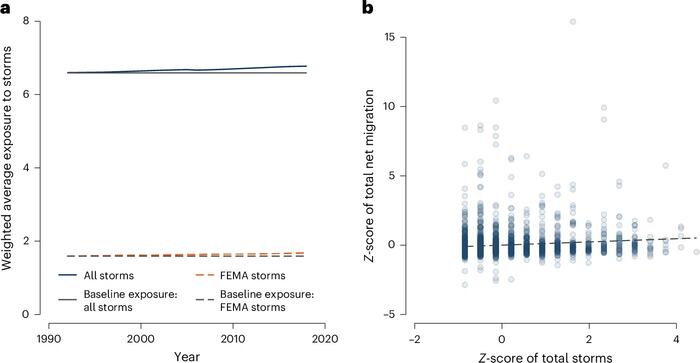
Fig. 3: Trend in population-weighted exposure and correlation between net migration and total storms.


Fig. 3: Trend in population-weighted exposure and correlation between net migration and total storms. a, Trend in population-weighted exposure. We plotted the weighted average number of storms across all 2,387 counties in our sample. Weights are the county population in each year. The number of storms in each county is the sum over the sample and so remains constant across years. The change in the trend line is due to changes in where people live. The flat grey lines show the weighted average if populations had not changed from 1990 levels—that is, if no one had moved. The solid lines show all storms. The dashed lines show storms with at least US$10 million in damages according to FEMA. b, Correlation between net migration and total storms. The Z-score of total net migration is the Z-score across all counties of the sum of net migration (in-migration minus outmigration) in the county across all years in the sample. The Z-score of total storms is the Z-score across all counties of all storms over our sample period. All points are shaded equally; darker areas on the graph indicate a greater density of counties. The dashed line is the linear best fit line of the plotted data points.


The authors caution that these findings may be driven by (a) those Americans most impacted by storms being least able to move, this despite their preferences to do so, and (b) those with the means to insure themselves against climate risks having weaker preferences to move. In addition, migration within the same county — for example, moving from lower to higher sea level areas — may be a significant but hidden process that enables climate adaptation. The findings may also be less relevant to understanding migration dynamics in low- and middle-income countries, especially in places with less comprehensive insurance and less resilient infrastructure.

Behrer and Bolotnyy deepen our understanding of the importance and “stickiness” of geography. Indeed, many people do not or cannot move, even if they want to and even if staying in place puts them at risk. One wonders about how these processes interact with politics. For example, climate change has coincided with the powerful forces of climate change denial. Perhaps skepticism about storms as systemic phenomena is blunting migratory pressures, leading those affected to view them as one-off occurrences. Similarly, social scientists have coined the term “petro-masculinity” to describe an identity that views the climate change consensus as an attack on, e.g., driving large trucks or eating meat. It may be that when this identity is salient, people view climate migration as a form of weakness or betrayal.

*Brief prepared by Adam Fefer.

Hero Image
Barber shop located in the Ninth Ward, New Orleans, Louisiana, damaged by Hurricane Katrina in 2005.
Library of Congress
All News button
1
Subtitle

CDDRL Research-in-Brief [4-minute read]

Date Label
Paragraphs

Climate change is intensifying droughts and threatening water security worldwide, particularly in arid and semi-arid regions. Israel’s innovative response has been to integrate large-scale desalination into its water supply and climate resilience strategy, recently constructing the Reverse Water Carrier, a pioneering project that conveys desalinated seawater from the Mediterranean inland to Lake Kinneret (Sea of Galilee). This study examines the objectives, rationale, and feasibility of this system as a model for climate-resilient water management. Using a qualitative case study approach, it evaluates the project across four dimensions: water security, environmental sustainability, economic feasibility and regional cooperation. Data were drawn from policy documents, expert interviews, and government reports. The analysis finds that replenishing the Kinneret with surplus desalinated water enhances national water reliability, reduces salinity, stabilizes agricultural production, and provides a critical emergency reserve, while introducing manageable energy and ecological trade-offs. Although long-term sustainability will depend on continued efficiency improvements and adaptive management, Israel’s experience demonstrates how inter-basin desalination transfers can strengthen water security and offer a replicable framework for other regions confronting climate-induced scarcity.

All Publications button
1
Publication Type
Journal Articles
Publication Date
Journal Publisher
Sustainability
Authors
Alon Tal
Number
23, 10636
Authors
News Type
News
Date
Paragraphs

Motivation & Overview:


The effects of the climate crisis are thought to be extremely far-reaching, from declining economic growth and agricultural productivity to housing displacement and job loss. An important set of consequences are psychological, relating to how climate change can exacerbate anxiety and one’s sense of hopelessness about an uninhabitable future. These psychological impacts are heightened for members of vulnerable and marginalized groups, as well as for those in poor and underdeveloped places that struggle to address climate change.

In “Adolescent psychological health, temporal discounting, and climate distress under increased flood exposure in Bangladesh,” Liza Goldberg and her coauthors examine the psychological well-being of 15 to 18-year-olds in two Bangladeshi cities that have been differentially affected by floods. The authors conduct surveys and focus groups with adolescents in the low-flood-risk capital city of Dhaka and the high-flood-risk city of Barisal. They find that although adolescents in both cities fear the personal impacts of climate change, rates of anxiety and depression are significantly higher in Barisal. In addition, those with anxiety and depression exhibit greater temporal discounting, meaning that short-term consequences are favored over longer-term ones. Discounting is an important — if neglected — consequence because adolescents will emerge as household decision-makers who must plan to adapt to climate change. The article is notable in increasing our knowledge of how floods harm members of an already vulnerable population.

Case Selection and Hypotheses:


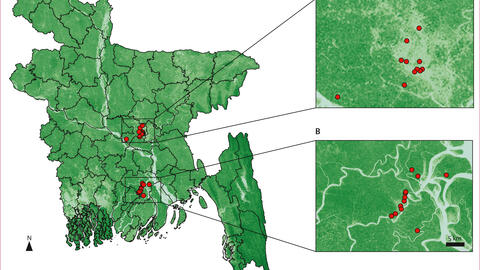
Bangladesh is among the world’s most climate-vulnerable countries. This is due to its “deltaic” geography (i.e., its low, flat land, crossed by many rivers) and consequent flood exposure, extreme temperature and humidity, and poor air quality. Barisal — a city of over 500,000 that is roughly 115 kilometers from Dhaka — is highly vulnerable to flooding, as well as being poorer (relative to Dhaka) and limited in its “climate adaptation infrastructure.” Partly for these reasons, rates of migration from Barisal to Dhaka are the highest in Bangladesh. By contrast, Dhaka — the capital city of over 24 million — is less flood-exposed and is slightly wealthier. Respondents in Barisal and Dhaka reported around four floods and one flood per year, respectively.


Figure. Study site locations in Bangladesh. Study sites at Dhaka (A) and Barisal (B) are shown in red.


Figure. Study site locations in Bangladesh. Study sites at Dhaka (A) and Barisal (B) are shown in red.


The authors hypothesize that Barisal’s greater flood exposure would be associated with more anxiety and depression among its adolescents, and that anxiety and depression would be associated with greater temporal discounting. (In other words, they do not expect that flood exposure would be directly associated with discounting.) In addition, the authors expect that these negative psychological effects would be especially pronounced among poor Bangladeshis, girls, and those with a greater awareness of the climate crisis.

Data and Findings:


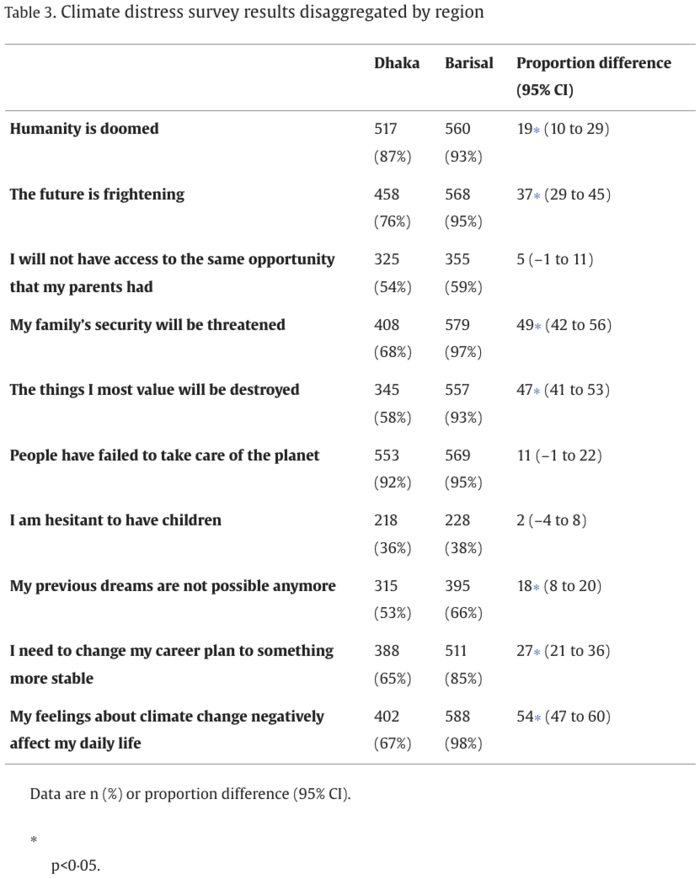
The authors surveyed 1200 Bangladeshi adolescents in 24 schools immediately after the flood season, which usually runs from May to September. In addition, 16 focus groups were conducted with around 160 total participants. Adolescents in both cities expressed a high familiarity with climate change. However, and consistent with the authors’ expectations, those in Barisal expressed significantly higher levels of agreement with statements about climate distress. For example 97% of those in Barisal compared to just 68% in Dhaka agreed that “My family’s security will be threatened,” 93% in Barisal and 58% in Dhaka agreed that “The things I most value will be destroyed,” and 98% in Barisal and 67% in Dhaka agreed that “My feelings about climate change negatively affect my daily life.” 


Image
Table 3. Climate distress survey results disaggregated by region.


Table 3. Climate distress survey results disaggregated by region.


The focus groups corroborated this unequal sense of despair, especially concerning the future and one’s educational and career goals. In Barisal, a boy said, “We expect that we will have to continue withstanding this [flooding] for many years to come,” while a girl said, “I used to want to become a teacher myself, but now I believe I will need to get married immediately after school because my father keeps losing his job during the floods.” By contrast, and because flooding in Dhaka is so infrequent, adolescents did not expect climate change to meaningfully threaten their life trajectories.

In terms of anxiety and depression, 86% of those in Barisal reported anxiety symptoms, compared to 71% in Dhaka, while 98% in Barisal and 88% in Dhaka reported depressive symptoms. After adjusting for factors like sex, wealth, and climate change awareness, the odds of being anxious and depressed in Barisal were nearly twice as high and more than 3.5 times as high, respectively. Across both cities, females were more than 1.75 times as likely to experience anxiety. And the odds of being depressed were over 1.85 times as high for those with a greater awareness of climate change.

I used to want to become a teacher myself, but now I believe I will need to get married immediately after school because my father keeps losing his job during the floods.

Girls in the Barisal focus groups revealed that flooding was linked to domestic violence. Fathers facing financial insecurity were reported to engage in violence against their mothers as a consequence of this stress. As one girl put it, “The floods keep getting worse and worse. So, I may experience even more violence than my mother does.” By contrast, few girls in Dhaka expressed worsening family dynamics, and none reported domestic violence owing to flooding. Adolescents in Dhaka believed that floods in their region were simply too fleeting to result in such abuse.

Finally, only 7% and 6% of adolescents in Barisal and Dhaka showed signs of temporal discounting. However, the odds of discounting were twice as high for those with anxiety and almost 2.5 times as high for those with depression. The authors find some evidence of discounting in the focus groups, but no meaningful differences across cities. This absence may be due to discounting behaviors emerging around adulthood, which is older than the adolescent study population. Taken together, the authors’ findings imply that mental health support will be essential for those affected by climate change — especially in impoverished areas — to help them manage stress and to improve their ability to plan for the future.

*Research-in-Brief prepared by Adam Fefer.

Hero Image
A woman stands on sandbags stacked to protect against flooding in Barisal, Bangladesh.
Liza Goldberg
All News button
1
Subtitle

CDDRL Research-in-Brief [4-minute read]

Date Label
Authors
Surina Naran
News Type
News
Date
Paragraphs

On October 9, 2025, FSI Senior Fellow Saumitra Jha presented his team’s research on how exposure to financial markets — meaning individuals’ exposure to tailored opportunities to directly engage with investment platforms and decision-making — can increase support for action on climate change. This CDDRL research seminar expanded on Jha’s earlier research on the effects of financial exposure and literacy as tools for reducing political polarization, including studies conducted in Israel, Mexico, and the United Kingdom.

During the seminar, Jha highlighted the study's relevance in an era of democratic backsliding, rising populism on both the right and the left, and increasing economic uncertainty. Jha emphasized that basic financial literacy — the ability to understand and practically apply financial concepts such as saving, investing, and diversifying risks— is essential for citizens navigating this environment. Jha’s team designed interventions that empower citizens, both in rich and poor countries, to build financial knowledge and, by focusing on common investments and the common good, ultimately mitigate political polarization and conflict.

The study focused on the partisan issue of climate change in the United States. Participants were oversampled from states either disproportionately affected by climate change or central to the green-energy transition — Pennsylvania, West Virginia, North Carolina, Tennessee, Georgia, Alabama, Arizona, Ohio, South Carolina, and Kentucky. Each participant in the treatment group initially received an investment portfolio that tracked stocks from either green energy companies (firms at the forefront of the transition, engaged in renewable energy like solar and wind) or brown energy companies (firms earlier in the transition, engaged in the extraction of fossil fuels such as oil and natural gas). Subjects had $50–$100 of real money or a virtual portfolio of funds to invest.

For five weeks, participants used a Robinhood-style investment platform (a simple online interface for buying and selling stocks) to trade their stocks. Midway through the study, they were able to trade across both green and brown stocks. At this point, they received additional financial disclosures (basic company performance data) and had access to climate-impact disclosures (data on companies' greenhouse gas emissions and how they affect or are affected by climate change). However, this is currently a central policy debate; very few participants actually chose to review climate disclosures, which Jha identified as a research question for a companion paper. The research team then evaluated results in four categories: (1) beliefs about human agency and tradeoffs with the green energy transition, (2) policy preferences, (3) political attitudes, and (4) personal behaviors.

The data demonstrated that this financial exposure treatment — i.e., hands-on stock trading experience — had a significant, meaningful, and lasting influence on participants’ beliefs. Relative to control, treated participants were 9% more likely to agree or strongly agree that human activity is a significant contributor to climate change. They further became more supportive of both government and corporate action to mitigate climate change, and came to view the green-energy transition as potentially economically beneficial. 

Further, the intervention was empowering, raising the financial literacy of participants and increasing their ongoing consumption of financial news outlets, rather than social media or Fox News. These effects were observable even eight months after the study. 

Further, these changes were not preaching to the choir — instead, the effects were observed across the political spectrum, particularly among those who were ex ante climate change skeptics. However, while treated participants were more likely to donate to climate causes and to consider climate when investing and working, they did not report an overall increased willingness to change their daily lives. For example, while reporting an increased willingness to reuse recyclable bags, most did not report an increased willingness to change ingrained daily habits, such as eating less meat or changing commute patterns.

Jha also previewed new results from a companion paper based on a long-term survey conducted 8 months after treatment. To examine how the treatment changes how participants preferred climate action to be implemented, the research team gauged support for two approaches: the “Abundance approach”, popularized by Ezra Klein, and the “Conservation and Regulation approach.” The Abundance approach emphasizes expanding investments in clean energy infrastructure, sustainable housing, and economic growth as solutions to climate change. By contrast, the Conservation and Regulation approach focuses on reducing energy use through government regulation, strong local autonomy, and personal restraint. The financial exposure treatment significantly raised the share of subjects supporting the Abundance approach.

Read More

Maria Nagawa presented her research in a CDDRL seminar on October 2, 2025.
News

Foreign Aid and the Performance of Bureaucrats

CDDRL postdoctoral scholar Maria Nagawa examines how foreign aid projects influence bureaucrats’ incentives, effort, and the capacity of bureaucratic institutions.
Foreign Aid and the Performance of Bureaucrats
Claire Adida
News

Overcoming Barriers to Women’s Political Participation: Evidence from Nigeria

In Nigeria, women are far less likely than men to attend meetings or contact leaders. Claire Adida’s research reveals interventions that make a difference.
Overcoming Barriers to Women’s Political Participation: Evidence from Nigeria
Forex trading using smartphones and laptops.
News

Trading Stocks and Trusting Others

CDDRL Research-in-Brief [4-minute read]
Trading Stocks and Trusting Others
Hero Image
Saumitra Jha presented his research in a CDDRL seminar on October 9, 2025.
Surina Naran
All News button
1
Subtitle

Can financial literacy shape climate beliefs? Saumitra Jha’s latest study suggests it can — and across party lines.

Date Label
Paragraphs

The adverse effects of climate change will be worse in some locations than in others, raising the possibility that migration from more severely impacted areas to less impacted areas will reduce future damages. Assessing whether such migration is already occurring can inform our understanding of future responses to climate change. Using data on the paths of all Atlantic basin hurricanes and tropical storms from 1992 to 2017, we study whether outmigration from US counties increases after a storm. On average, storms are not followed by outmigration, and total population-weighted exposure to storms increases over the sample period. Very destructive storms are followed by outmigration, though often to other high-risk counties. Counties with high economic activity see net in-migration after a storm. Given existing policies and incentives, the economic and social benefits of high-risk areas currently appear to outweigh the incentive to reduce exposure to future storms by relocating across counties.

All Publications button
1
Publication Type
Journal Articles
Publication Date
Journal Publisher
Nature Human Behaviour
Authors
News Type
Blogs
Date
Paragraphs

The world’s health systems face a complex and interconnected set of challenges that threaten to outpace our capacity to respond. Geopolitical fragmentation, climatic breakdown, technological disruption, pandemic threats, and misinformation have converged to strain the foundations of global health.  Building resilient global health systems requires five urgent reforms: sharpening the mandate of the World Health Organization (WHO), operationalizing the One Health concept, modernizing procurement, addressing the climate–health nexus, and mobilizing innovative financing. Together, these shifts can move the world from fragmented, reactive crisis management to proactive, equitable, and sustainable health security.

Emerging and Escalating Threats

While the global community demonstrated remarkable resilience in weathering the COVID-19 pandemic, the crisis also exposed profound structural weaknesses in global health governance and architecture. Chronic underinvestment in health systems led to coverage gaps, workforce shortages, and inadequate surveillance systems. The pandemic also revealed a fragmented global health architecture, plagued by institutional silos among key agencies (Elnaiem et al. 2023).

Years later, the aftershocks of the pandemic still resonate worldwide, with the ongoing triple burden of disease—the unfinished agenda of maternal and child health, the rising silent pandemic of noncommunicable diseases, and the reemergence of communicable diseases. These challenges, combined with the persistent challenge of malnutrition, unmet needs in early childhood development, growing concerns around mental health, and the threat of other emerging diseases, as well as the rising toll of trauma, injury, and aging populations, have placed countries across the world under immense strain. Health systems face acute infrastructure gaps, critical workforce shortages, and persistent inequities in service delivery, making it increasingly difficult to address the complex and evolving health needs of their populations. Post-pandemic fiscal tightening has constrained health budgets with debt-to-GDP ratios exceeding 70–80% in parts of the region (UN ESCAP 2023).

Global development assistance for health has significantly declined by more than $10 billion, with sharp cuts driven by the United States. This decline is likely to continue over the next five years.

 Furthermore, climate change is fundamentally redefining the risk landscape. Rising temperatures, more frequent floods, intensifying storms, and shifting vector ranges for organisms like mosquitoes and ticks are disrupting food systems, displacing populations, and driving new patterns of disease transmission. Over the next 25 years in low- and middle-income countries, climate change could cause over 15 million excess deaths, and economic losses related to health risks from climate change could surpass $20.8 trillion (World Bank 2024). The cost of inaction has never been higher.

Meanwhile, deepening political polarization is amplifying conflict and weakening the global cooperation essential for scientific progress. The number of geopolitical disturbances worldwide is at an all-time high, displacing over 122 million people and eroding access to essential health services (UNHCR 2024). In 2023, false and conspiratorial health claims amassed over 4 billion views across digital platforms, compromising vaccine uptake and fueling health-related conspiracy theories. (Kisa and Kisa 2025). Furthermore, exponential technological advances in artificial intelligence are outpacing public health governance systems, creating new ethical and equity dilemmas. Global development assistance for health has significantly declined by more than $10 billion, with sharp cuts driven by the United States. This decline is likely to continue over the next five years (Institute for Health Metrics and Evaluation 2025).

Image
Graph showing total development assistance for health, 1990-2025
Note: Development assistance for health is measured in 2023 real US dollars; 2025 data are preliminary estimates.
Source: Institute for Health Metrics and Evaluation 2025.
 

Sign up for APARC newsletters to receive our experts' updates >


Five Critical Reform Directions for Future-Proofing Global Health Systems


1.    WHO matters more than ever — but only if it sharpens its focus.

The World Health Organization remains the technical backbone of global health, with a mandate to set norms and standards, shape research agendas, monitor health trends, coordinate emergency responses and regulation, and provide technical assistance. COVID-19 underscored both its indispensability and its limitations. During the pandemic, WHO convened states, disseminated guidance, and spearheaded initiatives like the Solidarity Trial and COVAX to promote vaccine equity, illustrating why it remains vital as the only neutral platform where 194 member states can cooperate on pandemics, antimicrobial resistance, or climate-related health risks. Its work on universal health coverage, the “triple burden” of disease, and global health data continues to anchor policy across countries.

At the same time, the crisis exposed structural weaknesses: WHO lacks enforcement authority, relies heavily on voluntary donor-driven funding, and sometimes stretches beyond its comparative strengths. When it shifts from convening and technical guidance into direct fund management, logistics, or large-scale program delivery, it risks diluting its mandate and eroding trust. Critics argue this reflects a broader challenge of an expansive mandate and donor-driven mission creep, pushing WHO beyond what 7,000 staff and a modest budget can realistically deliver. The way forward lies in sharpening focus: leveraging its convening power and legitimacy, providing technical expertise and evidence-based guidance, coordinating emergencies under the International Health Regulations, and advocating for equity in access to medicines and care. Anchored in these core strengths, a more agile WHO can better lead during crises, sustain credibility, and ensure that global health standards are consistently applied across diverse national contexts.

2.    Animal Health as the Next Frontier

More than 70 percent of emerging infectious diseases are zoonotic in origin, with roughly three-quarters of newly detected pathogens in recent decades spilling over from animals into humans (WHO 2022; Jones, Patel, Levy, et al. 2008). The economic costs are staggering: the World Bank estimates that zoonotic outbreaks have cost the global economy over $120 billion between 1997 and 2009 through crises such as Nipah, SARS, H5N1, and H1N1 (World Bank 2012). The drivers of spillover are intensifying due to deforestation and land-use change, industrial livestock farming, wildlife trade, and climate change. These are further accelerating the emergence of novel pathogens. 

However, the governance of animal health remains fragmented. While WHO, the Food and Agriculture Organization (FAO), and the World Organization for Animal Health (WOAH) each hold mandates, they often operate in silos. The Quadripartite, expanded in 2021 to include the United Nations Environment Programme, launched a One Health Joint Plan of Action (2022–26), but it remains underfunded and lacks strong political commitment. 

There is an urgent need to move One Health from principle to practice. To fill this governance gap, the world should consider establishing an independent intergovernmental alliance for animal health with a clear mandate. This could strengthen global One Health response by augmenting joint surveillance, building veterinary workforce capacity, and integrating environmental data into early warning systems. Such an alliance should avoid creating new bureaucratic layers and instead leverage the Quadripartite as its operational backbone. Embedding One Health into national health strategies and cross-sectoral policies would enable animal, human, and environmental health systems to work in tandem and address risks at their source. Preventive investments are also very cost-effective; the World Bank estimates that annual One Health prevention investments of $10–11 billion could save multiple times that amount in avoided pandemic losses (World Bank 2012). Strengthening One Health is both a health and economic necessity. 

COVID-19 revealed how vital procurement and financial management are to global health security [...] Reform must begin by making procurement agile, transparent, and equitable.

3.    Agile Procurement: The Missing Link in Global Health Security

COVID-19 revealed how vital procurement and financial management are to global health security. A system built for routine procurement was suddenly called upon to handle crisis response on a worldwide scale, and it struggled to keep up. When vaccines became available, strict procedures, fragmented supply chains, and export restrictions meant access was uneven and often delayed. Developed countries’ advance purchase agreements stockpiled most of the supply, leaving many low- and middle-income countries waiting for doses. Within the UN system and its partners, overly complex procurement rules slowed the speed to market, and the lack of harmonized regulatory recognition caused further delays. As a result, those least able to handle shocks faced the longest waits and highest costs.

Reform must begin by making procurement agile, transparent, and equitable. Emergency playbooks should be pre-cleared to ensure that indemnity clauses and quality assurance requirements can be activated immediately when the next crisis arises. Regional pooled procurement mechanisms, like the Pan American Health Organization’s Revolving Fund or the African Union’s pooled initiatives, should be expanded to diversify supply sources and anchor distributed manufacturing. End-to-end e-procurement platforms would provide real-time shipment tracking, facility-level stock visibility, and open dashboards to strengthen accountability. Financial management must be integrated with procurement so that contingency funds, countercyclical reserves, and fast-disbursing credit lines can release resources in tandem with purchase orders. Together, these reforms would ensure that in future health emergencies, these procurement systems act as lifelines rather than bottlenecks.

4.    Addressing the Health–Climate Nexus

Climate change poses severe health risks, disproportionately affecting women and vulnerable populations in developing countries through heatwaves, poor air quality, food and water insecurity, and the spread of infectious diseases. Climate-related disasters are increasing in frequency and severity worldwide, reshaping both economies and health systems. In 2022, there were 308 climate-related disasters worldwide, ranging from floods and storms to droughts and wildfires (ADRC 2022). These events generated an estimated $270 billion in overall economic losses, with only about $120 billion insured—underscoring the disproportionate burden on low- and middle-income countries where resilience and coverage remain limited (Munich Re 2023). Over the past two decades, Asia and the Pacific have consistently been the most disaster-prone regions, accounting for nearly 40% of all global events, but every continent is now affected, from prolonged droughts in Africa and mega storms in North America to record-breaking heatwaves in Europe (UNEP n.d.).

Meeting this challenge requires a dual agenda of adaptation and mitigation. Health systems must be made climate-resilient by hardening infrastructure against floods and storms, ensuring reliable, clean energy in clinics and hospitals, and building climate-informed surveillance and early-warning systems that can anticipate disease outbreaks linked to environmental change. Supply chains need redundancy and flexibility to withstand shocks, and frontline workers require training to manage climate-driven health crises. At the same time, health systems must rapidly decarbonize. This means greening procurement and supply chains, phasing out high-emission medical products like certain inhalers and anesthetic gases, upgrading buildings and transport fleets, and embedding sustainability into financing and governance. Momentum is growing. The 2023 G20 Summit in Delhi, supported by the Asian Development Bank (ADB), recognized the health–climate nexus as a global priority, and institutions such as WHO, the World Bank, and ADB have begun to advance this agenda. The next step is to translate commitments into operational change by embedding climate-health strategies into national health plans, financing frameworks, and cross-sectoral policies. Climate action, sustainability, and resilience need to be integrated into the foundation of health systems.

5.    Mobilizing Innovative Financing

Strengthening health systems and preventing future pandemics will require massive financing, but global health funding is in decline. Innovative mechanisms to mobilize new resources are essential. This requires stronger engagement with finance ministries, development financing institutions, and the private sector to design models that attract and de-risk investment while enabling rapid disbursement during emergencies. International financing institutions (IFIs) need to unlock innovative financial pathways to amplify health investments. They need to deploy blended finance initiatives, public-private partnerships, guarantees, debt swaps, and outcome-based financing tools to mobilize private capital for health. Over the past few years, IFIs have committed billions in health-related financing worldwide. This has included landmark support for vaccine access facilities, delivery of hundreds of millions of COVID-19 vaccine doses, and mobilization of large-scale response packages that combine grants, loans, and technical assistance. 

Embedding health into climate policies and climate resilience into health strategies will ensure that future systems are both sustainable and resilient to shocks.

There is a need to broaden the financing mandate beyond investing in universal health coverage and mobilize capital for emerging areas, including the climate-health nexus, mental health, nutrition, rapid urbanization, demographic shifts, digitization, and non-communicable diseases. By leveraging their balance sheets, IFIs can generate a multiplier effect in fund mobilization and attract new financing actors. Innovative instruments are already demonstrating potential. For example, the International Finance Facility for Immunisation (IFFIm), which issues “vaccine bonds” backed by donor pledges, has raised over $8 billion for Gavi immunization programs (IFFIm 2022; Moody’s 2024).  Debt-for-health and debt-for-nature swaps have redirected debt service into social outcomes. For example, El Salvador’s 2019 Debt2Health agreement with Germany channeled approximately $11 million into strengthening its health system, while Seychelles’ debt-for-nature swap created SeyCCAT to finance marine conservation, yielding social and resilience co-benefits for coastal communities (Hu, Wang, Zhou, et al. 2024). Similarly, contingent financing facilities—such as the Innovative Finance Facility for Climate in Asia and the Pacific (IF-CAP) and the International Financing Facility for Education (IFFEd)—also hold significant potential for health (IFFEd n.d.; ADB n.d.).  These examples demonstrate how contingent financing and swaps can expand fiscal space without exacerbating debt distress.

This can create a virtuous cycle of facilitating investments that create regional cooperation for sustainable and scalable impact. In this vein, the G20 Pandemic Fund is a beacon of catalytic multilateralism funding in a fragmented world. Launched in 2022 with over $2 billion pooled from governments, philanthropies, and multilaterals, it strengthens pandemic preparedness in low- and middle-income countries. Every $1 awarded from the Pandemic Fund has mobilized an estimated $7 in additional financing. The fund demonstrates that nations can still unite around shared threats, offering hope and a template for collective action on global challenges.

Equally important is the ability to deploy funds rapidly in emergencies. During the COVID-19 pandemic, reserve and countercyclical funds, used by countries such as Germany, the Netherlands, and Lithuania, along with the Multilateral Development Bank’s fast-track financing facilities with streamlined approval and disbursement processes, provided urgent and timely financing support (Sagan, Webb, Azzopardi-Muscat, et al. 2021; Lee and Aboneaaj 2021). These mechanisms should be institutionalized in national financial management systems as well as IFIs to ensure rapid funding disbursement in future health emergencies

Moving Forward

Delivering on this reform agenda requires more than technical fixes—it demands political will, sustained financing, and cross-sectoral collaboration. Member states must empower WHO to lead within its comparative strengths, while reinforcing One Health through stronger mandates and funding. Governments, IFIs, and the private sector should jointly design agile procurement and financing mechanisms that can be activated at speed during crises. Embedding health into climate policies and climate resilience into health strategies will ensure that future systems are both sustainable and resilient to shocks. Above all, reform efforts must be anchored in equity, so that the most vulnerable are protected first.

The opportunity before the global community is to reimagine health as the backbone of resilience and prosperity in the 21st century. A whole-of-systems approach is necessary to clarify mandates, integrate animal and environmental health, develop agile and fair procurement systems, embed climate action into health systems, and mobilize innovative financing. The steps taken in the next few years can lead to a more connected, cooperative, and future-ready global health architecture. 


Works Cited

ADB (Asia Development Bank). n.d. “IF-CAP: innovative Finance Facility for Climate in Asia and the Pacific.”

ADRC (Asian Disaster Reduction Center). Natural Disasters Data Book 2022

Elnaiem, Azza, Olaa Mohamed-Ahmed, Alimuddin Zumla, et al. 2023. “Global and Regional Governance of One Health and Implications for Global Health Security.” The Lancet 401 (10377): 688–704. 

Hu, Yunxuan, Zhebin Wang, Shuduo Zhou, et al. 2024. “Redefining Debt-to-Health, a Triple-Win Health Financing Instrument in Global Health.” Globalization and Health 20 (1): 39. 

Institute for Health Metrics and Evaluation. 2025. “Financing Global Health.” 

IFFEd (International Financing Facility for Education). n.d. “A Generation of Possibilities.” 

IFFIm (International Finance Facility for Immunisation). 2022. “How the World Bank Built Trust in Vaccine Bonds.” October 21. 

Jones, Kate E., Nikkita G. Patel, Marc A. Levy, et al. 2008. “Global Trends in Emerging Infectious Diseases.” Nature 451: 990–93. 

Kisa, Adnan, and Sezer Kisa. 2025. “Health Conspiracy Theories: A Scoping Review of Drivers, Impacts, and Countermeasures.” International Journal for Equity in Health 24 (1): 93.  

Lee, Nancy, and Rakan Aboneaaj. 2021. “MDB COVID-19 Crisis Response: Where Did the Money Go?” CGD Note, Center for Global Development, November. 

Moody’s. 2024. "International Finance Facility for Immunisation—Aa1 Stable” Credit opinion. October 29. 

Munich Re. 2023. “Climate Change and La Niña Driving Losses: The Natural Disaster Figures for 2022.” January 10. 

Sagan, Anna, Erin Webb, Natasha Azzopardi-Muscat, et al. 2021. Health Systems Resilience During COVID-19: Lessons for Building Back Better. World Health Organization and the European Observatory on Health Systems and Policies. 

UN ESCAP (United Nations Economic and Social Commission for Asia and the Pacific). 2023. “Public Debt Dashboard.” 

UNEP (United Nations Environment Programme). n.d. “Building Resilience to Disasters and Conflicts.” Accessed September 1, 2025. 

UNHCR (United Nations High Commissioner for Refugees). 2024. Global Trends Report. Copenhagen, Denmark. 

WHO (World Health Organization). 2022. Zoonoses and the Environment

World Bank. 2012. People, Pathogens and Our Planet: The Economics of One Health.  

World Bank. 2024. The Cost of Inaction: Quantifying the Impact of Climate Change on Health in Low- and Middle-Income Countries. Washington D.C. 

Read More

A man walks past a bear-like sculpture at Evergrande City Plaza shopping center on September 22, 2021 in Beijing, China.
News

When the Storm Hit: How COVID Exposed China’s Flawed Fiscal System

A co-authored study by a team including Stanford political scientist Jean Oi traces how the Chinese central government’s shifting policies during the COVID pandemic exposed its fiscal fault lines and created a local government liquidity crisis.
When the Storm Hit: How COVID Exposed China’s Flawed Fiscal System
Close-up on coloured medication capsules and a stethoscope on the background of Korean won bills.
News

Spending More, Gaining Less: Lowest-Income Koreans Derive the Least Value from Health Care Investment, New Research Reveals

Despite rising health care spending, adults in South Korea’s lowest-income quintile experience the smallest relative improvement in life expectancy and well-being, according to a new study. The co-authors, including Stanford health economist Karen Eggleston, call for the country’s health policy to prioritize both equity and value, and highlight lessons for other health systems.
Spending More, Gaining Less: Lowest-Income Koreans Derive the Least Value from Health Care Investment, New Research Reveals
Hero Image
In Keny, a doctor administers to an AIDs patient holding her child.
Lab technician Martin Agunda tests a viral load sample from Ruth Gweyi, a mother living with HIV, in Kisumu, Kenya, where U.S. funding cuts to HIV programs strain local health services.
Michel Lunanga/Getty Images
All News button
1
Subtitle

Why Now Is the Time for Fundamental Reform

Date Label
Paragraphs
Climate Resilience and Local Governmental Policy: Lessons from Los Angeles and Tel Aviv

Climate Resilience and Local Governmental Policy: Lessons from Los Angeles and Tel Aviv" was a two-day conference at Stanford University on May 29–30, 2025. The conference, hosted by the Visiting Fellows in Israel Studies program at the Center on Democracy, Development and the Rule of Law (CDDRL) and the Environmental Social Sciences department at Stanford’s Doerr School of Sustainability, explored how Los Angeles and Tel Aviv are addressing climate resilience through local policy, equity, and innovation.

Table of Contents:


Day 1:


Opening Session: Los Angeles and Tel Aviv-Yafo: The Urgency of Climate Resilience

  • Introduction: Alon Tal, Conference Chair, Stanford University / Tel Aviv University (p. 3)
  • Presentations:
    • Nancy Sutley, Los Angeles City Council’s Deputy Mayor of Energy and Sustainability (p. 6)
    • Prof. Noah Efron, Tel Aviv City council member; Chair, Tel Aviv-Yafo Municipal Environmental Protection Committee (p. 12)


Panel 1: Water Management in Water Scarce Cities: Combatting Droughts and Ensuring Supply (p. 18)

Panel 2: Health, Trees, and Thermal Comfort: Urban Strategies (p. 19)

Panel 3a: Financing Climate Resilience in Local Government (p. 20)

Panel 3b: Preparing for Sea Level Rise – Local Strategies (p. 21)

Panel 4: Forest Fire Prevention, Cities and the Climate Crisis  (p. 23)

Day 2:


Panel 5: Climate Justice: Identifying and Protecting Vulnerable Populations in Urban Environments (p. 25)

Panel 6a: Civil Society’s Role in Promoting Climate Resilience (p. 27)

Panel 6b: The Role of Climate Technologies in Local Climate Adaptation Strategies (p. 29)

Panel 7: Urban Climate Resilience Programs and Public Policy: What’s Next? (p. 30)

All Publications button
1
Publication Type
Conference Memos
Publication Date
News Type
News
Date
Paragraphs

Both Southern California and Israel suffered disastrous wildfires this year.

In January, the Palisades and Eaton fires in Los Angeles killed 29 people and destroyed thousands of buildings, spurring a United Nations report titled “Once-in-a-generation events now happen frequently.”

In late April, a huge wildfire in central Israel threatened Jerusalem, caused nearby towns to evacuate and led to a national emergency.

The fires are just one example of the devastating effects of climate change experienced by California and Israel, said Alon Tal, an environmental scholar, former Knesset member and part of the Visiting Fellows in Israel Studies program at Stanford University’s Center on Democracy, Development and the Rule of Law, which co-hosted the conference.

Read the full story from J. The Jewish News of Northern California.

Hero Image
The gathering included a tour of the Stanford Central Energy Facility
The gathering included a tour of the Stanford Central Energy Facility.
Rod Searcey
All News button
1
Subtitle

More than 200 academics and political leaders met last week at Stanford for “Climate Resilience and Local Governmental Policy: Lessons from Los Angeles and Tel Aviv,” a groundbreaking conference organized by CDDRL's Visiting Fellows in Israel Studies program.

Date Label
Subscribe to Climate change