


The NATO-EU-Russia Triangle: Different Perceptions and Approaches to International Security
-
About the speaker:
Dr. Franz Cede is a retired Austrian diplomat who served as the Austrian Ambassador to Russia (1999-2003) and to NATO (2003-2007). He also was the Legal Advisor to the Austrian Foreign Ministry. He has a strong California connection dating back to the time when he was the Austrian Consul General in Los Angeles 20 years ago. Dr Cede holds the degree "Doctor of Law" from Innsbruck University. He received an M.A. in international affairs from the School of Advanced International Studies (SAIS) in Washington, D.C., and is currently an associate professor at the Andrassy University in Budapest, Hungary. Dr. Cede has published several books and articles in the field of international relations, international law and diplomacy.
Jointly sponsored by The Europe Center at the Freeman Spogli Institute for International Studies, and the Center for Russian, East European and Eurasian Studies.
Audio Synopsis:
In this talk, Dr. Cede details his views on Russia's evolving relationships with the EU, NATO, and the US, drawing on his experiences as Austrian ambassador to the Soviet Union from1999 to 2003. Cede first outlines his perceptions of present-day Russia-US and Russia-NATO relations. Russia, he explains, still thinks in Cold War terms of bilateral relations and considers the United States to be its primary strategic partner on global security issues, especially in light of the Obama administration's recent "reset" of relations and ratification of the new START treaty. In contrast, Russia views NATO as outdated and yet still a threat. Its expansion to the East is viewed with suspicion by Putin's administration, which considers these developments to be distinctly anti-Russian. Russia engages with NATO only to the extent that it believes it can influence the organization's behavior and policies toward Moscow. Still, in Cede's experience, the NATO-US-Russia triangle continues to be at the forefront of Russian policymakers' dialogue. Russian leaders prefer to avoid dealing with the EU because it lacks a coherent foreign policy, and also because Russia prefers bilateral relations with countries that offer a strategic benefit. Dr. Cede quotes Timothy Garton Ash, who wrote in a recent op-ed that "much of the Russian foreign policy elite treats the European Union as a kind of transient, post-modern late 20th century anachronism: flawed in principle, and feeble in practice. What matters in the 21st century, as much as it did in the 19th century, is the...determination of great powers." Dr. Cede cites the Georgian military intervention and recent Ukrainian gas crisis as examples of Russia's renewed attempts to reestablish dominance in its neighborhood.
In the second portion of his talk Dr. Cede traces the evolution of Russian views of the EU and NATO. Ten years ago, the EU-Russia relationship was largely ignored in the Russian media. When Cede asked Russian citizens for their views on the EU, they "either didn't know or didn't care." As Ambassador, Dr. Cede found Russian officials better informed, but disdainful of being given orders by EU donors and "treated like a developing country." Cede illustrates this dynamic by recounting the 2004 incident in which the EU forced the residents of Russia's Kaliningrad Oblast region to apply for EU Shengen visas, which then required special permits to travel throughout Russia. Western assurances that EU expansion to the east was not an attack on Russia but rather an attempt to extend stability to the Eastern bloc fell on deaf ears. Cede believes that notwithstanding Russia's attitude, the country is too big to ever join the EU, or to be influenced by Europe in its policy decisions. Because Russia still views itself as "one of the poles in a multipolar world," Dr. Cede insists that any change must come from within the country. However, Cede views Russia's candidacy to the WTO, which would require a clearer commitment to democracy and open economic policies, as a glimmer of hope.
Finally, Dr. Cede outlines several "permanent" features of Russia's relationship with the world, including economic interdependence, lack of cooperation on security policy, and weak relations with stateless organizations like the EU and NATO. He lays out several recommendations, which are elaborated on during the Q&A session:
- EU policymakers and other Western powers (notably the US) should strengthen their common Russia policy. Given the EU's dependence on Russia for oil and gas, it should also diversify its own energy sources to strengthen its bargaining position.
- The EU should consider membership for "bridge countries" such as Ukraine, Moldova, and Belarus.
- Personal diplomacy between universities, civil society, and citizens is important. This includes reevaluation of visa policy. Cede hopes that the advent of the internet will also help improve attitudes between Russia and the rest of the world.
Reuben W. Hills Conference Room
Franz Cede
Former Austrian Ambassador to Russia
Speaker
Seminars
Larry Diamond: Toppling of Egypt's regime will serve US., Israel
News Type
Commentary
Date
Paragraphs
The toppling of Egypt's modern-day pharaoh through peaceful mass protests, aided by Facebook and Twitter, marks a watershed for Egypt and the entire Arab world. Contrary to widespread anxieties in the U.S. foreign policy establishment, it will also serve the long-term interests of the United States - and Israel.
Many analysts of Egypt have been warning for years that the status quo under Hosni Mubarak was not sustainable. A repressive and deeply corrupt dictatorship was sitting on top of a social volcano - an increasingly young, urbanized, digitally connected population seething over the lack of freedom, dignity and economic opportunity. A quarter of Egypt's working-age youth are unemployed and many more under-employed. Over the past two decades, average incomes in Egypt stagnated while they doubled or tripled elsewhere in the region.
Think of what could have happened. Many observers (including myself) worried that the growing alienation of young Egyptians might flow in anti-American, anti-Israeli and radical Islamist directions. The inevitable eruption could have turned violent, resulting in the kind of bloody suppression that gripped Algeria in the early 1990s, when 200,000 died. Or it might have been hijacked by radical Islamists who would ride the popular revolution to power, as in Iran in 1979.
So far, none of these have happened. The millions of Egyptians who have poured into the streets of Cairo and other cities have not been chanting "down with America," nor have their protests been about Israel (or the Palestinians). Rather, they want freedom, justice and accountability in Egypt. They have mobilized for democratic change with extraordinary discipline, imagination and moderation. In the face of killings, provocations, arrests and torture, they have adhered to nonviolence as a sacred principle.
In achieving the first condition for Egypt's liberation, the departure of the pharaoh, through peaceful grassroots mobilization, a huge chip has been lifted from their shoulders. Now Egyptians feel a new sense of pride, confidence and empowerment. And they are beginning to view the United States in a fresh and more hopeful light, not because of President Obama's Cairo Speech in 2009 but because of what he said and subtly did in the last two weeks (after several rhetorical blunders by some in his administration). As the mass protests grew, Obama aligned the United States more explicitly behind the goal of peaceful democratic change, warned the regime against the use of force, and urged Mubarak to step aside. The experience could mark a turning point not just for Egypt but for Barack Obama personally. He now has the chance to nurture democratic change in the Arab world through artful diplomacy and timely assistance, where George W. Bush failed with blunter rhetoric and means.
Israel as well should be reassured by developments so far. Egypt's new (and hopefully temporary) military junta has quickly reaffirmed the country's treaty obligations. Few protesters are calling for abrogation of Egypt's peace with Israel. Most protesters resent Israel's treatment of the Palestinians and want an independent Palestinian state, but mainly they want to transform their own country politically and economically. They know their aspirations for human dignity and economic opportunity can only be met with far-reaching internal reforms, and that the worn-out theme of anti-Zionism is a divergence from that. Israel and its friends should thus welcome democratic change in Egypt. The only way to guarantee a lasting Middle East peace is to root negotiated agreements in the same democratic legitimacy that undergirds the stability and resilience of Israel's political system. As Thomas Friedman recently observed, it is a better bet to make peace with 82 million people than with one man.
The challenge now is to ensure that Egypt's revolution produces a genuine pluralist democracy. This is far from assured.
Egypt's military rulers may well seek to sabotage the transition and restore the old order with a slightly more democratic façade. Or the Muslim Brotherhood (which rejects violent means but clings to Islamist political ends) could gain the upper hand in popular mobilization or elections. But the second scenario will be much more likely to follow, rather than prompt, the first. If a democratic transition unfolds seriously and peacefully through negotiations and reform, and if democratic institutions are well designed, the Muslim Brotherhood will be a significant but minority player.
For Egypt, Mubarak's fall is only the first step along a tortuous path. If its transition leads to democracy, it will produce a much more reliable partner for peace and progress in the Middle East. That is why other democracies in the world should support it in every way possible.
Hero Image

All News button
1
African Agricultural R&D and Productivity Growth in a Global Setting
-
Food and agricultural policy experts Prabhu Pingali and Philip Pardey will each speak on trends in productivity and investments in technology, survey of constraints to productivity, incentives and investment, and opportunities to raise productivity.
The Green Revolution - past successes, unfinished business, and the way forward
Pingali will review strategic components of the Green Revolution and its achievement and limits in terms of agricultural productivity improvement and broader impact at social, environmental and economic levels, including its impact on food and nutrition security. Lessons learned and the strategic insights these provide will be reviewed as the world is preparing a "redux" version of the Green Revolution with more integrative environmental and social impact combined with agricultural and economic development. Pingali will also point to core research & policy gaps that can enhance further spread and sustainable adoption of productivity enhancing technologies.
Image
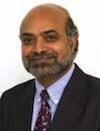
Prabhu Pingali is the Deputy Director of Agricultural Development at the Bill and Melinda Gates Foundation. Formerly, he served as Director of the Agricultural and Development Economics Division of the Food and Agriculture Organization (FAO) of the United Nations. Pingali was elected to the U.S. National Academy of Sciences as a Foreign Associate in May 2007, and he was elected Fellow of the American Agricultural Economics Association in 2006. Pingali was the President of the International Association of Agricultural Economists (IAAE) from 2003-06. Pingali has over twenty five years of experience in assessing the extent and impact of technical change in agriculture in developing countries, including Asia, Africa and Latin America.
African Agricultural R&D and Productiivity Growth in a Global Setting
Given the continuing importance of agriculture in most African economies, an in-depth understanding of the past and likely future productivity performance of African agriculture is key to assessing the overall economic growth and development prospects of the region. African agriculture operates in increasingly interconnected global commodity markets, so the relative productivity performance of African vis-à-vis rest-of-world agriculture is also relevant. This talk will present new evidence on African agricultural productivity performance and place that evidence in relation to the evolving pattern of agricultural productivity growth worldwide. Technological change is a principal driver of productivity growth, and new, updated evidence on the trends in R&D investments that give rise to these technological changes will also be presented and discussed. The productivity effects of R&D play out over comparatively long periods of time demanding a long-run look at these developments.
Image
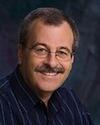
Philip Pardey is Professor of Science and Technology Policy in the Department of Applied Economics, and Director of the University of Minnesota's International Science and Technology Practice and Policy (InSTePP) center. His research deals with the finance and conduct of R&D globally, methods for assessing the economic impacts of research, and the economic and policy (especially intellectual property) aspects of genetic resources and the biosciences. He is a Fellow of the American Agricultural Economics Association and a Distinguished Fellow of the Australian Agricultural and Resource Economics Society.
Bechtel Conference Center
Prabhu Pingali
Deputy director, Agricultural Development
Speaker
Bill & Melinda Gates Foundation
Philip Pardey
Professor of Science and Technology, Applied Economics
Speaker
University of Minnesota
Symposiums
CDDRL to host February 25 statebuilding conference featuring Ashraf Ghani
News Type
News
Date
Paragraphs
Stanford University’s Center on Democracy, Development, and the Rule of Law in partnership with the Canadian Foreign Affairs and International Trade department are hosting a symposium, Addressing the Accountability Gap in Statebuilding: The Case of Afghanistan, on February 25, 2011. The distinguished Ashraf Ghani, former Afghan Minister of Finance and 2009 Presidential Candidate, will be delivering the keynote address. This event will bring together practitioners, experts, and diplomats from Afghanistan and beyond, to share experiences and explore options to improve the contemporary practice of state-building. This conference and keynote address is open to the public.
All News button
1
Los Que Se Quedan (Those Who Remain) Film Screening
-
A screening of the award-winning documentary Los Que Se Quedan (Those Who Remain), that tells the powerful story of nine Mexican families who cross the border in search of a better life and those they leave behind. The film will be followed by a discussion and reception with the film's co-director Carlos Hagerman, and Stanford's Larry Diamond and Beatriz Magaloni.
Bechtel Conference Center
Beatriz Magaloni
Dept. of Political Science
Encina Hall, Room 436
Stanford University,
Stanford, CA
0
magaloni@stanford.edu
Senior Fellow at the Freeman Spogli Institute for International Studies
Graham H. Stuart Professor of International Relations
Professor of Political Science
Beatriz Magaloni Magaloni is the Graham Stuart Professor of International Relations at the Department of Political Science. Magaloni is also a Senior Fellow at the Freeman Spogli Institute, where she holds affiliations with the Center on Democracy, Development and the Rule of Law (CDDRL) and the Center for International Security and Cooperation (CISAC). She is also a Stanford’s King Center for Global Development faculty affiliate. Magaloni has taught at Stanford University for over two decades.
She leads the Poverty, Violence, and Governance Lab (Povgov). Founded by Magaloni in 2010, Povgov is one of Stanford University’s leading impact-driven knowledge production laboratories in the social sciences. Under her leadership, Povgov has innovated and advanced a host of cutting-edge research agendas to reduce violence and poverty and promote peace, security, and human rights.
Magaloni’s work has contributed to the study of authoritarian politics, poverty alleviation, indigenous governance, and, more recently, violence, crime, security institutions, and human rights. Her first book, Voting for Autocracy: Hegemonic Party Survival and its Demise in Mexico (Cambridge University Press, 2006) is widely recognized as a seminal study in the field of comparative politics. It received the 2007 Leon Epstein Award for the Best Book published in the previous two years in the area of political parties and organizations, as well as the Best Book Award from the American Political Science Association’s Comparative Democratization Section. Her second book The Politics of Poverty Relief: Strategies of Vote Buying and Social Policies in Mexico (with Alberto Diaz-Cayeros and Federico Estevez) (Cambridge University Press, 2016) explores how politics shapes poverty alleviation.
Magaloni’s work was published in leading journals, including the American Political Science Review, American Journal of Political Science, Criminology & Public Policy, World Development, Comparative Political Studies, Annual Review of Political Science, Cambridge Journal of Evidence-Based Policing, Latin American Research Review, and others.
Magaloni received wide international acclaim for identifying innovative solutions for salient societal problems through impact-driven research. In 2023, she was named winner of the world-renowned Stockholm Prize in Criminology, considered an equivalent of the Nobel Prize in the field of criminology. The award recognized her extensive research on crime, policing, and human rights in Mexico and Brazil. Magaloni’s research production in this area was also recognized by the American Political Science Association, which named her recipient of the 2021 Heinz I. Eulau Award for the best article published in the American Political Science Review, the leading journal in the discipline.
She received her Ph.D. in political science from Duke University and holds a law degree from the Instituto Tecnológico Autónomo de México.
Director, Poverty, Violence, and Governance Lab
Co-director, Democracy Action Lab
CV
Document
Magaloni_cv (12).pdf
(97.5 KB)
Hide publication sections
Off
Larry Diamond
CDDRL
Stanford University
Encina Hall, C147
616 Jane Stanford Way
Stanford, CA 94305-6055
0
ldiamond@stanford.edu
Mosbacher Senior Fellow in Global Democracy at the Freeman Spogli Institute for International Studies
William L. Clayton Senior Fellow at the Hoover Institution
Professor, by courtesy, of Political Science and Sociology
Larry Diamond is the William L. Clayton Senior Fellow at the Hoover Institution, the Mosbacher Senior Fellow in Global Democracy at the Freeman Spogli Institute for International Studies (FSI), and a Bass University Fellow in Undergraduate Education at Stanford University. He is also professor by courtesy of Political Science and Sociology at Stanford, where he lectures and teaches courses on democracy (including an online course on EdX). At the Hoover Institution, he co-leads the Project on Taiwan in the Indo-Pacific Region and participates in the Project on the U.S., China, and the World. At FSI, he is among the core faculty of the Center on Democracy, Development and the Rule of Law, which he directed for six and a half years. He leads FSI’s Israel Studies Program and is a member of the Program on Arab Reform and Development. He also co-leads the Global Digital Policy Incubator, based at FSI’s Cyber Policy Center. He served for 32 years as founding co-editor of the Journal of Democracy.
Diamond’s research focuses on global trends affecting freedom and democracy and on U.S. and international policies to defend and advance democracy. His book, Ill Winds: Saving Democracy from Russian Rage, Chinese Ambition, and American Complacency, analyzes the challenges confronting liberal democracy in the United States and around the world at this potential “hinge in history,” and offers an agenda for strengthening and defending democracy at home and abroad. A paperback edition with a new preface was released by Penguin in April 2020. His other books include: In Search of Democracy (2016), The Spirit of Democracy (2008), Developing Democracy: Toward Consolidation (1999), Promoting Democracy in the 1990s (1995), and Class, Ethnicity, and Democracy in Nigeria (1989). He has edited or coedited more than fifty books, including China’s Influence and American Interests (2019, with Orville Schell), Silicon Triangle: The United States, China, Taiwan the Global Semiconductor Security (2023, with James O. Ellis Jr. and Orville Schell), and The Troubling State of India’s Democracy (2024, with Sumit Ganguly and Dinsha Mistree).
During 2002–03, Diamond served as a consultant to the US Agency for International Development (USAID) and was a contributing author of its report, Foreign Aid in the National Interest. He has advised and lectured to universities and think tanks around the world, and to the World Bank, the United Nations, the State Department, and other organizations dealing with governance and development. During the first three months of 2004, Diamond served as a senior adviser on governance to the Coalition Provisional Authority in Baghdad. His 2005 book, Squandered Victory: The American Occupation and the Bungled Effort to Bring Democracy to Iraq, was one of the first books to critically analyze America's postwar engagement in Iraq.
Among Diamond’s other edited books are Democracy in Decline?; Democratization and Authoritarianism in the Arab World; Will China Democratize?; and Liberation Technology: Social Media and the Struggle for Democracy, all edited with Marc F. Plattner; and Politics and Culture in Contemporary Iran, with Abbas Milani. With Juan J. Linz and Seymour Martin Lipset, he edited the series, Democracy in Developing Countries, which helped to shape a new generation of comparative study of democratic development.
Download full-resolution headshot; photo credit: Rod Searcey.
Former Director of the Center on Democracy, Development and the Rule of Law
Faculty Chair, Jan Koum Israel Studies Program
Hide publication sections
Off
Carlos Hagerman
Film co-director
Speaker
Conferences
Emerging Land Issues in African Agriculture: Toward the identification of appropriate rural development strategies
-
Thom Jayne, Professor of International Development from Michigan State University will answer the following questions: What are the trends in land access? How can smallholder farmers get higher value out of scarce land and how does that relate to food and non-food markets? Smallholder vs. large enterprises in Africa. Derek Byerlee, independent scholar and director of the 2009 World Development Report will provide additional commentary.
Thomas Jayne's professional career has been devoted to promoting effective policy responses to poverty and hunger in Africa. Jayne is Professor, International Development, in the Department of Agricultural, Food, and Resource Economics and a member of the Core Faculty of the African Studies Center at Michigan State University. He is involved in research, outreach, and capacity building programs in collaboration with African universities and government agencies, mainly focusing on food marketing and trade policies and their effects on sustainable and equitable development. Jayne's secondary research focus has been on measuring the current and long-term effects of HIV/AIDS on African agriculture. Jayne sits on the editorial boards of two development journals, received a top paper award in 2004 by the International Association of Agricultural Economists, co-authored a paper (with graduate student Jacob Ricker-Gilbert) awarded the T.W. Schultz Award at the 2009 International Association of Agricultural Economists Triennial Meetings, and received the 2009 Best Article Award in Agricultural Economics (with co-authors Xhying Xu, William Burke, and Jones Govereh). Jayne's work has also been recognized at the 1996 World Food Summit in Rome and the Secretariat of Global Agricultural Science Policy for the Twenty-First Century.
Bechtel Conference Center
Thom Jayne
Professor of International Development
Speaker
Michigan State University
Derek Byerlee
Independent Scholar and Director, World Development Report, 2009
Commentator
Symposiums
Francis Fukuyama: US democracy has little to teach China
News Type
Commentary
Date
Paragraphs
The first decade of the 21st century has seen a dramatic reversal of fortune in the relative prestige of different political and economic models. Ten years ago, on the eve of the puncturing of the dotcom bubble, the US held the high ground. Its democracy was widely emulated, if not always loved; its technology was sweeping the world; and lightly regulated "Anglo-Saxon" capitalism was seen as the wave of the future. The United States managed to fritter away that moral capital in remarkably short order: the Iraq war and the close association it created between military invasion and democracy promotion tarnished the latter, while the Wall Street financial crisis laid waste to the idea that markets could be trusted to regulate themselves.
China, by contrast, is on a roll. President Hu Jintao's rare state visit to Washington this week comes at a time when many Chinese see their weathering of the financial crisis as a vindication of their own system, and the beginning of an era in which US-style liberal ideas will no longer be dominant. State-owned enterprises are back in vogue, and were the chosen mechanism through which Beijing administered its massive stimulus. The automatic admiration for all things American that many Chinese once felt has given way to a much more nuanced and critical view of US weaknesses - verging, for some, on contempt. It is thus not surprising that polls suggest far more Chinese think their country is going in the right direction than their American counterparts.
But what is the Chinese model? Many observers casually put it in an "authoritarian capitalist" box, along with Russia, Iran and Singapore. But China's model is sui generis; its specific mode of governance is difficult to describe, much less emulate, which is why it is not up for export.
The most important strength of the Chinese political system is its ability to make large, complex decisions quickly, and to make them relatively well, at least in economic policy. This is most evident in the area of infrastructure, where China has put into place airports, dams, high-speed rail, water and electricity systems to feed its growing industrial base. Contrast this with India, where every new investment is subject to blockage by trade unions, lobby groups, peasant associations and courts. India is a law-governed democracy, in which ordinary people can object to government plans; China's rulers can move more than a million people out of the Three Gorges Dam flood plain with little recourse on their part.
Nonetheless, the quality of Chinese government is higher than in Russia, Iran, or the other authoritarian regimes with which it is often lumped - precisely because Chinese rulers feel some degree of accountability towards their population. That accountability is not, of course, procedural; the authority of the Chinese Communist party is limited neither by a rule of law nor by democratic elections. But while its leaders limit public criticism, they do try to stay on top of popular discontents, and shift policy in response. They are most attentive to the urban middle class and powerful business interests that generate employment, but they respond to outrage over egregious cases of corruption or incompetence among lower-level party cadres too.
Indeed, the Chinese government often overreacts to what it believes to be public opinion precisely because, as one diplomat resident in Beijing remarked, there are no institutionalised ways of gauging it, such as elections or free media. Instead of calibrating a sensible working relationship with Japan, for example, China escalated a conflict over the detention of a fishing boat captain last year - seemingly in anticipation of popular anti-Japanese sentiment.
Americans have long hoped China might undergo a democratic transition as it got wealthier, and before it became powerful enough to become a strategic and political threat. This seems unlikely, however. The government knows how to cater to the interests of Chinese elites and the emerging middle classes, and builds on their fear of populism. This is why there is little support for genuine multi-party democracy. The elites worry about the example of democracy in Thailand - where the election of a populist premier led to violent conflict between his supporters and the establishment - as a warning of what could happen to them.
Ironically for a country that still claims to be communist, China has grown far more unequal of late. Many peasants and workers share little in the country's growth, while others are ruthlessly exploited. Corruption is pervasive, which exacerbates existing inequalities. At a local level there are countless instances in which government colludes with developers to take land away from hapless peasants. This has contributed to a pent-up anger that explodes in many thousands of acts of social protest, often violent, each year.
The Communist party seems to think it can deal with the problem of inequality through improved responsiveness on the part of its own hierarchy to popular pressures. China's great historical achievement during the past two millennia has been to create high-quality centralised government, which it does much better than most of its authoritarian peers. Today, it is shifting social spending to the neglected interior, to boost consumption and to stave off a social explosion. I doubt whether its approach will work: any top-down system of accountability faces unsolvable problems of monitoring and responding to what is happening on the ground. Effective accountability can only come about through a bottom-up process, or what we know as democracy. This is not, in my view, likely to emerge soon. However, down the road, in the face of a major economic downturn, or leaders who are less competent or more corrupt, the system's fragile legitimacy could be openly challenged. Democracy's strengths are often most evident in times of adversity.
However, if the democratic, market-oriented model is to prevail, Americans need to own up to their own mistakes and misconceptions. Washington's foreign policy during the past decade was too militarised and unilateral, succeeding only in generating a self-defeating anti-Americanism. In economic policy, Reaganism long outlived its initial successes, producing only budget deficits, thoughtless tax-cutting and inadequate financial regulation.
These problems are to some extent being acknowledged and addressed. But there is a deeper problem with the American model that is nowhere close to being solved. China adapts quickly, making difficult decisions and implementing them effectively. Americans pride themselves on constitutional checks and balances, based on a political culture that distrusts centralised government. This system has ensured individual liberty and a vibrant private sector, but it has now become polarised and ideologically rigid. At present it shows little appetite for dealing with the long-term fiscal challenges the US faces. Democracy in America may have an inherent legitimacy that the Chinese system lacks, but it will not be much of a model to anyone if the government is divided against itself and cannot govern. During the 1989 Tiananmen protests, student demonstrators erected a model of the Statue of Liberty to symbolise their aspirations. Whether anyone in China would do the same at some future date will depend on how Americans address their problems in the present.
The writer is a fellow at the Freeman Spogli Institute for International Studies at Stanford University. His latest book, The Origins of Political Order, will be published in the spring.
All News button
1
Bob Rae speaks to CDDRL on Exporting Democracy
News Type
News
Date
Paragraphs
On January 18, the Honorable Bob Rae, Liberal Member of Parliament for Toronto Centre and the foreign affairs critic for the Liberal Party of Canada was the featured speaker at a special CDDRL seminar. Rae addressed the Stanford community on the topic of his latest book Exporting Democracy, published in November 2010 by McClelland & Stewart. CDDRL Deputy Director, Kathryn Stoner, welcomed Rae to Stanford and Ben Rowswell, Visiting Scholar and Canadian "diplomat in residence," introduced the distinguished Rae stressing the timeliness of this topic.
This occasion marked the debut of Rae's book to a US audience and drew a sizable crowd interested in learning more about the MP's views on the role of Western powers in statebuilding and democracy promotion efforts abroad. Based on his personal experience engaging in diplomatic missions in Iraq, Afghanistan, Sri Lanka, and across the Middle East, Rae was confronted with the limits of power and democratic ideals in foreign lands.
His discussion focused on the theoretical and practical analysis of the role of democracy in statebuilding that is the foundation of his argument in Exporting Democracy. Drawing on the writing of 18th century philosophers, Thomas Paine and Edmund Burke, Rae examined the tensions between natural law and justice versus customs and tradition that continue to dominate the debate in modern day statecraft.
Rae's experience observing democracy promotion abroad allowed him to recognize the importance of upholding democratic values, while also respecting the idea that democracy cannot be viewed as the "gold standard" for all. "From a Western perspective the debate suffers from the notion that the idea of democracy has emerged as perfectly natural and an automatic assumption of our daily lives. In reality it has generally been accompanied by periods of great conflict and can take hundreds of years to bear fruit as evidenced by the American and Canadian experience."
Rae emphasized that the best way Western countries can promote democracy is by helping other countries develop their own solutions to their own problems.
Rae's sensitivity to the consequences of Western interventions, his belief in the principles of human rights, and his testimony to the importance of humility and pragmatism in our efforts of statebuilding abroad, offered the Stanford community a new perspective on the effectiveness of the global democracy movement.
Hero Image

All News button
1