Policy Analysis
News Type
News
Date
Paragraphs

Recap: Pascal Lamy Lecture, “World Trade and Global Governance”

 
On February 10, 2014, Pascal Lamy, the former Director-General of the World Trade Organization, visited Stanford University as a special guest of The Europe Center and the Freeman Spogli Institute for International Studies. During his two-term tenure at the helm of the WTO (from 2005 to 2013), Mr. Lamy successfully guided the organization through complex changes in the regulation of international trade. Among his many achievements, he oversaw the systematic integration of developing countries into positions of political leadership in the world economic order. Prior to the WTO, Mr. Lamy served as the European Commissioner for Trade, the CEO of the French bank Crédit Lyonnais, and in the French civil service. 
 
At Stanford, Mr. Lamy first participated in a lunchtime question and answer roundtable with students that was moderated by Stephen Stedman, Deputy Director of the Center for Democracy, Development, and the Rule of Law. Among other topics, he spoke about the necessary mix of economic, social, and political policies that determine the efficacy of free trade as an engine of global economic growth. 


Image

Mr. Lamy then delivered a public lecture on “World Trade and Global Governance” before an audience of over a hundred members of the Stanford community. In this talk, Mr. Lamy outlined a statement of his thinking about the future of global governance, focusing on three overarching points. First, despite some setbacks, governments and international organizations have achieved major successes in regulating the liberalization of global trade. Tariffs are on average lower than ever before, and governments did not raise tariffs during the recent financial crisis as they did during the Great Depression. Second, a new feature of the global economy is that protectionism based on economic objectives has been replaced by ‘precautionism’ based on normative prerogatives. For example, competing national perspectives on product standards such as those related to safety or labor norms thwart efforts to achieve consensus on trade regulation. Third, in order to achieve regulatory convergence, we need to bring together stakeholders from the public and private sector to build coalitions that jointly negotiate conflicts in matters of global governance. For example, the “C20-C30-C40 Coalition of the Working” that comprises countries, companies, and cities is currently striving to overcome regulatory gridlock on climate change.
 
We welcome you to visit our website for additional details about this event.


Save the Date: The Europe Center Lectureship on Europe and the World

 
Please mark your calendars for the inaugural annual lectures in this series by Adam Tooze, Barton M. Briggs Professor of History, Yale University. 
 
Dates: April 30, May 1, and May 2, 2014
 
 
Image
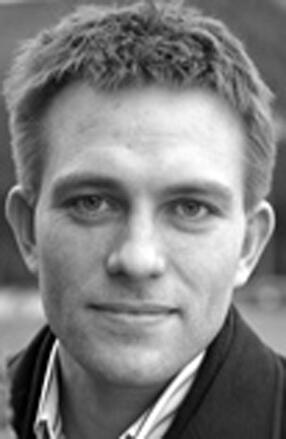
Image of Adam Tooze
Adam Tooze will deliver three lectures from his forthcoming book, A World Fit for Heroes. In particular, he will speak about the history of the transformation of the global power structure that followed from Imperial Germany’s decision to provoke America’s declaration of war in 1917. Tooze is the author of The Wages of Destruction: The Making and Breaking of the Nazi Economy (2006) and Statistics and the German State 1900-1945: The Making of Modern Economic Knowledge (2001), among numerous other scholarly articles on modern European history.


Meet our Visiting Scholars:  Manfred Nowak 

 
In each newsletter, The Europe Center would like to introduce you to a visiting scholar or collaborator at the Center. We welcome you to visit the Center and get to know our guests.
 
 
Image
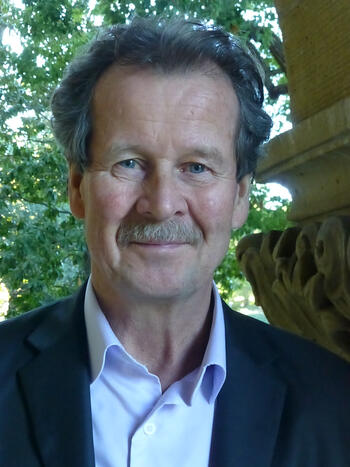
Image of Manfred Nowak, Visiting Austrian Chair Professor 2013-2014, Stanford University
Manfred Nowak (LL.M., Columbia University, 1975) is Distinguished Visiting Austrian Chair Professor; Visiting Professor, Stanford Law School; and, Professor of Law, University of Vienna. One of the world’s most renowned human rights scholars and legal theorists, Nowak has published more than 400 books and articles on international, constitutional, administrative, and human rights law, including the standard commentary on the International Covenant on Civil and Political Rights. He was the Director of the Netherlands Institute of Human Rights at the University of Utrecht (1987-1989), and he founded the Austrian Ludwig Boltzmann Institute of Human Rights in 1989. From 1996-2003, Nowak was a judge at the Human Rights Chamber in Bosnia. He has also served as a U.N. legal expert on missing persons and enforced disappearances, and was appointed the U.N. Special Rapporteur on Torture and other Cruel, Inhuman or Degrading Treatment in 2004. 
 
Manfred Nowak was awarded the UNESCO Prize for the Teaching of Human Rights in 1994 and the Bruno Kreisky Prize for Human Rights in 2007.


Workshop Schedules  

 
The Europe Center invites you to attend the talks of speakers in the following workshop series: 
 

Europe and the Global Economy

 
February 20, 2014
Alan Deardorff, John W. Sweetland Professor of International Economics & Prof. of Economics and Public Policy, University of Michigan
RSVP by Feb 19, 2014
 
Mar 6, 2014
Sophie Meunier, Research Scholar, Woodrow Wilson School and Co-Director, EU Program at Princeton, Princeton University
RSVP by Mar 3, 2014
 
Mar 13, 2014
Randy Stone, Professor of Political Science, University of Rochester
RSVP by Mar 10, 2014
 
Apr 3, 2014
Kåre Vernby, Associate Professor, Department of Government, Uppsala University
RSVP by Mar 31, 2014
 
Apr 17, 2014
Mark Hallerberg, Professor of Public Management and Political Economy, Hertie School of Governance 
RSVP by Apr 4, 2014
 
May 15, 2014
Christina Davis, Prof. of Politics and International Affairs, Princeton University
RSVP by May 12, 2014
 

European Governance

 
May 22, 2014
Wolfgang Ischinger, Former German Ambassador to the U.S.; Chairman, Munich Security Conference
RSVP by May 19, 2014
 
May 29, 2014
Simon Hug, Professor of Political Science, University of Geneva
RSVP by May 26, 2014


The Europe Center Sponsored Events

 
We invite you to attend the following events sponsored or co-sponsored by The Europe Center:
 
March 6, 2014
“Promise and Critique of Capitalism: Changing Discourses Since the 18th Century”
Jürgen Kocka, Professor and Former President of the Social Science Research Center, Berlin
Location: Watt Room, Stanford Humanities Center
 
March 6 and 7, 2014
Indian Ocean Conference
“Connecting Continents: Setting an Agenda for a Historical Archaeology of the Indian Ocean World”
Location: Stanford Archaeology Center, Building 500, 488 Escondido Mall
 
March 31, 2014
Simon Hix, Professor of European and Comparative Politics, London School of Economics and Political Science
Political Science Comparative Politics Workshop
Location: Encina Hall West Room 400
 
April 15, 2014
Ulrich Wilhelm, Director General, Bavarian Broadcasting Corporation
“Assessing the Impact of the NSA Spy Scandal on American-European Relations” 
The Europe Center and FSI Stanford Special Event
Location: Oksenberg Conference Room, Encina Hall
RSVP by April 10, 2014


Other Events

 
The Europe Center also invites you to attend the following events of interest:
 
February 20, 2014
Gregory Shaffer, Melvin C. Steen Professor of Law, University of Minnesota Law School
“How the WTO Shapes Regulatory Governance”
Room 185, Stanford Law School
 
European Entrepreneurship & Innovation @Stanford Engineering
February 24, 2014
    “Switzerland and Turkey - Venture Capital and Product Design Firms”
    Giuseppe Zocco, Founding Partner, Index Ventures; Emrah Yalaz, CEO, Spring Ventures
March 3, 2014
    “Flanders and Sweden - Enterprise Software and VC Funds”
    Lieven Vermaele, CEO, SDNsquare; Martin Hauge, Founding Partner, Creandum
March 10, 2014
    “Hungary and Italy - Digital Infrastructure Startups and ‘Maker’ Movements”
    Gyula Feher, CTO & Co-Founder, Ustream
Location: Hewlett 201 Auditorium, Engineering School
 

We welcome you to visit our website for additional details.

All News button
1
News Type
News
Date
Paragraphs

Special Event:  Pascal Lamy Lecture

“World Trade and Global Governance”

 
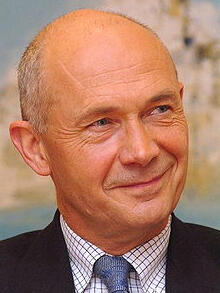
The Europe Center invites you to a special lecture by Pascal Lamy, the former Director-General of the World Trade Organization.
 
Image
Image of Pascal Lamy
Date: February 10, 2014 
Time: 4:00 - 5:30 p.m.
Venue: Bechtel Conference Center, Encina Hall
RSVP by February 5, 2014                       
  
Mr. Lamy will speak on the necessary mix of economic, social, and political policies that will determine the efficacy of free trade as an engine of global economic growth. In particular, he will outline a statement of his own thinking about the future of global governance and international trade, and describe what remains to be done in addressing the challenges of globalization. Additionally, Mr. Lamy will reflect on the features of modern politics that create governance gridlock and thwart global oversight, and will identify how progress can be made in overcoming impediments to policy action at the international level. 
 
My Lamy served as the Director-General of the World Trade Organization from 2005-2013. He is currently the Honorary President of the Paris-based think tank, Notre Europe.


Meet our Visiting Scholars:  Bjørn Høyland 

 
In each newsletter, The Europe Center would like to introduce you to a visiting scholar or collaborator at the Center. We welcome you to visit the Center and get to know our guests.
 
Bjør
Image
Image of Bjorn Hoyland
n Høyland (PhD, London School of Economics, 2005) is Professor of Political Science at the University of Oslo, Norway. He is currently visiting Professor and Anna Lindh Fellow at The Europe Center, Freeman Spogli Institute for International Studies and Stanford Global. The focus of his research is European Union politics and comparative legislative politics. Professor Høyland’s list of journal publications includes the American Political Science Review, Annual Review of Political Science, British Journal of Political Science, and European Union Politics. His textbook (with Simon Hix) The Political System of the European Union (3rd ed) is the standard text for advanced courses on the European Union.

Workshop Schedules  

 
The Europe Center invites you to attend the talks of speakers in the following workshop series: 
 

Europe and the Global Economy

 
January 23, 2014
David Dreyer Lassen, Professor of Economics, University of Copenhagen
RSVP by Jan 20, 2014 
 
February 20, 2014
Alan Deardorff, John W. Sweetland Professor of International Economics & Prof. of Economics and Public Policy, University of Michigan
RSVP by Feb 17, 2014
 
Mar 6, 2014
Sophie Meunier, Research Scholar, Woodrow Wilson School and Co-Director, EU Program at Princeton, Princeton University
RSVP by Mar 3, 2014
 
Mar 13, 2014
Randy Stone, Professor of Political Science, University of Rochester
RSVP by Mar 10, 2014
 
Apr 3, 2014
Kåre Vernby, Associate Professor, Department of Government, Uppsala University
RSVP by Mar 31, 2014
 
Apr 17, 2014
Mark Hallerberg, Professor of Public Management and Political Economy, Hertie School of Governance 
RSVP by Apr 4, 2014
 
May 15, 2014
Christina Davis, Prof. of Politics and International Affairs, Princeton University
RSVP by May 12, 2014

European Governance

 
February 6, 2014
Matthew Gabel, Professor of Political Science, Washington University at St. Louis
RSVP by Feb 3, 2014
 
May 22, 2014
Wolfgang Ischinger, Former German Ambassador to the U.S.; Chairman, Munich Security Conference
RSVP by May 19, 2014
 
May 29, 2014
Simon Hug, Professor of Political Science, University of Geneva
RSVP by May 26, 2014

Other Events

 
The Europe Center also invites you to attend the following events of interest:
 
January 27, 2014
Vassil Terziev, Co-founder & CEO, Telerik (BG); and Japec Jakopin, Co-founder & CEO, Seaway (SI)
“Worldclass Enterprise Software and Design Firms in SouthEast and Balkans Europe” 
Sponsor: European Entrepreneurship & Innovation Thought Leaders Seminar
 
January 30, 2014
Ken Schultz, Professor of Political Science, Stanford University
“Making and Breaking Territorial Agreements: Explaining European Exceptionalism”
Sponsor: CISAC Social Science Seminar; co-sponsored by The Europe Center
 
 
All News button
1
-


Abstract: 

The recently concluded 16th Lok Sabha elections in India was the biggest democratic election in history. It produced the first absolute majority in Indian national elections in thirty years and catapulted BJP and its leader Narendra Modi to power after a sustained presidential style campaign. The election decisively changed the political landscape in India and seemed to reverse a longstanding trend towards fragmentation of Indian politics along lines of region and caste.

What are the underlying dynamics that made this historic vote possible? Can BJP and Modi deliver the economic growth and employment that they promise? What are the necessary reforms and challenges that confront the new government? Will BJP remain focused on development, or will the older cultural and majoritarian agenda of the RSS and its associated organizations re-appear? What is the prospects for India’s multiple minorities in this new dispensation?

These and other questions will be debated by a panel of three Stanford based academics. 


Speaker Bios:

Thomas Blom Hansen (Moderator/Speaker) is the Reliance-Dhirubhai Ambani Professor of Anthropology at Stanford University. He is also the director of the Center for South Asia at Stanford. He has worked extensively on Hindu-Muslim relations, communal violence and the rise of Hindu nationalism in India. His books include The Saffron Wave. Hindu Nationalism and Democracy in Modern India (Princeton University Press 1999) and Wages of Violence, Naming and identity in postcolonial Bombay (Princeton University Press 2001).


Harish S. Wankhede (Speaker) research interest is to imagine theoretical spaces by interconnecting certain approaches and themes of social science mainly, Justice, politics of recognition and redistribution, secularism, nationalism and the Caste identity. The emphasis of his work is on the marginalized communities in India especially the Muslims, Dalits and the Tribals.

Currently, he is a visiting scholar at the Center for South Asia, Stanford University and working on a research project on the Dalit Panthers’ Movement in Maharashtra. He teaches at the Department of Political Science, University of Delhi.


Alexander Lee (Speaker) is a postdoctoral fellow at the Center on Democracy, Development, and the Rule of Law. In the fall of 2014 he will be an assistant professor of political science at the University of Rochester. His research focuses on the historical factors governing the success or failure of political institutions, particularly in South Asia and other areas of the developing world. His work has been published in World Politics and the Quarterly Journal of Political Science. Alex earned his PhD from Stanford in 2013. More information on his work can be found on his website.


This event is hosted by the Center for South Asia and the Center for Democracy, Development and the Rule of Law. 


CISAC Conference Room

Thomas Blom Hansen Director Moderator Center for South Asia
Harish S. Wankhede Visiting Scholar Speaker Center for South Asia

Encina Hall
616 Serra Street
Stanford, CA 94305-6055

0
CDDRL Postdoctoral Fellow, 2013-14
Lee_HS.jpg

Alexander Lee's research focuses on the historical factors governing the success or failure of political institutions, particularly in South Asia and other areas of the developing world. His dissertation examined the ways in which colonialism changed the distribution of wealth in Indian society, and the ways in which these changes affected the development of caste identities. Additional research areas include the study of colonialism and European expansion in a cross- national perspective, and the causes of political violence, especially terrorism. His work has been published in World Politics and the Quarterly Journal of Political Science. Alex earned his PhD from Stanford in 2013. More information on his work can be found on his website: https://people.stanford.edu/amlee/

Alexander Lee Postdoctoral Fellow Speaker Center on Democracy, Development, and the Rule of Law
Seminars
-

Abstract:

The United States spends over 17 percent of GDP on health care; the next six highest countries spend over 11 percent. This six percent differential indicates an excess spending of approximately one trillion dollars per year. Depending on the benefit from the extra spending, this suggests the possibility of a huge misallocation of resources. Also, because the federal government funds almost half of total health care spending, there are significant effects on the deficit and the debt. The main reasons for the excess are (1) the U.S. pays higher prices for drugs, devices, and equipment and higher fees to specialists and sub-specialists; (2) higher administrative costs; and (3) a more expensive mix of medical care. The seminar will focus on institutional and political explanations for the three proximate reasons.


Speaker Bio:

Victor R. Fuchs is the Henry J. Kaiser Jr Professor Emeritus at Stanford University, in the Departments of Economics and Health Research and Policy.  He is also a Research Associate of the National Bureau of Economic Research and a Senior Fellow at SIEPR.  He applies economic analysis to social problems of national concern, with special emphasis on health and medical care.  He is author of nine books, the editor of six others, and has published over two hundred papers and shorter pieces.  His current research focuses on male-female differences in mortality, reform of medical education, and the future of U.S. health care.

His best known work, Who Shall Live?  Health, Economics, and Social Choice (1974; expanded edition 1998, 2nd expanded edition 2011), helps health professionals and policy makers to understand the economic and policy problems in health that have emerged in recent decades.  Other books include The Service Economy (1968), How We Live (1983), The Health Economy (1986), Women’s Quest For Economic Equality (1988), and The Future of Health Policy (1993).  He is the editor of Individual and Social Responsibility: Child Care, Education, Medical Care, and Long-term Care in America (1996).

Professor Fuchs was elected president of the American Economic Association in 1995.  He has also been elected to the American Philosophical Society, the American Academy of Arts and Sciences, the Institute of Medicine of the National Academy of Sciences, and is an Honorary Member of Alpha Omega Alpha.  He has received the John R. Commons Award, Emily Mumford Medal for Distinguished Contributions to Social Science in Medicine, Distinguished Investigator Award (Association for Health Services Research), Baxter Foundation Health Services Research Prize, and Madden Distinguished Alumni Award (New York University).  ASHE’s (American Society of Health Economists) Career Award for Lifetime Contributions to the Field of Health Economics and the RAND Corporation prize for the Best Paper published in the Forum for Health Economics and Policy are named and awarded in honor of Professor Fuchs.

This event is sponsored by the Stanford Center on Democracy, Development and the Rule of Law and the Center for Health Policy/Center for Primary Care and Outcomes Research.


CISAC Conference Room

Victor Fuchs the Henry J. Kaiser Jr Professor Emeritus Speaker Stanford University
Seminars
-

Abstract:

Moulay Hicham’s newly published memoir, Journal d’un prince banni, retells his personal life within the context of devastating political critique against the Moroccan political system, its authoritarian monarchy, and the “deep state” within that resists democratic change, the Makhzen.  Written during Moulay Hicham's time as a fellow at the Center for Democracy, Development, and Rule of Law at Stanford University, the volume is neither a settlement of accounts nor a gossipy narrative of frivolous stories.  It instead uniquely ensconces vivid personal recollections within the context of authoritarian politics.  The prince witnessed the rise of the system under King Hassan II, the long-lasting ruler who eliminated all opposition, centralized power, and linked a loyal community of courtiers, elites, and cronies to his will—the Makhzen.  The memoir reveals how Moulay Hicham’s aspirations towards autonomy and independence were constantly blocked by this system, often by either the King himself or his coercive apparatus, comprising the intelligence services and military.  At the same time, the nearly half-century reign of King Hassan exposes critical insight into the development of Moroccan politics and identity, from his acumen regarding the Western Sahara problem to his ability to make the kingdom a focal point of Arab politics after the demise of Nasserism. 

Those personal observations on governance continue with the royal ascent of Hassan’s son, Mohamed VI, who assumed the throne in 1999 and is Moulay Hicham’s cousin.  Replacing Hassan’s powerfully intent personality was this more humane yet political disengaged new king.  His inability to curb the Makhzen and enact meaningful democratic reforms shows the system’s very success.  Whereas the pressures of conforming to the system crushed many of those personalities who grew up in the court, Moulay Hicham managed to elude this destructive side through his self-imposed exile to the United States and his intellectual decision to criticize an authoritarian machine to which he was meant to belong.  As the memoir concludes, such resistance to change implicates the monarchy’s future.  Decades of political exclusion, false promises, and rising inequality have alienated much of the Moroccan public.  As the Arab Spring showed, such discontentment portends to future social and political conflict that could well discredit the monarchy, resulting in its overthrow after 350 years of continuous reign.

Journal d’un prince banni has become a literary and political phenomenon in Morocco and the Moroccan diaspora worldwide.  Its release ignited tumultuous debates within the press, social media, and civil society.  Dubbed an “exceptional document” by Le Nouvel Observateur, the memoir has become one of the best-selling non-fiction works in France.  Though print versions are currently unavailable in Morocco, electronic versions have been downloaded and disseminated on an exponential scale.  Arabic, English, and other language-editions are scheduled for release in the near future.


Speaker Bio:

Hicham Ben Abdallah received his B.A. in Politics in 1985 from Princeton University, and his M.A. in Political Science from Stanford in 1997. His interest is in the politics of the transition from authoritarianism to democracy.

He has lectured in numerous universities and think tanks in North America and Europe. His work for the advancement of peace and conflict resolution has brought him to Kosovo as a special Assistant to Bernard Kouchner, and to Nigeria and Palestine as an election observer with the Carter Center. He has published in journals such Le Monde,  Le Monde Diplomatique,Pouvoirs, Le Debat, The Journal of Democracy, The New York Times, El Pais, and El Quds.

In 2010 he has founded the Moulay Hicham Foundation which conducts social science research on the MENA region. He is also an entrepreneur with interests in agriculture, real estate, and renewable energies. His company, Al Tayyar Energy, has a number of clean energy projects in Asia and Europe. 


Oksenberg Conference Room

CDDRL
Stanford University
Encina Hall
616 Serra Street
Stanford, CA 94305-6055

0
Consulting Professor
Ben_Abdallah.jpg MA

Hicham Ben Abdallah received his B.A. in Politics in 1985 from Princeton University, and his M.A. in Political Science from Stanford in 1997. His interest is in the politics of the transition from authoritarianism to democracy.

He has lectured in numerous universities and think tanks in North America and Europe. His work for the advancement of peace and conflict resolution has brought him to Kosovo as a special Assistant to Bernard Kouchner, and to Nigeria and Palestine as an election observer with the Carter Center. He has published in journals such Le Monde,  Le Monde Diplomatique,Pouvoirs, Le Debat, The Journal of Democracy, The New York Times, El Pais, and El Quds.

In 2010 he has founded the Moulay Hicham Foundation which conducts social science research on the MENA region. He is also an entrepreneur with interests in agriculture, real estate, and renewable energies. His company, Al Tayyar Energy, has a number of clean energy projects in Asia and Europe. 

Hicham Ben Abdallah Consulting Professor Speaker Stanford University
Conferences

Walter H. Shorenstein Asia Pacific Research Center
Freeman Spogli Institute for International Studies
Encina Hall, Rm. E313
616 Serra Street
Stanford, CA 94305-6055

(650) 725-5781
0
Visiting Associate Professor
ryo_sahashi.jpg PhD

Ryo Sahashi is a visiting associate professor of the Walter H. Shorenstein Asia-Pacific Research Center (Shorenstein APARC) from April 2014 to March 2015. He joins APARC from Kanagawa University, where he concurrently serves as an associate professor of international politics. He will be writing a book on U.S. strategy toward China, Taiwan, and Northeast Asia since the Cold War.

Sahashi is a specialist on the regional security architecture in East Asia and Japan’s international relations. His articles are published in Chinese, English, and Japanese, including “Security Arrangements in the Asia-Pacific: a Three-Tier Approach,” William T. Tow and Rikki Kerstain (eds.); Bilateral Perspectives on Regional Security: Australia, Japan and the Asia-Pacific Region, New York: Palgrave MacMillan, 2012, pp.214-240; “Security Partnership in Japanese Asia Strategy: Creating Order, Building Capacity, and Sharing Burden,” ifri Policy Papers, February 2013; “The rise of China and the transformation of Asia-Pacific security architecture,” William T. Tow and Brendan Taylor (eds.); Contending Cooperation: Bilateralism, Multilateralism, and Asia-Pacific Security, London and New York: Routledge, 2013, pp.135-156. His newest articles on Japan-Taiwan relations and on Japan’s foreign policy since DPJ era (2009-) will soon be available.

He also serves as Research Fellow at Japan Center for International Exchange. In the past, he was the visiting researcher at the Japanese House of Councilors and German Fund of the United States. His early academic career as faculty started with the University of Tokyo and Australian National University.

He is an active commentator and contributor to international media, including NHK (Asian Voice & Newsline), CCTV, APF, Newsweek, Defense News, Stars and Stripes, Global Times, China Dairy, Asia Pacific Bulletin, and East Asia Forum.

Sahashi is a graduate from International Christian University, spending junior year at University of Illinois at Urbana-Champaign, and earned his LL.M. and Ph.D. from the Graduate Schools for Law and Politics at the University of Tokyo.

-

Economists and business scholars have long tried to construct theoretical models that can explain economic growth and development in emerging economies, but Western models have not always been fully applicable to developing economies, particularly in Asia, due to differences in political, economic and social systems. Created to address this gap, the ABCD framework of K-Strategy is a more nearly universal approach showing how inherent disadvantages can be overcome and competitive advantages achieved. Using the ABCD framework, the lecturer will analyze Korea’s success at both national and corporate levels since the 1960s and discuss the framework’s implications for Korea’s future government policies and corporate strategies. He will also demonstrate the ABCD framework’s applicability to other countries. Hwy-Chang Moon, dean of Seoul National University’s graduate school of international studies, has done extensive research and theoretical work on the ABCD framework.

Hwy-Chang Moon received his PhD from the University of Washington and is currently a professor of international business and strategy in the graduate school of international studies at Seoul National University. Professor Moon has taught at the University of Washington, University of the Pacific, State University of New York at Stony Brook, Helsinki School of Economics, Kyushu University, Keio University, Hitotsubashi University, and other executive and special programs in various organizations. On topics such as international business strategy, foreign direct investment, corporate social responsibility, and cross-cultural management, Professor Moon has published numerous journal articles and books. He is currently the editor-in-chief of the Journal of International Business and Economy, an international academic journal. Professor Moon has conducted consulting and research projects for several multinational companies, international organizations (APEC, World Bank, and UNCTAD), and governments (Malaysia, Dubai, Azerbaijan, and Guangdong Province of China). For interviews and debates on international economy and business, he has been invited by international newspapers and media, including New York Times and NHK World TV.

This event is made possible through the generous support of the Koret Foundation.

Philippines Conference Room

Hwy-Chang Moon Dean, Graduate School of International Studies; Professor of International Business and Strategy Speaker Seoul National University
Seminars
-

Due to the interest generated by this seminar, we have exceeded our seating capacity and are not able to accommodate any more guests. We apologize for the inconvenience and thank you for your understanding.

About the Topic: America’s longest war draws to an end this year with the conclusion of combat operations in Afghanistan.  The still undecided Afghan presidential election potentially marks the first successful democratic transition in that country’s history and the process thus far has been positive.  However, the political, security, and economic problems that Afghanistan’s next leader will face are daunting.  The level of American support for Afghanistan’s future development hinges on the signing of a Bilateral Security Agreement that permits the U.S. to continue pursuing intelligence and military operations against Al Qaeda and international terrorist organizations in Central and South Asia.  Karl Eikenberry, who served both as the U.S. ambassador and the commander of U.S.-led coalition forces in Afghanistan, will reflect on the American experience in Afghanistan and discuss the difficult challenges still ahead.    

About the Speaker: Karl Eikenberry is the William J. Perry Fellow in International Security at the Center for International Security and Cooperation and is a Distinguished Fellow with the Shorenstein Asia-Pacific Research Center at Stanford University. He served as the U.S. Ambassador to Afghanistan from May 2009 until July 2011 and had a 35-year career in the United States Army, retiring with the rank of lieutenant general. His military assignments included postings with mechanized, light, airborne, and ranger infantry units in the continental United States, Hawaii, Korea, Italy, and Afghanistan as the Commander of the American-led Coalition forces from 2005–2007. He is a graduate of the U.S. Military Academy, has earned master’s degrees from Harvard University in East Asian Studies and Stanford University in Political Science, was awarded an Interpreter’s Certificate in Mandarin Chinese from the British Foreign Commonwealth Office, and earned an advanced degree in Chinese History from Nanjing University. He is also the recipient of the George F. Kennan Award for Distinguished Public Service and Harvard University Graduate School of Arts and Sciences Centennial Medal. Ambassador Eikenberry serves as a Trustee for the International Institute for Strategic Studies, The Asia Foundation, and the National Committee on American Foreign Policy, and is a Fellow of the American Academy of Arts and Sciences. 

CISAC Conference Room

Karl Eikenberry William J. Perry Fellow in International Security at CISAC, Former US Ambassador to Afghanistan, Retired U.S. Army Lt. General Speaker
Seminars
Subscribe to Policy Analysis