Policy Analysis
-

South Korea has relied on its export-oriented development model to become an economic powerhouse, but has now reached the limits of this model. Indeed, Korea’s phenomenal growth has incubated the seeds of its own destruction. Learning from the Korean developmental experience, China has adopted key elements of the Korean development model and has become a potent competitor in electronics and the heavy industries. Meanwhile, the organizational and institutional legacies of late industrialization have constrained Korean efforts to move into technology entrepreneurship and the service sector. These strategic challenges are compounded by a demographic bomb, as social development has led to collapsing birthrates in Korea, much like other developed countries in Europe and Asia. Within the next few years, the Korean workforce will start diminishing in size and aging rapidly, straining the country’s resources and curtailing its growth. In this seminar, Joon Nak Choi, 2015-16 Koret Fellow at Stanford's Shorenstein Asia-Pacific Reserach Center, will discuss innovations in business strategy, educational policy and social structure that are directly relevant to these problems, and that would alleviate or perhaps even reverse Korea’s economic malaise.

Image
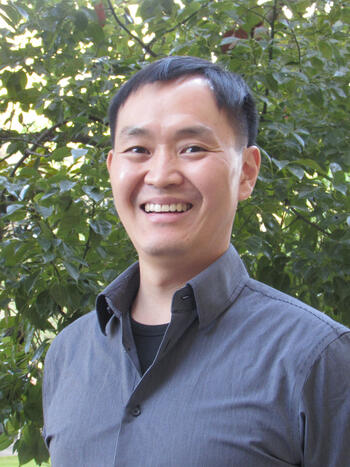
joon nak choi 7 cropped
A Stanford graduate and sociologist by training, Choi is an assistant professor of management at the School of Business and Management, Hong Kong University of Science and Technology. His research and teaching areas include economic development, social networks, organizational theory, and global and transnational sociology, within the Korean context. He coauthored Global Talent: Skilled Labor as Social Capital in Korea (Stanford University Press, 2015).

This public event is made possible through the generous support of the Koret Foundation.

Shorenstein APARC
Encina Hall
Stanford University
Stanford, CA 94305-6055

0
joon_nak_choi_7_cropped.jpg

Joon Nak Choi is the 2015-2016 Koret Fellow in the Korea Program at Stanford University's Walter H. Shorenstein Asia-Pacific Research Center (Shorenstein APARC). A sociologist by training, Choi is an assistant professor at Hong Kong University of Science and Technology. His research and teaching areas include economic development, social networks, organizational theory, and global and transnational sociology, within the Korean context.

Choi, a Stanford graduate, has worked jointly with professor Gi-Wook Shin to analyze the transnational bridges linking Asia and the United States. The research project explores how economic development links to foreign skilled workers and diaspora communities.

Most recently, Choi coauthored Global Talent: Skilled Labor as Social Capital in Korea with Shin, who is also the director of the Korea Program. From 2010-11, Choi developed the manuscript while he was a William Perry postdoctoral fellow at Shorenstein APARC.

During his fellowship, Choi will study the challenges of diversity in South Korea and teach a class for Stanford students. Choi’s research will buttress efforts to understand the shifting social and economic patterns in Korea, a now democratic nation seeking to join the ranks of the world’s most advanced countries.
 
Supported by the Koret Foundation, the Koret Fellowship brings leading professionals to Stanford to conduct research on contemporary Korean affairs with the broad aim of strengthening ties between the United States and Korea. The fellowship has expanded its focus to include social, cultural and educational issues in Korea, and aims to identify young promising scholars working on these areas.


2015-2016 Koret Fellow
Visiting Scholar
<i>2015-16 Koret Fellow, Shorenstein APARC, Stanford University</i>
Seminars
Paragraphs

This article examines how different organizational structures in disaster aid delivery affect house aid quality. We analyze three waves of survey data on fishermen and fishing villages in Aceh, Indonesia, following the 2004 tsunami. We categorize four organizational structures based on whether and to whom donors contract aid implementation. Compared to bilateral contracting between donors and implementers, donors that vertically integrate and do their own implementation offer the highest-quality housing as rated by village heads and have fewer counts of faults, such as leaky roofs and cracked walls, as reported by fishermen. However, they shade in quality as they lose dominance as the leading aid agency in a village. Domestic implementers and the government agency that was responsible for significant portions of aid delivery provide significantly lower-quality aid. We also examine how the imposition of shared ownership, the primary social agenda for boat aid agencies, affects boat aid quality. We find that village and fishing leaders steer poor-quality boats toward those whom shared ownership was imposed upon, often lower-status fishermen.

All Publications button
1
Publication Type
Journal Articles
Publication Date
Journal Publisher
Economic Development and Cultural Change
Authors
Yong Suk Lee
Number
4
-

Abstract:  In recent decades, social scientists have begun to employ the rigorous research methods that used to be the province of the natural sciences. This evidence-based approach has revolutionized how academic work is judged, how policies are created and evaluated and, now, how war is viewed. At the forefront of this movement, the Empirical Studies of Conflict Project (ESOC) has developed a large body of evidence on conflict that enables a new perspective on the causes and effects of violence. Information and War presents a new framework to understand the conflicts that have prevailed since World War II and the kind in which the US was so recently embroiled: asymmetric contests where a greater power struggles to contain an insurgency.

About the Speakers: Dr. Joseph Felter joined CISAC as a senior research scholar in September 2011.

Felter retired from the US Army as a Colonel following a career as a Special Forces and foreign area officer with distinguished service in a variety of special operations and diplomatic assignments. He has conducted foreign internal defense and security assistance missions across East and Southeast Asia and has participated in combat deployments to Panama, Iraq, and Afghanistan.

Prior to arriving at CISAC, he led the International Security and Assistance Force, Counterinsurgency Advisory and Assistance Team (CAAT) in Afghanistan reporting directly to Gen. Stanley McChrystal and Gen. David Petraeus and advising them on counterinsurgency strategy. Felter held leadership positions in the US Army Rangers and Special Forces and directed the Combating Terrorism Center (CTC) at West Point from 2005-2008. He is Co-Director of the Empirical Studies of Conflict Project (ESOC) and a research fellow at the Hoover Institution.

He has published many scholarly articles on the topic of  counterinsurgency and has focused on the study of how to address the root causes of terrorism and political violence. Some highlights include: “Aid Under Fire: Development Projects and Civil Conflict” with Benjamin Crost and Patrick Johnston (American Economic Review), "Can Hearts and Minds be Bought? The Economics of Counterinsurgency in Iraq," with Eli Berman and Jacob N. Shapiro (Journal of Political Economy), and "Do Working Men Rebel? Insurgency and Unemployment in Afghanistan, Iraq, and the Philippines," with Eli Berman, Michael Callen, and Jacob N. Shapiro (Journal of Conflict Resolution).

Felter holds a BS from West Point, an MPA from the Harvard Kennedy School of Government, and a PhD in Political Science from Stanford University.

Dr. Jacob N. Shapiro is Associate Professor of Politics and International Affairs at Princeton University and co-directs the Empirical Studies of Conflict Project. His active research projects study political violence, economic and political development in conflict zones, security policy, and urban conflict. He is author of The Terrorist’s Dilemma: Managing Violent Covert Organizations. His research has been published or is forthcoming in broad range of academic and policy journals including American Journal of Political Science, Foreign Affairs, Foreign Policy, International Organization, International Security, Journal of Political Economy, and World Politics as well as a number of edited volumes. Shapiro is a term member of the Council on Foreign Relations, an Associate Editor of World Politics, a Faculty Fellow of the Association for Analytic Learning about Islam and Muslim Societies (AALIMS), a Research Fellow at the Center for Economic Research in Pakistan (CERP), and served in the U.S. Navy and Naval Reserve. Ph.D. Political Science, M.A. Economics, Stanford University. B.A. Political Science, University of Michigan.

 

Senior research scholar CISAC, Stanford University
Jacob N. Shapiro Associate Professor of Politics and International Affairs Princeton University
Seminars
-

Abstract: In 2004, al-Qaeda’s security chief smuggled 42 handwritten pages out of Iran, where he was confined under a loose form of house arrest. The notes written by Sayf al-Adl were each folded into a bundle the size of a cigarette, and they included two seminal documents: a history of ISIS Godfather Abu Mus'ab al-Zarqawi's original engagement with al-Qaeda in 2000, and a high-level plan to re-establish the Caliphate between 2013 and 2016. 

Al-Adl’s history has formed the basis of virtually every subsequent retelling of the development of al-Qaeda in Iraq and the Islamic State. But none other than Osama bin Laden himself has repudiated al-Adl’s history, and newly available al-Qaeda correspondence from the period suggests that intra-jihadi competition drove al-Qaeda’s original engagement with Zarqawi more than strategic or ideological alignment.
 
Al-Adl’s other document, a seven-stage ‘Master Plan’ that foretold the declaration of the Caliphate in 2014, has proved extraordinarily prescient. It aimed to exploit a geopolitical loophole to al-Qaeda’s basic worldview and finally unify Zarqawi’s movement with al-Qaeda. The strategic vision proved powerful, but the alliance it was built for was not.
 
About the Speaker: Brian Fishman is a Counterterrorism Research Fellow with the International Security Program at New America, a Washington, DC think tank and a Fellow with the Combating Terrorism Center (CTC) at West Point, where he previously served as the Director of Research. He currently manages policy at Facebook regarding terrorism and violent extremism. Fishman also served as an assistant professor in West Point’s Department of Social Sciences. Fishman built and led Palantir Technologies’ Disaster Relief and Crisis Response team, which brought some of the world’s most sophisticated technology to humanitarian organizations. Fishman is a term member of the Council on Foreign Relations and was a founding editor of the CTC Sentinel.
 
Fishman is the author of numerous studies U.S. national security, terrorism and international jihadi groups. He has specialized in the so-called Islamic State and its predecessors since 2005 and taught a dedicated course about the Islamic State of Iraq in 2008. Fishman coauthored seminal investigations of al-Qaeda's foreign fighters in Iraq and Iranian support for Shia militias fighting U.S. troops in Iraq. Fault Lines in Global Jihad: Organizational, Strategic, and Ideological Fissures, a volume Fishman co-edited with Assaf Moghadam, was named one of the top books for understanding terrorist recruitment. He regularly appears in domestic and international media regarding terrorism and national security issues.
 
Fishman has taught as an adjunct professor in Georgetown's School of Foreign Service and Columbia's School of International and Public Affairs. Before joining the CTC, Fishman was the Foreign Affairs/Defense Legislative Assistant for Congresswoman Lynn Woolsey. Fishman holds a Masters in International Affairs (MIA) from Columbia University and a B.A. from the University of California, Los Angeles.
Counterterrorism Research Fellow, International Security Program New America
Seminars
-

Abstract:

The Wild Lily movement was a student demonstration in 1990 calling for democracy through direct election. 24 years later, the Sunflower movement was driven by a coalition of students and civic groups that were discontent with the Taiwanese government's handling of China relations. We discuss the general trajectory of student movements and the subsequent rise of numerous 'Third Force' parties that represent a new way for civic engagement in politics. 

Speaker Bio:

Dr. Fan Yun (范雲), PhD, is associate professor of sociology at the National Taiwan University. She is a politician, sociology scholar, feminist theorist, and former chairperson of the Social Democratic Party in Taiwan. After graduating from NTU with a B.A. and M.A. in Sociology, she received her PhD in Sociology from Yale University. She was president of the student association at NTU, assistant research fellow at Academia Sinica, commander for the Wild Lily student movement, and chairperson for the Awakening Foundation for women's rights. Her research interests include social movement, collective action, gender politics, identity politics, civil society and democracy. She has participated in social movement since the Wild Lily student movement in 1990, and was participant and witness to the trajectory of Taiwan’s transition into modern civil society and democracy.

Bechtel Conference Room

Encina Hall, 1st Floor

616 Serra St., Stanford, CA

Fan Yun Associate Professor of Sociology Keynote Speaker National Taiwan University
Lectures
-

Abstract: To what extent will multipolar institution building undermine the US-led international order? Recent Chinese initiatives like the Asian Infrastructure Investment Bank and the Shanghai Cooperation Organization, and similar efforts by Russia and even Venezuela, might be seen as attempts to build alternatives to American hegemony. We suggest that we can learn from past rival hierarchies to understand contemporary politics. Some scholars highlight international hierarchy, in which a dominant state exerts a limited degree of political control over one or more subordinate states. We contend that certain patterns of international cooperation and conflict between dominant states cannot be fully understood without reference to their rival hierarchies. We identify three distinct mechanisms through which one hierarchy can influence the internal workings of a second hierarchy: competitive shaming, outbidding, and inter-hierarchy cooperation.

We illustrate the plausibility of our argument by exploring the politics of nuclear technology sharing by the United States and the Soviet Union in the Cold War. We show that Soviet competitive shaming of the United States was a major motivation for the U.S. Atoms for Peace program. In response, the Soviet Union attempted to outbid the United States with its own technology sharing program. Ultimately, Moscow and Washington cooperated in founding the International Atomic Energy Agency.

The paper is co-authored with Nicholas Miller, Frank Stanton Assistant Professor of Nuclear Security and Policy at Brown University.

About the Speaker: Jeff D. Colgan is the Richard Holbrooke Assistant Professor in the Department of Political Science and Watson Institute for International and Public Affairs at Brown University.  His research focuses on two main areas: (1) the causes of war and (2) global energy politics. His book, Petro-Aggression: When Oil Causes War, was published in 2013 by Cambridge University Press. An article that previews the book's argument won the Robert O. Keohane award for the best article published in International Organization (Oct 2010) by an untenured scholar. He has published other articles in International Organization, World Politics, International Security and elsewhere.

Professor Colgan previously taught at the School of International Service of American University 2010-2014, and was a Fellow at the Woodrow Wilson International Center for Scholars in Washington DC in 2012-13. He completed his PhD at Princeton University, and was a Canada-US Fulbright Scholar at UC Berkeley, where he earned a Master’s in Public Policy. Dr. Colgan has worked with the World Bank, McKinsey & Company, and The Brattle Group.


Jeff D. Colgan Richard Holbrooke Assistant Professor of Political Science and International and Public Affairs Watson Institute for International and Public Affairs, Brown University
Seminars
-

Description: In the Social Sciences and the Humanities, we regularly debate the implications of research drawing on oral interviews, but only infrequently discuss the process of collecting such testimony itself. Join postdoctoral fellows from FSI as they discuss the practical and ethical concerns of doing human subjects research they have encountered in their own work abroad. The panel will discuss issues such as the methods of building networks and asking questions, the logistics and risks inherent in conducting such research, and the moral or ethical considerations for protecting sources. The panel will conclude with an open discussion aimed both at scholars new to such methods and those who actively grapple with similar issues in their own work.

About the Panel:

  • Brett Carter, Fellow at CDDRL; National Fellow at the Hoover Institution
  • Kate Cronin-Furman, Law & International Security Postdoctoral Fellow, CISAC
  • Morgan Kaplan, Predoctoral Fellow, CISAC; Ph.D. candidate in the Department of Political Science at the University of Chicago
  • Terrence Peterson (moderator), Postdoctoral Fellow, CISAC
  • Magda Stawkowski, MacArthur Nuclear Security Postdoctoral Fellow, CISAC
Brett Carter Fellow Panelist CDDRL
Law & International Security Postdoctoral Fellow Panelist CISAC
Morgan Kaplan Ph.D. candidate in Political Science, Predoctoral Fellow Panelist CISAC
Postdoctoral Fellow Moderator CISAC
MacArthur Nuclear Security Postdoctoral Fellow Panelist CISAC
Panel Discussions
News Type
News
Date
Paragraphs

The Walter H. Shorenstein Asia-Pacific Research Center (APARC), in pursuit of training the next generation of scholars on contemporary Asia, has selected three postdoctoral fellows for the 2016-17 academic year. The cohort includes two Shorenstein Postdoctoral Fellows and one Developing Asia Health Policy Fellow; they carry a broad range of interests from hospital reform to the economic consequences of elite politics in Asia.

The fellows will begin their year of academic study and research at Stanford this fall.

Shorenstein APARC has for more than a decade sponsored numerous junior scholars who come to the university to work closely with Stanford faculty, develop their dissertations for publication, participate in workshops and seminars, and present their research to the broader community. In 2007, the Asia Health Policy Program began its fellowship program to specifically support scholars undertaking comparative research on Asia health and healthcare policy.

The 2016-17 fellows’ bios and their research plans are listed below:


Shorenstein Postdoctoral Fellows


Image
aditya dasgupta   photo
Aditya "Adi" Dasgupta is completing his doctorate in the Department of Government at Harvard University. At Stanford, he will work on converting his dissertation on the historical decline of single-party dominance and transformation of distributive politics in India into a book manuscript. More broadly, his research interests include the comparative economic history of democratization and distributive politics in emerging welfare states, which he studies utilizing formal models and natural experiments. He received a Bachelor of Arts from Cambridge University and a Master of Science from Oxford University and has worked at the Public Defender Service in Washington D.C., his hometown.


Image
dong zhang photo2
Dong Zhang is a political scientist whose research interests include political economy of development, with focus on the economic consequences of elite politics, and on the historical origins of long-run economic development. His dissertation examines the political logic of sustaining state capitalism model in weakly institutionalized countries with a primary focus on China. At Stanford, Zhang will develop his dissertation into a book manuscript and pursue other research projects on comparative political economy and authoritarian politics. He will receive his doctorate in political science from Northwestern University in 2016. Zhang holds bachelor’s degrees in public policy and economics, and a master’s degree in public policy from Peking University, Beijing.


Developing Asia Health Policy Postdoctoral Fellow


Image
ngando pic
Ngan Do is strongly interested in health system related issues, especially health financing, human resources for health, and health care service delivery. Do implemented comparison studies at regional level as well as participated in fieldwork in Cambodia, Lao, the Philippines, Korea and Vietnam. At Stanford, she will work on the public hospital reforms in Asia, focusing on dual practice of public hospital physicians and provider payment reforms. Do achieved her doctorate in health policy and management at the College of Medicine, Seoul National University. She earned her master’s degree in public policy at the KDI School of Public Policy and Management in Seoul, and her bachelor’s degree in international relations at the Diplomacy Academy of Vietnam (previously the Institute for International Relations).


Hero Image
160105 3244
All News button
1
News Type
News
Date
Paragraphs

China Daily has featured a longstanding Stanford research project described as instrumental towards the normalization of U.S. relations with China during the Carter administration.

Led by late professor Michel Oksenberg, a China expert who also served on the U.S. National Security Council, the project sought to examine the workings of the local government, economy and social structure of Zouping, a county in northern China. Between 1987 and 1991, the project brought more than eighty U.S. academics to that area.

According to the Daily, it was “one of the most important academic exchanges of the 1980s,” which offered a symbol of reform and “helped the world gain greater and deeper understanding of China’s growing role on the global stage.”

Jean Oi, director of the China Program at the Shorenstein Asia-Pacific Research Center, was part of the cohort that traveled with Oksenberg, and has since revisited the area with her students to continue research efforts.

The full article can be accessed below.


APARC Event: 2018 Oksenberg Conference on Zouping County Research

Publication: Zouping Revisited: Adaptive Governance in a Chinese County

Hero Image
mike in crowd low res
Michel Oksenberg (center) meets with young people in China.
Lois Oksenberg
All News button
1
-

Abstract:

One of the key objectives of introducing a compulsory health insurance is to provide citizens, regardless of socioeconomic status, with financial risk protection against unexpected catastrophic expenditures in the face of illness.  South Korea and Taiwan achieved universal health coverage (UHC) through mandatory social insurance schemes in 1989 and 1995, respectively.  Despite both countries' efforts to achieve the goal of financial risk protection for more than two decades, past research has demonstrated that household out-of-pocket (OOP) payment still accounts for more than one-third of total health expenditures in both countries.  When OOP payment represents a significant share of financial sources for health care, one should be particularly concerned about the distribution of such payments, in particular, catastrophic health expenditures, across households of differing economic levels.  This talk sets out to examine the change in the incidence and distribution of catastrophic health expenditures before and after the introduction of the National Health Insurance programs in South Korea and Taiwan.


Given similarity in the health and National Health Insurance (NHI) system characteristics observed in South Korea and Taiwan, substantial variation in the distribution of catastrophic payment among households was noted. The rich are more likely to incur catastrophic payment in South Korea, but the opposite trend is noted in Taiwan.  Further assessment on the impact of universal health coverage (UHC) on reducing catastrophic headcount (defined as the proportion of households incurring catastrophic health payment) is observed in Taiwan, but not in South Korea.  We found that when South Korea introduced the NHI program with a limited benefit package and high copayment, it produced little effect (if not none) in reducing financial burden in terms of proportion of catastrophic headcount. On the contrary, the impact of universal health coverage on catastrophic headcount ranged from -1.82% to -4.08% for Taiwan, due to the provision of a rather comprehensive benefit package with modest copayment. While UHC is a well-lauded policy goal and may be a magic word for many countries striving for the achievement, it is definitely not a panacea to resolve the incidence of catastrophic payment and potential medical impoverishment.  To provide sufficient financial protection against unexpected medical expenses, the design of the benefit coverage and risk sharing mechanism is key to the success of effectively achieving UHC. 


Bio

Jui-fen Rachel Lu, Sc.D., is the Fulbright Visiting Scholar at Center for East Asian Studies, Stanford University, and a Professor at Chang Gung University (CGU) in Taiwan, where she teaches comparative health systems, health economics, and health care financing and has served as department chair (2000-2004), Associate Dean (2009-2010) and Dean of College of Management (2010-2013).  She earned her B.S. from National Taiwan University, and her M.S. and Sc.D. from Harvard University, and she was also a Takemi Fellow at Harvard (2004-2005).  Prof. Lu is currently the President of Taiwan Society of Health Economics (TaiSHE) and an Honorary Professor at Hong Kong University (2007-2017).  Dr. Lu was also the recipient of IBM Faculty Award in 2009.   


Her research focuses on 1) the equity issues of the health care system; 2) impact of the NHI program on health care market and household consumption patterns; 3) comparative health systems in Asia-Pacific region.  She is a long-time and active member of Equitap (Equity in Asia-Pacific Health Systems) research network and was the coordinator for the catastrophic payment component of Equitap II research project which involved 21 country teams and was jointly funded by IDRC, AusAID, and ADB.  Professor Lu has also been appointed to serve as a member on various government committees dealing with health care issues in Taiwan.  

Okimoto Conference Room, Encina Hall 3rd Floor, East Wing

Rachel Jui-fen Lu Visiting Scholar, Center for East Asian Studies Stanford University
Seminars
Subscribe to Policy Analysis