Policy Analysis
News Type
Commentary
Date
Paragraphs

Stringent social-distancing rules and other restrictions aimed at addressing the Covid-19 pandemic have brought a large part of the world to a screeching halt and dramatically changed current daily life for millions of people around the globe. In the U.S. alone, the economic toll was underscored this week when the U.S. Labor Department reported that another 6.6 million people filed for unemployment last week, bringing the total number of job losses to more than 16 million over the last month. 

How long can a nation of 327 million people endure with work and schools closed, lost jobs, and people still dying from a pandemic with no proven treatment? And, as the number of new infections starts to level off, will Americans be willing to continue to adhere to such strict measures?  

In a perspective published in the April 9, 2020, issue of the New England Journal of MedicineDavid Studdert, professor in both Stanford’s law and medical schools, and Mark Hall, professor of law at Wake Forest Law School, analyze the tension between disease control priorities and basic social and economic freedoms. 

“Resistance to drastic disease-control measures is already evident. Rising infection rates and mortality, coupled with scientific uncertainty about Covid-19, should keep resentment at bay — for a while. But the status quo isn’t sustainable for months on end; public unrest will eventually become too great,” writes Studdert and Hall.

In the perspective, titled Disease Control, Civil Liberties, and Mass Testing — Calibrating Restrictions during the Covid-19 Pandemic,” the authors advocate for a graduated path back to normal that is guided by a population-wide program of disease testing and surveillance.

Read the Perspective

In ordinary times, a comprehensive program of testing, certification, and retesting would be beyond the pale. Today, it seems like a fair price to pay for safely and fairly resuming a semblance of normal life.
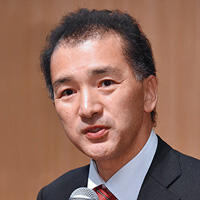
David Studdert
David M. Studdert is a leading expert in the fields of health law and empirical legal research. He explores how the legal system influences the health and well-being of populations. A prolific scholar, he has authored more than 150 articles and book chapters and his work appears frequently in leading international medical, law, and health policy publications.
Profile

Read More

gettyimages corona test
Q&As

Michelle Mello Answers Questions About the Federal Rollout of the Coronavirus Test

Michelle Mello Answers Questions About the Federal Rollout of the Coronavirus Test
gettyimages corona taiwan
News

How Taiwan Used Big Data, Transparency and a Central Command to Protect Its People from Coronavirus

How Taiwan Used Big Data, Transparency and a Central Command to Protect Its People from Coronavirus
gettyimages coronaprotocols
Commentary

Is the Coronavirus as Deadly as They Say?

Is the Coronavirus as Deadly as They Say?
Hero Image
getttyimages civil liberties Getty Images
All News button
1
Subtitle

David Studdert addresses the tradeoff between basic liberties and societal health in the current coronavirus pandemic in a New England Journal of Medicine perspective.

Authors
Beth Duff-Brown
News Type
Commentary
Date
Paragraphs

As we watch President Trump tell the states they have to do more to find their own personal protective equipment for their health-care workers, governors lash back with demands for a national leader who will unlock the emergency powers of the federal government.

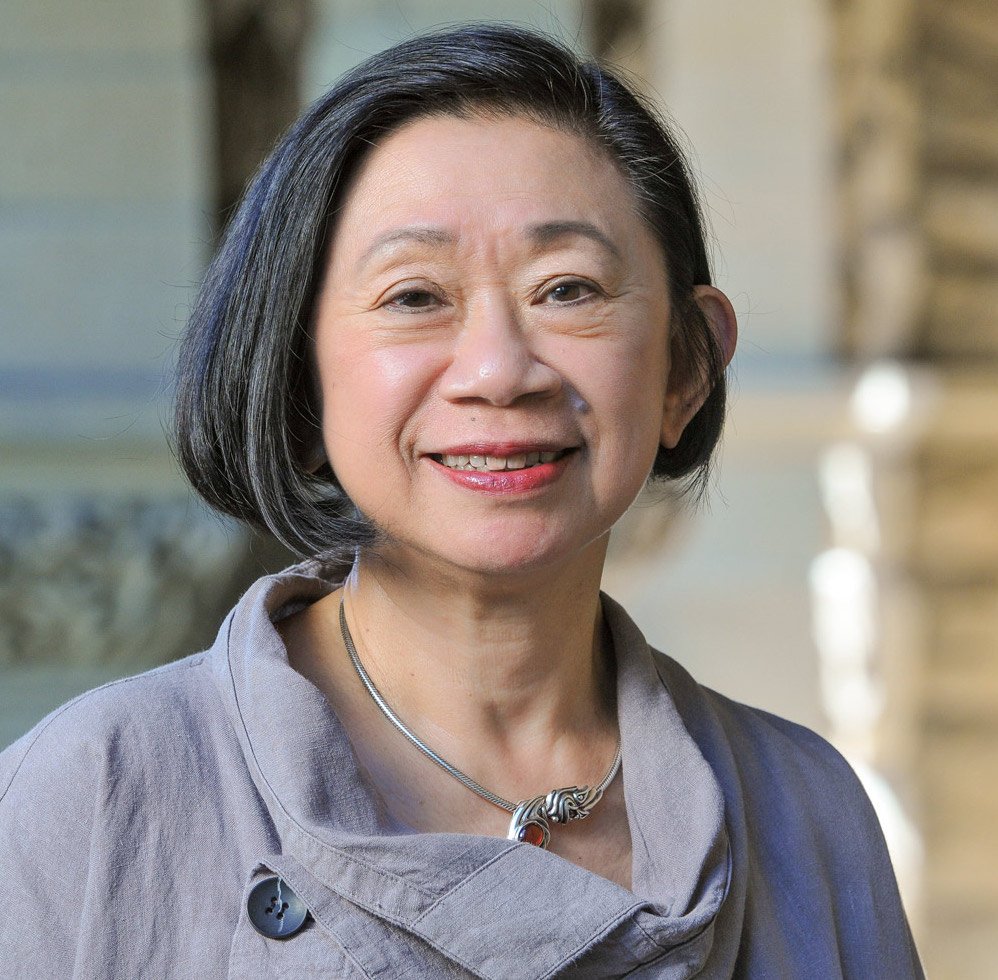
The response to the COVID-19 pandemic has exposed major weaknesses in the federalist system of public health governance, which divides powers among the federal, state and local governments, argues SHP’s Michelle Mello in this New England Journal of Medicine commentary.

The coronavirus, she writes, “is exactly the type of infectious disease for which federal public health powers and emergencies were conceived: it is highly transmissible, crosses borders efficiently, and threatens our national infrastructure and economy.”

“Strong, decisive national action is therefore imperative,” writes Mello, a professor of medicine and a professor of law, and Rebecca L. Haffajee, a policy researcher at the RAND Corporation. “Yet the federal response has been alarmingly slow to develop, fostering confusion about the nature of the virus and necessary steps to address it.”

The authors warn this “lack of interjurisdictional coordination has and will cost lives.”

Though states must respect constitutionally protected individual rights — such as due process, equal protection and freedom of travel and association — the Constitution puts primary responsibility for public health with the states, cities and counties. It gives them the right to exercise broad police powers to protect their citizens’ health during ordinary times.

In extraordinary times — like the one we’re experiencing now — states and the federal government can activate emergency powers to expand their abilities to act swiftly and protect human life and health. All 50 states and dozens of localities and the federal government have declared emergencies.

“The resulting executive powers are sweeping: they can range from halting business operations, to restricting freedom of movement, to limiting civil rights and liberties, to commandeering property,” Mello and Haffajee write in the NEJM Perspective.

This emergency legal framework has led to too few checks-and-balances on poor decisions—historically, in the direction of being overly aggressive, write the authors. They note a good example is when New Jersey’s governor ordered a nurse returning from Sierra Leone during the 2014 Ebola outbreak into quarantine, contrary to Centers for Disease Control and Prevention guidelines.

Too Little Too Late? 

“Today, we find ourselves in the opposite situation: the federal government has done too little,” the authors write. “Perhaps because of misleading early statements from federal officials about the gravity of the COVID-19 threat, public sentiment has weighed against taking steps that would impose hardships on families and businesses.”

The tumbling stock market and unprecedented 10 million unemployment claims last month also have created further pressure by the federal government to project a sense of calm.

“The resulting laconic federal response has meant that a precious opportunity to contain COVID-19 through swift, unified national action has been lost — a scenario that mirrors what occurred in Italy,” they write.

So the states had to pick up where the federal government fell short, the authors note. Many jurisdictions issued stay-at-home orders; others did not. As of March 31, more than a dozen governors had yet to issue statewide stay-at-home orders and eight had only ordered partial measures. Yet many jurisdictions turn a blind eye, they note, to noncompliance with social-distancing recommendations issued by the CDC, as evidenced by crowded beaches and children congregating in public parks.

“This is the dark side of federalism: it encourages a patchwork response to epidemics,” the authors write.

“A federal takeover of all public health orders would be out of step with our federalist structure,” the authors state, but there remain three good options:

  • “The White House must reverse its current trajectory toward prematurely weakening existing federal measures and the resolve of governors who are enforcing stay-at-home orders and school closures.” Trump said last week he wanted the United States “opened up and raring to go by Easter.” A few days later, he heeded the call of medical experts and extended social-distancing guidelines until the end of April, but public health experts believe the crisis will likely be with us longer.
  • Congress should “use its spending power to further encourage states to follow a uniform playbook for community mitigation that includes measures for effective enforcement of public health orders.” It could threaten to withhold some federal funds from states that do not comply.
  • “Congress could leverage its interstate-commerce powers to regular economic activities that affect the interstate spread” of COVID-19, such as restricting large businesses from traveling and operating across state lines in ways that expose workers to risk.

The White House could also make further use of the Defense Production Act (DPA) to direct private companies to produce badly needed ventilators and personal protective equipment for health-care workers, the authors write. Trump has ordered General Motors to manufacture ventilators and the $2 trillion stimulus package includes $1 billion for DPA projects.                                                                     

“Learning is difficult in the midst of an emergency, but one lesson from the COVID-19 epidemic is already clear: when epidemiologists warn that a pathogen has pandemic potential, the time to fly the flag of local freedom is over,” the authors conclude. “Yet national leadership in epidemic response works only if it is evidence-based. It is critical that the U.S. response to COVID-19 going forward be not only national, but rational.”

Hero Image
gettyimages trumpcorona Getty Images
All News button
1
Authors
News Type
News
Date
Paragraphs

The signing of President Trump’s Phase One trade deal with China has rekindled speculations about the future of the world’s second-largest economy. Many analysts have cited trade frictions between the United States and China as a driving force behind the slowdown the Chinese economy has experienced in recent years. It is not a tariff crossfire, however, that explains the slowdown, argues Nicholas Lardy, a leading expert on the Chinese economy.

Lardy, the Anthony M. Solomon Senior Fellow at the Peterson Institute for International Economics, offered a different view on China’s slowing economy in a lecture presented at the China Program’s 2020 winter/spring colloquia series, which examines the past, present, and future of the PRC at 70. Using data and trends from the last forty years of China’s economic growth, Lardy presented the case that the slowing trend in the Chinese economy is directly related to changes in how the government lends credit and to what he terms “resource misallocation.”

Image
Nicholas Lardy lecturing at APARC.
According to Lardy, the Chinese economy is slowing from the inside. The government’s recent campaign to deleverage the amount of credit coming out of the shadow banking system was arguably justified, but it has nonetheless reduced the amount of credit available to businesses, particularly private companies. As a result, the credit-to-GDP ratio has plateaued in the last several years and is growing in-pace with the economy instead of ahead of it. 

Coupled with this is the observation that Xi Jinping’s government has actively sought to increase the size and scope of state-owned enterprises. Lardy’s research indicates that the assets of state-owned, non-financial companies in China are growing twice as fast as the overall GDP, a situation he feels is only possible if state companies are being allocated a disproportional share of credit and loans. Lardy shows that pre-2012, funding to private companies was at $3.6 trillion USD, but by 2016 it dropped to a mere $600 billion.

Taking these factors together, Lardy argues that the economic slowdown will continue if the Chinese government continues to aggressively emphasize party control and the importance of the state sector over private companies. While reporting on trade deals may dominate the media, “We will increasingly see friction not on tariffs, but on technology transfer and issues of technology,” he says. “The key thing to watch is whether or not Xi Jinping gets serious about reforming state-owned enterprises and having a financial system that allocates credit more efficiently.”

Listen to highlights from Lardy’s presentation above, also available on our SoundCloud channel. A transcript is available

.


Hero Image
Image of Chinese Yuan Thanakorn Phanthura / EyeEm / Getty Images
All News button
1
-

Moon Jae-in administration increased South Korea’s minimum wage by nearly 30 percent in 2018 and 2019 under its political slogan of "income-led growth." The idea was that the higher minimum wage would boost low-wage earners’ earnings, thus the income inequality would be reduced while promoting economic growth with increased labor income and expenditure of low-wage workers and their households. This idea was, however, heavily criticized by those who argued that the minimum wage could not be a tool for economic growth and there could be a negative effect on employment.

Lee will discuss empirical findings from his research on the Korean minimum wage including the effect of the recent wage hikes. Using employer-employee matched data and longitudinal data on the universe of establishments, he estimated the effect of the minimum wage on net job growth and tried to decompose the effect into job creation and destruction by existing establishments as well as by establishment entry and exit. He found a significant negative effect of the minimum wage on employment growth; and also that ignoring the minimum wage’s effect on the self-employed could underestimate the adverse effect on total employment. To explain the mechanism, he focuses on the Korean labor market's unique feature—a high share of the self-employed in the workforce and their financial marginality. His findings demonstrate that the minimum wage’s effect and its channels should differ across countries depending on labor market institutions and structure.

Image
Jungmin Lee
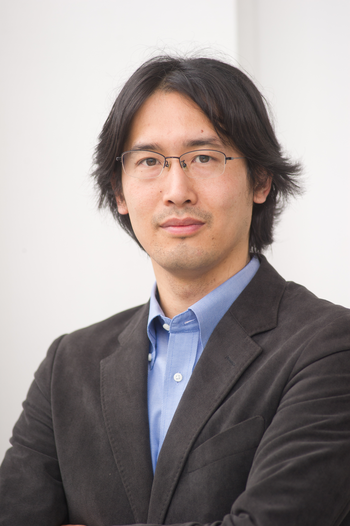
Jungmin Lee is a professor of economics at Seoul National University in Korea, and also a Research Fellow at the Institute for the Study of Labor in Germany and at the Center for Research & Analysis of Migration at University College London in UK. Previously, he was an assistant professor at University of Arkansas and Florida International University, and an associate professor at Sogang University in Korea. His current research focuses on Korean labor market and education policies, interactions between health and labor market outcomes, and North Korean refugees. He has been a member of editorial board of many economics journals in Korea. He was the chief editor for the Korean Journal of Labor Economics and he is currently a Co-Editor for the Korean Economic Review; and was a member of the committee on youth employment of the Korea Tripartite Commission. He has published more than 50 papers in academic journals, mostly about the Korean economy. He received a bachelor’s degree in international economics from Seoul National University and PhD in economics from the University of Texas at Austin.

Jungmin Lee <i>Professor of Economics, Seoul National University</i>
Seminars
Shorenstein APARCStanford UniversityEncina Hall E301Stanford, CA 94305-6055
0
Koret Fellow, 2019-20
Visiting Scholar at APARC, Winter 2020
victor_cha-koret_fellow.jpg Ph.D.

Victor Cha, professor of government and international affairs at Georgetown University, joined the Walter H. Shorenstein Asia-Pacific Research Center and the Korea Program as the Koret Fellow for the winter quarter of 2020. He is the author of five books, including The Impossible State: North Korea, Past and Future (Harper Collins, 2012) and Powerplay: Origins of the American Alliance System in Asia (Princeton University Press, 2016). He holds Georgetown's Dean's Award for teaching for 2010, the Distinguished Research Award for 2011, and a Distinguished Principal Investigator Award for 2016.

Professor Cha left the White House in 2007 after serving since 2004 as Director for Asian Affairs at the National Security Council, where he was responsible for Japan, the Korean peninsula, Australia/New Zealand, and Pacific Island affairs. He serves as Senior Advisor at CSIS, and is a non-resident Fellow in Human Freedom at the George W. Bush Institute in Dallas, Texas. He received a Ph.D. from Columbia University, M.A. from the University of Oxford, and MIA and B.A. from Columbia University.

-
This event is open to Stanford undergraduate students only. 
 
The Center on Democracy, Development, and the Rule of Law (CDDRL) will be accepting applications from eligible juniors on who are interested in writing their senior thesis on a subject touching upon democracy, economic development, and rule of law (DDRL) from any university department.  The application period opens on January 13, 2020 and runs through February 14, 2020.   CDDRL faculty and current honors students will be present to discuss the program and answer any questions.
 
For more information on the Fisher Family CDDRL Honors Program, please click here.
 
Image
honors info session 2019

CDDRL
Encina Hall, C152
616 Jane Stanford Way
Stanford, CA 94305-6055

(650) 725-2705 (650) 724-2996
0
Senior Fellow at the Freeman Spogli Institute for International Studies
Professor, by courtesy, of Political Science
Stedman_Steve.jpg PhD

Stephen Stedman is a Senior Fellow at the Freeman Spogli Institute for International Studies (FSI) and the Center on Democracy, Development and the Rule of Law (CDDRL), an affiliated faculty member at CISAC, and professor of political science (by courtesy) at Stanford University. He is director of CDDRL's Fisher Family Honors Program in Democracy, Development and Rule of Law, and will be faculty director of the Program on International Relations in the School of Humanities and Sciences effective Fall 2025.

In 2011-12 Professor Stedman served as the Director for the Global Commission on Elections, Democracy, and Security, a body of eminent persons tasked with developing recommendations on promoting and protecting the integrity of elections and international electoral assistance. The Commission is a joint project of the Kofi Annan Foundation and International IDEA, an intergovernmental organization that works on international democracy and electoral assistance.

In 2003-04 Professor Stedman was Research Director of the United Nations High-level Panel on Threats, Challenges and Change and was a principal drafter of the Panel’s report, A More Secure World: Our Shared Responsibility.

In 2005 he served as Assistant Secretary-General and Special Advisor to the Secretary- General of the United Nations, with responsibility for working with governments to adopt the Panel’s recommendations for strengthening collective security and for implementing changes within the United Nations Secretariat, including the creation of a Peacebuilding Support Office, a Counter Terrorism Task Force, and a Policy Committee to act as a cabinet to the Secretary-General.

His most recent book, with Bruce Jones and Carlos Pascual, is Power and Responsibility: Creating International Order in an Era of Transnational Threats (Washington DC: Brookings Institution, 2009).

Director, Fisher Family Honors Program in Democracy, Development and Rule of Law
Director, Program in International Relations
Affiliated faculty at the Center for International Security and Cooperation
Date Label

Encina Hall, C150
616 Jane Stanford Way
Stanford, CA 94305

0
Center Fellow, Freeman Spogli Institute for International Studies
didi_kuo_2023.jpg

Didi Kuo is a Center Fellow at the Freeman Spogli Institute for International Studies (FSI) at Stanford University. She is a scholar of comparative politics with a focus on democratization, corruption and clientelism, political parties and institutions, and political reform. She is the author of The Great Retreat: How Political Parties Should Behave and Why They Don’t (Oxford University Press) and Clientelism, Capitalism, and Democracy: the rise of programmatic politics in the United States and Britain (Cambridge University Press, 2018).

She has been at Stanford since 2013 as the manager of the Program on American Democracy in Comparative Perspective and is co-director of the Fisher Family Honors Program at CDDRL. She was an Eric and Wendy Schmidt Fellow at New America and is a non-resident fellow with the Carnegie Endowment for International Peace. She received a PhD in political science from Harvard University, an MSc in Economic and Social History from Oxford University, where she studied as a Marshall Scholar, and a BA from Emory University.

Date Label
News Type
Commentary
Date
Paragraphs
What is strategic thinking? Are the foreign policies of some Southeast Asian states more strategic than those of others? If so, in what way, and with what implications for U.S. policy?
 
APARC's Southeast Asia Program Director Donald K. Emmerson examines these questions at the seminar "Beyond the Grass and the Elephants: Strategic Thinking in Southeast Asia," hosted by the New York Southeast Asia Network on September 19, 2019.
 
Watch the video here:
 

Hero Image
U.S. Secretary of State Michael R. Pompeo meets with Chinese State Councilor and Foreign Minister Wang Yi in Bangkok, Thailand, on August 1, 2019.
U.S. Secretary of State Michael Pompeo meets with Chinese State Councilor and Foreign Minister Wang Yi in Bangkok, Thailand on August 1, 2019.
State Department Photo by Ron Przysucha/ Public Domain
All News button
1
Shorenstein APARCStanford UniversityEncina Hall E301Stanford, CA 94305-6055
0
Koret Fellow, 2019-20
Visiting Scholar at APARC
robert_king.png Ph.D.

Robert R. King was a Visiting Scholar, Koret Fellow at the Walter H. Shorenstein Asia-Pacific Research Center (Shorenstein APARC) during the 2019 fall term.  He is the former U.S. Special Envoy for North Korean Human Rights Issues at the U.S. Department of State (2009-2017).  He is Special Advisor to the Korea Chair at the Center for Strategic and International Studies (CSIS), a non-resident Fellow at the Korea Economic Institute, and a member of the board of the Committee for Human Rights in North Korea. 

Ambassador King’s research interests include North Korea human rights, Northeast Asia, U.S. foreign policy, and the Congressional role in U.S. foreign affairs.  During his time at Shorenstein APARC, he researched the United States efforts to promote human rights in North Korea.

Before assuming his position at the Department of State, King was Staff Director and Minority Staff Director of the Foreign Affairs Committee of the U.S. House of Representatives (2001-2009).  He served as Chief of Staff to Congressman Tom Lantos of California (1983-2008).  He was a White House Fellow on the staff of the National Security Council (1977-1978), and Senior Analyst and Assistant Director of Research at Radio Free Europe in Munich, Germany (1970-1977).

King holds a PhD and an MALD in international relations from the Fletcher School of Law and Diplomacy and a BA in political Science from Brigham Young University.

Authors
Noa Ronkin
News Type
Q&As
Date
Paragraphs

The U.S.-China relationship is in a dangerous downward spiral. The crisis in the relationship has spread virtually to every arena, from the intensifying trade war between the two largest economies to their escalating technology rivalry that is rippling into a U.S. government crackdown on foreign influence on research, and from security concerns over China’s growing military power in the Asia-Pacific region to mounting tensions over the antigovernment protests in Hong Kong and over longstanding frictions with respect to Taiwan.

Renowned Chinese politics expert David M. Lampton has been busy discussing these developing issues with academics and policymakers in China, Hong Kong, and Washington, D.C., and researching his book project about Chinese power and rail connectivity in Southeast Asia. In a conversation with APARC’s Associate Director of Communications and External Relations Noa Ronkin, the Oksenberg-Rohlen Fellow at the Freeman Spogli Institute and Shorenstein APARC analyzes the escalating U.S.-China conflict, one that will affect not only bilateral ties, but the regional and world systems beyond.

Q: What risks in the conflict are you most concerned about?

There are a number of problems on the agenda. Certainly trade is top of mind for people in Beijing and Washington. But I think the situation in Hong Kong has great potential to do tremendous harm to the U.S.-China relationship. The predicate is being laid for the possible use of force in Hong Kong. I don't think a decision has been made to do so, and I believe Beijing would prefer not to do so. However, remembering 1989 in Tiananmen, we shouldn't underestimate the willingness of China’s central government to use force to protect its power. You see the increasing spread of demonstrations within Hong Kong, which are very worrisome to the PRC government, and indicators are accumulating that to me signal a significant possibility that the Special Administrative Region and/or Beijing will use tough means to bring demonstrators under control. Such an outcome will, of course, feed into the policy and security anxieties in Washington, not to mention be a tragedy for Hong Kong itself. So, I think Hong Kong is a top concern.

Q: Can you expand on the politics and the context of the U.S.-China trade war?

We're in a situation in which each side thinks it can and will benefit by outwaiting the other. I think Beijing sees at least a significant possibility that Mr. Trump would not be reelected and fervently hopes that's the case. They're in no hurry, thinking that the U.S.-China trade dispute undermines Trump with his natural constituencies and makes his economic story harder to tell to the American people. Beijing believes that, by virtue of the United States’ being a democracy, China has a higher threshold for pain than we do, and so simply inflicting pain on key American constituencies and industries will turn up the political heat on the administration so that compromise would look increasingly attractive to Washington.

The Trump administration, on the other hand, looks at the high percentage of China's GDP that's involved in exports, particularly exports to the United States, which is over three percent. If you subtract the value added of all the components China imports in order to assemble these exports, then still approximately two percent of China's GDP is directly involved in trade with the United States, and the Trump administration believes that China has a lot to lose. The United States is not nearly as dependent on China's exports—that's one of our complaints, that we don't export enough. Therefore Mr. Trump sees Mr. Xi as facing many domestic problems and thinks he can outwait Mr. Xi.

We have then two leaders who are locked into the view that the other is going to blink first. I believe both sides benefit from an economic relationship, but both have the capacity to do without the other if they're forced to. And so I think the trade war can go on for a protracted period.

Q: The trade war, big as it is, is part of a more encompassing rivalry between China and the United States. How do you see this competition between the world’s two superpowers and its consequences?

What has fundamentally happened here—even more important than the economic and cultural dimensions of the U.S.-China dispute—is a deterioration of the security dimension in the relationship. For the first three decades of engagement since the Nixon era, our security relationship with China was generally positive, based first on an anti-Soviet rationale, then counter-terrorism, and finally jointly tackling global issues such as climate change. Up through the Obama administration we had a security rationale for positive relations. Most countries and people prioritize their security, and hence as long as Americans and Chinese could feel the relationship had value for their security, they downplayed thorny issues such as human rights or economic frictions, even though they were unhappy with each other in those other domains.

But as China's military and economic capabilities have increased, so has its assertiveness abroad and its efforts to resolve longstanding disputes in its favor: in the South China Sea, in cross-Strait relations with Taiwan, against Japan, even against South Korea. From its more capable position today, China is pushing the perimeter of U.S. influence back away from the Chinese coast as far as possible, while the United States resists. And so we have a severe security competition that, in turn, has infected the economic relationship, because what makes a competitive military today is largely technological capability, which China is forging ahead with and using to develop new weapons systems. The United States thinks much of this capability is coming through the illicit acquisition of intellectual property and proprietary technology, and through university collaborations and exchanges. So the security competition is ramifying through the economic relationship and the cultural/educational relationship.

Q: If the competition between the two superpowers is here to stay, what steps, at home and abroad, are essential to achieve stable coexistence with China?

We have assumed that a huge, complex authoritarian society such as China has many disadvantages, which it does, but we're in danger of not realizing what it can achieve nonetheless. I'm worried about the competition with China because I don't think we are taking the right steps to put ourselves in the best possible competitive position, and I don’t mean just militarily.

If you consider the space race against the Soviet Union, there was a galvanizing vision of a serious competitor, yet there nonetheless was an abiding belief that we could prevail if we properly organized ourselves with discipline, commitment, and allocation of resources. We need the same sort of galvanizing spirit, not grounded in seeing China as an enemy, but in the realization that we Americans make up but four percent of the world's people and that if we're going to keep a strong position economically, intellectually, and socially, then we have to perform better than others, because we're just too small a percentage of the world's people. And I don't think anybody believes we're performing at our peak today.

Competition in general is a good thing. We surely recognize this in our own domestic lives, and free trade theories in international economics recognize that competition is an engine for positive forward motion. So I don't think we should be afraid of competing with China. Our society has been designed for competition from the ground up. And China has tremendous problems: demographic problems, educational quality problems, and debt problems. But what we must avoid is a destructive competition in which we're hurting our own ability to innovate by attempting to keep China from advancing. For instance, targeting foreign students in American research institutions and labs is a major problem.

Q: You have been studying China’s Belt and Road Initiative (BRI) and its implications across the Asia-Pacific. What are some of the takeaways from your research so far?

The Chinese learned a lesson from U.S. policy in the post-WWII era, namely, that you build your own greatness by integrating other countries into your economy and by building their strength. The Chinese are now looking at their underdeveloped periphery and think, "How can we build the new connectivity in the 21st century that will make China central to all countries along its enormous periphery and beyond?" BRI is therefore a big umbrella concept, based on the notion that you create economic growth through building infrastructure, and particularly transportation and communications, in an attempt to increase China's comprehensive national power and centrality in the emerging global system. It could be described as an “all roads lead to Rome concept.”

Some argue that BRI is a strategy, a master plan. And here's where I think we get it wrong. It isn't really a plan. China has created this umbrella policy concept, has said it will devote resources to it, but local provinces, state enterprises, private enterprises, foreign governments all are in effect lobbying Beijing to approve their pet projects that are shoved under this umbrella. So, you see a big vision painted by Beijing, but an extremely entrepreneurial system below Beijing is trying to grab as much of this money and opportunity, and build their locality into this vision. It's a combination of spontaneous combustion at the middle and lower levels and a grand general idea at the top.

Right now what we're seeing is the implementation of numerous projects—some are unmitigated fiascos, some are successful to a limited degree, and some are likely to become quite successful. There will be a sorting out process. In fact, Beijing, for its own welfare, is already starting to constrain the system and apply more economic analysis to differentiate between good and bad projects. But because BRI is so entrepreneurial and so many people at the bottom are trying to grab a piece of this policy, it's very difficult for Beijing to get its arms around all that's going on.

I think that one of the policy implications of BRI is that we—the United States, the West, American allies—must realize that BRI isn't necessarily a bad idea. This is how development occurs: big infrastructure projects create urbanization, pathways for production chains, and so forth. And if we were to sit back and say, "This is destined to fail," or "The Chinese are biting off more than they can chew," or essentially decide that we have a "no” policy, then we will essentially abandon what I believe is largely a sound concept. The U.S. government is, I think, beginning to understand that it has to respond with something, not nothing. The United States needs to use its creativity, capital, and capacity to get others to cooperate and be more active in showing our private sector where it can get involved.

We're in a transition stage. I think that one of the big problems right now is that it's hard to induce our allies to cooperate when we’re badgering them about defense expenditures and so forth. We need a remake of our foreign policy process before we'll be able to consistently pursue a vision for development. On some projects we might even choose to cooperate with the Chinese. In fact, we're already cooperating through the World Bank, the Asian Development Bank, and even indirectly through the Asian Infrastructure Investment Bank, which has gotten almost all U.S. allies involved with it. So we shouldn't absolutely oppose China on all fronts, but evaluate the alternatives and tradeoffs in each particular case.

Q: Your current book project focuses on China’s development of high-speed rail between southern China and Singapore. What have you found in researching this project?

My core interest has always been Chinese politics, and particularly what I call the "implementation problem." That is, the realization that what Beijing says isn't necessarily implemented faithfully down the hierarchy in localities, despite the assumption that, because China is authoritarian, there ought to be a high correlation between what the top says and what the bottom actually does. The idea to build connectivity between China and the seven continental Southeast Asian nations south of it makes for a fascinating implementation case study. The underlying question for my book is: “Does China have the capacity to pull off such a gigantic initiative?”

In the case of this particular railway connectivity vision linking China and seven Southeast Asian neighbors, the idea was not Chinese, but rather, a vision of Southeast Asians themselves. In the past, China didn't have the technology, capital, or frankly the inclination to build somebody else's rail system. Around 2012, however, China decided to step out and build infrastructure beyond its borders, and essentially adopted the Southeast Asian idea of rail connectivity. What interests me is the implementation question: if it's difficult to get things done within China itself, how do you create an interconnected system that transits seven more countries, from Thailand, Malaysia, and Singapore, through Myanmar, Laos, Vietnam, and Cambodia? It's a fantastically complicated project, with financing, environmental, and displaced population problems, among many others.

The results so far are mixed, but you would be surprised at the progress that China has made. I believe that within a few years, certainly before 2030, there will be a high-speed and conventional-speed rail system that connects south China to at least Bangkok and another link that connects Singapore to Kuala Lumpur, with the major uncertainty being the stretch from Kuala Lumpur to Bangkok. It’s less clear whether it will also eventually go through Myanmar and Vietnam. But the Chinese are well on the way to finishing the Laos railroad and began construction on some railroad in Thailand, so I think that probably by 2025 you'll see a railroad to Bangkok, which would be a major change in the economic geography of the region. What bothers me is seeing the United States mired in our own preoccupation with ourselves and not reacting in a way that is most productive for our future given what China is doing and how other countries are moving forward.

Hero Image
Traders and financial professionals work ahead of the closing bell on the floor of the New York Stock Exchange (NYSE) on August 1, 2019 in New York City.
Traders and financial professionals work ahead of the closing bell on the floor of the New York Stock Exchange (NYSE) on August 1, 2019 in New York City. Following large gains earlier in the day, U.S. markets dropped sharply after an afternoon tweet by U.S. President Donald Trump announcing his plans to impose a 10 percent tariff on an additional $300 billion worth of Chinese imports. His announcement said the new tariffs will take effect on September 1.
Drew Angerer/ Getty Images
All News button
1
Subscribe to Policy Analysis