Diplomacy
-

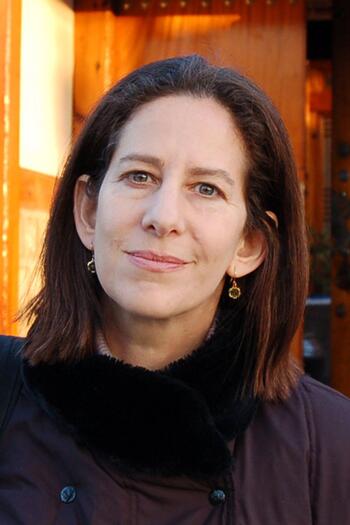
About the Topic: The scholarly literature on Track Two in South Asia has traditionally held that the region is inhospitable to this kind of dialogue. Drawing on his extensive experience with facilitating Track Two dialogues in South Asia, Peter Jones will explore the ways in which the literature may not be properly capturing the situation.  He will also explore the positive role that Track Two can play in the region, and consider pitfalls that can arise if it is done badly.  The talk will include reflections on key issues that arise in facilitating such dialogues, such as: the questions of designing such projects and selecting the participants; how to transfer the results of such projects to the official track; dealing with those who oppose such projects; and maintaining momentum.

About the Speaker: Before joining the University of Ottawa, Peter Jones served as a senior analyst for the Security and Intelligence Secretariat of the Privy Council of Canada. An expert on security in the Middle East and track-two diplomacy, he led the Middle East Security and Arms Control Project at the Stockholm International Peace Research Institute (SIPRI) in Sweden in the 1990s. He is presently leading several Track Two initiatives in South Asia and the Middle East, and is also widely published on Iran.  Jones holds a Ph.D. in War Studies from Kings' College, London, and an MA in War Studies from the Royal Military College of Canada.

CISAC Conference Room

Peter Jones Associate Professor, School of Public and International Affairs, University of Ottawa; Annenberg Distinguished Visiting Fellow, Hoover Institution Speaker
Seminars
-

"When you come to a fork in the road, take it." – Yogi Berra

Ambassador Bosworth will discuss some of the possible options for dealing with North Korea. This is a keynote speech open to the public during the Fifth Annual Koret Conference on "North Korea Policy."

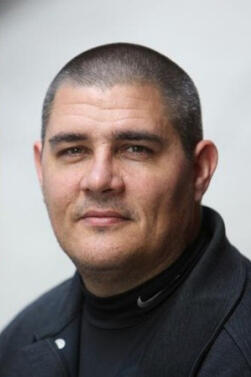
Ambassador Bosworth is the Dean of The Fletcher School of Law and Diplomacy at Tufts University. A former career diplomat, he served as U.S. Ambassador to the Republic of Korea, the Philippines, and Tunisia. Most recently, he served as U.S. Special Representative for North Korea Policy for the Obama administration. 

This event is made possible by the generous support of the Koret Foundation.

Oksenberg Conference Room

Stephen W. Bosworth Dean of The Fletcher School of Law and Diplomacy Speaker Tufts University
Lectures
-

During the past few years, the European Union has experienced one of the most difficult periods in its now sixty-year long process of unification. To fight the current eurocrisis, the EU has taken further steps toward integration that seemed unthinkable just a few years ago. In this seminar, we will discuss the challenges and opportunities the crisis offers for more European unification.

Ambassador Veestraeten has been the Belgian Consul General in Los Angeles since September 2012. Prior to his arrival in California he was Belgian Ambassador to Thailand. He has also held positions at the Belgian Embassies in Nigeria, Bulgaria, Kenya and Washington DC. Amb. Veestraeten holds a degree in Romance Literature from KU Leuven.

This event is part of The Europe Center's series on the "European and Global Economic Crisis."

Daniel and Nancy Okimoto Conference Room

Rudi Veestraeten Consul General to the US Speaker the Consulate General of Belgium in Los Angeles
Seminars
0
Former Henri H. and Tomoye Takahashi Senior Fellow in Japanese Studies at the Freeman Spogli Institute for International Studies
Former Professor, by courtesy, of Finance at the Graduate School of Business
takeo_hoshi_2018.jpg PhD

Takeo Hoshi was Henri and Tomoye Takahashi Senior Fellow at the Freeman Spogli Institute for International Studies (FSI), Professor of Finance (by courtesy) at the Graduate School of Business, and Director of the Japan Program at the Shorenstein Asia-Pacific Research Center (APARC), all at Stanford University. He served in these roles until August 2019.

Before he joined Stanford in 2012, he was Pacific Economic Cooperation Professor in International Economic Relations at the Graduate School of International Relations and Pacific Studies (IR/PS) at University of California, San Diego (UCSD), where he conducted research and taught since 1988.

Hoshi is also Visiting Scholar at Federal Reserve Bank of San Francisco, Research Associate at the National Bureau of Economic Research (NBER) and at the Tokyo Center for Economic Research (TCER), and Senior Fellow at the Asian Bureau of Finance and Economic Research (ABFER). His main research interest includes corporate finance, banking, monetary policy and the Japanese economy.

He received 2015 Japanese Bankers Academic Research Promotion Foundation Award, 2011 Reischauer International Education Award of Japan Society of San Diego and Tijuana, 2006 Enjoji Jiro Memorial Prize of Nihon Keizai Shimbun-sha, and 2005 Japan Economic Association-Nakahara Prize.  His book titled Corporate Financing and Governance in Japan: The Road to the Future (MIT Press, 2001) co-authored with Anil Kashyap (Booth School of Business, University of Chicago) received the Nikkei Award for the Best Economics Books in 2002.  Other publications include “Will the U.S. and Europe Avoid a Lost Decade?  Lessons from Japan’s Post Crisis Experience” (Joint with Anil K Kashyap), IMF Economic Review, 2015, “Japan’s Financial Regulatory Responses to the Global Financial Crisis” (Joint with Kimie Harada, Masami Imai, Satoshi Koibuchi, and Ayako Yasuda), Journal of Financial Economic Policy, 2015, “Defying Gravity: Can Japanese sovereign debt continue to increase without a crisis?” (Joint with Takatoshi Ito) Economic Policy, 2014, “Will the U.S. Bank Recapitalization Succeed? Eight Lessons from Japan” (with Anil Kashyap), Journal of Financial Economics, 2010, and “Zombie Lending and Depressed Restructuring in Japan” (Joint with Ricardo Caballero and Anil Kashyap), American Economic Review, December 2008.

Hoshi received his B.A. in Social Sciences from the University of Tokyo in 1983, and a Ph.D. in Economics from the Massachusetts Institute of Technology in 1988.

Former Director of the Japan Program at the Shorenstein Asia-Pacific Research Center
CV
-

North Korea, arguably the most isolated country in the world, poses unique challenges for journalists. Access to the country is severely limited and even when a journalist is able to gain entry, the secretive and repressive nature of the state significantly limits what can be learned. Still, despite these difficult conditions, the realities of North Korean life are increasingly finding their way into various media, from newspaper reporting and on-line media to thinly fictionalized accounts.

This panel will take a multi-faceted look at the coverage of North Korea through the journalist (represented by 2012 Shorenstein Journalism Award winner Barbara Demick), the editor, the development/relief worker, and the novelist.

Panelists include:

Image
Barbara Demick
Barbara Demick, has been Beijing bureau chief for the Los Angeles Times since 2008. She has focused on human trafficking, corruption, and minorities, as well as North Korea. Demick is the author of two books -- Nothing to Envy: Ordinary Lives in North Korea and Logavina Street: Life and Death in a Sarajevo Neighborhood. Her work has won awards from the Asia Society, the Overseas Press Club, the American Academy of Diplomacy, among others. Her North Korea book, which has been translated into more than 20 languages, recently won the International Book Award on Human Rights. She is a graduate of Yale and taught a seminar on coverage of repressive regimes at Princeton University. She lives in Beijing with her son Nicholas.

Image
Susan Chira
Susan Chira, was named assistant managing editor for news for the New York Times in September 2011. Previously, she had served as foreign editor (since January 2004), and as editorial director of book development (since September 2002). Before that, Chira was the editor of the "Week in Review" section at the Times (since October 1999), after having served as deputy foreign editor of the newspaper (since February 1997). Earlier, she served in a variety of reporting positions including national education correspondent, Tokyo correspondent (from October 1984 until February 1989), metropolitan reporter in the Albany and Stamford bureaus, and reporter for the "Business Day" section.
 

Image
Katharina Zellweger
Katharina Zellweger, a Pantech Fellow, joined the Korean Studies Program at the Walter H. Shorenstein Asia-Pacific Research Center after five years of living in Pyongyang where she has served as the North Korea country director for the Swiss Agency for Development and Cooperation (SDC). Through her SDC and earlier work, she has witnessed modest economic and social changes not visible to most North Korea observers. Her research at the Center has drawn on her over 15 years of humanitarian work in North Korea and explore how aid intervention can stimulate positive sustainable change there


Image
Adam Johnson
Adam Johnson is an associate professor of English, with emphasis in creative writing, at Stanford University. A Whiting Writers’ Award winner, his fiction has appeared in Esquire, Harper's, Playboy, Paris Review, Granta, Tin House, and Best American Short Stories. He is the author of Emporium, a short-story collection, and the novel Parasites Like Us, which won a California Book Award. His novel The Orphan Master's Son, a novel set in North Korea, has just been published by Random House. His books have been translated into sixteen languages. Johnson was a 2010 National Endowment for the Arts Fellow.

Bechtel Conference Center

Conferences
-

Abstract:

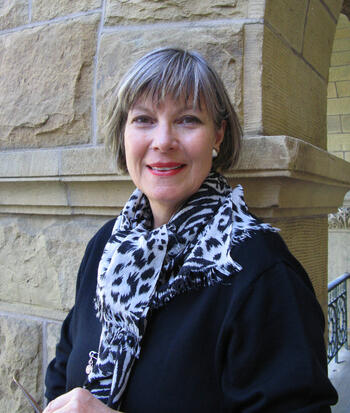
Marking the publication of Lina Khatib's latest book Image Politics in the Middle East: The Role of the Visual in Political Struggle, this seminar focuses on the evolution of political expression in the Middle East over the past decade, highlighting the visual dimension of power struggles between citizens and leaders in Lebanon, Iran, Egypt, Libya, and Syria.

About the speaker:

Lina Khatib is a co-founder and Program Manager of the Program on Arab Reform and Democracy at the Center on Democracy, Development, and the Rule of Law at Stanford University. She joined Stanford University in 2010 from the University of London where she was an Associate Professor. Her research is firmly interdisciplinary and focuses on the intersections of politics, media, and social factors in relation to the politics of the Middle East. She is also a consultant on Middle East politics and media and has published widely on topics such as new media and Islamism, US public diplomacy towards the Middle East, and political media and conflict in the Arab world, as well as on the political dynamics in Lebanon and Iran. She has an active interest in the link between track two dialogue and democratization policy. She is also a Research Associate at SOAS, University of London, and, from 2010-2012, a Research Fellow at the USC Center on Public Diplomacy at the Annenberg School.

Lina is a founding co-editor of the Middle East Journal of Culture and Communication, a multidisciplinary journal concerned with politics, culture and communication in the region, and in 2009 co-edited (with Klaus Dodds) a special issue of the journal on geopolitics, public diplomacy and soft power in the Middle East. She also edited the Journal of Media Practice from 2007-2010. She is one of the core authors of the forthcoming Arab Human Development Report (2012) published by the UNDP.

She has written two books, Filming the Modern Middle East: Politics in the Cinemas of Hollywood and the Arab World (IB Tauris 2006), which is a study of the link between international relations and film, focusing on 25 years of cinematic representation of politics in the region (1980-2005), from the Arab-Israeli conflict to the Gulf War to Islamic fundamentalism, and Lebanese Cinema: Imagining the Civil War and Beyond (IB Tauris 2008). The book takes a socio-political approach to the study of Lebanese cinema over the last thirty years, focusing on the issues of Lebanese national identity, history, sectarian conflict, and memory of the Civil War.

Lina has recently finished writing a book titled Image Politics in the Middle East: The Role of the Visual in Political Struggle for IB Tauris. The book examines the power struggles among states, other political actors, and citizens in the region that are expressed through visuals, and focuses on case studies from Lebanon, Egypt, Syria, Libya, and Iran, with a focus on the role of the image as a political tool in the Arab Spring. She has also recently led a multidisciplinary research project on US public diplomacy in the digital age, in collaboration with the University of Oxford and the University of Wolverhampton, the outcome of which will appear in the Middle East Journal in 2012.

Before joining the academic field, Lina worked in broadcast journalism in Lebanon. She is a frequent commentator on the Middle East in the media with appearances on Al-Jazeera (Arabic and English), CNN, BBC, Sky News and other media outlets across the globe.

Encina Ground Floor Conference Room

Lina Khatib Program Manager for the Program on Arab Reform and Democracy Speaker CDDRL
Seminars
-

About the topic: Stanford University, in collaboration with humanitarian NGOs, WHO, the Global Fund and the North Korean Ministry of Public Health have undertaken to develop that country's first National Tuberculosis Reference Laboratory. North Korea is estimated to have the highest tuberculosis rate outside sub-Saharan Africa and is believed to have a mounting epidemic of patients infected with drug-resistant strains. This presentation will focus on the nature of the TB epidemic in North Korea, the role of this laboratory in addressing this epidemic, challenges to the laboratory's development in this isolated country and possible "dual use" concerns about the importation of equipment and expertise intended for the diagnosis and treatment of TB patients.


About the speaker: Gary Schoolnik is Professor of Medicine, Microbiology and Immunology, Attending Physician in Internal Medicine and Infectious Diseases at Stanford Hospital, Associate Director of the Institute for Immunology, Transplantation and Infection and Associate Dean, School of Medicine. His research laboratory studies tuberculosis and cholera using molecular, genetic and genomic methods to understand how these microbes cause disease and how that understanding might lead to improved preventive, diagnostic and treatment strategies.

CISAC Conference Room

Gary Schoolnik Professor, Medicine (Infectious Diseases); Professor, Microbiology and Immunology; Senior Fellow, Institute for the Environment Speaker
Seminars
Authors
News Type
Q&As
Date
Paragraphs

Fresh off his re-election victory, Barack Obama—the “Pacific President”—became the first president to visit Myanmar and Cambodia when he traveled to the Southeast Asian countries in November.

The trip highlights the region’s importance to the United States and signals that Obama’s second term will significantly focus on Asian trade, security and governance issues.

Eight Walter H. Shorenstein Asia-Pacific Research Center scholars sat down to discuss reactions to the election in Asia, and possible directions for U.S.-Asia relations and foreign policy during the second Obama administration.

How do you think countries in Asia view the outcome of the U.S. presidential election?

Karl Eikenberry: Overall, I think the countries of Asia will view President Obama’s reelection as positive, including because of the likely continuity in American policy toward the region.

Thomas Fingar: Beijing is troubled by Obama’s policies toward Asia because it sees them as directed against China and detrimental to its interests. But it was more troubled by Romney’s rhetoric during the campaign and probably interprets the election outcome as portending more continuity than change in U.S. policy. On balance, Beijing would rather deal with a devil it knows than cope with the uncertainties of a new U.S. administration.

Gi-Wook Shin: There was some concern in South Korea that Mitt Romney would have reverted to the hardline North Korea policy of George W. Bush’s first term. It would have created a bit of tension between the United States and South Korea, so in that context many Koreans are relieved that Obama was re-elected.

David Straub: Interestingly, President Obama personally is overwhelmingly popular in South Korea, but opinion polls show that most South Koreans continue to have complex, even critical views of American foreign policy under him.

Is President Obama likely to make major changes to Asia policy in his second term?

Eikenberry: Some of the people in key positions in the second Obama administration will change, including Secretary of State Hillary Clinton, but President Obama will of course be in office for four more years. He has been in Asia and knows the players. He has a clear strategy, so overall I expect continuity in his administration’s Asia policy. 

Michael H. Armacost: Events are really what shape foreign policy, and developments can occur that are hard to predict.

Henry S. Rowen: We tend to assume there is a continuity or gradual evolution to events, but there are also discontinuities. Something could happen in North Korea, for example. Unexpected events do happen from time to time, and the question is to try to figure out what they might be.

How could U.S. China policy develop?

Fingar: If President Obama has a clear plan for his second term, its goals and priorities are not yet clear to the Chinese. They worry that he may continue, or ratchet up, efforts they see as designed to constrain China’s rise. That said, they know that steady relations with the United States are essential for their own continued economic success and will respond positively to U.S. efforts to reduce distrust and enhance strategic stability. They will be troubled, however, by likely—and overdue—U.S. pressure to secure enforcement of China’s intellectual property and other trade-related commitments, and by likely U.S. efforts to deepen trade relations with other countries.

How could the possible election of a more conservative Japanese government during the second term of the Obama administration affect U.S.-Japan relations?

Armacost: The Trans-Pacific Partnership is an issue where we both have potential constraints on the extent to which Japan can be included, and it is not certain whether that will change very much under a Liberal Democratic Party (LDP) administration. Secondly, there is the longstanding Okinawa base issue. The LDP did not do anything about the base from 1996 onward, and that will probably also be the case if the LDP comes into power again. Finally, the United States will probably push Japan to take more of a stand on the ongoing Senkaku/Diaoyu Islands dispute with China.

After the failure of the United States’ Leap Day agreement with North Korea this year, and especially with the election of a new South Korean government next month, do you think that Obama’s second term could bring a renewed effort in diplomacy with North Korea?

Shin: It will be important to watch the outcome of the South Korean election. If the opposition party wins, they will move very quickly to engage with North Korea and the question then will be how the United States will respond.

Straub: In any event, the United States periodically reaches out to North Korea, to test it or just because time has passed. It may do so again after the election, particularly since there is a still fairly new leadership in North Korea, and also because there are elections or leadership changes in all the countries in the region. A number of the Six Party Talks member states, likely including South Korea, may also push harder for a resumption of those talks, which were never held during President Obama’s first term. But the Obama administration will be cautious because it was burned by North Korea’s breaking of their Leap Day agreement.

What direction might U.S. policy toward South Asia take?

Eikenberry: Our presence in Afghanistan is going to remain an important part of our overall military posture in Central, South, and East Asia. Managing properly the transition to full Afghan responsibility for their internal security will remain very high on President Obama’s agenda. At the same time, it will be important to keep some U.S. counterterrorism capability in Afghanistan, with the permission of the Afghan government.  

The nature of our security dialogue with Pakistan will change in emphasis from one that since 9/11 has mostly been informed by international terrorism. If we continue to make progress against Al Qaida, I expect our conversation with Pakistan will place more emphasis on its nuclear weapons programs and deployments. This is a potentially destabilizing issue and a concern not only to India, but also to China.

There has been a steady appreciation in the current and future importance of India. It will continue to be key in terms of the administration’s broader Asia-Pacific policy, but with a clear understanding of the limits of defense engagement with India.

Will the rebalancing, or “pivot,” toward Asia continue to be a central theme in U.S. foreign policy in Obama’s second term?

Eikenberry: Last year, when President Obama announced the rebalancing to Asia, I think this was done in part to signal to the world that we were putting the decade of costly wars in Iraq and Afghanistan behind us and looking forward—that the U.S. “was back.” I do not believe we will see any short-term major change in the deployment of military capabilities to the Asia-Pacific region, but the rebalancing could have profound consequences in the longer term. It will likely inform the prioritization of our future defense modernization and the development of military doctrine, which in turn drives procurement.

Donald K. Emmerson: Asia will continue to loom large on Washington's policy horizon. Although the pivot was originally all about security, the rebalance has since been "rebalanced" to encompass economic concerns. In July 2012 when Secretary Clinton went to Phnom Penh to attend the security-focused ASEAN Regional Forum, she brought along the largest delegation of American businesspeople ever to visit Southeast Asia. Their presence upgraded the profile of the U.S.-ASEAN Business Forum, which met the following day. The Obama administration has also taken the lead in promoting a Trans-Pacific Partnership to liberalize Asia-Pacific trade. 

President Obama's mid-November trip to Southeast Asia is further evidence of the pivot's continuation. In mid-November he will become the first U.S. president ever to have visited Myanmar and Cambodia. He will stop in Thailand as well. In Phnom Penh he will attend the U.S.-ASEAN Summit and the East Asia Summit. A key issue at these meetings will be the quarrels over sovereignty in the South China Sea between China, Taiwan, the Philippines, Vietnam, Malaysia, and Brunei. To the extent that the United States appears to be intervening against Beijing in these disputes, the "pivot" will be interpreted as a move to check China.

Armacost: There is no doubt that the Asia rebalancing strategy will endure, but the components and the apportionment of resources may change. President Obama may have initially overplayed engagement with China, and now he is probably hedging too much. But it does not change the fact that there is a lot at stake in terms of our relationship with China and that we have to engage the government. So it is a question then of where to strike a balance between hedging and engagement. After the election, there is also the question now of what happens to U.S. trade policy, and whether the Trans-Pacific Partnership will include India, China, and Japan.

Daniel C. Sneider: If you look at the president’s broader message and the one he carried in the campaign, he is very focused on restructuring and moving toward a more innovation-centered U.S. economy to develop new sources of employment. In addition to being concerned about climate change, he is also seriously looking at alternative energy resources as a source of real growth in the U.S. economy and as a way to move away from foreign fossil fuel dependency. Focusing more on the Asia-Pacific region is also quite consistent with these goals.

Hero Image
ElectionNight NEWSFEED
Confetti obscures the stage as U.S. President Barack Obama celebrates after winning the U.S. presidential election, Chicago, November 2012. | REUTERS/Philip Scott- Andrews
All News button
1
Subscribe to Diplomacy