Diplomacy
News Type
News
Date
Paragraphs

Gi-Wook Shin, director of Stanford’s Shorenstein Asia-Pacific Research Center, presented the policy report Tailored Engagement at the Korea Foundation for Advanced Studies in late March. The event in Seoul coincided with the public release of the report in Korean.

Shin delivered a keynote lecture on the study which offers steps that South Korea can take to establish sustainable dialogue with North Korea. The report is an outcome of a longstanding research project seeking to understand the future domestic and global implications of North Korea’s situation.

Shin’s lecture was followed by remarks from Korea Program Associate Director David Straub and a panel discussion among four other experts. The panelists shared their observations on the current political climate in and around the Korean Peninsula.

Video from the event is available below:

Gi-Wook Shin’s lecture (in Korean)

David Straub’s remarks (in English)

Panel discussion (in Korean)

More than 320 people attended the event including students, policymakers and academics. The event marked the second occasion in Seoul where the Stanford team presented the report. In late 2014, they briefed the Special Committee on Inter-Korean Relations, Exchange and Cooperation of the South Korean National Assembly. An article about the briefing can be accessed here.

Shin is a professor of sociology, director of Shorenstein APARC, and a senior fellow at the Freeman Spogli Institute for International Studies. Straub is the associate director of the Korea Program at Shorenstein APARC.

Hero Image
profile shin Korea Foundation for Advanced Studies
All News button
1
Paragraphs

"North Korean Human Rights: A Long Journey with Little Progress" examines human rights in the Democratic People's Republic of Korea (DPRK, or North Korea) and the approaches that the European Union has taken to address the situation. In this paper, Mike Cowin provides perspective on EU-DPRK engagement; the two sides officially established diplomatic relations in May 2001. The EU and its members have continued to raise the human rights issue during bilateral meetings. But, North Korea says it will continue to refuse dialogue if the EU continues to sponsor resolutions against North Korea at the UN Human Rights Commission/Council. The EU has rejected this as a precondition. "The EU has had no incentive or justifiable reason to take the initiative to break out of this chicken-and-egg dilemma...The DPRK has also maintained its position. The gap between the two sides has therefore widened," he writes. Cowin suggests the EU could take additional steps to restart EU-DPRK engagement.

Mike Cowin is the 2014-15 Pantech Fellow in the Korea Program at the Walter H. Shorenstein Asia-Pacific Research Center. Before coming to Stanford, he served as the deputy head of mission at the British Embassy in Pyongyang, North Korea. He has also served in the British embassies in Seoul from 2003 to 2007, and in Tokyo from 1992 to 1997.

All Publications button
1
Publication Type
Policy Briefs
Publication Date
Journal Publisher
Shorenstein Asia-Pacific Research Center
Authors
Mike Cowin
News Type
Q&As
Date
Paragraphs

The attack on Mark Lippert, the American ambassador to South Korea, made headlines worldwide on Thursday. Since his arrival in Seoul last October, Lippert received high marks from the Korean people and the media for his accessibility to the public there. Lippert, a Stanford graduate, is a very close friend of President Obama, who has called him “brother,” and attended his ambassadorial swearing-in ceremony.

The Shorenstein Asia-Pacific Research Center asked David Straub to discuss the incident and its significance. The associate director of the Korea Program at Stanford, Straub served as a career diplomat at the U.S. embassy in Seoul from 1999 to 2002 and is the author of the forthcoming book about that period called Anti-Americanism in Democratizating South Korea.

What actually happened?

A South Korean extreme left-wing activist, Kim Ki-jong, slashed Ambassador Lippert with a kitchen knife Thursday morning at a public event in Seoul. Koreans at the event immediately wrestled the assailant to the floor, but not before he had inflicted several wounds on the ambassador: a long, deep gash on his cheek and cuts to his wrist and fingers. The ambassador was taken straightway to hospital, where surgeons repaired the damage in a three-hour operation. The prognosis is that he will regain the full use of his fingers in about six months, and that the scar on his face will be barely noticeable in one or two years. His doctors plan to remove the eighty stitches on his cheek on Monday, and, if all is well, release him from the hospital then. But it was a close call. Had the face wound extended only one inch farther down, it would have severed his carotid artery.

How is Ambassador Lippert doing?

He told his doctors on Friday that the facial wound was not bothering him particularly, but he did have some pain in his wrist and fingers. Doctors say he has some nerve damage there but the pain should ease soon. Ambassador Lippert’s response has been laudable. Consistent with the outstanding way he has comported himself in Korea since his arrival, he promptly tweeted on Thursday that he was “Doing well & in great spirits!” I am also aware that he was even responding to email wishes from some Stanford friends on Thursday.

Was Kim acting alone? How was it possible for him to perpetrate this attack?

Kim was the only person who attacked Ambassador Lippert, and he has stated that he acted alone.  Kim was a member of the organization that hosted Ambassador Lippert, but had not been invited to the function. The incident is still being investigated but Korean press reports say that the U.S. embassy declined South Korean police protection some time ago. Korea is considered a relatively safe country for American diplomats. This will all be sorted out in coming days and weeks, and U.S. and South Korean authorities will determine if other security arrangements are needed for Ambassador Lippert. In any event, it does not appear that this was an egregious security or intelligence failure on anyone’s part. Ambassadors are public figures and it’s not possible to provide them with perfect protection.

What was the assailant’s motivation?

Kim said that he wanted to emphasize that the United States is responsible for preventing improved inter-Korean relations because it does such things as participate in the ongoing combined military exercises with South Korean forces. North Korea cites the annual exercises as a pretext for not talking with the South, claiming each year that they are a prelude to an invasion. But Kim is a sad sack figure even within South Korea’s anti-American far left, which is a very small but vocal minority. Kim has been arrested many times in the past for outrageous and violent behavior, such as throwing pieces of concrete at the Japanese ambassador in 2010. He heads his own little NGO, but the Korean left has mostly avoided him because of his bizarre behavior. He even set himself on fire in 2007 near the Blue House to protest an alleged attack on an associate. Although I have never met him, it is my impression that Kim is clearly mentally and emotionally unstable.

How have the Korean government and people responded?

From the people who wrestled the assailant to the ground, to the surgeons and the thousands of people who are wishing Ambassador Lippert well, South Koreans have responded with an outpouring of support. Ambassador Lippert has already conveyed his deep gratitude for that on Twitter. President Park, who is currently on an official visit to the Middle East, telephoned Ambassador Lippert on Thursday; so did Foreign Minister Yun Byung-se. President Obama also called the ambassador to wish him a speedy recovery. Unfortunately, North Korea’s reaction has been very different: its official media applauded the attack as “deserved punishment” for “a warmongering United States.”

There are press reports that South Koreans are worried that this attack could hurt U.S.-Korean relations.

There is indeed considerable concern being expressed in South Korea at the moment that the incident could hurt bilateral relations, but there is no reason at all to believe that will be the case. Top U.S. officials have already stated that the incident will only strengthen U.S.-Korean relations. I recall the reaction in Seoul to the mass shooting by Seung-hui Cho at Virginia Tech in 2007. Cho had grown up in the United States but remained a Korean citizen. Many South Koreans were very fearful that the U.S. government would punish South Koreans, such as by not issuing visas, and that Americans would attack South Koreans on the streets in the United States. Of course, nothing like that happened. Americans understood the tragedy for what it was: not a “Korean” but a fellow human being with severe mental illness and access to guns.

You say that Kim appears to have a mental disability. But there are press reports that he lectured for the South Korean unification ministry’s education institute as well as at a major university in Seoul. How could such a person get those positions?

I am curious and concerned about those reports. For me, the bigger question about that is not Kim’s particular policy views but how someone with such obvious behavioral and apparently mental issues could receive such positions. But he held those jobs several years ago, so perhaps his behavior has become worse in the meantime.

I understand that Kim has already been charged with attempted murder and that Korean authorities are considering whether to charge him under the National Security Law owing to frequent travel to North Korea and possible other links with the North Korean government.

Unless Korean authorities find evidence that Kim was working for North Korea, which I doubt was the case (but which should of course be investigated due to his numerous trips to the country), it would be unfortunate for U.S.-South Korean relations to charge him under the controversial National Security Law. The U.S. government has criticized that law for decades for the McCarthyite way South Korean governments have sometimes implemented it to suppress alleged “pro-North Korean” thinking. Some South Korean leaders are calling the incident “pro-North Korean terrorism” and the work of “pro-North Korean forces.” That seems to me to be unwisely elevating the violent behavior of one deranged person and ascribing to it a significance it does not deserve.

Ambassador Lippert’s Twitter handle is @mwlippert.

Hero Image
obama lippert
In 2009, President Barack Obama confers with Mark Lippert, the then-National Security Council chief of staff. Since Oct. 2014, Lippert has served as the U.S. ambassador to South Korea.
Flickr/White House - Pete Souza
All News button
1
-

At the NATO Summit in Wales in September 2014, NATO leaders were clear about the security challenges on the Alliance’s borders. In the East, Russia’s actions threaten our vision of a Europe that is whole, free and at peace.  On the Alliance’s southeastern border, ISIL’s campaign of terror poses a threat to the stability of the Middle East and beyond.  To the south, across the Mediterranean, Libya is becoming increasingly unstable. As the Alliance continues to confront theses current and emerging threats, one thing is clear as we prepare for the 2016 Summit in Warsaw: NATO will adapt, just as it has throughout its 65-year history.

Image
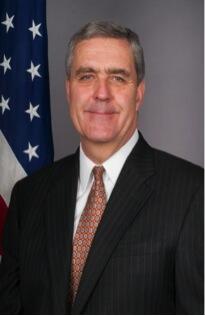
Douglas Lute, Ambassador of the United States to NATO


In August 2013, Douglas E. Lute was sworn-in as the Ambassador of the United States to the North Atlantic Treaty Organization (NATO).  From 2007 to 2013, Lute served at the White House under Presidents Bush and Obama, first as the Assistant to the President and Deputy National Security Advisor for Iraq and Afghanistan, and more recently as the Deputy Assistant to the President focusing on Afghanistan, Pakistan and India.  In 2010, AMB Lute retired from the U.S. Army as a Lieutenant General after 35 years on active duty.  Prior to the White House, he served as the Director of Operations on the Joint Staff, overseeing U.S. military operations worldwide. He served multiple tours in NATO commands including duty in Germany during the Cold War and commanding U.S. forces in Kosovo.  He holds degrees from the United States Military Academy and Harvard University.

A light lunch will be provided.  Please plan to arrive by 11:30am to allow time to check in at the registration desk, pick up your lunch and be seated by 12:00 noon.

Co-sponsored by The Europe Center, the Freeman Spogli Institute for International Studies, the Center for International Security and Cooperation and the Center for Russian, East European and Eurasian Studies.


Douglas Lute United States Ambassador to NATO Speaker
Lectures
News Type
News
Date
Paragraphs

The Shorenstein Asia-Pacific Research Center (APARC) hosted its inaugural event in New Delhi, a public seminar titled India’s Relations with its Northeast Asian Neighbors, in late 2014. Experts from Shorenstein APARC and the Brookings Institution’s India Center spoke about recent developments in India’s foreign policy under the nation’s new prime minister, Narendra Modi, and provided an outlook on where India fits in the context of an emerging Northeast Asia.

The panel consisted of Stanford scholars: Gi-Wook Shin, professor of sociology and director of Shorenstein APARC; Michael Armacost, a Shorenstein Distinguished Fellow; and Karl Eikenberry, a Shorenstein Distinguished Fellow; and Brookings scholars: Vikram S. Mehta, executive chairman; and W.P.S. Sidhu, a senior fellow.

Video and transcript of the event are available below. A list of key discussion points was also written up by Brookings India and is available by clicking here.


The seminar was one event in a larger visit by Shorenstein APARC to New Delhi. Armacost, Eikenberry, Shin, and Huma Shaikh, the associate director for administration, hosted a series of private roundtable discussions at two universities, Jawaharlal Nehru University and Delhi University.

Kathleen Stephens, the then-charge d’affaires for the United States in India, also hosted Shorenstein APARC at Roosevelt House, the official U.S. ambassadorial residence. There, at the entrance, the group was greeted with a Stanford “S” prepared in “rangoli” style, an Indian custom of welcoming guests with an intricate design made of colored rice and flowers.

On Twitter, Stephens (@AmbStephens) shared a series of tweets, a few are included below:


Image
stephens tweets


Stephens was the Koret Distinguished Fellow in the Korea Program at Shorenstein APARC from 2013-14; she served as U.S. ambassador to the Republic of Korea from 2008 to 2011, among other posts. 

The events were part of an effort to reinvigorate the South Asia Initiative, a Stanford program that seeks to conduct policy-relevant research and convene conferences on topics related to the United States and the nations of South Asia.

Hero Image
newdelhi headline
An entrance to the Taj Mahal in New Delhi, India.
All News button
1
Paragraphs

The thirteenth session of the Korea-U.S. West Coast Strategic Forum, held in Seoul on December 11, 2014, convened senior South Korean and American policymakers, scholars and regional experts to discuss North Korea policy and recent developments in the Korean peninsula. Hosted by the Korea Program at the Walter H. Shorenstein Asia-Pacific Research Center at Stanford University, the Forum is also supported by the Korea National Diplomatic Academy.

All Publications button
1
Publication Type
Policy Briefs
Publication Date
Authors
Gi-Wook Shin
News Type
Commentary
Date
Paragraphs

Last spring two North Korean defectors visited Stanford University from Seoul to share their experiences in the North. Hosted by Stanford's Korean Student Association, the event was held to increase awareness of North Korean human rights issues in the Stanford intellectual community. In fact, the Association hosts "North Korean Human Rights Night" every year. Stanford is not alone in this; many other leading American universities across the country, often also led by Korean American students, convene similar gatherings.

In the summer of 2012, Silicon Valley IT giant Google, a Stanford progeny and neighbor, hosted a conference on how technology can be used to disrupt illicit global networks, such as trafficking in human beings, human organs, and weapons. Ten North Korean defectors, ranging from former elite party members to forgotten orphans, flew in from Seoul to participate. They shared their extraordinary stories of survival amid excruciatingly painful quests for freedom.

Growing pressure on Pyongyang

These two stories are not isolated episodes. They reflect a recent trend of the international community paying dramatically more attention to North Korean human rights issues. Most notably, last month the United Nations General Assembly passed a resolution to put North Korean human rights violations on the U.N. Security Council's agenda, despite objections from China and Russia. International pressure has been intensifying on Pyongyang since the release last year of a U.N. report documenting a network of political prisons in the North and atrocities that include murder, enslavement, torture, rape and forced abortions.

While concerns about North Korean human rights are longstanding at the U.N., this was the first time the U.N. Security Council ever debated the isolated country's human rights situation. In the past the international community focused primarily on curbing North Korea's nuclear programs. Now human rights in North Korea have become a matter rivaling the nuclear issue in seriousness and global attention. Its importance appears likely to continue to grow in the coming years.

That the human rights situation in North Korea is appalling was never a secret. Defectors have produced some searing accounts of life in the North Korean gulag. Why then did the international community largely ignore it until recently?

Partly this was a product of the priority given to security issues. But it also has to do with the closed nature of the regime and Cold War dynamics that made many people in the international community doubt that the situation could be as bad as some asserted. Pyongyang made it virtually impossible for foreign journalists to report out of the country, much less obtain video that could dramatize the situation of the ordinary people of North Korea for an international audience.

Moreover, some Western observers suspected that those focusing on North Korea's human rights situation were trying to demonize the regime for political and strategic purposes. Others, such as China and Russia, stayed away from supporting international criticism of North Korea's human rights situation, apparently for fear of opening up their own human rights situation to heightened international scrutiny. In any event, with few practical means to address the North Korean human rights situation, the international community paid little heed to the problem until the end of the cold war.

Unspeakable atrocities

Then, the great famine in North Korea in the mid-1990s led to many more North Koreans leaving their country and seeking temporary relief in China. More than ever they traveled on to the South and brought their life stories with them. One consequence has been an enormous increase in the amount of information available about circumstances inside North Korea, not least due to the flow of information into the country and the use of cell phones and other technology to get reports out. Along with changing international norms about human rights, this contributed to a dramatic growth during the past decade in the number of people, organizations and states throughout the world actively focusing on human rights in North Korea. In South Korea alone, there are many NGOs, often led by North Korean refugees, that work on North Korean human rights issues.

In a logical conclusion to these developments, a special United Nations Commission of Inquiry in February 2014 published a report detailing what it called "unspeakable atrocities" in North Korea. The head of the inquiry sent a letter to Kim Jong Un, warning, in effect, that Kim himself might be brought before the International Criminal Court. While the U.N. Security Council has not yet taken concrete action, the fact that it placed North Korea's human rights record on its agenda means that, theoretically at least, it can now at any point take the next step of referring these crimes against humanity to the International Criminal Court.

How, then, should we deal with the human rights situation in North Korea? While it is not difficult to condemn the current condition on moral and ethical grounds, it is much more challenging to adequately address it in practical terms, especially when the Democratic People's Republic of Korea reacts extremely negatively on such condemnation and uses it as a reason for not engaging on this issue.

For instance, the North Korean human rights situation remains one of the most divisive issues between conservatives and progressives in South Korea. South Korean conservatives advocate a very active program of publicizing and condemning North Korea's human rights situation. Many support steps such as taking the matter before the International Court of Justice with the aim of charging North Korea's leaders with crimes against humanity. Conservatives argue not only that this is the morally correct approach but also that it would put increased pressure on the regime to reform, if not contribute to its collapse.

South Korean progressives, on the other hand, while acknowledging the seriousness of the situation, are adamant that focusing on it will not serve to improve the situation. Instead, they say, by making the regime feel even less secure, it would actually worsen the human rights situation in North Korea as well as hurt efforts to improve inter-Korean relations. Progressives therefore argue South Korea should instead focus for the time being on state-to-state dialogue while providing aid to the North. This would reassure Pyongyang, they say, and eventually contribute to its taking its own reform measures, including improving the human rights situation.

As a result of these very different views, the Republic of Korea has adopted significantly different policies depending on whether a progressive or a conservative leader occupies the Blue House. When progressives Kim Dae-jung and Roh Moo-hyun were president, the ROK often abstained on votes in UN bodies addressing North Korea's human rights situation. In contrast, conservative governments voted in favor of international criticism of North Korea's human rights situation and sometimes took the lead in raising the issue.

A coordinated effort

Meanwhile, South Korea's National Assembly has for years been unable to pass a North Korean human rights bill at all. Progressives favor "human rights" legislation that deals primarily with providing humanitarian aid to the North, consistent with their perspective on the problem's roots, while conservatives have drafted a bill that focuses on human rights along the lines of the United States' North Korea Human Rights Act, first passed in 2004.

For its part, the U.S. itself became focused on human rights only about a generation ago. It was not until the administration of President Jimmy Carter (1977-81) that the U.S. embraced an activist policy placing international human rights near the top of its foreign agenda. Before then, the U.S. fiercely criticized communist states, but mostly because of the nature of their regimes rather than their human rights practices per se.

Today democratic governments throughout the world routinely criticize aspects of the human rights situations even in friendly and allied countries, not just in those of adversaries. Actions on behalf of human rights that in earlier decades would have been deemed unacceptable "interference in domestic affairs" now enjoy international legitimacy and broad support. Concepts such as the "responsibility to protect (R2P)," which many Japanese have promoted, assert that national sovereignty is not absolute and that the international community must intervene to stop situations where the regime is unable to protect its people.

While concern is well-taken that a focus on the North Korean human rights situation would burden any engagement effort with Pyongyang and, moreover, would not improve the lives of the people of North Korea in the short- to mid-term, we cannot ignore the human rights situation. Any policy toward the North must take into account that the North Korean human rights issue has developed dramatically in recent years.

For South Korea, this requires a principled but nuanced approach. It has long been the primary center for research on North Korean human rights, with the Korea Institute for National Unification producing its annual White Paper since 1996, but it needs to establish a bipartisan body to develop programs to effectively address those areas most in need. It should also support all important and accurate criticism of North Korea's human rights situation at the United Nations and other international organizations.

However, South Korea may not take the lead in addressing North Korea's human rights abuses, while increasing the humanitarian provision of nutritional assistance and public health services in North Korea without linkage to the nuclear issue. Such an approach would deprive North Korea of the argument that South Korea is not actually concerned about human rights but is using the issue as a weapon against Pyongyang.

Like other aspects of North Korea policy, the human rights problem is extremely troubling yet enormously difficult to address effectively. The international community must share its wisdom and its resources to develop and implement principled, pragmatic, long-term approaches to the challenges that Pyongyang presents, especially the human rights situation. Leaders of the international community as a whole but above all South Korea's neighbors should support and participate in such a coordinated effort. This is in fact an area in which Japan and South Korea can easily cooperate more.


Shin recently coauthored the policy report, "Tailored Engagement: Toward an Effective and Sustainable Inter-Korean Relations Policy," released at a hearing of the Korean National Assembly's special committee on inter-Korean relations. This Nikkei Asian Review article was originally carried on Jan. 20 and reposted with permission.

Hero Image
617644 2
The United Nations Security Council met to discuss the situation in North Korea on Dec. 22, 2014.
United Nations
All News button
1
-

Abstract

In 2010-2011, the "Arab Spring" brought unexpected revolutions to many Middle Eastern and North African countries. Why did these seemingly invincible regimes fall, while China remained durably authoritarian? Many observers credited global media for the political transformations. While the hopes of Arab Spring democracy have proven to be fragile or short-lived, we can effectively explore the relationship between political communication and regime stability by turning our attention to Taiwan’s remarkable democratization, which remains under-appreciated by the international community.

This talk considers political communication in Taiwan from the martial law era to the heady days of democratic activism beginning in the late 1970s and lasting till the 1990s. Professor Esarey argues that the Chiang Ching-kuo administration’s diminishing capacity to control a small but influential opposition (dangwai) media, and even mainstream newspapers, gradually permitted reformers to reframe debates, reset the political agenda, and challenge state narratives and legitimacy claims. 

When viewed in comparative perspective, Taiwan’s successful democratization suggests that seeking regime change is impracticable, and even perilous, without considerable and sustainable media freedom as well as opportunities for the public to advocate, evaluate, and internalize alternative political views. A balance of “communication power” between state and societal actors facilitates a negotiated and peaceful transition from authoritarianism.


Bio

Professor Ashley Esarey received his PhD in Political Science from Columbia University and was awarded the An Wang Postdoctoral Fellowship by Harvard University. He has held academic appointments at Middlebury College, Whitman College, and the University of Alberta, where he is an instructor in the departments of East Asian Studies and Political Science and a research associate of the China Institute. Esarey has written on democratization and authoritarian resilience, digital media and politics, and information control and propaganda. His recent publications include My Fight for a New Taiwan: One Woman’s Journey from Prison to Power (with Lu Hsiu-lien) and The Internet in China: Cultural, Political, and Social Dimensions (with Randolph Kluver).


Communication Power and Taiwan's Democratization
Download pdf
Ashley Esarey Research Associate, China Institute University of Alberta
Seminars
-

Is Europe "elderly and haggard", and could France become "the crucible of  Europe" (Jan. 10, 2015 NYTimes op-ed)?

On the one hand, Europe is warned by the US about an Asian "pivot", and is perceived here as less relevant and effective. Significantly, certainly as a wake up call, Pope Francis recently compared Europe to  a "grandmother, no longer fertile and vibrant, increasingly a bystander in a world that has apparently become less and less Eurocentric”. France had been previously presented here as an eminent representative of an "Old Europe".

On the other hand,  the US has been constantly, during the last decade, advocating for a stronger Europe  and stressing a special French role in this endeavour. A few days ago, after the terrorist attacks in Paris, President Obama publicly stated that "France was the US oldest Ally". 

At a time when we have to face common challenges in the Middle East and in Africa, to adapt to new emerged actors and a more assertive Russia, to deal with direct threats including in the field of proliferation and the cyber space, to define a multipolar world and organize our economic relation (TTIP), what can be the EU contribution? What can also be a special intellectual and diplomatic French input to this global realignment?

Co-sponsored by The Europe Center, the Center for International Security and Cooperation and the France-Stanford Center.

Image
Ambassador Eric Lebédel of France


Ambassador Eric Lebédel is a French diplomat, former ambassador to the OSCE and to Finland, with a deep experience in Transatlantic relationship (twice as Minister's advisor;  in the French embassy in Washington DC) and in European affairs. He is also involved in crisis management (PMs office), international security (embassy in Moscow, consul general in Istanbul) and multilateral diplomacy ( NATO's Director for crisis management, OSCE). Presently working on Strategic Partnerships for the French MFA and interested in e.diplomacy, he also regularly lectures  at Sciences-po and ENA (Ecole Nationale d'Administration) on crisis management and Europe.


Ambassador Eric Lebédel French Diplomat Speaker
Seminars
Subscribe to Diplomacy