Environment

FSI scholars approach their research on the environment from regulatory, economic and societal angles. The Center on Food Security and the Environment weighs the connection between climate change and agriculture; the impact of biofuel expansion on land and food supply; how to increase crop yields without expanding agricultural lands; and the trends in aquaculture. FSE’s research spans the globe – from the potential of smallholder irrigation to reduce hunger and improve development in sub-Saharan Africa to the devastation of drought on Iowa farms. David Lobell, a senior fellow at FSI and a recipient of a MacArthur “genius” grant, has looked at the impacts of increasing wheat and corn crops in Africa, South Asia, Mexico and the United States; and has studied the effects of extreme heat on the world’s staple crops.

Authors
News Type
News
Date
Paragraphs

Congratulations to CISAC honors program Class of 2017! On June 16, students in the CISAC Interschool Honors Program in International Studies graduated in a conferral of honors ceremony on the front lawn of Encina Hall. 

We are proud to add our 12 new graduates to our expanding list of graduates from the program since it began in 2001. In total, CISAC has 193 alumni in honors. For the students, their graduation reflects an intellectual adventure that included a two-week honors college program in Washington D.C., tours of government agencies, meetings with influential policy makers, and weekly seminars with CISAC faculty. Honors students are also required to research and complete an original thesis on an important national security issue.

The 2017 program was co-directed by Martha Crenshaw and Chip Blacker. Crenshaw said, "We stress hard work, independent thinking, intellectual honesty, and courtesy and civility.  Our students are critical without being disrespectful, open to new ideas and ways of thinking, and self-made experts in the subjects they have chosen."

In his remarks, Blacker said several features of the CISAC program make it distinctive. "These include the diversity of the disciplines represented by the student's major fields of study, which range this year from political science, history and international relations, on the one hand, to computer science, energy systems engineering, and materials science and engineering, on the other. ..." 

While each project is different, "they all share the unifying and overarching themes of advancing the international security agenda and having value and utility in policy terms," Blacker said. The program, he added, places a "premium on knowledge of the real world, and of the art and science of policymaking in particular, coupled with intensive training in research and writing."

During the conferral ceremony, CISAC honors teaching assistant Shiri Krebs read statements from the students' thesis advisors regarding their final papers. Read below for those comments:


Ken Ben ChaoKen-Ben Chao

A New Journey to the West: The Shanghai Cooperation Organization and Chinese Foreign Policy

Thesis Advisor: Coit. D. Blacker

"What is the Shanghai Cooperation Organization and, to be blunt, why should we care? In essence, this is the question that Ben Chao seeks to answer in this thoughtful, comprehensive and well-written senior thesis. Ben’s answer, like the question, comes in two parts. The Shanghai Cooperation Organization, he tells us, is neither an emerging alliance nor a diplomatic “talk shop.” Rather, it has been – and it continues to be – a subtle instrument of Chinese foreign policy that has waxed and waned in importance since its creation in 2001 depending on Beijing’s assessment of the international security environment. In Ben’s judgment, this is reason enough for us to care and for us to pay attention. Ben’s thesis is a superior piece of scholarship that tells us a great deal about something most of us know little about and does so in an informed and wonderfully entertaining way."


Image
Marina Elmore
Marina Elmore

When Things Are Not What They Seem: Explaining the Success of Countering Violent Extremism in Los Angeles

Thesis Advisor: Martha Crenshaw

"A policy of countering violent extremism and radicalization, known as “CVE,” was a hallmark of the Obama Administration as it struggled to respond to the threat of “homegrown” jihadist terrorism. But what is CVE? And is it effective? These questions motivated Marina Elmore’s fascinating inquiry into the apparent success of the Los Angeles program, highly praised as a model on the national level. Marina probed deeply into the case to discover that special circumstances predetermined the outcome and that the model was not easily transferable to other cities. For one thing, Los Angeles did not actually face a challenge of violent extremism because it lacked a population susceptible to the appeal of jihadist propaganda. For another, the city had already implemented most of the newly prescribed CVE “best practices,” such as community policing, in efforts to solve earlier social and political problems. Marina’s conclusions are astute, balanced, and fair, and she persuasively demonstrates both how important it is to test commonly held assumptions and how difficult it is to establish standards for policy effectiveness in the counterterrorism field."


Gabbi FisherGabbi Fischer

Towards DIUx 2.1 or 3.0? Examining DIUx’s Progress Towards Procurement Innovation

Thesis Advisors: Herb Lin, Dan Boneh

"In 2015, Secretary of Defense Ashton Carter announced the creation of Defense Innovation Unit Experimental (DIUx).  Through some great case-based work, Gabbi cuts through the complexity of the traditional acquisition system to observe that DIUX fills two important niches in the defense innovation ecosystem: it facilitates connections between DoD users and the tech community and it exercises non-traditional acquisition authority (called Other Transaction Authorities (OTAs)) to expedite contracting.  But she also cautions that the use of OTA may not be compatible in the long run with the traditional acquisition system, and suggests that future DIUX efforts may have to take advantage of other existing acquisition authorities (which do exist but which are rarely used) to make further progress in improving the coupling between the tech sector and the DoD.  She makes also substantive recommendations that DIUX should take seriously if it wants to survive in the long term."


Wyatt HoranWyatt Horan

Evaluating the U.S. Foreign Policy Institutions in Permitting a Coercive Russian Energy Policy

Thesis Advisor: Coit D. Blacker

"Following the twin “oil shocks” of the 1970s, the U.S. Government moved effectively to reduce the potential economic and political impact of any future such events by reorienting and reshaping key foreign policy institutions. When, thirty years later, the Russian government under Vladimir Putin began to manipulate Russian deliveries of natural gas to its customers in Europe, the U.S. failed to respond in a focused, deliberate and coordinated way. In this provocative senior thesis, Wyatt asks whether the clumsy American response to Russia’s manipulation of this vital energy resource contributed to Moscow’s alarming behavior. He answers in the affirmative and by so doing forces us to think hard about how seemingly obscure organizational issues impact the effectiveness of U.S. foreign policy. Wyatt’s thesis is bold and a little unsettling. It also reads like a detective novel, which is a tribute to the author’s willingness to run risks in search of a good story."


Tori KellerTori Keller

The Rise and Fall of Secular Politics in Iraq

Thesis Advisor: Lisa Blaydes

"As you know from interacting with Tori over the past year(s), she is a passionate – almost obsessively curious – student of contemporary Iraqi politics. Her drive to understand the case has led her to write a normatively-motivated, policy-relevant thesis on the failure of democratic consolidation in Iraq. Her research suggests that a non-sectarian political future for Iraq was possible; the historical antecedents for such a vision existed. But as a result of a combination of US missteps, Iranian interference and, most importantly, the way these factors manifested into an insecure security environment, secular parties never really had a real chance to succeed even if a plurality of voters supported such an outlook. To write this thesis, Tori invested in her own human capital development in impressive ways. She studied Arabic, learned ArcGIS mapping software, collected original data, and undertook statistical analysis – deploying the skills she had acquired in her four years at Stanford with the goal of answering this research question. In the end, I believe she has the right answer as well. If there was any doubt left in her mind about whether she got it “right,” I feel confident that she would still be puzzling through the research today."


Alexander LubkinAlexander Lubkin

Plutonium Management and Disposition in the United States: History and Analysis of the Program

Thesis Advisor: Rod Ewing

"Alex’s thesis examines the issues related to the failure of the U.S. program for the disposition of excess plutonium from dismantled nuclear weapons. Based on his survey of the literature and interviews with key actors in this program, Alex analyzed the U.S. program and has made a number of important observations and conclusions concerning the causes for the failure of the U.S. program. His most significant conclusion is that one of the major causes of failure was that the U.S. program to use irradiated MOX fuel for the disposition of the plutonium was not consistent with U.S. nuclear policy. The U.S. is pursuing an open nuclear fuel cycle, and thus has limited experience with large scale processing of radioactive materials and the fabrication of MOX fuel. Alex was able to identify a number of other issues, such as over reliance on cost and schedule estimates of the different strategies and a failure to utilize advances in materials science for the development of actinide waste forms. I am very impressed with Alex’s dedication to this research project, and his persistence in the review of an often confusing and obscure literature. We have met regularly over the past year. I outline broad areas that he might investigate, but then he took these ideas and developed them according to his on evaluation of a variety of different sources. He also did an exceptional job of synthesizing the information from the interviews into an interesting and informative chapter in his thesis. Alex’s research will be the basis for a publication, but most importantly, he has opened the door to a whole series of policy issues that require more detailed analysis. He has certainly educated me on a number of these issues."


Jian Yang LumJian Yang Lum

To Bomb or Stab? The Impact of Ideology and Territorial Control on Rebel Tactics

Thesis Advisors: Joseph Felter, Jeremy Weinstein

“Lumpy” as we know him- explores how rebel groups’ ideology and degree of territorial control affect the type of violence they choose to employ in pursuit of their aims. Using fine grained conflict data and case studies from thirty-six years of insurgency and counterinsurgency in the Philippines, Lumpy finds both quantitative and qualitative evidence in support of the predictive model he develops in his thesis. In sum, rebel groups with weaker ideological commitment and more limited control of the territory they operate in are more likely to initiate indiscriminate attacks such as bombings and employment of improvised explosive devices. More ideologically committed rebels, and those exercising greater territorial control, initiate violence that is comparatively more discriminate such as targeted raids and assassinations. The human toll and economic costs incurred by civil war and insurgency around the world are staggering and continuing to mount. There is an urgent need for policy relevant scholarship that increases our understanding of the local level violence associated with these deadly conflicts and how states can better anticipate and respond to these threats. Lumpy’s thesis makes a significant contribution to these important ends."


Elizabeth MargolinElizabeth Margolin

Should I Retweet or Should I Go? Pro-ISIS Twitter Communities and American Decapitation Strategy

Thesis Advisors: Martha Crenshaw, Justin Grimmer

"There are many studies of the U.S. Government’s use of military force in “decapitation” strikes against terrorist leaders, particularly the effects of these strikes on levels of violence and degree of organizational cohesion. Researchers have also analyzed the relationship between social media and terrorism generally. But the specific question of the social media reactions of jihadist sympathizers to decapitation strikes directed against Islamic State leaders was neglected until the idea occurred to Eli Margolin, who took it up as the subject of her honors thesis. This difficult, demanding, and often frustrating research project required Eli to master new cutting-edge analytical methodologies and struggle to acquire elusive data from the archived Twitter accounts of now banned users, obstacles that she overcame with impressive ability, determination, and sophistication. After extensive and thoughtful consideration of three carefully selected cases, she found that Twitter followers of jihadist causes react quite differently to the deaths of different types of terrorist leaders. Her intellectual ambition and tenacity produced a thesis that is excellent in terms of conceptualization, analytical rigor, and empirical foundation."


Lauren NewbyLauren Newby

From Zero to Sixty: Explaining the Proliferation of Shi’a Militias in Iraq after 2003

Thesis Advisor: Martha Crenshaw

"Why has there been a sharp increase in the number of Shia militias in Iraq, a troubling development that may jeopardize Iraqi progress toward stability and democracy? Lauren Newby could not find a good answer in her review of the theoretical literature, so she proposed an original one of her own. Most scholars attribute the proliferation of violent non-state actors to the fragmentation of existing groups through splintering and splitting, whereas Lauren shows that in Iraq the increase is due to the emergence of new groups. Researchers typically focus on groups directly opposing the state, whereas the Iraqi militias side with the incumbent government. Most studies are limited to groups operating in a single bounded conflict zone, whereas the politics of Iraq and Syria are linked. Lauren concludes that the Syrian civil war has been a major impetus for the formation of Shia militias in Iraq and that most are established by Iraqi political parties. Her thesis is exemplary in making a clear and convincing claim, contrasting it to alternative explanations, and providing new supporting evidence from primary sources."


AAnhViet NguyennhViet Nguyen

Territorial Disputes in Court: Power, Compliance, and Defiance

Thesis Advisor: Kenneth Schultz

"In the wake of the arbitration ruling over the China-Philippines dispute in the South China Sea, AnhViet wanted to understand what the prospects were for this ruling to help resolve the conflict. To do so, he placed this case in the context of other territorial disputes that have involved great powers or states who were significantly more powerful than their adversaries. This led to the central research questions: why and under what conditions do great powers comply with adverse court rulings over territorial issues? The thesis draws nicely on the existing literature to articulate several hypotheses and then tests these hypotheses using a variety of methods. Case studies of the US-Mexico dispute over the Chamizal tract and the Nigeria-Cameroon dispute over the Bakassi Penninsula show that great powers who initially reject adverse court decisions might later find these rulings to be a convenient basis for settlement. He also makes a very important and sophisticated point that great power compliance with court rulings may reflect their ability to keep high salience issues off the agenda. The conclusion is mildly optimistic about the prospects for (eventual) compliance while remaining appropriately clear-eyed about the limits of international law in this context. Overall, AnhViet does an admirable job blending theoretical material, historical case studies, and large n data to develop his argument. Moreover, his application of these lessons to the contemporary case of the South China Sea dispute is nuanced and compelling. In short, AnhViet’s thesis represents an excellent example of how academic research can be made relevant to current policy issues."


Thu-An PhamThu-An Pham

On Treaties and Taboos: U.S. Responses to International Norms in the NPT and Genocide Convention (1945-1999)

Thesis Advisor: David Holloway

"Thu-An Pham has written an outstanding thesis on the role of norms in international relations. The United States has not tried strenuously to enforce the Genocide Convention of 1948, which calls for the prevention and punishment of genocide. It has, however, actively sought to enforce the nonproliferation norm expressed in the Nuclear Nonproliferation Treaty of 1968. What explains the difference? On the basis of a subtle theoretical analysis and detailed empirical research, Thu-An offers three answers. First, the Nonproliferation Treaty is better supported than the Genocide Convention by institutions that monitor and enforce compliance. Second, the United States has regarded the norm of nuclear nonproliferation as more important for its national security than the ban on genocide. And third, the nonproliferation norm supports the current international order, which is based on the primacy of states in international relations. The Genocide Convention, by contrast, threatens to weaken the foundations of that order by challenging the primacy of states. Thu-An’s thesis suggests that there are limits on the role that international norms can play in a system of states. This is a wonderful thesis on a crucial issue in international security."


Jack WellerJack Weller

Counting the Czars: Extra-Bureaucratic Appointees in American Foreign Policy

Thesis Advisor: Amy Zegart

"White House czars are frequently discussed in the press, but most people don’t really know what they are and very few scholars have studied them. Yet the use of czars has serious implications for the presidency—signaling when the regular bureaucracy cannot get the job done. Jack Weller’s thesis provides a novel and important contribution to the study of the American presidency. He compiles an original dataset of every foreign policy czar created during the past 100 years and examines alternative explanations for why some presidents used czars more than others. He finds something surprising: czar creation is NOT driven by the individual management style of the president. Instead, it is driven by the external threat environment. Presidents facing simultaneous wars – as FDR did in World War II and George W. Bush did after 9/11 – are more likely to create czars than others. Jack’s thesis is beautifully written and masterfully argued, earning him the honor of being Stanford’s czar of czars."


Hero Image
rsd17 054 0201a
The 2017 CISAC honors program, from top left, second row: Elizabeth Margolin, Jack Weller, Marina Elmore, Alex Lubkin, Thu-An Pham, Lauren Newby. First row, from the left: Gabby Fisher, Tori Keller, Professor Martha Crenshaw, AnhViet Nguyen, substitute instructor Dr. Gil-li Vardi, Jiang Yang Lum, teaching assistant Shiri Krebs, Wyatt Horan, Ken "Ben" Chao, and Professor Chip Blacker.
Rod Searcey
All News button
1
-
The "Workshop of young leaders in Asia health policy" will take place at SCPKU on June 21, 2017, just prior to the annual primary care Forum. This special event convened in honor of the Stanford Asia Health Policy Program's 10th anniversary. It will feature short research panels by a dozen young health policy experts from Cambodia, China, Indonesia, Korea, Mongolia, Myanmar, Nepal, the Philippines, Thailand, the United States, and Vietnam. The luncheon colloquium will feature comparative perspectives on the major health policy challenges facing Asia as well as specific examples of how evidence-based policymaking can improve lives throughout the Asia-Pacific region.


Stanford Center at Peking University

Encina Hall E301616 Serra StreetStanford, CA94305-6055
(650) 724-5321 (650) 723-6530
0
darika_saingam.jpg Ph.D.

Darika Saingam joins the Walter H. Shorenstein Asia-Pacific Research Center as the Developing Asia Health Policy Postdoctoral Fellow for the 2015-16 year.  Saingam’s research interests are public health, substance abuse, drug policy and Southeast Asia. While at Shorenstein APARC, she will research the evolution of substance-abuse control measures and related policy in Thailand.  Saingam seeks to identify potentially effective policy directions suitable for Thailand, and other developing countries in Southeast and East Asia.

Saingam completed her doctorate in epidemiology at the Prince of Songkla University in 2012, and has served as a researcher at the University’s epidemiology unit since, as well as a researcher at the Thailand Substance Abuse Academic Network since 2014.

2015-16 Developing Asia Health Policy Postdoctoral Fellow
Faculty of Medicine Prince of Songkla University, Thailand
Ngoc Minh Pham Visiting research fellow at Curtin University, Australia
Director of KHANA Center for Population Health Research, Cambodia

Shorenstein APARC
Encina Hall E332
616 Serra Street
Stanford, CA 94305-6055

(650) 724-5710 (510) 705-2049 (650) 723-6530
0
Developing Asia Health Policy Fellow
IMG_4537.jpg MD

Gendengarjaa Baigalimaa joins the Walter H. Shorenstein Asia-Pacific Research Center (Shorenstein APARC) during the 2013-2014 acedemic year as the Asia Health Policy Program Fellow. She joins APARC from the Mongolian National Cancer Center, where she serves as a Gynecological Oncologist.

During her appointment as Health Policy Fellow, she will conduct a comparative study of how knowledge of cervical cancer risk factors has influenced behavior changes in Mongolia before and after the introduction of the National Cervical Cancer Program.

Baigalimaa is the Executive Director of Mongolian Society of Gynecological Oncologists and is also a member of the International Gynecological Cancer Society (IGCS) in Mongolia, Russia, and France.

Baigalimaa holds a MD from Minsk Belarussia Medical University. She also received a Masters in Health Science from Mongolian Medical University. She is fluent in both Russian and English.

Gynecological Oncologist at ''Mungun Guur'' hospital, Mongolia

Shorenstein APARC
Encina Hall C331
616 Serra Street
Stanford, CA 94305-6055

(650) 724-5656 (650) 723-6530
0
2013-2014 Asia Health Policy Postdoctoral Fellow
triyana_photo.jpg PhD

Margaret (Maggie) Triyana’s main research interests are inequality and human capital investments in developing countries. In particular, she is interested in the effects social policy changes on children’s health outcomes. As a Postdoctoral Fellow, she will analyze the effects of rural-urban migration in Indonesia and China, as well as the impact of health insurance expansion in Indonesia and Vietnam.

Triyana received a PhD in Public Policy from the University of Chicago in 2013.


Working Papers

“Do Health Care Providers Respond to Demand-Side Incentives? Evidence from Indonesia“

“The Effects of Community and Household Interventions on Birth Outcomes: Evidence from Indonesia”

“The Longer Term Effects of the ‘Midwife in the Village’ Program in Indonesia”

“The Sources of Wage Growth in a Developing Country” (with Ioana Marinescu)

2016-17 Kellogg visiting fellow; Assistant Professor of Economics at Nanyang Technological University, Singapore
Assistant Professor at the School of Economics, University of the Philippines, Diliman

Walter H. Shorenstein
Asia-Pacific Research Center
616 Serra St C335
Stanford University
Stanford, CA 94305-6055

(650) 724-5668 (650) 723-6530
0
2011-12 Asia Health Policy Fellow
SunAng_Profile.jpg MA, PhD

Ang Sun joins the Walter H. Shorenstein Asia-Pacific Research Center (Shorenstein APARC) from Brown University’s department of economics where she recently received her PhD.

Sun’s research interests encompass development economics, labor and demographic economics, and health economics. She focuses on intra-household allocations, gender differences, and household formation. In particular, she studies how a combination of different forces in China—including traditional values, rapid growth, and the population structure—is affecting Chinese families. During her time at Shorenstein APARC, Sun will participate in an interdisciplinary study of the impact of the aging process in Asia on economic growth.

Sun holds a PhD and an MA in economics from Brown University, and an MA from the China Center of Economic Research. She also received a BA in economics and a BS in information and computer science from Beijing University.

Central University of Finance and Economics, Beijing, China

Shorenstein APARC
Stanford University
Encina Hall, Room C335
Stanford, CA 94305-6055

(650) 736-0771 (650) 723-6530
0
2011 Shorenstein-Spolgi Fellow in Comparative Health Policy
Qiulin_Chen3x4.jpg MA, PhD

Qiulin Chen is a postdoctoral fellow of Shorenstein APARC and a member of the center's Asia Health Policy Program. His main interest of research is health economics and public finance, focusing on policy and outcome comparison of health care systems and Chinese health reform. His dissertation focused on performance comparison between public (or governmental) and private health care financing, between local and central government responsibility on health care, between contracted and integrated health care system. In particular, his dissertation examined under Chinese-style decentralization, known as fiscal decentralization with political centralization, how economic competition affect local government's behaviour on health investment, and why public contracted system obstructs health performance and provides one channel of such effects in terms of preventive care and public health. He is currently involved in a comparative research project on demographic change in East Asia based on the National Transfer Accounts data and analysis.

Chen's recent publication is "The changing pattern of China's public services" (with Ling Li and Yu Jiang) in Population Aging and the Generational Economy: A Global Perspective (Ronald Lee and Andrew Mason, editors), forthcoming 2011. Before studying in Stanford, he has published more than 10 papers in academic journals in Chinese, such as Jing Ji Yan Jiu (Economic Research) and Zhong Guo Wei Sheng Jing Ji (Chinese Health Economics), and 5 book chapters. He has participated in about 20 research projects, such as A Design of Framework for Healthcare Reform in China which is commissioned by the State Council Working Party on Health Reform, Strategy Planning Study of "Healthy China 2020" which is commissioned by the Minister of Health, and Health Challenge in the Aging Society and It's Policy Implication funded by Chinese National Natural Science Foundation.

Chen earned his Ph.D. in Economics from Peking University in 2010, and earned a B.A. in Business Administration from Nanjing University in 2001. From 2004 through 2008, he was Executive Assistant of the Director of the China Centre for Economic Research at Peking University (CCER). He is also a postdoctoral fellow of National School of Development at Peking University (Its predecessor is CCER).

CV
China Academy of Social Sciences, China
Associate Professor in the Department of Health Policy and Management at Seoul National University College of Medicine, Seoul, South Korea
Seminars
Paragraphs

Satellite-derived land cover maps play an important role in many applications, including monitoring of smallholder-dominated agricultural landscapes. New cloud-based computing platforms and satellite sensors offer opportunities for generating land cover maps designed to meet the spatial and temporal requirements of specific applications. Such maps can be a significant improvement compared to existing products, which tend to be coarser than 300 m, are often not representative of areas with fast-paced land use change, and have a fixed set of cover classes. Here, we present two approaches for land cover classification using the Landsat archive within Google Earth Engine. Random forest classification was performed with (1) season-based composites, where median values of individual bands and vegetation indices were generated from four years for each of four seasons, and (2) metric-based composites, where different quantiles were computed for the entire four-year period. These approaches were tested for six land cover types spanning over 18,000 locations in Zambia, with ground “truth” determined by visual inspection of high-resolution imagery from Google Earth. The methods were trained on 30% of these points and tested on the remaining 70%, and results were also compared with existing land cover products. Overall accuracies of about 89% were achieved for the season- and metric-based approaches for individual classes, with 93%and 94% accuracy for distinguishing cropland from non-cropland. For the latter task, the existing Globeland30 dataset based on Landsat had much lower accuracies (around 77% on average), as did existing cover maps at coarser resolutions. Overall, the results support the use of either season or metric-based classification approaches. Both produce better results than those obtained from previous classifiers, which supports a general paradigm shift away from dependence on standard static products and towards custom generation of on-demand cover maps designed to fulfill the needs of each specific application.

All Publications button
1
Publication Type
Journal Articles
Publication Date
Journal Publisher
Remote Sensing of Environment
Authors
George Azzari
David Lobell
Authors
News Type
News
Date
Paragraphs

Japan is an increasingly divided country between elites and the public as it grapples with whether it should acquire nuclear weapons itself and not rely on America’s protection, a Stanford scholar found.

Sayuri Romei, a political scientist and predoctoral fellow at Stanford’s Center for International Security and Cooperation (CISAC), has a new working paper that describes how Japanese society is grappling with its nuclear future. Romei researches the U.S.-Japan relationship, nuclear security, nationalism and identity in East Asia.

“The shift in the Japanese nuclear debate at the turn of the 21st century did not stem directly from a willingness to deter the new and urgent looming military threats, but was rather the result of a very limited security role that collapsed after the end of the Cold War, and took the shape of a disoriented and shaky Japanese identity,” she wrote.

Japan, a country that suffered two nuclear bombs in WWII, has a well-justified historical “nuclear allergy” that long restrained nuclear weapons ambitions, Romei said. But today, internal questions about Japan’s national sense of identity is causing elites to reconsider the nuclear military option.

She said it’s true that the tone in that debate has been changing in recent years as Japan’s security landscape changes – North Korea and China are building up their nuclear and conventional military programs. On top of this, when the Cold War ended in 1991, the “nuclear umbrella” that the U.S. afforded Japan became “theoretically less justified in an evolving security context,” as Romei describes it. Japan, in turn, sought reassurance from the U.S. that it would not abandon her.

Rethinking Japan's security

Yet the turn of the 21st century is hardly the first time that Japanese elites have discussed a nuclear option, or that they have felt a sense of mistrust towards their ally, she said. Rather than a break from the past, Japanese elites’ behavior suggests a continuity in their thinking:

“It would therefore be more correct to talk of a renaissance of the nuclear debate, rather than an erosion of the nuclear taboo,” Romei said.

What is new in today’s nuclear statements, however, is the increasing intertwining between rethinking security identity issues, a rising nationalism, and a more challenging regional environment, she said.

Along with the necessity to rethink Japan’s security arrangement, pre-WWII nostalgia and nationalism have been growing in Japan as Prime Minister Shinzō Abe's constitutional reforms are being enacted, Romei said. And so, some top officials are reevaluating Japan's nuclear policy in favor of a more self-sufficient approach that fits their increasingly nationalist mood.

“The line between the rethinking of a Japanese security identity and pushing a nationalist agenda into the current nuclear policy is very thin,” wrote Romei.

No longer do Japanese nationalists wish to be perceived as the “faithful dog” in the U.S-Japan alliance, as they resent the “lack of a healthy postwar nationalism,” she said. Restarting some of the country’s nuclear power plants after the Fukushima Daiichi accident was even described by one leading Japanese politician as the first step toward the country acquiring nuclear weapons of its own, she added.

Though some Japanese scholars argue that Japan has been preparing for the acquisition of nuclear weapons since the end of WWII, Romei said that the link between the two sides of the nuclear coin was never really visible in Japan: indeed, the government has historically succeeded in making a sharp distinction between nuclear power for peaceful vs. military purposes.

‘Still very sensitive’

One well-known trait of Japan’s nuclear history is that Japan has a strong popular peace and anti-nuclear movement with public opinion polls set against acquiring nuclear weapons, Romei said. Peace, security, and nuclear matters are in fact deeply linked in postwar Japanese history.

“The constant and consistent work of peace associations and the massive organized demonstrations against Prime Minister Abe’s security reform plans that took place across Japan during the entire summer in 2015 are a relevant sign that public opinion is still very sensitive to a change of pace,” she wrote.

But public opinion and elite opinion “do not speak the same language and are heading in different directions,” she wrote. Elites – political  and  thought leaders, for example – continue to allude to a nuclear option for Japan to defend itself unilaterally, with or without the American nuclear umbrella.

“This sudden proliferation of nuclear statements among Japanese elites  in 2002 has been directly linked by Japan watchers to the break out of the second North Korean nuclear crisis and the rapid buildup of China’s military capabilities,” Romei said.

Trusting America?

But those external threats, she said, are actually used as a “pretext to solve a more deep-rooted and long-standing anxiety that stems from Japan’s own unsuccessful quest for a less reactive, and more proactive post-Cold War identity,” Romei noted.

The level of trust that Japanese elites feel towards their American ally is an important leitmotiv in the country’s nuclear debate, she said.

While during the Cold War U.S. credibility was mainly linked to Japan’s limited role as an ally in a bipolar era, after the collapse of this system Japanese elites slowly began their quest for a new identity, thus questioning and changing the meaning of the U.S.-Japan alliance, Roemi said. Furthermore, the first decade of the 21st century brought about a new nationalist layer that complicates the issue of trust in the ally by adding a populist tone to the domestic nuclear debate.

Romei believes that if the gap in elite-public opinion continues to widen, Japan’s longstanding “nuclear allergy” could be overwhelmed as the government – not necessarily by design – gradually creates the political and cultural conditions that seemingly justify building nuclear weapons, Romei said.

“The turn of the century brought a new strategic environment in which Japan was forced to question its own post-Cold War identity, without eventually succeeding in an actual change,” she wrote.

Romei urges a careful monitoring of Japan’s nuclear debate moving forward – the major political shift in the U.S. caused by the November 2016 presidential elections is a key reason. America’s future political direction will ultimately affect Japan’s sense of identity by easing the questioning of the U.S.-Japan security arrangement.

While the study of the Japanese nuclear debate cannot necessarily offer a prediction of the country’s future nuclear policy choices, it can serve as an important tool to gauge the evolution of Japan’s own perception of its role in the current world order, she said.

Romei is a nuclear security predoctoral fellow at CISAC for 2016-2017 and a doctoral candidate in international relations at Roma Tre University in Rome, Italy. Her dissertation focuses on the relationship between Japan’s nuclear mentality and its identity evolution in the post-WWII era. 

MEDIA CONTACTS:

Sayuri Romei, Center for International Security and Cooperation: (650) 725-5364, sromei@stanford.edu

Clifton B. Parker, Center for International Security and Cooperation: (650) 725-6488, cbparker@stanford.edu


Hero Image
gettyimages 670651328
The Hiroshima Peace Memorial, often called the Atomic Bomb Dome, is part of the Hiroshima Peace Memorial Park in Hiroshima. CISAC fellow Sayuri Romei's research explains how nationalism and post-war identity are key factors in Japan's evolving public debate on nuclear weapons.
Getty Images/Nigel Killeen
All News button
1
Paragraphs

One of the greatest challenges in monitoring food security is to provide reliable crop yield information that is temporally consistent and spatially scalable. An ideal yield dataset would not only extend globally and across multiple years, but would also have enough spatial granularity to characterize productivity at the field and subfield level. Rapid increases in satellite data acquisition and platforms such as Google Earth Engine that can efficiently access and process vast archives of new and historical data offer an opportunity to map yields globally, but require efficient and robust algorithms to combine various data streams into yield estimates. We recently introduced a Scalable satellite-based Crop Yield Mapper (SCYM) that combines crop models simulations with imagery and weather data to generate 30 m resolution yield estimates without the need for ground calibration. In this study, we tested new large-scale implementations of SCYM, focusing on three regions with varying crops, field sizes and landscape heterogeneity: maize in the U.S. corn belt (390,000 km2), maize in Southern Zambia (86,000 km2), and wheat in northern India (450,000 km2). As a benchmark, we also tested a simpler empirical approach (PEAKVI) that relates yield to the peak value of a time series of spatially aggregated vegetation indices, similar to methods used in current operational monitoring. Both SCYM and PEAKVI were applied to data from all Landsat's sensors and MODIS for more than a decade in each region, and evaluated against ground-based estimates at the finest available administrative level (e.g., counties in the U.S.). We found consistently high correlations (R2 ≥ 0.5) between the spatial pattern of ground- and satellite-based estimates in both U.S. maize and India wheat, with small differences between methods and source of satellite data. In the U.S., SCYM outperformed PEAKVI in tracking temporal yield variations, likely owing to its explicit consideration of weather. In India, both methods failed to track temporal yield changes, with various possible explanations discussed. In Zambia, the PEAKVI approach applied to MODIS tracked yield variations much better (R2 > 0.5) than any other yield estimate, likely because the frequent cloud cover in this region confounds the other approaches. Overall, this study demonstrates successful approaches to yield estimation in each region, and illustrates the importance of distinguishing between accuracy for spatial and temporal variation. The 30 m resolution of Landsat-based SCYM does not appear to offer large benefits for tracking aggregate yields, but enables finer scale analyses than possible with the other approaches.


All Publications button
1
Publication Type
Journal Articles
Publication Date
Journal Publisher
Remote Sensing of Environment
Authors
George Azzari
David Lobell
Authors
News Type
News
Date
Paragraphs

Since the 1960s, India’s groundwater irrigation has increased dramatically, playing an important role in its economy and people’s lives — supporting livelihoods of over 26 crore farmers and agricultural labourers who grow over a third of India’s foodgrains. These benefits, however, have come at the cost of increased pressure on groundwater reserves. 

India is the world’s largest user of groundwater and, since the 1980s, its groundwater levels have been dropping. The severity of the problem is particularly acute in the northwest, where levels have plunged from 8m below ground to 16m, so that water needs to be pumped from even greater depths. Worse yet, much of this is non-renewable since recharge rates are less than extraction rates and replenishing this resource can take thousands of years. 

This won’t last 

Using up such “fossil” groundwater is unsustainable. Moreover, the future of monsoon rainfall remains uncertain; while some climate models predict an increase, others forecast a weakening monsoon, although changes in monsoon variability are already underway and will continue into the future. Historical records show the number of dry spells and the intensity of wet spells have risen over the past 50 years. As climate change alters the monsoon, the large stresses on India’s groundwater resources may increase.

Please go to The Hindu Buisness Line to read the entire article.

Hero Image
water iStockphoto/greenaperture
All News button
1
News Type
News
Date
Paragraphs

Fellows will arrive at Stanford in July to begin the three-week academic training program taught by Stanford faculty, policymakers and thought-leaders in the technology sector.


Image
collagewebsite2


Stanford's Center on Democracy, Development, and the Rule of Law is proud to announce the 2017 class of Draper Hills Summer Fellows, which is composed of 28 leaders – selected from among hundreds of applications – advancing democratic development in some of the most challenging corners of the world.

In Bahrain, Burma, Rwanda and Sudan our fellows are working on peace-building initiatives to create more tolerant and inclusive societies. Judges and lawyers are holding government and criminals accountable and reforming the rule of law in Argentina, Guatemala and the Philippines. Gender rights activists are creating new tools and programs to protect the safety and freedom of women and girls in India, Kuwait and Papua New Guinea.

In Egypt, Morocco, Pakistan, Serbia and Ukraine, our fellows are serving inside the government as members of Parliament and senior civil servants to advance reform and new policy agendas. Business leaders in Jordan and India launched initiatives to support more inclusive economic growth and social development.

CDDRL is excited to launch another powerful network of leaders determined to advance change in their communities. They will emerge with new tools, frameworks and connections to enhance their work and deepen their impact on democratic reform.

The 2017 class will mark the 13th cohort of the Draper Hills Summer Fellows Program and the fellows will join the Omidyar Network Leadership Forum, an alumni community of over 300 alumni in 75 countries worldwide.

Hero Image
collagewebsite2
All News button
1
-

Abstract: Over decades, assessment by the Intergovernmental Panel on Climate Change and many others has bolstered understanding of the climate problem: unequivocal warming, pervasive impacts, and serious risks from continued high emissions of heat-trapping gases. Societies are increasingly responding with early actions to decarbonize energy systems and prepare for impacts. In this emerging era of climate solutions, new assessment opportunities arise. They include learning from ongoing real-world experiences and helping close the gap between aspirations and the pace of progress. Against this backdrop, I will consider core challenges in assessment, in particular: (1) integrating diverse evidence; (2) applying rigorous expert judgment; and (3) deeply embedding interactions between experts and decision-makers. Examples span climate risks and portfolios of mitigation and adaptation responses. For climate and broader global change, the presentation will explore how transparent, high-traction assessment can support decisions about contested and uncertain futures. 

About the Speaker: Katharine Mach is a Senior Research Scientist at Stanford University, an Adjunct Assistant Professor at Carnegie Mellon University, and a Visiting Investigator at the Carnegie Institution for Science. She leads the Stanford Environment Assessment Facility (SEAF). From 2010 until 2015, Mach co-directed the scientific activities of Working Group II of the Intergovernmental Panel on Climate Change, which focuses on impacts, adaptation, and vulnerability. This work culminated in the IPCC’s Fifth Assessment Report and its Special Report on Managing the Risks of Extreme Events and Disasters to Advance Climate Change Adaptation. Mach received her PhD from Stanford University and AB from Harvard College.

What next for climate? Assessing the risks and the options
Download pdf
Katharine J. Mach Senior Research Scientist Stanford University
Seminars
-

Image

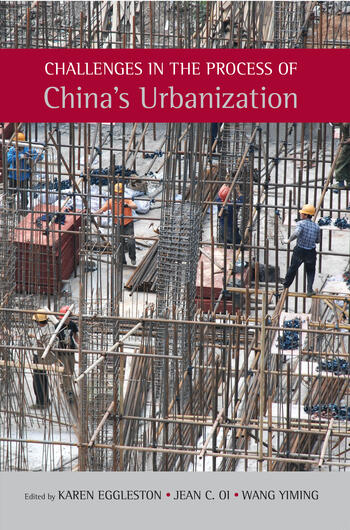
The same institutions that enabled China’s massive urbanization and spurred its economic growth now require further reform and innovation.

To address the issues facing the next phase of the nation’s transformation, the National New Urbanization Plan (2014–20) set ambitious targets for sustainable, human-centered, and environmentally friendly urbanization. This volume explores the key institutional and governance challenges China will face in reaching those goals. Its policy-focused contributions from leading social scientists in the United States and China explore aspects of urbanization ranging from migration and labor markets to agglomeration economies, land finance, affordable housing, and education policy. Subjects covered in the eleven chapters include:


    * Institutional problems leading to fiscal pressures on local governments and unequal provision of social    services to migrant families   

   * The history of land financing and threats to its sustainability

    * The difficulty of sorting out property rights in rural China

    * How administrative redistricting has allowed the urbanization of geographical administrative places to     outpace the urbanization of populations within those areas

    * How the hukou system may not be the sole, or even primary, mechanism restricting migrants from      public goods, such as their childrens’ education

    * Whether the nation’s food security is threatened by its ongoing urbanization

    * The current state of the provision of low-income housing, and future challenges

Professor Jean Oi is Director of the China Program, William Haas Professor of Chinese Politics, Stanford University; Lee Shau Kee Director of the Stanford Center, Peking University. Her work focuses on comparative politics, with special expertise on political economy and the process of reform in transitional systems.  Oi has written extensively on China's rural politics and political economy. Her State and Peasant in Contemporary China (University of California Press, 1989) examined the core of rural politics in the Mao period—the struggle over the distribution of the grain harvest—and the clientelistic politics that ensued. Her Rural China Takes Off (University of California Press, 1999) examined the property rights necessary for development and showed how "local state corporatism" facilitated rapid growth of rural industry.  Recent publications include Growing Pains: Tensions and Opportunity in China's Transformation (Brookings Institution Press, 2010), co-edited with Scott Rozelle and Xueguang Zhou; and “Development Strategies and Poverty Reduction in China,” in Yusuf Bangura, ed., The Developmental Road to Poverty Reduction, (2015); and “Rural Development,” in David S. Goodman, ed., Handbook of the Politics of China (Edward Elgar Publishing, 2015).

Professor Karen Eggleston is Director of the Asia Health Policy Program; Deputy Director, Shorenstein Asia-Pacific Research Center. She joined the Walter H. Shorenstein Asia-Pacific Research Center (APARC) in the summer of 2007. She is also a fellow at Stanford's Center for Health Policy/Primary Care and Outcomes Research (CHP/PCOR), and a Faculty Research Fellow of the National Bureau of Economic Research (NBER). Her research focuses on comparative healthcare systems and health reform in Asia, especially China; government and market roles in the health sector; payment incentives; healthcare productivity; and the economics of the demographic transition. Eggleston teaches through Stanford's East Asian studies program and is also affiliated with Stanford's public policy program.

Professor Klaus Desmet is Altshuler Centennial Interdisciplinary Professor at Southern Methodist University; Research Fellow at the Centre for Economic Policy Research. He holds an MSc in Business and Engineering from the Université Catholique de Louvain and a Ph.D. in Economics from Stanford University. He previously was professor at Universidad Carlos III de Madrid and has held visiting positions at a number of institutions, including the University of Illinois, Stanford University and the Bank of Spain. His research focuses on regional economics, international trade, economic growth and diversity.

Books will be available for sale. Cash or check only.


Department of Political Science
Stanford University
616 Serra Street
Stanford, CA 94305-26044

(650) 723-2843 (650) 725-9401
0
Senior Fellow at the Freeman Spogli Institute for International Studies
William Haas Professor in Chinese Politics
jean_oi_headshot.jpg PhD

Jean C. Oi is the William Haas Professor of Chinese Politics in the department of political science and a Senior Fellow of the Freeman Spogli Institute for International Studies at Stanford University. She is the founding director of the Stanford China Program at the Walter H. Shorenstein Asia-Pacific Research Center. Professor Oi is also the founding Lee Shau Kee Director of the Stanford Center at Peking University.

A PhD in political science from the University of Michigan, Oi first taught at Lehigh University and later in the Department of Government at Harvard University before joining the Stanford faculty in 1997.

Her work focuses on comparative politics, with special expertise on political economy and the process of reform in transitional systems. Oi has written extensively on China's rural politics and political economy. Her State and Peasant in Contemporary China (University of California Press, 1989) examined the core of rural politics in the Mao period—the struggle over the distribution of the grain harvest—and the clientelistic politics that ensued. Her Rural China Takes Off (University of California Press, 1999 and Choice Outstanding Academic Title, 1999) examines the property rights necessary for growth and coined the term “local state corporatism" to describe local-state-led growth that has been the cornerstone of China’s development model. 

She has edited a number of conference volumes on key issues in China’s reforms. The first was Growing Pains: Tensions and Opportunity in China's Transformation (Brookings Institution Press, 2010), co-edited with Scott Rozelle and Xueguang Zhou, which examined the earlier phases of reform. Most recently, she co-edited with Thomas Fingar, Fateful Decisions: Choices That Will Shape China’s Future (Stanford University Press, 2020). The volume examines the difficult choices and tradeoffs that China leaders face after forty years of reform, when the economy has slowed and the population is aging, and with increasing demand for and costs of education, healthcare, elder care, and other social benefits.

Oi also works on the politics of corporate restructuring, with a focus on the incentives and institutional constraints of state actors. She has published three edited volumes related to this topic: one on China, Going Private in China: The Politics of Corporate Restructuring and System Reform (Shorenstein APARC, 2011); one on Korea, co-edited with Byung-Kook Kim and Eun Mee Kim, Adapt, Fragment, Transform: Corporate Restructuring and System Reform in Korea (Shorenstein APARC, 2012); and a third on Japan, Syncretism: The Politics of Economic Restructuring and System Reform in Japan, co-edited with Kenji E. Kushida and Kay Shimizu (Brookings Institution, 2013). Other more recent articles include “Creating Corporate Groups to Strengthen China’s State-Owned Enterprises,” with Zhang Xiaowen, in Kjeld Erik Brodsgard, ed., Globalization and Public Sector Reform in China (Routledge, 2014) and "Unpacking the Patterns of Corporate Restructuring during China's SOE Reform," co-authored with Xiaojun Li, Economic and Political Studies, Vol. 6, No. 2, 2018.

Oi continues her research on rural finance and local governance in China. She has done collaborative work with scholars in China, including conducting fieldwork on the organization of rural communities, the provision of public goods, and the fiscal pressures of rapid urbanization. This research is brought together in a co-edited volume, Challenges in the Process of China’s Urbanization (Brookings Institution Shorenstein APARC Series, 2017), with Karen Eggleston and Wang Yiming. Included in this volume is her “Institutional Challenges in Providing Affordable Housing in the People’s Republic of China,” with Niny Khor. 

As a member of the research team who began studying in the late 1980s one county in China, Oi with Steven Goldstein provides a window on China’s dramatic change over the decades in Zouping Revisited: Adaptive Governance in a Chinese County (Stanford University Press, 2018). This volume assesses the later phases of reform and asks how this rural county has been able to manage governance with seemingly unchanged political institutions when the economy and society have transformed beyond recognition. The findings reveal a process of adaptive governance and institutional agility in the way that institutions actually operate, even as their outward appearances remain seemingly unchanged.

Selected Multimedia

Director of the China Program
Lee Shau Kee Director of the Stanford Center at Peking University
Faculty Affiliate at the Stanford Center on China's Economy and Institutions
Date Label
<i>Stanford University</i>

Shorenstein APARC
Stanford University
Encina Hall E301
Stanford, CA 94305-6055

(650) 723-9072 (650) 723-6530
0
Senior Fellow at the Freeman Spogli Institute for International Studies
Center Fellow at the Center for Health Policy and the Center for Primary Care and Outcomes Research
Faculty Research Fellow of the National Bureau of Economic Research
Faculty Affiliate at the Stanford Center on China's Economy and Institutions
karen-0320_cropprd.jpg PhD

Karen Eggleston is a Senior Fellow at the Freeman Spogli Institute for International Studies (FSI) at Stanford University and Director of the Stanford Asia Health Policy Program at the Shorenstein Asia-Pacific Research Center at FSI. She is also a Fellow with the Center for Innovation in Global Health at Stanford University School of Medicine, and a Faculty Research Fellow of the National Bureau of Economic Research (NBER). Her research focuses on government and market roles in the health sector and Asia health policy, especially in China, India, Japan, and Korea; healthcare productivity; and the economics of the demographic transition.

Eggleston earned her PhD in public policy from Harvard University and has MA degrees in economics and Asian studies from the University of Hawaii and a BA in Asian studies summa cum laude (valedictorian) from Dartmouth College. Eggleston studied in China for two years and was a Fulbright scholar in Korea. She served on the Strategic Technical Advisory Committee for the Asia Pacific Observatory on Health Systems and Policies and has been a consultant to the World Bank, the Asian Development Bank, and the WHO regarding health system reforms in the PRC.

Director of the Asia Health Policy Program, Shorenstein Asia-Pacific Research Center
Stanford Health Policy Associate
Faculty Fellow at the Stanford Center at Peking University, June and August of 2016
CV
Date Label
<i>Stanford University</i>
Klaus Desmet <i>Southern Methodist University</i>
Seminars
-

Abstract: In 2015 nations agreed to the Sustainable Development Goals, including ending poverty, protecting the planet, and ensuring prosperity for all. To accomplish them, we need to find synergies across the seventeen goals. Fortunately, some co-benefits are clear.  Cutting greenhouse gas emissions does much more than fight climate change.  It saves water and improves water quality. It saves lives, too, as witnessed by the ~20,000 or more people who die from coal pollution each year in the United States, with a million more people worldwide. The low-carbon economy will help stabilize national security, create net jobs, and more.

About the Speaker: Rob Jackson is Douglas Provostial Professor and Chair of the Earth System Science Department at Stanford University and a Senior Fellow in Stanford's Woods Institute for the Environment and Precourt Institute for Energy (jacksonlab.stanford.edu).  As an environmental scientist, he chairs the Global Carbon Project (globalcarbonproject.org), an international organization that tracks natural and anthropogenic greenhouse gas emissions.  His photographs have appeared in many media outlets, including the NY Times, Washington Post, and USA Today, and he has published several books of poetry. Jackson is a Fellow of the American Geophysical Union and the Ecological Society of America and was honored at the White House with a Presidential Early Career Award in Science and Engineering.

Rob Jackson Douglas Provostial Professor and Chair Earth System Science Department, Stanford University
Seminars
Subscribe to Environment