Environment

FSI scholars approach their research on the environment from regulatory, economic and societal angles. The Center on Food Security and the Environment weighs the connection between climate change and agriculture; the impact of biofuel expansion on land and food supply; how to increase crop yields without expanding agricultural lands; and the trends in aquaculture. FSE’s research spans the globe – from the potential of smallholder irrigation to reduce hunger and improve development in sub-Saharan Africa to the devastation of drought on Iowa farms. David Lobell, a senior fellow at FSI and a recipient of a MacArthur “genius” grant, has looked at the impacts of increasing wheat and corn crops in Africa, South Asia, Mexico and the United States; and has studied the effects of extreme heat on the world’s staple crops.

-


EMERGING ISSUES IN CONTEMPORARY ASIA

A Special Seminar Series


RSVP required by Tuesday, May 7, 2019

RSVP Now


ABSTRACT: Why have the three most salient minority groups in Japan - the politically dormant Ainu, the active but unsuccessful Koreans, and the former outcaste group of Burakumin - all expanded their activism since the late 1970s despite the unfavorable domestic political environment? My investigation into the history of the three groups finds an answer in the galvanizing effects of global human rights on local social movements. Drawing on interviews and archival data, I document the transformative impact of global human rights ideas and institutions on minority activists, which changed the prevalent understanding about their standing in Japanese society and propelled them to new international venues for political claim making. The global forces also changed the public perception and political calculus in Japan over time, catalyzing substantial gains for the minority movements. Having benefited from global human rights, all three groups repaid their debt by contributing to the consolidation and expansion of international human rights principles and instruments. The in-depth historical comparative analysis offers rare windows into local, micro-level impact of global human rights - complementing my other projects on the relationship between international human rights and local politics, which employ cross-national quantitative analyses - and contributes to our understanding of international norms and institutions, social movements, human rights, ethnoracial politics, and Japanese society. 
 
Image
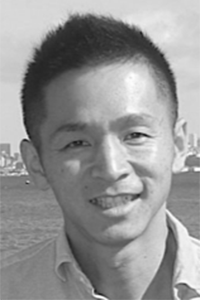
Kiyoteru Tsutsui
PROFILE:
  Kiyoteru Tsutsui is Professor of Sociology, Director of the Center for Japanese Studies, and Director of the Donia Human Rights Center at the University of Michigan, Ann Arbor. His research on globalization of human rights and its impact on local politics has appeared in American Sociological Review, American Journal of Sociology, Social Forces, Social Problems, Journal of Peace Research, Journal of Conflict Resolution, and other social science journals. His book publications include Rights Make Might: Global Human Rights and Minority Social Movements in Japan (Oxford University Press 2018), and a co-edited volume (with Alwyn Lim) Corporate Social Responsibility in a Globalizing World (Cambridge University Press 2015). He has been a recipient of National Endowment for the Humanities Fellowship, National Science Foundation grants, the SSRC/CGP Abe Fellowship, Stanford Japan Studies Postdoctoral Fellowship, and other grants as well as awards from American Sociological Association sections on Global and Transnational Sociology (2010, 2013), Human Rights (2017), Asia and Asian America (2018), and Collective Behavior and Social Movements (2018).


McClatchy Hall, Building 120, Studio 40
450 Serra Mall
Stanford University

Kiyoteru Tsutsui Professor of Sociology, University of Michigan
Seminars
-

Massive changes in the global food sector over the next few decades – driven by climate change and other environmental stresses, growing population and income, advances in technology, and shifts in policies and trade patterns – will have profound implications for the oceans. Roz Naylor, Senior Fellow and Founding Director of Stanford’s Center on Food Security and the Environment,  will discuss the interplay between terrestrial and marine food systems, highlighting the rising role of aquaculture in helping to meet the nutritional demands of 9-10 billion people by 2050. As a platform for her talk, she will introduce a new research initiative at Stanford on “Oceans and the Future of Food”, co-led by the Center for Oceans Solutions (COS) and the Center on Food Security and the Environment (FSE).

Free Admission is by reservation only. Please call 831-655-6200 between 8:30AM – 5:00PM, Mon-Fri, or RSVP at the Friends of Hopkins web page.

Contact:
Amanda Whitmire
831-655-6200
thalassa@stanford.edu

Boat Works Lecture Hall, Hopkins Marine Station

Lectures
-

Abstract: In efforts to halt the Syrian government’s use of chemical weapons (CW) in that country’s civil war the United States and other outside powers applied coercive strategies, in both a deterrent and compellent mode. Outcomes varied: compellence achieved a partial success in getting Syria to give up much of its chemical stockpile, but there were multiple deterrence failures. This paper examines this record to draw lessons about factors associated with the effectiveness of coercion. Its analysis points to the interplay of three factors: credibility, motivation, and assurance. Regarding credibility, the case demonstrates that threats fulfilling many of the traditional criteria for establishing credibility can still fail. In Syria, this is partly because there were ambiguities in the scope of what was covered by deterrent warnings and partly because other factors also affect coercive outcomes. In the Syria case two additional factors were especially important. First, the domestic political motivations of the target affect whether external threats provide coercive leverage. In this case Syrian President Assad’s concern with regime survival led him to perceive the value of CW use as outweighing the likely costs even if outside powers followed through on retaliatory threats. Second, where regime survival is a concern, it is vital to pair coercive threats with appropriate assurances. Here, the case suggests that it is possible not only to provide too little assurance, but also too much. Whereas the Obama administration found it hard to offer credible assurances to Assad, the Trump administration initially conveyed assurances that were too robust, creating a sense that Syria could use CW with impunity. This analysis suggests there may have been a potentially viable path to effective coercion of the Assad regime, but the path would have involved intense tradeoffs that largely prevented decision makers from embracing it. Decision makers and outside commentators alike turned instead to a familiar schema that implies credibility is established by demonstrating a willingness to impose costs using airpower – a script that can be labeled the “resolve plus bombs” formula. Despite the frequent tendency to equate coercion with the threat or limited use of air strikes, this approach was not sufficient to change Syria’s calculations regarding chemical arms.


Speaker's Biography: Jeff Knopf is a professor at the Middlebury Institute of International Studies (MIIS) in Monterey, California, where he serves as chair of the M.A. program in Nonproliferation and Terrorism Studies and a senior research associate with the Center for Nonproliferation Studies (CNS). He is on sabbatical for the 2018-19 academic year and is spending the year as a visiting scholar at CISAC. This is his second stint at CISAC. Dr. Knopf received his Ph.D. in Political Science from Stanford and was previously a pre-doctoral fellow at CISAC in the days when it was still located in the old Galvez House. His most recently completed project is a forthcoming book volume he co-edited on Behavioral Economics and Nuclear Weapons. While at CISAC, Dr. Knopf will primarily be working on a project titled “Coercing Syria on Chemical Weapons.” This project examines efforts by the United States and other countries to apply deterrent and compellent strategies in attempts to stop the Syrian government from using chemical weapons and to dismantle its chemical arsenal. Dr. Knopf will also be working on a paper that explores cognitive aspects of the nuclear taboo.

Jeffrey Knopf Professor Middlebury Institute of International Studies (MIIS)
Seminars
-

Abstract:

The recent surge in nationalism and tribalism brings renewed salience to questions of identity within and across borders. Notably, it exposes the tension between bounded social identities, on the one hand, and universalist yearnings and commitments, on the other. Liberal democracy—and the ostensible universalism on which it is based—is struggling to resolve this tension. I turn instead to the cosmopolitan tradition. I argue that cosmopolitanism—and a genuinely cosmopolitan (i.e., unbounded) social identity, in particular—represents not just an extension of scope from the national to the global, but a qualitative shift that permeates all identities, and serves to fundamentally protect and liberate particularist attachments from their otherwise inherent instabilities and contradictions. On this view, the promise of cosmopolitanism does not rest exclusively in what it can deliver beyond our borders, but also in its potential to fundamentally recast social identities within boundaries, resolving crises of identity at all levels of society.


Speaker Bio:

Image
sabet headshot
Shahrzad Sabet's research spans politics, economics, psychology, and philosophy. She is a Fellow at the University of Maryland’s Bahá’í Chair for World Peace Program. Previously, she was a Senior Research Fellow at Princeton University’s Niehaus Center for Globalization and Governance and a Postdoctoral Fellow at Harvard, where she recently received her PhD in Government. Her work has been featured in outlets such as The Washington Post and The New York Times.

Shahrzad Sabet Fellow at the University of Maryland’s Bahá’í Chair for World Peace Program
Seminars
Paragraphs

We assess scientific evidence that has emerged since the U.S. Environmental Protection Agency’s 2009 Endangerment Finding for six well-mixed greenhouse gases and find that this new evidence lends increased support to the conclusion that these gases pose a danger to public health and welfare. Newly available evidence about a wide range of observed and projected impacts strengthens the association between the risk of some of these impacts and anthropogenic climate change, indicates that some impacts or combinations of impacts have the potential to be more severe than previously understood, and identifies substantial risk of additional impacts through processes and pathways not considered in the Endangerment Finding.

All Publications button
1
Publication Type
Journal Articles
Publication Date
Journal Publisher
Science
Authors
Christopher B. Field
Noah Diffenbaugh
David Lobell
-

The event is jointly sponsored by the Japan Program at the Shorenstein Asia-Pacific Research Center and the Japan Foundation Center for Global Partnership.

The Heisei era started in 1989, with high hopes for Japan to contribute to the international order. As the Heisei era draws to an end, Japan is once again expected to “step up” with increased urgency, given the current US administration’s withdrawal from, and challenge to the international order.  In this talk, I will first look back at the thirty years of Heisei, and discuss why Japan did not take the “internationalist” path in a way that some had expected. Looking forward, I discuss how the domestic institutional changes, together with the geopolitical challenges in Asia, have prompted Japan to seek active leadership in the region and beyond. I will elaborate on the evolution of the “Free and Open Indo-Pacific Vision,” with focus on how exactly Japan seeks to achieve “free and open” in the region, and challenges and limitations going forward.

Image
hikotaniphoto2017
Takako Hikotani is Gerald L. Curtis Associate Professor of Modern Japanese Politics and Foreign Policy. She previously taught at the National Defense Academy of Japan, where she was Associate Professor, and lectured at the Ground Self Defense Force and Air Self Defense Force Staff Colleges, and the National Institute for Defense Studies. Her research focus on civil-military relations and Japanese domestic politics, Japanese foreign policy, and comparative civil-military relations. Her publications (in English) include, “The Japanese Diet and defense policy-making.” International Affairs, 94:1, July, 2018; “Trump’s Gift to Japan: Time for Tokyo to Invest in the Liberal Order,” Foreign Affairs, September/October 2017; and “Japan’s New Executive Leadership: How Electoral Rules "Japan’s New Executive Leadership: How Electoral Rules Make Japanese Security Policy" (with Margarita Estevez-Abe and Toshio Nagahisa), in Frances Rosenbluth and Masaru Kohno eds, Japan in the World (Yale University Press, 2009). She was a Visiting Professional Specialist at Princeton University as Social Science Research Council/Abe Fellow (2010-2011) and Fellow of the US-Japan Leadership Program, US-Japan Foundation (2000- ). Professor Hikotani received her BA from Keio University, MAs from Keio University and Stanford University, and PhD in Political Science from Columbia University, where she was a President’s Fellow.

Takako Hikotani Associate Professor, Modern Japanese Politics and Foreign Policy, Columbia University
Seminars
-

The event is sponsored by the Japan Society for Promotion of Science and
the Japan Foundation Center for Global Partnership.


abe 6364 Japanese Prime Minister Shinzo Abe speaks at Stanford about innovation in Japan and Silicon Valley. He was also joined on stage by Stanford President John Hennessy and George Shultz, the former U.S. Secretary of State and a distinguished fellow at the Hoover Institution (below).
When the Liberal Democratic Party in Japan regained the power led by Prime Minister Shinzo Abe in December 2012, Japan’s government embarked on a set of economic policies dubbed “Abenomics.” Abenomics aimed at bringing Japan back from stagnation and restoring its growth potential.  The Abe administration entered its 7th year and Prime Minister Abe looks most likely to become the prime minister with the longest reign in the post war era.  Abenomics looks seemingly successful as well.  Japan’s economy has been in the longest expansion phase in the post war era.  The unemployment rate is so low that many employers claim they cannot find workers.  Yet, the major goals of Abenomics set at the beginning, such as 2% inflation rate and 2% real economic growth, have not been achieved.  Has Abenomics really succeeded?

This panel features four experts who have been closely watching Abenomics’s impacts on the Japanese economy.  They evaluate what Abenomics has accomplished so far in various areas.


Panelists:

Joshua Hausman, Assistant Professor of Public Policy; Assistant Professor of Economics, University of Michigan

Takatoshi Ito, Professor of International and Public Affairs, Columbia University

Nobuko Nagase, Professor of Labor Economics and Social Policy, Ochanomizu University, Japan

Steven Vogel, Professor of Asian Studies; Professor of Political Science; Chair of the Political Economy Program, University of California, Berkeley

Takeo Hoshi (moderator), Director of the Japan Program at the Shorenstein Asia Pacific Research Center, Stanford University


Koret-Taube Conference Center
Gunn-SIEPR Building
366 Galvez Street, Stanford University

Panel Discussions
-

Plese note: we're no longer accepting RSVPs for this event.


Eight years have passed since the Great East Japan Earthquake and subsequent Fukushima Daiichi Nuclear Power Plant accident. Steady progress has been made towards the reconstruction of Fukushima, repopulation of surrounding areas, and the decommissioning of the plant, of which Tokyo Electric Power Company Holdings (TEPCO) must shoulder 16 trillion yen of the 22 trillion yen, the total estimated cost of the accident. Meanwhile, with Japan having fully liberalized its electricity and gas retail market, the business environment surrounding TEPCO is undergoing a major change. In the long term, TEPCO foresees a decrease in demand for their power service and increased competition among utility companies. In this program, Naomi Hirose, who endeavored to manage the Fukushima incident spearhead reforming the company as President of TEPCO from 2012 to 2017, shares his insights on the current situation in Fukushima, lessons learned and implications from the accident.


Image
naomi hirose photo
Naomi Hirose is senior executive whose service at the Tokyo Electric Power Company (TEPCO) spans four decades.  He joined the company in 1976, having gained an appreciation for the energy industry following the 1973 Oil Shock, and worked in a number of management positions from 1992 to 2005, including corporate planning, sales, marketing, and customer relations.  Mr. Hirose became an executive officer in 2006, and in 2008, conceived and spearheaded a campaign promoting the economic and environmental benefits of electrification, called “Switch” that was a Japan-first. In 2010, he re-energized the company vision for global expansion.  Immediately after the 3.11 Fukushima Accident, Mr. Hirose dedicated himself to create the system for Nuclear Damage Compensation. After becoming President and CEO in 2012, he led the company in addressing a number of highly complex issues such as water management and decommissioning plans for the Fukushima Daiichi Nuclear Power Station, compensation for the accident and Fukushima revitalization, and keeping TEPCO competitive while facing the deregulation of Japan’s electricity market.  He currently serves as Executive Vice Chairman, Fukushima Affairs, overseeing the utility’s passionate and steadfast efforts to reconstruct and revitalize Fukushima Prefecture.  Mr. Hirose received his B.A. in Sociology from Hitotsubashi University in 1976,and his MBA from Yale School of Management in 1983.

Naomi Hirose, Vice Chairman, Tokyo Electric Power Company Holdings, Inc. (TEPCO)
Seminars
This event is open to Stanford undergraduate students only. 
 
The Center on Democracy, Development, and the Rule of Law (CDDRL) is currently accepting applications from eligible juniors due February 15, 2019 who are interested in writing their senior thesis on a subject touching upon democracy, economic development, and rule of law (DDRL) from any university department. CDDRL faculty and current honors students will be present to discuss the program and answer any questions.
 
For more information on the Fisher Family CDDRL Honors Program, please click here.
 
Image
honors info session 2019 1


Ground Floor Conference Rm E008 Encina Hall616 Serra MallStanford, CA 94305-6055


CDDRL
Encina Hall, C152
616 Jane Stanford Way
Stanford, CA 94305-6055

(650) 725-2705 (650) 724-2996
0
Senior Fellow at the Freeman Spogli Institute for International Studies
Professor, by courtesy, of Political Science
Stedman_Steve.jpg PhD

Stephen Stedman is a Senior Fellow at the Freeman Spogli Institute for International Studies (FSI) and the Center on Democracy, Development and the Rule of Law (CDDRL), an affiliated faculty member at CISAC, and professor of political science (by courtesy) at Stanford University. He is director of CDDRL's Fisher Family Honors Program in Democracy, Development and Rule of Law, and will be faculty director of the Program on International Relations in the School of Humanities and Sciences effective Fall 2025.

In 2011-12 Professor Stedman served as the Director for the Global Commission on Elections, Democracy, and Security, a body of eminent persons tasked with developing recommendations on promoting and protecting the integrity of elections and international electoral assistance. The Commission is a joint project of the Kofi Annan Foundation and International IDEA, an intergovernmental organization that works on international democracy and electoral assistance.

In 2003-04 Professor Stedman was Research Director of the United Nations High-level Panel on Threats, Challenges and Change and was a principal drafter of the Panel’s report, A More Secure World: Our Shared Responsibility.

In 2005 he served as Assistant Secretary-General and Special Advisor to the Secretary- General of the United Nations, with responsibility for working with governments to adopt the Panel’s recommendations for strengthening collective security and for implementing changes within the United Nations Secretariat, including the creation of a Peacebuilding Support Office, a Counter Terrorism Task Force, and a Policy Committee to act as a cabinet to the Secretary-General.

His most recent book, with Bruce Jones and Carlos Pascual, is Power and Responsibility: Creating International Order in an Era of Transnational Threats (Washington DC: Brookings Institution, 2009).

Director, Fisher Family Honors Program in Democracy, Development and Rule of Law
Director, Program in International Relations
Affiliated faculty at the Center for International Security and Cooperation
Date Label

Encina Hall, C150
616 Jane Stanford Way
Stanford, CA 94305

0
Center Fellow, Freeman Spogli Institute for International Studies
didi_kuo_2023.jpg

Didi Kuo is a Center Fellow at the Freeman Spogli Institute for International Studies (FSI) at Stanford University. She is a scholar of comparative politics with a focus on democratization, corruption and clientelism, political parties and institutions, and political reform. She is the author of The Great Retreat: How Political Parties Should Behave and Why They Don’t (Oxford University Press) and Clientelism, Capitalism, and Democracy: the rise of programmatic politics in the United States and Britain (Cambridge University Press, 2018).

She has been at Stanford since 2013 as the manager of the Program on American Democracy in Comparative Perspective and is co-director of the Fisher Family Honors Program at CDDRL. She was an Eric and Wendy Schmidt Fellow at New America and is a non-resident fellow with the Carnegie Endowment for International Peace. She received a PhD in political science from Harvard University, an MSc in Economic and Social History from Oxford University, where she studied as a Marshall Scholar, and a BA from Emory University.

Date Label
Subscribe to Environment