Environment

FSI scholars approach their research on the environment from regulatory, economic and societal angles. The Center on Food Security and the Environment weighs the connection between climate change and agriculture; the impact of biofuel expansion on land and food supply; how to increase crop yields without expanding agricultural lands; and the trends in aquaculture. FSE’s research spans the globe – from the potential of smallholder irrigation to reduce hunger and improve development in sub-Saharan Africa to the devastation of drought on Iowa farms. David Lobell, a senior fellow at FSI and a recipient of a MacArthur “genius” grant, has looked at the impacts of increasing wheat and corn crops in Africa, South Asia, Mexico and the United States; and has studied the effects of extreme heat on the world’s staple crops.

-

This event is part of Shorenstein APARC's winter webinar series "Asian Politics and Policy in a Time of Uncertainty."

Is demographics destiny as societies search for sustainable, innovation-led growth? Many analysts worry that population aging slows the socioeconomic engine of innovation. What can the older societies of East Asia do to remain innovative? Will younger South Asia inevitably eclipse East Asia as the South Asian population surges into the working ages, just as surely as India will soon overtake China as the most populous country in the world? In this webinar celebrating the publication of Demographics and Innovation in the Asia-Pacific, social scientists from across the region probe multiple aspects of these critical questions. Chinese economist and entrepreneur James Liang will offer insights regarding demography and innovation in China; economist James Feyrer probes the economics of demography and comparative productivity effects across the Asia-Pacific; sociologist Joon-Shik Park will discuss “Population Cliffs, Crisis of Local Society, and the Politics of Innovation Cities in South Korea”; and political scientist Kenji Kushida will focus on “How Japan’s Aging Demographics Have Affected Pathways of Technological Development.” Karen Eggleston, co-editor and author, will moderate the discussion.

Speakers:

Image
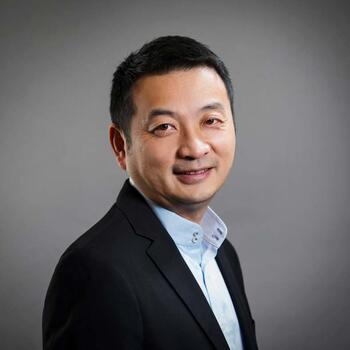
James Liang 4X4
James Liang is one of the Co-founders and Executive Chairman of the Board of Trip.com Group Ltd. He was the Chief Executive Officer from 2000 to 2006 and from 2013 to 2016. Trip.com Group has grown to become one of the world’s largest online travel agencies. Currently, James serves as Co-Chairman of Tongcheng-eLong (HKSE:7080) and on the boards of a number of other Internet companies, including Sina (NASDAQ: SINA), and MakeMyTrip (NASDAQ: MMYT). He is also Research Professor of Economics at Peking University.

In addition to his expertise in the travel industry, James is also a leading scholar of demographics and social studies. He has played an important role in shaping China’s population policies in recent years and in generating public interest in issues such as education and urban planning. As a co-author of the book Too Many People in China?, James analyzed the impact of the one-child policy and the adverse effects of demographic changes on China’s economy. He is also the author of multiple other publications, including The Rise of the Network Society, and his latest book published in 2018, The Demographics of Innovation.

James received his Ph.D. degree from Stanford University and his master’s and bachelor’s degrees from Georgia Institute of Technology.

­­

Image
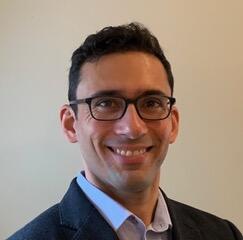
Feyrer, James 4X4
James Feyrer is an Associate Professor of Economics at Dartmouth College.  He received his Ph.D. from Brown University and his B.S. from Stanford University.  His work is primarily in applied macroeconomics. His work on the impacts of demographics and trade on growth have been influential in policy circles.  In particular his work on the impact of globalization on output has informed the Brexit debate. He has published articles in the Quarterly Journal of Economics, the American Economic Review, the Review of Economics and Statistics, the Journal of the European Economic Association, among other journals.

Image
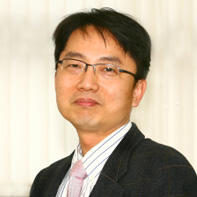
Park Joon Shik 4X4
Joon-Shik Park is Professor in the Department of Sociology at Hallym University, Chuncheon, Korea. He got his Ph.D. degree at Yonsei University in Korea. His research focuses on employment and regional studies. Prof. Park began his academic career as a researcher on labor and employment issues in Korean society. Recently, Prof. Park has been interested in comparing social economy and local regeneration in the context of global social and economic crisis. He recently published several books, articles, and project reports on such issues as the impact of globalization on employment regimes and local societies; social dialogue and integration; creative innovations for sustainable local development. Prof. Park has served as President of the Korean Regional Sociological Association, Dean of the Social Science School at Hallym University. He is now a member of the Presidential Commission on Policy Planning of the Korean Government. He is leading the Inclusive Society Division in the Presidential Commission as the chair person. He is also serving as Vice President of Vision and Cooperation of Hallym University.

Image
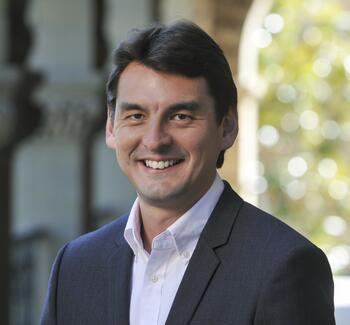
Kenji Kushida 4X4
Kenji E. Kushida is a Research Scholar at the Shorenstein Asia-Pacific Research Center Japan Program at Stanford University. Kushida’s research streams include 1) Information Technology innovation, 2) Silicon Valley’s economic ecosystem, 3) Japan’s political economic transformation since the 1990s, and 4) the Fukushima nuclear disaster. He has published several books and numerous articles in each of these streams, including “The Politics of Commoditization in Global ICT Industries,” “Japan’s Startup Ecosystem,” “Diffusing the cloud: Cloud computing and implications for public policy,” “Leading without followers: how politics and market dynamics trapped innovations in Japan's domestic ‘Galapagos’ telecommunications sector” and others. He holds a PhD in political science from the University of California, Berkeley, an MA in East Asian studies and BAs in economics and East Asian studies, all from Stanford University.

Moderator:

Image
Karen Eggleston 4X4
Karen Eggleston is Senior Fellow at the Freeman Spogli Institute for International Studies (FSI) at Stanford University, and Director of the Stanford Asia Health Policy Program and Deputy Director of the Shorenstein Asia-Pacific Research Center at FSI. She is also a Fellow with the Center for Innovation in Global Health at Stanford University School of Medicine, and a Faculty Research Fellow of the National Bureau of Economic Research (NBER). Eggleston earned her PhD in public policy from Harvard University and has MA degrees in economics and Asian studies from the University of Hawaii and a BA in Asian studies summa cum laude (valedictorian) from Dartmouth College. Eggleston studied in China for two years and was a Fulbright scholar in Korea. Her research focuses on government and market roles in the health sector and Asia health policy, especially in China, India, Japan, and Korea; healthcare productivity; and the economics of the demographic transition. She served on the Strategic Technical Advisory Committee for the Asia Pacific Observatory on Health Systems and Policies, and has been a consultant to the World Bank, the Asian Development Bank, and the WHO regarding health system reforms in the PRC.

Via Zoom Webinar.
Register https://bit.ly/2YD0Rvk

James Liang Research Professor of Economics, Peking University.
James Feyrer Department of Economics, Dartmouth College.
Joon-Shik Park Department of Sociology, Hallym University.
Kenji Kushida Shorenstein APARC, Stanford University.

Shorenstein APARC
Stanford University
Encina Hall E301
Stanford, CA 94305-6055

(650) 723-9072 (650) 723-6530
0
Senior Fellow at the Freeman Spogli Institute for International Studies
Center Fellow at the Center for Health Policy and the Center for Primary Care and Outcomes Research
Faculty Research Fellow of the National Bureau of Economic Research
Faculty Affiliate at the Stanford Center on China's Economy and Institutions
karen-0320_cropprd.jpg PhD

Karen Eggleston is a Senior Fellow at the Freeman Spogli Institute for International Studies (FSI) at Stanford University and Director of the Stanford Asia Health Policy Program at the Shorenstein Asia-Pacific Research Center at FSI. She is also a Fellow with the Center for Innovation in Global Health at Stanford University School of Medicine, and a Faculty Research Fellow of the National Bureau of Economic Research (NBER). Her research focuses on government and market roles in the health sector and Asia health policy, especially in China, India, Japan, and Korea; healthcare productivity; and the economics of the demographic transition.

Eggleston earned her PhD in public policy from Harvard University and has MA degrees in economics and Asian studies from the University of Hawaii and a BA in Asian studies summa cum laude (valedictorian) from Dartmouth College. Eggleston studied in China for two years and was a Fulbright scholar in Korea. She served on the Strategic Technical Advisory Committee for the Asia Pacific Observatory on Health Systems and Policies and has been a consultant to the World Bank, the Asian Development Bank, and the WHO regarding health system reforms in the PRC.

Director of the Asia Health Policy Program, Shorenstein Asia-Pacific Research Center
Stanford Health Policy Associate
Faculty Fellow at the Stanford Center at Peking University, June and August of 2016
CV
Date Label
Shorenstein APARC, Stanford University.
Seminars
-

This event is part of the Asia Health Policy Program (AHPP) 2020-21 Colloquium series "Health, medicine, and longevity: Exploring public and private roles"

Non-state actors contribute to health systems in many ways that are vital for health and well-being, especially for those most vulnerable. We will hear from three distinguished speakers on non-government organizations and public-private collaborations in Asia: Dr. Karki, Executive Director of PHASE Nepal; Mr. Choub, Executive Director of KHANA, Cambodia; and Dr. Huntington of Johnson & Johnson, Singapore, prefaced by video interviews of many others. They will share about the trade-offs in contracting for health services in Asia and beyond, from the conceptual foundations to the daily reality of practitioners, and what COVID-19 has taught about “building back better” in the future.

Speakers:

Image
Jiban Karki 4X4
Dr Jiban Karki is a development professional with a PhD in Public Health, a master’s degree in Rural Development and bachelor’s degrees in Civil Engineering and Business Administration. He has over 20 years of experience in leading development organizations and managing projects in Nepal and over 9 years of experience in academic research in South Asia. He is currently working with the University of Sheffield. He also leads PHASE Nepal, an NGO he founded in 2006 in Nepal which works with multiple partners at the grassroot level in the health, education and livelihoods improvement sector where other organizations rarely go because of the remoteness of the areas.  His research interests range from community led primary health care to provision of Assistive Technology to Person with Disabilities. 


Image
Sok Chamreun Choub 4X4
Mr. Sok Chamreun Choub is the Executive Director of the Khmer HIV/AIDS NGO Alliance (KHANA) in the Kingdom of Cambodia, which focuses on prevention and treatment for HIV/AIDS, Tuberculosis, sexual reproductive health, other non-communicable diseases, as well as promoting human rights and health coverage for vulnerable populations in Cambodia. Chamreun’s professional background is in social science, but he has been devoted to public health work for 27 years in government, the UN and NGOs—more than two decades with KHANA, but also in many other roles. For example, he currently also serves as the Chief of Party for the five-year USAID-funded Community Mobilization Initiative to End TB (COMMIT); the Chair of the Steering Committee of the Health Action Coordinating Committee for the Cooperation Committee for Cambodia; Vice-Chair Civil Society Representative for The Global Fund Country Coordination Committee for Cambodia; Co-Chair of the Activists Coalition on TB for Asia and the Pacific; and the Developing Country NGOs Representative of the Stop TB Partnership Board.  

Image
Dale Huntington 4X4
Dr. Dale Huntington is currently Senior Director, Health Care Systems for Emerging Markets with Johnson and Johnson, based in Singapore where he serves as the primary Global Health Policy lead in Asia and the Pacific. In this role, he is responsible for developing and implementing a strategy to advance Johnson & Johnson’s Enterprise objectives and Government Affairs & Policy platform priorities – with a particular focus on shaping healthcare systems to expand access to quality healthcare in key emerging markets. Prior to joining Johnson and Johnson he was with the WHO, working as the Director of the Asia Pacific Observatory on Health Policy and Systems, based in the WHO Western Pacific Regional Office, Manila, and as a Scientist with the Department of Reproductive Health and Research in Geneva. Before joining WHO he was a Senior Health Specialist at the World Bank – focused on South and East Asia. He holds a Doctorate in Science degree from the Johns Hopkins University School of Hygiene and Public Health, specializing in health services research and evaluation. He has lived and worked in developing countries for over 25 years. He has an extensive publication record and is proficient in French.

Via Zoom Webinar.
Register: https://bit.ly/2KcO6DW

Jiban Karki Executive Director of PHASE Nepal, and Global Challenge Fellow at University of Sheffield
Sok Chamreun Choub Executive Director of KHANA, Phnom Penh, Cambodia
Dale Huntington Senior Director of Health Care Systems for Emerging Markets, Johnson & Johnson, Singapore
Seminars
-

About the Event: Do programmatic policies always yield electoral rewards? A growing body of research attributes the adoption of programmatic policies in African states to increased electoral competition. However, these works seldom explore how the specifics of policy implementation condition voters’ electoral responses to programmatic policies over time, or changes in electoral effects throughout policy cycles. We analyze the electoral effects of both the promise and implementation of a programmatic policy designed to increase secondary school enrollment in Tanzania over three election cycles. We find that the incumbent party benefited from a campaign promise to increase access to secondary schooling, but incurred an electoral penalty following implementation of the policy. We do not find any significant electoral effects by the third electoral cycle. Our findings illuminate temporal dynamics of policy feedback, the conditional electoral effects of programmatic policies, and the need for more studies of entire policy cycles over multiple electoral periods.


Image
Opalo, Ken
About the Speaker:  Dr. Ken Opalo is an Assistant Professor at Georgetown University’s School of Foreign Service. His research interests include the political economy of development, legislative politics, and electoral accountability in African states. Ken’s current research projects include studies of political reform in Ethiopia, the politics of education sector reform in Tanzania, and electoral accountability under devolved government in Kenya. His works have been published in Governance, the British Journal of Political Science, the Journal of Democracy, and the Journal of Eastern African Studies. His first book, titled Legislative Development in Africa: Politics and Post-Colonial Legacies (Cambridge University Press, 2019) explores the historical roots of contemporary variation in legislative institutionalization and strength in Africa. Ken earned his BA from Yale University and PhD from Stanford University.

Online, via Zoom: REGISTER

Ken Opalo Assistant Professor at Georgetown University’s School of Foreign Service
Seminars
-


About the Event:  In the wake of the racial unrest of 1968, the federal government  embarked on a series of social programs designed to  respond to the cries of Black communities demanding an end to police brutality, access to quality housing, and economic investment in schools and jobs.  Often, these cries were not fully heeded, and the marketplace became a terrain on which corporate America and the state argued that Black lives could be improved.  In this presentation on her most recent book, Franchise: The Golden Arches in Black America, historian Marcia Chatelain links the rise of black capitalism with the fracturing of the mid-century civil rights struggle and eclipsing of Dr. Martin Luther King, Jr.’s dream of economic justice.  In lieu of policies that could enhance the quality of life in America’s cities, many Black neighborhoods were offered fast food outlets, low-wage work, and an enmeshed relationship with corporate benevolence.

 
Image
Marcia Chatelain
About the Speaker:  Marcia Chatelain is Professor of History and African-American Studies at Georgetown University. The author of books, South Side Girls and Franchise: The Golden Arches in Black America. Her work has appeared in The Chronicle of Higher Education, The Nation, and The Washington Post.


Online, via Zoom: REGISTER

Marcia Chatelain Professor of History and African-American Studies at Georgetown University
Seminars
-

This event is part of the Asia Health Policy Program (AHPP) 2020-21 Colloquium series "Health, medicine, and longevity: Exploring public and private roles"

A collaborating network of researchers summarize preliminary results from recent harmonized surveys on the impact of COVID-19 on individuals living with diabetes and hypertension, focusing on their access to medication and other care, loss of household income, (non)adherence to treatment, and worsening of symptoms. Researchers from China, India, Korea, and Thailand discuss empirical results from data gathered in the last few months. Understanding to what extent lapses in medication or other treatment have occurred, and whether telehealth or other options are associated with better outcomes, may enable locally tailored, evidence-based policy responses to help mitigate impacts on future morbidity and mortality.

Speakers
Nikhil Tandon, All India Institute of Medical Sciences
Kavita Singh, Public Health Foundation of India
Lijing Yan, Duke Kunshan University
Jianchao Quan, University of Hongkong
Daejung Kim, Korea Institute for Health and Social Affairs
Piya Hanvoravongchai, Chulalongkorn University
Wasin Laohavinij, Chulalongkorn University

Via Zoom Webinar.
Register: https://bit.ly/2H6oAhV

Nikhil Tandon All India Institute of Medical Sciences
Kavita Singh Public Health Foundation of India
Lijing Yan Duke Kunshan University
Daejung Kim Korea Institute for Health and Social Affairs
Piya Hanvoravongchai Chulalongkorn University
Shorenstein APARCStanford UniversityEncina Hall E301Stanford, CA 94305-6055
0
Visiting Scholar, 2019-20
wasin_laohavinij.jpg Ph.D.

Wasin Laohavinij joined the Walter H. Shorenstein Asia-Pacific Research Center (Shorenstein APARC) as visiting scholar with the Asia Health Policy Program for the fall quarter of 2019 from King Chulalongkorn Memorial Hospital and Chulalongkorn University, where he serves as physician and teaching assistant respectively. His research focuses on diabetes care and health service systems in Thailand.  Dr. Laohavinij received his doctorate of medicine from Chulalongkorn University in 2017.

Chulalongkorn University
Jianchao Quan University of Hong Kong
Seminars
-

This event is part of the Asia Health Policy Program (AHPP) 2020-21 Colloquium series "Health, medicine, and longevity: Exploring public and private roles"

Over the last decade, India has rapidly expanded government health insurance programs that entitle low-income households to free hospital care.  In a major policy shift away from direct public provision of healthcare, these programs contract private hospitals for service delivery. This constitutes a sizeable public subsidy delivered through private agents, but there is relatively little evidence on how private hospitals perform. Using a unique dataset on 6 million insurance claims and 15,000 patient surveys, this talk will present several key insights on the behavior of private hospitals within a large government insurance program. 1) Private hospitals manipulate coding to increase their revenues at the government's expense. 2) They also charge patients out-of-pocket for care that is supposed to be free under program rules. 3) When the government increases hospital reimbursement rates, patient charges decrease substantially. 4) However, hospitals capture approximately half the increased subsidy and this is driven by less competitive markets. The results demonstrate that hospital reimbursement rates are a key policy lever shaping hospital behavior with implications for program outcomes. Improving program performance requires a combination of stronger hospital monitoring and attention to reimbursement rates; focusing on one without the other may reduce the efficiency of public spending or worsen patient welfare. Lastly, market structure, a factor rarely taken into consideration in health policy in India, may play a role in the extent to which public subsidies benefit patients.

https://aparc.fsi.stanford.edu/asiahealthpolicy/news/postdoctoral-spotlight-radhika-jain

Image
Radhika Jain 4X4 022521
Radhika Jain is the Asia Health Policy Postdoctoral Fellow for 2019-2022 at the Walter H. Shorenstein Asia-Pacific Research Center (Shorenstein APARC).  Her research focuses on health care markets, the effectiveness of public health policy, and gender disparities in health.

She completed her doctorate in the Department of Global Health at Harvard University in 2019.  Her dissertation examined the extent to which government subsidies for health care under insurance are captured by private hospitals instead of being passed through to patients, and whether accountability measures can help patients claim their entitlements. Dr. Jain's research has been supported by grants from the Weiss Family Fund and the Jameel Poverty Action Lab (JPAL). She has worked on impact evaluations of health programs in India and on the implementation of HIV programs across several countries in sub-Saharan Africa. She also held a doctoral fellowship at the Center for Global Development.

At Shorenstein APARC, Radhika is starting new work on understanding the factors that contribute to poor female health outcomes and interventions to increase the effectiveness of public health insurance.

Via Zoom Webinar.
Register: https://bit.ly/37218gJ

2019-2022 Asia Health Policy Postdoctoral Fellow
Seminars
-

This event is open to Stanford undergraduate students only. 

Image
CDDRL Flyer 2021

The Center on Democracy, Development, and the Rule of Law (CDDRL) will be accepting applications from eligible juniors on who are interested in writing their senior thesis on a subject touching upon democracy, economic development, and rule of law (DDRL) from any university department.  The application period opens on January 11, 2021 and runs through February 12, 2021.   CDDRL faculty and current honors students will be present to discuss the program and answer any questions.

For more information on the Fisher Family CDDRL Honors Program, please click here.

**Please note all CDDRL events are scheduled using the Pacific Time Zone

 Online, via Zoom: REGISTER

CDDRL
Encina Hall, C152
616 Jane Stanford Way
Stanford, CA 94305-6055

(650) 725-2705 (650) 724-2996
0
Senior Fellow at the Freeman Spogli Institute for International Studies
Professor, by courtesy, of Political Science
Stedman_Steve.jpg PhD

Stephen Stedman is a Senior Fellow at the Freeman Spogli Institute for International Studies (FSI) and the Center on Democracy, Development and the Rule of Law (CDDRL), an affiliated faculty member at CISAC, and professor of political science (by courtesy) at Stanford University. He is director of CDDRL's Fisher Family Honors Program in Democracy, Development and Rule of Law, and will be faculty director of the Program on International Relations in the School of Humanities and Sciences effective Fall 2025.

In 2011-12 Professor Stedman served as the Director for the Global Commission on Elections, Democracy, and Security, a body of eminent persons tasked with developing recommendations on promoting and protecting the integrity of elections and international electoral assistance. The Commission is a joint project of the Kofi Annan Foundation and International IDEA, an intergovernmental organization that works on international democracy and electoral assistance.

In 2003-04 Professor Stedman was Research Director of the United Nations High-level Panel on Threats, Challenges and Change and was a principal drafter of the Panel’s report, A More Secure World: Our Shared Responsibility.

In 2005 he served as Assistant Secretary-General and Special Advisor to the Secretary- General of the United Nations, with responsibility for working with governments to adopt the Panel’s recommendations for strengthening collective security and for implementing changes within the United Nations Secretariat, including the creation of a Peacebuilding Support Office, a Counter Terrorism Task Force, and a Policy Committee to act as a cabinet to the Secretary-General.

His most recent book, with Bruce Jones and Carlos Pascual, is Power and Responsibility: Creating International Order in an Era of Transnational Threats (Washington DC: Brookings Institution, 2009).

Director, Fisher Family Honors Program in Democracy, Development and Rule of Law
Director, Program in International Relations
Affiliated faculty at the Center for International Security and Cooperation
Date Label
Deputy Director, CDDRL

Encina Hall, C150
616 Jane Stanford Way
Stanford, CA 94305

0
Center Fellow, Freeman Spogli Institute for International Studies
didi_kuo_2023.jpg

Didi Kuo is a Center Fellow at the Freeman Spogli Institute for International Studies (FSI) at Stanford University. She is a scholar of comparative politics with a focus on democratization, corruption and clientelism, political parties and institutions, and political reform. She is the author of The Great Retreat: How Political Parties Should Behave and Why They Don’t (Oxford University Press) and Clientelism, Capitalism, and Democracy: the rise of programmatic politics in the United States and Britain (Cambridge University Press, 2018).

She has been at Stanford since 2013 as the manager of the Program on American Democracy in Comparative Perspective and is co-director of the Fisher Family Honors Program at CDDRL. She was an Eric and Wendy Schmidt Fellow at New America and is a non-resident fellow with the Carnegie Endowment for International Peace. She received a PhD in political science from Harvard University, an MSc in Economic and Social History from Oxford University, where she studied as a Marshall Scholar, and a BA from Emory University.

Date Label
Associate Director for Research, CDDRL
-

This event is part of the Asia Health Policy Program (AHPP) 2020-21 Colloquium series "Health, medicine, and longevity: Exploring public and private roles"

A quarter century ago in a seminal paper, Hart, Shleifer and Vishny (NBER1996, QJE1997) developed a theory of the ‘Proper Scope of Government.’ In this webinar, Oliver Hart, 2016 Nobel Laureate, reflects on that framework and its place in economics, as well as the inspiration for his more recent work on norms and guiding principles, contracts as reference points, maximizing shareholder welfare, and exit versus voice. In discussion with Karen Eggleston, Hart answers questions posed by economists who have built upon that paper and offers insights on how the theory applies to understanding public and private roles in healthcare, education, and other publicly-financed services. With China, India, and many other emerging markets engaged in decades-long controversies about public and private roles in their health sectors, and international focus on public-private partnerships for COVID-19 response and harnessing innovation to address other global challenges, this is an opportune time to discuss how conceptually rigorous thinking can inform a sometimes divisive and ideological debate with vital implications for human welfare.


Image
Oliver Hart 021021
Oliver Hart is currently the Lewis P. and Linda L. Geyser University Professor at Harvard University, where he has taught since 1993. He is the 2016 co-recipient of the Sveriges Riksbank Prize in Economic Sciences in Memory of Alfred Nobel, a Fellow of the Econometric Society, the American Academy of Arts and Sciences, the British Academy, and the American Finance Association, a member of the National Academy of Sciences, a Distinguished Fellow of the American Economic Association, and has several honorary degrees. Hart works mainly on contract theory, the theory of the firm, corporate finance, and law and economics. His research centers on the roles that ownership structure and contractual arrangements play in the governance and boundaries of corporations. He has published a book (Firms, Contracts, and Financial Structure, Oxford University Press, 1995) and numerous journal articles. He has used his theoretical work on firms and contracts in several legal cases. He has been president of the American Law and Economics Association and a vice president of the American Economic Association.

This keynote is part of the Stanford Asia Health Policy Program colloquium series entitled:  Health, medicine, and longevity: Exploring public and private roles

Governmental agencies and non-state actors interact within health systems in complicated and sometimes controversial ways that are vital for health and well-being. These run the gamut from developing and distributing vaccines and therapeutics for COVID-19 and mitigating the social and economic impact of the pandemic, to achieving and sustaining universal health coverage, addressing the social determinants of health, mitigating disparities, and encouraging innovations for healthy longevity, to name but a few. From the conceptual foundations to the daily reality of practitioners, this colloquium series will explore the evidence and experience of the public-private nexus in health sectors across Asia, in comparative global perspective. With colloquia throughout the academic year, the series features a keynote on February 10, 2021 from Nobel Laureate Oliver Hart, “A quarter century of ‘The Proper Scope of Government’: Theory and Applications” (dating from the 1996 NBER working paper subsequently published in the Quarterly Journal of Economics, QJE).

https://www.youtube.com/watch?v=g9JRhGpXC2Y&feature=emb_title

Via Zoom Webinar.
Register https://bit.ly/3jAvFFQ

Oliver Hart Lewis P. and Linda L. Geyser University Professor, Harvard University
Seminars
-

This event is part of the Asia Health Policy Program (AHPP) 2020-21 Colloquium series "Health, medicine, and longevity: Exploring public and private roles"

Co-sponsored by the Asia Health Policy Program and the Southeast Asia Program

Jakarta time: Friday, October 30, 2020, 7:30am - 9:00am

Apart from the 1998 Asian Financial Crisis (AFC), the current COVID-19 economic crisis is Indonesia’s most serious economic calamity in half a century with adverse impact. In March 2020, Indonesia’s poverty rate increased from 9.41% to 9.78% year on year, the equivalent of 1.28 million new people entering poverty.  By the end of 2020, it is expected that poverty rates will increase above 10%, wiping out two years of Indonesia’s poverty alleviation achievements. Social protection is key for crisis recovery. Indonesia’s social protection system has continually become stronger since the AFC. Over the past two decades, Indonesia has significantly expanded its social protection programs and coverage buttressed by a robust social registry that covers the poorest 40% of the population. The COVID-19 crisis is pushing the system to its limits. Insufficient data on Indonesians vulnerable to falling into poverty (and above the poorest 40%), coupled with response programs with complicated delivery and eligibility mechanisms, has made it challenging to deliver response-focused social protection. Dr. Sumarto will discuss whether the current social protection system is strong enough to weather the storm, especially to protect those working in the informal sector and marginal groups. Today, Indonesian policymakers have the choice to keep on following the same path and continue investing on the same social protection system, or take a radical move to reform it and make it better equipped to face future challenges.

Image
Sudarno Sumarto 102920
Sudarno Sumarto is an economist specializing in poverty reduction, social protection, labor, health, education and political economy of public policy implementation. Before joining the TNP2K, he was previously a visiting scholar at the Shorenstein Asia Pacific Research Center (APARC) at Stanford University as well as Founder and Executive Director of The SMERU Research Institute. Well-versed in leading large-scale research projects, Sudarno also provides intellectual leadership to Indonesia’s RISE country team. His research has been widely published in high-impact journals such as the Journal of Political Economy, Journal of Development Economics, and World Bank Economic Review, and has extensively contributed to policy-making by the Government of Indonesia. Sudarno earned his doctoral and master’s degrees in economics from Vanderbilt University.


Via Zoom Webinar.
Register https://bit.ly/30vi2jJ

Sudarno Sumarto Policy Adviser, National Team for the Acceleration of Poverty Reduction (TNP2K), Senior Research Fellow, The SMERU Research Institute.
Seminars
Subscribe to Environment