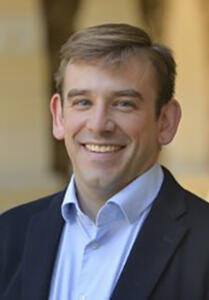
Jonathan White
Encina Hall
616 Serra Street
Stanford, CA 94305-6165
Encina Hall
616 Serra Street
Stanford, CA 94305-6165
- This joint CISAC/FSI event is at maximum capacity. RSVPs are for waitlist only. Thank you for your interest -
About the Event: Jake Sullivan, Martin R. Flug Visiting Lecturer at Yale Law School and Senior Policy Adviser for Hillary Clinton’s 2016 Presidential Campaign, will be interviewed by Michael McFaul, Director of the Freeman Spogli Institute for International Studies (FSI) and a Senior Fellow at FSI. Dr. McFaul is also a Professor of Political Science and Peter and Helen Bing Senior Fellow at the Hoover Institution. Audience members will have an opportunity to ask questions after the interview.
About the Speaker: Jake Sullivan is a Martin R. Flug Visiting Lecturer in Law at Yale Law School. He served in the Obama administration as national security adviser to Vice President Joe Biden and Director of Policy Planning at the U.S. Department of State, as well as deputy chief of staff to Secretary of State Hillary Clinton. He was the Senior Policy Adviser on Secretary Clinton's 2016 presidential campaign. Previously, he served as deputy policy director on Hillary Clinton's 2008 presidential primary campaign, and a member of the debate preparation team for Barack Obama's general election campaign. Sullivan also previously served as a senior policy adviser and chief counsel to Senator Amy Klobuchar from his home state of Minnesota, worked as an associate for Faegre & Benson LLP, and taught at the University of St. Thomas Law School. He clerked for Judge Stephen Breyer of the Supreme Court of the United States and Judge Guido Calabresi of the U.S. Court of Appeals for the Second Circuit. Sullivan holds undergraduate and law degrees from Yale and a master's degree from Oxford.
Encina Hall, 3rd floor
Encina Hall
616 Jane Stanford Way
Stanford, CA 94305-6055
Michael McFaul is the Ken Olivier and Angela Nomellini Professor of International Studies in Political Science, Senior Fellow at the Freeman Spogli Institute for International Studies, and the Peter and Helen Bing Senior Fellow at the Hoover Institution, all at Stanford University. He joined the Stanford faculty in 1995 and served as FSI Director from 2015 to 2025. He is also an international affairs analyst for MSNOW.
McFaul served for five years in the Obama administration, first as Special Assistant to the President and Senior Director for Russian and Eurasian Affairs at the National Security Council at the White House (2009-2012), and then as U.S. Ambassador to the Russian Federation (2012-2014).
McFaul has authored ten books and edited several others, including, most recently, Autocrats vs. Democrats: China, Russia, America, and the New Global Disorder, as well as From Cold War to Hot Peace: An American Ambassador in Putin’s Russia, (a New York Times bestseller) Advancing Democracy Abroad: Why We Should, How We Can; and Russia’s Unfinished Revolution: Political Change from Gorbachev to Putin.
He is a recipient of numerous awards, including an honorary PhD from Montana State University; the Order for Merits to Lithuania from President Gitanas Nausea of Lithuania; Order of Merit of Third Degree from President Volodymyr Zelenskyy of Ukraine, and the Dean’s Award for Distinguished Teaching at Stanford University. In 2015, he was the Distinguished Mingde Faculty Fellow at the Stanford Center at Peking University.
McFaul was born and raised in Montana. He received his B.A. in International Relations and Slavic Languages and his M.A. in Soviet and East European Studies from Stanford University in 1986. As a Rhodes Scholar, he completed his D. Phil. in International Relations at Oxford University in 1991.
The Iraqi government, the Peshmerga, the international coalition and a consortium of militia have been winning the war against ISIS in Iraq. The concern moving forward is whether Iraq’s state institutions have what it takes to prevent ISIS from reemerging in a new, and more deadly form after the current conflict is over. What does recent history, the current military campaign, and the Donald Trump administration’s current trajectory tell us about Iraq’s prospects?
Reuben Hills Conference Room
2nd Floor East Wing E207
Encina Hall
616 Serra Street
Stanford, California 94305
This is a watershed French presidential election marked by the collapse of the main political leaders and established political parties as well as the amplification of corruption scandals by social networks. The French electorate is torn between disengagement from politics, anger and confusion. In the first ballot on April 23rd, voters are likely to reject the traditional Right/Left divide and stage the run-off campaign as a stark choice between far-Right populist leader Marine Le Pen and 39 year old pro-European centrist Emmanuel Macron. These candidates and their ideas are the most emblematic incarnation of the clash that increasingly defines Western politics, pitting anti-immigrant and anti-trade nationalists against the more cosmopolitan elites. Will France vote more like the Dutch or the British and Americans? With what consequences for herself, Europe and the transatlantic relationship?
Patrick Chamorel is Senior Resident Scholar at the Stanford University Center in Washington DC. He teaches Political Science, with an emphasis on comparative American and European politics, public policy and political economy, as well as transatlantic relations. He has taught Transatlantic Relations on Stanford’s California campus as well as French Politics at the Stanford in Paris campus. Over the last few years, he has been teaching a semester course and an intensive seminar at the Reims Euro-American campus of Sciences-Po Paris. In addition to Stanford, he has taught at the University of California (Berkeley and Santa Cruz), George Washington University, and Claremont McKenna College where he was the Crown Visiting professor of Government. He was a Fellow of the Institute for Governmental Studies at UC Berkeley, the Woodrow Wilson Center in Washington DC and the Hoover Institution at Stanford, as well as a Congressional Fellow of the American Political Science Association (Offices of Harry Reid in the U.S. Senate and Norman Mineta in the House of Representatives).
Patrick Chamorel has written and lectured extensively on US and European politics. His research has focused recently on US strategic, political and economic relations with Europe and the EU, American and European political and business elites, the impact of globalization on governments, business and civil society, Euro-skepticism in America, and US and French presidential elections. He regularly contributes to the media, including the Wall Street Journal, Die Welt, Les Echos, Atlantico.fr, the Canadian Broadcasting Corporation, and CNN International.
In the 1990s, Patrick Chamorel was a Senior Advisor to the Minister of Industry and in the Policy Planning Office of the Prime Minister in Paris. He is a graduate of Sciences-Po in Paris where he also earned his Ph.D. in Political Science after doing research at UC Berkeley and Stanford University. In addition, he holds a Master in Public Law from the University of Paris.
Alexander Stubb has served as Prime Minister, Finance Minister, Foreign Minister, Trade and Europe Minister of Finland. He was a Member of the European Parliament from 2004-2008 and in the national government from 2008-16. He was the Chairman of the National Coalition Party from 2014-16 and is currently a Member of the Finnish Parliament.
Stubb's background is in academia and civil service. He has published 16 books, tens of academic articles and hundreds of columns. He holds a Ph.D. From the London School of Economics and Political Science, a Master's degree from the College of Europe in Bruges, and a B.A. from Furman University in South Carolina. He also studied at the Sorbonne in Paris. He worked as an expert adviser at the Finnish Ministry for Foreign Affairs in Helsinki and in Brussels, and in President Romano Prodi's team at the European Commission. He has been a visiting Professor at the College of Europe in Bruges.
His expertise includes European and International Affairs, Foreign and Security Policy, the Euro and the Global Economy. His current interests are Brexit, global affairs, the Fourth Industrial Revolution (digitalisation, robotisation and artificial intelligence) and health and exercise science. Stubb is a sought after speaker and a frequent commentator on international affairs for many global news channels. He writes a regular column for the Financial Times and Dagens Industri, the Swedish business journal.
Stubb speaks Finnish, Swedish, English, French and German. He is an avid sportsman, having played ice-hockey, handball, and national team golf in his youth. His current passions are cycling and triathlon. He participated in the Ironman World Championships in Hawaii in October 2016.
Read more about this topic in a paper featured in the academic journal Asian Survey and an analysis piece in The Diplomat by Gi-Wook Shin and Rennie J. Moon, or watch a video featuring a panel discussion from earlier this year.
South Korean President Park Geun-hye faced a leadership crisis after revelations that she relied on a confidant with no official position for key decision-making in state affairs. Heavy industry met with serious financial difficulties, and a strong anti-corruption law was enacted. North Korea tested more nuclear weapons and missiles. Controversy over the deployment of Terminal High Altitude Area Defense strained South Korea’s relations with China.
Damian Collins MP is a member of the House of Commons, and Chairman of the Parliamentary Select Committee for Culture, Media and Sport. He graduated in modern history from the University of Oxford, and Charmed Life, the Phenomenal World of Philip Sassoon is his first book.
No RSVP required. For more information, please contact jewishstudies.stanford.edu.
This event is co-sponsored by The Taube Center for Jewish Studies, the Department of History, and The Europe Center.
Lane History Corner (Building 200)
Room 302
Torun Dewan is a political scientist at the London School of Economics. His main research is in political economy and in the formal and empirical analysis of decision making in political parties, legislatures and executives. Amongst other issues he has looked at how cabinets structure the incentives of ministers, how leadership acts as a coordinating focal point, how political parties aggregate dispersed information, and how elections provide incentives for policy experimentation.
This seminar is part of the Comparative Politics Workshop in the Department of Political Science and is co-sponsored by The Europe Center.