Health and Medicine

FSI’s researchers assess health and medicine through the lenses of economics, nutrition and politics. They’re studying and influencing public health policies of local and national governments and the roles that corporations and nongovernmental organizations play in providing health care around the world. Scholars look at how governance affects citizens’ health, how children’s health care access affects the aging process and how to improve children’s health in Guatemala and rural China. They want to know what it will take for people to cook more safely and breathe more easily in developing countries.

FSI professors investigate how lifestyles affect health. What good does gardening do for older Americans? What are the benefits of eating organic food or growing genetically modified rice in China? They study cost-effectiveness by examining programs like those aimed at preventing the spread of tuberculosis in Russian prisons. Policies that impact obesity and undernutrition are examined; as are the public health implications of limiting salt in processed foods and the role of smoking among men who work in Chinese factories. FSI health research looks at sweeping domestic policies like the Affordable Care Act and the role of foreign aid in affecting the price of HIV drugs in Africa.

Authors
Charlotte J. Haug
News Type
Commentary
Date
Paragraphs

In August 2015, the publisher Springer retracted 64 articles from 10 different subscription journals “after editorial checks spotted fake email addresses, and subsequent internal investigations uncovered fabricated peer review reports,” according to a statement on their website. The retractions came only months after BioMed Central, an open-access publisher also owned by Springer, retracted 43 articles for the same reason.

Charlotte J. Haug, MD, PhD, a visiting scholar at Stanford Health Policy, writes in this New England Journal of Medicine perspective that the pressure to publish is huge for scientists, what with rewards such as promotions and financial incentives. This is leading to a growing number of cases of plagiarism and errors.

"The pressure to publish is huge for scientists everywhere, and the competition for space in the best journals harder than ever," she tells Stanford Health Policy. "One reason for this is the rapidly increasing amount of research and number of researchers coming from emerging economies like Brazil, India, Turkey and China — to mention a few. When the rewards for publishing is also very high (promotion, money), one might be more willing to take some short-cuts to get published." Haug, who was the editor-in-chief of The Journal of the Norwegian Medical Association and is a international correspondent for the New England Journal, said that as long as authors are rewarded for publishing many articles, and editors are rewarded for publishing them rapidly, new ways of gaming the traditional publication models will be invented more quickly than new control measures can be put in place. "Science is a collaborative endeavor," she said. "Not only in the sense that most scientific papers have a number of authors, but also in the sense that all science builds on previous science. One — or more — bad apple can have tremendously negative effects by leading other researchers in the wrong direction, wasting their time or directly harming for example patients that get the wrong treatment." You can read her full commentary here
Hero Image
nejm logo
All News button
1

Medical School Office Building
1265 Welch Road
Stanford, CA 94305

(650) 725-7747
0
Assistant Professor of Medicine
r01palhsm07.r01.med_.va_.govhomedirvhapalzulmadmy_documentsmy_picturesdonna_zulman037_12-13-11.jpg MD, MS

Donna Zulman, MD, MS, is an assistant professor in the Division of General Medical Disciplines at Stanford University, and an investigator at the Center for Innovation to Implementation (Ci2i) in the VA Palo Alto Health Care System. Dr. Zulman received her MD from the University of California, Los Angeles. After completing a residency in Internal Medicine at the University of Michigan, she received a Masters in Health and Health Care Research through the Robert Wood Johnson Clinical Scholars Program at the University of Michigan and the Ann Arbor VA.

Dr. Zulman's research focuses on improving health care delivery for patients with multiple chronic conditions and complex medical and social needs, and optimizing health-related technology to personalize care and improve outcomes for high-risk patients. Dr. Zulman is currently supported by a VA Health Services Research & Development Career Development Award.

Physician Investigator at the VA Palo Alto Health Care System
-

The brain works with electricity. Modulating the electrical function of the brain at different sites of the brain can give rise to information about how the brain works and how it may be broken in certain disorders. In the next decades of the century, we will be approaching the field of electriceuticals rather than pharmaceuticals in the treatment of many neuropsychiatric disorders. In this talk, Prof. Parvizi will give an overview of the lessons learned from the time of classical stimulations of the brain until the current technological advancements in this field.

Josef Parvizi MD PHD is an Associate Professor of Neurology and Neurological Sciences at Stanford University School of Medicine and director of Stanford Human Intracranial Cognitive Electrophysiology Program. He received his MD from the University of Oslo and PhD in neurosciences from the University of Iowa. He completed his medical internship at Mayo Clinic and Neurology Residency at BIDMC-Harvard before joining the UCLA for fellowship training in Clinical Epilepsy and Neurophysiology.  Prof. Parvizi moved to Stanford University in July 2007 and started the Human Intracranial Cognitive Electrophysiology Program (SHICEP). His research is now supported by NIH, Stanford NeuroVentures Program, and Stanford School of Medicine. His expertise is in functional mapping of the human brain using the three methods of electrocorticography, electrical brain stimulation, and functional imaging.

Stanford Center at Peking University, The Lee Jung Sen Building, Langrun Yuan, Peking University

Josef Parvizi Associate Professor of Neurology and Neurological Sciences Stanford University School of Medicine
Lectures
Authors
Rosamond L. Naylor
News Type
Commentary
Date
Paragraphs

Read the original post on Medium.com:

A Global Perspective on Food Policy

I applaud Mark Bittman, Michael Pollan, Ricardo Salvador, and Olivier de Schutter for advocating the introduction of a national food policy in the U.S. Greater emphasis in our current farm legislation on nutrition, health, equity, and the environment is clearly warranted and long overdue. As the authors note, Americans’ access to adequate nutrition at all income levels affects educational and health outcomes for the nation as a whole. Poor nutrition thus plays a role in determining the level and distribution of economic and social wellbeing in the U.S, now and in the future. It is surprising that no one within the large circle of Presidential hopefuls has raised the topic of food, not just agriculture, as a major political issue for the 2016 election.

The U.S. is not unique. Virtually every country with an agrarian base has, at some point in history, introduced agricultural policies that support farmers and provide incentives for them to produce major commodities. At the time, governments have been able to justify these policies on several grounds: national security (avoiding excess dependence on foreign nations for food), economic growth (using agricultural surpluses as an engine of economic growth), and social stability (keeping its population well-fed to avoid social unrest). Once agricultural policies are implemented, they typically give rise to institutions and vested political interests that perpetuate a supply-side orientation to food and agriculture. In the U.S., the political institutions that govern food and agriculture have their roots in historical political precedents that date back to the 1860s, and later to the 1930s when the New Deal was promulgated. Farm interests have been entrenched in the U.S. political system for quite some time, and they cannot be easily removed.

There is a general rule for successful policies: Align incentives with objectives. A corollary to this principle is that objectives change over the course of economic development. For the United States in earlier eras, and for many developing economies in recent decades, meeting basic calorie needs has been the first order of business. This objective has been largely achieved through public investments in infrastructure (irrigation, roads), research and development, commodity support programs, incentives for private agribusiness development, and other supply-side measures.

With successful agricultural growth and rising incomes, many countries face a new set of food and nutrition challenges: eliminating “hidden hunger” (deficiencies in iron, vitamin A, calcium, zinc and other micronutrients), and abating the steady rise in obesity that results from a transition to diets rich in energy-dense carbohydrates, fats, and sugar. Hidden hunger affects some three billion people worldwide. It is prevalent among low-income households in almost all countries, impairs cognitive and physical development (especially among infants up to two years of age) and thus limits a nation’s educational and economic potential. Meanwhile, rates of obesity now surpass rates of energy-deficient hunger throughout the world, even in developing nations.

The objectives of food and agricultural policies in virtually all countries need to shift, on balance, from promoting staple food supplies to enhancing nutrition. I am not suggesting an abandonment of agriculture, but rather an enrichment of agriculture with more crop diversity to support the nutritional needs of all people. If improved nutrition is the objective, what are the correct incentives? Proper incentives will differ among countries, but will inevitably require a fundamental change in institutional structure. With a shift from supply- to demand orientation, there needs to be a transition from Ministries of Agriculture to Ministries of Food. After all, the main goals of a Ministry of Agriculture are to increase the volume of agricultural production and to improve economic growth in the agricultural sector. The main goal of a Ministry of Food, by contrast, is to enhance the nutrition and food security of the entire population.

Bittman, Pollan, Salvador, and de Schutter emphasize that replacing the U.S. Department of Agriculture (USDA) with a “U.S. Department of Food, Health, and Wellbeing” would be difficult at best. It would require unprecedented political will and cooperation among parties. The same can be said for institutional change in agricultural ministries throughout the world. Regardless of the challenges, however, nothing will change until the conversation surrounding food policies, politics, and institutions takes a major turn.

Hero Image
feed the world
All News button
1
(650) 725-3894
0
Professor, Health Policy
Professor, Law
mello-scott_macdonald-profile.jpg JD, PhD

Michelle Mello is Professor of Law at Stanford Law School and Professor of Health Policy in the Department of Health Policy at Stanford University School of Medicine.  She conducts empirical research into issues at the intersection of law, ethics, and health policy.  She is the author of more than 230 articles on medical liability, public health law, the public health response to COVID-19, pharmaceuticals and vaccines, biomedical research ethics and governance, health information privacy, and other topics.
 
The recipient of a number of awards for her research, Dr. Mello was elected to the National Academy of Medicine at the age of 40.  From 2000 to 2014, she was a professor at the Harvard School of Public Health, where she directed the School’s Program in Law and Public Health.
 
Dr. Mello teaches courses in torts, public health law, and health policy.  She holds a J.D. from the Yale Law School, a Ph.D. in Health Policy and Administration from the University of North Carolina at Chapel Hill, an M.Phil. from Oxford University, where she was a Marshall Scholar, and a B.A. from Stanford University. 

News Type
Q&As
Date
Paragraphs

Most Americans will get at least one faulty diagnosis in their lifetime, sometimes with devastating consequences. “Urgent change is warranted to address this challenge,” according to a recent landmark report from the Institute of Medicine.

The September report, by a committee of medical experts, found that despite dramatic improvements in patient safety over the last 15 years, diagnostic errors have been the critical blind spot of health-care providers.

Kathryn McDonald, executive director of Stanford’s Center for Health Policy/Center for Primary Care and Outcomes Research, is a member of the committee that wrote the report, “Improving Diagnosis in Health Care.”

We ask McDonald Five Questions about the report’s findings and also got her suggestions for limiting one of the most overlooked health-care dilemmas today. You can read her responses here on the Stanford Medicine news center website.

Read more here about the report when it came out last month.

Hero Image
CDC generic diagnosis CDC
All News button
1
News Type
News
Date
Paragraphs

B

Basic science aims to advance knowledge, not only develop new drugs or cure disease. Yet today's biomedical innovations are only possible because of fundamental research conducted decades ago. As national funding priorities shift toward applied research, young basic scientists face the most challenging funding landscape in 50 years, diverting many of them to new careers altogether. Though impossible to divine where the experiments of Stanford investigators and researchers will lead them, investing in their work — and in basic science in general — is crucial to keeping the next great discovery alive.

In this multimedia photo essay, Magnum photographer Peter van Agtmael and FSI digital media associate Kylie Gordon, shine light on the interdisciplinary medical and scientific research being conducted at Stanford — which could lead to the #NextGreatDiscovery.


Hero Image
vanagtmael stanford final 003
At her lab bench, postdoctoral fellow Pascale Guiton sets up a polymerase chain reaction to generate copies of Toxoplasma gondii DNA. T. gondii is one of the most common parasites, with an estimated one third of the global population infected.
Peter van Agtmael/Magnum Photos
All News button
1
-

"Prevalence and Characteristics of Physicians Prone to Malpractice Claims"


Please note: All research in progress seminars are off-the-record. Any information about methodology and/or results is embargoed until publication.


Abstract

The distribution of malpractice claims across the physician workforce is not well understood.  If claim-prone physicians account for a substantial share of all claims, and it is feasible to reliably identify those physicians at an early stage, there are clear implications for efforts to improve the quality and safety of care.  Liability insurers and healthcare organizations could use the information to target interventions to address risks posed by claim-prone physicians.  Using data from the National Practitioner Data Bank, we analyzed malpractice claims paid against physicians between 2005 and 2014.  We calculated concentrations of claims among physicians.  We also sought to identify characteristics of physicians at high risk of “recurrent claims”.  We find that relatively few physicians account for a surprisingly large number of paid malpractice claims. Our findings also suggest that it may be feasible to predict who these physicians are before they accumulate troubling track records.

Encina Commons Room 225,
615 Crothers Way,
Stanford, CA 94305-6006

(650) 723-0970 (650) 723-1919
0
Vice Provost and Dean of Research
Professor, Health Policy
Professor, Law
rsd15_081_0469a.jpg LLB, ScD, MPH

David M. Studdert is a leading expert in the fields of health law and empirical legal research. His scholarship explores how the legal system influences the health and well-being of populations. A prolific scholar, he has authored more than 150 articles and book chapters, and his work appears frequently in leading international medical, law, and health policy publications.

Professor Studdert joined Stanford Law School faculty on November 1, 2013, in a joint appointment as Professor of Health Policy at the Stanford University School of Medicine, and Professor of Law.

Before joining the Stanford faculty, Professor Studdert was on the faculty at the University of Melbourne (2007-13) and the Harvard School of Public Health (2000-06). He has also worked as a policy analyst at the RAND Corporation, a policy advisor to the Minister for Health in Australia, and a practicing attorney.

Professor Studdert has received the Alice S. Hersh New Investigator Award from AcademyHealth, the leading organization for health services and health policy research in the United States. He was awarded a Federation Fellowship (2006) and a Laureate Fellowship (2011) by the Australian Research Council. He holds a law degree from University of Melbourne and a doctoral degree in health policy and public health from the Harvard School of Public Health.

CV
Date Label
David Studdert
(650) 725-3894
0
Professor, Health Policy
Professor, Law
mello-scott_macdonald-profile.jpg JD, PhD

Michelle Mello is Professor of Law at Stanford Law School and Professor of Health Policy in the Department of Health Policy at Stanford University School of Medicine.  She conducts empirical research into issues at the intersection of law, ethics, and health policy.  She is the author of more than 230 articles on medical liability, public health law, the public health response to COVID-19, pharmaceuticals and vaccines, biomedical research ethics and governance, health information privacy, and other topics.
 
The recipient of a number of awards for her research, Dr. Mello was elected to the National Academy of Medicine at the age of 40.  From 2000 to 2014, she was a professor at the Harvard School of Public Health, where she directed the School’s Program in Law and Public Health.
 
Dr. Mello teaches courses in torts, public health law, and health policy.  She holds a J.D. from the Yale Law School, a Ph.D. in Health Policy and Administration from the University of North Carolina at Chapel Hill, an M.Phil. from Oxford University, where she was a Marshall Scholar, and a B.A. from Stanford University. 

Michelle Mello
Seminars
Authors
Denise Masumoto
News Type
News
Date
Paragraphs

As the new academic year gets underway, the Walter H. Shorenstein Asia-Pacific Research Center’s Corporate Affiliates Program is excited to welcome its new class of fellows to Stanford University:

  • Yuta AikawaMinistry of Economy, Trade & Industry, Japan
  • Wataru FukudaShizuoka Prefectural Government
  • Huang (Catherine) HuangBeijing Shanghe Shiji Investment Company
  • Avni JethwaReliance Life Sciences
  • Satoshi Koyanagi, Ministry of Economy, Trade & Industry, Japan
  • An Ma, PetroChina
  • Huaxiang Ma, Peking University
  • Yuichiro Muramatsu, Mitsubishi Electric
  • Tsuzuri Sakamaki, Ministry of Finance, Japan
  • Tsuneo SasaiThe Asahi Shimbun
  • Ravishankar Shivani, Reliance Life Sciences
  • Aki Takahashi, Nissoken
  • Mariko Takeuchi, Sumitomo Corporation
  • Hideaki Tamori, The Asahi Shimbun
  • Ryo Washizaki, Japan Patent Office
  • Hung-Jen (Fred) Yang, MissionCare

During their stay at Stanford University, the fellows will audit classes, work on English skills, and conduct individual research projects; at the end of the year they will make a formal presentation on the findings from their research. During their stay at the center, they will have the opportunity to consult with Shorenstein APARC's scholars and attend events featuring visiting experts from around the world. The fellows will also participate in special events and site visits to gain a firsthand understanding of business, society and culture in the United States.


Hero Image
rsd15 070 0045a Rod Searcey
All News button
1
-

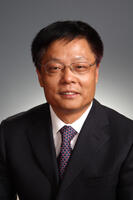
Professor MENG Qingyue, Dean of the Peking University School of Public Health and Director of the China Center for Health Development Studies at Peking University, will share his deep experience with research and policy advising about health and healthcare in the PRC. In the colloquium, Professor Meng will summarize the achievements of China’s health system reforms as well as the formidable challenges remaining -- strengthening primary care, reforming payment incentives, and multiple other reform priorities.

Professor Meng is lead author of the first-ever comprehensive overview of the PRC health system [http://www.wpro.who.int/asia_pacific_observatory/hits/series/chn/en/], which documents that the PRC has made great strides in raising health status and improving access to medical care, in large part thanks to emphasis on cost- effective public health programs, renewed commitments of government financing, expansion of social health insurance and other forms of financial protection, and investments in the healthcare delivery system. However, challenges remain in the form of large and in some cases growing inequalities in health and healthcare – across regions, urban-rural areas, or involving migrants and other vulnerable groups– as well as in improving the quality of healthcare, reforming public hospitals, and making expenditure growth sustainable through payment reforms and improved strategic purchasing.

Image
meng qing yue
Professor Meng Qingyue (MD, PhD), is Professor in Health Economics and Policy, Dean of Peking University School of Public Health, and Executive Director of Peking University China Center for Health Development Studies.

He obtained his Bachelor degree in medicine from Shandong Medical University (now Shandong University), Masters in public health from Shanghai Medical University (now Fudan University), Masters in economics from University of the Philippines, and PhD in health economics and policy from Karolinska Institutet in Sweden.

Before taking the current position, he was the Dean of Shandong University School of Public Health and Director of Shandong University Center for Health Management and Policy. His research interests include health financing policy and health provider payment systems.

He has led a team doing dozens of research projects supported by both domestic and international funding sources. He has been Member of the Expert Committee on Health Policy and Management to China Ministry of Health over the past decade. He is the Board Member of Health Systems Global elected from the Asia and Pacific Region.


China's health system
Download pdf
Meng Qingyue Professor in Health Economics and Policy, Dean of Peking University School of Public Health, and Executive Director of Peking University China Center for Health Development Studies
Seminars
Subscribe to Health and Medicine