
FSI’s researchers assess health and medicine through the lenses of economics, nutrition and politics. They’re studying and influencing public health policies of local and national governments and the roles that corporations and nongovernmental organizations play in providing health care around the world. Scholars look at how governance affects citizens’ health, how children’s health care access affects the aging process and how to improve children’s health in Guatemala and rural China. They want to know what it will take for people to cook more safely and breathe more easily in developing countries.
FSI professors investigate how lifestyles affect health. What good does gardening do for older Americans? What are the benefits of eating organic food or growing genetically modified rice in China? They study cost-effectiveness by examining programs like those aimed at preventing the spread of tuberculosis in Russian prisons. Policies that impact obesity and undernutrition are examined; as are the public health implications of limiting salt in processed foods and the role of smoking among men who work in Chinese factories. FSI health research looks at sweeping domestic policies like the Affordable Care Act and the role of foreign aid in affecting the price of HIV drugs in Africa.
Non-communicable Diseases Control and Prevention in Zhejiang province, China
-
The lecture aims to introduce the prevalence of Non-communicable Diseases (NCDs) in Zhejiang Province in China, and also share experience of Control and Prevention of NCDs. The lecture is composed by five parts. Firstly, NCDs surveillance system in Zhejiang will be introduced, including its establishment history and system coverage. Then, epidemiological characteristics of major NCDs (such as diabetes, cancer, stroke, and acute coronary heart disease events) will be presented, as well as NCDs related behavioral risk factors and hospital-based injury surveillance. Next, current work of NCDs prevention and control in Zhejiang Province will be described, including work network, human resources, community management and pilot programs for NCDs. Fourthly, economic cost of diabetes will be illustrated. Finally, countermeasures for NCDs Prevention and Control will be discussed.
Image

Yu got Medical degree in Zhejiang University and Master degree of Public Health in Peking Medical University. Now his research focuses on epidemiology of NCDs, strategy for NCDs control and prevention, and disease burden.
Min Yu
Deputy director of Zhejiang Provincial Center for Disease Control and Prevention
Seminars
The Effects of Early-Life Exposure to Pollution on Children's Human Capital Formation: the Case of Indonesia
-
Co-sponsored by the Asia Health Policy Program & the Southeast Asia Program
This paper analyzes the effects of an early-life shock in Indonesia on children’s human capital formation and parental responses to these shocks. We exploit the geographical variation of Indonesia’s forest fires during the El Nino phenomenon in 1997, as well as cohort variation in exposure. Children affected by these shocks in utero and in early years have worse health outcomes relative to children not exposed to these shocks. We find that the health effects persist, but other factors mitigate the initial effect on cognitive skills.
My main research interest lies at the intersection of development and health economics. I am particularly interested in how social policies affect health outcomes for the poor, early health investments, and health-seeking behavior in limited resource settings, focusing on the evaluation of different strategies that seek to promote health investments and the effects of these interventions. Specifically, I have analyzed the effects of Indonesia’s household conditional cash transfer program on health outcomes, local health care price, and quality of care. I have also analyzed the long-term effects of a large-scale midwifery program in Indonesia. Current projects study the effects of early life shocks on children’s human capital outcomes in Indonesia and the Philippines.
Image
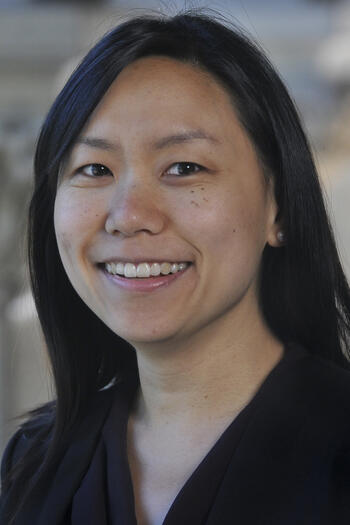
Margaret Triyana
Assistant Professor of Economics, Nanyang Technological University, Singapore
Seminars
Shorenstein APARC releases annual Center Overview for 2014-15
News Type
News
Date
Paragraphs
As we look toward year 2016, the Walter H. Shorenstein Asia-Pacific Research Center documents highlights from the 2014-15 academic year. The latest edition of the Center Overview, entitled "Asia in Flux," includes special research, people, events and outreach features, and is now available for download online.
Hero Image

All News button
1
Shorenstein APARC Center Overview 2014-15
Paragraphs
Shorenstein APARC's center overviews provide detailed information about Shorenstein APARC's mission, history, faculty, financial support, organizational structure, projects, and programs.
All Publications button
1
Publication Type
Annual Reports
Publication Date
Journal Publisher
Shorenstein Asia-Pacific Research Center
Research in Progress (RIP) Seminar: "Preventing Cardiovascular Disease"
-
"Preventing Cardiovascular Disease: Pathways through Diagnostic Testing, Clinical Guidelines, and Patient Decision Making"
Please note: All research in progress seminars are off-the-record. Any information about methodology and/or results is embargoed until publication.
Abstract
Cardiovascular disease is the leading cause of death in the United States and consumes 17% of our national healthcare expenditures. Diagnostic testing in clinical settings—particularly for coronary heart disease—and incorporation of economic evidence into professional society guidelines represent underdeveloped opportunities to catalyze adoption of preventive health measures. Financial incentives that influence patient decision-making may also be an effective tool to increase adoption of preventive health measures, and we are currently testing their effectiveness and return on investment in high-risk, hospitalized smokers.
Joseph Ladapo
New York University
Seminars
Wall Street Journal: China Abandons One-Child Policy
News Type
News
Date
Paragraphs
Laurie Burkitt quotes REAP's director Scott Rozelle on the impact of China cancelling the one-child policy . To read the original article, click here.
Chinese leaders implemented the one-child policy in 1980 in an effort to rein in explosive population growth and help raise living standards. It was rooted in a Mao Zedong-era baby boom. China’s population rose by nearly half to about 807 million people in 1969 from when the Communist Party took over the country 20 years before. That led to fears among the leadership that China faced a population boom it couldn’t feed.
Demographers began to present a united front in 2000, arguing that China was dangerously close to falling below a replacement rate of 2.1 children for every woman. Activists stepped up opposition. Chen Guangcheng, the blind activist who famously escaped home confinement and made his way to the U.S. embassy in 2012, became well-known in China in the 2000s for opposing forced abortion.
China effectively hobbled the one-child policy in 2013, when it allowed couples to have two children if one parent came from a household without other siblings. It has also long allowed exceptions in some parts of the country.
Just like on Thursday, the 2013 move led to a frenzy of anticipation from baby-related businesses and a brief bump in shares of Chinese formula makers and other baby-related companies. It resulted in 1.45 million new birth applications as of the end of May, according to the most recent data from the China’s National Health and Family Planning Commission. But the figures have so far disappointed many demographers.
Even rural residents, many of whom have been exempt of the one-child policy, are reluctant to have bigger families, said Scott Rozelle, co-director of Stanford University’s Rural Education Action Program. “Fertility has collapsed in rural and poor areas,” said Mr. Rozelle. “Anyone there can have two or three babies, but no one wants that.”
Hero Image

All News button
1
Research in Progress (RIP): “Improving Symptoms and Quality of Life in Chronic Heart Failure”
-
“Improving Symptoms and Quality of Life in Chronic Heart Failure”
Please note: All research in progress seminars are off-the-record. Any information about methodology and/or results is embargoed until publication.
*Please note the irregular time for this seminar*
Abstract
David Bekelman, MD, MPH is a visiting lecturer at Stanford University and the VA Palo Alto Health Care System. He is an Associate Professor of Medicine and Nursing at the University of Colorado Anschutz Medical Campus. Dr. Bekelman is a board-certified internist, psychiatrist, and palliative care specialist. In this talk, he will present his research related to measuring and improving quality of life, testing novel health care delivery interventions, and behavioral clinical trials. He will describe his ongoing research that is examining ways to integrate palliative and psychosocial care into the primary care setting. These interventions expand the “reach” of palliative care by combining training of nurses and social workers in basic palliative care with case review by palliative care specialists. He will also discuss how his team has managed challenges in recruiting ill patients and their family caregivers into research, coordinating care, and integrating specialist care in the patient-centered medical home.
David Bekelman
Seminars
Advancing Human Rights through Tech and Data
-
Abstract
Human rights groups have only two assets: people and information. Learn about Benetech’s decade of putting information technology tools into the hands of human rights activists, with the goal of making these two assets more effective in advancing the global cause of human rights.
Speaker bio
Jim Fruchterman is the founder and CEO of Benetech, a Silicon Valley nonprofit technology company that develops software applications to address unmet needs of users in the social sector. He is the recipient of numerous awards recognizing his work as a pioneering social entrepreneur, including the MacArthur Fellowship, Caltech’s Distinguished Alumni Award, the Skoll Award for Social Entrepreneurship, and the Migel Medal—the highest honor in the blindness field—from the American Foundation for the Blind. Since its founding in 1989, Benetech has touched the lives of hundreds of thousands of people. Its tools and services have transformed the ways in which people with disabilities access printed information, at-risk human rights defenders safely document abuse, and environmental practitioners succeed in their efforts to protect species and ecosystems. Through his work with Benetech and as a trailblazer in the field of social entrepreneurship, Jim continues to advance his vision of a world in which the benefits of technology reach all of humanity, not just the wealthiest and most able five percent.
Wallenberg Hall
Bulding 160
Room 124
Jim Fruchterman
Founder and CEO
Benetech
Seminars
Peer-Review Fraud: Hacking the Scientific Publication Process
News Type
Commentary
Date
Paragraphs
In August 2015, the publisher Springer retracted 64 articles from 10 different subscription journals “after editorial checks spotted fake email addresses, and subsequent internal investigations uncovered fabricated peer review reports,” according to a statement on their website. The retractions came only months after BioMed Central, an open-access publisher also owned by Springer, retracted 43 articles for the same reason.
Charlotte J. Haug, MD, PhD, a visiting scholar at Stanford Health Policy, writes in this New England Journal of Medicine perspective that the pressure to publish is huge for scientists, what with rewards such as promotions and financial incentives. This is leading to a growing number of cases of plagiarism and errors.
"The pressure to publish is huge for scientists everywhere, and the competition for space in the best journals harder than ever," she tells Stanford Health Policy. "One reason for this is the rapidly increasing amount of research and number of researchers coming from emerging economies like Brazil, India, Turkey and China — to mention a few. When the rewards for publishing is also very high (promotion, money), one might be more willing to take some short-cuts to get published." Haug, who was the editor-in-chief of The Journal of the Norwegian Medical Association and is a international correspondent for the New England Journal, said that as long as authors are rewarded for publishing many articles, and editors are rewarded for publishing them rapidly, new ways of gaming the traditional publication models will be invented more quickly than new control measures can be put in place. "Science is a collaborative endeavor," she said. "Not only in the sense that most scientific papers have a number of authors, but also in the sense that all science builds on previous science. One — or more — bad apple can have tremendously negative effects by leading other researchers in the wrong direction, wasting their time or directly harming for example patients that get the wrong treatment." You can read her full commentary here.Hero Image

All News button
1