Business
-

The Chinese government developed over 100 high-tech industrial development zones and over 80 university science parks since the mid-1980s, aimed to support fundraising and growth for innovation. How do they contribute to innovation in China? Are places like Zhongguangcun helping Chinese firms like the Silicon Valley? Professor Eesley will discuss his research on Science Parks as innovation policy in China and the channels through which ventures acquire financial and political support in China. 

Professor Eesley is an SCPKU Faculty Fellow, the recipient of the National Natural Science Foundation of China (NSFC) 2012 Research Fund for International Young Scientists, and 2010 Best Dissertation Award in the Business Policy and Strategy Division of the Academy of Management. He has a doctorate from the MIT Sloan School of Management, and had been an entrepreneur in medical equipment innovation. His research focuses on how formal and informal institutions, and industry environment influence entrepreneurship.

Stanford Center at Peking University

CHARLES EESLEY Assistant Professor, Management Science and Engineering Department Speaker Stanford University
Seminars
-


SPEAKERS

Eze Vidra - Head of Campus London and Google for Entrepreneurs European Outreach, Google

Samantha Evans - Vice Consul, SoftwareUK Trade & Investment


ABOUT THE SEMINAR

Innovation Hub: London
Eze VidraHead of Campus London and Google for Entrepreneurs European Outreach, Google
Samantha Evans - Vice Consul, Software, UK Trade & Investment (UKTI)

Wednesday, October 30, 12:00-1:00 pm 
Venue: McClelland Building, Room M109 - Stanford Graduate School of Business. 

London's Tech City, or Silicon Roundabout, is the fastest growing tech cluster in Europe with over 1300 startups, and has managed to attract industry leaders such as Amazon, Facebook, Google, Intel, and more to establish a presence there. 

Learn more about what is going on in this hub of innovation in a one-hour seminar with Eze Vidra, the head of Campus London, Google's first physical startup hub worldwide providing entrepreneurs with work and event space, mentorship, and educational programs. Joining him will be Vice Consul Samantha Evans of UKTI, who will offer a government/policy perspective on Tech City.

This talk is part of a seminar series hosted by the Silicon Valley Project at Stanford Graduate School of Business.


ABOUT THE SPEAKERS

Image
Eze Vidra is the Head of Campus London and Google for Entrepreneurs Europe. In March 2012, Eze launched Campus London, Google's first physical startup hub worldwide providing entrepreneurs with work and event space, mentorship and educational programs as well as access to a vibrant startup community.

Before Campus, Eze spearheaded Google's commerce strategic partnerships in EMEA, launching Google Shopping in Spain and Local Shopping in the UK among other projects. In the years before joining Google, Eze held product management leadership roles at Shopping.com in Israel, Gerson Lehrman Group in New York, Ask.com in Silicon Valley and AOL Europe in London, where was the Principal Product Manager for Search in EMEA. In 2003, Eze co-founded a startup in Israel, developing text-input technology for mobiles.

In 2005, Eze founded VC Cafe, a highly regarded venture capital blog shining a spotlight on Israeli startups. In 2012, he founded Techbikers, a non-for-profit cycling community responsible for starting a school and 20 libraries for children in the developing world. Eze serves as advisory board member of BBC Worldwide Labs and is a trustee of StartupWeekend Europe. He holds a BA in Business and Entrepreneurship from IDC in Israel (Cum Laude) and an MBA from London Business School. A native Argentinean raised in Israel, Eze is fluent in Spanish, Hebrew and English and lives in London with his family.

Eze Vidra's bio on the Campus London website: http://www.googleventures.com/team/eze-vidra
Eze Vidra on twitter: www.twitter.com/ediggs

Image
Samantha Evans is the Vice Consul for Software at UK Trade & Investment. Her role is to advise Enterprise software companies and fast growing start-ups on the opportunities in the UK and European Market as well as providing practical support to accelerate their success in the UK. UKTI is a UK Government organization based in 90 cities across the world – with a overall aim of economic development for the UK – both through import and export.

Sam moved to San Francisco for her current role in January 2013. She previously worked for MIDAS – Manchester’s Investment Agency and a Technology Accelerator in Manchester.

M109, First Floor, McClelland Building
Stanford Graduate School of Business
Knight Management Center

Seminars
-

Robert Mueller was nominated by President George W. Bush and became the sixth Director of the FBI on September 4, 2001.


Born in New York City, Mr. Mueller grew up outside of Philadelphia. He graduated from Princeton University in 1966 and later earned a master’s degree in International Relations at New York University.


After college, he joined the United States Marine Corps, where he served as an officer for three years, leading a rifle platoon of the Third Marine Division in Vietnam. He is the recipient of the Bronze Star, two Navy Commendation Medals, the Purple Heart, and the Vietnamese Cross of Gallantry.


Following his military service, Mr. Mueller earned a law degree from the University of Virginia Law School in 1973 and served on the Law Review.


After completing his education, Mr. Mueller worked as a litigator in San Francisco until 1976. He then served for 12 years in United States Attorney’s Offices, first in the Northern District of California in San Francisco, where he rose to be chief of its criminal division. In 1982, he moved to Boston as an Assistant United States Attorney, where he investigated and prosecuted major financial fraud, terrorist, and public corruption cases, as well as narcotics conspiracies and international money launderers.


After serving as a partner at the Boston law firm of Hill and Barlow, Mr. Mueller returned to public service. In 1989 he served in the United States Department of Justice as an assistant to Attorney General Richard L. Thornburgh. The following year he took charge of its Criminal Division. In 1991, he was elected Fellow of the American College of Trial Lawyers.


In 1993, Mr. Mueller became a partner at Boston’s Hale and Dorr, specializing in complex white collar crime litigation. He again returned to public service in 1995 as senior litigator in the Homicide Section of the District of Columbia United States Attorney’s Office. In 1998, Mr. Mueller was named United States Attorney in San Francisco and held that position until 2001.


Mr. Mueller and his wife, Ann, have two daughters.


The Payne Lectureship is named for Frank E. Payne and Arthur W. Payne, brothers who gained an appreciation for global problems through their international business operations.

The Payne Distinguished Lecturer is chosen for his or her international reputation as a leader, with an emphasis on visionary thinking; a broad, practical grasp of a given field; and the capacity to clearly articulate an important perspective on the global community and its challenges.

SIEPR Koret-Taube Conference Center
John A. and Cynthia Fry Gunn Building
366 Galvez Street

Robert S. Mueller III Sixth Director (Ret.) of the United States Federal Bureau of Investigation and Former United States Attorney for the Northern District of California Speaker
Lectures
-

One of the most important developments in the modern global economy is financial globalization. This has raised threats to the stability of political regimes in two ways: (1) by enhancing the possibility of a financial crisis that could cause political turmoil; and (2) by easing access to foreign sources of financing for opposition political groups. I argue that state capitalism – defined as state-owned publicly listed corporations -- has risen disproportionately among single party regimes as a way to address these dual threats. Single party regimes have both the motivation and a greater institutional capacity for addressing these threats in comparison to other regimes. Tests are conducted on 607 firms in 1996 and 856 firms in 2008 across seven East Asian economies, and are supplemented with case studies of Malaysia and South Korea.  The evidence suggests that financial globalization is contributing to the rise of the state as a counter reaction.

Richard W. Carney is a Fellow in the Department of International Relations located in the College of Asia and the Pacific at the Australian National University. His research and teaching are in the areas of international and comparative political economy with a focus on corporate governance and finance in East Asia. He has published articles in many academic journals including the Journal of Financial Economics, the Journal of East Asian Studies, and Business and Politics. He is also the author of the book Contested Capitalism: The Political Origins of Financial Institutions, and editor of the book Lessons from the Asian Financial Crisis. He was a Jean Monnet Fellow at the European University Institute in Fiesole, Italy (2003-04), and has held visiting positions at INSEAD. He holds a Ph.D. in Political Science (UCSD 2003). Before joining the ANU in 2011, he was an Assistant Professor in Singapore.

Daniel and Nancy Okimoto Conference Room

Richard W. Carney Fellow, Department of International Relations Speaker Australian National University
Seminars
-

Prime Minister Abe's economic policy, called Abenomics, places policies to open up Japan as a key component.  The government argues that reducing the barriers for international trade and capital flows will revitalize the Japanese economy and restore the growth in Japan.  At the core of the opening up policy are efforts to establish free trade agreements (FTAs) with major trading partners.  Japan joined the negotiation for TPP (Trans-Pacific Partnership), which includes the U.S., Japan's second largest trading partner, in July this year.  Japan has also started negotiation for RCEP (Regional Comprehensive Economic Partnership), which includes China, Japan's largest trading partner.  Will these efforts really succeed in making the Japanese economy more open?  Do they lead to the recovery of Japan from two decades of stagnation?  Experts from both sides of the Pacific discuss these issues.


Participants:

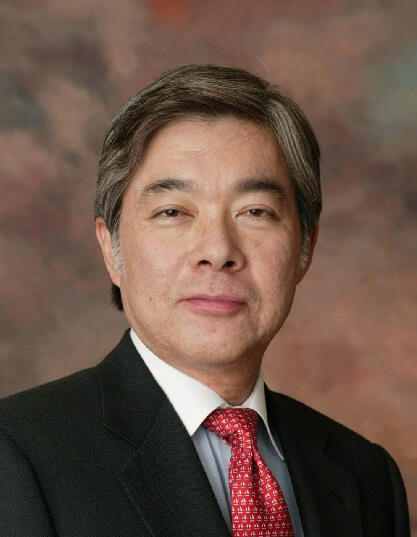
Glen S.

Image
Fukushima is Senior Fellow at the Center for American Progress, a prominent public policy think tank headquartered in Washington, D.C.  From 1990 to 2012, Mr. Fukushima was based in Tokyo as a senior executive with one European and four American multinational corporations: Vice President, AT&T Japan Ltd.; President, Arthur D. Little Japan; President & CEO, Cadence Design Systems Japan; President & CEO, NCR Japan; and President & CEO, Airbus Japan.  Before embarking on his business career in 1990, he was based in Washington, D.C. as Director for Japanese Affairs (1985-1988) and Deputy Assistant United States Trade Representative for Japan and China (1988-1990) at the Office of the United States Trade Representative (USTR), Executive Office of the President.  Mr. Fukushima served two terms as President of the American Chamber of Commerce in Japan, 1998-1999, and Vice President, 1993-1997.  A native of California, Mr. Fukushima was educated at Deep Springs College, Stanford University, Harvard University Graduate School of Arts and Sciences, Harvard Business School, and Harvard Law School. At Harvard, he was awarded a National Science Foundation Fellowship. He has studied and worked in Japan for over 25 years, including at Keio University, a daily newspaper, an international law firm, and as a Fulbright Fellow and a Japan Foundation Fellow at the Faculty of Law, University of Tokyo.


Image
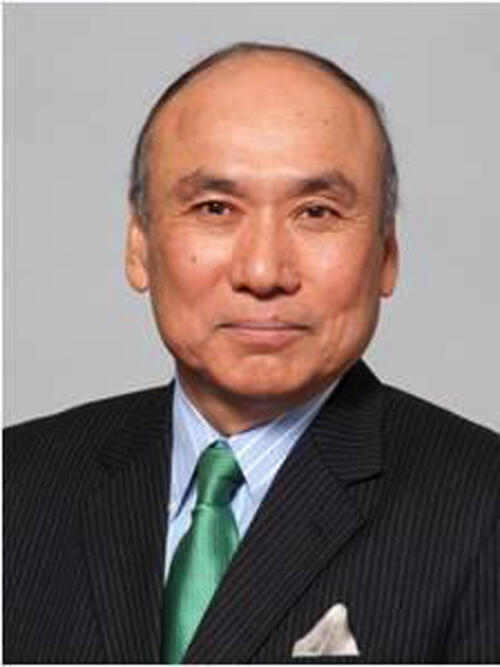
Hideichi Okada joins the Walter H. Shorenstein Asia-Pacific Research Center (Shorenstein APARC) from September, 2013 until March, 2014 as Sasakawa Peace Fellow with the Japan Studies Program (JSP).  His research interests encompass energy policies and trade policies in the context of possible cooperation between Japan and the U.S. During his time at Shorenstein APARC, Okada will be working to launch New Dialogue Program for future cooperation on various areas between Japan and the U.S., and other Asia Pacific countries.  Okada served as Vice Minister for International Affairs, Ministry of Economy, Trade and Industry (METI) from 2010 to 2012, where he promoted international trade and investment, and expanded industrial cooperation with various countries. He also served as Director General of Trade Policy Bureau (2008-2010) and Director General of Commerce and Information Policy Bureau of METI (2007-2008). He worked for Prime Minister Junichiro Koizumi as his executive assistant, where he dealt with policies on economy, industry, energy, science and technology, and environment, and with public relations (2001-2006). He was a professor at GRIPS (2006-2007) and a visiting scholar at Harvard Law School and IR/PS, University of California, San Diego in 2007.  Okada was born in Tokyo in 1951. He received LL.M. degree from Harvard Law School (1981) and graduated from the University of Tokyo with a LL.B. (1976). Currently, he is Senior Advisor, NTT Data Institute of Management and Consulting.


Image
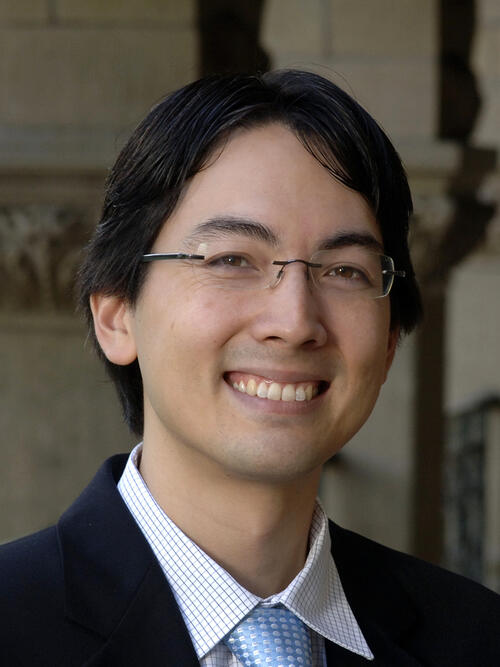
Phillip Lipscy is a center fellow at the Freeman Spogli Institute for International Studies and an assistant professor of political science at Stanford University. His fields of research include Japanese politics, U.S.-Japan relations, international and comparative political economy, international security, and regional cooperation in East and Southeast Asia.  Lipscy is an expert on bargaining over unbalanced representation in international organizations such as the United Nations Security Council, International Monetary Fund, and World Bank. His existing work addresses a wide range of topics such as the use of secrecy in international policy making, the effect of domestic politics on trade, and Japanese responses to the Asian Financial Crisis. His most recent research examines the political and economic factors that facilitate energy-efficient policymaking.  Lipscy obtained his PhD in political science at Harvard University. He received his MA in international policy studies and BA in economics and political science at Stanford University.  Lipscy has been affiliated with the Reischauer Institute of Japanese Studies and Weatherhead Center for International Affairs at Harvard University, the Institute for Global and International Studies at George Washington University, the RAND Corporation, and the Institute for International Policy Studies in Tokyo.


Image
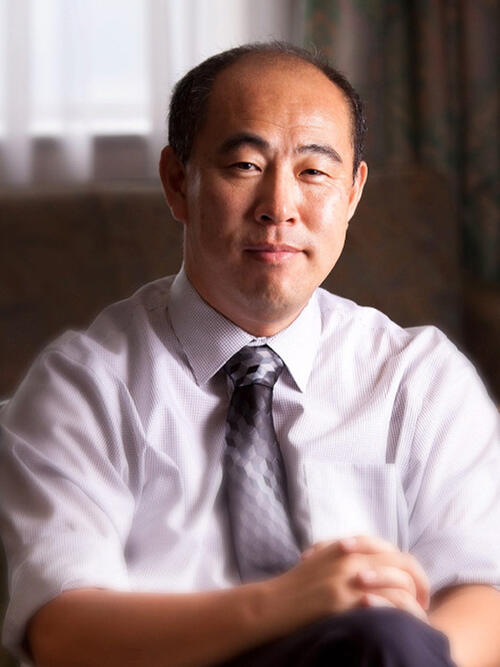
Takeo Hoshi is the Henri and Tomoye Takahashi Senior Fellow at the Walter H. Shorenstein Asia-Pacific Research Center at Stanford University, and professor of finance (by courtesy), Stanford Graduate School of Business. Prior to joining S/APARC, he was Pacific Economic Cooperation Professor in International Economic Relations at the Graduate School of International Relations and Pacific Studies (IR/PS) at the University of California, San Diego (UCSD). Hoshi also serves on the Board of Directors at Union BanCal Corporation. He is also a research associate at the National Bureau of Economic Research (NBER) and at the Tokyo Center for Economic Research (TCER). His main research interests include the study of the financial aspects of the Japanese economy, especially corporate finance, banking, and monetary policy. He received numerous awards for his publications including Corporate Financing and Governance in Japan: The Road to the Future (MIT Press, 2001), co-authored with Anil Kashyap (Graduate School of Business, University of Chicago), and his other publications include, “Japanese Government Debt and Sustainability of Fiscal Policy” (with Takero Doi and Tatsuyoshi Okimoto), Journal of the Japanese and International Economies,2011; “Corporate Restructuring in Japan during the Lost Decade” (with Satoshi Koibuchi and Ulrike Schaede), Japan’s Bubble, Deflation, and Long-term Stagnation, MIT Press, 2011 (Koichi Hamada, Anil K Kashyap, and David E. Weinstein, eds.) He has been the editor-in-chief of the Journal of the Japanese and International Economies since 1999. Hoshi received his BA in social sciences from the University of Tokyo in 1983, and a PhD in economics from the Massachusetts Institute of Technology in 1988.

Philippines Conference Room

Glen S. Fukushima Senior Fellow, Center for American Progress; Former President, American Chamber of Commerce in Japan and Former Deputy Assistant U.S. Trade Representative for Japan and China Panelist

Shorenstein APARC
Encina Hall E317
616 Serra Street
Stanford, CA 94305-6055

(650) 725-2375 (650) 213-6374 (650) 723-6530
0
Sasakawa Peace Fellow
OKADA,_Hideichi_1_3x4.jpg

Hideichi Okada joins the Walter H. Shorenstein Asia-Pacific Research Center (Shorenstein APARC) from September, 2013 until March, 2014 as Sasakawa Peace Fellow with the Japan Studies Program (JSP).

His research interests encompass energy policies and trade policies in the context of possible cooperation between Japan and the U.S. During his time at Shorenstein APARC, Okada will be working to launch New Dialogue Program for future cooperation on various areas between Japan and the U.S., and other Asia Pacific countries.

Okada served as Vice Minister for International Affairs, Ministry of Economy, Trade and Industry (METI) from 2010 to 2012, where he promoted international trade and investment, and expanded industrial cooperation with various countries. He also served as Director General of Trade Policy Bureau (2008-2010) and Director General of Commerce and Information Policy Bureau of METI (2007-2008). He worked for Prime Minister Junichiro Koizumi as his executive assistant, where he dealt with policies on economy, industry, energy, science and technology, and environment, and with public relations (2001-2006). He was a professor at GRIPS (2006-2007) and a visiting scholar at Harvard Law School and IR/PS, University of California, San Diego in 2007.

Okada was born in Tokyo in 1951. He received LL.M. degree from Harvard Law School (1981) and graduated from the University of Tokyo with a LL.B. (1976). Currently, he is Senior Adviser, NTT Data Institute of Management and Consulting.

Hideichi Okada The Sasakawa Peace Fellow, Shorenstein APARC Panelist Stanford University
0
Former Thomas Rohlen Center Fellow at the Freeman Spogli Institute for International Studies
Former Assistant Professor of Political Science
phillip_lipscy_2018.jpg PhD

Phillip Y. Lipscy was the Thomas Rohlen Center Fellow at the Freeman Spogli Institute for International Studies and Assistant Professor of Political Science at Stanford University until August 2019. His fields of research include international and comparative political economy, international security, and the politics of East Asia, particularly Japan.

Lipscy’s book from Cambridge University Press, Renegotiating the World Order: Institutional Change in International Relations, examines how countries seek greater international influence by reforming or creating international organizations. His research addresses a wide range of substantive topics such as international cooperation, the politics of energy, the politics of financial crises, the use of secrecy in international policy making, and the effect of domestic politics on trade. He has also published extensively on Japanese politics and foreign policy.

Lipscy obtained his PhD in political science at Harvard University. He received his MA in international policy studies and BA in economics and political science at Stanford University. Lipscy has been affiliated with the Reischauer Institute of Japanese Studies and Weatherhead Center for International Affairs at Harvard University, the Institute of Social Science at the University of Tokyo, the Institute for Global and International Studies at George Washington University, the RAND Corporation, and the Institute for International Policy Studies.

For additional information such as C.V., publications, and working papers, please visit Phillip Lipscy's homepage.


Phillip Lipscy The Thomas Rohlen Center Fellow, FSI and Assistant Professor, Department of Political Science Panelist Stanford University
0
Former Henri H. and Tomoye Takahashi Senior Fellow in Japanese Studies at the Freeman Spogli Institute for International Studies
Former Professor, by courtesy, of Finance at the Graduate School of Business
takeo_hoshi_2018.jpg PhD

Takeo Hoshi was Henri and Tomoye Takahashi Senior Fellow at the Freeman Spogli Institute for International Studies (FSI), Professor of Finance (by courtesy) at the Graduate School of Business, and Director of the Japan Program at the Shorenstein Asia-Pacific Research Center (APARC), all at Stanford University. He served in these roles until August 2019.

Before he joined Stanford in 2012, he was Pacific Economic Cooperation Professor in International Economic Relations at the Graduate School of International Relations and Pacific Studies (IR/PS) at University of California, San Diego (UCSD), where he conducted research and taught since 1988.

Hoshi is also Visiting Scholar at Federal Reserve Bank of San Francisco, Research Associate at the National Bureau of Economic Research (NBER) and at the Tokyo Center for Economic Research (TCER), and Senior Fellow at the Asian Bureau of Finance and Economic Research (ABFER). His main research interest includes corporate finance, banking, monetary policy and the Japanese economy.

He received 2015 Japanese Bankers Academic Research Promotion Foundation Award, 2011 Reischauer International Education Award of Japan Society of San Diego and Tijuana, 2006 Enjoji Jiro Memorial Prize of Nihon Keizai Shimbun-sha, and 2005 Japan Economic Association-Nakahara Prize.  His book titled Corporate Financing and Governance in Japan: The Road to the Future (MIT Press, 2001) co-authored with Anil Kashyap (Booth School of Business, University of Chicago) received the Nikkei Award for the Best Economics Books in 2002.  Other publications include “Will the U.S. and Europe Avoid a Lost Decade?  Lessons from Japan’s Post Crisis Experience” (Joint with Anil K Kashyap), IMF Economic Review, 2015, “Japan’s Financial Regulatory Responses to the Global Financial Crisis” (Joint with Kimie Harada, Masami Imai, Satoshi Koibuchi, and Ayako Yasuda), Journal of Financial Economic Policy, 2015, “Defying Gravity: Can Japanese sovereign debt continue to increase without a crisis?” (Joint with Takatoshi Ito) Economic Policy, 2014, “Will the U.S. Bank Recapitalization Succeed? Eight Lessons from Japan” (with Anil Kashyap), Journal of Financial Economics, 2010, and “Zombie Lending and Depressed Restructuring in Japan” (Joint with Ricardo Caballero and Anil Kashyap), American Economic Review, December 2008.

Hoshi received his B.A. in Social Sciences from the University of Tokyo in 1983, and a Ph.D. in Economics from the Massachusetts Institute of Technology in 1988.

Former Director of the Japan Program at the Shorenstein Asia-Pacific Research Center
CV
Takeo Hoshi Henri H. and Tomoye Takahashi Senior Fellow in Japanese Studies at FSI; Professor, by courtesy, of Finance, Graduate School of Business and Director, Japan Studies Program, Shorenstein APARC Moderator Stanford University
Panel Discussions
-

The digital Information Technology (IT) revolution currently underway is profoundly reshaping economic activity, influencing politics, and transforming societies around the world. It is also forcing a reconceptualization of the global and local; many of the technologies, platforms, and fundamental disruptions are global in nature, but national or local contexts critically influence the uses and effects of IT.

Digital media— broadly conceived as digital platforms for information creation, transmission, and consumption—is a core driver of the IT revolution. Information is the very essence of civilization itself, and the advent of digital media fundamentally transforms our relationship to information. We have already seen: 1)  the Internet maturing as a platform for posting, disseminating, and consuming information, such as online news startups, video such as Youtube, microblogs to evade censorship, and a global marketplace for selling software, advertising and even personal information; 2) the diffusion of mobile communications, making information available across  geographic and socio-economic boundaries, and 3) the widespread adoption of social networking services that represent exploration into the next stage of relationships between people, groups, firms, and other entities.

Digital media is also at the crux of the “global meets local” dynamic, since digital media is by nature global, but differences in economic, political, and social conditions across countries lead to wide variation in its impact. For example, digital media is argued to have been a catalyst in the Arab Spring demonstrations that led to regime shifts in Tunesia, Egypt, and then Syria, but digital media in itself may not lead directly to a regime shift in China— due to government success in sophisticated censorship and physical network design.

The Asia-Pacific provides a fascinating array of countries for examination of the political, economic, and socio-cultural effects of digital media on the modern world. Economies range from developing to advanced. Governments include varied democracies as well as one party regimes. The press enjoys relative freedom in some countries, undergoes limited constraints in others, and is tightly controlled in a few. Populations range from dense to sparse, and from diverse to relatively homogenous.

The panels were divided to discuss four major themes:

Digital Media versus Traditional Media
Around the world, digital media is disrupting traditional media such as newspapers and television. Traditional business models are undermined, new entrants proliferate, and experimentation abounds with no end-game in sight. Questions for countries with well-established traditional media include: what are the patterns for the emergence of new players? To what degree do they threaten the traditional? In countries with less diffused traditional media, what are the opportunities enjoyed by digital media? 

Beyond business models, the social and political functions of digital media may differ from those of traditional media—particularly where traditional media is subject to close governmental control. Who are the new entrants, and what new functions do they provide?  Have traditional media failed as sources of information? What shifts have occurred in how people get information, and how does this differ across countries?

Digital Media and Political Change in Asia
Digital media opens up vast new information flows that can influence political change. From the perspective of grass-roots movements and civil society, digital media provides new tools to congregate, coordinate, and demonstrate. Governments that strongly control civil society, such as China and Vietnam, were alert to the role digital media played in the Arab Spring. What is the potential for digital media in civil society and democratization? In democratic countries such as Japan, South Korea, or India, how is digital media transforming civil society? For example, Japan’s peaceful anti-nuclear demonstrations, coordinated through digital media, displayed an entirely new pattern.

From the perspective of governments, digital media presents not only challenges, but new opportunities to monitor, gather information, and respond to the public. In strong state countries, control of information flows to the people, and gathering of information about people are the cornerstones of state control. How are these states adapting their attempts at controlling media in the face of pervasive digital media? In democratic systems, deciding what information to channel to which voters at what point in election cycles is a critical part of any electoral strategy. How are governments and parties using digital media to reach their constituencies, and what is their effectiveness?

Social Change and Economic Transformation
As a core part of the IT revolution, digital media has opened up new domains of innovation that transforms industries and economies. For advanced countries, it raises serious questions about how best to profit from digital platforms whose underlying technology is increasingly controlled by American multinational firms. For developing countries, the question is how to best take advantage of the world-class computing resources, global markets, and extensive reach enabled by the technological platforms underlying digital media. Instruments such as smartphones and the digital content conveyed on those devices are altering interpersonal relations and even the struggle against poverty in societies such as India.

The advent of social network services is also altering how we conceive of social connections. How do these networks affect groups such as the Korean or Filipino diasporas, and what are the implications for identity, “imagined communities,” and group identification. In what ways is the cohesiveness of groups enhanced by connections such as Facebook or Twitter, and in what ways are groups fragmented along interest cleavages, with people exposed to only ideas and groups of their choice. How does digital media impact social change and how does that impact lead to economic transformation in both developed and developing countries?

Digital Media and International Relations
The growth of digital media produces a powerful and sometimes troubling impact on international relations in the Asia-Pacific region. It can provide greater cultural understanding and regional integration but also aggravate tensions.  Cultural phenomenon such as the wildly popular Korean pop star Psy (of “Gangnam Style” fame) arise from the availability of digital media allowing a video to ‘go viral’ on a global scale in weeks. Conversely, tensions over territorial and historical issues in Northeast and Southeast Asia gain credence and momentum from discussion on digital media platforms, often pushing governments to act in ways detrimental to peace and stability. How does digital media influence international relations in the region? Is it a force for positive change or a source of instability? Finally, the rules governing critical parts of the physical infrastructure upon which digital media depend, such as governance of the Internet are increasingly contested in the international domain.

The fifth Stanford Kyoto Trans-Asian Dialogue focused on these issues surrounding the impact of digital media. The Dialogue brought together scholars, policy experts, and practitioners from the media, from Stanford University and from throughout Asia. Selected participants will start each session of the Dialogue with stimulating, brief presentations. Participants from around the region engaged in off-the-record discussion and exchange of views. The final report from the Dialogue will be published on this page as soon as it has been completed.

The Walter H. Shorenstein Asia-Pacific Research Center (Shorenstein APARC) established the Stanford Kyoto Trans-Asian Dialogue in 2009 to facilitate conversation about current Asia-Pacific issues with far-reaching global implications. Scholars from Stanford University and various Asian countries start each session of the two-day event with stimulating, brief presentations, which are followed by engaging, off-the-record discussion. Each Dialogue closes with a public symposium and reception, and a final report is published on the Shorenstein APARC website.

Previous Dialogues have brought together a diverse range of experts and opinion leaders from Japan, South Korea, China, Vietnam, Thailand, Indonesia, Singapore, India, Australia, and the United States. Participants have explored issues such as the global environmental and economic impacts of energy usage in Asia and the United States; the question of building an East Asian regional organization; and addressing the dramatic demographic shift that is taking place in Asia.

The annual Stanford Kyoto Trans-Asian Dialogue is made possible through the generosity of the City of Kyoto, the Freeman Spogli Institute for International Studies at Stanford University, and Yumi and Yasunori Kaneko.

Kyoto International Community House Event Hall
2-1 Torii-cho, Awataguchi,
Sakyo-ku Kyoto, 606-8536
JAPAN

Seminars
-

The Stanford Chinese Faculty and Family Club (SCFFC) and the China 2.0 initiative of Stanford Graduate School of Business are pleased to announce that Steven Chu, Professor of Physics and Molecular & Cellular Physiology will give a talk on Sunday, October 13. Recently returned to Stanford after serving as the 12th U.S. Secretary of Energy, he will speak on

"Climate Change, Innovations in Energy, and Scientists in Government Service"

To kick-off the new academic year, Dr. Chu will informally share his thoughts on important energy issues and reminisce a little about his experience in Washington, D.C.

SCFFC members and family are cordially invited. Current Stanford students with ID cards are also welcome. Please join us to celebrate the inaugural event of SCFFC and China 2.0 at Stanford, to meet up with old friends, and make new ones.

Please click here to RSVP.

Oberndorf Event Center
Stanford Graduate School of Business

Conferences
-

East Africa is one of the epicenters of a vibrant, highly competitive, and quickly-growing industry that sells (on a commercial and for-profit basis) low-power solar energy products to consumers that traditionally cannot access electricity. Although this appears to be good news for the hundreds of millions of people that rely on kerosene and other traditional energy options, surprisingly little is known about east African solar energy customers and the development impacts of the solar products they use. This new study tracks a group of solar customers and products to uncover the needs and habits of consumers, the performance/reliability of products, and the impacts of business model innovations. We are in the early stages of data collection and will present early findings and next steps for the project, so feedback and ideas from the audience are especially welcome.  We seek to identify the most promising niches for solar in East Africa from the perspectives of both solar businesses and their customers.

CISAC Conference Room

Stanford University 
Economics Department 
579 Jane Stanford Way Stanford, CA 94305-6072 

Website: https://fawolak.org/

(650) 724-1712 (650) 724-1717
0
Senior Fellow at the Freeman Spogli Institute for International Studies
Holbrook Working Professor of Commodity Price Studies in Economics
Senior Fellow, by courtesy, at the Stanford Institute for Economic Policy Research
frank_wolak_033.jpg MS, PhD

Frank A. Wolak is a Professor in the Department of Economics at Stanford University. His fields of specialization are Industrial Organization and Econometric Theory. His recent work studies methods for introducing competition into infrastructure industries -- telecommunications, electricity, water delivery and postal delivery services -- and on assessing the impacts of these competition policies on consumer and producer welfare. He is the Chairman of the Market Surveillance Committee of the California Independent System Operator for electricity supply industry in California. He is a visiting scholar at University of California Energy Institute and a Research Associate of the National Bureau of Economic Research (NBER).

Professor Wolak received his Ph.D. and M.S. from Harvard University and his B.A. from Rice University.

Director of the Program on Energy and Sustainable Development
Date Label
Frank Wolak Speaker

Program on Energy and Sustainable Development
616 Jane Stanford Way
Encina Hall East, Rm E412
Stanford, CA 94305

(650) 724-9709 (650) 724-1717
0
new_mct_headshot_from_jeremy_cropped2.jpg PhD

Mark C. Thurber is Associate Director of the Program on Energy and Sustainable Development (PESD) at Stanford University, where he studies and teaches about energy and environmental markets and policy. Dr. Thurber has written and edited books and articles on topics including global fossil fuel markets, climate policy, integration of renewable energy into electricity markets, and provision of energy services to low-income populations.

Dr. Thurber co-edited and contributed to Oil and Governance: State-owned Enterprises and the World Energy Supply  (Cambridge University Press, 2012) and The Global Coal Market: Supplying the Major Fuel for Emerging Economies (Cambridge University Press, 2015). He is the author of Coal (Polity Press, 2019) about why coal has thus far remained the preeminent fuel for electricity generation around the world despite its negative impacts on local air quality and the global climate.

Dr. Thurber teaches a course on energy markets and policy at Stanford, in which he runs a game-based simulation of electricity, carbon, and renewable energy markets. With Dr. Frank Wolak, he also conducts game-based workshops for policymakers and regulators. These workshops explore timely policy topics including how to ensure resource adequacy in a world with very high shares of renewable energy generation.

Dr. Thurber has previous experience working in high-tech industry. From 2003-2005, he was an engineering manager at a plant in Guadalajara, México that manufactured hard disk drive heads. He holds a Ph.D. from Stanford University and a B.S.E. from Princeton University.

Associate Director for Research at PESD
Social Science Research Scholar
Date Label
Mark C. Thurber Speaker

616 Jane Stanford Way
Encina Hall East
Stanford, CA 94305

(415) 745-2636
0
Research Affiliate at PESD
IMG_0795.JPG JD

Ognen Stojanovski has been affiliated with PESD since 2005 (while still a student at Stanford Law School) and returned to the program in 2012. He is charged with leading PESD’s research platform on low-income energy services, which studies the kinds of economic and institutional arrangements that can deliver modern energy services to the poor at scale and in a durable way (as opposed to whether a specific technology can be made to work on a one-off basis).

His current research focuses on measuring and quantifying the economic and social welfare impacts of solar PV products in developing countries, as well as identifying innovations in the off-grid solar industry that can improve business performance and maximize end-user benefits. He is also keenly interested in investigating the theory and practice of impact investing in social enterprises intended to both promote development and deliver financial returns. Stojanovski was previously part of PESD's research on national oil companies and authored the chapter on Pemex and the Mexican oil sector in the book Oil and Governance: State-owned Enterprises and the World Energy Supply.

Stojanovski has designed and carried out multiple randomized controlled trials (RCTs) and other field research projects in challenging environments. He has also been responsible for developing and maintaining relationships with both commercial and research partners that have enabled PESD to perform effective research in these settings. He authored successful research grant proposals to support this work.

Stojanovski developed the curriculum for Economics 121: “Social Science Field Research Methods,” a new course he has co-taught (along with Frank Wolak and Mark Thurber) since 2015. The course aims to equip students with strong foundations in research design and rigorous data analysis, along with the practical skills required for successful fieldwork implementation and project management. In the summer of 2015, he organized and led a group of selected students from the course to conduct an RCT in Puebla, Mexico. They explored how households use electricity and tested whether information about electricity pricing and conservation leads to changes in behavior.

Stojanovski’s research at the nexus of energy and development is motivated and informed by working, living, and traveling through over 20 developing countries in sub-Saharan Africa, central and eastern Europe, and South America for four years (October 2007-October 2011).

Additionally, Stojanovski has extensive experience in the autonomous vehicles industry, starting as a competitor in the first DARPA Grand Challenge while in graduate school in 2003-04. Most recently, he helped launch Otto (a startup later acquired by Uber) where he spearheaded policy, internal research, and external advocacy efforts. He developed the company’s policy position and compiled research probing the potential safety, fuel-efficiency, greenhouse gas emissions, and productivity benefits of self-driving commercial motor vehicles. He also organized and led a team undertaking a detailed econometric analysis on the possible impacts of this technology on the trucking labor market (available here).

Stojanovski has worked closely with policymakers, regulators and law enforcement at the federal, state, and international levels to develop and implement autonomous vehicle policies. He cleared a regulatory path forward for major milestones, including: (1) the first-ever commercial delivery by an autonomous truck ; (2) the first series of interstate shipments by (SAE level 2) self-driving trucks; and (3) the first framework for the development and testing of self-driving trucks in California. Stojanovski continues to actively advise on policy and legal issues related to autonomous vehicles.

Stojanovski has a background is in law and engineering. He received his J.D. from Stanford (with distinction) and also holds masters and bachelor’s degrees from UC Berkeley in Industrial Engineering and Operations Research (with highest honors). He is an active member of the State Bar of California and has advised clients on a wide range of corporate legal issues.


Ognen Stojanovski Speaker
Seminars
-

We have ample examples of efforts to "engage" adversaries, from Willy Brandt’s Ostpolitik to Kissinger’s conception of détente and Kim Dae Jung’s Sunshine policy. Yet much more attention has been given to understanding the logic of sanctions than the logic of inducements. Drawing an array of new sources of information on the North Korean economy, from the direction of its foreign trade to two firm‐level surveys of Chinese and South Korean firms doing business in the country, we consider the political and economic logic of engagement. Like sanctions, the conditions under which engagement strategies are likely to work are subject to a number of constraints. Target governments appear well aware of the risks of engagement and there is only mixed evidence for claims that such engagement has transformative effects.

Dr. Stephan Haggard is the Lawrence and Sallye Krause Distinguished Professor of Korea-Pacific Studies and Director of Korea-Pacific Program (KPP) at the University of California, San Diego Graduate School of International Relations and Pacific Studies.

Stephan Haggard works on the political economy of developing countries, with a particular interest in Asia and the Korean peninsula. He is the author of Pathways from the Periphery: The Politics of Growth in the Newly Industrializing Countries (1990), The Political Economy of Democratic Transitions (1995, with Robert Kaufman), The Political Economy of the Asian Financial Crisis (2000) and Development, Democracy and Welfare States: Latin America, East Asia, Eastern Europe (2000, with Robert Kaufman). His current research focuses on the relationship between inequality, democratization and authoritarianism in developing countries. 

Professor Haggard has written extensively on the political economy of North Korea with Marcus Noland, including Famine in North Korea: Markets, Aid, and Reform (2007) and Witness to Transformation: Refugee Insights into North Korea (2011). Haggard and Noland co-author the "North Korea: Witness to Transformation" blog at the Peterson Institute for International Economics.

Philippines Conference Room

Stephan Haggard Distinguished Professor of Korea-Pacific Studies; Director of Korea-Pacific Program Speaker University of California, San Diego
Seminars
Subscribe to Business