Science Diplomacy and Nuclear Threats (Video)
From Conversations with History- Institute of International Studies, University of California at Berkeley
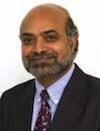
Conversations host Harry Kreisler welcomes Siegfried S. Hecker, former Director of the Los Alamos National Laboratory, for a discussion of scientists, the national laboratories, and the threat posed by nuclear weapons. Hecker traces his career in material sciences, describes the evolution of his intellectual focus, and recalls his leadership of Los Alamos. He then traces the changes in the international security environment in the aftermath of the collapse of the Soviet Union discussing the response of the U.S. and the weapons laboratories to the momentous events that created a qualitatively different set of security challenges. Hecker then analyzes the threats posed by terrorist organizations, the dangers of nuclear proliferation, and the challenges for U.S. policy in assessing the motivation and capabilities of Pakistan, North Korea, and Iran. He emphasizes the importance of understanding the political and technical dimensions of the international security landscape.
Siegfried S. Hecker
CISAC
Stanford University
Encina Hall, C220
Stanford, CA 94305-6165
Siegfried S. Hecker is a professor emeritus (research) in the Department of Management Science and Engineering and a senior fellow emeritus at the Freeman Spogli Institute for International Studies (FSI). He was co-director of CISAC from 2007-2012. From 1986 to 1997, Dr. Hecker served as the fifth Director of the Los Alamos National Laboratory. Dr. Hecker is an internationally recognized expert in plutonium science, global threat reduction, and nuclear security.
Dr. Hecker’s current research interests include nuclear nonproliferation and arms control, nuclear weapons policy, nuclear security, the safe and secure expansion of nuclear energy, and plutonium science. At the end of the Cold War, he has fostered cooperation with the Russian nuclear laboratories to secure and safeguard the vast stockpile of ex-Soviet fissile materials. In June 2016, the Los Alamos Historical Society published two volumes edited by Dr. Hecker. The works, titled Doomed to Cooperate, document the history of Russian-U.S. laboratory-to-laboratory cooperation since 1992.
Dr. Hecker’s research projects at CISAC focus on cooperation with young and senior nuclear professionals in Russia and China to reduce the risks of nuclear proliferation and nuclear terrorism worldwide, to avoid a return to a nuclear arms race, and to promote the safe and secure global expansion of nuclear power. He also continues to assess the technical and political challenges of nuclear North Korea and the nuclear aspirations of Iran.
Dr. Hecker joined Los Alamos National Laboratory as graduate research assistant and postdoctoral fellow before returning as technical staff member following a tenure at General Motors Research. He led the laboratory's Materials Science and Technology Division and Center for Materials Science before serving as laboratory director from 1986 through 1997, and senior fellow until July 2005.
Among his professional distinctions, Dr. Hecker is a member of the National Academy of Engineering; foreign member of the Russian Academy of Sciences; fellow of the TMS, or Minerals, Metallurgy and Materials Society; fellow of the American Society for Metals; fellow of the American Physical Society, honorary member of the American Ceramics Society; and fellow of the American Academy of Arts and Sciences.
His achievements have been recognized with the Presidential Enrico Fermi Award, the 2020 Building Bridges Award from the Pacific Century Institute, the 2018 National Engineering Award from the American Association of Engineering Societies, the 2017 American Nuclear Society Eisenhower Medal, the American Physical Society’s Leo Szilard Prize, the American Nuclear Society's Seaborg Medal, the Department of Energy's E.O. Lawrence Award, the Los Alamos National Laboratory Medal, among other awards including the Alumni Association Gold Medal and the Undergraduate Distinguished Alumni Award from Case Western Reserve University, where he earned his bachelor's, master's, and doctoral degrees in metallurgy.
Research Presentations (4 of 4) - Kondo, Murata and Yamamoto
Takeshi Kondo, "Augmented Reality Application Outside of the Entertainment World"
Augmented Reality (AR), created in the 1960s, has recently attracted attention due to the progress of Information Technology. AR is supplementary text/visual data superimposed over the surrounding real world. For example, in a football game on television, the yard lines and logos displayed on the screen use AR technology. AR technology has been applied to the entertainment world, such as in computer games, in film, and in advertisement. However, there are few examples of the application outside of the entertainment field. In his research presentation, Kondo proposes some possible AR applications outside of the entertainment industries.
Makoto Murata, "Developing New Facilities Strategy and Added Value in "Smart Grid"
Smart Grid is a new concept of power supply and management, and it receives a great deal of public attention. Electricity is the fastest-growing component of total global energy demand. In this environment, there are increasing needs for minimizing costs and environmental impacts while maximizing electric system reliability. Smart grid is thought to be a key solution for them. The deployment of smart grid affects facilities strategy. Murata analyzes facilities strategy for smart grid deployment from the viewpoints of regulations and area characteristics.
Eiichi Yamamoto, "Management of Intellectual Assets such as Patents, in the United States and Japan"
In a knowledge economy where there is global competition, intellectual assets become a key factor in a company's performance. The United States government recognized the significance of intellectual assets as a company's value earlier than Japan and has promoted a pro-patent policy since the early 1980s. The policy has encouraged U.S. companies to take advantage of the profitability of patents, much more than Japanese companies have done. In this presentation, Yamamoto analyzes the differences in the management of intellectual assets, such as patents, between the United States and Japan, and tries to explain the reasons for those differences.
Philippines Conference Room
Research Presentations (3 of 4) - Aosaki, Palande and Takeuchi
Minoru Aosaki, "International Banking Regulation after the Financial Crisis: Economic Impacts and Policy Challenges in the US, Japan, and the EU"
To address lessons of the financial crisis, the Basel Committee introduced a new international framework on banking regulations, known as Basel III. The world leaders subsequently committed to implement it at the last G20 summit meeting. A current key issue is how regulators in each country should/can transform their current regulatory regime to the new regime under their own economic and regulatory environments. To consider the issue, Aosaki examines how economic costs and benefits of the regulatory reform would vary among countries and discusses policy challenges of the regulators to ensure the benefits and mitigate the costs.
Pradnya Palande, "Population Dynamics: A New Approach in Understanding Cancer Development"
Cancer, the most vicious and hard to cure disease, results from an accumulation of genetic alterations best known as mutations, in our body. These mutations constantly keep evolving by natural selection. A consequence of this evolution is that a cancer treatment will tend to kill the susceptible cells but will leave the resistant ones to flourish. A few months later, the cancer will reappear and will be resistant to previous treatment. Hence studying the population dynamics of cancer will provide insight into development of cancer and will help in developing better methods for cancer prevention and therapy.
Palande has concentrated her research on population dynamics of cancer cells in chronic myeloid leukemia, a type of blood cancer. She is trying to study the role of the antibody diversification enzyme, namely Activation Induced cytidine Deaminase (AID), in the generation of mutations associated with cancer progression and drug resistance in chronic myeloid leukemia.
Naoki Takeuchi, "Energy Policies, Clean Technologies, and Business Innovations in the United States"
In January 2011, at his State of the Union speech, President Obama suggested setting a goal that 80% of electricity will come from clean energy sources in the United States by 2035. He also suggested that the United States will become the first country to have a million electric vehicles on the road by 2015.
In Takeuchi's research, he tries to understand the dynamic interactions among government energy policies, clean technologies, and business innovations in the United States. His research includes an overview of federal energy policies (both regulations and incentives), an overview of California State government policies, recent trends of clean technologies, venture capital investments in cleantech companies, and major areas of clean technologies and business innovations. In this presentation, Takeuchi will present case studies focusing on cleantech companies in the Silicon Valley.
Philippines Conference Room
Sweetening biofuel production
Sugarcane - a principal crop for biofuel - reduces the local air temperature compared to pasturelands or fields growing soybeans or maize, according to a new study from researchers at Stanford University and the Carnegie Institution for Science. But sugarcane's effect on temperature is a "double-edged machete," as it increases ambient temperatures compared with natural vegetation.
These small local changes should be taken into consideration in studies of global climate change, the researchers said.
The researchers looked at changes in vegetation in the Brazilian Cerrado - a vast tropical savanna lying south of the Amazon basin - large areas of which have been converted from natural vegetation to agriculture in recent decades.
Increasingly, these existing agricultural areas are now being converted to sugarcane for use in biofuel production. Brazil is now second only to the United States in ethanol production, much of which is used domestically.
What the effect on global climate would be if sugarcane farming were to expand significantly is not yet clear, said David Lobell, an assistant professor in environmental Earth system science at Stanford and center fellow at the Program on Food Security and the Environment.
"The temperature changes are happening locally, where the land-use change is happening," Lobell said. "It does not seem to spill over into other countries, for example, at least as far as we can tell right now."
But Lobell said sugarcane growing in the Cerrado is definitely expanding and given that the region encompasses approximately 1.9 million square kilometers (733,000 square miles) - an area larger than Alaska - the potential exists for a globally significant effect.
Using maps and data from hundreds of satellite images, the researchers calculated the temperature, the amount of water given off and how much light was reflected rather than absorbed for each of the different types of vegetation. They found that compared to land cultivated with other annual crops, sugarcane reduced the local air temperature by an average of 0.93 degrees Celsius (1.67 F).
But compared to the natural vegetation of the Cerrado - mainly grass and shrubs - the sugarcane fields warmed the ambient air by 1.55 C (2.79 F).
Lobell said the bulk of the temperature difference is due to evapotranspiration - the moisture released to the air through the leaves of the plants and the soil. Most of the land put into sugarcane had previously been converted from natural vegetation to pastureland, said Scott Loarie, a postdoctoral researcher at Carnegie. "If someone has a farm that once was natural vegetation, that transition to pasture and annual crops caused local warming," he said. "So now as the farm is going to sugarcane, by comparison it is cooling temperatures locally."
Their research, Direct Impacts on Local Climate of Sugarcane Expansion in Brazil, is described in the current issue of Nature Climate Change.
This local cooling does not necessarily mean that the global climate is cooling as a result. It depends in part on what happens with the agriculture that was displaced by the sugarcane, Loarie said. For example, if cattle used to graze on a tract of land and some Amazon forest is cut down to provide new pasture for them, net carbon emissions will actually increase.
"You might not make any difference as far as cooling the world globally at all; in fact, you might make the world marginally warmer," he said.
"The global implications of these local effects were not a part of this study, and any discussion of mitigating global climate should consider the potential for these land use cascades."
One of the important aspects of the study, Lobell said, is that it demonstrates how satellite data can be used in real time to understand the effects of environmental changes. Most research studying the impact of biofuel use on climate has been done with computer modeling.
"I think the coolest thing about this study is you actually can see these temperature effects happening already," Lobell said. "In terms of the more general point about bio energy, I think it is another good example of why looking only at greenhouse gases is not the full picture."
Another takeaway from the study, Loarie said, is that the temperature findings support the existing rule of thumb that biofuel crops are best located on land that is already used for agriculture. That general guideline stems from the fact that there is less carbon released to the atmosphere by converting land where the existing vegetation contains low amounts of carbon, such as pasture or crops, than by cutting down the dense, carbon-rich forests in the Amazon.
Loarie said that while the study clearly showed that planting sugarcane moves the temperature closer to what it would have been if the natural vegetation had not been removed from the land, that doesn't mean the land is any closer to its natural state in other respects.
"Converting pasture to sugarcane is definitely not ecological restoration," said Chris Field, a professor of biology and of environmental Earth system science, who was involved in the research.
"Still, the direct effect on climate is potentially important enough to play a role in future decisions about land use and land management in large parts of the tropics," he said.
The study was funded by the Stanford University Global Climate and Energy Project.
Greg Asner, a professor, by courtesy, of environmental Earth system science, is a coauthor of the paper. Lobell is also a center fellow at both the Freeman Spogli Institute for International Studies and the Woods Institute for the Environment. Field is also a senior fellow at the Precourt Institute for Energy and at the Woods Institute, and director of the Department of Global Ecology at the Carnegie Institution.
Scott D. Sagan: A conversation with the CISAC co-director
In a wide-ranging interview, CISAC co-director Scott Sagan discusses his career in political science, and his interests in nuclear deterrence, nonproliferation, South Asia, and more.
On the Demos and its Kin: Nationalisms and Democratic Legitimacy
Abstract
Both cultural nationalism and democratic theory seek to legitimate political power by rendering it compatible with the freedom of those over whom it is exercised, i.e., by appeal to a notion of collective self-rule. Both doctrines thus advance a self-referential theory of political legitimacy: their principle of legitimation refers right back to the very persons over whom political power is to be exercised. Since self-referential theories base legitimation in a collective self, they must necessarily combine the question of legitimation with the question of boundaries. The problem is that it is impossible to solve both problems together once it is assumed that the collectivity in question is in principle bounded. Cultural nationalism claims that political power is legitimate insofar as it authentically expresses the nation's pre-political culture, but it cannot fix the nation's cultural boundaries pre-politically. Hence the collapse into ethnic nationalism. The democratic theory of bounded popular sovereignty claims that political power is legitimate insofar as it expresses the people's will, but cannot itself legitimate the pre-political boundaries of the people it presupposes. Hence the collapse into cultural nationalism. Only a theory of unbounded popular sovereignty avoids this collapse of demos into nation into ethnos, but such a theory departs radically from traditional theory. It abandons the notion of a pre-politically constituted "will of the people," supports the formation of global democratic forums, and challenges the legitimacy of unilaterally controlled political boundaries.
Arash Abizadeh is associate professor in the Department of Political Science and associate member of the Department of Philosophy, McGill University, and specializes in contemporary political theory and the history of political philosophy. His research focuses on democratic theory and questions of identity, nationalism, and cosmopolitanism; immigration and border control; and seventeenth- and eighteenth-century philosophy, particularly Hobbes and Rousseau. He is currently finishing a book titled The Oscillations of Thomas Hobbes: Between Insight and the Will.
Graham Stuart Lounge
The Great Tohoku, Japan Disaster
Please join us on April 25 and 26 for two evenings devoted to an examination of and conversation about the March 11, 2011 Tohoku earthquake in northern Honshu, Japan, and the subsequent tsunami and nuclear accident. In talks and panel discussions, experts from the School of Earth Sciences and the Freeman Spogli Institute for International Studies will focus on what happened, the impacts of the events, and what the future holds for Japan and other earthquake- and tsunami-zone regions of the world.
APRIL 25 PARTICIPANTS
Moderator:
Pamela A. Matson is the Chester Naramore Dean of the Stanford University School of Earth Sciences, Richard and Rhoda Goldman Professor of Environmental Studies at Stanford, and senior fellow at the Woods Institute for the Environment.
Panelists:
Gregory Beroza is the Wayne Loel Professor in the Stanford University School of Earth Sciences and chair of the Department of Geophysics. He works to develop and apply techniques for analyzing seismograms—recordings of seismic waves—in order to understand how earthquakes work and the hazard they pose to engineered structures.
Gregory G. Deierlein is the John A. Blume Professor in the Department of Civil and Environmental Engineering and director of the Blume Earthquake Engineering Center at Stanford. His research focuses on improving limit states design of constructed facilities through the development and application of nonlinear structural analysis methods and performance-based design criteria.
Katherine Marvel is the Center for International Security and Cooperation (CISAC) Perry Fellow at the Freeman Spogli Institute for International Studies (FSI) at Stanford. Her research interests include energy security and nuclear nonproliferation, renewable energy technologies, energy security, nuclear power and nonproliferation, sustainable development, and public understanding of science.
For more information, please visit the symposium website.
William R. Hewlett Teaching Center
Auditorium 200
370 Serra Mall
Stanford Campus