Science and Technology
-

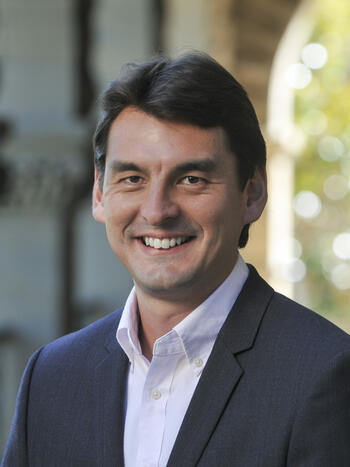
Hiroaki Yasutake has had a front row seat in the development of Japan’s startup ecosystem for the past 20 years as he joined Rakuten as one of its earliest employees, spending many years at its CTO. In this talk, he will share various insights gained from being an integral part of the rise of Rakuten as it grew rapidly by introducing new services, buying much larger and established companies, and the process by which it made itself a reputable, established company in Japan. He also experienced Rakuten’s famed “English-nization” and the company’s aggressive global push. More broadly, many of his friends, associates and acquaintances fanned out to drive the growth of Japan’s startup ecosystem, which has transformed dramatically in the past two decades, and he will share many of their experiences, along with challenges facing Japan’s stage of the startup ecosystem. Yasutake also co-founded Junify, and he will introduce the business itself, his motivations for moving to Silicon Valley, and his observations of specific efforts by Japanese entrepreneurs in Silicon Valley. 

SPEAKER:

Hiroaki Yasutake, Co-founder and CSO, Junify, and former CTO, Rakuten

BIO:

Hiroaki Yasutake joined Rakuten (founded 1997) in its infancy in 1998 as an engineer after briefly working at NTT. At Rakuten, he was in charge of creating various services and served as CTO before departing in 2016. He moved to Silicon Valley and co-founded a new startup, Junify, and currently also assists various large and small Japanese companies about their technology and innovation strategies as external board member and advisor. He graduated from Waseda University’s Graduate School of science research, mathematical sciences, and in 2015, attended the Stanford Executive Program (SEP) at the Graduate School of Business.

AGENDA:

4:15pm: Doors open
4:30pm-5:30pm: Talk and Discussion
5:30pm-6:00pm: Networking

RSVP REQUIRED:

Register to attend at http://www.stanford-svnj.org/112718-public-forum

For more information about the Silicon Valley-New Japan Project please visit: http://www.stanford-svnj.org/
 

PARKING ON CAMPUS:

Please note there is significant construction taking place on campus, which is greatly affecting parking availability and traffic patterns at the university. Please plan accordingly.

Philippines Conference Room
Encina Hall, 3rd Floor
616 Serra Mall
Stanford, CA 94305

Hiroaki Yasutake, Co-founder and CSO, Junify, and former CTO, Rakuten
Seminars
Paragraphs

Gender diversity has the potential to drive scientific discovery and innovation. Here, we distinguish three approaches to gender diversity: diversity in research teams, diversity in research methods and diversity in research questions. While gender diversity is commonly understood to refer only to the gender composition of research teams, fully realizing the potential of diversity for science and innovation also requires attention to the methods employed and questions raised in scientific knowledge-making. We provide a framework for understanding the best ways to support the three approaches to gender diversity across four interdependent domains — from research teams to the broader disciplines in which they are embedded to research organizations and ultimately to the different societies that shape them through specific gender norms and policies. Our analysis demonstrates that realizing the benefits of diversity for science requires careful management of these four interdependent domains.

All Publications button
1
Publication Type
Journal Articles
Publication Date
Journal Publisher
Nature: Human Behavior
Authors
Paragraphs

In 1670 the Sicilian painter Agostino Scilla (1629–1700) devised an entirely new way of depicting fossils when he wrote and illustrated his Vain Speculation Undeceived by Sense (1670–1671), which argued that fossils were the remains of once living creatures and not mimetic stones. This essay explores the nature of Scilla’s graphic innovations, comparing his fossils drawings and Pietro Santi Bartoli’s engravings of them to earlier and contemporary images of fossils. Scilla captured the effect of time on nature by infusing his style of drawing with his philosophical understanding of what it means to see and to know. He made his drawing less rich in detail to focus on those which served his purpose. In particular, he made the first use of dotted lines in paleontological illustration to render his images dynamic theoretical interpretations rather than static depictions.

All Publications button
1
Publication Type
Journal Articles
Publication Date
Journal Publisher
Endeavor
Authors
Paula Findlen
-

In 2012, as giants such as Facebook, Twitter, and Google began to position themselves as the go-to places to read news, a little-known news app called SmartNews emerged and started gaining popularity in Japan. The SmartNews app has since been dubbed “App of the Year” on Google Play and won the “Best of” award in Apple’s App store, launched US operations in 2014, and now has over 10 million monthly active users in US and Japan.

In the age of fake news and information polarization, SmartNews is working to deliver to users a balanced diet of quality information from trusted journalism sources. The SmartNews news app uses machine learning to deliver curated news from more than 3000 sources and identify fake news. The SmartNews Delivery Algorithm not only considers users’ likes and clicks and other behavior on the app to generate suggestions, but also applies political balancing algorithms to ensure multiple viewpoints are expressed on important topics, and diversification algorithms to help break the filter bubble.

In this public forum, SmartNews Director of Product Management Yuhei Nishioka will talk about SmartNews’ story and growth trajectory, competing in the current news app landscape, and finally, discuss the process and considerations in creating the SmartNews News Delivery Algorithm. Introduction by Rich Jaroslovsky Vice President for Content and Chief Journalist of SmartNews and former Wall Street Journal White House correspondent.

MAIN SPEAKER:

Yuhei Nishioka, Director of Product Management, SmartNews

INTRODUCTION BY:

Rich Jaroslovsky, Vice President for Content and Chief Journalist, SmartNews and former Wall Street Journal White House correspondent

AGENDA:

4:15pm: Doors open
4:30pm-5:30pm: Main Content, followed by discussion
5:30pm-6:00pm: Networking

RSVP REQUIRED:

Register to attend at http://www.stanford-svnj.org/101618-public-forum

For more information about the Silicon Valley-New Japan Project please visit: http://www.stanford-svnj.org/

PARKING ON CAMPUS:

Please note there is significant construction taking place on campus, which is greatly affecting parking availability and traffic patterns at the university. Please plan accordingly.

Yuhei Nishioka, Director of Product Management, SmartNews
Seminars
Paragraphs

The digital transition of the world economy is now entering a phase of broad and deep societal impact. While there is one overall transition, there are many different sectoral transformations, from health and legal services to tax reports and taxi rides, as well as a rising number of transversal trends and policy issues, from widespread precarious employment and privacy concerns to market monopoly and cybercrime. This Research Handbook offers a rich and interdisciplinary synthesis of some of the recent research on the digital transformations currently under way.

This comprehensive study contains chapters covering sectoral and transversal analyses, all of which are specially commissioned and include cutting-edge research. The contributions featured are global, spanning four continents and seven different countries, as well as interdisciplinary, including experts in economics, sociology, law, finance, urban planning and innovation management. The digital transformations discussed are fertile ground for researchers, as established laws and regulations, organizational structures, business models, value networks and workflow routines are contested and displaced by newer alternatives.

This book will be equally pertinent to three constituencies: academic researchers and graduate students, practitioners in various industrial and service sectors and policy makers.

Chapter 17 of this book, The Impact of Digital Technologies on Innovation Policy, was written by Shorenstein APARC Research Scholar Kenji Kushida.

All Publications button
1
Publication Type
Books
Publication Date
Authors
Kenji E. Kushida
Paragraphs

Highly readable yet deeply researched, this book serves as an essential guide to the many ways in which Japan has risen to become one of the world's most creative and innovative societies.


• Challenges conventional views of Japan as mired in two unproductive "lost decades" by documenting the myriad ways in which the nation has embraced creativity and innovation

• Describes the ways in which Japan has transformed our lives and explains the guiding principles of one of the world's least understood, most vibrantly creative societies

• Explains how Japan, as the world's first non-Western developed nation, can inspire other nations at a time when America's economic and social models are being challenged as never before

• Argues that, in a world that seems to have lost its direction in the face of threats ranging from terrorism to angry populism, Japan can assume greater leadership in preserving global peace and prosperity

Chapter 4 of this book, Departing from Silicon Valley: Japan's New Startup Ecosystem, was written by Shorenstein APARC Research Scholar Kenji Kushida.

All Publications button
1
Publication Type
Books
Publication Date
Authors
Kenji E. Kushida
Paragraphs

Under what we call Abenergynomics, Japanese Prime Minister Abe Shinzō has used energy policy to support the growth objectives of Abenomics, even when the associated policies are publicly unpopular, opposed by utility companies, or harmful to the environment. We show how Abenergynomics has shaped Japanese policy on nuclear power, electricity deregulation, renewable energy, and climate change.

All Publications button
1
Publication Type
Journal Articles
Publication Date
Journal Publisher
Asian Survey
Authors
Phillip Lipscy
Number
4
0
Former Lecturer in History
Former Mellon Postdoctoral Fellow of the Stanford Humanities Center
luca_scholtz_image.jpg

I work on the history of early modern Europe, combining social, legal and intellectual history with spatial and digital methods. My research explores how old-regime societies negotiated freedom of movement and its restriction, how they justified and denounced phenomena like serfdom, and to what extent the spatial make-up of their world differed from ours.

My first book, Porous Order, retraces the history of the modern state’s grasp over flows of goods and people, particularly during the early modern period. After having dug through more than twenty archives between the Alps and the North Sea, I am able to show how travelers, jurists and officials negotiated passage and obstruction on the roads and rivers of the Old Reich, one of the pre-modern world’s most fragmented regions. I do this with particular reference to safe-conduct, that is, the quasi-sovereign right to escort travelers and to levy duties on passing goods and people. My book challenges conventional conceptions of pre-modern statehood, and offers a new account of how early modern polities claimed and disputed rights of passage.

My second project explores the history of the atmosphere in early modernity. With the rise of global history, historians have continuously expanded the spatial scope of their studies in a horizontal movement. In recent decades, however, a growing body of literature has begun to discuss the human exploration of the atmosphere and outer space in a distinctly vertical dynamic. A widespread assumption in this literature is that the history of airspace begins with the history of aviation. My project combines archival research, text mining, and GIS to show to that the human engagement with airspace has a longer history.

I use geospatial and distant reading approaches to explore phenomena that escape the grasp of conventional scholarship. I have completed statistical, GIS, and computational training at Heidelberg, Columbia, and Stanford. Within Stanford’s Spatial History Project, I lead a digital mapping project that uses GIS and other digital tools to create new maps of old-regime Europe. I also participate in a collaborative digital history project on mobility in the early modern world. My digital research uses advanced computing to gain a more adequate understanding of pre-modern political geography, to retrace the ways in which goods and people travelled through the physical landscape, and to uncover broad spatial and temporal trends in intellectual history. I am excited about how digital tools facilitate, complement and transform scholarship in the humanities.

I have designed and taught numerous lecture and seminar classes for undergraduate, graduate, and doctoral students at Stanford, Berlin, and Florence, on different aspects of of early modern history, on spatial history and on the digital humanities. I also acted as co-director of Stanford’s Digital Humanities Graduate Fellowship Program.

I am a Mellon Postdoctoral Fellow and a lecturer at Stanford University. I earned a PhD in History from the European University Institute, a MA in History from the École des hautes études en sciences sociales and University of Heidelberg, as well as a BA in Economics from that same university. Before moving to California, I taught at the Free University of Berlin. I have also been a visiting scholar at the University of Saint Andrews and at Columbia University.


Affiliated Lecturer at The Europe Center
Paragraphs

Given that much of the global leadership in value creation over the past couple of decades has been driven by the Silicon Valley model – not only a geographic region but a distinct ecosystem of complementary characteristics – the basic question this paper asks is how far Japan’s Abenomics reforms are pushing Japan towards being able to compete in an era dominated by Silicon Valley firms. 

To answer this, the first section of this paper looks at content of the third arrow of Abenomics. The second section then distills the Silicon Valley ecosystem into its key characteristics, sorts each of these characteristics according to the underlying institutions to put forth a model, and briefly evaluates whether third arrow reforms move Japan closer to a Silicon Valley model of entrepreneurship and innovation.


All Publications button
1
Publication Type
Working Papers
Publication Date
Authors
Kenji E. Kushida
Paragraphs

Artificial Intelligence (AI) is rapidly becoming one of the underlying drivers of the next wave of industrial transformations. There is every reason to believe that we are on the cusp of a sea change in how human activities and decision-making are transformed by abundant computing power. This research note will provide the basis for understanding the conceptual building blocks and paradigmatic examples of how the development of AI is accelerating, and how its deployment will be transformative. 

All Publications button
1
Publication Type
Working Papers
Publication Date
Authors
Kenji E. Kushida
Subscribe to Science and Technology