International Law
Authors
Noa Ronkin
News Type
Commentary
Date
Paragraphs

The January 3, 2026, U.S. “Operation Absolute Resolve” in Venezuela to capture and remove President Nicolás Maduro has raised urgent questions about its repercussions for the U.S.-China competition, Taiwan Strait security, American strategic priorities in the Indo-Pacific region, and U.S. allies and partners.

In two new episodes of the APARC Briefing series, Stanford scholars Larry Diamond, the Mosbacher Senior Fellow in Democracy at the Freeman Spogli Institute for International Studies (FSI) and William L. Clayton Senior Fellow at the Hoover Institution, and APARC faculty affiliate Oriana Skylar Mastro, a center fellow at FSI, join host Kiyoteru Tsutsui, the director of APARC, to unravel what happened in Venezuela and the implications of the U.S. actions in Latin America for Taiwan, security and alliances in the Indo-Pacific, and U.S. relations with stakeholders in the region.

Both scholars agree that the U.S. mission in Venezuela is a precedent that likely emboldens rather than deters China in its Taiwan calculus, warning that the shift it represents in U.S. national security policy might detract from American capabilities in the Indo-Pacific region at a crucial moment. They also provide sobering advice for U.S. allies struggling to adjust to rapidly shifting geopolitical realities under the second Trump administration.

A Shocking Action in World Affairs


There is no dispute that the Maduro government has been deeply authoritarian, deeply corrupt, and deeply illegitimate, says Diamond, author of Ill Winds: Saving Democracy from Russian Rage, Chinese Ambition, and American Complacency. Yet the United States “has probably violated international law to intervene forcibly in the internal affairs of Venezuela and remove its political leader," creating enormous implications for the international community. If it does not pursue a strategy of systemic democratic change in Venezuela, “all of this will have been for naught, and it will have paid a tragic price in terms of international precedent and international legitimacy,” Diamond argues.

Beijing is already using the operation as a "discourse power win," depicting the United States as crushing sovereignty and international law, Mastro notes. Moreover, in addition to Venezuela, President Trump continues to make statements about Greenland, reiterating its importance for U.S. national security and his interest in acquiring the territory, which has alarmed European partners and exacerbated strains with NATO.

“For the first time since WWII, some European countries have declared the United States to be a security threat,” Mastro says. “So I am curious to see if the Chinese try to bring along the Venezuela case as well, to convince U.S. allies and partners to distance themselves from the United States, which would have significant repercussions for the global order and for the United States' role in it.”

There is no situation in which we 'neutralize' Chinese air defenses and then somehow do some sort of infiltration.
Oriana Skylar Mastro

A Risky Strategic Reorientation


By unilaterally bypassing international norms to wield power in its own "backyard," the United States may have set a precedent that China can now exploit to justify its own ambitions in Taiwan as a legitimate exercise of regional dominance.

Diamond remarks on this line of thought: “If the United States, as a hegemon, can just do what it wants to arrest and remove a leader, in its kind of declared sphere of influence, what's to stop Xi Jinping from doing the same in his sphere of influence, and with a democratic system in Taiwan, whose sovereignty he does not recognize?” 

On the other hand, many commentators have argued that Operation Absolute Resolve serves as a deterrent to Chinese aggression. Granted, there is no doubt that the operation was a remarkably successful military attack showcasing the capabilities of U.S. special forces, notes Mastro, who, alongside her academic career, also serves in the United States Air Force Reserve, for which she currently works at the Pentagon as deputy director of research for Global China Strategy. Nevertheless, she emphasizes that the United States cannot carry out a similar attack in Asia.

“There is no situation in which we ‘neutralize’ Chinese air defenses and then somehow do some sort of infiltration,” says Mastro, author of Upstart: How China Became a Great Power. The U.S. intervention in Venezuela, therefore, “does not tell us a lot, operationally, about what the United States is capable of in a contingency via China.”

More troubling, Mastro identifies the Venezuela operation as demonstrating a fundamental shift in U.S. strategic priorities, with the raid conducted just weeks after the Trump administration released its 2025 National Security Strategy, which prioritizes restoring “American preeminence in the Western Hemisphere.” Mastro characterizes it as “the one region where U.S. dominance faces no serious challenge.” Thus, Venezuela suggests “the Trump administration means business about the renewed focus on the Western Hemisphere, and, unfortunately, that makes me concerned that there might be strategic neglect of the Indo-Pacific moving forward,” she points out.

Diamond stresses that, virtually throughout the entire presidency of Xi Jinping, dating back to 2012, China has been rapidly building up its military capabilities, prioritizing those specifically suited for coercing, isolating, or potentially seizing Taiwan. Against this backdrop, “I am much more fearful about the future of Taiwan in the week following U.S. military action on January 3 in Venezuela than I was before that action.” 

Mastro agrees with this assessment about the ripple effects of the operation in Venezuela. “I would say that it probably emboldens China.”

[M]y advice to the leaderships [of our allies is]: Find a way to get to the fundamental interests you need to pursue, defend, and preserve. And in the case of East Asia, that has to be number one, above all else, the preservation of our alliances.
Larry Diamond

Frank Advice for U.S. Allies


For U.S. allies in the Indo-Pacific, including Japan, South Korea, the Philippines, and Australia, as well as allies and partners in Europe, both scholars offer pragmatic counsel for coping with the Trump administration.

Diamond urges U.S. allies to manage Trump diplomatically while staying focused on core interests, namely, prioritizing the preservation of the alliances and strengthening autonomous defense capabilities to demonstrate commitment and hedge against potential U.S. retrenchment.

“It takes constant, energetic, proactive, imaginative, relentless, and in some ways deferential working of the relationship, including the personal relationship between these leaders and Donald Trump [...] The future will be better if the leaders of these countries internalize that fundamental lesson about Trump.”

Mastro is equally direct about the limited alternatives ahead of U.S. allies: "You don't really have an option. That Chinese military – if it gives the United States problems, it definitely gives you problems. There's no hope for a country like Taiwan without the United States. There's no hope for Australia without the United States."

Counterintuitively, U.S. assertiveness may indicate its insecurity about the balance of power with China. “It seems to me that the United States also needs to be reassured that our allies and partners support us [...] And if we had that confidence, maybe the United States would be less aggressive in its use of military force.”

Watch the two APARC Briefing episodes:

🔸 What the U.S. Raid in Venezuela Means for Taiwan and Asia - with Larry Diamond >

🔸 Does Venezuela Provide China a Roadmap for Taiwan? – with Oriana Skylar Mastro >

Read More

On an auditorium stage, panelists discuss the documentary 'A Chip Odyssey.'
News

‘A Chip Odyssey’ Illuminates the Human Stories Behind Taiwan’s Semiconductor Dominance

A screening and discussion of the documentary 'A Chip Odyssey' underscored how Taiwan's semiconductor ascent was shaped by a collective mission, collaboration, and shared purpose, and why this matters for a world increasingly reliant on chips.
‘A Chip Odyssey’ Illuminates the Human Stories Behind Taiwan’s Semiconductor Dominance
Stanford campus scene with a palm tree seen through an arch. Text about call for nominations for the 2026 Shorenstein Journalism Award.
News

2026 Shorenstein Journalism Award Open for Nominations

Sponsored by Stanford University’s Shorenstein Asia-Pacific Research Center, the annual award recognizes outstanding journalists and news media outlets for excellence in covering the Asia-Pacific region. News editors, publishers, scholars, and organizations focused on Asia research and analysis are invited to submit nominations for the 2026 award through February 15, 2026.
2026 Shorenstein Journalism Award Open for Nominations
Hero Image
Oriana Skylar Mastro (left), Map of Venezuela (center), and Larry Diamond (right)
All News button
1
Subtitle

Speaking on the APARC Briefing video series, Larry Diamond and Oriana Skylar Mastro analyze the strategic implications of the U.S. operation in Venezuela for the balance of power in the Taiwan Strait, Indo-Pacific security, America’s alliances, and the liberal international order.

Date Label
Display Hero Image Wide (1320px)
Yes
Authors
News Type
News
Date
Paragraphs

On Jan. 7, the Democracy Action Lab convened a panel to assess Venezuela’s political landscape following the U.S. administration’s recent removal and arrest of leader Nicolás Maduro.

The event, “Venezuela After Maduro: Democracy, Authoritarian Rebalancing, or Chaos,” included speakers María Ignacia Curiel, Héctor Fuentes, Dorothy Kronick, Harold Trinkunas, and Diego A. Zambrano. Moderated by Alberto Díaz-Cayeros, the discussion offered analyses of post-extraction scenarios that drew on comparative experiences, Venezuelan political dynamics, and theories of post-authoritarian and post-conflict transitions. 

Housed in the Center on Democracy, Development and the Rule of Law (CDDRL), the Democracy Action Lab (DAL) combines rigorous research with practitioner collaborations. It is co-directed by Beatriz Magaloni and Díaz-Cayeros, both senior fellows at the Freeman Spogli Institute for International Studies (FSI). During the panel discussion, Díaz-Cayeros said that DAL is collecting and sharing resources on the situation in Venezuela.

Authoritarian rebalance 


Maduro served as president of Venezuela for more than 10 years before he was ousted Jan. 3 in a U.S. military operation that brought him to America to face narco-terrorism charges.

Trinkunas, a senior research scholar at FSI’s Center for International Security and Cooperation (CISAC), discussed the possibility of Venezuela transitioning to democracy, especially given the opposition's overwhelming victory in the 2024 presidential elections. But an authoritarian rebalancing looms large, he noted.

“We have to remember that all the institutions of power and all the electoral offices in Venezuela below the president are held by supporters of the regime,” he said.

Trinkunas recalled political scientist Alexander B. Downs’ book, “Catastrophic Success,” which examined the negative consequences of foreign-imposed regime changes and highlighted that such interventions often lead to civil war and violent removals of leaders.

“About one-third to 40% of all regimes installed by a foreign intervention end up in civil conflict within 10 years,” Trinkunas said. And, almost half of leaders installed by foreign powers withdraw from or are pushed from office before their terms are up.

He foresees a divergence between the interests of the intervening power, the U.S., and Venezuela’s power elites and population under the proposed arrangement. “The people with the guns stay employed.” And they may not be eager to cooperate if it involves sharing Venezuela’s mineral wealth with the United States government.

Díaz-Cayeros said, “Nothing has changed in the basic underlying economic conditions of Venezuela that has forced an exodus of 8 million people.” Days after the arrest of Maduro, the government in office is still the same government that came into office through an electoral fraud, he added.

We have to remember that all the institutions of power and all the electoral offices in Venezuela below the president are held by supporters of the regime.
Harold Trinkunas
Senior Research Scholar, CISAC

Status quo interests


Curiel, a research scholar at CDDRL, research manager for the Democracy Action Lab, and a native of Venezuela, described the ecosystem of armed actors in Venezuela and outlined how both state and non-state security forces have the incentives and capabilities to preserve the status quo. 

“They’ve had arrangements that have been important for their survival, up until now. And so, there’s a question that these groups face with the loss of Maduro and [his wife Cilia] Flores,” she said.

To the extent they perceive their arrangements are under threat, they might respond with violence or engage in chaos, Curiel added. This is further complicated by the fact that different armed groups are loyal to different members of the governing coalition, creating competing power centers.

Fuentes, a CDDRL visiting scholar and Venezuelan native, noted that the situation in Venezuela remains extremely fluid and that it is still too early to determine whether Maduro’s removal will lead to authoritarian rebalancing or a genuine democratic transition. He argued that policymakers face a real tension between two objectives: stabilizing the country while accounting for the complexity and fragility of the Venezuelan state, and recognizing that stabilization without a clear commitment to democratic transition as the ultimate goal is not sustainable.

“The stability is not going to happen unless you promise and commit to the final goal of a democratic transition,” said Fuentes, a lawyer and policy expert from Venezuela.

He explained that the regime’s basic instinct is to resist and survive any U.S. involvement in the way its key ally, Cuba, has done through the decades.

Stability is not going to happen unless you promise and commit to the final goal of a democratic transition.
Héctor Fuentes
Visiting Scholar, CDDRL

Zambrano, a Stanford law professor and CDDRL affiliated faculty member who grew up in Venezuela, said he was guardedly optimistic about a democratic transition and supported the military operation that removed Maduro. As for the legal implications of the capture of Maduro, he cited prior examples of the U.S. taking military action in Kosovo, Libya, and Panama, among others, without Congressional approval and in apparent violation of international law.

The international law prohibition on the use of force “has been violated [maybe] 40 times” in the last few decades, he said. “This is one more violation. Is that good? No, that’s not good, but it’s not a drastic change the way the Russian invasion of Ukraine was,” because the latter implicated the international prohibition on the annexation of territory. Moreover, in Venezuela’s case, the Venezuelan people welcomed the U.S. intervention.

Kronick, an associate professor of public policy at UC Berkeley and Stanford alum, observed that U.S. officials at a January 3 press conference didn’t mention democracy and totally dismissed María Corina Machado, whom she described as “Venezuela's most popular politician and the driving force behind the opposition candidate in last year's presidential election.”

The 2024 Venezuelan presidential election was highly controversial, given that both the opposition showed incontrovertible evidence, widely verified by the international community, that the election was stolen by Maduro and that the opposition actually won by a landslide.

Kronick said the acting president of Venezuela, Delcy Rodríguez, is clearly not a democratic activist and has been a key member of the regime for years. “It’s a little bit hard to be optimistic about the prospects for democratization,” given her current role.

On the other hand, Venezuela has very capable election-vote-counting technology and decades of high-turnout elections, all of which could potentially facilitate re-democratization. 

This kind of U.S. unilateral action strikes a very deep chord in the Latin American psyche. And it doesn’t really matter if someone is on the left or on the right.
Alberto Díaz-Cayeros
Senior Fellow, FSI; Co-Director, Democracy Action Lab

‘Gangster diplomacy’


In the question-and-answer session, Michael McFaul, former FSI director, described the Trump Administration’s current attempt to take more than $2 billion in oil from Venezuela as “gangster diplomacy” and a “travesty.” 

Díaz-Cayeros said, “This kind of U.S. unilateral action strikes a very deep chord in the Latin American psyche. And it doesn’t really matter if someone is on the left or on the right” in Latin and South America.”

Kathryn Stoner, Mosbacher Director of CDDRL, noted that the U.S. arrest of Maduro raises troubling questions about whether Russia would attempt a similar action against Ukraine’s leaders in the future. “What then stops Putin, other than the incompetence of the Russian armed forces, from going in and trying to get (President Volodymyr) Zelensky or any other high leader in Ukraine?”

Kronick suggested audience members read a recent Foreign Affairs essay, “A Grand Bargain With Venezuela,” in which the author argues for a “pacted transition,” a negotiated, power-sharing arrangement, as the most viable path for Venezuela. This would involve an agreement between the current regime and opposition to coexist and gradually democratize, rather than one side seeking total victory.

“Whether you read this and think this is pie in the sky and this is never going to happen, or you think this is what we need to really push for, I think it’s really worth engaging with, so I’ll end with that recommendation,” she said.
 

In October 2025, CDDRL launched the Democracy Action Lab, a new initiative designed to apply the findings of leading-edge research to practice in the global effort to defend and revitalize democracy. DAL’s agenda is organized around four key issues — how democratic erosion unfolds; how practitioners navigate strategic dilemmas; how diasporas may influence political struggles at home; and how citizens’ beliefs and trade-offs shape their commitments to democracy.

Read More

Leopoldo López
News

“Venezuela can be the spark for a fourth wave of democratization,” says Leopoldo López

López, a political leader and prominent advocate for democracy in Venezuela, shared his vision for uniting global efforts to champion freedom and push back against authoritarianism with a Stanford audience on December 2, 2024.
“Venezuela can be the spark for a fourth wave of democratization,” says Leopoldo López
María Corina Machado spoke to a Stanford audience in a special video address on November 18, and engaged in a conversation with Larry Diamond.
News

Venezuela: Cultivating Democratic Resilience Against Authoritarianism

María Corina Machado, the leader of the Venezuelan pro-democracy movement, suggests that a strong international response to Venezuelan authoritarianism will help overcome electoral fraud against democracy in her country.
Venezuela: Cultivating Democratic Resilience Against Authoritarianism
A person cast a vote during the presidential elections at Escuela Ecológica Bolivariana Simón Rodríguez on July 28, 2024 in Fuerte Tiuna, Caracas, Venezuela.
Commentary

Exploring the Implications of Venezuela’s 2024 Presidential Election with Héctor Fuentes

Fuentes, a lawyer, human rights advocate, and agent of social change in Venezuela, is a member of the 2024 class of Fisher Family Summer Fellows at the Center on Democracy, Development and the Rule of Law.
Exploring the Implications of Venezuela’s 2024 Presidential Election with Héctor Fuentes
Hero Image
man holds a portrait of nicolas maduro during a march
A man holds a portrait of Nicolas Maduro during a march in Caracas, Venezuela, on January 6, 2026. | Jesus Vargas/Getty Images
All News button
1
Subtitle

A Democracy Action Lab panel weighed competing scenarios for Venezuela’s political future amid elite continuity, economic crisis, and international intervention.

Date Label
In Brief
  • Experts convened by CDDRL's Democracy Action Lab discussed the challenges facing Venezuela after Nicolás Maduro’s removal, including the possibility of democratic transition, authoritarian rebalancing, or political instability.
  • Panelists emphasized that entrenched institutions, armed actors, and economic conditions could complicate efforts to achieve lasting democratic change.
  • The discussion highlighted the importance of balancing stability and democratization while considering the role of international intervention and negotiated political solutions.
Display Hero Image Wide (1320px)
Yes
-
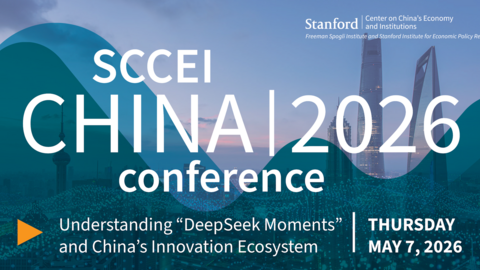
2026 SCCEI China Conference will be held on May 7, 2026 and focus on Understanding “DeepSeek Moments” and China’s Innovation Ecosystem.


Governments, markets, and analysts in the United States and around the world frequently find themselves surprised by China’s capabilities in industries central to economic and national security—from artificial intelligence and robotics to pharmaceuticals, advanced manufacturing, and strategic supply chains. Episodes widely described as “DeepSeek moments” reflect more than isolated breakthroughs; they reveal a systematic failure to understand how China builds technological capacity and scales it with speed. Yet these cutting-edge advances are emerging against the backdrop of a sustained economic slowdown, raising new questions about whether China’s push for technological supremacy is occurring at the expense of broader economic health. 

The Stanford Center on China's Economy and Institution's (SCCEI) annual China Conference convenes leading experts to examine why prevailing frameworks consistently underestimate China’s industrial performance and assess how its technology ecosystem, industrial policies, and trade strategies function and interact to push many critical sectors to the frontier.


We are finalizing an outstanding lineup of speakers from academia, industry, and policy communities. Updates will be posted here as confirmed. 

*Schedule is subject to change  

Location: 
Bechtel Conference Center
Encina Hall
616 Jane Stanford Way, Stanford University

*Topics, speakers, and timing will be confirmed soon. 


10:30 AM - 11:00 AM  Registration & Light Breakfast

11:00 AM - 11:15 AM  Welcome & Opening Remarks


Scott Rozelle 
Faculty Co-Director of the Stanford Center on China's Economy and Institutions;
Senior Fellow at the Freeman Spogli Institute for International Studies and at the Stanford Institute for Economic Policy Research
Stanford University

11:15 AM - 12:15 PM  Session 1 | What Distinguishes China's Innovation Ecosystem?


Session Panelists:
Barry Naughton
So Kwan Lok Chair of Chinese International Affairs
University of California, San Diego 

Philip Wong
Willard R. and Inez Kerr Bell Professor of Electrical Engineering, Stanford University
Chief Scientist Advisor, TSMC

Chenjian Li
Research Fellow, Hoover Institution
Stanford University

Moderator:
Joshua Rosenzweig
Senior Associate Director, Stanford Center on China's Economy and Institutions, Stanford University
 

12:15 PM - 1:30 PM  Lunch
 
1:30 PM - 2:30 PM  Session 2 | Industrial Policy at the Tech Frontier


Session Panelists:
Heiwai Tang
Victor and William Fung Professor in Economics; Associate Vice President (Global); 
Associate Dean for External Relations, Business School
University of Hong Kong 

Scott Kennedy
Senior Adviser and Trustee Chair in Chinese Business and Economics 
Center for Strategic and International Studies

Ruixue Jia
Professor of Economics, School of Global Policy and Strategy
University of California, San Diego

Moderator:
Shanjun Li
Professor of Environmental Social Sciences, Stanford Doerr School of Sustainability; 
Senior Fellow, Freeman Spogli Institute for International Studies
Stanford University 
 

2:30 PM - 3:00 PM  Break
 
3:00 PM - 4:00 PM  Session 3 | Trade War Meets Tech War: Trade Technology in a Fragmented World


Session Panelists:
Jiajun Wu
Assistant Professor of Computer Science
Stanford University

Graham Webster
Research Scholar, Program on Geopolitics, Technology, and Governance;
Editor-in-Chief, DigiChina Project, Stanford University

Hong Ma
Professor and Chair, Department of Economics
Tsinghua University

Moderator:
Jennifer Pan
Professor of Communication
Stanford University


4:00 PM - 4:15 PM  Break

4:15 PM - 5:30 PM  Keynote Address


Rush Doshi
C.V. Starr Senior Fellow for Asia Studies and Director of the China Strategy Initiative, Council on Foreign Relations
Assistant Professor of Security Studies, Walsh School of Foreign Service, Georgetown University 

Moderator:
Scott Rozelle 
Faculty Co-Director of the Stanford Center on China's Economy and Institutions;
Senior Fellow at the Freeman Spogli Institute for International Studies and at the Stanford Institute for Economic Policy Research
Stanford University


Questions? Contact scceichinaconference@stanford.edu 


Bechtel Conference Center
Encina Hall
616 Jane Stanford Way, Stanford University

This event is by invitation only.

Conferences
News Feed Image
banner_2_to_1_dimensions_2026-no_topic.png
Date Label
0
6875216_hayotsyan_kaacx_2026letter.jpg

Nensi Hayotsyan is a Research Assistant at the Center on Democracy, Development and the Rule of Law. Currently pursuing studies in Political Science and International Relations, her academic interests lie in international law, transitional justice, and democratic resilience. She is also interested in questions of institutional stability, human rights protection, and accountability within global governance.

CDDRL Undergraduate Communications Assistant, 2025-27
Date Label
Authors
Aurelia Leowinata
News Type
News
Date
Paragraphs

In the wake of Venezuela’s 2024 presidential election — marred by widespread fraud to ensure Nicolás Maduro’s re-election over opposition candidates Edmundo González and María Corina Machado — the regime has escalated its repression of political dissent. In the aftermath of the election, the regime arrested over 2,400 people. More than 807 political prisoners remain unjustly detained, including 95 women, 4 minors, and over 83 foreign nationals. These individuals, many held as leverage in international negotiations, are subjected to degrading conditions and denied due process.

Amongst them is Jesús Armas, a 2022 Fisher Family Summer Fellow at the Center on Democracy, Development and the Rule of Law (CDDRL) and a recently admitted student to Stanford’s Ford Dorsey Master’s in International Policy program (MIP). As a key campaign organizer for González and Machado, Jesús promoted civic participation and democratic unity in Caracas. He has now been held incommunicado, in conditions of physical and legal abuse, for over eight months. His arrest is emblematic of the Maduro regime’s broader strategy to silence opposition and dismantle civil society.

On August 4, 2025 Fisher Family Summer Fellows Lilian Tintori and Waleed Shawky joined Gulika Reddy, Director of the International Human Rights and Conflict Resolution Clinic at Stanford Law School (SLS), for a panel on how local and global communities can support political prisoners and their families. As Beatriz Magaloni, Graham H. Stuart Professor of International Relations, stated in her opening remarks: “This event should act as a call to action for deeper reflection and justice.”

CDDRL faculty wear shirts that read "Liberen a Jesús Armas"
CDDRL faculty standing in solidarity with Jesús Armas and political prisoners around the world. | Nora Sulots

Strategies for Release


Lilian Tintori, an internationally recognized human rights advocate and the wife of former political prisoner Leopoldo López (the 2022 Robert G. Wesson Lecturer in International Relations Theory and Practice at the Freeman Spogli Institute for International Studies), spoke candidly about her seven-year struggle to secure her husband’s release. “It is not easy,” she stated, “You become the voice of the political prisoner. You can’t talk, you have to scream in every crevice, every place, every moment you get.” 

Tintori argues that the most important aspect for release is a community of resilience, which is to provide mental health and emotional support to political prisoners’ families, as they cannot act as the voice if they feel broken themselves. At the heart of this strength, she argued, is love. In her efforts, she now distributes the Pathway to Freedom handbook, produced through her organization, the World Liberty Congress, to help families navigate the grueling road to release.

“Torture only occurs because the Maduro regime knows we are the majority,” Tintori clarified. Since the beginning of 2025, five political prisoners in Venezuela have died in custody. Tintori emphasized the importance of protecting the life of the person being detained — the human being behind the titles of activist, mayor, or opposition leader, beyond a simple number. To raise awareness about political prisoners alike, Tintori often employs the strategy of always mentioning “other political prisoners” after their loved ones’ names. This keeps the broader community of victims in public consciousness.

With international and local channels to plead for help closing, such as the EU or historically, the U.S., all three panelists stressed that silence is not an option for all communities — including academic spheres — and the broader public. Tintori testified that after public pressure, the regimes do pay attention and often send proof of life to suppress further outrage, hence helping to protect prisoners until their release.

You become the voice of the political prisoner. You can’t talk, you have to scream in every crevice, every place, every moment you get.
Lilian Tintori

Ways to Support A Political Prisoner 


Having been a political prisoner himself after co-founding the April 6th Youth Movement in Egypt, Waleed Shawky recounted what he believed carried him through his time behind bars — the cause he fought for. Upholding the values and vision that led to their arrest, he argued, can provide hope and dignity in the most inhumane conditions. “Being a victim is a choice as a prisoner, because you can choose to be a survivor,” Shawky asserted, “It is important to remind them of the bigger picture.” 

Echoing Tintori’s previous statements, Shawky praised the courage of the families, particularly women, who visit and support prisoners, often at great personal risk. He also warned against idolizing or victimizing political prisoners. “They’re human,” he emphasized. “Don’t cry in front of them. Be strong; they need your strength.”

[Political prisoners are] human. Don’t cry in front of them. Be strong; they need your strength.
Waleed Shawky

Authoritarian Crackdowns and Resistance


Gulika Reddy highlighted the challenges advocates operating in authoritarian contexts face and how they navigate these challenges. She broke it down into three different categories: movements, organizations, and individuals.

  • Movements are often delegitimized and co-opted. Reddy stressed the importance of engaging in grounded movement building, offering counter-narratives to sustain public trust, and fostering solidarity and collective action.

  • At the organizational level, regimes may block formal registration, restrict funding, and launch physical or digital attacks — including office raids and data seizures. To survive these assaults, organizations can diversify financial models, invest in digital security, and cultivate collective care to mitigate burnout and trauma. Additionally, there is a need to adopt diverse theories of change in contexts where traditional human rights tactics prove ineffective.

  • For individuals, threats include intimidation and retaliation, which can also extend to their loved ones. Reddy recommended conducting risk assessments and creating mitigation and response plans, including access to free legal aid and safe housing.


What we learned from our speakers is clear: authoritarianism thrives on silence, but freedom depends on our voices. For political prisoners around the world, solidarity, resilience, and an unwavering defense of human dignity are not just ideals; they are lifelines that can bring them home.

Read More

Jesus Armas participates in the 2022 Fisher Family Summer Fellows Program at CDDRL
News

Statement Demanding the Immediate Release of Jesús Armas (FFSF 2022, Venezuela)

A joint statement from the Center on Democracy, Development and the Rule of Law (CDDRL) and the Ford Dorsey Master’s in International Policy program (MIP) at Stanford University.
Statement Demanding the Immediate Release of Jesús Armas (FFSF 2022, Venezuela)
Leopoldo López
News

“Venezuela can be the spark for a fourth wave of democratization,” says Leopoldo López

López, a political leader and prominent advocate for democracy in Venezuela, shared his vision for uniting global efforts to champion freedom and push back against authoritarianism with a Stanford audience on December 2, 2024.
“Venezuela can be the spark for a fourth wave of democratization,” says Leopoldo López
María Corina Machado spoke to a Stanford audience in a special video address on November 18, and engaged in a conversation with Larry Diamond.
News

Venezuela: Cultivating Democratic Resilience Against Authoritarianism

María Corina Machado, the leader of the Venezuelan pro-democracy movement, suggests that a strong international response to Venezuelan authoritarianism will help overcome electoral fraud against democracy in her country.
Venezuela: Cultivating Democratic Resilience Against Authoritarianism
Hero Image
Lilian Tintori, Waleed Shawky, and Gulika Reddy
Lilian Tintori, Waleed Shawky, and Gulika Reddy spoke to a Stanford audience about strategies to support political prisoners in a panel discussion on August 4, 2025. | Nora Sulots
All News button
1
Subtitle

A panel discussion featuring 2025 Fisher Family Summer Fellows Lilian Tintori and Waleed Shawky, along with Gulika Reddy, Director of the International Human Rights and Conflict Resolution Clinic at Stanford Law School, explored the human cost of political imprisonment, the barriers advocates face, and the strategies available to combat them.

Date Label
0
CDDRL Honors Student, 2025-26
sakshi_umrotkar.jpg

Major: Political Science
Minor: Economics
Hometown: Fremont, California
Thesis Advisor: Vasiliki Fouka

Tentative Thesis Title: Trade, Trust, and Populism: Weighing Norm Adherence against Economic Protectionism

Future aspirations post-Stanford: I'm hoping to explore work in international law and relations between the public and private sectors, since both seem relevant to international economics conversations! I also hope to combine my interest in national security with trade and economics.

A fun fact about yourself: The first guitar solo I learned to play was Hotel California by The Eagles.

Date Label
Authors
Heather Rahimi
News Type
News
Date
Paragraphs

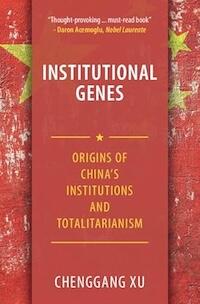
SCCEI Senior Research Scholar Chenggang Xu’s latest book, Institutional Genes: Origins of China's Institutions and Totalitarianism, offers a reinterpretation of China’s political and institutional development. Drawing from decades of research, Xu introduces the concept of "institutional genes"—the enduring foundational structures that shape and constrain how institutions evolve. Through this lens, he examines the emergence and evolution of China’s current communist totalitarian institution, contending that substantial parts of its "institutional genes" were implanted by Soviet Russia, building upon a longstanding tradition of authoritarian rule dating back to imperial China.

Book cover: Institutional Genes: Origins of China's Institutions and Totalitarianism by Chenggang Xu

With insights spanning political economy, institutional economics, and history, Institutional Genes presents a compelling account of why China’s institutions have taken their particular form—why they have resisted democratization—and why its economic reforms have risen and fallen. Xu’s work will appeal to scholars, policymakers, and general readers seeking a deeper understanding of how China’s past continues to shape its political trajectory today. 

Institutional Genes: Origins of China's Institutions and Totalitarianism, previously published in Chinese, is currently available for pre-order and will be published and available to the public on August 21, 2025. For more from Xu, read his recent essay, The Origins of China’s Institutions and Totalitarianism, based on his forthcoming book.


Headshot of Dr. Chenggang Xu.

Chenggang Xu

Senior Research Scholar, Stanford Center on China's Economy and Institutions
About the Author

Read More

Landscape aerial view of Haikou City, China.
News

Shanjun Li to Lead New Research Program on Sustainability and Energy Transition in China

SCCEI's newest research program addresses the pressing sustainability challenges facing China and examines their broader global implications. Grounded in rigorous empirical analysis and economic modeling, researchers aim to inform the development of effective evidence-based policy solutions as well as uncover valuable lessons for other countries navigating similar economic and energy transitions.
Shanjun Li to Lead New Research Program on Sustainability and Energy Transition in China
Elizabeth Economy speaks during a Fireside Chat.
News

Strategic Shifts: Understanding China’s Global Ambitions and U.S.-China Dynamics with Elizabeth Economy

At the 2025 SCCEI China Conference, Elizabeth Economy, Hargrove Senior Fellow at the Hoover Institution, outlined China’s ambitious bid to reshape the global order—and urged the U.S. to respond with vision, not just rivalry, during a Fireside Chat with Professor Hongbin Li, Senior Fellow and SCCEI Faculty Co-Director.
Strategic Shifts: Understanding China’s Global Ambitions and U.S.-China Dynamics with Elizabeth Economy
Professor Matteo Maggiori speaks in front of a crowd.
News

Stanford Professor Matteo Maggiori Unpacks the New Geopolitics of Global Trade

Professor Maggiori joined SCCEI and Stanford Libraries to discuss how the U.S. and China apply economic pressure to achieve their political and economic goals, and the economic costs and benefits that this competition is imposing on the world.
Stanford Professor Matteo Maggiori Unpacks the New Geopolitics of Global Trade
All News button
1
Subtitle

SCCEI Senior Research Scholar Chenggang Xu’s latest book, "Institutional Genes: Origins of China's Institutions and Totalitarianism", explores the origins and evolution of China's institutions and communist totalitarianism.

Date Label
All Publications button
1
Publication Type
Working Papers
Publication Date
Subtitle

This paper examines how power lawyers shape judicial and economic outcomes by studying the “revolving door” between judges and lawyers in China’s judicial system—namely, former judges who quit the bench to practice law. In otherwise identical lawsuits, revolving-door lawyers deliver 8−23% higher win rate for their clients. Their performance in home versus away courts suggests these gains stem from both “know how” and “know who.” We extend the theoretical framework of Dewatripont and Tirole (1999) to show that revolving-door lawyers create countervailing forces in society: they enhance judicial decision-making through evidence and reasoning, but also exploit strategic arguments and connections to bias outcomes in favor of their clients. We estimate a structural model of the judicial process to quantify these trade-offs and find that increasing the supply of power lawyers can have a non-monotonic effect on equilibrium judicial quality.

Journal Publisher
NBER Working Paper
Authors
-
Digital flyer for Shorenstein APARC Japan Program April 15, 2025 event: Recalibrating U.S.-Japan Collaboration in a Time of Tumult


As the United States redefines its role in the world, its closest ally, Japan, gains new prominence while facing new pressures, new challenges, and new opportunities. This symposium features leading experts on issues that concern the American, Japanese, and global public in this turbulent time. They will explore the evolving U.S.-Japan ties from various angles and engage in a wide-ranging conversation spanning the liberal international order, global trade, DEI, civil society — and baseball.

Free lunch and refreshments will be provided on a first-come, first-served basis

This symposium is co-sponsored by the Shorenstein Asia-Pacific Research Center Japan Program and the United States-Japan Foundation
 

Agenda


Session 1 – Global Democracy, Foreign Aid, and Regional Security: As the U.S. Pulls Back, Will Tokyo Step Up?

12:00 PM - 1:30 PM


Larry Diamond, Mosbacher Senior Fellow of Global Democracy at the Freeman Spogli Institute for International Studies

Shinichi Kitaoka, former Japanese Ambassador to the United Nations, former former President of the Japan International Cooperation Agency (JICA

Kiyoteru Tsutsui, Director, Japan Program at Shorenstein APARC; Stanford Professor of Sociology


Session 2 – How Tariffs and Trade Wars are Reshaping the Indo-Pacific

1:45 PM - 2:30 PM


Wendy Cutler, Vice President at the Asia Society Policy Institute (ASPI), former Acting Deputy United States Trade Representative

Peter Wonacott, Managing Editor, Stanford Doerr School of Sustainability; former Wall Street Journal Deputy Washington Bureau Chief


Session 3 — The Future of DEI, ESG, SDGs: Will Japan Follow the U.S. or Stay the Course?

2:30 PM - 3:15 PM


Keiko Tashiro, Deputy President, Head of Sustainability, Daiwa Securities Group Inc.

Gayle Peterson, Associate Fellow, Saïd School of Business, University of Oxford

Patricia Bromley, Co-Director, Stanford Center on Philanthropy and Civil Society


Session 4 — Redefining the Relationship Through Civil Society: Burden Sharing, Knowledge Sharing, Picking up the Slack

3:30 PM - 4:15 PM


Mike Berkowitz, Executive Director, Democracy Funders Network

Laura Deal Lacey, Executive Vice President, International Milken Institute

Jacob M. Schlesinger, President & CEO, United States-Japan Foundation


Session 5 — Diamond Diplomacy Redux: Baseball as a Bilateral Bridge

4:15 PM - 5:00 PM


Stan Kasten, President & CEO, Los Angeles Dodgers

Yuriko Gamo Romer, Director/Producer, Diamond Diplomacy documentary


Speakers


Larry Diamond

Larry Diamond is a senior fellow at the Hoover Institution and the Mosbacher Senior Fellow in Global Democracy at Stanford's Freeman Spogli Institute for International Studies (FSI). He chairs the Hoover Institution Project on Taiwan in the Indo-Pacific Region. He is the founding co-editor of the Journal of Democracy and serves as a senior consultant at the International Forum for Democratic Studies of the National Endowment for Democracy. His research focuses on democratic trends and conditions around the world and on policies and reforms to defend and advance democracy. During 2002–03, he served as a consultant to the US Agency for International Development (USAID) and was a contributing author of its report Foreign Aid in the National Interest.

Headshot photo of Shinichi Kitaoka

Shinichi Kitaoka is a Shorenstein APARC visiting scholar and Japan Program fellow. He was president of the Japan International Cooperation Agency (JICA: 2015-2022) and is an emeritus professor at the University of Tokyo. Previous posts include president of the International University of Japan (2012-2015), professor at University of Tokyo (1997-2012), professor of the National Graduate Institute for Policy Studies (GRIPS) (2012-), professor of Graduate Schools for Law and Politics, the University of Tokyo (1997-2004, 2006-2012), ambassador extraordinary and plenipotentiary, deputy permanent representative of Japan to the United Nations (2004-2006), and professor of the College of Law and Politics, Rikkyo University (1985-1997). His specialty is modern Japanese politics and diplomacy. He is a former member of the Board of Trustees of the United States-Japan Foundation.

Square portrait photo of Kiyoteru Tsutsui

Kiyoteru Tsutsui is the Henri H. and Tomoye Takahashi Professor and Senior Fellow in Japanese Studies at Shorenstein APARC, the director of the Japan Program, and deputy director at APARC, a senior fellow of the Freeman Spogli Institute for International Studies, and Professor of Sociology, all at Stanford University. His research interests lie in political/comparative sociology, social movements, globalization, human rights, and Japanese society. His current projects include studies of populism and the future of democracy, global expansion of corporate social responsibility and its impact on corporate behavior, Japan’s public diplomacy, and perceptions of Japan in the world. He is a fellow in the United States-Japan Foundation's U.S.-Japan Leadership Program network.

Wendy Cutler, VP of Asia Society

Wendy Cutler is vice president at the Asia Society Policy Institute (ASPI) and the managing director of the Washington, D.C. office. She focuses on leading initiatives that address challenges related to trade, investment, and innovation, as well as women’s empowerment in Asia. She joined ASPI after nearly three decades as a diplomat and negotiator in the Office of the U.S. Trade Representative (USTR), where she also served as acting deputy U.S. trade representative. During her USTR career, she worked on a range of bilateral, regional, and multilateral trade negotiations and initiatives, including the U.S.-Korea Free Trade Agreement, the Trans-Pacific Partnership, U.S.-China negotiations, and the WTO Financial Services negotiations. She is a member of the Board of Trustees of the United States-Japan Foundation.

headshot photo of Peter wonacott

Peter Wonacott is managing editor of a new global-facing sustainability publication being developed at the Stanford Doerr School of Sustainability. He previously worked for nearly three decades at The Wall Street Journal, where he was a correspondent in China, a senior correspondent in South Asia, chief of the Africa bureau, chief of the Middle East and North Africa bureau, and deputy chief of Washington coverage. He spent a year at the Johns Hopkins University-/Nanjing University Center for U.S.-China Studies, and is fluent in Mandarin.

headshot photo of Keiko Tashiro

Keiko Tashiro is a Member of the Board, Deputy President at Daiwa Securities Group, a position she has held since 2019. She currently serves as the Head of Asset Management, Sustainability and Financial Education. She has held various positions at Daiwa, including overseas assignments in Singapore, London, and New York. Outside of the firm, she serves as Vice Chairman at the Japan Association of Corporate Executive, a Trustee of the International Financial Reporting Standards (IFRS) foundation and Vice Chair of the Daiwa Anglo-Japanese Foundation. She is also a member of the Board of Trustees of the United States-Japan Foundation.

headshot photo of Gayle Peterson

Gayle Peterson is associate fellow at Saïd Business School, University of Oxford and senior managing director of pfc social impact advisors. She directs Oxford's Impact Investing Programme and the Social Finance Programme. She has two decades of experience as a strategist, philanthropist, and advisor to social investors worldwide and has managed and assessed more than $15 billion in philanthropic and social investments to alleviate poverty, mitigate climate change, promote gender and financial inclusion, and build the capacity of new leaders in the field of social finance. She is currently leading a global case and film series, Ten Years in the Making: Japan’s Impact Economy, examining the role of philanthropy, public, and private sectors in addressing Japan’s most complex socio-economic challenges.  

bromley patricia gse

Patricia Bromley is associate professor in the Graduate School of Education, the Doerr School of Sustainability, and (by courtesy) Sociology at Stanford University. She also directs the Scandinavian Consortium for Organizational Research (SCANCOR) and is co-director of the Center on Philanthropy and Civil Society (PACS). She teaches courses related to sustainable development, nonprofit organizations, and global education policy. Her research examines the expansive societal effects of the rise and globalization of a liberal world culture as well as contemporary challenges to that order, such as growing restrictions on civil society organizations. Much of her current work takes place in the Global Civil Society and Sustainable Development Lab in PACS. Current research includes multiple projects related to sustainable development, education, organizations, and civil society.

Headshot photo of Mike Berkowitz

Mike Berkowitz is co-founder & principal at Third Plateau, where he leads the firm’s Democracy practice and works across its Philanthropic Management and Jewish Community Impact portfolios. He serves as executive director of the Democracy Funders Network, a cross-ideological learning and action community for donors concerned about the health of American democracy. He is also co-founder of Patriots & Pragmatists, a network and convening space through which civic leaders and influencers debate, envision, and realize a brighter future for American democracy. He is a senior advisor to the Pritzker Innovation Fund, which supports the development and advancement of paradigm-shifting ideas to address the world’s most wicked problems, with a primary focus on climate and energy and on U.S. democracy. 

Headshot photo of Laura Deal Lacey

Laura Deal Lacey is the Executive Vice President of International at the Milken Institute. 

As the first employee of the Milken Institute in Asia, Deal Lacey was instrumental in establishing its center, programs, and activities in the Asia Pacific region. Over time, her responsibilities expanded to strategically grow the Institute’s presence across Europe, the Middle East, Latin America, and Africa.

Before joining the Institute, Deal Lacey served as the Executive Director of the American Chamber of Commerce in Singapore, where she represented the interests of U.S. companies, working to advance policy and business issues facing American businesses in Southeast Asia.

She serves on the board of FWD Insurance (Group) and is a member of the advisory board for The Sim Kee Boon Institute for Financial Economics at Singapore Management University.

Deal Lacey holds a Bachelor of Science from Arizona State University, a Master of Science from Columbia University, and an International Directors Certificate in Corporate Governance from INSEAD in France.

Headshot photo of Jacob M. Schlesinger

Jacob M. Schlesinger is president and CEO of the United States-Japan Foundation, an organization that gives grants and runs a fellowship program dedicated to bolstering relations between the two countries. Schlesinger previously worked at The Wall Street Journal for more than 30 years as a reporter and editor in Washington, D.C., Tokyo, and Detroit. He was a fellow at Stanford’s Asia-Pacific Research Center from 1994-1996 and returned to Stanford in 2021 as a fellow at the Distinguished Careers Institute, where he studied the threats and challenges to democracy, in the U.S. and around the world.  

Headshot photo of Stan Kasten

Stan Kasten is president & CEO of the Los Angeles Dodgers baseball team, a position he has held since 2012. He has been a member of numerous ownership committees in Major League Baseball, the National Basketball Association, and the National Hockey League, and is a former trustee of the Naismith Basketball Hall of Fame. In 1999, he became the first person to hold the title of president of three different teams in three different major sports simultaneously, doing so with MLB’s Atlanta Braves, the NBA’s Atlanta Hawks, and the NHL’s Atlanta Thrashers. He currently serves on the Advisory Board of the Professional Women’s Hockey League, founded in 2023. He is a member of the Board of Trustees of the United States-Japan Foundation.

Headshot photo of Yuriko Gamo Romer

Yuriko Gamo Romer is an award-winning documentary filmmaker. Her documentary, Diamond Diplomacy (funded in part by the U.S. Japan Foundation) is about U.S.-Japan relations through a shared love of baseball. Romer’s previous films include Baseball Behind Barbed Wire, about the WWII Japanese American incarceration and Mrs. Judo about Keiko Fukuda (1913-2013) the first woman to attain the tenth-degree black belt in judo (nationally on PBS, 20+ film festivals internationally and the Grand Jury Award for Best Documentary, 2013 International Festival of Sport Films Moscow.  Her thesis Occidental Encounters won the Student Academy Award (Gold Medal), and Heartland Film Festival’s Jimmy Stewart Memorial Crystal Heart Award. MA documentary filmmaking, Stanford University. (Teaching fellowship, National Academy of Television Arts and Sciences Scholar)

Frances C. Arrillaga Alumni Center
Fisher Conference Center
326 Galvez Street
Stanford, CA 94305

Date Label
-
SCCEI China Conference 2025 on China and The Changing Global Economy on May 14, 2025.


The Stanford Center on China's Economy and Institution's (SCCEI) annual China Conference brings together leading voices from policy, business, and academia to examine key economic trends in China and their implications for the world.

This year's conference will examine China's role in a changing global economy. Panels of experts from Stanford and around the world will take a deep dive into China’s evolving economic ambitions and self-perception on the global stage, assess the roles of state and private enterprises in advancing China’s goals, and analyze the impacts on global trade, finance, and institutions.


We are finalizing an outstanding lineup of speakers from academia, industry, and policy communities. Updates will be posted here as confirmed. 

*Schedule is subject to change  

Location: 

Bechtel Conference Center
Encina Hall
616 Jane Stanford Way, Stanford University


9:00 AM - 9:30 AM  Registration & Light Breakfast

9:30 AM - 9:45 AM  Welcome & Opening Remarks


Scott Rozelle 
Faculty Co-director of the Stanford Center on China's Economy and Institutions
Helen F. Farnsworth Endowed Professorship; Senior Fellow at the Freeman Spogli Institute for International Studies and at the Stanford Institute for Economic Policy Research
Stanford University


9:45 AM - 10:30 AM  Morning Fireside Chat


Elizabeth Economy
Hargrove Senior Fellow, Hoover Institution
Stanford University  

Moderator:
Hongbin Li 
Faculty Co-director of the Stanford Center on China's Economy and Institutions 
The James Liang Endowed Chair; Senior Fellow at the Freeman Spogli Institute for International Studies and at the Stanford Institute for Economic Policy Research
Stanford University
 

10:30 AM - 11:00 AM  Break
 
11:00 AM - 12:00 PM  Session 1 | The View from Beijing: China's Economic Ambitions in a Changing World


Session Panelists:
Gangsheng Bao 
Professor of Political Science, Fudan University
Skyline Scholar, Stanford Center on China’s Economy and Institutions

Jonathan Czin
Michael H. Armacost Chair in Foreign Policy Studies, John L. Thornton China Center
Brookings Institute

Stephen Kotkin
Senior Fellow, Freeman Spogli Institute for International Studies; 
Kleinheinz Senior Fellow, Hoover Institution
Stanford University

Moderator:
Ruixue Jia
Professor of Economics, School of Global Policy and Strategy
University of California San Diego
 

12:00 PM - 1:00 PM  Lunch
 
1:00 PM - 2:00 PM  Session 2 | China Inc.: The Role of State and Private Enterprises in Fulfilling China's Ambitions


Session Panelists:
Nan Jia
Professor of Management and Organization
University of Southern California

Arthur Kroeber
Founding Partner
Gavekal Dragonomics

Dan Wang
Research Fellow, Hoover Institution
Stanford University

Moderator:
Zhiguo He
James Irvin Miller Professor of Finance, Stanford Graduate School of Business; Faculty Affiliate, Stanford Center on China’s Economy and Institutions, 
Stanford University
 

2:00 PM - 2:30 PM  Break

2:30 PM - 3:15 PM  Afternoon Keynote


Sean Stein
President, U.S.-China Business Council

Moderator: 
Scott Rozelle 
Faculty Co-director of the Stanford Center on China's Economy and Institutions
Stanford University
 

3:15 PM - 3:45 PM  Break

3:45 PM – 4:45 PM  Session 3 | China in the Global Economy: Disruptor, Competitor, Partner?


Session Panelists:
Deborah Brautigam
Director of the China Africa Research Initiative; Bernard L. Schwartz Professor of Political Economy Emerita
Johns Hopkins University

Kyle Chan
Postdoctoral Research Associate and Lecturer in Sociology
Princeton University

Ramin Toloui
Distinguished Policy Fellow, Stanford Institute for Economic Policy Research
Stanford University

Moderator:
Shaoda Wang
Skyline Scholar, Stanford Center on China's Economy and Institutions, Stanford University; Assistant Professor, Harris School of Public Policy, University of Chicago


4:45 PM - 5:00 PM  Closing Remarks


Hongbin Li 
Faculty Co-director of the Stanford Center on China's Economy and Institutions 
Stanford University


5:00 PM - 6:00 PM  Reception in the Courtyard


Questions? Contact scceichinaconference@stanford.edu 


Bechtel Conference Center
Encina Hall
616 Jane Stanford Way, Stanford University

This event is by invitation only.

Conferences
News Feed Image
Banner 2 to 1 dimensions_2025-v2.png
Date Label
Subscribe to International Law