Foreign Policy
-

china uscapital reuters A Chinese flag and American flag fly on a lamp post along Pennsylvania Avenue near the U.S. Capitol in Washington during Chinese President Hu Jintao's state visit, January 18, 2011.
The Thucydides Trap is real. Whether China’s rising power leads to conflict or cooperation is up to us. Whether the gears of our two nations grind or mesh depends on the effort and creativity we put into the endeavor. The question is how to avoid the trap. American diplomacy with China is dated. U.S exceptionalism and sense of superiority sometimes undermines our good intentions. U.S.’ views tend to be short term, unfocused, and pre-occupied with ad hoc developments elsewhere in the world. The U.S. government needs a much better long-term framework or strategy that deals with the China reality. So far, the U.S. and China have avoided major controversy. However, as China continues to grow and establish itself as a dominant world power, the U.S. must be more creative and willing to take increasingly thoughtful and considered risks.

Multimedia for this event.

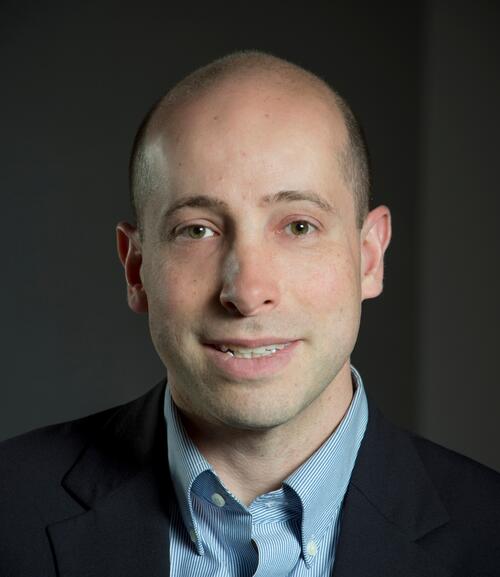
Max Sieben Baucus is the former U.S. Ambassador to the People's Republic of China (2014-2017) and a former U.S. Senator from Montana (1978-2014). On January 7, 2014 U.S. President Barack Obama nominated Max Sieben Baucus to be Ambassador of the United States of America to the People's Republic of China. He served as Ambassador from February 21, 2014 until January 19, 2017.  Ambassador Baucus formerly served as the senior United States Senator from Montana from 1978 to 2014 and was Montana’s longest serving U.S. Senator as well as the third longest tenure among those serving in the U.S. Senate. Senator Baucus was Chairman and Ranking Member of the Senate Committee on Finance, Vice Chairman of the joint Committee on Taxation, member of the Senate Committee on Agriculture, Nutrition and Forestry, and a member of the Joint Select Committee on Deficit Reduction (Super committee). Before his election to the U.S. Senate, he represented Montana in the U.S. House of Representatives from 1975 to 1978. Ambassador Baucus has extensive experience in international trade. As Chairman of the Senate Committee on Finance, he led the passage and enactment of the Free Trade Agreements with 11 countries: Australia, Bahrain, Jordan, Chile, Colombia, Morocco, Oman, Panama, Peru, Singapore and South Korea. He also was deeply involved in orchestrating the congressional approval of permanent normal trade relations with China in 2000 and in facilitating China’s entrance into the World Trade Organization in 2001. Ambassador Baucus was also the chief architect of the Affordable Health Care Act (ACA), which was signed into law on March 23, 2009. Ambassador Baucus earned a bachelor’s and law degree from Stanford University. He is married to Melodee Hanes and they have three children and one granddaughter.


The Oksenberg Lecture, held annually, honors the legacy of Professor Michel Oksenberg (1938–2001). A senior fellow at Shorenstein APARC and the Freeman Spogli Institute for International Studies, Professor Oksenberg served as a key member of the National Security Council when the United States normalized relations with China, and consistently urged that the United States engage with Asia in a more considered manner. In tribute, the Oksenberg Lecture recognizes distinguished individuals who have helped to advance understanding between the United States and the nations of the Asia-Pacific.

At times beginning in 2009 the decision was made to expand this series from its original lecture format to a workshop in order to bring scholars and policy makers together to discuss the ever-changing role China is playing in today's world. This new format allows for the exchange of ideas and opinions amongst today's top experts.

For directions to the Black Community Services Center, please click here.


Black Community Services Center

418 Santa Teresa Street

Stanford, CA 94305

Max Baucus <i>U.S. Ambassador to the People's Republic of China (2014-2017), U.S. Senator Montana (1978-2014) </i>
Michael H. Armacost <i>Former U.S. Ambassador to Japan and the Philippines, Shorenstein APARC Fellow, Stanford University</i>
Kathleen Stephens <i>Former U.S. Ambassador to the Republic of Korea; William J. Perry Fellow, Shorenstein APARC, Stanford University</i>
Daniel R. Russel <i>Former U.S. Assistant Secretary of State for East Asian and Pacific Affairs, Diplomat in Residence and Senior Fellow, Asia Society Policy Institute</i>
Lectures
-

The China Program at Shorenstein APARC is celebrating its Tenth Anniversary with a conference on "China's Possible Futures."


Many perceive China as arriving at a critical juncture in its political, economic and social maturation. It strives to avoid the “middle income trap,” retain its one-party rule, and preempt social instability. While the past can never predict the future, the China Program will gather together renowned scholars, thought leaders, and policymakers to take stock of where China is now, evaluate its remarkable successes, and consider likely scenarios as it enters another crucial transition point in its social, economic and political maturation. What assumptions might still hold, what strategies may still work, which are no longer viable, and what new factors must be regarded in considering China’s potential “futures”? The conference will explore four sub-themes: (1) China’s economic future; (2) political future; (3) China’s international relations and global economic engagements; and (4) China’s future as seen in comparative perspective. 


Multimedia for this event.


Please note that our anniversary conference will launch on May 11 with our annual Oksenberg Conference/Lecture. In this time of great political uncertainty in both the U.S. and in China, former Ambassador Max Baucus will give the keynote address followed by a panel discussion on U.S.-China relations. You may RSVP for the Oksenberg Lecture here.


Agenda

Panel I: China’s Economic Future ~9:00 AM -10:45 AM

Chair: Andrew Walder (Stanford University)

  • Barry Naughton (U.C. San Deigo)

  • Karen Eggleston (Stanford Univerity)

  • Hongbin Li (Stanford University)

  • Mary Gallagher (University of Michigan) 


Panel II: China’s Political Future ~11:00 AM - 12:30 PM

Chair: Thomas Fingar (Stanford University)

  • Alice Miller (Stanford University)

  • Andrew Wedeman (Georgia State University)

  • Jean Oi (Stanford University)

  • Xueguang Zhou (Stanford University)                                                                                           


Panel III: China's International Relations and Global Economic Engagements ~1:45 PM - 3:15 PM

Chair: Karl Eikenberry (Stanford University)

  • Thomas Fingar (Stanford University)

  • M. Taylor Fravel (MIT)

  • Ho-Fung Hung (John Hopkins University)

  • David M. Lampton (John Hopkins University)


Panel IV: China’s Future: A Comparative Perspective ~3:30 PM - 5:00 PM

Chair: Kathryn Stoner (Stanford University)

  • Amb. Max Baucus

  • Takeo Hoshi (Stanford University)

  • Gi-Wook Shin (Stanford University)

  • Andrew Walder (Stanford University)                 


Conferences
-


ABSTRACT

In this talk, Karine Walther discusses her new book Sacred Interests: The United States and the Islamic World, 1821-1921. Throughout the nineteenth and early twentieth centuries, as Americans increasingly came into contact with the Islamic world, U.S. diplomatic, cultural, political, and religious beliefs about Islam began to shape their responses to world events. In Sacred Interests, Karine V. Walther excavates the deep history of American Islamophobia, showing how negative perceptions of Islam and Muslims shaped U.S. foreign relations from the Early Republic to the end of World War I.


SPEAKER BIO

Image
Karine Walther is an Associate Professor of History at Georgetown University's School of Foreign Service in Qatar. She holds a PhD in history from Columbia University, a Maîtrise and Licence in Sociology from the University of Paris VIII and a BA in American Studies from the University of Texas, Austin. Her book, Sacred Interests: The United States and the Islamic World, 1821-1921 was published by the University of North Carolina Press in August of 2015.  Her forthcoming book, tentatively titled Spreading the Faith: American Missionaries, ARAMCO and the Birth of the US-Saudi Special Relationship, 1889-1955 will be published by UNC Press in 2018. 

Karine Walther Associate Professor of History Georgetown University, School of Foreign Service, Qatar
Seminars
News Type
News
Date
Paragraphs
Admiral Harry B. Harris, Jr., commander of U.S. Pacific Command (USPACOM), visited the Shorenstein Asia-Pacific Research Center last Friday. Throughout the day, he met with faculty, fellows and students and delivered a keynote speech to the broader Stanford community.
 
In his remarks titled Deterring Revisionist Powers, Harris described how the Indo-Asia-Pacific region fits in the context of the “global operating system,” a term used to illustrate the norms and standards that have defined the international system since the end of World War II. Harris also explained how USPACOM is ensuring continued international access to the shared domains of the Indo-Asia-Pacific, which include use of the air, sea and cyber domains.
 
Harris also led discussions on the strategic environment and security challenges that the United States faces. He engaged in an exchange with various audience members on current security dilemmas such as North Korea’s nuclear program, the South China Sea, and the state of U.S. alliances and partnerships in the Indo-Asia-Pacific region.
 
The Chatham House Rule applied to Harris’ public presentation, and his subsequent meetings were closed to the public and news media.
 
Harris was later featured at a meeting held at the Highly Immersive Classroom at the Graduate School of Business. Faculty and students at Stanford conversed by way of video teleconference with affiliates at Stanford Center at Peking University (SCPKU), Beijing. U.S.-Asia Security Initiative Director Karl Eikenberry and SCPKU Executive Director Josh Cheng moderated the dialogue.
 
Admiral Harris’ visit to Stanford was co-sponsored by Ambassador Eikenberry and Admiral Gary Roughead, Robert and Marion Oster Distinguished Military Fellow at the Hoover Institution.
Hero Image
2017march admharris visit online
Admiral Harry B. Harris, Jr., commander of U.S. Pacific Command, delivers remarks titled "Deterring Revisionist Powers" at the Bechtel Conference Center, March 3, 2017.
Debbie Warren
All News button
1
-

Image
Ma Ying-jeou KMT

The eight-year presidency of Ma Ying-jeou (2008-2016) in Taiwan left a complex legacy of political achievements, confrontations, and disappointments that defies easy characterization. It began with President Ma and the Kuomintang’s (KMT) commanding electoral victories in the 2008 elections, and ended with the KMT’s overwhelming loss to the resurgent Democratic Progressive Party (DPP) and its leader Tsai Ing-wen in 2016.

It featured rapid conclusions to a broad set of agreements on cross-Strait cooperation with the People’s Republic of China (PRC). But worries about closer ties with the PRC also triggered a popular backlash against growing mainland Chinese influence in Taiwan’s economy and culminated in a student-led occupation of the Legislative Yuan.

It coincided with contradictory trends in public opinion, including both the consolidation of a separate Taiwanese identity and support for the status quo in cross-Strait relations, as well as the increasing salience of divisions over social and environmental issues such as same-sex marriage and green energy at the same time as rising concerns about economic inequality.

It also marked a return to unified government after the acrimonious partisan fights of the Chen Shui-bian years, but long-standing intra-KMT divisions and the decentralized organization of the legislature continued to frustrate the administration, especially in President Ma’s second term.        

Finally, the Ma era produced no consensus about how to move beyond Taiwan’s developmental state legacies. Plans for domestic economic liberalization and greater integration into the global economy were only partially carried out, and the Ma administration ignored or struggled to address rising inequality, stagnant wages, increasing economic dependence on the PRC market, and a skewed tax system favoring investors and corporations over salaried workers.


Conference Agenda

The 11th Annual Conference on Taiwan Democracy will bring together scholars from Taiwan, the US, and Europe to consider these political achievements, confrontations, and disappointments in depth, and to assess the strengths and weaknesses of Taiwan’s democracy at the end of the Ma Ying-jeou’s presidency. Conference participants will discuss trends in public opinion, party politics and elections, cross-Strait relations, governance and media, and the performance of political institutions. The conference papers will be revised and included in an edited volume covering democratic practice during the Ma Ying-jeou era in Taiwan.

The conference is free and open to the public. Those interested in attending are requested to RSVP at the link above. This event is organized by the Taiwan Democracy Project in the Center on Democracy, Development, and the Rule of Law.


Thursday, March 9

9:15-10:45. Panel I. Public Opinion and Elections

  • Min-hua Huang, "Why Young Voters Abandoned the KMT"
  • Ching-hsin Yu, "Trends in National Identity, Partisanship, and Attitudes toward Cross-Strait Relations"
  • Yun-han Chu, discussant

11:00-12:45. Panel II. Party Politics

  • Austin Wang, "Tsai Ing-wen and the DPP: The Path Out of the Political Wilderness"
  • Nathan Batto, "The KMT as a Presidentialized Party: Party Leaders and Shifts in China Discourse"
  • Kharis Templeman, "The Disruption that Wasn't: How 2016 Changed the Taiwanese Party System"
  • Ching-hsin Yu, discussant

12:45-1:45. Lunch

1:45-3:30. Panel III. Economics, Security, and Cross-Strait Relations

  • Szu-yin Ho, "Ma Ying-jeou's Cross-Strait Policy: Ambitions, Constraints, Results" 
  • Lang Kao, "Cross-Strait Agreements and Taiwan's Executive-Legislative Relationship, 2008-2016"
  • Dean Chen, "In the Shadow of Great Power Rivalry: The KMT Administration's Relations with America, China, and Japan, 2008-2016"
  • Larry Diamond, discussant


Friday, March 10

9:15-10:45. Panel IV. Governance, Media, and Civil Society

  • Eric Yu, "The Changing Media Environment and Public Opinion"
  • Yun-han Chu and Yu-tzung Chang, "The Challenge of Governability in Taiwan"
  • Kharis Templeman, discussant

11:00-12:30. Panel V. Political Institutions

  • Shih-hao Huang, w/ Shing-yuan Sheng, "Decentralized Legislative Organization and Its Consequences for Policy-making in the Ma Ying-jeou Era"
  • Christian Goebel, "Special Prosecutors, Courts, and Other Accountability Institutions under Ma YIng-jeou"
  • TJ Pempel, discussant

12:30-1:30. Lunch


Oksenberg Room, 3rd Floor, Encina Hall Central

CDDRL
Stanford University
Encina Hall, C147
616 Jane Stanford Way
Stanford, CA 94305-6055

(650) 724-6448 (650) 723-1928
0
Mosbacher Senior Fellow in Global Democracy at the Freeman Spogli Institute for International Studies
William L. Clayton Senior Fellow at the Hoover Institution
Professor, by courtesy, of Political Science and Sociology
diamond_encina_hall.png MA, PhD

Larry Diamond is the William L. Clayton Senior Fellow at the Hoover Institution, the Mosbacher Senior Fellow in Global Democracy at the Freeman Spogli Institute for International Studies (FSI), and a Bass University Fellow in Undergraduate Education at Stanford University. He is also professor by courtesy of Political Science and Sociology at Stanford, where he lectures and teaches courses on democracy (including an online course on EdX). At the Hoover Institution, he co-leads the Project on Taiwan in the Indo-Pacific Region and participates in the Project on the U.S., China, and the World. At FSI, he is among the core faculty of the Center on Democracy, Development and the Rule of Law, which he directed for six and a half years. He leads FSI’s Israel Studies Program and is a member of the Program on Arab Reform and Development. He also co-leads the Global Digital Policy Incubator, based at FSI’s Cyber Policy Center. He served for 32 years as founding co-editor of the Journal of Democracy.

Diamond’s research focuses on global trends affecting freedom and democracy and on U.S. and international policies to defend and advance democracy. His book, Ill Winds: Saving Democracy from Russian Rage, Chinese Ambition, and American Complacency, analyzes the challenges confronting liberal democracy in the United States and around the world at this potential “hinge in history,” and offers an agenda for strengthening and defending democracy at home and abroad.  A paperback edition with a new preface was released by Penguin in April 2020. His other books include: In Search of Democracy (2016), The Spirit of Democracy (2008), Developing Democracy: Toward Consolidation (1999), Promoting Democracy in the 1990s (1995), and Class, Ethnicity, and Democracy in Nigeria (1989). He has edited or coedited more than fifty books, including China’s Influence and American Interests (2019, with Orville Schell), Silicon Triangle: The United States, China, Taiwan the Global Semiconductor Security (2023, with James O. Ellis Jr. and Orville Schell), and The Troubling State of India’s Democracy (2024, with Sumit Ganguly and Dinsha Mistree).

During 2002–03, Diamond served as a consultant to the US Agency for International Development (USAID) and was a contributing author of its report, Foreign Aid in the National Interest. He has advised and lectured to universities and think tanks around the world, and to the World Bank, the United Nations, the State Department, and other organizations dealing with governance and development. During the first three months of 2004, Diamond served as a senior adviser on governance to the Coalition Provisional Authority in Baghdad. His 2005 book, Squandered Victory: The American Occupation and the Bungled Effort to Bring Democracy to Iraq, was one of the first books to critically analyze America's postwar engagement in Iraq.

Among Diamond’s other edited books are Democracy in Decline?; Democratization and Authoritarianism in the Arab WorldWill China Democratize?; and Liberation Technology: Social Media and the Struggle for Democracy, all edited with Marc F. Plattner; and Politics and Culture in Contemporary Iran, with Abbas Milani. With Juan J. Linz and Seymour Martin Lipset, he edited the series, Democracy in Developing Countries, which helped to shape a new generation of comparative study of democratic development.

Download full-resolution headshot; photo credit: Rod Searcey.

Former Director of the Center on Democracy, Development and the Rule of Law
Faculty Chair, Jan Koum Israel Studies Program
Date Label
Conferences
Paragraphs

In an op-ed for The Diplomat, Stanford assistant professor Phillip Y. Lipscy says the Trump presidency offers Japanese Prime Minister Shinzo Abe an opportunity to realize his vision of a more prominent Japan, yet the depth of the bilateral relationship and ability to deliver hinge on how much the two leaders can compromise on economic and security interests.

All Publications button
1
Publication Type
Commentary
Publication Date
Journal Publisher
The Diplomat
Authors
Phillip Lipscy
Authors
News Type
News
Date
Paragraphs
The future of relations between China and the United States depends on the readiness of both governments to focus on resolving shared challenges, longtime journalist John Pomfret said at the Shorenstein Asia-Pacific Research Center (APARC) last Wednesday.
 
“The reality of the U.S.-China relationship is collaboration and competition,” said Pomfret, who served for 15 years as a foreign correspondent, describing the nature of interaction between the two countries that began to normalize relations in 1972.
 
Pomfret's remarks were delivered at a colloquium entitled, “The United States and China in the Era of Donald Trump,” which explored the unorthodox approach Donald Trump took during his campaign on a range of issues related to China, and implications for the bilateral relationship now that Trump has assumed the U.S. presidency.
 
Pomfret over the course of his journalism career spent seven years covering China, including during the 1989 Tiananmen Square protests and from 1998 through 2003 as the bureau chief for the Washington Post in Beijing, and recently authored the book, The Beautiful Country and the Middle Kingdom, which examines U.S.-China relations from 1776 to the present. He won the 2007 Shorenstein Journalism Award, an annual honor conferred to a journalist who produces outstanding reporting on Asia.
 
“It’s clear that a new type of reciprocity is needed to right the balance in the U.S.-China relationship, but just whether Trump and his team have the wherewithal to do it…is very much an open question,” he said.
 
Trump continues to promise to restore manufacturing jobs in the United States, but fulfillment of that promise could come in conflict with its trade relationship with China, where much manufacturing of U.S. products takes place, he said.
 
Equally important in the U.S.-China relationship is how to address North Korea and its nuclear weapons and ballistic missiles program, which remains an “extremely complicated” and pressing situation, he said.
 
Pomfret expressed uncertainty about the Trump administration’s capacity to change China’s position from the status quo, which has long supported the North Korean regime by way of trade and relaxed implementation of U.N. sanctions despite repeated provocations.
 
Yet, amidst the vague foreign policy positions projected by Trump toward China, “there is one positive, and that is that he has the Chinese off-balance,” Pomfret admitted.
 
For Pomfret, his appearance at Stanford was a bit of a homecoming; he spoke to an audience of 200 faculty, students and community members at the colloquium sponsored by the China Program and Center for East Asian Studies, the center from which he received his master’s degree in 1984.
 
Asked about the future of China and its governance, he noted that today’s China is markedly different than when he was there in the 1980s studying as a student, and later, working as a journalist. The generational changes are stark, said Pomfret, relaying a sense of optimism that the country would become more democratic over time.
 
“The amount of personal freedoms that the average Chinese person has has expanded exponentially. I think the desire of Chinese people to have more agency over their lives will continue to grow – that’s clear.”
 
Innovation will be a determinant of China’s future growth, said Pomfret, coupling the idea that societies that have knowledge-driven economies typically demand more freedoms. Without innovation, China will fall into the middle-income trap, he said, “I don’t think they want to be there; they are an incredibly proud nation.”
 
Hero Image
china uscapital reuters Reuters/Hyungwon Kang
All News button
1
Authors
News Type
News
Date
Paragraphs

Stanford scholars are encouraging the new administration to consider steps to alleviate the uncertainty and anxiety felt by countries in East Asia about U.S. intentions toward the region.

President Donald Trump’s anti-China rhetoric during his campaign and his recent withdrawal of the U.S. from the Trans-Pacific Partnership have contributed to the unease in the region, which is drifting in ways that are unfavorable for American interests, they said.

Stanford’s Walter H. Shorenstein Asia-Pacific Research Center (APARC) recently published a 27-page report with recommendations on topics of trade and defense that would improve relations between the U.S. and Asian countries. The report, co-authored by eight Stanford scholars, is aimed to help shape U.S. policies in the region.

“The advent of any new administration provides an opportunity to reassess policy approaches,” wrote Gi-Wook Shin, director of the Shorenstein center. “A new mandate exists, and it is our hope that that mandate will be used wisely by the new administration.”

Trade and defense

The biggest trade concern for experts in the region is President Trump’s decision to withdraw the U.S. from the Trans-Pacific Partnership (TPP) and his intention to focus on bilateral agreements instead of multinational pacts.

The agreement, which bound 12 countries in the region by a set of international trade and investment rules, had problems, Stanford scholars said. For example, some have criticized the treaty for not requiring full compliance with international labor standards for all the participating countries. Also, the rules of origin, which were supposed to give preferential treatment to countries in the TPP, were deemed to be weak by many, allowing goods produced outside the TPP to receive benefits.

But it would not be wise or efficient for the U.S. to start negotiations from scratch in the region because the U.S. withdrawal from the agreement, which was touted as a model for the 21st century, already has hurt its credibility with other Asian countries, said Takeo Hoshi, director of the Japan Program at the Shorenstein Center. In addition, Asian countries view the idea of bilateral agreements as an attempt to force trade deals on them that disproportionately benefit the U.S., he said.

“The TPP was not perfect and many problems remain, but they are not removed by abandoning the TPP,” Hoshi wrote in the report. “Completely abandoning the TPP could hurt not only the U.S. economy but also erode U.S. leadership in Asia.”

Hoshi said the U.S. should rely on aspects of TPP that are consistent with the current U.S. trade policy when creating new bilateral agreements, while maintaining and improving existing free trade agreements with other Asian countries.

Another immediate concern for scholars is the maintenance of security and stability in the region.

“The region is unsettled because of uncertainty about us,” said Thomas Fingar, a Shorenstein APARC fellow. “The U.S. has long served as the guarantor of prosperity and security in the region but Asians are no longer convinced that we have the will or ability to do so. This has real consequences … It’s not simply because they are already beginning to act as if we intend to play a less active or positive role.”

If China’s national power and economy continue to expand, it will become increasingly difficult to maintain stability in the region if the U.S. does not continue to play a constructive role. Possible dangers include escalation of tensions between China and the U.S. or its allies following accidents or tactical encounters near areas over which China claims sovereignty.

In the report, scholars recommend a comprehensive review of security in the region to make sure military plans are in place that prioritize management of a possible collapse of North Korea or a sudden military strike coming from the country. Other priorities should include peaceful resolution of China-Taiwan differences and ensuring military access in the South China Sea and East China Sea, wrote Karl Eikenberry, director of the U.S.-Asia Security Initiative at the Shorenstein Center.

“The United States also should engage in a more long-range, exploratory strategic dialogue, first with allies and partners, and then with Beijing, to identify potential areas of mutual interest that can help prevent the unintended escalation of conflicts and reduce already dangerous levels of misperception and mistrust on both sides,” Eikenberry wrote.

China is key

Maintaining a peaceful, productive relationship with China should be of the utmost importance for the U.S., according to the Stanford scholars.

“Managing America’s multifaceted relationship with China is arguably the most consequential foreign policy challenge facing the new administration,” Fingar said.

Although President Trump’s anti-China rhetoric during his campaign made Asian countries anxious about the future, China has been criticized by many American leaders before. Ten previous U.S. presidents were critical of China during their campaigns, but once they assumed office, their tone changed and they adopted a more pragmatic view of U.S. interests in the area, Fingar wrote.

However, while in the past China’s political moves have been predictable for the most part, now that its economy is slowing, the country is increasingly relying on social control and nationalism to reinforce regime legitimacy. This makes China less predictable, according to Fingar.

But the scholars say that there are several opportunities to approach the relationship with China in a way that is beneficial for the U.S. and the rest of the region.

One such opportunity would be for the U.S. to declare its willingness to join China’s newly created Asian Infrastructure Investment Bank, which was formed in early 2016 to support construction projects in the Asia-Pacific region. This would be an “any outcome we win” opportunity that would showcase the U.S. desire to cooperate with China and help establish the region’s confidence in the U.S., Fingar said.

The new administration should also consider pushing for a quick completion of a Bilateral Investment Treaty with China – something that two previous U.S. administrations were not able to achieve. Creating this agreement would help protect things that are important to the U.S. businesses and reassure the willingness of the U.S. to deepen its relationship with China, according to Fingar.

“In my view, how we’re going to establish or reestablish relations with China is key,” Shin said. “Will there be more tension? That’s really important. This affects not only the U.S., but also our allies in the region.”

Alex Shashkevich is a writer for the Stanford News Service.

Hero Image
gettyimages southchinasea
Navy officers wait dockside as a Chinese Navy warship, escorting the arrival of the USS Curtis Wilbur, arrives at Qingdao port.
Getty Images - AFP/Frederic J. Brown
All News button
1
Subscribe to Foreign Policy