
Institutions and Organizations
-

This is a virtual event. Please click here to register and generate a link to the talk. 
The link will be unique to you; please save it and do not share with others.


To celebrate its May release, contributors Karen Eggleston, Barry Naughton, and Andrew Walder will join editors Thomas Fingar and Jean Oi for a panel discussion of their volume Fateful Decisions: Choices That Will Shape China’s Future (Stanford University Press).  China has enjoyed an extraordinary run of rapid growth and development over the last 40 years.  Yet, as Fingar and Oi point out, China’s future is hardly set in stone.  Sustained economic growth, social welfare and stability will depend upon tough policy decisions confronting Beijing’s leaders today in what is a watershed moment.  Casting doubt on Beijing’s aversion to major reforms and its return to certain Mao-era policy tools, Oi and Fingar argue that China’s challenges are not only complex, but high-stakes – challenges that have become even more daunting in the aftermath of COVID-19.  As China battles the difficulties caused by an aging population, the loss of comparative economic advantage, a politically entrenched elite, and a population with rising expectations, today’s policy decisions will weigh heavily on its future. Topics explored in the volume include China's healthcare challenges in a slowing economy, its global ambitions and track record, economic aims and realities, the country’s mounting governance pressures, and more. 


Fateful Decisions is available for purchase here.


Fore more information on Fateful Decisions, check out these articles:

Karen Eggleston Examines China’s Looming Demographic Crisis, in Fateful Decisions

Now It Gets Much Harder: Thomas Fingar and Jean Oi Discuss China’s Challenges in The Washington Quarterly

China’s Challenges: Now It Gets Much Harder


Portrait of Karen EgglestonKaren Eggleston is a senior fellow at the Freeman Spogli Institute for International Studies (FSI) at Stanford University, director of the Stanford Asia Health Policy Program, and deputy director of the Walter H. Shorenstein Asia-Pacific Research Center at FSI. She is also a fellow with the Stanford Center for Innovation in Global Health and a faculty research fellow of the National Bureau of Economic Research (NBER). Eggleston earned her PhD in public policy from Harvard University, studied in China for two years, and was a Fulbright scholar in South Korea. Her research focuses on comparative health systems and health reform in Asia, especially China; government and market roles in the health sector; supply-side incentives; healthcare productivity; and economic aspects of demographic change.


Portrait of Thomas FingarThomas Fingar is a Shorenstein Distinguished Fellow in the Shorenstein Asia-Pacific Research Center at Stanford University. From May 2005 through December 2008, he served as the first deputy director of national intelligence for analysis and, concurrently, as chairman of the National Intelligence Council. Previous positions include assistant secretary of state for Intelligence and Research (2000-2001, 2004–2005), principal deputy assistant secretary (2001–2003), deputy assistant secretary for analysis (1994–2000), director of the Office of Analysis for East Asia and the Pacific, and chief of the China Division. Fingar is a graduate of Cornell University (AB in government and history) and Stanford University (MA and PhD, both in political science). His most recent books are Uneasy Partnerships: China’s Engagement with Japan, the Koreas, and Russia in the Era of Reform (editor) (Stanford University Press, 2017); The New Great Game: China’s Relations with South and Central Asia in the Era of Reform (editor) (Stanford University Press, 2016); and Reducing Uncertainty: Intelligence Analysis and National Security (Stanford University Press, 2011).
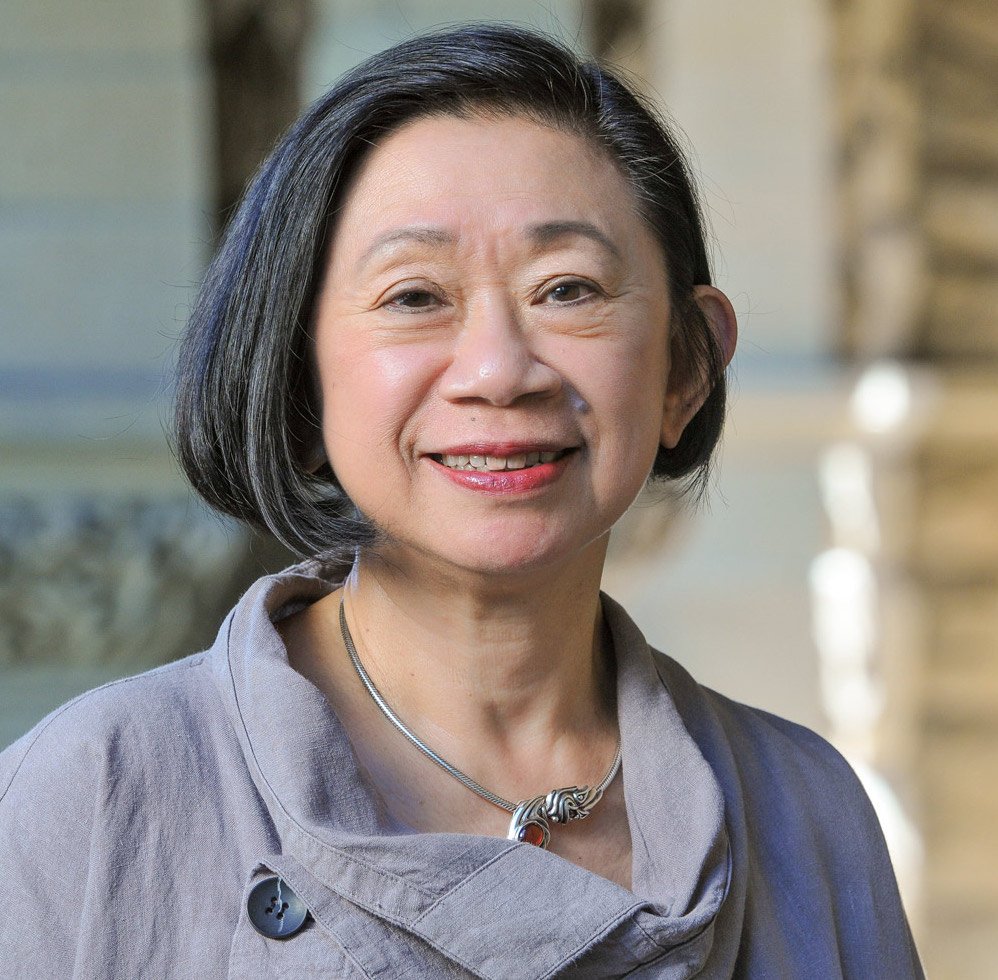
 

Image
Photo of Barry Naughton
Barry Naughton is the So Kwanlok Professor at the School of Global Policy and Strategy, University of California–San Diego. Naughton’s work on the Chinese economy focuses on market transition; industry and technology; foreign trade; and political economy. His first book, Growing Out of the Plan, won the Ohira Prize in 1996, and a new edition of his popular survey and textbook, The Chinese Economy: Adaptation and Growth, appeared in 2018. Naughton did his dissertation research in China in 1982 and received his PhD in economics from Yale University.


Jean C. OiJean C. Oi is the William Haas Professor of Chinese Politics in the Department of Political Science and a senior fellow in the Freeman Spogli Institute for International Studies at Stanford University. She directs the China Program at the Walter H. Shorenstein Asia-Pacific Research Center and is the Lee Shau Kee Director of the Stanford Center at Peking University. Oi has published extensively on China’s reforms. Recent books include Zouping Revisited: Adaptive Governance in a Chinese County, coedited with Steven Goldstein (Stanford University Press, 2018), and Challenges in the Process of China’s Urbanization, coedited with Karen Eggleston and Yiming Wang (2017). Current research is on fiscal reform and local government debt, continuing SOE reforms, and the Belt and Road Initiative.


Portrait of Andrew WalderAndrew G. Walder is the Denise O’Leary and Kent Thiry Professor of Sociology in the School of Humanities and Sciences, and a senior fellow in the Freeman Spogli Institute for International Studies at Stanford University. A political sociologist, Walder has long specialized in the study of contemporary Chinese society and political economy. After receiving his PhD at the University of Michigan, he taught at Columbia, Harvard, and the Hong Kong University of Science and Technology. At Stanford he has served as chair of the Department of Sociology, director of the Asia-Pacific Research Center, and director of the Division of International, Comparative, and Area Studies in the School of Humanities and Sciences. His most recent books are Fractured Rebellion: The Beijing Red Guard Movement (2009), China under Mao: A Revolution Derailed (2015), and Agents of Disorder: Inside China’s Cultural Revolution (2019).

Via Zoom Webinar.
Register at: https://bit.ly/2WiwPvm

Karen Eggleston <br> Senior Fellow at FSI; Director of the Asia Health Policy Program, Shorenstein APARC, Stanford University <br><br>
Thomas Fingar <br> Shorenstein APARC Fellow, Stanford University <br><br>
Barry Naughton <br> Sokwanlok Chair of Chinese International Affairs, School of Global Policy and Strategy, UC San Diego <br><br>
Jean C. Oi <br> Director, Stanford China Program; William Haas Professor of Chinese Politics, Stanford University <br><br>
Andrew Walder <br> Senior Fellow at FSI; Denise O'Leary and Kent Thiry Professor, Stanford University <br><br>
Panel Discussions
Authors
Beth Duff-Brown
News Type
Commentary
Date
Paragraphs

As we watch President Trump tell the states they have to do more to find their own personal protective equipment for their health-care workers, governors lash back with demands for a national leader who will unlock the emergency powers of the federal government.

The response to the COVID-19 pandemic has exposed major weaknesses in the federalist system of public health governance, which divides powers among the federal, state and local governments, argues SHP’s Michelle Mello in this New England Journal of Medicine commentary.

The coronavirus, she writes, “is exactly the type of infectious disease for which federal public health powers and emergencies were conceived: it is highly transmissible, crosses borders efficiently, and threatens our national infrastructure and economy.”

“Strong, decisive national action is therefore imperative,” writes Mello, a professor of medicine and a professor of law, and Rebecca L. Haffajee, a policy researcher at the RAND Corporation. “Yet the federal response has been alarmingly slow to develop, fostering confusion about the nature of the virus and necessary steps to address it.”

The authors warn this “lack of interjurisdictional coordination has and will cost lives.”

Though states must respect constitutionally protected individual rights — such as due process, equal protection and freedom of travel and association — the Constitution puts primary responsibility for public health with the states, cities and counties. It gives them the right to exercise broad police powers to protect their citizens’ health during ordinary times.

In extraordinary times — like the one we’re experiencing now — states and the federal government can activate emergency powers to expand their abilities to act swiftly and protect human life and health. All 50 states and dozens of localities and the federal government have declared emergencies.

“The resulting executive powers are sweeping: they can range from halting business operations, to restricting freedom of movement, to limiting civil rights and liberties, to commandeering property,” Mello and Haffajee write in the NEJM Perspective.

This emergency legal framework has led to too few checks-and-balances on poor decisions—historically, in the direction of being overly aggressive, write the authors. They note a good example is when New Jersey’s governor ordered a nurse returning from Sierra Leone during the 2014 Ebola outbreak into quarantine, contrary to Centers for Disease Control and Prevention guidelines.

Too Little Too Late? 

“Today, we find ourselves in the opposite situation: the federal government has done too little,” the authors write. “Perhaps because of misleading early statements from federal officials about the gravity of the COVID-19 threat, public sentiment has weighed against taking steps that would impose hardships on families and businesses.”

The tumbling stock market and unprecedented 10 million unemployment claims last month also have created further pressure by the federal government to project a sense of calm.

“The resulting laconic federal response has meant that a precious opportunity to contain COVID-19 through swift, unified national action has been lost — a scenario that mirrors what occurred in Italy,” they write.

So the states had to pick up where the federal government fell short, the authors note. Many jurisdictions issued stay-at-home orders; others did not. As of March 31, more than a dozen governors had yet to issue statewide stay-at-home orders and eight had only ordered partial measures. Yet many jurisdictions turn a blind eye, they note, to noncompliance with social-distancing recommendations issued by the CDC, as evidenced by crowded beaches and children congregating in public parks.

“This is the dark side of federalism: it encourages a patchwork response to epidemics,” the authors write.

“A federal takeover of all public health orders would be out of step with our federalist structure,” the authors state, but there remain three good options:

  • “The White House must reverse its current trajectory toward prematurely weakening existing federal measures and the resolve of governors who are enforcing stay-at-home orders and school closures.” Trump said last week he wanted the United States “opened up and raring to go by Easter.” A few days later, he heeded the call of medical experts and extended social-distancing guidelines until the end of April, but public health experts believe the crisis will likely be with us longer.
  • Congress should “use its spending power to further encourage states to follow a uniform playbook for community mitigation that includes measures for effective enforcement of public health orders.” It could threaten to withhold some federal funds from states that do not comply.
  • “Congress could leverage its interstate-commerce powers to regular economic activities that affect the interstate spread” of COVID-19, such as restricting large businesses from traveling and operating across state lines in ways that expose workers to risk.

The White House could also make further use of the Defense Production Act (DPA) to direct private companies to produce badly needed ventilators and personal protective equipment for health-care workers, the authors write. Trump has ordered General Motors to manufacture ventilators and the $2 trillion stimulus package includes $1 billion for DPA projects.                                                                     

“Learning is difficult in the midst of an emergency, but one lesson from the COVID-19 epidemic is already clear: when epidemiologists warn that a pathogen has pandemic potential, the time to fly the flag of local freedom is over,” the authors conclude. “Yet national leadership in epidemic response works only if it is evidence-based. It is critical that the U.S. response to COVID-19 going forward be not only national, but rational.”

Hero Image
gettyimages trumpcorona Getty Images
All News button
1
Shorenstein APARC Stanford University Encina Hall E301 Stanford, CA 94305-6055
0
Visiting Scholar at APARC
Ph.D.

Heng Hu joined the Walter H.Shorenstein Asia-Pacific Research Center during January 2020 to January 2021 from Renmin University of China’s Institute of Qing History where he serves as Associate Professor and Vice Director of the institute.

His research focuses on the administrative jurisdictions and local organizations in Chinese history, with particular interest in the digital humanities related to the historical databases. During his visit in APARC, his research project intends to examine the spatial logic of local governance in China from 1644 to 1911, based on some new Database.

Heng Hu is a deputy editor-in-chief of Qing History Journal. He has published a book titled Imperial Power Stops at County Seats? The Administrative Districts and Social Governance Below the County Authority in the Qing Dynasty (2015), which won awards as The Top Ten Books of the Year in History and Biography (China Reading Weekly, 2015), The Puyin Humanities Award (5 award-winners, 2018), and the Youth Achievement Award of the 8th Humanities and Social Sciences Award of the Ministry of Education of China (2020).

Authors
Herbert Lin
News Type
Commentary
Date
Paragraphs

On Feb. 12, White House National Security Adviser Robert O’Brien announced that the U.S. government has “evidence that Huawei has the capability secretly to access sensitive and personal information in systems it maintains and sells around the world.” This represents the latest attempt by the Trump administration to support an argument that allied governments—and the businesses they oversee—should purge certain telecommunications networks of Huawei equipment. The position reflects the preferred approach in the United States, which is to issue outright bans against select companies (including Huawei) that meet an as-yet-unknown threshold of risk to national security.


Read the rest at Lawfare Blog


Hero Image
lin herbert
All News button
1
Paragraphs

The easy phases of China’s quest for wealth and power are over. After forty years, every one of a set of favorable conditions has diminished or vanished, and China’s future, neither inevitable nor immutable, will be shaped by the policy choices of party leaders facing at least eleven difficult challenges, including the novel coronavirus. 

See also https://aparc.fsi.stanford.edu/news/tom-fingar-and-jean-oi-preview-forthcoming-volume-fateful-decisions

All Publications button
1
Publication Type
Journal Articles
Publication Date
Journal Publisher
The Washington Quarterly
Authors
Thomas Fingar
Jean C. Oi
Authors
Callista Wells
News Type
News
Date
Paragraphs

President Xi Jinping’s tenure has been marked by growing state influence over all spheres of governance in China, including a marked tightening of control over the economy.

Curtis Milhaupt, the William F. Baxter-Visa International Professor of Law at Stanford Law School, addressed the hardening of Party controls over Chinese corporate governance. His lecture to the China Program on February 6 was based on research conducted by Milhaupt in collaboration with Yu-Hsin Lin of City University of Hong Kong, and examined the expanding role of the Chinese Communist Party (CCP) within both state-owned enterprises (SOEs) and privately-owned enterprises (POEs). The influence of the CCP within these enterprises, Milhaupt says, is not as straightforward as it might seem.

Milhaupt posits that the level of control exercised by the CCP on SOEs is lower than one might generally expect. At the same time, the CCP exercises a surprisingly higher level of control over POEs than we would typically assume. To draw these conclusions, Milhaupt uses a set of ten model provisions deemed to be dangjian, or “party-building,” measures that were developed and released by the Central Committee of the CCP. From data compiled between 2015 and 2018 from the charters of publicly-listed companies, Milhaupt shows that 10% of SOEs chose not to adopt any of the provisions distributed by the Central Committee. Meanwhile, 6% of POEs had at least a low level of adoption, despite the fact that the provisions were not directed at them. The reason for such variation, according to Milhaupt, can be explained by the characteristics of the provisions, the SOEs, and the POEs.

Image
Photo of Curtis Milhaupt speaking
Milhaupt breaks the measures into three distinct groups: personnel-related, decision-making, and symbolic. Nearly every corporation that amended its charter adopted the symbolic provisions. As the name suggests, these generally did not require any substantial or meaningful change on the enterprises’ parts. There was a steep drop-off, however, in the level of adoption for the other two types. Only 58% of SOEs who amended their charters adopted the more intrusive, decision-making provisions. Similarly, only 52% of such SOEs adopted the personnel-related provisions. The numbers were even lower for POEs, with only 25% of POEs who amended their charters adopting the decision-making provisions, and only 16% adopting the personnel-related provisions.

Which enterprises adopted which provisions was highly correlated to those enterprises’ characteristics. SOEs were far more likely to amend their charters if they had direct state shareholding, but less likely to amend if they had large non-state shareholders, were further down in the state-ownership chain, or were cross-listed on international stock exchanges. POEs followed a similar structure, with enterprises being more likely to adopt provisions the more politically connected they were or the more direct state shareholding they had.

It remains unclear how the government can actually enforce the dangjian policy, and how these policies will affect the enterprises that adopt it. Despite the official rhetoric behind the dangjian policy, with claims that greater loyalty to the Party will lead to more economic success, Milhaupt expresses doubts:

“What’s [the danajian policy] going to mean for firm performance? Certainly, from a . . . straightforward economics or corporate governance perspective, one would not be optimistic that infiltrating corporations with political influence is going to do good things for firm performance.”

Milhaupt also has concerns about how the strategy will impact international investment, noting the already high levels of suspicion surrounding Chinese motivations: “This [emphasis on loyalty to the Party] would certainly seem to add fuel to the fire, and heighten concerns or suspicions with respect to Chinese outbound economic activity.” As SOEs and POEs continue to navigate both domestic and international markets with their amended charters, the future feasibility of the CCP’s reassertions over the economy is far from certain.

Hero Image
Pedestrians walk past a Madrid branch of the Industrial and Commercial Bank of China (ICBC), one of the largest state-owned enterprises in China.
Jasper Juinen / Getty Images News
All News button
1
-

Seminar Recording: https://youtu.be/YQU4cuywdK8


About this Event: What sort of narrative defines the American experience with nuclear weapons? National security expert Joe Cirincione argues that it is not a triumph, but a tragedy - one ripe with themes the ancient Greeks would have recognized. He will guide us through the paradoxes and pitfalls of U.S. nuclear policy and expose the costs - political, financial, and moral - of our search for an all-too illusory security in the atomic age.


About the Speaker: Joseph Cirincione is president of Ploughshares Fund, a global security foundation. He is also the host of Press The Button, a weekly podcast from Ploughshares Fund dedicated to nuclear policy and national security. A new episode is available every Tuesday.

Cirincione is the author of the books Nuclear Nightmares: Securing the World Before It Is Too LateBomb Scare: The History and Future of Nuclear Weapons and Deadly Arsenals: Nuclear, Biological and Chemical Threats. He has worked on nuclear weapons policy in Washington for over 35 years and is considered one of the top experts in the field. He served previously as vice president for national security at the Center for American Progress, director for non-proliferation at Carnegie Endowment, and senior associate at Stimson. He worked for nine years as professional staff on the U.S. House of Representatives Committees on Armed Services and Government Operations. He is a member of the Council on Foreign Relations and a former member of the International Security Advisory Board for Secretaries of State John Kerry and Hillary Clinton. He also teaches at the Georgetown University Graduate School of Foreign Service.

Cirincione's commentary has been featured in The New York Times, The Washington Post, The Los Angeles Times, MSNBC, CNN, The Boston Globe, The Philadelphia Inquirer, The Financial Times, Kyodo News, Moscow Times, Foreign Policy, The Hill, Daily Beast, and Huffington Post.


Joseph Cirincione President Ploughshares Fund
Seminars
Paragraphs

Explore our series of multimedia interviews and Q&As with the contributors to this volume: 


China's future will be determined by how its leaders manage its myriad interconnected challenges. In Fateful Decisions, leading experts from a wide range of disciplines eschew broad predictions of success or failure in favor of close analyses of today's most critical demographic, economic, social, political, and foreign policy challenges. They expertly outline the options and opportunity costs entailed, providing a cutting-edge analytic framework for understanding the decisions that will determine China's trajectory.

Xi Jinping has articulated ambitious goals, such as the Belt and Road Initiative and massive urbanization projects, but few priorities or policies to achieve them. These goals have thrown into relief the crises facing China as the economy slows and the population ages while the demand for and costs of education, healthcare, elder care, and other social benefits are increasing. Global ambitions and a more assertive military also compete for funding and policy priority. These challenges are compounded by the size of China's population, outdated institutions, and the reluctance of powerful elites to make reforms that might threaten their positions, prerogatives, and Communist Party legitimacy. In this volume, individual chapters provide in-depth analyses of key policies relating to these challenges. Contributors illuminate what is at stake, possible choices, and subsequent outcomes. This volume equips readers with everything they need to understand these complex developments in context.

Available May 2020.

This book is part of the Stanford University Press series, "Studies of the Walter H. Shorenstein Asia-Pacific Research Center"

All Publications button
1
Publication Type
Books
Publication Date
Journal Publisher
Stanford University Press
Authors
Jean C. Oi
Thomas Fingar
-

Livestream: Registration is required and will close 24 hours before the event. Click here to register.

This event is available only to CISAC faculty, fellows, staff, and honors students.


About this Event: Jeopardizing U.S. research enterprises, provoking regional nationalism, and building a technological panopticon to rate every citizen's behavior: these assumptions about China fuel US foreign policy shadow-boxing with misplaced concerns. Our panel challenges prevalent narratives on China, providing informed, nuanced investigations that cut across a range of research methods. Julien de Troullioud's argues that the rise of China in science and technology is not a threat to the US but instead an opportunity to jointly work to solve global issues. Data shows that the current policies to protect the US research enterprise in science is hurting American and international scientific research. Xinru Ma finds that nationalism in China and in Southeast Asia are not necessarily all anti-foreign, and is more of a liability rather than an asset for domestic regimes, according to evidences from formal modeling and social media data. Shazeda Ahmed's interviews with Chinese government officials, tech firm representatives, and legal scholars reveal that the Chinese social credit system is more limited in its data collection and fragmented in its on-the-ground implementation than the dystopic institution its foreign critics presume it to be. Our research presents new data and fresh perspectives for rethinking US-China dynamics.


About the Speakers:

Shazeda Ahmed is a Ph.D. student at the University of California, Berkeley who researches how tech firms and the Chinese government are collaboratively constructing the country's social credit system. She will be joining CISAC and the Stanford Institute for Human-Centered Artificial Intelligence in Fall 2019 as a pre-doctoral Fellow. Shazeda has worked as a researcher for the Citizen Lab, the Mercator Institute for China Studies, and the Ranking Digital Rights corporate transparency review by New America. In the 2018-19 academic year she was a Fulbright fellow at Peking University's law school.


Xinru Ma is currently a Ph.D. candidate at Political Science and International Relations (POIR) program at University of Southern California, and will join CISAC as a Postdoctoral Fellow for 2019-2020. Originally from China, Xinru is interested in combining formal modeling and computational social science with research on nationalist protests and maritime disputes, with a regional focus on East and Southeast Asia. Her research is informed by extensive field research in Vietnam, Philippines and China, during which she interviewed protestors, think tanks, diplomats, government officials, and foreign business owners that were impacted by nationalist protests. In addition to informing her of the complicated strategic interaction between mass mobilization, government repression and foreign policy-making, the field research further motivated her to focus on the methodological challenges for causal inference that stem from strategic conflict behavior. More broadly, Xinru is interested in public opinion and new methods of measuring it, foreign policy formation, alliance politics, East Asian security dynamics, and the historical relations of East Asia. 


Julien de Troullioud de Lanversin will be joining CISAC as a Stanton Postdoctoral Fellow. Julien is finishing his Ph.D. at Princeton University’s Program on Science and Global Security. He is interested in how to verify and reconstruct past fissile material production programs with scientific tools. To that end, he developed innovative methods that use isotopic analysis from nuclear reactors to gain information on their past operation (nuclear archeology) and designed an open source software that can compute the istopic composition of fissile materials from nuclear reactors. His current research looks at the various modalities of the production of plutonium and tritium in production reactors and how transparency on tritium could be used to improve estimates on plutonium stockpiles. Julien also studies security questions related to civil and military nuclear programs in Northeast Asia through the lens of fissile material, with a focus on China and North Korea. Julien visited the Institute of Nuclear and New Energy Technologies at Tsinghua University for one semester in 2018 to collaborate with Chinese experts on work related to nuclear engineering and arms control. Julien’s work on nuclear archaeology has been published in the Journal of Science and Global Security. He received his Diplôme d’Ingénieur (M.Sc. And B.Sc.Eng.) from Ecole Centrale de Marseille in 2014. The same year he also obtained a M.Sc. in Nuclear Science and Engineering from the University of Tsinghua where he was a recipient of the Chinese Government Scholarship. Julien speaks and uses Chinese in his research and is a native French speaker.

Virtual Seminar

Shazeda Ahmed, Xinru Ma, Julien de Troullioud de Lanversin
Seminars

Center for International Security and Cooperation
Encina Hall
616 Jane Stanford Way
Stanford University
Stanford, CA 94305-6165

0
William J. Perry Lecturer, Freeman Spogli Institute for International Studies
Research Fellow at the Hoover Institution
dsg_gottemoeller.jpg

Rose Gottemoeller is the William J. Perry Lecturer at Stanford University's Freeman Spogli Institute for International Studies and Research Fellow at the Hoover Institute.

Before joining Stanford, Gottemoeller was the Deputy Secretary General of NATO from 2016 to 2019, where she helped to drive forward NATO’s adaptation to new security challenges in Europe and in the fight against terrorism.  Prior to NATO, she served for nearly five years as the Under Secretary for Arms Control and International Security at the U.S. Department of State, advising the Secretary of State on arms control, nonproliferation and political-military affairs. While Assistant Secretary of State for Arms Control, Verification and Compliance in 2009 and 2010, she was the chief U.S. negotiator of the New Strategic Arms Reduction Treaty (New START) with the Russian Federation.

Prior to her government service, she was a senior associate with the Carnegie Endowment for International Peace, with joint appointments to the Nonproliferation and Russia programs. She served as the Director of the Carnegie Moscow Center from 2006 to 2008, and is currently a nonresident fellow in Carnegie's Nuclear Policy Program.  

At Stanford, Gottemoeller teaches and mentors students in the Ford Dorsey Master’s in International Policy program and the CISAC Honors program; contributes to policy research and outreach activities; and convenes workshops, seminars and other events relating to her areas of expertise, including nuclear security, Russian relations, the NATO alliance, EU cooperation and non-proliferation. 

Date Label
Subscribe to Institutions and Organizations