Institutions and Organizations
Authors
Callista Wells
News Type
News
Date
Paragraphs

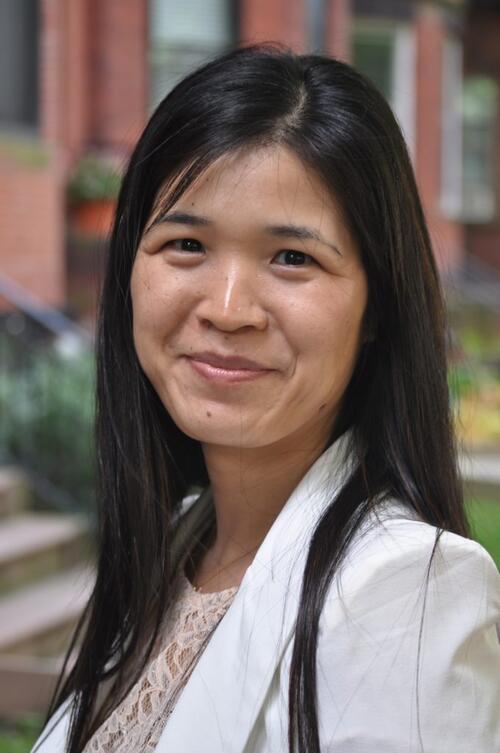
The China Program at Shorenstein APARC had the pleasure of hosting Professor Min Ye of Boston University’s Pardee School of Global Studies on October 14, 2020. Her program, moderated by China Program Director Jean Oi, focused on the much-discussed but poorly-understood Belt and Road Initiative (BRI), announced in 2013 by President Xi Jinping. While it is not widely known exactly what the BRI is or what Beijing hopes it will accomplish, it has been described as something of a modern silk road, connecting China to dozens of other countries through trade and extensive infrastructure projects. Based on research conducted for her recently published book, The Belt Road and Beyond: State-Mobilized Globalization in China: 1998-2018, Professor Ye enlightened the audience on a surprisingly critical element of this global program: the domestic component.

While Ye began her research with the assumption that many hold about the BRI—that it is primarily a global, internationally-focused initiative—as she continued her research, she found that many, if not most, BRI projects are either entirely domestic or have strong ties to domestic programs. To this end, she posed three questions during her program: Why did Chinese leadership launch the BRI in 2013? How did the Chinese state and businesses implement the BRI? and, What are the internal and external outcomes of the BRI?

To answer these questions, Ye explained the theoretical frameworks she used to understand both the BRI and China's "state-mobilized globalization." Firstly, Ye's "Chinese-State Framework" breaks the Chinese governmental system into three parts: Party Leadership, State Bureaucracy, and Subnational Actors. Each of these elements affect the others, as well as policy surrounding the BRI. However, this division also creates fragmentation in authority and ideology. Secondly, her “State-Mobilized Globalization” framework explains the process surrounding Chinese national strategy. Ye posits that national strategies are generally prompted by crises faced at lower levels of government, particularly when a lack of efficiency or communication is causing “state paralysis.” Once the strategy is announced in order to coordinate efforts and solve the crisis, it enters a feedback loop in which plans are adjusted and changed according to ground-level conditions. These frameworks informed the empirical studies used to answer Ye’s research questions.

The drivers of the BRI, argues Ye, were threefold: strategic, diplomatic, and economic. It was believed by interested parties within China that such an international initiative could ease tensions related to the United States and maritime Asia, as well as generally improve diplomatic relations for the country. China’s industries were also facing problems related to overcapacity, and economic and financial groups wished to use their excess capital to invest abroad. Actors from several different levels in China, including national agencies, local governments, and private entrepreneurs, were involved in executing BRI projects intended to alleviate these tensions. Different cities saw different sides of this implementation: Chongqing, one of China’s largest cities, is heavily dominated by state capital, with its main BRI actors being State-Owned Enterprises (SOEs). Wenzhou, a port city in Zhejiang province, is by contrast dominated by private entrepreneurs.

With diverse implementation comes diverse outcomes. Ye argues that some BRI projects have been helpful in reforming cities’ structural economy, while others have helped upgrade industry. The BRI has managed to alleviate some of the tensions listed above, but at the same time, it has created its own problems. While there has been a massive internal mobilization effort for BRI projects, there exists a disconnect between the domestic situation and demands for transparency from outside actors.

Ye concluded her talk by tying her research to current developments related to COVID-19. While one might imagine that a global pandemic would be a significant inhibitor to an international trade and infrastructure project, Ye finds just the opposite. Because the BRI is, in fact, quite domestically focused, many BRI projects are continuing at a rapid pace, albeit with digital adjustments. Some projects, such as the New Infrastructure Plan, were actually fast-tracked in the wake of the pandemic outbreak. Ye predicts that as COVID-19 restrictions ease and the world returns to “normal,” these domestic and digital elements will be combined with the BRI’s original projects.

An audio recording of this program is available at the link below, and a video recording is available upon request. Please contact Callista Wells, China Program Coordinator at cvwells@stanford.edu with any inquiries.

Read More

Photograph of the UN building in Geneva, Switzerland
News

Rebuilding International Institutions Will be Tough but Necessary, Say Stanford Experts Thomas Fingar and Stephen Stedman

Fingar and Stedman spoke as part of the APARC program “Rebuilding International Institutions,” which examined the future of international institutions such as the United Nations (UN), World Trade Organization (WTO), and World Health Organization (WHO) in our evolving global political landscape.
Rebuilding International Institutions Will be Tough but Necessary, Say Stanford Experts Thomas Fingar and Stephen Stedman
Cover of the book Fateful Decisions: Choices That Will Shape China's Future
News

Thomas Fingar and Jean Oi Analyze the Choices and Challenges Facing China’s Leaders

Fingar and Oi joined the National Committee on U.S.-China Relations to discuss their edited volume, ‘Fateful Decisions: Choices that Will Shape China’s Future.’
Thomas Fingar and Jean Oi Analyze the Choices and Challenges Facing China’s Leaders
Hero Image
Min Ye speaking
All News button
1

Department of Political Science
Stanford University
Encina Hall West, Room 307
Stanford, CA 94305-6044

(650) 725-7987
0
CDDRL Affiliated Faculty
Associate Professor, Political Science
adam_bonica.jpg

Adam Bonica is an Associate Professor of Political Science. His research is at the intersection of data science and politics, with interests in money in politics, campaigns and elections, the courts, and political methodology. His research has been published in journals such as the American Journal of Political Science, Political Analysis, Journal of Economic Perspectives, Journal of Law, Economics, and Organization, and JAMA Internal Medicine. His book, The Judicial Tug of War: How Lawyers, Politicians, and Ideological Incentives Shape the American Judiciary (with Maya Sen), examines the politicization of the American judiciary. 

CV
Date Label
Authors
News Type
News
Date
Paragraphs

On September 29, the APARC China Program hosted Thomas Fingar and Stephen Stedman for the program “Rebuilding International Institutions.” The program, which was moderated by China Program Director Jean Oi, examined the future of international institutions such as the United Nations (UN), World Trade Organization (WTO), and World Health Organization (WHO) in our evolving global political landscape. While Fingar and Stedman acknowledged that such institutions facilitated attainment of unprecedented peace and prosperity after WWII, they also asked difficult questions: Are these institutions still adequate? And if not, how will we change them?

Shorenstein APARC Fellow Thomas Fingar kicked off the session by asking whether or not US-China tensions would impede cooperation on major global challenges, or if those challenges were so serious as to render such rivalries immaterial. Perhaps the most obvious example of such a crisis is the current COVID-19 pandemic. The efforts to curb the virus’ spread not only by individual countries, but also by international organizations like the WHO, have proven largely inadequate. According to Fingar, our existing institutions need to be reformed or supplemented to deal with these types of threats. However, such an overhaul of our international systems will be difficult, he says.

How, then, will we go about such a massive project? Stephen Stedman, Deputy Director at Stanford’s Center on Democracy, Development, and the Rule of Law (CDDRL), responded by explaining that the current failure of international cooperation makes such undertakings tough. Globalization has been a double-edged sword: On one hand, more contact, perhaps inherently, leads to increased tension. The resurgence of traditional notions of sovereignty in 2010, kickstarted by the opposition of countries like Russia and China to what was seen as UN overreaching, has led to a reduction of international cooperation overall. On the other hand, Fingar posits that our interconnectedness may force us toward cooperation despite rivalries as we face more and more transnational threats. International institutions create rules to organize and manage our many interconnected relationships so that we can deal with our problems effectively and reduce friction.

Stedman also pointed to the upcoming US elections and the major impact their outcome will have on how these problems are addressed—or not. In the last four year, the United States has pulled back significantly from international institutions and agreements, leaving a gap that China has started to fill. Furthermore, despite the US’s retreat from international responsibility, the country still remains a critical actor in global initiatives. China’s embrace of a global leadership role is not inherently negative, but its future relationship with the US will need to be “managed in a way that you get greater cooperation and not just paralysis.” Stedman says that it is likely that progress will need to be made on a bilateral front in order to have productive conversations about international issues with China.

Concluding on an optimistic note, Fingar voiced his hope that the current tensions and negative perceptions between rivals might ultimately “be mitigated by success in dealing with a common problem,” because “experience does shape perceptions.”

A video recording of this program is available upon request. Please contact Callista Wells, China Program Coordinator at cvwells@stanford.edu with any inquiries.

Read More

View of building roof in the Forbidden City complex and the Beijing skyline in the background
News

New Fellowship on China Policy Seeks to Strengthen U.S.-China Relations

Stanford University’s Shorenstein Asia-Pacific Center invites applications for the inaugural 2021-22 China Policy Fellowship from experts with research experience on issues vital to the U.S. China policy agenda and influence in the policymaking process.
New Fellowship on China Policy Seeks to Strengthen U.S.-China Relations
Cover of the book Fateful Decisions: Choices That Will Shape China's Future
News

Thomas Fingar and Jean Oi Analyze the Choices and Challenges Facing China’s Leaders

Fingar and Oi joined the National Committee on U.S.-China Relations to discuss their edited volume, ‘Fateful Decisions: Choices that Will Shape China’s Future.’
Thomas Fingar and Jean Oi Analyze the Choices and Challenges Facing China’s Leaders
Hero Image
Photograph of the UN building in Geneva, Switzerland Image by Mat Reding on Unsplash
All News button
1
Subtitle

Fingar and Stedman spoke as part of the APARC program “Rebuilding International Institutions,” which examined the future of international institutions such as the United Nations (UN), World Trade Organization (WTO), and World Health Organization (WHO) in our evolving global political landscape.

Date Label
Authors
Ryan A. Musto
News Type
Commentary
Date
Paragraphs

Abstract: This paper examines the U.S. approach to the idea of arming the United Nations with nuclear weapons in the earliest decades of the Cold War. The main protagonist is Harold Stassen, who in 1945 publicly proposed a nuclear-armed UN air force as a way to control the bomb, stop proliferation, and strengthen the UN. The Truman Administration rejected the idea because of the questions it raised about the use of atomic weapons and the capabilities of the UN, as well as the threat it posed to the U.S. atomic monopoly. But the idea reemerged in the Eisenhower Administration. U.S. Ambassador to the UN Henry Cabot Lodge, Jr. and Secretary of State John Foster Dulles sought to provide the UN with agency in nuclear decision-making, a pitch that inspired Stassen to revisit his earlier enthusiasm for a nuclear-armed UN. Stassen again touted its deterrent effects, but, unlike before, looked to use the proposal to consolidate an unequal nuclear order. After the Eisenhower Administration rebuffed Stassen’s “Atoms for Police” proposal, the idea transitioned to plans for general and complete disarmament and became a tenuous feature of an initiative put forth by the Kennedy Administration. Overall, the idea spoke to the struggle of the United States to achieve progress in disarmament while it clung to its nuclear arsenal. To highlight its core principles, this paper concludes with a brief comparison to the UN’s 2017 Treaty on the Prohibition of Nuclear Weapons.  

Read the rest at  The Wilson Center

Hero Image
man smiling
All News button
1
Subtitle

In commemoration of the UN’s 75th anniversary, Ryan Musto unveils the forgotten history of the dream to arm the UN with nuclear weapons and why three U.S. presidential administrations ultimately rejected the idea in the earliest decades of the Cold War.

-

This is a virtual event. Please click here to register and generate a link to the talk. 
The link will be unique to you; please save it and do not share with others.

Most people attribute the Belt and Road Initiative (BRI) to Beijing’s imperialist ambitions. In her talk, Professor Min Ye will go beyond top-level rhetoric, however, and investigate BRI’s origins, its implementation, and its on-the-ground effects inside China. She will unpack different local governments' approaches to the BRI by discussing how subnational entities have leveraged Beijing’s grand strategy and how the implementation of projects and programs related to the BRI facilitate local economic agendas. China’s local developmentalism, which has undergirded not only the BRI but also other national-level strategies (like the Western Development Program and China Goes Global policy), has propelled the Chinese economy from a middle power in 1998 to a superpower in 2018. The talk will conclude with a discussion of COVID-19’s impact on China’s BRI as well as preliminary findings from Professor Ye’s current research into other state-mobilized development initiatives in China.
 

Image
Portrait of Professor Min Ye
Min Ye is an Associate Professor at the Pardee School of Global Studies, Boston University. Her research lies in the nexus between domestic and global politics and economics and security, focusing on China, India, and regional relations. Her publications include The Belt, Road, and Beyond: State-Mobilized Globalization in China 1998 -- 2018 (Cambridge University Press, 2020), Diasporas and Foreign Direct Investment in China and India (Cambridge University Press, 2014), and The Making of Northeast Asia (with Kent Calder, Stanford University Press, 2010). She has received a Smith Richardson Foundation grant (2016-2018), the East Asia Peace, Prosperity, and Governance Fellowship (2013), Princeton-Harvard China and the World Program post-doctoral fellowship (2009-2010), and Millennium Education Scholarship in Japan (2006). In 2014-2016, Min Ye was an NCUSCR Public Intellectual Program fellow. Ye is currently the 2020 Rosenberg Scholar of East Asian Studies at Suffolk University.

Via Zoom Webinar. Register at: https://bit.ly/3kJlhM9

Min Ye Associate Professor, Pardee School of Global Studies, Boston University
Seminars
Authors
News Type
News
Date
Paragraphs

Since regaining its independence in the aftermath of the Soviet Union’s collapse nearly 30 years ago, Ukraine has sought to build links with the West. This includes ties with institutions such as NATO, with which Ukraine has established a distinctive partnership. Kyiv has been keen on deepening those ties. Its interest in becoming a NATO member has continued to grow since 2014, as it views NATO as a means to protect Ukrainian sovereignty and territorial integrity from its aggressive neighbor, Russia.

Although NATO-Ukraine cooperation has intensified, and the Alliance maintains its “open door” policy, NATO members appear reluctant to put Ukraine on a membership track. Despite the fact that Russia continues a low-intensity conflict against Ukraine—and occupies Ukrainian territory—Kyiv can expand its practical cooperation with NATO. However, in the near term, Kyiv will have to keep its expectations about membership modest.

Read the rest at Turkish Policy Quarterly

Hero Image
photo of man smiling
All News button
1
Subtitle

Since regaining its independence in the aftermath of the Soviet Union’s collapse nearly 30 years ago, Ukraine has sought to build links with the West. This includes ties with institutions such as NATO, with which Ukraine has established a distinctive partnership.

Encina Hall
616 Jane Stanford Way
Stanford, CA 94305-6055

0
Research Scholar
mike_bennon_2022.jpg

Michael Bennon is a Research Scholar at CDDRL for the Global Infrastructure Policy Research Initiative. Michael's research interests include infrastructure policy, project finance, public-private partnerships and institutional design in the infrastructure sector. Michael also teaches Global Project Finance to graduate students at Stanford. Prior to Stanford, Michael served as a Captain in the US Army and US Army Corps of Engineers for five years, leading Engineer units, managing projects, and planning for infrastructure development in the United States, Iraq, Afghanistan and Thailand. 

Program Manager, Global Infrastructure Policy Research Initiative
-

This event has been postponed. Please see below for details.

On the heels of Prime Minister Abe's resignation, a Cabinet meeting has been called for the morning of Wednesday, September 16 prior to the Diet vote for the new Prime Minister later that day. As much as he would like to join us that morning, Defense Minister Kono has to prioritize the cabinet meeting; the whole cabinet has to resign in order for the vote to take place. Therefore, we will be postponing our seminar "Turbulence in East Asia and Japan's Security," which was planned for September 15 at 4 PM (Pacific)/September 16 at 8 AM (Japan). 
 
We will advertise the new date for the event once it has been set. We hope you will be able to join us at that time. Thank you for your interest and understanding.
 
 
Starting with a landscape overview of Japan's security and defense as it regards the Asia-Pacific region and also the world, Japanese Minister of Defense Kono Taro will discuss recent changes in Japan's security environment, the challenges and opportunities these changes present, as well as their impacts on the country's security policy. Minister Kono will also examine the major issues for Japan's defense and Japan's approach to them. The webinar will end with a short audience Q&A moderated by APARC Japan Program Director Kiyoteru Tsutsui.
 
SPEAKER
Image
Portrait of Taro Kono, Japanese Minister of Defense
Kono Taro, 56, is an eight-term Member of the House of Representatives. He has been Minister of Defense in the Abe Government since September 11, 2019.
 
Among positions he has held are Foreign Minister; Chairman of the National Public Safety Commission, or Minister in charge of the National Police Organization; Minister for Administrative Reform; Minister for Civil Service Reform; Minister for Regulatory Reform; Minister in Charge of Consumer Affairs and Food Safety; and Minister in Charge of Disaster Management in the Abe Government, Parliamentary Secretary for Public Management and Senior Vice-Minister of Justice in the Koizumi Government, and Chairman of the Standing Committee on Foreign Affairs of the House of Representatives.
 
Kono is a graduate of the School of Foreign Service, Georgetown University. He was Chairman of the Japan Race Horse Association and Chairman of the Shonan Bellmare Football Club, the 1995 Asia Champion Soccer Club. He is married to Kaori and has a son, Ippei.
Kono Taro Minister of Defense, <br>Government of Japan</br>
Seminars
-

This is a virtual event. Please click here to register and generate a link to the talk. 
The link will be unique to you; please save it and do not share with others.


Sponsored by the Stanford China Program and the Stanford Center at Peking University.
 

International institutions established after WWII and shaped by the Cold War facilitated attainment of unprecedented peace and prosperity.  But what worked well in the past may no longer be adequate to address the challenges and opportunities in the world these institutions helped to create.  Should legacy institutions be reformed, replaced, or supplemented by new mechanisms to manage new global challenges?  This program will examine whether existing institutions of global governance are adequate, and if not, why changing them will be difficult.


Image
Dr. Thomas Fingar
Thomas Fingar is a Shorenstein APARC Fellow in the Freeman Spogli Institute for International Studies at Stanford University. He was the inaugural Oksenberg-Rohlen Distinguished Fellow from 2010 through 2015 and the Payne Distinguished Lecturer at Stanford in 2009. From 2005 through 2008, he served as the first deputy director of national intelligence for analysis and, concurrently, as chairman of the National Intelligence Council. Fingar served previously as assistant secretary of the State Department’s Bureau of Intelligence and Research (2000-01 and 2004-05), principal deputy assistant secretary (2001-03), deputy assistant secretary for analysis (1994-2000), director of the Office of Analysis for East Asia and the Pacific (1989-94), and chief of the China Division (1986-89). Between 1975 and 1986 he held a number of positions at Stanford University, including senior research associate in the Center for International Security and Arms Control.

Fingar's most recent books are The New Great Game: China and South and Central Asia in the Era of Reform, editor (Stanford, 2016), Uneasy Partnerships: China and Japan, the Koreas, and Russia in the Era of Reform (Stanford, 2017), and Fateful Decisions: Choices that will Shape China’s Future, co-edited with Jean Oi (Stanford, 2020).


Dr. Stephen J. StedmanStephen Stedman is a Freeman Spogli senior fellow at the Center on Democracy, Development, and the Rule of Law and FSI, an affiliated faculty member at CISAC, and professor of political science (by courtesy) at Stanford University. 

In 2011-12 Professor Stedman served as the Director for the Global Commission on Elections, Democracy, and Security, a body of eminent persons tasked with developing recommendations on promoting and protecting the integrity of elections and international electoral assistance. The Commission is a joint project of the Kofi Annan Foundation and International IDEA, an intergovernmental organization that works on international democracy and electoral assistance. In 2003-04 Professor Stedman was Research Director of the United Nations High-level Panel on Threats, Challenges and Change and was a principal drafter of the Panel’s report, A More Secure World: Our Shared Responsibility. In 2005 he served as Assistant Secretary-General and Special Advisor to the Secretary- General of the United Nations, with responsibility for working with governments to adopt the Panel’s recommendations for strengthening collective security and for implementing changes within the United Nations Secretariat, including the creation of a Peacebuilding Support Office, a Counter Terrorism Task Force, and a Policy Committee to act as a cabinet to the Secretary-General.  His most recent book, with Bruce Jones and Carlos Pascual, is Power and Responsibility: Creating International Order in an Era of Transnational Threats (Washington DC: Brookings Institution, 2009).

Via Zoom Webinar. Register at: https://bit.ly/3b6qmKT

Thomas Fingar Shorenstein APARC Fellow, Stanford University
Stephen Stedman Deputy Director, Center on Democracy, Development and Rule of Law, Stanford University
Seminars
Authors
Callista Wells
News Type
News
Date
Paragraphs

To celebrate its May Release, the Stanford China Program hosted a virtual book launch event for Fateful Decisions: Choices That Will Shape China’s Future (Stanford University Press) on June 2nd. Joining co-authors Thomas Fingar (Shorenstein APARC Fellow, Stanford University) and Jean C. Oi (Director, Stanford China Program; William Haas Professor of Chinese Politics, Stanford University) were contributors Karen Eggleston (Senior Fellow at FSI; Director of the Asia Health Policy Program, Shorenstein APARC, Stanford University), Barry Naughton (Sokwanlok Chair of Chinese International Affairs, School of Global Policy and Strategy, UC San Diego), and Andrew Walder (Senior Fellow at FSI; Denise O'Leary and Kent Thiry Professor, Stanford University). As Fingar and Oi point out in their volume, despite China’s extraordinary growth over the past 40 years, the country’s future is uncertain. China has enjoyed optimal conditions for development since the 1980s, but new hurdles including an aging populace, the loss of comparative economic advantage, a politically entrenched elite, and a population with rising expectations will test the country’s leaders. With each focusing on a different facet of China’s challenges, the panelists gathered to share their expertise and provide the audience with a glimpse into what the future might hold for this important country.

Following an introduction from Professor Jean Oi, the program kicked off with Professor Barry Naughton of University of California, San Diego, who discussed his chapter entitled “Grand Steerage.” Professor Naughton argued that, as it plans for the future, China’s policymaking is becoming increasingly technology-focused, particularly in the realm of economic policy. Naughton further notes that China’s economy is becoming simultaneously more state-guided and more centered around technology. This decision is a gamble, though: China is investing heavily in high-tech industries, advancing massive, centrally steered projects like the Greater Bay Area initiative and the Xiong’an New District. If they are successful, says Naughton, this will indeed be an incredible success. But, if they are not, China’s losses will be major: “There’s not really a middle ground.”

After Professor Naughton was Professor Karen Eggleston, an expert on health policy in Asia. Professor Eggleston’s chapter, “Demographic and Healthcare Challenges,” deals with emerging obstacles for China’s healthcare system, including population aging and the problems that come with it, like chronic diseases and elder care. Although China’s healthcare system has improved dramatically in recent decades, it has done so unevenly, notes Eggleston: life expectancy has greatly increased, but with disparities according to income, region, and urban vs. rural status; universal healthcare is available, but the benefit level is low, effectively limiting the standard of care many can receive. The ratio of health spending to GDP is also increasing, yet it is still modest compared to high-income countries. The COVID-19 crisis has, of course, introduced even more challenges: Will China be able to distribute future vaccines equitably? Will this crisis negatively affect young people’s decisions to choose healthcare as a career? Will telemedicine, which has seen a surge under the pandemic, improve or exacerbate existing disparities? China faces a multitude of constraints and choices going forward if it hopes to meet its population’s healthcare needs.

The audience then had a chance to hear from co-editor Thomas Fingar, speaking on his chapter, “Sources and Shapers of China’s Foreign Policy.” Fingar noted three key takeaways from both his chapter and his talk: Firstly, China’s foreign policy is a fundamental part of its national policy. Secondly, the global political environment plays an important role in shaping both foreign and domestic policy which, thirdly, plays an important role in shaping foreign policy. The conditions that allowed China to flourish over the past 40 years, emphasized Fingar, are very different from those of the present. In the 1970s and 80s, China was able to take advantage of Cold War bipolarity, globalization was in its infancy, and “China was the only significant developing country willing to embark, at that time, on the export-led path of development.” In recent years, though, China’s behavior internationally has alienated other countries; there are many competitors pursuing its style of development; and its needs and aspirations have changed, requiring more raw materials and depending upon multi-national economic agreements. Fingar suggests two potential foreign policy options: China could continue with its wolf warrior diplomacy, which has “alienated essentially all China’s neighbors to some degree,” or it could return to a style more similar to that of the 1980s and 90s Reform and Opening era. It remains to be seen which style will win out.

Finally, Professor Andrew Walder concluded the program with his discussion of China’s political future at large. His chapter, “China’s National Trajectory,” follows China’s remarkable advancement in recent years and “tr[ies] to divine what a lower growth era will mean for China’s political future.” The last 40 years of rapid growth have generated support for China’s political system, more patriotism, the near eradication of democracy movements, and an elite unity not seen in the 1970s and 80s. However, low growth rates could mean a reversal for many of these trends, says Walder. While the aforementioned support for and stability of the Chinese government was maintained by ever-improving living standards and upward mobility, a low growth period (coupled with an aging population) means the government will no longer be able to rely on these trends for popular support. Rather, it will need to improve its provision of public services to address present-day challenges. Regardless, argues Walder, the low growth era will undoubtedly lead to “dynamic changes underneath the façade of stability of Chinese politics….”

For more insights on the modern obstacles China faces and what they mean for the country’s future, check out Fateful Decisions: Choices That Will Shape China's Future, available for purchase now.

Read More

Elderly Chinese citizens sit together on a park bench.
Q&As

Karen Eggleston Examines China’s Looming Demographic Crisis, in Fateful Decisions

Karen Eggleston Examines China’s Looming Demographic Crisis, in Fateful Decisions
Quote from Thomas Fingar and Jean Oi from, "China's Challeges: Now It Gets Much Harder"
Commentary

Now It Gets Much Harder: Thomas Fingar and Jean Oi Discuss China’s Challenges in The Washington Quarterly

Now It Gets Much Harder: Thomas Fingar and Jean Oi Discuss China’s Challenges in The Washington Quarterly
Hero Image
Fateful Decisions book cover
All News button
1
Subscribe to Institutions and Organizations