Security

FSI scholars produce research aimed at creating a safer world and examing the consequences of security policies on institutions and society. They look at longstanding issues including nuclear nonproliferation and the conflicts between countries like North and South Korea. But their research also examines new and emerging areas that transcend traditional borders – the drug war in Mexico and expanding terrorism networks. FSI researchers look at the changing methods of warfare with a focus on biosecurity and nuclear risk. They tackle cybersecurity with an eye toward privacy concerns and explore the implications of new actors like hackers.

Along with the changing face of conflict, terrorism and crime, FSI researchers study food security. They tackle the global problems of hunger, poverty and environmental degradation by generating knowledge and policy-relevant solutions. 

News Type
Commentary
Date
Paragraphs

"There is growing consensus that populism constitutes a grave threat to liberal democracy, and to the liberal international order on which peace and prosperity have rested for the past two generations," writes Francis Fukuyama in the World Economic Forum. The fate of the global liberal order could be jeopardized due to rising populist powers and movements. Read the full article here

Hero Image
hands 600497 1280
All News button
1
-

Co-sponsored by the Southeast Asia Program and the Abbasi Program in Islamic Studies

Transnational Islam lacks the centralized leadership and institutions associated with Catholicism. Yet hierarchical and authoritative bodies do make decisions regarding Islam in various contemporary settings, including within the institutional frameworks of states. What happens when Muslim faith and practice are adapted to the terms and procedures of bureaucracy and the modern nation-state?

Dr. Müller will present an original conceptual framework for studying the bureaucratization of Islam. He will apply it to five Southeast Asian cases—Brunei, Indonesia, Malaysia, the Philippines, and Singapore. State bureaucracies in these countries vary widely,
but generally they aim to influence or control trends and meanings in local Islamic discourse. Drawing on current debates in the anthropology of the state, with particular reference to Brunei and Singapore, Müller will offer an original analytic framework to explain similarities and differences in bureaucratized Islam in Southeast Asia. Possible implications beyond the region will also be explored.

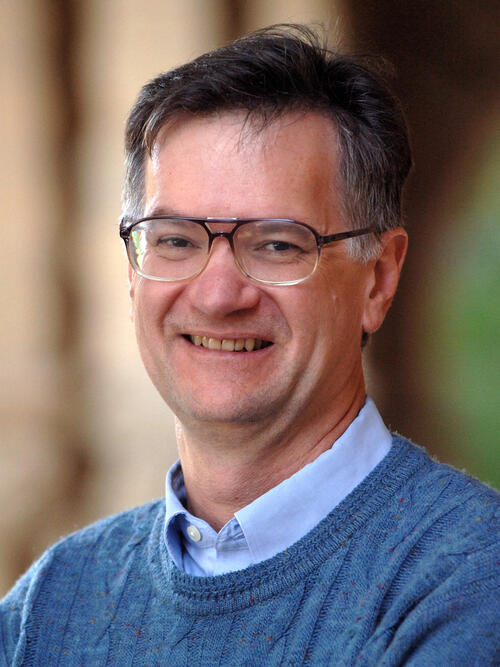
Dominik Müller

Image
dominik mueller4x4
heads the Max Planck Institute for Social Anthropology’s Research Group on the Bureaucratization of Islam and Its Socio-Legal Dimensions in Southeast Asia. He is also a non-resident fellow in the Centre for Asian Legal Studies at the National University of Singapore (NUS). Prior positions include visitorships at NUS (2016), the University of Oxford (2015), the University of Brunei Darussalam (2014), and Stanford University (APARC, 2013).  His doctorate in anthropology is from Goethe University Frankfurt (2012).His latest publication is an article on “Hybrid Pathways to Orthodoxy” in Brunei in the April-May 2018 Journal of Current Southeast Asian Affairs, a special issue on bureaucratized Islam that he also guest-edited.


Shorenstein APARC
Stanford University
Encina Hall, Room C331
Stanford, CA 94305-6055

(650) 724-5656 (650) 723-6530
0
Visiting Scholar
MullerDominik.jpg PhD

Dominik Müller joins the Walter H. Shorenstein Asia-Pacific Research Center (Shorenstein APARC) from February until May 2013 from the Department of Anthropology at Goethe-University Frankfurt where he serves as a postdoctoral research associate.

His research interests encompass Islam and popular culture in contemporary Southeast Asia, Malaysian domestic politics, and socio-legal change in the Malay world.

During his time at the Shorenstein APARC, Müller will conduct research on the religious bureaucracy of Malaysia. His research project at Stanford is funded by the German Academic Exchange Service (DAAD).

Müller obtained his PhD summa cum laude in 2012 in cultural anthropology from the Cluster of Excellence the “Formation of Normative Orders” at Frankfurt University. He previously studied anthropology, philosophy, and law in Frankfurt and at Leiden University. His dissertation on Islam, Politics, and Youth in Malaysia received the Frobenius Society’s Research Award 2012 and will be published in 2013.

Visiting Fellow, Islamic Legal Studies Program on Law and Social Change, Harvard University
Seminars
-

Abstract: The conventional international approach to post-conflict intervention has fallen short of expectations despite the enormous resources devoted to the endeavor. In this talk, Naazneen H. Barma will offer her original analysis of the underlying problem, arguing that while international peacebuilders aim to build effective and legitimate government, post-conflict elites co-opt process-focused interventions to serve their own very different political ends. She will present the core findings of her book, The Peacebuilding Puzzle, which develops a historical institutionalist approach to understanding peacebuilding. Through a comparative analysis of UN peace operations in Cambodia, East Timor, and Afghanistan, she will illustrate how competing international and domestic visions of post-conflict political order shape outcomes at three critical peacebuilding phases: the peace settlement; the transformative peace operation; and the aftermath of intervention. The central implication emerging from this study is that international peacebuilders must abandon the notion that post-conflict institutions can be designed and transplanted in whole cloth. Barma will conclude the talk with suggestions for a more incremental and adaptive approach to better achieve robust political order in post-conflict countries.

Speaker bio: Naazneen H. Barma is Associate Professor of National Security Affairs at the Naval Postgraduate School. Her research and teaching focus on peacebuilding and political order, the political economy of development, and natural resource governance, with a regional specialization in East Asia and the Pacific. Her most recent book, The Peacebuilding Puzzle (Cambridge University Press 2017), argues that international peace operations fall short of achieving the modern political order sought in post-conflict countries because the interventions empower domestic elites to attain their own political ends. Barma received her PhD and MA in Political Science from the University of California, Berkeley, and her MA in International Policy Studies and BA in International Relations and Economics from Stanford University. From 2007–2010, she was a Young Professional and Public Sector Specialist at the World Bank, where she conducted political economy analysis and worked on operational dimensions of governance and institutional reform in the East Asia Pacific Region. Barma is a founding member and co-director of Bridging the Gap, an initiative devoted to enhancing the policy impact of contemporary international affairs scholarship. 

Naazneen H. Barma Associate Professor, Department of National Security Affairs Naval Postgraduate School
Seminars
-

Abstract: China’s participation in venture deals financing is at a record level of 10-16% of all venture deals (2015-2017) and has grown quite rapidly in the past seven years.  Technologies where Chinese firms are investing are foundational to future innovation:  artificial intelligence, autonomous vehicles, augmented/virtual reality, robotics and blockchain technology. Moreover, since these technologies are dual use--designed for commercial use but also equally applicable for military applications, these are some of the same technologies of interest to the U.S. Defense Department.  

Investing is itself only a piece of a larger story of massive technology transfer from the U.S. to China. China has a long-term, systematic effort to attain global leadership in many industries, partly by transferring leading-edge technologies from around the world.

U.S. military superiority since World War II has relied on both U.S. economic scale and technological superiority. If we allow China access to these same technologies concurrently, then not only may we lose our technological superiority but we may even be facilitating China’s technological superiority. 

Speaker bio: Michael Brown is a White House Presidential Innovation Fellow in the U.S. Defense Department. He is the co-author of a Pentagon study on China’s participation in the U.S. venture ecosystem which served as key input for the proposed Foreign Investment Risk Review Modernization Act (FIRRMA) being reviewed with bipartisan support by both the House and Senate.

Michael is the former CEO of Symantec Corporation, the global leader in cybersecurity and the world’s 10th largest software company with revenues of $4 billion and more than 10,000 employees worldwide. During his tenure as CEO, Michael led a turnaround as the company developed a new strategy focusing on its security business.

Michael is the former Chairman & CEO of Quantum, a leader in the computer storage industry specializing in backup and archiving products. After leaving Quantum, Michael served as Chairman of EqualLogic, a storage array company. 

He serves on the Board of Trustees of the Berklee College of Music in Boston, received his BA degree in economics from Harvard University in 1980 and his MBA degree from Stanford University in 1984.  

Michael Brown U.S. Department of Defense
Seminars
News Type
Commentary
Date
Paragraphs

“I don't think [young South Koreans] necessarily want reunification,” APARC director Gi-Wook Shin tells an audience during the World Affairs panel, “Responding to North Korea: South Korea’s Olympic Olive Branch and US Cyber Warfare Options." Joined by Ambassador Kathleen Stephens, the two spoke with World Affars CEO Jane Wales about many of the issues facing the Korean peninsula as it prepares for the start of the Pyeongchang Winter Olympics

The conversation is also available as a downloadable podcast

Hero Image
Wrold Affairs CEO Jane Wales, APARC Director Gi-Wook Shin, and Kathleen Stephens
All News button
1
Paragraphs
Book cover of "Peace on a Knife's Edge" showing South Korean president Roh Moo-hyun alongside George W. Bush and Kim Jong-il

Lee Jong-Seok served as vice-secretary of South Korea’s National Security Council and as its unification minister under the Roh Moo-Hyun administration (2003–08). After Roh’s tragic death in 2009, Lee resolved to present a record of the so-called participatory government’s achievements and failures in the realm of unification, foreign affairs, and national security.

Peace on a Knife’s Edge is the translation of Lee’s 2014 account of Roh’s efforts to bring peace to the Korean Peninsula in the face of opposition at home from conservative forces and abroad from the Bush administration’s hard stances of “tailored containment” and its declaration of the North as part of the “axis of evil.” Lee’s narrative will give American readers rare insights into critical moments of Roh’s incumbency, including the tumultuous Six-Party Talks; the delicate process of negotiating the relocation and reduction of United States Forces Korea; Roh’s pursuit of South Korea’s “autonomous defense”; conflicts with Japan over history issues; and the North’s first nuclear weapons test.

Desk, examination, or review copies can be requested through Stanford University Press.

All Publications button
1
Publication Type
Books
Publication Date
Subtitle

The Inside Story of Roh Moo-hyun's North Korea Policy

Book Publisher
Shorenstein APARC
-

Image
cover pic

After the Cold War, Thailand became a poster child of democratizing processes in Southeast Asia. Student protests, farmers’ activism, a thriving civil society, and an expanding middle class suggested a model of successful democratic transition. In the last decades, however, many of the forces that supported that process turned sour on electoral politics. Dr. Sopranzettis book will explore how that happened—new class alliances, discourses of corruption and morality, questions of law.  In this context, he will portray Thailand as an experimental space for a new model of authoritarianism, inspired by Beijing and now spreading throughout the region.  The book, Owners of the Maps: Motorcycle Taxi Drivers, Mobility, and Politics in Bangkok, will be available for sale at the talk.


Claudio Sopranzetti is a Postdoctoral Research Fellow at All Souls College at the University of Oxford. He is the author of Owners of the Maps: Motorcycle Taxi Drivers, Mobility, and Politics in Bangkok and he is currently working on Awakened,  an anthropological graphic novel on Thai politics.

Claudio Sopranzetti Postdoctoral Research Fellow, All Souls College, Oxford University
Seminars
-

Abstract: Founded in 1945 by Manhattan Project scientists who “could not remain aloof to the consequences of their work,” the Bulletin of the Atomic Scientists aimed to chronicle the dawn of the nuclear age through the words of the men and women who built the atomic bomb. In 1947, Bulletin supporters—including a veritable Who’s Who of nuclear physics, from Einstein and Fermi to Szilard and Oppenheimer—expanded their four-page newsletter into a magazine that featured a minimalist clock, ticking toward the midnight of nuclear Armageddon, on its cover. More than 70 years later, the now-famous Doomsday Clock is set each January to reflect the world’s security situation. That event is now covered by thousands of media outlets around the world, and today’s Bulletin is hardly your grandfather’s niche magazine. It has become a global multimedia platform that deals with a host of manmade threats to civilization—from nuclear weapons to climate change and on to a host of emerging technologies—and reaches a worldwide digital audience of millions each year.     

Speaker bio: John Mecklin is the editor-in-chief of the Bulletin of the Atomic Scientists. Previously, he was editor-in-chief of Miller-McCune (since renamed Pacific Standard), an award-winning national magazine that focuses on research-based solutions to major policy problems, and the top editor of High Country News, a nationally acclaimed magazine that reports on the politics, environment, and culture of the American West. Writers working at his direction have won many major journalism prizes, including the George Polk Award, the Investigative Reporters and Editors certificate, and the Sidney Hillman Award for social justice journalism. Beyond his columns for the magazines he has edited, Mecklin’s writing has been published by Foreign Policy, The Columbia Journalism Review, and the Reuters international news service, among other media outlets. Before his magazine work, Mecklin was an investigative newspaper reporter and covered the Persian Gulf War from Saudi Arabia and Iraq. He holds a master in public administration degree from Harvard's John F. Kennedy School of Government.

John Mecklin Bulletin of the Atomic Scientists
Seminars
Authors
News Type
News
Date
Paragraphs

This piece originally appeared in Stanford News.

Secretary of State Rex Tillerson visited the Hoover Institution on Wednesday to give a speech on U.S. policies in Syria. He said a continuing presence of U.S. troops in the country is needed to stabilize the area.

In its vision for Syria, the United States wants to see a peaceful, independent country, free of weapons of mass destruction, that could welcome back millions of Syrians displaced by the past years of war, U.S. Secretary of State Rex Tillerson told a Stanford audience on Wednesday.

As part of his prepared policy speech, titled “The Way Forward in Syria,” Tillerson said that in order for that to happen, the conflict between the Syrian people and the regime of Syrian President Bashar al-Assad has to be resolved through diplomatic means, and Assad has to step aside from power. He spoke at the Hoover Institution’s Hauck Auditorium in front of some 265 Stanford students and an additional 100 staff,  faculty members and Hoover fellows, such as former Secretary of State George Shultz.

The event was cosponsored by Hoover and the Freeman Spogli Institute for International Studies (FSI).

Condoleezza Rice and Rex Tillerson“A stable, unified and independent Syria ultimately requires post-Assad leadership in order to be successful,” Tillerson said.

While acknowledging that some Americans are skeptical of the continued military involvement in Syria, Tillerson said it’s vital for the U.S. be engaged in the area in order to continue fighting terrorist groups and the possibility of their resurgence.

“United States will maintain military presence in Syria, focused on ensuring ISIS cannot re-emerge,” Tillerson said. “Ungoverned spaces, especially in conflict zones, are breeding grounds for ISIS and other terrorist organizations. … The fight against ISIS is not over. … Similarly, we must persist in Syria to thwart al-Qaida, which still has substantial presence and base operations in northwest Syria.”

Tillerson said another major goal of the U.S. in Syria is to prevent Iran from growing its influence in the region, calling the country’s influence “malicious.”

In order to achieve these goals, the U.S. will continue to help de-escalate parts of Syria and to invest in stabilization initiatives, such as clearing unexploded landmines, restoring water and electricity and helping to reopen hospitals and schools, Tillerson said.

Tillerson said the U.S. will continue to work on these efforts and on overall peace negotiations with the United Nations and Russia.

“Once Assad is gone from power, the United States will gladly encourage the normalization of economic relations between Syria and other nations,” Tillerson said. “This process will take time. But we’re patient in the departure of Assad and in the establishment of new leadership.”

After his speech, Tillerson sat down with former Secretary of State Condoleezza Rice, the Denning Professor in Global Business and the Economy at Stanford Graduate School of Business, and a senior fellow at Hoover and at FSI.

As part of the conversation, Tillerson reflected on his upcoming anniversary as secretary of state. He said what he likes most about the job is the quality of the people he works with every day.

“Even if we talk about very complicated issues … the level of intelligence and the level of openness for us to have a good conversation about it is what I most look forward to,” he said.

On the flip side, he said, are the days when he has to deal with the loss of life. “Those are the days that are most difficult.”

In response to Rice’s question about the future of international assistance programs such as the President’s Emergency Plan for AIDS Relief (PEPFAR) and the Millenium Challenge Corporation, Tillerson said the United States’ commitment to provide humanitarian aid will remain but that a conversation over how much other countries contribute in aid is also important.

Tillerson also touched on the latest state of U.S. policies toward North Korea, the topic he discussed on Tuesday during a gathering of foreign ministers in Vancouver. He said that there is growing evidence that the latest tough sanctions against North Korea are working.

“We’ve never had a sanctioned regime that is as comprehensive as this one, and we’ve never had Chinese support for sanctions like we’re getting now,” Tillerson said. “We are committed – as is everyone in the international community – to denuclearize North Korea, and we’re gonna stay on that until we achieve it.”


Hero Image
tillerson shultz rice 2
Secretary of State Rex Tillerson meets with former Secretaries of State Condoleezza Rice and George Shultz after speaking with Stanford students about Syria.
Rod Searcey
All News button
1
-

Over the last dozen years, Taiwan’s democracy has deepened in important ways. Executive power has rotated twice, from the DPP’s Chen Shui-bian to the KMT’s Ma Ying-jeou in 2008, and from Ma to the DPP’s Tsai Ing-wen in 2016. The majority in the legislature also changed for the first time in 2016, from the KMT to the DPP. Taiwan’s most recent overall Freedom House ranking is 93/100, significantly higher than the United States. Its freedom of the press ranking is the highest in all of Asia, ahead of Korea and even Japan, and its rule of law and anti-corruption scores are trending in a positive direction as well.

To be sure, serious concerns remain about the practice of democracy in Taiwan, including a poorly institutionalized and often chaotic lawmaking process, incomplete legislative oversight of executive branch actions, and a partisan and increasingly fragmented media environment. Nevertheless, the greatest threat to Taiwan’s continued place among the world’s liberal democracies now appears to be external, not internal. The People’s Republic of China (PRC) has always posed an existential threat to Taiwan, but its growing economic influence, rapid military modernization, assertive territorial claims in the region, and aggressive global efforts to isolate Taiwan have accelerated in recent years. Put simply, Taiwan’s long-term future as a democracy is imperiled by China’s rise.

The PRC’s growing power presents difficult security challenges for most of the countries in the Asia-Pacific region, not just for Taiwan. But these challenges are rarely considered from a multi-lateral perspective—most analyses of regional security issues instead tend to focus on bilateral or trilateral (US-China-Country X) relationships. This pattern is particularly common in discussions of Taiwan’s security, where the dominant focus is on Cross-Strait and US-Taiwan relations to the neglect of Taiwan’s other relationships in the region.

The goals of this workshop, then, are to place Taiwan’s security challenges in a broader, regional context, to consider possible obstacles to and opportunities for greater regional cooperation on security issues, and to devise a set of recommendations for Taiwan and its partners and allies. Workshop participants will include experts on a wide array of economic, diplomatic, and security topics from Taiwan, the United States, and elsewhere in the Asia-Pacific region.


Remarks are Off-the-Record.  Recording, reporting and citation of remarks is strictly prohibited.

AGENDA

Monday, March 5 - Koret-Taube Conference Center, John A. and Cynthia Fry Gunn Building

9:00-9:30am CONTINENTAL BREAKFAST

9:30-9:45am OPENING REMARKS
Larry Diamond, Senior Research Fellow, Center on Democracy, Development, and the Rule of Law
Karl Eikenberry, Director, U.S.-Asia Security Initiative, Asia-Pacific Research Center

9:45am – 11:30am: PANEL I.
Assessment of US Alliances and the Political and Military Situation in the Western Pacific
Chair: Tom Fingar (APARC, Stanford)
• Overview of Military Trends and US Strategy in Region. Karl Eikenberry (APARC, Stanford)
• US-Taiwan Relations. Robert Wang (Center for Strategic and International Studies)
• US-Japan Relations. TJ Pempel (UC Berkeley)
• US-Korea Relations. Kathy Stephens (APARC, Stanford)

11:30am-1:00pm LUNCH
Keynote Speaker: Robert Sutter (George Washington University) - "Will Trump administration advance support for Taiwan despite China's objections?"

1:15pm-3:00pm: PANEL II.
Trade and Economic Relations in the Western Pacific
Chair: Phillip Lipscy (APARC, Stanford)
• Regional Trade Agreements after TPP: RCEP vs TPP-11. Barbara Weisel (former Assistant US Trade Representative for SE Asia and the Pacific)
• China’s Institution-Building: OBOR, Maritime Silk Road, AIIB. Amy Searight (Center for Strategic and International Studies)
• Taiwan’s New Southbound Policy. Russell Hsiao (Global Taiwan Institute)

3:15-5:00pm: PANEL III.
Maritime Security Issues: The South and East China Seas
Chair: Karl Eikenberry (APARC, Stanford)
• Interpreting Chinese Maritime Strategy in the South China Sea, Don Emmerson (APARC, Stanford)
• China’s Maritime Militia. Andrew Erickson (Naval War College)
• Evolution of US Policy: FONOPS and Beyond. Dale Rielage (Captain, US Navy)
• Taiwan’s Role in Maritime Security Issues. Yeong-Kang Chen, (Admiral (Ret.), ROC Navy)


Tuesday, March 6 - McCaw Hall, Stanford Alumni Center

9:00-9:30am CONTINENTAL BREAKFAST

9:30-11:15am: PANEL IV.
Taiwan’s Key Asian Relations
Chair: Kharis Templeman (APARC, Stanford)
• A Taiwanese Perspective on Asian Relations. Lai I-chung (Prospect Foundation)
• NE Asia, Yeh-chung Lu (National Chengchi University)
• SE Asia, Jiann-fa Yan (Chien Hsin University of Science and Technology)

11:30-1:15pm: PANEL V.
Cross-Strait Relations
Chair: Larry Diamond
• The Domestic Politics of Security in Taiwan. Kharis Templeman (APARC, Stanford)
• Beijing’s Taiwan Policy after the 19th Party Congress. Alice Miller (Hoover Institution)
• US Role in the Trilateral Relationship. Raymond Burghardt (former chairman, American Institute in Taiwan)

1:15am-2:15pm LUNCH

March 5: Koret-Taube Conference Center, Gunn–SIEPR Building, 366 Galvez Street, Stanford, CA 94305

March 6: McCaw Hall, Frances C. Arrillaga Alumni Center, 326 Galvez St, Stanford, CA 94305

Conferences
Subscribe to Security