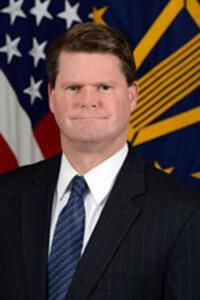
U.S.-Taiwan Relations in a Changing Indo-Pacific Region
Oksenberg Conference Room
616 Serra Mall
Encina Hall, 3rd Floor, Central S350
Stanford, CA 94305
FSI scholars produce research aimed at creating a safer world and examing the consequences of security policies on institutions and society. They look at longstanding issues including nuclear nonproliferation and the conflicts between countries like North and South Korea. But their research also examines new and emerging areas that transcend traditional borders – the drug war in Mexico and expanding terrorism networks. FSI researchers look at the changing methods of warfare with a focus on biosecurity and nuclear risk. They tackle cybersecurity with an eye toward privacy concerns and explore the implications of new actors like hackers.
Along with the changing face of conflict, terrorism and crime, FSI researchers study food security. They tackle the global problems of hunger, poverty and environmental degradation by generating knowledge and policy-relevant solutions.
Oksenberg Conference Room
616 Serra Mall
Encina Hall, 3rd Floor, Central S350
Stanford, CA 94305
Abstract: Successful use of bots and trolls as tools of its expansionist foreign policy demonstrated the Russian government's superior capability in computational propaganda. Yet the main area of application for these tools remains inside Russia: to prop up Vladimir Putin's approval ratings and deny his opponents an opportunity to reach potential voters. In this paper, we use supervised machine learning algorithms for bot detection and sentiment analysis to do a first systematic survey of bot activity in the Russian segment of Twitter. We discover a high yet fluctuating volume of bot communication and presence of both pro- and anti-government as well as neutral bots. We also identify sources of information they spread and formulate testable hypotheses about the political strategy behind bots deployment. Finally, we discuss the implications of autocrats' reliance on domestic computational propaganda for the response to their activities abroad.
Speaker's Biography: Sergey Sanovich received his Ph.D. in Politics at NYU. He studies how autocrats use the power of persuasion to come to, and stay in, office. His ongoing research is focused on online censorship and propaganda by authoritarian regimes; elections and partisanship in electoral autocracies; and personalization of politics in both autocratic and democratic countries. To conduct his research, Sergey collects big data from social media, digitalizes archival documents, and runs field and survey experiments both online and offline.
Abstract: My research investigates the formal institutionalization of inter-governmental cooperation among the three major Northeast Asian powers – China, Japan, and the Republic of Korea—in the face of a continued North Korean threat. How much of a shadow, if any, has North Korea’s nuclear weapons cast over the development of multilateralism in the region? Since 1999, the Northeast Asian region has seen intensifying institutionalization of cooperation among its major powers. In a region where the realist logic of state-centric nationalism, sovereignty, and balance of power still prevails, this new development of trilateral cooperation among the former and potential adversaries deserves serious scholarly investigation. What started as economic and functional cooperation, trilateral cooperation has since been substantially expanded to include political and security agendas at the highest level of government. What explains the emergence and endurance of trilateral cooperation and to what extent has containing the North Korean nuclear crisis shaped its institutional trajectory and outcomes? By examining the evolution of trilateral cooperation, I address some critical gaps in our understanding of formal institution building and the economic-security nexus in one of the most dynamic regions in the world.
Speaker's Biography: Yeajin Yoon is a 2018-2019 MacArthur Nuclear Security Pre-doctoral Fellow at CISAC and a doctoral candidate in the Blavatnik School of Government at the University of Oxford. Her dissertation examines the evolution of trilateral cooperation among the most militarily and economically dominant states in Northeast Asia, namely, China, Japan and the Republic of Korea, and considers when and how their relations become implicated in the North Korean nuclear crisis.
Prior to entering academia, Yeajin travelled extensively across Asia and worked with national governments, international organisations, and NGOs in the region. She led the development of the inaugural issue of the 'Oxford Government Review’ and helped facilitate a Track II dialogue on wartime history issues in Asia at Stanford University. Previously, she worked as a founding member of the Trilateral Cooperation Secretariat, the official intergovernmental organisation for China, Japan, and the Republic of Korea and managed a development fund focused on the ASEAN region at the Korean Foreign Ministry.
Yeajin received a Bachelor of Arts in Political Science with Honors from Stanford University and a Master of Public Policy degree from Oxford University.
Abstract: How do nuclear-armed states coerce their adversaries in wars with limited aims without using nuclear weapons? I develop a theory of strategic substitution to explain why states use space, cyber and conventional missile weapons instead of nuclear weapons to maximize leverage against their adversaries. I also explain how they select space, cyber, and conventional missile force postures, defined as weapons and plans for using them. Threats to use space, cyber and conventional missile weapons are more credible sources of strategic leverage against adversaries in wars that do not threaten a state’s survival. I demonstrate the plausibility of the theory using China’s cyber force posture. China developed space, cyber and conventional missile weapons to solve a common problem: giving Beijing the leverage it could not gain from its nuclear weapons in a future war over Taiwanese independence involving the United States. Using original Chinese-language written sources and interviews conducted during extensive fieldwork, I show that Chinese leaders pursued cyber weapons to maximize their strategic leverage after the United States bombed the Chinese Embassy in Belgrade in 1999. As China’s vulnerability to cyber attacks grew during the 2000s, its appetite for risk in using cyber weapons declined, resulting in a change to its military cyber force posture in 2014.
Speaker Bio: Fiona Cunningham is a Post-Doctoral Fellow at CISAC. Her research interests lie at the intersection of technology and conflict, with an empirical focus on China. She received her PhD in September 2018 from the Department of Political Science at the Massachusetts Institute of Technology (MIT), where she was a member of the Security Studies Program. Her dissertation explained China’s development of space, cyber and conventional missile force postures as substitutes for using nuclear weapons to coerce adversaries. Her research is based on extensive fieldwork, including a year-long dissertation research fellowship at the Renmin University of China, Beijing, in 2015-6. She was a Pre-Doctoral Fellow in the Cyber Security Project at the Belfer Center for Science and International Affairs at the Kennedy School of Government, Harvard University, in 2017-8. Fiona’s research has been supported by the Smith Richardson Foundation, China Confucius Studies Program, and the MIT Center for International Studies. Her research on China's nuclear strategy has been published in the quarterly journal, International Security. Fiona holds a Bachelor of Arts in Politics and International Relations from the University of New South Wales and a Bachelor of Laws from the University of Sydney, both with first-class honors. She was a research associate at the Lowy Institute for International Policy in Sydney from 2009 until 2012, where she focused on extended nuclear deterrence in East Asia and nuclear nonproliferation. Fiona speaks Mandarin Chinese and French.
Abstract: Existing international relations scholarship on human rights focuses on international law and transnational advocacy to the exclusion of "human rights diplomacy" (HRD)---efforts by government officials to engage publicly and privately with their foreign counterparts---because diplomacy is often not publicly observable. We exploit an opportunity to assess the effectiveness of HRD: a campaign coordinated by the U.S. government to free twenty female political prisoners called #Freethe20. Our analysis of release outcomes for #Freethe20 women compared to two control groups (a longer list of women considered by the State Department for the campaign and a list of women imprisoned simultaneously in the same target countries) suggests the campaign was highly effective. While #Freethe20 was public-facing, we find little evidence that "naming and shaming" alone drove releases. Drawing on in-depth interviews with U.S. officials, we argue that foreign governments were most responsive when public pressure was matched with private, coercive diplomacy.
Speaker Bio: Jeremy M. Weinstein is a Professor of Political Science and Senior Fellow at the Freeman Spogli Institute for International Studies. He is also a non-resident fellow at the Center for Global Development in Washington, D.C.
His research focuses on civil wars and political violence; ethnic politics and the political economy of development; and democracy, accountability, and political change. He is the author of Inside Rebellion: The Politics of Insurgent Violence (Cambridge University Press), which received the William Riker Prize for the best book on political economy. He is also the co-author of Coethnicity: Diversity and the Dilemmas of Collective Action (Russell Sage Foundation), which received the Gregory Luebbert Award for the best book in comparative politics. He has published articles in the American Political Science Review, American Journal of Political Science, Annual Review of Political Science, Journal of Conflict Resolution, Foreign Affairs, Foreign Policy, Journal of Democracy, World Policy Journal, and the SAIS Review.
Weinstein received the International Studies Association’s Karl Deutsch Award in 2013. The award is given to a scholar younger than 40 or within 10 years of earning a Ph.D. who has made the most significant contribution to the study of international relations. He also received the Dean’s Award for Distinguished Teaching at Stanford in 2007.
He has also worked at the highest levels of government on major foreign policy and national security challenges, engaging in both global diplomacy and national policy-making. Between 2013 and 2015, Weinstein served as the Deputy to the U.S. Ambassador to the United Nations and before that as the Chief of Staff at the U.S. Mission to the United Nations. As Deputy, Weinstein was a standing member of the National Security Council Deputies’ Committee – the sub-cabinet policy committee with primary responsibility for advising the National Security Council, the Cabinet, and the President on the full range of foreign policy issues, including global counterterrorism, nonproliferation, U.S. policy in the Middle East, the strategic rebalance to Asia, cyber threats, among a wide variety of other issues.
During President Obama’s first term, he served as Director for Development and Democracy on the National Security Council staff at the White House between 2009 and 2011. In this capacity, he played a key role in the National Security Council’s work on global development, democracy and human rights, and anti-corruption, with a global portfolio. Before joining the White House staff, Weinstein served as an advisor to the Obama campaign and, during the transition, as a member of the National Security Policy Working Group and the Foreign Assistance Agency Review Team.
Weinstein obtained a BA with high honors from Swarthmore College, and an MA and PhD in political economy and government from Harvard University. He is a member of the Council on Foreign Relations and serves on a number of non-profit boards and advisory groups.
On January 18, 2019, Stanford Global Studies and the Stanford Program on International and Cross-Cultural Education (SPICE) hosted a book talk by Professor Michael McFaul. McFaul served for five years in the Obama administration, first as Special Assistant to the President and Senior Director for Russian and Eurasian Affairs at the National Security Council (2009–2012), and then as U.S. Ambassador to the Russian Federation (2012–2014). He is also one of several contributing scholars to Inside the Kremlin, SPICE’s lesson plan on Soviet and Russian history. McFaul’s talk was given to approximately 30 community college and secondary school educators from the San Francisco Bay Area. Three of the educators—Nancy Willet, Phillip Tran, Don Uy-Barreta—are 2018–19 Stanford Education Partnership for Internationalizing Curriculum (EPIC) Fellows, and this article highlights their reflections.
Ambassador McFaul has described From Cold War to Hot Peace as “three books in one.” First, it is a book that explains the arc of U.S.–Russia relations since the end of the Cold War. Second, it a book that describes the “reset” in U.S.–Russia relations and its aftermath during the Obama presidency. Third, it is a book about McFaul’s life that describes how his involvement with the debate team at Bozeman High School, Montana, sparked his interest in Russia and led to his subsequent study of Russia at Stanford University, Oxford University, and in Russia itself. During his talk, he touched upon all three.
McFaul’s reflections not only provided the educators with important content on U.S.–Russia relations and insights from his youth to his ambassadorship, but also prompted the educators to consider effective teaching and pedagogical strategies. McFaul’s use of storytelling, presentation of multiple perspectives, emphasis on interdisciplinarity, and sharing of first-hand accounts gave the educators a glimpse into McFaul not only as an academic and diplomat but as a teacher.
EPIC Fellow Nancy Willet, Co-chair of the Business & Information Systems Department, College of Marin, noted, “I was most impressed with Ambassador McFaul’s engaging storytelling. His first-hand insights of his time spent studying and working in Russia challenged some of my misguided assumptions and helped expand my understanding of the complexities of U.S.–Russia relations. I grew up during the Cold War and the Ambassador disrupted some of my deep-rooted misconceptions about the former Soviet Union and further opened my mind for a more nuanced understanding.” In a follow-up communication, Willet said that she is devouring From Cold War to Hot Peace and plans to share McFaul’s scholarly insights with her law students—particularly when discussing democracy and rule of law—here and abroad.
EPIC Fellow Philip Tran, Instructor of Business, San Jose City College, remarked that “Ambassador McFaul’s talk reinforced the complicated notion of human relations and the importance of an interdisciplinary study of it—including political science, business, economics, etc. Interdisciplinarity is a key to grasping a better understanding of human relations.” He continued by noting that the biggest take-away from McFaul’s talk was that it cautioned him as a teacher to “refrain from the natural ‘knee-jerk’ reactions and to seek a deeper understanding of the situation from all sides…. Even though Ambassador McFaul is a subject matter expert on U.S.–Russian relations, he displayed humility and acceptance of ambiguity in his responses to some of the toughest questions regarding the U.S. relationship with Russia and Vladimir Putin.”
EPIC Fellow Don Uy-Barreta, Instructor of Economics, De Anza College, reflected upon the significance of sharing first-hand experiences with students. He noted that “Reading about Ambassador McFaul’s experience is very informative, but being able to ask questions and hearing it from the source is a whole different level of experience. As he was telling us about his days in Russia, it felt like I was right next to him, and it gave me goosebumps.” Uy-Barreta found inspiration in McFaul’s talk as he prepares for his presentation on global economics at the EPIC Symposium on May 18, 2019 during which the 2018–19 EPIC Fellows will present their research at Stanford.
McFaul has given numerous talks on From Cold War to Hot Peace but this was the first geared to an audience of educators. As I observed his talk, I was primarily attentive to the pedagogical strategies that he utilized to engage the educators. For me, his effective teaching made the history and insights in From Cold War to Hot Peace come alive and feel more like “four books in one.”
This book talk was made possible by a U.S. Department of Education Title VI grant that provides professional development opportunities for K–12 teachers and community college instructors. Among these opportunities is EPIC, a program that provides one-year fellowships to community college instructors. Title VI grant collaborators include Stanford Global Studies (SGS), SPICE, Lacuna Stories, and the Stanford Graduate School of Education’s Center to Support Excellence in Teaching. SGS’s Denise Geraci and SPICE’s Jonas Edman organized and facilitated the talk by Ambassador McFaul.
SPICE also offers professional development opportunities for middle school teachers and high school teachers. To stay informed of SPICE news, join our email list or follow us on Facebook and Twitter.

Congress’s annual worldwide-threat hearings are usually scary affairs, during which intelligence-agency leaders run down all the dangers confronting the United States. This year’s January assessment was especially worrisome, because the minds of American citizens were listed as key battlegrounds for geopolitical conflict for the first time. “China, Russia, Iran, and North Korea increasingly use cyber operations to threaten both minds and machines in an expanding number of ways,” wrote Director of National Intelligence Dan Coats. Coats went on to suggest that Russia’s 2016 election interference is only the beginning, with new tactics and deep fakes probably coming soon, and the bad guys learning from experience.
Deception, of course, has a long history in statecraft and warfare. The Greeks used it to win at the Battle of Salamis in the fifth century b.c. The Allies won the Second World War in Europe with a surprise landing at Normandy—which hinged on an elaborate plan to convince Hitler that the invasion would be elsewhere. Throughout the Cold War, the Soviets engaged in extensive “active measure” operations, using front organizations, propaganda, and forged American documents to peddle half-truths, distortions, and outright lies in the hope of swaying opinion abroad.
But what makes people susceptible to deception? A colleague and I recently launched the two-year Information Warfare Working Group at Stanford. Our first assignment was to read up on psychology research, which drove home how vulnerable we all are to wishful thinking and manipulation.
Cyber Initiative grantees and researchers in the news, February 2019
Here is a selection of Cyber Initiative grantee and researcher publications and citations for February 2019:
1-30-2019: Larry Diamond “Chinese Influence, American Interests” in The Diplomat.
1-30-19: Michelle Mello “Stanford’s Michelle Mello on Latest Measles Outbreak” in SLS Blogs.
1/31/19: Matthew Gentzkow “How Quitting Facebook Could Change Your Life” in Fortune.
1/30/29: Matthew Gentzkow “This is Your Brain Off Facebook” in Health.
2/3/19: Herb Lin “Atomic Scientists: Hunanity flirting with annhilation” in Tribune.
2/4/19: Matthew Gentzkow “Quitting Facebook makes people happier, study finds” in Irish Examiner.
2/6/19: Herb Lin “Add cybersecurity to Doomsday Clock concerns, says Bulletin of Atomic Scientists” in CSO.
2/6/19: Herb Lin “Add cybersecurity to Doomsday Clock concerns, says Bulletin of Atomic Scientists” in CIO.
2/8/19: Elaine Treharne “Statement on the Hoover Institution” in The Stanford Daily.
2/13/19: Michelle Mello “Stanford’s Michael Wald on Vaccinations, Children’s Rights, and the Law” in The Stanford Report.
2/15/19: Fei-Fei Li and Elaine Treharne “Human-centered Artificial Intelligence Initiative talks AI, humanities and the arts” in The Stanford Daily.
2/19/19: Fei-Fei Li “5 Women advancing AI industry research” in Tech Talks.
2/19/19: Fei-Fei Li “10 AI influencers you should be following on Twitter” in Siliconrepublic.com.
2/22/19 Larry Diamond “Utah Against Health Insurance” in New York Times.
2/23/19 Sharad Goel “Algorithms Can Decide Pre-Trial Jail” in urbanmilwaukee.
2/25/19: Dan Boneh “Zether developers from Stanford aim to add new layer of privacy to Ethereum” in Dapp Life.
2/26/19: Susan Athey “Ripple Lead on Questions – Student Seeks Clarification for Promoting XRP Over Bitcoin in Stanford University" in CoinGape.
2/26/19: Larry Diamond “George Pyle: Utah’s Medicaid reversal makes us a fool coast-to-coast” in Salt Lake Tribune.
2/27/19: Arnold Milstein “AI will not solve health care challenges now, but there are innovative alternatives, researcher writes” in Scope.
2/28/19: Dan Boneh “New Privacy Protocol Zether Can Conceal Ethereum Transactions” in Blockonomi.
2/28/19: Jure Leskovec “Species evolve ways to back up life's machinery” in Phys.org.
2/28/19: Matthew Gentzkow “What happens when you get off Facebook for four weeks? Stanford researchers found out” in Recode.