FSI scholars produce research aimed at creating a safer world and examing the consequences of security policies on institutions and society. They look at longstanding issues including nuclear nonproliferation and the conflicts between countries like North and South Korea. But their research also examines new and emerging areas that transcend traditional borders – the drug war in Mexico and expanding terrorism networks. FSI researchers look at the changing methods of warfare with a focus on biosecurity and nuclear risk. They tackle cybersecurity with an eye toward privacy concerns and explore the implications of new actors like hackers.
Along with the changing face of conflict, terrorism and crime, FSI researchers study food security. They tackle the global problems of hunger, poverty and environmental degradation by generating knowledge and policy-relevant solutions.
Carly Miller is a research analyst at the Stanford Internet Observatory. She was most recently a Team Lead at the Human Rights Investigations Lab at Berkeley Law School where she worked to unearth patterns of various bad actors’ media campaigns. Carly is interested in combining investigative and digital forensic research with the power of effective policy recommendations.
Carly received her BA with honors in political science from the University of California, Berkeley in May 2019.
Former Research Analyst, Stanford Internet Observatory
This event is now full and we are unable to take any further reservations. However, if you would like to be added to the waitlist, please email us at sj1874@stanford.edu.
This panel will examine the role of Ukraine and Russia in the Trump impeachment inquiry. Why has Ukraine emerged as central focus of the charges? What are Russia’s goals here, and how has it tried to achieve them? How different is an impeachment process driven by foreign policy concerns, rather than by domestic charges? Bringing together three experts on Ukraine, Russia, and US presidential politics, we will examine this extraordinary moment in American and international politics.
PANELISTS:
Image
Michael McFaul, '86, MA '86, is the Director and Senior Fellow at the Freeman Spogli Institute for International Studies; the Ken Olivier and Angela Nomellini Professor of International Studies in Political Science; and the Peter and Helen Bing Senior Fellow at the Hoover Institution, all at Stanford University. He was also the Distinguished Mingde Faculty Fellow at the Stanford Center at Peking University from June to August of 2015. He joined the Stanford faculty in 1995. Michael McFaul is also an analyst for NBC News and a contributing columnist to The Washington Post.
He received his B.A. in International Relations and Slavic Languages and his M.A. in Soviet and East European Studies from Stanford University in 1986. As a Rhodes Scholar, he completed his D. Phil. in International Relations at Oxford University in 1991.
He also served for five years in the Obama administration, first as Special Assistant to the President and Senior Director for Russian and Eurasian Affairs at the National Security Council at the White House (2009-2012), and then as U.S. Ambassador to the Russian Federation (2012-2014). He has authored several books, including most recently the New York Times bestseller, From Cold War to Hot Peace: An American Ambassador in Putin’s Russia. He is currently writing a book on great powers relations in the 21st century.
Image
Terry M. Moe is the William Bennett Munro Professor of Political Science at Stanford University and a senior fellow at the Hoover Institution. He has written extensively on the presidency, public bureaucracy, and the theory of political institutions more generally. His most recent book on American national politics is Presidents, Populism, and the Crisis of Democracy (University of Chicago Press, forthcoming. Coauthored with William G. Howell.)
Image
Steven Pifer is a William Perry research fellow at Stanford University's Center for International Security and Cooperation and a nonresident senior fellow with the Brookings Institution. He writes on nuclear arms control, Ukraine and Russia. A retired Foreign Service officer, his assignments included U.S. ambassador to Ukraine and special assistant to the President and senior director for Russia, Ukraine and Eurasia on the National Security Council.
MODERATOR:
Image
Anna Grzymala-Busse is a professor in the Department of Political Science, the Michelle and Kevin Douglas Professor of International Studies, senior fellow at the Freeman Spogli Institute for International Studies and the director of The Europe Center. Her research interests include political parties, state development and transformation, informal political institutions, religion and politics, and post-communist politics.
Encina Hall
616 Jane Stanford Way
Stanford, CA 94305-6055
0
Senior Fellow, Freeman Spogli Institute for International Studies
Ken Olivier and Angela Nomellini Professor of International Studies, Department of Political Science
Peter and Helen Bing Senior Fellow, Hoover Institution
mcfaul_headshot_2025.jpg
PhD
Michael McFaul is the Ken Olivier and Angela Nomellini Professor of International Studies in Political Science, Senior Fellow at the Freeman Spogli Institute for International Studies, and the Peter and Helen Bing Senior Fellow at the Hoover Institution, all at Stanford University. He joined the Stanford faculty in 1995 and served as FSI Director from 2015 to 2025. He is also an international affairs analyst for MSNOW.
McFaul served for five years in the Obama administration, first as Special Assistant to the President and Senior Director for Russian and Eurasian Affairs at the National Security Council at the White House (2009-2012), and then as U.S. Ambassador to the Russian Federation (2012-2014).
He is a recipient of numerous awards, including an honorary PhD from Montana State University; the Order for Merits to Lithuania from President Gitanas Nausėda of Lithuania; Order of Merit of Third Degree from President Volodymyr Zelenskyy of Ukraine, and the Dean’s Award for Distinguished Teaching at Stanford University. In 2015, he was the Distinguished Mingde Faculty Fellow at the Stanford Center at Peking University.
McFaul was born and raised in Montana. He received his B.A. in International Relations and Slavic Languages and his M.A. in Soviet and East European Studies from Stanford University in 1986. As a Rhodes Scholar, he completed his D. Phil. in International Relations at Oxford University in 1991.
International Working Group on Russian Sanctions
The International Working Group on Russian Sanctions aims to provide expertise and experience to governments and companies around the world by assisting with the formulation of sanctions proposals that will increase the cost to Russia of invading Ukraine, and support democratic Ukraine in the defense of its territorial integrity and national sovereignty.
Encina Hall
616 Jane Stanford Way
Stanford, CA 94305
(650) 723-4270
0
amgbusse@stanford.edu
Senior Fellow at the Freeman Spogli Institute for International Studies
Michelle and Kevin Douglas Professor of International Studies
Professor of Political Science
Senior Fellow, Hoover Institution
anna_gb_4_2022.jpg
Anna Grzymała-Busse is a professor in the Department of Political Science, the Michelle and Kevin Douglas Professor of International Studies, senior fellow at the Freeman Spogli Institute for International Studies and the director of The Europe Center. Her research interests include political parties, state development and transformation, informal political institutions, religion and politics, and post-communist politics.
In her first book, Redeeming the Communist Past, she examined the paradox of the communist successor parties in East Central Europe: incompetent as authoritarian rulers of the communist party-state, several then succeeded as democratic competitors after the collapse of these communist regimes in 1989.
Rebuilding Leviathan, her second book project, investigated the role of political parties and party competition in the reconstruction of the post-communist state. Unless checked by a robust competition, democratic governing parties simultaneously rebuilt the state and ensured their own survival by building in enormous discretion into new state institutions.
Anna's third book, Nations Under God, examines why some churches have been able to wield enormous policy influence. Others have failed to do so, even in very religious countries. Where religious and national identities have historically fused, churches gained great moral authority, and subsequently covert and direct access to state institutions. It was this institutional access, rather than either partisan coalitions or electoral mobilization, that allowed some churches to become so powerful.
Other areas of interest include informal institutions, the impact of European Union membership on politics in newer member countries, and the role of temporality and causal mechanisms in social science explanations.
Global Populisms
A new project examining the global surge in populist movements and what it means for established democratic rules and institutions.
On 20 October 2019, Indonesia’s president Joko “Jokowi” Widodo began his second five-year term in office. In his first successful presidential campaign in 2014, he promised to transform the country into a “Global Maritime Fulcrum”—a seemingly keystone role between the Indian and Pacific Oceans that comprise the now popular term “Indo-Pacific.” How has that vision fared, and what priority will it have in 2019-2024? How will Indonesia deal with Sino-American strategic competition? Will Indonesia’s national and regional security policies change or stay the same? In addressing these questions, the talk will feature not only the president but his new ministers’ political, bureaucratic, and personal goals and differences as well. Laksmana will argue that, in practice, the GMF’s promise of proactive centrality has not been to date and is unlikely to be met in future.
Image
Evan A. Laksmana, in addition to his position at CSIS in Jakarta, is completing his doctorate in political science at Syracuse University’s Maxwell School of Citizenship and Public Affairs, where he has been a Fulbright Presidential Scholar. He has held visiting fellowships and research positions with the National Bureau of Asian Research, Sydney University’s Southeast Asia Centre, the Lowy Institute for International Policy, the German Marshall Fund of the United States, and the S. Rajaratnam School of International Studies. Journals that have carried his scholarly work include Asian Politics & Policy, Asian Security, Contemporary Southeast Asia, Defense & Security Analysis, and the Journal of Contemporary Asia. Other writings have appeared in Foreign Affairs, Foreign Policy, The New York Times, and The Washington Post, among other publications.
Using behavioral web-tracking data collected over the 2016 U.S. general election, Matthew Tyler, Justin Grimmer and Shanto Iyengar demonstrate that partisans direct their attention at congenial sources and apolitical portal sites, while ignoring more antagonistic news outlets. While users of all-purpose sites such as Yahoo and MSN come from across the political spectrum, users of dedicated news sites diverge by their partisanship. The authors further demonstrate that partisans tend to consume more news when campaign events favor their party's candidate. They show that the release of the Access Hollywood tape increased news consumption among Democrats, while the announcement of the Comey letter bolstered news consumption among Republicans. These short-term effects on news consumption proved asymmetric. While partisans became more engaged in the aftermath of “good news,'' the authors find no evidence that they avoided exposure to the news in the aftermath of “bad news.'' Overall, the results show that partisans engage with the news more frequently when the news favors their side, and they engage at sites that attract like-minded partisans.
This talk describes the disinformation campaign targeting the Syria Civil Defense (or “White Helmets”), a humanitarian response group that works in rebel held areas of Syria. The White Helmets provide medical aid, search, and rescue to people affected by the civil war in Syria. They also document the impacts of atrocities — including airstrikes and chemical weapons attacks — perpetrated by the Syrian regime and their Russian allies. For several years, the White Helmets have been the target of a campaign to undermine and delegitimize their work. In this talk, I describe a multi-study research effort that reveals how this multi-dimensional, cross-platform campaign “works” — including a look at the media ecosystems that support the campaign, the networks of actors who collaborate to produce and spread its narratives (including government agents and “unwitting crowds” of online activists), and the “work” that these actors participate in, using the affordances of social media platforms to connect, recruit, organize, promote their messages, attack opposing messages, and otherwise advance the goals of their campaign.
Graduate Student, Masters in International Policy Studies
Alex Zaheer Crop
Alex Zaheer is a technical Research Assistant at the Stanford Internet Observatory, where he works to create novel collection and analysis pipelines for social media data in order to enable cutting-edge social science research. He is a coterminal Master’s student in the Freeman Spogli Institute Ford Dorsey Master’s in International Policy program, with a focus in Cyber Policy and Security. He is also a Bachelor’s student in the Computer Science department. His interest areas include digital service, cyber governance and security, and narrowing the Washington-Silicon Valley divide.
Former research assistant, Stanford Internet Observatory
More than 820 million people around the world don’t have enough to eat and their hunger affects us all. “Without food security, you will have no other security,” said David Beasley, the executive director of the World Food Programme, to an audience of Stanford members and local residents on Oct. 1.
Beasley along with predecessor Ertharin Cousin, a visiting scholar with Stanford’s Center of Food Security and the Environment, helped shape the United Nations’ anti-hunger program into the world’s largest hunger relief organization, feeding over 90 million people every year.
Beasley and Cousin spoke on the multifaceted challenges of 21st century humanitarian response at the Robert G. Wesson Lecture, organized by Stanford's Center on Food Security and the Environment.
In March 2017, the Trump administration considered pulling U.S. funding, which provides 40 percent of the program’s support. But by arguing that food insecurity drives terrorist groups, like ISIS using food to recruit members, Beasley was able to keep US funding and raise money internationally.
“If you’re not going to do this out of the goodness of your heart, then you better do this out of your interest for national security,” said Beasley.
Though Cousin lauded the efficacy of Beasley’s efforts, she questioned whether promoting food security as a solution for global security could incite safety issues for World Food Programme workers. “How does that affect the building of awareness and does that create more problems for the people working on the ground?” she asked.
There are countries the World Food Programme has struggled to assist due to safety concerns. In June 2019, Beasley suspended aid from Yemen due to diversion of food from vulnerable people by Houthis. Safety was also a huge factor. “You can get shot and killed or stabbed in a heartbeat,” Beasley said.
The World Food Programme has encountered another complex situation in Venezuela, which is in the midst of its direst food crisis in history. Almost 90 percent of the country is living below the poverty line with a substantial cut in government assistance food programs.
Though Beasley could not provide detail due to the sensitive nature of negotiations, he believes a resolution will come soon. “We’re on the ground…in the middle of negotiations as we speak, and we’re making tremendous headway,”
Future efforts will focus on self-sustainability, which is crucial for long-term food security. The program has rehabilitated about 400,000 acres of otherwise unusable land because of flash floods or drought, allowing hundreds of thousands of people food and job security that would no longer need direct aid.
Both Beasley and Cousin agree that with the technology and wealth available, no child should go hungry and there should never be another famine on earth. “There are [people] who don’t know where their next meal is, and they’re marching towards death. That is absolutely inexcusable,” said Beasley.
When asked by Cousin what his takeaway from his experience as director has been, Beasley said, “Go love your neighbor, first and foremost. Please understand the suffering world out there, and don’t underestimate the power you have as an individual…I have so much hope for the future but at the same time, a great fear form what I see because of a lot of destabilization. The world is very fragile…Loving your neighbor is the most powerful weapon.”
Predicting the future is a fool's errand. Or is it? Technology has proved an agent of unprecedented disruption in recent years, but the instinct of some humans to do harm to others remains a constant. Cyber attacks continue to take the global community by surprise, and government actors still have a tendency to describe cybercrime as a new phenomenon. Knowing what we know about criminal modi operandi and motivations, can we speculate on the future of cybercrime in a way that enables governments, businesses and citizens to anticipate and prepare for the threats to come? Vic will present her ongoing work to review a past cybersecurity futures exercise, and a new project that aims to see further.
Abstract: The motivation to develop nuclear energy waned in the latter part of the twentieth century. Technologies such as very-high-temperature gas-cooled reactors and fast-neutron liquid-metal reactors had been pursued for the purpose of recycling used nuclear fuel from water-cooled reactors, or for the purpose of supplying high-temperature process heat to the chemical industry or for hydrogen production. While both worthwhile causes, one could argue that the important missing element of all of these advanced nuclear reactor technologies was a business case: how were nuclear power plants to be profitable? With the more widely recognized need for decarbonizing energy production, the new driver for developing nuclear energy became cost. Can nuclear power be economically competitive with natural gas and coal, in order to provide an economic driver for the displacement of fossil fuel? This became the new motivation for nuclear energy development in the twenty-first century, and over the last decade the unthinkable happened: a growing and striving ecosystem of nuclear energy start-up companies. Many of these start-up companies pursue the development of liquid-fuel molten salt reactors, fueled by thorium or uranium fuel. Other start-up companies develop solid-fuel reactors cooled by salt, or even fusion reactors cooled by salt. The common feature of nuclear reactors that utilize molten salt is the operation at high-temperature and atmospheric pressure. The high temperature leads to doubled power efficiencies, compared to conventional water-cooled reactors. The atmospheric pressure leads to a safety case that is arguably easier to demonstrate, and hence that would enable a faster commercialization time. On the other hand, there remain many technical risks and time-line uncertainties for the development of salt nuclear technologies. There remain also questions of policy, licensing, and compatibility with local industry and local culture, necessary elements for the global development of such nuclear reactors. This talk will explore some of the challenges faced by the global deployment of molten-salt and salt-cooled reactors, and some of the challenges faced by nuclear start-up companies in order to change the innovation cycle for nuclear energy technology from thirty years to a much shorter time frame.
Speaker's Biography:
Image
Raluca Scarlat is an assistant professor at UC Berkeley, in the Department of Nuclear Engineering. Raluca Scarlat’s research focuses on chemistry, electrochemistry and physical chemistry of high-temperature inorganic fluids and their application to energy systems. Her research includes safety analysis, licensing and design of nuclear reactors and engineering ethics, and she has extensive experience in design and safety analysis of fluoride-salt-cooled high-temperature reactors (FHRs) and Molten Salt Reactors (MSRs). Professor Scarlat has a Ph.D. in Nuclear Engineering from UC Berkeley, a certificate in Management of Technology from the Hass School of Business, and a B.S. in Chemical and Biomolecular Engineering from Cornell University. Scarlat has published articles in Electrochemical Society Journal, Journal of Fluorine Chemistry, Journal of Nuclear Materials, Nuclear Engineering and Design, Nuclear Instruments and Methods, Journal of Engineering for Gas Turbines and Power, Nuclear Technology, and Progress in Nuclear Energy.
Facebook recently announced its own version of the Supreme Court: a 40-member board that will make final decisions about user posts that Facebook has taken down. The announcement came after extended deliberations that have been described as Facebook’s “constitutional convention.” Sweeping terms such as Supreme Court and constitution are not commonly used to describe the operation of private companies, but here they seem appropriate given the platforms’ importance for the many people who use them in place of newspapers, TV stations, the postal service, and even money. Yet private platforms aren’t really the public square, and internet companies aren’t governments. That’s exactly why they are free to do what so many people seem to want: set aside the First Amendment’s speech rules in favor of new, more restrictive ones.
Mimicking a few government systems will not make internet platforms adequate substitutes for real governments, subject to real laws and real rights-based constraints on their power. Compared with democratic governments, platforms are far more capable of restricting speech. And they are far less accountable than elected officials for their choices. In this talk, I will delve into the differences we should be considering before urging platforms to take on greater roles as arbiters of speech and information.
Daphne Keller is the Director of Platform Regulation at the Stanford Program in Law, Science, & Technology. Her academic, policy, and popular press writing focuses on platform regulation and Internet users'; rights in the U.S., EU, and around the world. Her recent work has focused on platform transparency, data collection for artificial intelligence, interoperability models, and “must-carry” obligations. She has testified before legislatures, courts, and regulatory bodies around the world on topics ranging from the practical realities of content moderation to copyright and data protection. She was previously Associate General Counsel for Google, where she had responsibility for the company’s web search products. She is a graduate of Yale Law School, Brown University, and Head Start.




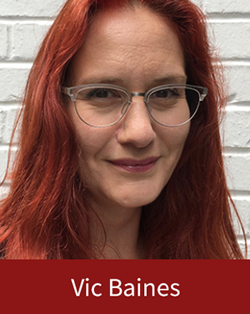 Vic Baines
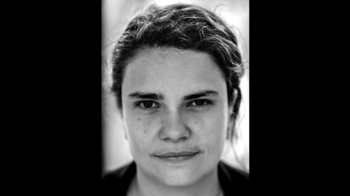
 Daphne Keller