Security

FSI scholars produce research aimed at creating a safer world and examing the consequences of security policies on institutions and society. They look at longstanding issues including nuclear nonproliferation and the conflicts between countries like North and South Korea. But their research also examines new and emerging areas that transcend traditional borders – the drug war in Mexico and expanding terrorism networks. FSI researchers look at the changing methods of warfare with a focus on biosecurity and nuclear risk. They tackle cybersecurity with an eye toward privacy concerns and explore the implications of new actors like hackers.

Along with the changing face of conflict, terrorism and crime, FSI researchers study food security. They tackle the global problems of hunger, poverty and environmental degradation by generating knowledge and policy-relevant solutions. 

-

Seminar Recording: https://youtu.be/8JDHuY0HMCM


Abstract: The motivation to develop nuclear energy waned in the latter part of the twentieth century. Technologies such as very-high-temperature gas-cooled reactors and fast-neutron liquid-metal reactors had been pursued for the purpose of recycling used nuclear fuel from water-cooled reactors, or for the purpose of supplying high-temperature process heat to the chemical industry or for hydrogen production. While both worthwhile causes, one could argue that the important missing element of all of these advanced nuclear reactor technologies was a business case: how were nuclear power plants to be profitable? With the more widely recognized need for decarbonizing energy production, the new driver for developing nuclear energy became cost. Can nuclear power be economically competitive with natural gas and coal, in order to provide an economic driver for the displacement of fossil fuel? This became the new motivation for nuclear energy development in the twenty-first century, and over the last decade the unthinkable happened: a growing and striving ecosystem of nuclear energy start-up companies. Many of these start-up companies pursue the development of liquid-fuel molten salt reactors, fueled by thorium or uranium fuel. Other start-up companies develop solid-fuel reactors cooled by salt, or even fusion reactors cooled by salt. The common feature of nuclear reactors that utilize molten salt is the operation at high-temperature and atmospheric pressure. The high temperature leads to doubled power efficiencies, compared to conventional water-cooled reactors. The atmospheric pressure leads to a safety case that is arguably easier to demonstrate, and hence that would enable a faster commercialization time.  On the other hand, there remain many technical risks and time-line uncertainties for the development of salt nuclear technologies. There remain also questions of policy, licensing, and compatibility with local industry and local culture, necessary elements for the global development of such nuclear reactors. This talk will explore some of the challenges faced by the global deployment of molten-salt and salt-cooled reactors, and some of the challenges faced by nuclear start-up companies in order to change the innovation cycle for nuclear energy technology from thirty years to a much shorter time frame.


Speaker's Biography:

Image
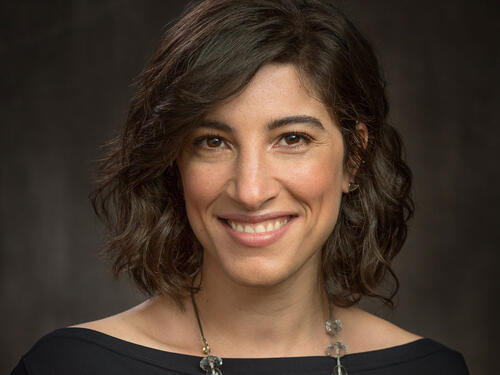
screen shot 2019 10 03 at 1 23 12 pm
Raluca Scarlat is an assistant professor at UC Berkeley, in the Department of Nuclear Engineering. Raluca Scarlat’s research focuses on chemistry, electrochemistry and physical chemistry of high-temperature inorganic fluids and their application to energy systems. Her research includes safety analysis, licensing and design of nuclear reactors and engineering ethics, and she has extensive experience in design and  safety analysis of fluoride-salt-cooled high-temperature reactors (FHRs) and Molten Salt Reactors (MSRs). Professor Scarlat has a Ph.D. in Nuclear Engineering from UC Berkeley, a certificate in Management of Technology from the Hass School of Business, and a B.S. in Chemical and Biomolecular Engineering from Cornell University. Scarlat has published articles in Electrochemical Society Journal, Journal of Fluorine Chemistry, Journal of Nuclear Materials, Nuclear Engineering and Design, Nuclear Instruments and Methods, Journal of Engineering for Gas Turbines and Power, Nuclear Technology, and Progress in Nuclear Energy.

Raluca Scarlat UC Berkeley
Seminars
-

Daphne Keller Daphne Keller
Abstract:

Facebook recently announced its own version of the Supreme Court: a 40-member board that will make final decisions about user posts that Facebook has taken down. The announcement came after extended deliberations that have been described as Facebook’s “constitutional convention.” Sweeping terms such as Supreme Court and constitution are not commonly used to describe the operation of private companies, but here they seem appropriate given the platforms’ importance for the many people who use them in place of newspapers, TV stations, the postal service, and even money. Yet private platforms aren’t really the public square, and internet companies aren’t governments. That’s exactly why they are free to do what so many people seem to want: set aside the First Amendment’s speech rules in favor of new, more restrictive ones. 

Mimicking a few government systems will not make internet platforms adequate substitutes for real governments, subject to real laws and real rights-based constraints on their power. Compared with democratic governments, platforms are far more capable of restricting speech. And they are far less accountable than elected officials for their choices. In this talk, I will delve into the differences we should be considering before urging platforms to take on greater roles as arbiters of speech and information.

Daphne Keller Bio


Lunch Seminar Series Flyer
  • E207, Encina Hall
  • 616 Serra Mall, Stanford, CA 94305


0
top_pick_rsd25_070_0254a.jpg

Daphne Keller is the Director of Platform Regulation at the Stanford Program in Law, Science, & Technology. Her academic, policy, and popular press writing focuses on platform regulation and Internet users'; rights in the U.S., EU, and around the world. Her recent work has focused on platform transparency, data collection for artificial intelligence, interoperability models, and “must-carry” obligations. She has testified before legislatures, courts, and regulatory bodies around the world on topics ranging from the practical realities of content moderation to copyright and data protection. She was previously Associate General Counsel for Google, where she had responsibility for the company’s web search products. She is a graduate of Yale Law School, Brown University, and Head Start.

SHORT PIECES


ACADEMIC PUBLICATIONS


POLICY PUBLICATIONS


FILINGS

  • U.S. Supreme Court amicus brief on behalf of Francis Fukuyama, NetChoice v. Moody (2024)
  • U.S. Supreme Court amicus brief with ACLU, Gonzalez v. Google (2023)
  • Comment to European Commission on data access under EU Digital Services Act
  • U.S. Senate testimony on platform transparency


PUBLICATIONS LIST

Director of Platform Regulation, Stanford Program in Law, Science & Technology (LST)
Social Science Research Scholar
Date Label
Director of Intermediary Liability Center for Internet and Society
Seminars
Authors
Noa Ronkin
News Type
Q&As
Date
Paragraphs

As the People’s Republic of China marks the 70th anniversary of its founding while Hong Kong prodemocracy protests intensify, Andrew Walder, the Denise O'Leary and Kent Thiry Professor and senior fellow at the Freeman Spogli Institute for International Studies, reflects on some of the changes in Chinese society and domestic policy, discusses his new book that offers a new interpretation of the Cultural Revolution, and shares details about his current research project.

Q: China is celebrating the 70th anniversary of the Chinese Communist Party’s rule, and of course the strategic shifts in Chinese foreign policy throughout the years are much more visible than the shifts in domestic policy. What have been some of the changes in that regard under Xi Jinping’s leadership?

Since Xi Jinping took office as president of the People’s Republic of China in 2013 he has changed the tone of the leadership, refocusing it on its survival. Now this is a regime that has seen nearly 30 years of 9 or 10 percent economic growth, has raised 400 million people out of poverty, and has generated significant upward mobility for very large swaths of the population, especially urban populations that have enjoyed a level of prosperity never experienced before. Yet Xi Jinping and the top Communist Party leadership seem to be driven by a strong concern for their survival.

So Xi has done three things. First, he has recentralized decision-making power and made himself a very powerful executive. Second, he has been cracking down ideologically on all talk about political reform – cracking down on universities, the media, human rights lawyers. That's actually led to significant alienation among educated populations. Third, he has launched a draconian anti-corruption campaign, arresting and imprisoning many people, including very high-ranking individuals.

Corruption in China isn’t as obvious as in a country like Russia and we, as foreigners, don't see it. But it’s likely that there are justified worries about the impact of corruption and the generation of wealth among the families of high-level officials, which seriously undermine the coherence and discipline of the Communist Party.

One interpretation of Xi’s actions is that he sees a lot of decay and observes the risks posed by the Chinese society’s openness to the outside world. He realizes that among the second generation – in his own family, in the families of other Party leaders, and among the best and brightest of China’s young, educated people – the Party really has no standing in terms of ideology. And he knows that most of the economic activity in China is generated in the private sector by people who are neither Party members nor under the subordination of the Party.

Xi’s actions could therefore be explained as a combination of conservatism and nationalism. But it could also be the case that Xi is perceptive and honest, observing cracks in the system that aren't yet visible to outsiders.

[Get stories like this delivered to your inbox by signing up for APARC newsletters]

Q: What is your assessment of China’s economic policy choices? How can China sustain robust economic growth over the coming years?

I believe Xi’s ultimate worry is about China’s economic growth. He recognizes that China is a variant of the East Asian “miracle economies” – South Korea, Taiwan, Japan – that all experienced much lower rates of economic growth after their huge takeoff periods. China has reached a certain level of GDP per capita, but to continue to raise that and truly be competitive with the other advanced economies they need to do things differently, including becoming more efficient in the use of capital and addressing their heavy debt burden.

I see China’s leadership as stuck in a dilemma similar to that of the Soviet Union in the 1970s. That is, they've had a model that worked well – China is now the world's second largest economy, a superpower – but there’s no agreement on how to continue from here. One school of thought resists change, while a more progressive school recognizes that this model isn’t going to work forever and that it’s necessary to be more efficient and creative – downsize the state-owned enterprise sector, give private enterprises a more level playing field, etc. The argument against such progressive economic liberalization, however, is that it will cause the Party to lose control over the leading sectors of the economy. So far, Xi appears to represent this view.

Q: Last year, Xi enshrined his ideology, “Xi Jinping Thought on Socialism with Chinese Characteristics for a New Era,” in China’s constitution. Can this system promote the supremacy of the Communist Party to today’s Chinese, who are fundamentally different from the workers who were the soul of the Communist Revolution?

No. It's very hard to get the toothpaste back in the tube, if you will. I spend a lot of time in China, teaching and giving talks in Beijing and elsewhere, and I can say that Chinese students are far more savvy and critical than we might think, asking tough questions about issues such as state ownership of assets, the banking system, the rule of law. Obviously they react negatively when they hear foreigners criticizing their country and preaching to them about China’s lack of democracy or human rights abuses. I think Americans might similarly react to criticisms about our homelessness crisis or the Southern border crisis, though we know these are real problems.

Many young Chinese are much more critical of the leadership than portrayed by Western news media. This is a dynamic situation, and Xi seems to be trying to ward off something that he sees as real danger. Whether he's right or whether he's simply holding back progress in China I couldn’t say. However, as I do always tell people in China, Xi is certainly creating the conditions for strong support of the next leader who might want to take China to a more liberal direction.

Q: China is celebrating 70 years of Chinese Communist Party rule amid uncertainty that is testing its authority like never before. In particular, the relentless prodemocracy demonstrations in Hong Kong appear to have caught the Xi administration off guard. What are China’s options in dealing with the unrest in Hong Kong?

It’s hard to assess the situation in Hong Kong. I understand why it’s happening – over the last five or six years, most of the people I know in Hong Kong (students, academics, professionals) have been very worried about the erosion of rights and independence. But I'm surprised at how widespread the dissatisfaction is, how militant the protesters are, how there's no real connection between them and the elite Legislative Council prodemocracy camp, and how the unrest is not dissipating. The disagreement between China and the United States about what's happening and China’s accusations that the US is behind it all are very worrisome.

The Chinese leadership practically ruled out most of the effective response options. They clearly don't want to be seen as giving in and are worried about contagion to other cities in mainland China. But China’s political system isn’t good at responding to popular mobilized dissent and the leadership doesn’t truly understand free societies. They don't understand the concerns of people in Taiwan or Hong Kong, who have a way of life and freedoms that will be taken away by integration with the mainland under its current political system. Beijing cannot get away with applying in Hong Kong the type of intimidation and bullying it applies to its own society. I don't think the current leadership is imaginative or flexible enough to think creatively about how to get out of this situation.

Q: As the Chinse Community Party trumpets China’s stunning economic and military success, it aims to keep its history of catastrophic, often cruel policies and tragic events from its people. You have long studied the Cultural Revolution, a period rife in persecution, violence, and death, and have a new book about that, coming out next week. Tell us about it.

The book, Agents of Disorder: Inside China’s Cultural Revolution (Harvard University Press), charts the violence in China from 1966 to 1969. By May 1966, just seventeen years after its founding, the People’s Republic of China had become one of the most powerfully centralized states in modern history. But that summer everything changed. Mao Zedong called for students to attack intellectuals and officials who allegedly lacked commitment to revolutionary principles, and rebels responded by toppling local governments across the country. The book, which is the outcome of a long research project, Political Movements in an Authoritarian Hierarchy, aims to answer the question: Why did the Chinese party state collapse so quickly after the onset of the Cultural Revolution?

My answer to this question is based on analysis of a data set collated from over 2,000 local annals chronicling some 34,000 revolutionary episodes across China from 1966 to 1971. That research unveils two major findings.

The first is a new interpretation of what happened during that period. Standard accounts depict a revolution instigated from the top down and escalated from the bottom up through power seizures by rebel groups. But if you read the local histories and look at the scope of rebel activity and protest in the last half of 1966 through the beginning of 1967, it turns out there really wasn’t that much going on outside of a few major cities. Yet within that short period counties all over China had their governments overthrown. What happened was that low-ranking government officials overthrew their superiors, setting off a chain reaction of violence. Then army units sent to quell the disorders gave arms to those rebels that they supported, ushering in nearly two years of conflict that in various places came close to civil war.

The second finding is what I believe to be a fairly accurate estimate of the casualties during this entire period: how many people died, when, and how. My estimate is that 1.6 million people died, mostly when they tried to rebuild the government. Only a small percentage was killed by student Red Guards, which is what everyone thinks of in relation to the Cultural Revolution. In fact, every organization eventually had a campaign looking for class enemies and, ultimately, the repression that ended the disorder was worse than the violence it was meant to contain.

The other thing I do in the book is compare this period in China’s history to other infamous periods of state violence – Bosnia in the 1990s, the Soviet Great Terror of the late 1930s, the Indonesian massacres of suspected leftists in 1965, El Salvador's civil war, the Pol Pot regime in Cambodia, and Rwanda in 1994. I show that, in terms of total numbers of casualties, the Cultural Revolution comes second on the list, topped by Cambodia, which has almost the same number of killings. However, if you consider the rate of killing as a percentage of the population, then the Cultural Revolution ranks at the bottom of all the comparison cases and the worst case by far is Cambodia. If the intensity of the violence in China had been the same as in Cambodia then 150 million people would have been killed.

Beyond the story of the violence and bloodshed in the Cultural Revolution, there’s a big story here about how many people were persecuted yet survived. The Cultural Revolution put many, many people through hell, but many survived and regained positions of authority and power, leading the country in the 1980s, which is why they wrote about what happened in their localities.

Q: Could you share some details about your current research project?

My current project, Political Violence and State Repression, analyzes unusually detailed internal investigation reports compiled by the government of a Chinese province that experienced some of the most severe level of violence and highest death tolls during the Cultural Revolution. There were 90,000 casualties in that province that had a population of about 24 million – a death rate much higher than the average we talked about before. The question is why this happened in that particular province.

The available investigation reports contain close to 5,000 political events and associated casualties, for all 86 cities and counties in the province. For the last three years I've been working with research assistants to code this massive body of information into a data set, which is now almost ready for analysis. The quality, level of detail, and comprehensive coverage of the materials makes it possible to analyze state collapse and political violence with an unusual degree of precision and depth.

Hero Image
Chinese 100 yuan bills
Thanakorn Phanthura / EyeEm / Getty Images
All News button
1
-

Sponsored by Shorenstein Asia-Pacific Research Center and Center on Democracy, Development and the Rule of Law

WE HAVE REACHED VENUE CAPACITY AND ARE NO LONGER ACCEPTING RSVPS

NOTE: THIS EVENT IS CLOSED TO THE MEDIA 

Registration required for admission.  No walk-ins.

No audio, video recording or photography will be permitted.  

News regarding increasing numbers of camps and detention facilities in Xinjiang Uyghur Autonomous Region in northwest China have grabbed the headlines since mid-2017. China’s deployment of high-tech surveillance and police tactics have spread throughout the region, and approximately ten million Muslim minorities in the region are under tight, top-down control. Over one million Uyghurs and other Turkic Muslims have allegedly disappeared into these internment camps, which the Chinese government and media characterize as vocational training centers. Although Beijing has recently claimed that most of the detainees have been released, evidence for this is still difficult to verify. Information dissemination regarding the region to the outside world has been closely guarded.

To gain a better understanding of what is happening in Xinjiang, a panel of experts from various scholarly disciplines will analyze the current crisis and, as importantly, do what academics do best -- provide historical context and critical social scientific analysis that broaden and deepen our understanding of the events unfolding in that region. 


Speakers

Image
bovingdon gardener 2017
Gardner Bovingdon is Associate Professor of Central Eurasian Studies at the Hamilton Lugar School of Global and International Studies at Indiana University. Bovingdon researches politics in contemporary Xinjiang as well as Xinjiang’s modern history. He is also an expert in historiography in China, as well as nationalism and ethnic conflict. He is the author of The Uyghurs: Strangers in Their Own Land (Columbia University Press, 2010); “Politics in Modern Xinjiang,” in Introduction to the Politics of China, ed. William Joseph (Oxford University Press, 2010); and “CCP Policies and Popular Responses in Xinjiang, 1949 to the present,” in Governing China’s Multiethnic Frontiers, ed. Morris Rossabi (University of Washington Press, 2004), among others.


Image
darren byler headshot 909x1200

Darren Byler received his Ph.D. from the Department of Anthropology at the University of Washington in 2018. His research focuses on Uyghur dispossession, culture work and "terror capitalism" in the city of Ürümchi, the capital of Xinjiang. He has published research articles in the Asia-Pacific Journal, Contemporary Islam, Central Asian Survey, the Journal of Chinese Contemporary Art and contributed essays to volumes on ethnography of Islam in China, transnational Chinese cinema and travel and representation. He has provided expert testimony on Uyghur human rights issues before the Canadian House of Commons and writes a regular column on these issues for SupChina. In addition, he has published Uyghur-English literary translations (with Mutellip Enwer) in Guernica and Paper Republic. He also writes and curates the digital humanities art and politics repository The Art of Life in Chinese Central Asia, which is hosted at livingotherwise.com.


Image
jim millward headshot 1 copy
James Millward is Professor of Inter-societal History at the Walsh School of Foreign Service, Georgetown University, teaching Chinese, Central Asian and world history. He is also an affiliated professor in the Máster Oficial en Estudios de Asia Oriental at the University of Granada, Spain. His specialties include Qing empire; the silk road; Eurasian lutes and music in history; and historical and contemporary Xinjiang. He follows and comments on current issues regarding the Uyghurs and PRC ethnicity policy.  Millward has served on the boards of the Association for Asian Studies (China and Inner Asia Council) and the Central Eurasian Studies Society, and was president of the Central Eurasian Studies Society in 2010. He edits the ''Silk Roads'' series for University of Chicago Press. His publications include The Silk Road: A Very Short Introduction (2013), Eurasian Crossroads: A History of Xinjiang (2007), New Qing Imperial History: The Making of Inner Asian Empire at Qing Chengde (2004), and Beyond the Pass: Economy, Ethnicity and Empire in Qing Central Asia (1998).  His articles and op-eds on contemporary China appear in The New York Times, The Los Angeles Review of Books, The New York Review of Books and other media.  


Image
thomasmullaney stanford 0
Thomas Mullaney is Professor of Chinese History at Stanford University, and Curator of the international exhibition, "Radical Machines: Chinese in the Information Age."  He is the author of The Chinese Typewriter: A History (MIT Press 2017), Coming to Terms with the Nation: Ethnic Classification in Modern China (UC Press, 2010), and principal editor of Critical Han Studies: The History, Representation and Identity of China’s Majority (UC Press, 2011). His writings have appeared in the Journal of Asian Studies, Technology & Culture, Aeon, Foreign Affairs, and Foreign Policy, and his work has been featured in the LA Times, The Atlantic, the BBC, and in invited lectures at Google, Microsoft, Adobe, and more. He holds a Ph.D. from Columbia University.


Image
lhedited2

Lauren Hansen Restrepo is Assistant Professor in Growth and Structure of Cities at Bryn Mawr College. She focuses on Chinese development planning and urbanization in Xinjiang, changes within urban Uyghur society, and state-society relations in Xinjiang’s cities. She also works on issues more broadly related to urban and economic development in conflict areas; urbanization in minority-majority regions; housing and slum upgrading; Chinese city planning; cross-border economic and development planning in Western China and Central Asia; development planning and practice in authoritarian states; gender and development.  Her book manuscript, Chinese Construction at the New Frontier: The Government of Uyghur Identity in Urban Xinjiang, combines ethnographic research with historical and policy analysis to assess the relationship between urban development, social control, and identity politics among upwardly mobile Uyghurs in Urumqi, the capital of Xinjiang.

Philippines Conference Room
616 Jane Stanford Way
Encina Hall, Central, 3rd Floor
Stanford, CA 94305


Gardner Bovingdon <br><i>Associate Professor, Central Eurasian Studies, Hamilton Lugar School of Global and International Studies, Indiana University</i><br><br>
Darren Byler <br><i>Post-Doctoral Lecturer, Department of Anthropology, University of Washington</i><br><br>
James Millward <br><i>Professor of Inter-societal History, Walsh School of Foreign Service, Georgetown University</i><br><br>
Thomas Mullaney (Moderator) <br><i>Professor of Chinese History, Stanford University</i><br><br>
Lauren Hansen Restrepo <br><i>Assistant Professor in Growth and Structure of Cities, Bryn Mawr College</i><br><br>
Panel Discussions
-

Abstract: In 2013, the Obama Administration’s “Nuclear Employment Strategy” guidance announced that all war plans and operations would be “consistent with the fundamental principles of the Law of Armed Conflict” (LOAC). The Trump Administration’s 2018 Nuclear Posture Review repeated this commitment. The literature on nuclear strategy and deterrence in political science however, has either ignored these legal requirements or misunderstood them. The legal literature on nuclear weapons, however, has largely ignored the technical revolution regarding improved accuracy and lower-yield nuclear weapons and the different strategic contexts in which the U.S. might contemplate nuclear use. This paper analyzes how proper application of the Law of Armed Conflict should constrain U.S. nuclear doctrine and war planning and how knowledge of strategic considerations is fundamental to proper legal analysis. We argue that the principle of proportionality can permit “counter-force” targeting— most clearly when such attacks can prevent or significantly reduce the expected damage to U.S. and allied populations with lower foreign collateral damage. We also argue that the legal requirement to take “feasible precautions” to protect non-combatants means the U.S. must use conventional weapons or the lowest yield nuclear weapons possible in any counterforce attack. Finally, we contend that the prohibition against deliberate targeting of civilians has gained the status of customary international law and that the U.S. government should therefore reverse its traditional position and reject the doctrine of “belligerent reprisal” against foreign civilians. This prohibition means that it is illegal for the United States, contrary to what is implied in the 2018 NPR and explicitly maintained by prominent U.S. Air Force lawyers, to either intentionally target civilians in reprisal to a strike against U.S. or allied civilians, or launch attacks against legitimate military targets if the intent to is cause incidental civilian harm.


Speaker's Biography:

Image
sagan scott 2012 photo
Scott D. Sagan is the Caroline S.G. Munro Professor of Political Science, the Mimi and Peter Haas University Fellow in Undergraduate Education, and Senior Fellow at the Center for International Security and Cooperation and the Freeman Spogli Institute at Stanford University. He also serves as Chairman of the American Academy of Arts and Sciences’ Committee on International Security Studies. Before joining the Stanford faculty, Sagan was a lecturer in the Department of Government at Harvard University and served as special assistant to the director of the Organization of the Joint Chiefs of Staff in the Pentagon. Sagan has also served as a consultant to the office of the Secretary of Defense and at the Sandia National Laboratory and the Los Alamos National Laboratory. 

Sagan is the author of Moving Targets: Nuclear Strategy and National Security (Princeton University Press, 1989); The Limits of Safety: Organizations, Accidents, and Nuclear Weapons (Princeton University Press, 1993); and, with co-author Kenneth N. Waltz, The Spread of Nuclear Weapons: An Enduring Debate (W.W. Norton, 2012). He is the co-editor of Learning from a Disaster: Improving Nuclear Safety and Security after Fukushima (Stanford University Press, 2016) with Edward D. Blandford and co-editor of Insider Threats (Cornell University Press, 2017) with Matthew Bunn. Sagan was also the guest editor of a two-volume special issue of Daedalus: Ethics, Technology, and War (Fall 2016) and The Changing Rules of War (Winter 2017).

Recent publications include “Armed and Dangerous: When Dictators Get the Bomb” in Foreign Affairs (November/December 2018); “Not Just a War Theory: American Public Opinion on Ethics in Combat” with Benjamin A. Valentino in International Studies Quarterly (Fall 2018); The Korean Missile Crisis” in Foreign Affairs (November/December 2017); “Revisiting Hiroshima in Iran: What Americans Really Think About Using Nuclear Weapons and Killing Noncombatants” with Benjamin A. Valentino in International Security (Summer 2017); and “Atomic Aversion: Experimental Evidence on Taboos, Traditions, and the Non-Use of Nuclear Weapons” with Daryl G. Press and Benjamin A. Valentino in the American Political Science Review (February 2013).

In 2018, Sagan received the Andrew Carnegie Fellowship from the Carnegie Corporation of New York. In 2017, he received the International Studies Association’s Susan Strange Award which recognizes the scholar whose “singular intellect, assertiveness, and insight most challenge conventional wisdom and intellectual and organizational complacency" in the international studies community. Sagan was also the recipient of the National Academy of Sciences William and Katherine Estes Award in 2015, for his work addressing the risks of nuclear weapons and the causes of nuclear proliferation. The award, which is granted triennially, recognizes “research in any field of cognitive or behavioral science that advances understanding of issues relating to the risk of nuclear war.” In 2013, Sagan received the International Studies Association's International Security Studies Section Distinguished Scholar Award. He has also won four teaching awards: Stanford’s 1998-99 Dean’s Award for Distinguished Teaching; Stanford's 1996 Hoagland Prize for Undergraduate Teaching; the International Studies Association’s 2008 Innovative Teaching Award; and the Monterey Institute for International Studies’ Nonproliferation Education Award in 2009.


Image
weiner allen
Allen S. Weiner, JD ’89, is an international legal scholar with expertise in such wide-ranging fields as international and national security law, the law of war, international conflict resolution, and international criminal law (including transitional justice). His scholarship focuses on international law and the response to the contemporary security threats of international terrorism, the proliferation of weapons of mass destruction, and situations of widespread humanitarian atrocities. He also explores assertions by states of “war powers” under international law, domestic law, and just war theory in the context of asymmetric armed conflicts between states and nonstate armed groups and the response to terrorism. In the realm of international conflict resolution, his highly multidisciplinary work analyzes the barriers to resolving violent political conflicts, with a particular focus on the Israeli-Palestinian conflict. Weiner’s scholarship is deeply informed by experience; he practiced international law in the U.S. Department of State for more than a decade advising government policymakers, negotiating international agreements, and representing the United States in litigation before the International Criminal Tribunal for the former Yugoslavia, the International Court of Justice, and the Iran-United States Claims Tribunal.

Senior Lecturer Weiner is director of the Stanford Program in International and Comparative Law and co-director of the Stanford Center on International Conflict and Negotiation. Before joining the Stanford Law School faculty in 2003, Weiner served as legal counselor to the U.S. Embassy in The Hague and attorney adviser in the Office of the Legal Adviser of the U.S. Department of State. He was a law clerk to Judge John Steadman of the District of Columbia Court of Appeals.


Scott Sagan Professor of Political Science Stanford University
Allen Weiner Stanford University
Seminars
-

Stanford University's Hoover Institution in Washington is pleased to invite you to attend the next National Security and Technology Congressional Briefing. The briefing, centered on the U.S. race with China for technological superiority, will feature various experts outlining actionable policy proposals to meet this rising challenge.

With the 2020 presidential campaign in full swing, the time is ripe to develop new nonpartisan policy ideas to inform the national security and technology policy priorities of whomever will occupy the White House in 2021. The Technology and Public Policy Project housed within the Freeman Spogli Institute's Cyber Policy Center, and in partnership with the Hoover Institution, seeks to address these policy challenges and questions by developing implementation-ready proposals that meet the needs of current and future policymakers.

Hosted by Hoover Research Fellow Andrew Grotto, the briefing will focus on opportunities for action, featuring proposals by: 

  • Anja Manuel, on developing an affirmative strategy for competing, contesting, and cooperating with China in response to its efforts to systematically extract advanced technology from the West.
  • Anthony Vinci, on harnessing a new joint venture model for public-private technology innovation to meet national security technology challenges. 


Schedule:

  • 9:00a.m. - Registration and Coffee
  • 9:30a.m. - 11:00a.m. - Panel Discussion
  • Hoover Institution DC
  • 1399 New York Avenue NW, Suite 500
  • Washington, DC 20005
Panel Discussions
Authors
News Type
Q&As
Date
Paragraphs

North Korea currently has only one publicly known uranium mine—the Pyongsăn uranium mining and milling complex—that serves as a first step in the country’s pathway towards nuclear weapons.

Using a combination of multispectral imagery sourced from the European Space Agency’s Copernicus Sentinel-2 satellite and a review of geological analyses dating back to 1955, a new study from Stanford’s Center for International Security and Cooperation (CISAC) in Jane’s Intelligence Review by geological sciences postdoctoral fellow Sulgiye Park (PhD ’17) and CISAC honors student Federico Derby (BS ’19) looks for evidence of uranium mining in North Korea, going beyond what is currently available in open sources in order to estimate the uranium resources and their locations in North Korea.

The peer-reviewed CISAC study has identified around 18 additional sites in North Korea where the hyperspectral signatures and geological profile combine to suggest the possibility of uranium mining. Nevertheless, CISAC and Jane’s stress that the presence of these ‘hotspots’ does not imply the presence of an active uranium mine or related facility, but rather a site that warrants further analysis.

In this Q&A with Katy Gabel Chui, researchers Sulgiye Park and Federico Derby discuss their work on the project:

How did you land on this project? What made you think to look for more mining sites?

Sulgiye Park (SP) and Federico Derby (FD): Very little is known about the front-end of North Korea’s nuclear fuel cycle, particularly when it comes to the mining and milling processes of uranium production pathway. To date, assessments of this portion of North Korea’s nuclear fuel cycle have been mostly conducted through traditional (electro-optical) satellite imagery observations---the type of imagery that you can access through Google Earth, for instance.

We wanted to get a more complete grasp of North Korea's uranium mining and processing capacity by conducting a multi-disciplinary approach that combines both the visible signatures from multi-spectral satellite imagery and a geological dataset that contains information such as mineralogy and geochemistry. The two individual methods come together at the end to provide information that encapsulates the potential regions likely to host uranium deposits and mines.

What is multispectral imaging? How would it ordinarily be used, and how did you use it for this project?

SP and FD: Traditional electro-optical satellite imagery exploits only three portions of the electromagnetic spectrum; namely, the blue, green and red bands. In general, when using the term “multispectral” within the satellite imagery community, we are usually referring to a satellite system that covers a few to tens of different bands in the electromagnetic spectrum.

Multispectral imagery is used in a wide variety of industries, to measure things like water turbidity, crop healthiness, vegetation quality, etc. For this project, we focused on using spectral fingerprints. Basically, every object – whether it be a mineral, a living thing, water, etc. – has a(n in theory unique) spectral fingerprint. Spectral fingerprints are measured as the intensity of the object’s reflectance of light at a specific wavelength. Varying across wavelengths – hence the importance of having a multispectral system that can give you access to different ranges of the electromagnetic spectrum – you ultimately get a spectral curve that is unique to the item you are studying.

The spectral fingerprints you collect on a specific image can be compared to previously collected fingerprints stored in what is usually termed a spectral library, for classification purposes. Basically, if my spectral curve of a given pixel (or set of pixels) looks super similar to that of gold (for which I obtained a reference spectral curve from a spectral library), then it is probably gold. Obviously, this matching is performed in a more rigorous manner, but you get the idea of how the process works.

In this project, we used the Pyongsan uranium mine in North Korea (arguably the only well-identified uranium mine in the country) as my reference spectral curve. Essentially, using various imaging techniques, we traversed North Korea looking for pixels whose spectral curves are similar to that of the Pyongsan uranium mine. Those are the ‘hotspots’ we identified.

What most surprised you in both your work and your findings?

SP and FD: The fascinating match between the 'hotspots' identified through satellite imagery analysis and the geologic information available in maps and reports. The majority of the 'hotspots' appeared adjacent to the limestone formation from the Ordovician period (circa 445-485 Ma) that are in contact with a specific sedimentary rocks of upper Proterozoic group. Part of the geologic characteristics of the 'hotspots' regions were similar to what had been observed in the Pyongsan (the most well-known) uranium mine of North Korea.

What was most surprising in the work itself? What was difficult in doing the work?

SP and FD: It was surprising to see how much we still don't know about North Korea despite the amount of effort that had been invested. There is no consensus reached regarding the location and the total number of uranium mines in North Korea.

One of the bigger difficulties we had was finding credible geological data and information.

What is the one thing you think someone should take away from your study?

SP and FD: That there are still many unknowns. While our study identified multiple regions with spectral signatures similar to the uranium tailing piles at Pyongsan, verification of uranium presence is still needed.

What are you working on next?

SP: I am still working on using a geologic approach to glean information on the uranium mines of North Korea. The further evaluation aims to identify a qualitative upper limit of uranium ore grade (quality) and quantity pertaining to all the suspected uranium mines in North Korea.

FD: I co-founded a startup focused on developing deep learning models for credit risk analytics (in Latin America). However, I will still keep in touch with my CISAC peers!


Hero Image
satellite
All News button
1
-

Livestream: This event will not be live-streamed or recorded.


Abstract: This study brings together social identity theory and the literature on ontological security in international relations to highlight the role of leadership processes for group formation and authoritarian legitimation. Together, these theories allow for exploring the conditions that increase the potency of identity-based politics and the specific ways political entrepreneurs can mobilize this political tool. Ontological insecurity, as I argue and show, is a condition that political entrepreneurs use and manipulate to gain political support and legitimate their rule. I illustrate this argument by looking into ‘late Putinism’ as an example of collective identity-driven politics. This study relies on an original nationwide survey experiment conducted in November 2017 in Russia to demonstrate the extent of the Russian society’s vulnerability and receptivity to insecure identity narratives. The data also allows us to start a discussion on the potential factors responsible for societal differentiation on this issue.


Speaker's Biography:

Gulnaz Sharafutdinova Gulnaz Sharafutdinova
Gulnaz Sharafutdinova, a Reader in Russian Politics at King’s College London, is the author of Political Consequences of Crony Capitalism Inside Russia (University of Notre Dame Press, 2011) and the forthcoming monograph Through The Looking Glass: Putin’s Leadership and Russia’s Insecure Identity (Oxford University Press, 2020)Gulnaz has written numerous articles on Russian regional political economy, state-business relations, and corruption in Russia. She has published an edited volume, Soviet Society in the Era of Late Socialism, 1964-1985 (2012) and has been working on bringing social psychological approaches to understanding collective identity issues and the nature of Putinism in Russia.


Gulnaz Sharafutdinova Reader in Russian Politics King’s College London
Seminars
Authors
News Type
Blogs
Date
Paragraphs

Representing 14 different countries, the Ford Dorsey Master’s in International Policy (MIP) first-year class is a diverse group. Of the 8 men and 21 women, some have worked in government, some have served in the military, and others just completed their undergraduate degrees. Their academic interests range from migration; to clean energy; to women’s, children’s and LGBTQIA rights; and they spend their free time woodworking, practicing Kung Fu, and listening to true-crime podcasts.

The Freeman Spogli Institute for International Studies spoke to five of the incoming first-year students about their backgrounds, passions, and dreams for the future. These are their stories.

Serage Amatory, 22. (Chouf, Lebanon) 

Image
serage1

“I’ve been living in Egypt for the last four years and attending American University in Cairo, where I double-majored in political science and multimedia journalism. My background is in human rights, and I plan to keep working in human rights after school. I worked as a journalist at one of the few nonpartisan TV stations in Lebanon, and I also worked at the Ministry of Foreign Affairs in Lebanon.

I’ve also made two documentary films — one is about the transgender community in Cairo, and the second film tells the stories of five male victims of rape and sexual assault in Cairo. I enjoy talking about issues that other people don’t want to talk about. I get a lot of disapproval from people all the time, but that's what motivates me — I want to be speaking about people who don’t have someone speaking about them. Someone has to bring attention to things that aren't in the mainstream, and that's what I like to do.

The Master’s in International Policy program here is amazing, and I love that you have the option to specialize in a topic — I’d like to study something concrete and know exactly what I'm going to be doing with it after I graduate. I studied really general topics in undergrad, and now I feel like it's time to augment my general education with something that's more specific. I came in with the expectation that I'm going to be specializing in governance and development, and while I still want to do that, I also really think I might want to take some cyber classes now. So we’ll see — I’m just really happy to be here.”

Maha Al Fahim, 21. (Vancouver, Canada and Abu Dhabi, United Arab Emirates) 

Image
maha1

“My interest in public policy started when I was 14. I wrote a nonfiction book about child abuse and gender discrimination, and it was based on my mother's story — she grew up in an abusive family. And in publishing that book, I really saw the power of writing to expose policy issues. When I went to Princeton for my undergraduate education, I wanted to hone my communication skills, because I saw communication as a really powerful tool. I wrote for the Daily Princetonian newspaper and Business Today magazine, and I was also chair of Princeton Writes, a program to promote writing among the community and celebrate the power of words.

Now I'm working on a novel. It's called "Shaolina", and it's set in China. The novel explores gender dynamics and financial and physical power. I traveled to China last summer to do research for the book, and I got to train with a Shaolin monk for 8 hours a day — we would wake up at 5 a.m. and run through the mountains, it was crazy. It was so cool to immerse myself in the experience like that. For me, Kung Fu is not just a sport, it’s a way of life. I've learned so many life lessons from Kung Fu: patience, perseverance, and balance, to name a few.

I love how Stanford is focusing on the future of policy, because as issues get more complex, you need not just qualitative skills, but also quantitative skills. And you need to be able to think creatively and innovatively. Our cohort is small — around 30 students — and I really like it. There are people here from very diverse backgrounds, and it has been really cool to hear so many different international perspectives.” 

Angela Ortega Pastor, 25. (Madrid, Spain) 

Image
angela1

“I studied economics at NYU Abu Dhabi, and then I worked for three years in Paris for the Organization for Economic Co-operation and Development (OECD) as an energy data manager in oil and gas topics. I worked a lot with the different countries within the OECD as well as with other organizations to help collect data, and we put all of that data into comprehensive reports so that other people and companies can use it for analysis. I really liked working there. I liked the international dynamic - everybody came from very different backgrounds and different places, so it was very congenial to learn from other people.

I'm an economist by training, and that impacts the way I like to look at the problems within the energy field. Such as, 'How can we get consumers and companies to want to transition to clean energy? Does it mean that we need to put policies in place, or regulate the market? Or are pure economic incentives going to do the trick?' There are a lot of professors at Stanford who have done research in that sphere, so that was also a big push for me to come here.

I really like Stanford so far. I've found that people here are very welcoming and happy to help. I was a bit worried about that - when you move somewhere new, you sometimes worry about cliques and how focused people will be on their own lives. But everyone that I've encountered has been really nice and helpful. It's made feel like, 'OK - I can figure out how this place works and eventually feel at home.'”

Craig Nelson, 37. (Minneapolis, Minnesota) 

Image
craig1

“I'm an infantry officer in the U.S. Army. I graduated from West Point in 2006, and I'm in my 14th year of service. I've done eight deployments across both Iraq and Afghanistan, and I've also spent a good amount of time stationed in Europe. My wife, Michelle, and I just moved to Palo Alto from Vicenza, Italy, with our 2-year-old son, Max. Michelle and I love to travel, we love being stationed abroad, and we think that the best way to complete a 20-year career in the Army is to be abroad as much as possible and see parts of the world that we would not otherwise be exposed to.

Overall what I hope to learn here is a better way for the American Army to help to implement the policy that I was a part of as the U.S. Army's forward-deployed unit in Europe. I was able to see where policy derived by our elected officials is actually implemented at a tactical level. I’d like to go back to the Army and implement that policy with a refined understanding of where it comes from and how it's generated.

Before social media became as ubiquitous as it is now, I think people were in groups based largely on where they're from - a certain area code, or a neighborhood, or a school. Now it's possible to identify with a group completely without respect to geographic location, and I think that's because of social media. I'm interested in how that drives security policy - how does that change cyber security policy, and how does that change the way that my country interfaces with its allies and its partners?

When I go back to the Army, I hope to be in a position of greater responsibility and leadership. And I think that this experience will broaden me in a way that I would not have achieved if I had stayed in the operational Army and done a more traditional job following what I just did in Italy.”

Sievlan Len, 23. (Toul Roveang Village, Cambodia) 

Image
sievlan1

“I earned my bachelor’s degree in global affairs from the American University of Phnom Penh in Cambodia. I did two internships before coming to Stanford: one was with a consulting firm, where I was working mainly on migration research and youth participation initiatives at the sub-national level. I also worked for a foundation that works on strengthening political parties in Cambodia. It was a really interesting experience, and it gave me the idea of doing my bachelor's thesis on migration.

My interests right now are in migration, development, and education. And I’m interested to learn about how the three interact, and how we can make the most out of migration. I'm so excited to explore the interdisciplinary aspects of the Master’s in International Policy program, because I've always felt that you can't separate these issues one from another — migration itself is very interdisciplinary, there is both a political and an economic side to it.

I come from a village in Cambodia, and I'm one of the luckiest in that I had the opportunity to pursue higher education. One of my dreams and goals is that everyone in Cambodia — including girls — have equal access to education, and at least to finish high school, and have the opportunity to pursue their dreams in universities if they’d like to. Where I grew up, I saw a lot of potential not being fulfilled because of people’s circumstances — poverty, or elders not valuing education. I really want to see that change. I want everyone to be able to reach their full potential.”

Hero Image
mipphotocropped
Vienna Exchange student Mourad Chouaki and Ford Dorsey Master’s in International Policy (MIP) first-year students Corie Wieland, Rehana Mohammed and Maria Fernanda Porras Jacobo on the grass of the Stanford Oval in September 2019. Photo: Maria Fernanda Porras Jacobo.
All News button
1
0
Visiting Assistant Professor at the Cyber Policy Center
katestarbird-headshot-cip-2.png

Kate Starbird is a Visiting Assistant Professor at the Cyber Policy Center and Associate Professor at the Department of Human Centered Design & Engineering (HCDE) at the University of Washington (UW). Starbird’s research is situated within human-computer interaction (HCI) and the emerging field of crisis informatics—the study of the how information-communication technologies (ICTs) are used during crisis events. One aspect of her research focuses on how online rumors spread during natural disasters and man-made crisis events. More recently, she has begun to focus on disinformation and other forms of strategic information operations online. She is a co-founder and executive council member of the UW Center for an Informed Public. Starbird earned her PhD from the University of Colorado at Boulder in Technology, Media and Society and holds a BS in Computer Science from Stanford University.

Subscribe to Security