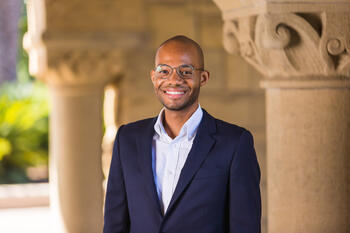
Security

FSI scholars produce research aimed at creating a safer world and examing the consequences of security policies on institutions and society. They look at longstanding issues including nuclear nonproliferation and the conflicts between countries like North and South Korea. But their research also examines new and emerging areas that transcend traditional borders – the drug war in Mexico and expanding terrorism networks. FSI researchers look at the changing methods of warfare with a focus on biosecurity and nuclear risk. They tackle cybersecurity with an eye toward privacy concerns and explore the implications of new actors like hackers.

Along with the changing face of conflict, terrorism and crime, FSI researchers study food security. They tackle the global problems of hunger, poverty and environmental degradation by generating knowledge and policy-relevant solutions. 

-

* Please note all CISAC events are scheduled using the Pacific Time Zone.


Seminar Recording:  https://youtu.be/t4xteN7N99U


About the Event: In The State from Below, we seek to understand democracy through ground-up knowledge of the state. We use a new technology and civic infrastructure, Portals, to initiate conversations about policing in communities where these forms of state action are concentrated.  Portals are virtual chambers where people in disparate communities can converse as if in the same room.  Based on over 850 recorded and transcribed conversations across fourteen neighborhoods in five cities – the most extensive collection of first-hand accounts of the police to date – we analyze patterns in political discourse.  We reveal four currents that challenge liberal-democratic framings of political life:  that an arrangement of distorted responsiveness characterizes the relationship between policed communities and the state; that the political desire of policed communities is not for greater engagement and responsiveness but for political recognition – to be known by the state; and that in contrast to prevailing wisdom about uninformed electorates, these citizens have too much knowledge of and too little power vis-à-vis state representatives.  Finally, we observe among policed communities an “ethics of aversion” in their political responses, a belief that power is best achieved by receding from state institutions in the short term and forging their own collective, community autonomy in the long term. At a broader level, we observe that it is not exclusion from democratic institutions that characterizes political inequality in our time, but inclusion in what we call racial authoritarianism, and the experience of misrecognition that results.


About the Speaker: Vesla Mae Weaver is the Bloomberg Distinguished Associate Professor of Political Science and Sociology at Johns Hopkins University and a 2016-17 Andrew Carnegie Fellow. 

She has contributed to scholarly debates around the persistence of racial inequality, colorism in the United States, the causes and consequences of the dramatic rise in prisons and police power for race-class subjugated communities. She is co-author with Amy Lerman of Arresting Citizenship: The Democratic Consequences of American Crime Control, the first large-scale empirical study of what the tectonic shifts in incarceration and policing meant for political and civic life in communities where it was concentrated. Weaver is also the co-author of Creating a New Racial Order: How Immigration, Multiracialism, Genomics, and the Young Can Remake Race in America (with J. Hochschild and T. Burch). She is at work on a new book, The State From Below, based on the largest archive of policing narratives using an innovative civic infrastructure called Portals (https://www.portalspolicingproject.com).

Virtual Seminar

Vesla Weaver Bloomberg Distinguished Associate Professor of Political Science and Sociology Johns Hopkins University
Seminars
-

The REDI Task Force invites you to the next event in our "Critical Conversations: Race in Global Affairs" series, featuring a panel moderated by Professor Gabrielle Hecht on inequality in nuclear regimes. This event will be recorded and uploaded to the REDI website.

The nuclear order is rife with inequalities. This panel will contextualize the state of the nuclear order as it stands today  with our ongoing conversation about race, diversity, and inclusion. The panelists will explore how non-proliferation, arms control, and disarmament, intersect and the exclusion that was/remains written into the system. The panel will discuss who in the nuclear world speaks about what, and more importantly, who in the nuclear world can speak about certain things and who cannot. By discussing debates about ‘haves and ‘have nots’ among nuclear states, the role of African-Americans in the disarmament movement, the disproportionate humanitarian impact of nuclear weapons, and inequal effect of the presence of nuclear weapons on marginalized communities, this panel will discuss whether it is even possible to have an equitable framework in a nuclear order that was built to structurally discriminate. There will be time for a Q&A following the discussion.

About the Speakers:

Gabrielle Hecht is the Frank Stanton Foundation Professor of Nuclear Security at CISAC, Senior Fellow at FSI, Professor of History, and REDI Task Force Chair. She is Vice-President/President-Elect of the Society for the History of Technology. Her current research explores radioactive residues, mine waste, air pollution, and the Anthropocene in Africa. Essays based on this research have appeared in Cultural Anthropology, Aeon, Somatosphere, the LA Review of Books, and e-fluxArchitecture. Hecht's graduate courses include colloquia on "Infrastructure and Power in the Global South," "Technopolitics," and "Materiality and Power." She teaches a community-engaged undergraduate research seminar on "Racial Justice in the Nuclear Age," in partnership with the Bayview Hunters Point Community Advocates (BVHPCA). She is currently working with BVHPCA and other partners to develop knowledge infrastructures to underpin community-driven public history that supports racial equity and environmental justice.

Vincent Intondi is a Professor of History and Director of the Institute for Race, Justice, and Civic Engagement at Montgomery College in Takoma Park, Maryland. From 2009-2017, Intondi was Director of Research for American University’s Nuclear Studies Institute in Washington, DC. Prior to teaching at Montgomery College, Intondi was an Associate Professor of History at Seminole State College in Sanford, Florida. Intondi regularly works with organizations exploring ways to include more diverse voices in the nuclear disarmament movement. His research focuses on the intersection of race and nuclear weapons. He is the author of the book, African Americans Against the Bomb: Nuclear Weapons, Colonialism, and the Black Freedom Movement with Stanford University Press.


Gabrielle Hecht Professor of History FSI Senior Fellow
Debak Das
Vincent Intondi Professor of History
Authors
Callista Wells
News Type
News
Date
Paragraphs

The China Program at Shorenstein APARC had the privilege of hosting Jude Blanchette, the Freeman Chair in China Studies at the Center for Strategic and International Studies​ (CSIS). The program, entitled "What’s ‘Communist’ about the Communist Party of China?," explored the goals and ideology of the Chinese Communist Party (CCP), as well as what they might mean for the future of China in the global community. Professor Jean Oi, William Haas Professor of Chinese Politics and director of the APARC China Program, moderated the event.

After the death of Mao Zedong in 1976, the goals of the CCP became less clear. As the country began to adopt market reforms in the 1980s and 1990s, CCP theorists were forced into contortions providing ideological justifications for policies that appeared overtly capitalist. Deng Xiaoping’s concept of “Socialism with Chinese characteristics” came to be seen as a theoretical fig leaf rather than a description of an egalitarian economic system, and by the 2000s, a consensus emerged that the CCP had completely abandoned any pretense of pursuing the Marxist vision it purported to hold. With the rise of Xi Jinping, however, the Party talks with renewed vigor about Marxism-Leninism and the goal of achieving actual, existing socialism. Has the CCP re-discovered communism?  In his talk, Blanchette discussed the abandoned and existing legacies of Mao Zedong, Marxism-Leninism, and the CCP’s vision of socialism. Watch now: 

Read More

Min Ye speaking
News

Domestic or International? The Belt and Road Initiative Is More Internally Focused Than We Think, Says Expert Min Ye

Domestic or International? The Belt and Road Initiative Is More Internally Focused Than We Think, Says Expert Min Ye
Banner of Hau L. Lee
News

The Pandemic, U.S.-China Tensions and Redesigning the Global Supply Chain

The Pandemic, U.S.-China Tensions and Redesigning the Global Supply Chain
American and Chinese flags
News

U.S.-China Relations in the Biden Era

Dr. Thomas Wright examines the recent history of US-China relations and what that might mean for the new administration.
U.S.-China Relations in the Biden Era
Hero Image
National Emblem of the People's Republic of China on the Great Hall of the People
All News button
1
Subtitle

Is the Chinese Communist Party really communist at all? Expert Jude Blanchette, Freeman Chair in China Studies at the Center for Strategic and International Studies, weighs in.

-

* Please note all CISAC events are scheduled using the Pacific Time Zone.


Seminar Recording:  https://youtu.be/-hERfg-DCYw


About the Event: 

This presentation explores two topics at the nexus of technology and international security: interstate influence operations and technological revolutions.

After Russian interference in the 2016 U.S. election, influence operations have become a central focus among American policymakers, foreign policy pundits, and publics alike. Yet, Goldstein argues that they remain under-explored and under-theorized in international security studies, with disagreement over how to define the phenomenon implicit in the existing literature. Goldstein will introduce a conceptual framework for foreign influence operations and argue that security studies scholars should pay greater attention to the subject for two reasons. First, they are policy-relevant and likely to remain so; they are cost effective, propagandists are prone to inflate their impact, and they are difficult to deter. Second, studying influence operations can contribute to the academic discipline of security studies by helping to expand restrictive notions of state power and challenge dominant models of foreign policy decision-making.

How do emerging technologies affect the rise and fall of great powers? Scholars have long observed that rounds of technological revolution disrupt the economic balance of power, bringing about a power transition in the international system. However, there has been limited investigation of how this process occurs. The standard explanation emphasizes a country’s ability to dominate innovation in leading sectors, seizing monopoly profits in new, fast-growing industries centered around major technological breakthroughs. Investigating historical cases of industrial revolutions followed by economic power transitions, Ding will present an alternative mechanism based on the diffusion of general-purpose technologies. The findings have direct implications for how recent breakthroughs in artificial intelligence could affect the U.S.-China power balance.


About the Speakers: 

Jeffrey Ding is a Ph.D. candidate in the Department of Politics and International Relations at the University of Oxford. Jeffrey’s current research is centered on how technological change affects the rise and fall of great powers. Through investigating historical cases of industrial revolutions, Jeffrey traces causal mechanisms that connect significant technical breakthroughs and economic power transitions — with an eye toward the implications of advances in AI for a possible U.S.-China power transition. Jeffrey’s previous research covered related topics, including China's development of AI, identifying strategic goods and technologies, and technical standards as a vehicle of AI governance.


Josh A. Goldstein is a PhD Candidate and Clarendon Scholar in the Department of Politics and International Relations at the University of Oxford. For the 2020-2021 year, he is a pre-doctoral fellow with the Stanford Internet Observatory and part of the inaugural class of non-resident Hans J. Morgenthau Fellows at the Notre Dame International Security Center. Josh’s 3-paper doctoral dissertation takes a multi-method approach to studying the challenges that democracies face from influence operations. His broader research interests lie in international security, political psychology, and foreign policy-decision making.


Virtual Seminar

0
Postdoctoral Fellow, Stanford Internet Observatory (2021-2022)
Predoctoral Fellow, Stanford Internet Observatory (2020-2021)
Josh-Goldstein.jpeg

Josh A. Goldstein is a past postdoctoral scholar at the Stanford Internet Observatory. He received his PhD in International Relations from the University of Oxford, where he studied as a Clarendon Scholar. At the Stanford Internet Observatory, Dr. Goldstein investigated covert influence operations on social media platforms, studied the effects of foreign interference on democratic societies, and explored how emerging technologies will impact the future of propaganda campaigns. He has given briefings to the Department of Defense, the State Department, and senior technology journalists based on this work, and published in outlets including Brookings, Lawfare, and Foreign Policy.

Prior to joining SIO, Dr. Goldstein received an MPhil in International Relations at Oxford with distinction and a BA in Government from Harvard College, summa cum laude. He also assisted with research and writing related to international security at the Belfer Center, Brookings Institution, House Foreign Affairs Committee, and Department of Defense.

0
ding.png

Jeff is an Assistant Professor of Political Science at George Washington University. Previously, he was a postdoctoral fellow at Stanford's Center for International Security and Cooperation, sponsored by Stanford's Institute for Human-Centered Artificial Intelligence. His research agenda centers on technological change and international politics. His book project investigates how past technological revolutions influenced the rise and fall of great powers, with implications for U.S.-China competition in emerging technologies like AI. Other research papers tackle how states should identify strategic technologies, assessments of national scientific and technological capabilities, and interstate cooperation on nuclear safety and security technologies. Jeff's work has been published in Foreign Affairs, Security Studies, The Washington Post, and other outlets. Jeff received his PhD in 2021 from the University of Oxford, where he studied as a Rhodes Scholar. He has also worked as a researcher for Georgetown's Center for Security and Emerging Technology and the Centre for the Governance of AI at the University of Oxford.

Affilate
Seminars
Authors
Callista Wells
News Type
News
Date
Paragraphs

On February 24, 2021, the China Program at Shorenstein APARC hosted Dr. Thomas Wright, director of the Center on the United States and Europe and a senior fellow in the Project on International Order and Strategy at the Brookings Institution. Professor Jean Oi, William Haas Professor of Chinese Politics and director of the APARC China Program, moderated the event.

The program, entitled "U.S.-China Relations in the Biden Era," explored the future of US-China relations based on experience from past administrations. Under former President Trump, U.S. relations with China evolved into outright rivalry. In his talk, Dr. Wright discussed whether this rivalry will continue and evolve during a Biden administration by analyzing the roots of strategic competition between the two countries and various strands of thinking within the Biden team. According to Wright, the most likely outcome is that the competition between the two countries will evolve into a clash of governance systems and the emergence of two interdependent blocs where ideological differences become a significant driver of geopolitics. Cooperation is possible but it will be significantly shaped by conditions of rivalry. Watch now:

Read More

Min Ye speaking
News

Domestic or International? The Belt and Road Initiative Is More Internally Focused Than We Think, Says Expert Min Ye

Domestic or International? The Belt and Road Initiative Is More Internally Focused Than We Think, Says Expert Min Ye
Banner of Hau L. Lee
News

The Pandemic, U.S.-China Tensions and Redesigning the Global Supply Chain

The Pandemic, U.S.-China Tensions and Redesigning the Global Supply Chain
Photograph of Xi Jinping and Vladmir Putin walking in front of two lines of armed Chinese soldiers
News

Military Competition with China: Harder to Win Than During the Cold War?

On February 10th, the APARC China Program hosted Professor Oriana Mastro to discuss military relations between the US and China, and why deterrence might be even more difficult than during the Cold War.
Military Competition with China: Harder to Win Than During the Cold War?
Hero Image
American and Chinese flags
All News button
1
Subtitle

Dr. Thomas Wright examines the recent history of US-China relations and what that might mean for the new administration.

Division of Infectious Disease and Geographic Med

300 Pasteur Drive, L134, MC 5107

Stanford, CA 94305

650-723-6661
0
Professor of Medicine
Senior Fellow (courtesy), Freeman Spogli Institute
dw_iba_highres.jpg MD

Dean Winslow, MD is Professor of Medicine with appointments in the Divisions of Hospital Medicine and Infectious Diseases and is a Senior Fellow (courtesy) at CISAC/Freeman Spogli Institute. He has served on the Stanford faculty since 1998 and served from 2003-2008 as Co-Director of Stanford's Infectious Diseases Fellowship Training Program. He was in private practice in Wilmington, Delaware where he started the state’s first multidisciplinary clinic for HIV patients in 1985. In 1988 he joined the DuPont Company where he worked both as a bench scientist on HIV drug resistance then later designed the clinical trials supporting FDA approval of efavirenz. In 1999 he became Vice President of Regulatory Affairs at Visible Genetics Inc. and led the FDA clearance of the TRUGENE HIV-1 drug resistance test. Dr. Winslow joined the staff at Santa Clara Valley Medical Center in 2003, where he served as Chief of the Division of AIDS Medicine and later as Chair of the Department of Medicine. In 2015 he was appointed Academic Physician-In-Chief at Stanford/ValleyCare and Vice Chair of the Department of Medicine. He was a Resident Fellow in Robinson House 2013-2017 and was visiting faculty at Oxford University in 2017. He was Lead Physician for the US Antarctic Program of the National Science Foundation 2019-2020 based at McMurdo Station, Antarctica. In 2021 he took leave from Stanford to lead the US COVID-19 Testing and Diagnostic Working Group. He served as CDC Senior Advisor to Operation ALLIES WELCOME and Chief Medical Officer for the Southwest Border Migrant Health Task Force before returning to Stanford in July 2022.

Dr. Winslow is a Master of the American College of Physicians, Fellow of the Royal College of Physicians, the Infectious Diseases Society of America, and the Pediatric Infectious Diseases Society. He is the author of 87 papers. He is,a member of the IDSA Sepsis Task Force, and previously served as Chair of the Standards and Practice Guidelines Committee.

Colonel Winslow entered the Air National Guard in 1980 and was a Distinguished Graduate of the USAF School of Aerospace Medicine. He served as Commander of the 159th Medical Group 1992-1995 and was State Air Surgeon, Delaware Air National Guard 1995-2011. He served as ANG Assistant to the Commander, 59th Medical Wing, Joint Base San Antonio 2011-2014. Colonel Winslow deployed to the Middle East six times from 2003-2011 as a flight surgeon supporting combat operations in Iraq and Afghanistan. From Jan-April 2003 Colonel Winslow was the flight surgeon responsible for combat rescue operations from Tikrit to northern Iraq. In 2005 he coordinated military public health in Louisiana in the aftermath of Hurricane Katrina. In 2006 Colonel Winslow served as an ER physician at the United States Air Force 447th EMEDS (combat hospital) in Baghdad and in 2008 he served as hospital commander during the Iraq surge. He is a 2007 graduate of Air War College. He served as an infectious disease consultant to the USAF Surgeon General. In 2017 Dr. Winslow was nominated by the President to serve as Assistant Secretary of Defense for Health Affairs. He has 1150 military flying hours including 431 combat hours and 263 combat sorties. He has extensive operational experience in fighter, tactical airlift, and combat rescue missions. He holds an FAA Airline Transport Pilot license.

Since 2006 Dr. Winslow has arranged medical care in the U.S. for 28 Iraqi children who have complicated medical conditions for which care is not available in Iraq. In 2015, Dr. Winslow and his wife, Dr. Julie Parsonnet, created The Eagle Fund of the Silicon Valley Community Foundation, which provides aid to middle eastern and central American refugees. In 2018 he co-founded Scrubs Addressing the Firearms Epidemic (SAFE), which unites health care professionals to address gun violence in the US as a public health issue and to advocate for education, research, and evidence-backed policy to reduce gun violenc

CV
Date Label
-

* Please note all CISAC events are scheduled using the Pacific Time Zone.


Seminar Recording:  https://youtu.be/Mwjn39S48rE


About the Event: NATO Secretary General Stoltenberg will speak about how the transatlantic alliance is adapting to change in this turbulent period.  President Biden has clearly signaled that he is resolved to reach out to the NATO allies, working to repair the trans-Atlantic bond. To strengthen the bond between America and Europe and prepare the alliance for the future, the Secretary General has launched the NATO 2030 initiative.  This includes proposals on how NATO can better harness technology and innovation, tackle the security implications of climate change, and help make our societies more resilient. While NATO must continue to deter and defend against Russia, it is also keeping channels open to Moscow. The rise of China presents both challenges and opportunities that NATO has started to address. And missions in Afghanistan and Iraq are on the cusp of change, with decisions underway about what role NATO will play in the future. All in all, an exciting time to hear from NATO’s Secretary General.

This event is co-sponsored with The Europe Center.


About the Speaker: 

Jens Stoltenberg became NATO Secretary General in October 2014, following a distinguished international and domestic career. As a former Prime Minister of Norway and UN Special Envoy, Mr. Stoltenberg has been a strong supporter of greater global and transatlantic cooperation. Mr. Stoltenberg’s mandate as NATO Secretary General has been extended until the end of September 2022.

Under Mr. Stoltenberg’s leadership, NATO has responded to a more challenging security environment by implementing the biggest reinforcement of its collective defence since the Cold War, increasing the readiness of its forces and deploying combat troops in the eastern part of the Alliance. He believes in credible deterrence and defence while maintaining dialogue with Russia. He has also advocated for increased defence spending and better burden sharing within the Alliance, and a greater focus on innovation. NATO has also stepped up its efforts in the fight against terrorism. He strongly supports a partnership approach, with cooperation between NATO and the European Union reaching unprecedented levels.

Before coming to NATO, he was the UN Special Envoy on Climate Change from 2013 to 2014. He has also chaired UN High-level Panels on climate financing and the coherence between development, humanitarian assistance and environmental policies.

As Prime Minister of Norway, Mr. Stoltenberg increased the defence spending and transformed the Norwegian armed forces with new high-end capabilities and investments. He also signed an agreement with Russia on establishing maritime borders in the Barents and Polar Sea, ending a 30-years dispute.

Mr. Stoltenberg was also Prime Minister during the deadly terrorist attacks, which killed 77 people in Oslo and Utøya on 22 July 2011, urging in response, “more democracy, more openness, and more humanity, but never naïvete”.

Mr Stoltenberg holds a postgraduate degree in Economics from the University of Oslo. After graduating in 1987, he held a research post at the National Statistical Institute of Norway, before embarking on a career in Norwegian politics.

  • 2005-2013: Prime Minister of Norway
  • 2002-2014: Leader of the Norwegian Labor Party
  • 2000-2001: Prime Minister of Norway
  • 1996-1997: Minister of Finance
  • 1993-1996: Minister of Industry and Energy
  • 1991-2014: Member of Parliament
  • 1990-1991: State Secretary at the Ministry of the Environment
  • 1985-1989: Leader of the Norwegian Labour Youth

Jens Stoltenberg was born in Oslo on 16 March 1959. He is married to Ingrid Schulerud. They have two grown-up children.

Virtual Seminar

Jens Stoltenberg Secretary General NATO
Seminars
-

About the Event:   The number of Americans arrested, brought to court, and incarcerated has skyrocketed in recent decades. Criminal defendants come from all races and economic walks of life, but they experience punishment in vastly different ways. How and why is the court process unequal? This talk draws on findings from my book Privilege and Punishment: How Race and Class Matter in Criminal Court (Princeton University Press, November 2020). Drawing on fieldwork and interviews in the Boston court system, I show that lawyers and judges often silence, coerce, and punish disadvantaged defendants when they try to learn their legal rights and advocate for themselves. These dynamics reveal how unwritten institutional norms devalue the exercise of legal rights among the disadvantaged, and that ensuring effective legal representation is no guarantee of justice. Drawing on other research and activism on the courts as a tool of racialized social control, I conclude with reflections on the democratic potential and possibilities of criminal court abolition.  


Image
Matthew Clair
About the Speaker:  Dr. Matthew Clair is Assistant Professor in the Department of Sociology and (by courtesy) the Law School. His research examines the law, culture, and inequality. Dr. Clair's research has been published in Criminology, Law & Social Inquiry, Social Science & Medicine, and Social Forces and has been supported by the National Science Foundation and the American Society of Criminology. He has received awards from the American Sociological Association, the American Society of Criminology, the Law & Society Association, and the Society for the Study of Social Problems. His first book Privilege and Punishment: How Race and Class Matter in Criminal Court was published by Princeton University Press in November 2020.


Online, via Zoom:  REGISTER

Matthew Clair Assistant Professor in the Department of Sociology and (by courtesy) at Stanford Law School
Seminars
-

This is a virtual event. Please click here to register and generate a link to the talk. 
The link will be unique to you; please save it and do not share with others.


This event is co-sponsored by the Center on Democracy, Development, and the Rule of Law.

How does autocratic lobbying affect political outcomes and media coverage in democracies? This talk focuses on a dataset drawn from the public records of the US Foreign Agents Registration Act. It includes over 10,000 lobbying activities undertaken by the Chinese government between 2005 and 2019. The evidence suggests that Chinese government lobbying makes legislators at least twice as likely to sponsor legislation that is favorable to Chinese interests. Moreover, US media outlets that participated in Chinese-government sponsored trips subsequently covered China as less threatening. Coverage pivoted away from US-China military rivalry and the CCP’s persecution of religious minorities and toward US-China economic cooperation. These results suggest that autocratic lobbying poses an important challenge to democratic integrity.


Portrait of Erin Baggott CarterErin Baggott Carter is an Assistant Professor at the Department of Political Science and International Relations at the University of Southern California. There, she is also a Co-PI at the Lab on Non-Democratic Politics. She received a Ph.D. in Government from Harvard University, is currently a visiting scholar at the Stanford Center on Democracy, Development and the Rule of Law, and was previously a Fellow at the Stanford Center for International Security and Cooperation.
Dr. Carter's research focuses on Chinese politics and propaganda. She recently completed a book on autocratic propaganda based on an original dataset of eight million articles in Arabic, Chinese, English, French, Russian, and Spanish drawn from state-run newspapers in nearly 70 countries. She is currently working on a book on how domestic politics influence US-China relations. Her other work has appeared or is forthcoming in the British Journal of Political Science, Journal of Conflict Resolution, and International Interactions. Her work has been featured by the New York Times, the Brookings Institution, and the Washington Post Monkeycage Blog.


Image
American and Chinese flags
This event is part of the 2021 Winter/Spring Colloquia series, Biden’s America, Xi’s China: What’s Now & What’s Next?, sponsored by APARC's China Program.


Via Zoom Webinar. Register at: https://bit.ly/3beG7Qz

Erin Baggott Carter Assistant Professor, Department of Political Science and International Relations, University of Southern California; Visiting Scholar, Center on Democracy, Development and the Rule of Law, Stanford University
Seminars
Authors
Oriana Skylar Mastro
News Type
Commentary
Date
Paragraphs

This article by Oriana Skylar Mastro was originally published by the Lowy Institute.

Chinese exercises in the South China Sea last month, and the strong US response, show these disputed waters will not soon be calm. While the focus has largely been on military maneuvers, competition in legal positions has also been heating up. Last year, both the United States and Australia risked China’s wrath by officially stating that China’s claims in the South China Sea are unlawful. Other claimants were pleased by this change of policy, but none voiced it prominently.

The issue, however, is not that China flagrantly violates international law – it is that it does so while simultaneously creating a veneer of legal legitimacy for its position.

The conventional wisdom is that China claims sovereignty over “virtually all South China Sea islands and their adjacent waters.” Its claims are “sweeping” and more expansive than those of any other rival claimant. In 2009, Dai Bingguo, then a top Chinese official, first referred to the South China Sea as a “core interest”, a term often used for Taiwan, Xinjiang, and Tibet. While China has not been specific about the extent of its claims, it uses a “nine-dash line” which “swoops down past Vietnam and the Philippines, and towards Indonesia, encompassing virtually all of the South China Sea”, to delineate its claims.

[Subscribe to APARC's newsletters to stay current on our scholars' research.]

On the surface, it appears that Chinese leaders are relying on a historical argument to buttress their claims – China traces its interaction with the South China Sea back to the Western Han Dynasty. Thus, Beijing’s narrative about its claims begins as early as the 2nd century BCE, when Chinese people sailed in the South China Sea and discovered some of the region’s land features.

Scholars have meticulously cataloged the dubious nature of this history. And besides, the UN Convention for the Law of the Sea (UNCLOS) does not grant signatories the right make claims based on historical legacy, and the concept of “historic claims” lacks a clear basis in international law.

But this is not actually how China lays claim to 90% of the South China Sea. China’s abuse and misapplication of international law is a bit more complex. There are four levels that build on one another.

First, China claims it has the same rights as archipelagic states, those countries mainly made up of islands. One of the benefits of archipelagic status is that the waters between islands are considered internal waters, like rivers inside a country. Other countries have no right to transit these waters without permission. This archipelagic status is conferred through the UN, and only 22 nations claim it.

Spoiler alert: China is not one of them.

China is undeniably a continental country, but nevertheless, it drew straight baselines around the Paracel Islands and claimed the waters between the islands to be internal waters. Beijing has not done this explicitly for the Spratly islands area, but its reaction to the activities of other countries suggests that is its interpretation. My discussions with Chinese strategists reveal that China will likely explicitly draw baselines to claim internal waters between the Spratly Islands once it has the military capabilities in place to enforce it. (This is not an easy task, as the Spratlys’ sea zone is 12 times that of the Paracels, covering 160,000 to 180,000 square kilometers of water.)

While international law may support the position of the US and Australia on legal behavior within the EEZs, countries need to work harder to solidify this norm more broadly.
Oriana Skylar Mastro
FSI Center Fellow

China then claims a 12 nautical mile (nm) territorial sea from the Paracel baseline, not from the individual islands, and in the Spratlys from many features that under international law are not awarded this right, such as artificial islands. Moreover, China’s interpretation of the territorial sea is that the state has the exclusive right to make, apply and execute its own laws in that space without foreign interference. But according to UNCLOS, all ships, civilian or military, enjoy the right of innocent passage through other states’ territorial seas. Moreover, the contiguous zone is considered part of international waters, and states do not have the right to limit navigation or exercise any control for security purposes.

Lastly, China claims 200 nm from the end of the territorial sea as its exclusive economic zone (EEZ), where it claims to have the right to regulate military activity. The US insists that freedom of navigation of military vessels is a universally established and accepted practice enshrined in international law – in other words, states do not have the right to limit navigation or exercise any control for security purposes in EEZs. Australia shares this view, but not all countries accept this interpretation. Argentina, Brazil, India, Indonesia, Iran, Malaysia, the Maldives, Oman, and Vietnam agree with China that warships have no automatic right of innocent passage in their territorial seas. Twenty other developing countries (including Brazil, India, Malaysia, and Vietnam) insist that military activities such as close-in surveillance and reconnaissance by a country in another country’s EEZ infringe on coastal states’ security interests and therefore are not protected under freedom of navigation.

In other words, while international law may support the position of the US and Australia on legal behavior within the EEZs, countries need to work harder to solidify this norm more broadly.

Through these three positions alone on internal waters, territorial seas and EEZs, China lays claim to approximately 80% of the South China Sea. Then China uses the nine-dash line to cover the remaining territory and provide redundancy by claiming “historic waters” – i.e., that China has historically controlled this maritime environment – again, a view that has no basis in international law.

Image
Table comparing the practices of China in the South China Sea verus the norms of international laws

The US has taken steps to challenge the false legal basis of China’s claims. This is the main purpose behind freedom-of-navigation operations, or FONOPS – to demonstrate through action that the US does not accept China’s position that areas are not international waters but internal or territorial waters. In other instances, the US is signaling that it does not accept an area to be in China’s EEZ, although China would not have the right to regulate military activity there anyway.

But undermining China’s false legal claims will take more than military operations and harsh statements. In 2016, the Hague Tribunal ruled that China’s claims of historic rights in the South China Sea lacked legal foundation, China’s actions in the region infringed on the rights of the Philippines, and features in the Spratlys are not entitled to EEZs or territorial zones. Yet Washington’s ongoing refusal itself to ratify UNCLOS undermines the general effectiveness of pushing back against Beijing with legal tools of statecraft. Additionally, Washington squandered an opportunity to support the Philippines in enforcing the international legal tribunal’s 2016 ruling in its favor, further reducing the attractiveness for other claimants to challenge Beijing on legal grounds.

The US should not make the same mistake twice. It should support other claimants that may want to pursue legal action against China (Vietnam is currently considering this course of action). Then, when the tribunal rules once more against China, the US should lead the charge to enforce the ruling.

China is using all the tools of statecraft at its disposal to gain control over this vital strategic waterway. The US and its allies should do the same.

Read More

Photograph of Xi Jinping and Vladmir Putin walking in front of two lines of armed Chinese soldiers
News

Military Competition with China: Harder to Win Than During the Cold War?

On February 10th, the APARC China Program hosted Professor Oriana Mastro to discuss military relations between the US and China, and why deterrence might be even more difficult than during the Cold War.
Military Competition with China: Harder to Win Than During the Cold War?
A warship sailing in the South China Sea and a photo of three soldiers standing guard in front of a Chinese traditional building
News

China’s South China Sea Strategy Prioritizes Deterrence Against the US, Says Stanford Expert

Analysis by FSI Center Fellow Oriana Skylar Mastro reveals that the Chinese military has taken a more active role in China’s South China Sea strategy, but not necessarily a more aggressive one.
China’s South China Sea Strategy Prioritizes Deterrence Against the US, Says Stanford Expert
Battleships patrolling in the open ocean.
Commentary

Beijing’s Line on the South China Sea: “Nothing to See Here”

China’s official denials of growing military capability in the region look a lot like gaslighting.
Beijing’s Line on the South China Sea: “Nothing to See Here”
Hero Image
Aircraft assigned to the Theodore Roosevelt Carrier Strike Group fly over the South China Sea
Aircraft assigned to the Theodore Roosevelt Carrier Strike Group fly over the South China Sea. | U.S. Indo-Pacific Command, Flickr
All News button
1
Subtitle

Beijing’s misapplication of international law in the disputed waters is more complex than it seems on the surface.

Subscribe to Security