FSI scholars produce research aimed at creating a safer world and examing the consequences of security policies on institutions and society. They look at longstanding issues including nuclear nonproliferation and the conflicts between countries like North and South Korea. But their research also examines new and emerging areas that transcend traditional borders – the drug war in Mexico and expanding terrorism networks. FSI researchers look at the changing methods of warfare with a focus on biosecurity and nuclear risk. They tackle cybersecurity with an eye toward privacy concerns and explore the implications of new actors like hackers.
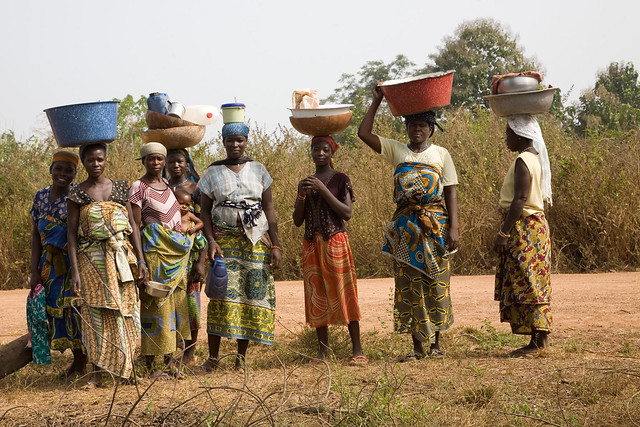
Along with the changing face of conflict, terrorism and crime, FSI researchers study food security. They tackle the global problems of hunger, poverty and environmental degradation by generating knowledge and policy-relevant solutions.
Trading carbon for food: Global comparison of carbon stocks vs. crop yields on agricultural land
Expanding croplands to meet the needs of a growing population, changing diets, and biofuel production comes at the cost of reduced carbon stocks in natural vegetation and soils. Here, we present a spatially explicit global analysis of tradeoffs between carbon stocks and current crop yields. The difference among regions is striking. For example, for each unit of land cleared, the tropics lose nearly two times as much carbon (∼120 tons·ha-1 vs. ∼63 tons·ha-1) and produce less than one-half the annual crop yield compared with temperate regions (1.71 tons·ha-1·y-1 vs. 3.84 tons·ha-1·y-1). Therefore, newly cleared land in the tropics releases nearly 3 tons of carbon for every 1 ton of annual crop yield compared with a similar area cleared in the temperate zone. By factoring crop yield into the analysis, we specify the tradeoff between carbon stocks and crops for all areas where crops are currently grown and thereby, substantially enhance the spatial resolution relative to previous regional estimates. Particularly in the tropics, emphasis should be placed on increasing yields on existing croplands rather than clearing new lands. Our high-resolution approach can be used to determine the net effect of local land use decisions.
How Wars End: Why We Always Fight the Last Battle
Foreign Affairs editor Gideon Rose will describe how the United States has failed in the aftermaths of every major 20th-century war-from WWI to Afghanistan-routinely ignoring the need to create a stable postwar environment. He will argue that Iraq and Afghanistan are only the most prominent examples of such bunging, not the exceptions to the rule. Rose will draw upon historic lessons of American military engagement and explain how to effectively end our wars.
Gideon Rose is the editor of Foreign Affairs. He served as managing editor of the magazine from 2000 to 2010 . From 1995 to December 2000 he was Olin senior fellow and deputy director of national security studies at the Council on Foreign Relations (CFR), during which time he served as chairman of CFR's Roundtable on Terrorism and director of numerous CFR study groups. He has taught American foreign policy at Columbia and Princeton Universities. From 1994 to 1995 Rose served as associate director for Near East and South Asian affairs on the staff of the National Security Council. From 1986 to 1987, he was assistant editor at the foreign policy quarterly The National Interest, and from 1985 to 1986 held the same position at the domestic policy quarterly The Public Interest. Rose received his BA from Yale University and his PhD from Harvard University.
Oksenberg Conference Room
Cultural critic Susie Linfield discusses 'The ethics of seeing'
As a little girl Susie Linfield was captivated by a book she
discovered on her parents' bookshelf entitled The Black Book of Polish Jewry.
Published in the early 1940s, it included photos of starving Jews in the
ghettos. “I was grieved by them. I was shamed by them. But I was also sort of
compelled by them,” says Linfield, the director of the Cultural Reporting and
Criticism Program at New York University. Decades later, she reflected again on
the way photographs informed her view of war and atrocities as she examined the
photos emerging from the Balkans, Rwanda, and other trouble spots. In her new book, The Cruel Radiance: Photography and Political Violence (University
of Chicago Press), Linfield returns to this theme. She recently gave a talk at
Stanford as part of the Stanford Ethics & War Series (2010-2011), sponsored in part by the Center
for International Security and Cooperation, and she spoke with CISAC about
changes in photojournalism, the political context behind warfare, and what she
calls “the ethics of seeing.” Excerpts:
CISAC: In your book you look at two different approaches to war
photography—that of Robert Capa, the Hungarian war photographer of the 1930s
and 1940s, and the modern war photographer James Nachtwey, who has chronicled
more recent conflict. How are world events reflected in their photography?
Linfield: One of the observations in my book is that war and its related
atrocities are photographed in a much more graphic way than they used to be.
The level of atrocity and bodily disfigurement that we are now used to seeing
in photographs is something very different than the kind of photojournalism
that was done in the 1920s through the 1950s. That connects in some ways to the
lessening of political certainty. In other words, the kind of political and
ideological factors that used to determine war are much less prevalent in a lot
of the wars that are being fought now. If you look at the war in the Congo,
it’s just a horrific, horrific situation with millions of people killed. But
it’s very hard to understand that war in any sort of traditional political
paradigm, certainly not the paradigm of something like the Spanish civil war.
There, one could understand the political dynamics and certainly feel
solidarity with one side or another. With a lot of the wars we're presented
with now, I think that kind of solidarity and political clarity is very, very
hard to come by. So I think what we’re presented with visually is the bodily
disfigurement, the tortured bodies, but without any kind of political context
in which to understand it.
CISAC: How are today’s photos perceived by viewers,
as opposed to back in Capa’s time?
L: I think there’s much more resistance to seeing photographs now than there
was in Capa’s time. And again I think that’s connected to the lack of political
clarity. People aren’t really sure why they’re seeing them or what to think
when they do, and I think that has turned into a resentment against photography
and against photojournalism in particular—that we’re just being assaulted by
these meaningless images. These images aren’t meaningless. But they do take a
lot of work to try to understand.
CISAC: How is this tied to ethics?
L: I think there is something I would call the ethics of seeing. To me that’s
not an instantaneous thing. It would be very connected to the idea of really
trying to delve into the histories that these photographs suggest and really
trying to understand them and understand the causes of the violence. And in
terms of the ethics of showing, I am much less critical of photojournalists
than I think a lot of other critics are, especially with someone like James Nachtwey.
He’s accused of being a pornographer, exploiting—his stuff is disgusting,
unbearable, unwatchable. And it is disgusting and unbearable in certain ways,
but I don’t think he’s a pornographer. And I don’t think he’s a nihilist. I
think he’s showing us images that are very, very difficult to look at. And
they’re very, very difficult to look at for two reasons. One, the explicitness
of them is very, very painful. To see bodies that tormented is extraordinarily
painful. And I think they’re also difficult to look at because it’s very hard
to have a political context in which to understand these images. In a certain
sense we’re sort of left with our troubled emotions, but not really knowing what
to do with them.
Shorenstein APARC experts take part in "North Korea 2010" forum
An international forum on North Korea was held in Palo Alto on October 26, 2010, in an effort to educate the public on reunifying the two Koreas. The San Francisco Chapter of the National Unification Advisory Council organized the forum. Approximately 150 audience members heard panelists speak about the economic, social, and political challenges that face South Korea today in its preparation for a peaceful reunification, as well as about their visions for the future of North Korea.
Gi-Wook Shin, the director of the Walter H. Shorenstein Asia-Pacific Research Center (APARC), moderated the presentations and the panel discussion. The panel of four experts included John Everard, 2010-2011 Pantech Fellow at APARC and a former British ambassador to North Korea, speaking about diplomacy and security; Greg Scarlatoiu, director of public affairs and business issues at the Korea Economic Institute, on economic issues; Sang-Hun Choe, 2010-2011 Fellow in Korean Studies at APARC and a reporter at the International Herald Tribune, on factionalism; and Jung Kwan Lee, the South Korean Consul General in San Francisco, on South Korea's policy toward North Korea.
Everad analyzed North Korea's development during the Cold War of a diplomatic technique by which it repeatedly attempted to play one ally off against another in its relationships with the Soviet Union and China. While arguing that North Korea continues to make effective use of this technique against South Korea, the United States, and the European Union, Everad noted that North Korea's current political uncertainty, following the succession, and its ongoing economic concerns will together create a situation in which it may be very difficult for North Korea to maintain political solidarity.
Scarlatoiu, meanwhile, contended that North Korea's is a post-Stalinist, neo-patrimonial economy. Thus, with recent efforts such as the 2002 market reforms and the 2009 currency reform, the North Korean regime has found itself confronted with a major dilemma. According to Scarlatoiu, while economic reforms are necessary to the long-term survival of the regime, they could also lead to the regime's collapse. This predicament, he added, must be considered as the regime undergoes a leadership transition in the succession to Kim Jong-un.
Choe spoke on the process of succession to Kim Jong-un as well, pointing out that while Kim Jong-un is indisputably the heir to the leadership of North Korea, he has yet to prove his competency as North Korea's future leader. In addition, Choe emphasized that difficulties judging North Korea's intentions and anticipating its behavior stem from the outside world's inability to understand the North Korean leadership and the goals that it truly has in mind.
Finally, Lee stressed that the basic objectives of South Korea's policy on North Korea are to promote a common prosperity and to peacefully resolve North Korean nuclear issues. However, he also made it clear that the South Korean government is seeking to keep North Korean nuclear issues distinct from the issue of inter-Korean relations.
Engagement with North Korea and Opportunities for Progress on Human Rights
Dr. Robert R. King became the Special Envoy for North Korean Human Rights Issues in November 2009 following confirmation by the United States Senate.
Prior to his appointment, Ambassador King worked on Capitol Hill for 25 years – 24 of those years as Chief of Staff to Congressman Tom Lantos (D-California). Ambassador King was heavily involved in the planning and conduct of Lantos’ human rights agenda, including the establishment and supervision of the Congressional Human Rights Caucus, (which recently became the Tom Lantos Congressional Human Rights Commission). Dr. King traveled with Congressman Lantos to North Korea and played a key role in the passage of the 2004 North Korean Human Rights Act. He was concurrently Staff Director of the Foreign Affairs Committee of the U. S. House of Representatives (2007-2008), Democratic Staff Director of the Committee (2001-2007) and held various professional staff positions on the Committee since 1993.
Prior to his service on Capitol Hill, Ambassador King served on the National Security Council Staff as a White House Fellow during the Carter Administration. He was Assistant Director of Research and Analysis at Radio Free Europe in Munich, Germany. Ambassador King holds a Ph.D. in International Relations from the Fletcher School of Law and Diplomacy and has authored five books and some 40 articles on international relations.
Philippines Conference Room
Justin McGrath
Y2E2 (Energy & Environment Building)
473 Via Ortega, room 349
Stanford, CA 94305-4205
Justin McGrath is a postdoctoral scholar in the Center on Food Security and the Environment. His research examines the impacts of environmental change on crop physiology, yield and quality. Recent projects have studied how water status alters crop response to elevated carbon dioxide concentrations, and how nutrient quality changes when crops are grown in elevated carbon dioxide. Ongoing studies will examine how these changes in crop quantity and quality will affect calorie and nutrient intake of populations in food-insecure regions of the world.
Justin received his degree from the University of Illinois, Urbana-Champaign in 2009 where he examined the molecular and physiological basis for changes in crop canopy structure when grown in elevated carbon dioxide, and he received a B.S. from Bradley University in 2004.