Security

FSI scholars produce research aimed at creating a safer world and examing the consequences of security policies on institutions and society. They look at longstanding issues including nuclear nonproliferation and the conflicts between countries like North and South Korea. But their research also examines new and emerging areas that transcend traditional borders – the drug war in Mexico and expanding terrorism networks. FSI researchers look at the changing methods of warfare with a focus on biosecurity and nuclear risk. They tackle cybersecurity with an eye toward privacy concerns and explore the implications of new actors like hackers.

Along with the changing face of conflict, terrorism and crime, FSI researchers study food security. They tackle the global problems of hunger, poverty and environmental degradation by generating knowledge and policy-relevant solutions. 

-

A Discussion Session with

Joel Beinin is Donald J. McLachan Professor of History and Professor of Middle Eastern History at Stanford University. He received his M.A. from Harvard University and Ph.D. from the University of Michigan- Ann Arbor.  His research focuses on workers, peasants, and minorities in the modern Middle East and on Israel, Palestine, and the Arab-Israeli conflict. He has written or edited seven books, most recently Workers and Peasants in the Modern Middle East (Cambridge University Press, 2001) and The Struggle for Sovereignty: Palestine and Israel, 1993-2005 (with Rebecca Stein, Stanford University Press, 2006). In 2002, he served as President of the Middle East Studies Association of North America.

Lisa Blaydes is Assistant Professor of Political Science at Stanford University. She received her M.A. from Johns Hopkins University and Ph.D. from University of California-Los Angeles. Among her publications are Elections and Distributive Politics in Mubarak's Egypt (Cambridge University Press, 2011), "Women's Electoral Participation in Egypt: The Implications of Gender for Voter Recruitment and Mobilization" (with Safinaz El Tarouty , Middle East Journal, 2009), and "Spoiling the Peace?: Peace Process Exclusivity and Political Violence in North-central Africa" (with Jennifer De Maio, Civil Wars, 2010). Her research interests include comparative politics, Middle Eastern politics, and political economy.


Robert Crews is Associate Professor of History and Director of the Center for Russian, East European and Eurasian Studies at Stanford University. He received his M.A. from Columbia University and Ph.D. from Princeton University. He is the author of For Prophet and Tsar:  Islam and Empire in Russia and Central Asia (Harvard University Press, 2006) and co-editor of The Taliban and the Crisis of Afghanistan (with Amin Tarzi, Harvard University Press, 2008).  He was named by the Carnegie Corporation of New York as one of the 2009 Carnegie Scholars selected for influential ideas and enhancing public discourse about Islam.

Sponsored by the Abbasi Program in Islamic Studies

Bechtel Conference Center

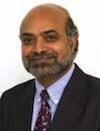
Joel Beinin Speaker Department of History, Stanford University
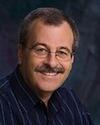
Lisa Blaydes Speaker Department of Political Science, Stanford University
Robert Crews Speaker Department of History, Stanford University
Conferences

Shorenstein APARC
Stanford University
Encina Hall, Room E301
Stanford, CA 94305-6055

(650) 725-2507 (650) 723-6530
0
Visiting Scholar
Hyun_J._Lee_2010-2011_Visiting_scholar.jpg

Hyun Jeoung Lee is currently a visiting scholar with the Korean Studies Program. She is an attorney at Kim & Chang, in the White Collar Criminal Defense Practice Group, in Seoul, Korea.

Before joining the firm in 2007, Lee served as a public prosecutor for 10 years. In that capacity, she developed expertise in a wide range of criminal law matters and was awarded honors by the Korean government, including the titles of Public Prosecutor General (2003) and Cabinet Minister of the Ministry of Justice (2006).

Lee completed her master's work in competition and antitrust laws at the Graduate School of Legal Studies at Korea University in 2006. She has extensive experience in white collar criminal defense, primarily in the areas of securities fraud, insider trading, and other corporate crimes, including fair trade regulation.

CV
Authors
Larry Diamond
News Type
Commentary
Date
Paragraphs

After nearly 30 years on the throne, Egypt's modern-day pharaoh, Hosni Mubarak, will soon follow in the footsteps of Tunisia's dictator, Ben Ali. The only question is not whether he will leave the presidency of Egypt, or even when, but how. In the face of persistent and growing mass protests-and a newfound sense of civic empowerment on the part of Egypt's long demoralized youthful masses-it is difficult to imagine Mubarak surviving in office for more than another week to ten days. The only question is whether he will see the inevitable and do one last service to his country-leave office gracefully-or whether he will have to be pushed out by the military or a deepening climate of chaos on the streets.

Egypt is very far from being "ready" institutionally or civically for democracy, but it is perched at an interesting point that could make a transition to democracy feasible. 

First, the naming of a Vice-President, after the office sat vacant throughout Mubarak's presidency, leaves open the possibility of an orderly transitional succession. Should the savvy former intelligence chief, Omar Suleiman, read his country's mood shrewdly and decide to preside over a free and fair contest for the presidential election six months hence, he could go down as a hero in Egyptian history, negating the central role he played in a now widely reviled regime. Parallels to the now valued transitional role played by Indonesia's Vice President, Habibie, after the fall of Suharto in 1998 come to mind. However, as the public mood shifts toward demand for a thorough house-cleaning, it is possible that nothing less than a broad-based interim government will satisfy popular demands for change.

Second, in contrast to Tunisia, there is an obvious democratic alternative to Mubarak (or Suleiman, or any other regime stalwart): the Nobel-prize-winning former IAEA head, Mohamed ElBaradei.  As a political novice who has lived outside Egypt for most of the last few decades, ElBaradei is far from an ideal founding president of a new democracy (but then, few countries in a situation of regime turmoil, or even after a carefully planned transition, wind up with a leader of the vision and political skill of Nelson Mandela). Yet ElBaradei has a number of assets, including a keen understanding of the international environment, wide international contacts, experience in running a large organization, a personal history that is untainted by association with the repression and corruption of the Mubarak era, and the apparent ability to unite disparate elements of the opposition, religious and secular, behind his candidacy.

Beyond ElBaradei, the emergence of a broad opposition effort (including ElBaradei and former opposition presidential candidate Ayman Nour) to negotiate the terms of a transition and a new national unity government also augur hopefully for the near-term future.

If a reasonably free and fair contest for the presidency could be organized on schedule in September 2011, there is little doubt that the long-ruling NDP would be dealt a crushing defeat.  To ensure that, however, would not only require institutional changes to allow a fully open and free presidential contest, but also to ensure a fresh registration of voters and neutral administration of the electoral process. These changes would need to be implemented fairly quickly to enable a credible and reasonably fair process as soon as September. The first such change will need to be a constitutional amendment to remove the condition that requires a party to have 5 percent of the seats in parliament in order to field a presidential candidate. 

If the September election timetable can be adhered to, the democratic election of a new president of Egypt would be the beginning, not the end, of a democratic transition in Egypt.  The parliament will need to be completely reelected, as the elections of late 2010 were even more farcical and outrageously rigged than previous ones. As a result, the ruling NDP won 81 percent of the seats, and no opposition party won more than a small sliver of seats in an election that at least three-quarters of eligible voters (and probably many more) boycotted. 

A new democratically elected president would thus need to preside over a far-reaching transitional process, which would require the rewriting of the constitution; the reform and renewal of the electoral system, the judiciary, and other government institutions, especially the police; and the training and empowerment of democratic political parties, mass media, and civil society organizations, which have been heavily constrained during the Mubarak era. Egyptians might want to consider the next presidential term as a deliberately transitional and power-sharing government, under a relatively spare interim constitution, while a democratic process of dialogue and deliberation drafted a new permanent constitution. South Africa could serve as a model here; a newly elected democratic parliament could also serve as a Constituent Assembly to draft a new constitution with wide popular participation and consultation.

Forging the rules and institutional arrangements of a transitional period will not be easy. Political stability will require a broadly inclusive process of negotiations that brings all key political stakeholders to the table, and that forges a political pact that ensures the loyalty of the army and security apparatus while gradually renewing its officer ranks and establishing civilian democratic control. No doubt there will be calls for retrospective justice to investigate the many abuses of human rights during the Mubarak era, but the historical experience of other transitions suggest that this task should be addressed with caution and deliberation, in a way that does not drive the surviving elements of the old regime into a posture of resistance and sabotage.

The challenge for the U.S. is to align itself squarely behind Egypt's aspirations for democracy without being so public, clumsy and abrupt in abandoning Mubarak that we provoke an anti-American backlash from among other regional allies. But if we have to choose between rulers and their people, it is time we started choosing the people. We need to quickly develop a strategy and commit new resources to assist Egyptian political parties, non-governmental organizations, civic education groups, and independent media to help them prepare the country for a period of protracted and unprecedented democratic change.

Egypt is entering the end of an era. The exit from power of Hosni Mubarak under pressure of volcanic popular protests will have wide repercussions throughout the Arab world. It will accelerate the momentum of democratic change in the region, and open the possibility of electoral democracy emerging in the Arab world's largest and most influential country. If Mubarak can be induced to exit peacefully and soon, and the way can be paved to a free and credible presidential election in September, the authoritarian exceptionalism of the Arab world may begin drawing to an end.

Hero Image
Larry Diamond website pic
All News button
1
News Type
News
Date
Paragraphs

On January 25, Professor Beth Simmons of Harvard University spoke as part of the Sanela Diana Jenkins Series on international human rights. Simmons, the Director of the Weatherhead Center for International Affairs, presented research from her award-winning book Mobilizing for Human Rights: International Law in Domestic Politics (2009).

During her lecture, Simmons explored the reasons why certain countries chose to ratify binding international treaties and others did not. Looking specifically at six "core" treaties, Simmons discussed the various domestic factors and international pressures that would explain the often-unexpected behavior of the nations toward these treaties. Strikingly, Simmons found that one of the best predictors of a country's position on a treaty was the ratification or non-ratification by its neighboring nations. This discovery, she said, suggested that nations could influence non-signatory neighbor countries to sign such treaties.

Simmons then turned to the analysis of why, and to what extent, these treaties matter - a question she is often asked by her students. While insisting that international treaties alone do not "solve all the problems," Simmons emphasized their role in framing human rights issues not only on the international level, but also in domestic politics. According to Simmons, these treaties support the domestic efforts of individuals and organizations across the globe that can now "point to [these] core focal group of documents as evidence [of their rights]."

Hero Image
Beth V scenery
All News button
1

FSE Fellow David Lobell presented his work on climate impacts on crop production at the Donald Bren School of Environmental Science and Management, UC Santa Barbara, CA.

Donald Bren School of Environmental Science and Management, UC Santa Barbara, CA

Energy and Environment Building
473 Via Ortega
Stanford CA 94305

(650) 721-6207
0
Professor, Earth System Science
Senior Fellow at the Freeman Spogli Institute for International Studies
Senior Fellow at the Stanford Woods Institute for the Environment
Senior Fellow at the Stanford Institute for Economic Policy Research (SIEPR)
Affiliate, Precourt Institute of Energy
shg_ff1a1284.jpg PhD

David Lobell is the Benjamin M. Page Professor at Stanford University in the Department of Earth System Science and the Gloria and Richard Kushel Director of the Center on Food Security and the Environment. He is also the William Wrigley Senior Fellow at the Stanford Woods Institute for the Environment, and a senior fellow at the Freeman Spogli Institute for International Studies (FSI) and the Stanford Institute for Economic Policy and Research (SIEPR).

Lobell's research focuses on agriculture and food security, specifically on generating and using unique datasets to study rural areas throughout the world. His early research focused on climate change risks and adaptations in cropping systems, and he served on the Intergovernmental Panel on Climate Change (IPCC) Fifth Assessment Report as lead author for the food chapter and core writing team member for the Summary for Policymakers. More recent work has developed new techniques to measure progress on sustainable development goals and study the impacts of climate-smart practices in agriculture. His work has been recognized with various awards, including the Macelwane Medal from the American Geophysical Union (2010), a Macarthur Fellowship (2013), the National Academy of Sciences Prize in Food and Agriculture Sciences (2022) and election to the National Academy of Sciences (2023).

Prior to his Stanford appointment, Lobell was a Lawrence Post-doctoral Fellow at Lawrence Livermore National Laboratory. He holds a PhD in Geological and Environmental Sciences from Stanford University and a Sc.B. in Applied Mathematics from Brown University.

CV
Date Label
David Lobell Speaker
Seminars
Subscribe to Security