FSI scholars produce research aimed at creating a safer world and examing the consequences of security policies on institutions and society. They look at longstanding issues including nuclear nonproliferation and the conflicts between countries like North and South Korea. But their research also examines new and emerging areas that transcend traditional borders – the drug war in Mexico and expanding terrorism networks. FSI researchers look at the changing methods of warfare with a focus on biosecurity and nuclear risk. They tackle cybersecurity with an eye toward privacy concerns and explore the implications of new actors like hackers.
Along with the changing face of conflict, terrorism and crime, FSI researchers study food security. They tackle the global problems of hunger, poverty and environmental degradation by generating knowledge and policy-relevant solutions.
"'Critical Engagement': British Policy toward the DPRK" examines the United Kingdom's policy toward the Democratic People's Republic of Korea (DPRK). The policy known as "critical engagement" has been applied for over 14 years.
"UK efforts are not going to have the immediate result we all want. However, they do show...that it is possible to carry out engagement and hopefully reduce the chasm between DPRK thinking and the rest of the world," author Mike Cowin writes. He suggests that the British approach is similar to that advised by a Stanford research team in Tailored Engagement.
Cowin wrote an earlier policy paper on relations between the DPRK and the European Union in March 2015.
Mike Cowin is the 2014-15 Pantech Fellow in the Korea Program at the Walter H. Shorenstein Asia-Pacific Research Center. Before coming to Stanford, he served as the deputy head of mission at the British Embassy in Pyongyang, North Korea. He has also served in the British embassies in Seoul from 2003 to 2007, and in Tokyo from 1992 to 1997.
North Korea fired off short-range missiles last Tuesday close to the arrival of U.S. Secretary of Defense Ashton Carter to the region. Carter, who was on his inaugural trip to Asia as the newly confirmed Secretary of Defense, said the launch was a sign of the region’s continued tensions.
The United States consistently expresses concern over North Korea’s nuclear and missile capabilities, yet attempts to resume the Six-Party Talks, the negotiations to denuclearize North Korea which began in 2003, have been unsuccessful. The United Kingdom, although not an official participant in the Talks, has had diplomatic relations with North Korea since 2000, setting itself apart from many in the West, and from Japan which do not have formal diplomatic ties with the country.
Typically small-scale and led largely in collaboration with European NGOs, the Embassy’s initiatives span from humanitarian aid – providing water supplies and sewage systems – to exchanges – hosting visiting delegations of North Korean paralympic athletes and English teachers.
The Embassy also works to build a stronger understanding of modern Britain in North Korea. They have shown films such as Wallace and Grommit and Philomena at the Pyongyang International Film Festival, and supplemented reading materials in the Grand People’s Study House, a central library in Pyongyang.
Cowin says that it’s not easy to construct these exchanges, but if established, they provide small steps in the right direction, and help set the stage for critical engagement in the future. The United Kingdom’s approach shares commonalities with the suggestions made by a Stanford research team in Tailored Engagement, he says.
“The United Kingdom’s efforts are not going to have the immediate result we all want. However, they do show that the DPRK is not completely isolated from the Western world and that it is possible to carry out engagement,” he says.
Cowin is also the author of an earlier policy brief on relations between North Korea and the European Union.
Hero Image
Presenters on stage at the 13th annual Pyongyang International Film Festival in North Korea. | Mike Cowin
A chance course at Stanford and a study-abroad trip to Nepal changed the trajectory of Marshall Burke's career, leading him to a human-focused approach studying climate change. His latest work deals with the link between rising temperatures and human violence.
I pray thee, good Mercutio, let's retire: The day is hot, the Capulets abroad, And, if we meet, we shall not scape a brawl; For now, these hot days, is the mad blood stirring.
That a connection exists between hot temperatures and flaring tempers is an old observation. In William Shakespeare's Romeo and Juliet, Benvolio begs his friend Mercutio to take shelter from the heat, lest it lead to a street fight with a member of the Capulet family.
“Even in Shakespeare’s time, it was recognized that people are more likely to lose their tempers when it’s hot outside,” said Marshall Burke, an assistant professor in the department of Environmental Earth System Science and a fellow at the Freeman Spogli Institute for International Studies and its Center on Food Security and the Environment (FSE).
The link between temperature and violence has come under increased scientific scrutiny in recent years because of climate change. In 2013, Burke made waves in scientific circles and in the popular press when he and Solomon Hsiang, now an assistant professor of public policy at the University of California, Berkeley, performed a meta-analysis of over 50 scientific studies and found that climate change is increasing various kinds of human conflict–everything from individual-level violence, such as assault and robbery, all the way up to group-level conflicts such as civil wars and skirmishes between nations.
"What we see is that over and over, no matter where you look, you see more conflict and more violence when temperatures are hotter than average," Burke said.
Climate change and violence
Prior to Burke and Hsiang's study, several papers had suggested possible links between climate change and violence, but the research was scattered across disciplines and the results often conflicted with one another. The pair sought to cut through the morass by putting all of the papers on an equal empirical footing. "We got a hold of all of the datasets that we could and reanalyzed them in exactly the same way," Burke said. "When we did that, what came through was a very strong and consistent relationship between hotter-than-average temperatures and increases in all these types of conflicts."
We are learning about ourselves and we can shape our trajectories in ways that we wouldn't have been able to if we didn't have this information. To me, that's very hopeful.
Burke says he was surprised by the how strong and consistent the signal was. For example, of the 27 studies from the modern era that looked directly at the relationship between temperature and conflict, all 27 of them found a positive relationship. "The chance of that happening at random or by chance is less than 1 in 10 million,” Burke said.
Burke finds it fascinating that a relationship between temperature and violence should exist at all. Economists have speculated that temperature affects human conflict through changes in economic productivity. The idea is that by increasing the likelihood of droughts in certain parts of the world, climate change is reducing crop productivity and driving people already in dire straits to take desperate measures such as joining rebellions. "In places like Sub-Saharan Africa, you don't need that many people to start a civil war," Burke said.
Human physiology almost certainly plays a key role as well. Studies show that people just behave badly when it’s hot. "Experiments have shown that whether it’s a cooperation task, or one that requires concentration, people just do poorly if it's hotter in the room," Burke said. "We're just wired to do better at some temperatures than at others."
Because global warming is unlikely to abate anytime soon, even if mitigation policies are enacted, understanding why hotter temperatures brings out the worst in humans is crucial for determining solutions to curb violent tendencies as global temperatures rise, Burke said. "If the root cause is agricultural, we might want to invest in things that boost crop yields or that reduces crop sensitivity to really hot temperatures," he added. "If it’s something to do with human physiology, the problem becomes much more difficult. You might say, well we could just invest in air conditioning, but even in the U.S. where we have lots of air conditioning, you still see this strong relationship."
Burke's own background is in economics, but he plans to team up with medical scientists to explore just how temperature affects human physiology. "That's what's exciting about being at Stanford, and one of the main reasons I accepted a position here," Burke said. "It's really easy to cross disciplines here and make connections in other fields."
People-focused
Being interdisciplinary comes naturally to Burke. His undergraduate education at Stanford University straddled the social sciences and the natural sciences. Initially an Earth Systems major, Burke later switched to International Relations after taking a course called "The World Food Economy" that was co-taught by Roz Naylor, the William Wrigley Professor in Earth Science. "I took that class and it literally changed my trajectory. I knew that this kind of human-focused research was what I wanted to do," Burke said.
Burke was also deeply affected by time he spent living in Nepal with poor farming families during his junior year as part of a semester abroad program. "It was my first real confrontation with deep and grinding rural poverty," he said. "That experience made me want to understand what's going on and think about the kind of research I needed to do if I wanted to help."
After graduating, Burke worked as a research assistant for Naylor and Walter Falcon, now the deputy director of FSE, where he helped investigate the impacts of agricultural systems on the environment and ways to use agriculture to reduce poverty around the world. "Since most of the poor people in the world continue to work in agriculture, our idea was that if we could improve how much was produced on small farms, it would have a big impact on global poverty," Burke said.
Burke also credits Naylor and Falcon with making him think more deeply about the connections between climate change and agriculture. Later, while earning his PhD in agricultural and resource economics at the University of California, Berkeley, Burke's research interests broadened further to look at how climate change effects on agriculture might in turn impact the economic health and social cohesion of a country. "For me, it was a natural to begin by thinking about climate change impacts on agriculture and then following that line of reasoning to investigate other knock-on effects," Burke said.
A silver lining
When Burke is not at Stanford, he can often be found taking photographs or hiking and rock climbing with his family. His office is decorated with photos he’s taken of Death Valley, Yosemite Valley, and Nepal, where he returned with his wife for their honeymoon.
Burke credits the time he spent outdoors as a child for his lifelong interest in environmental issues, and it's a tradition that he continues with his two young girls. "We have two-year-old twins, and my wife and I have little harnesses that we use to take them rock climbing. So far they're more interested in swinging around on the rope than in actually climbing, but it's fun," he said.
Burke says the time he spends in the mountains and deserts are not just for his own mental well being and happiness. “It’s a constant reminder about the things I work on and what’s at stake,” he said.
Marshall Burke and his wife rocking climbing with their two-year-old daughter at Joshua Tree.
He acknowledged that many of the predictions from climate change impact studies are frightening and depressing, but he thinks there is a silver lining that often gets overlooked. "We live in a unique moment in history when we have a wealth of tools and data that can help us understand how human societies and the environment are coupled," Burke said.
"We are learning about ourselves and we can shape our trajectories in ways that we wouldn't have been able to if we didn't have this information. To me, that's very hopeful."
Burke is also a fellow at the Center on Food Security and the Environment (FSE) and a fellow at the Freeman Spogli Institute for International Studies.
Retired Army Lt. Gen. Karl Eikenberry stood before a team of soldiers preparing to deploy to Afghanistan. Their mission would be quite different from the ones he led in the South Asian country during the height of the war.
The officers of the U.S. Army’s 3rd Bridge Combat Team, 101st Airborne Division, in Fort Campbell, Ky., would soon be leading a team of about 2,000 soldiers to provide operational support and advise Afghan national forces as the U.S.-led Coalition forces withdraw and the country takes over the battle against the Taliban.
“I spoke to them about the history of the U.S. diplomatic, development and military activities in Afghanistan since 9/11,” said Eikenberry, now the William J. Perry Fellow in International Security at the Center for International Security and Cooperation.
Eikenberry was a military commander in Afghanistan from 2002-2003 and then again from 2005-2009. He would later serve as U.S. ambassador to Kabul from 2009 to 2011.
Col. J.B. Vowell, a former CISAC Senior Military Fellow (2012-2013), was leading the brigade, which deployed in late January for a nine-month tour. He had invited Eikenberry to speak to his troops, having met him while he was at Stanford.
The mission of his tour is to advise and protect advisors and, if necessary, support Afghan forces in extreme combat situations. Though a brigade typically has 5,000 soldiers, Vowell’s smaller, tailored team is a sharp departure from previous missions.
Former CISAC military fellow and U.S. Army Col. J.B. Vowell, left, and Ret. U.S. Army Lt. Gen. Karl Eikenberry, at Fort Campbell, Ky., on Jan. 13, 2015.
“So they’ve had to think hard about not only their advisory role, but also who they will protect their own forces with, and what to do if they are called upon to support Afghan forces in an exceptionally dire situation,” said Eikenberry.
These types of operations are part of the central challenges facing the U.S. military today, Eikenberry said, adding that Vowell’s time as a senior military fellow at CISAC helped prepare him for his mission.
“The resources available at FSI help prepare officers for these challenges,” said Eikenberry, who is also an affiliate of FSI's Center on Democracy Development and the Rule of Law. “CISAC does very sophisticated studies in contemporary security problems; CDDRL does very interesting work in the development of political institutions in difficult environments. These are resources military fellows can draw upon.”
Military Fellow Program launched in 2009
When former Secretary of Defense William J. Perry returned to Stanford after his service in Washington, he and current Secretary of Defense Ashton Carter started the Preventative Defense Project at Harvard and Stanford. The project focuses on forging nongovernmental, Track II security partnerships with Russia and its neighbors, engaging China and addressing the lethal legacy of Cold War weapons of mass destruction.
Deborah Gordon, executive director of the project and manager of the military fellows program, said Perry believed that bringing in acting military officers to learn more about strategic defense policy would aid the mission to prevent future threats to global security.
“Perry started asking the various heads of the military services to allow a fellow to come to CISAC and be more broadly engaged in the university,” she said.
The Freeman-Spogli Institute for International Studies (FSI), the umbrella organization for CISAC and other research centers, hosted its first senior military fellow in 2009. FSI now hosts five, three from the Air Force and two from the Army. Fellows go through a rigorous selection process and attend Stanford for one year to conduct research.
CISAC Senior Research Scholar and retired U.S. Army Col. Joseph Felter helped secure the Army officers for the first fellowships. He had attended Stanford as an active duty officer from 2002-2005 and has a Ph.D. in political science from the university.
“When I came back to do a War College fellowship from 08-09, the only sponsored spots were at Hoover,” he said, referring to the Hoover Institution at Stanford. “It’s a great institution but it struck me as a bit insulated from the rest of the campus. With the support of the Army War College I volunteered to take the lead on putting together a proposal.”
He persuaded the War College that there was demand for fellows and they approved the establishment of two new fellowships at CISAC. Felter, Gordon and others at CISAC knew that civilian scholars and students at the university would in turn benefit from interacting with active-duty officers for their perspective on the U.S. military around the world.
Among the first fellows were Viet Luong, who is now a one-star general and deputy commander of the 1st Cavalry Division, and Charlie Miller, who is working directly for Chairman of the Joint Chiefs of Staff General Martin Dempsey as his senior advisor.
Former CISAC Military Fellow Viet Luong, now a one-star general, teaches a simulation class during his 2011-2012 fellowship.
In addition to meeting current and former government and military leaders and conducting research, fellows participate in Stanford classrooms and seminars.
Army Lt. Col. Dennis Heaney is a senior military fellow at CISAC this academic year. His research focuses on the strategic policy of the Regionally Aligned Forces (RAF), soldiers from all units of the U.S. Armed Forces that support combatant commands.
Heaney is working to delineate out the costs of altering the role of conventional forces - traditionally trained to fight against other national militaries - to fight unconventional wars that are not restricted to any particular geographic zone.
“The real dilemma is conventional Army forces are made for land warfare against other forces. They are not really cut out for irregular warfare,” Heaney said of the RAF. “When you try to do regional engagement it takes you away from your main mission. I may help you, but there is an opportunity cost. Trying to prepare for both regular and irregular warfare takes away from each one. It’s kind of a zero-sum game. So I’m trying to critique that and make recommendations.”
Heaney has been in the Army for 24 years. He started out in the infantry as an officer and then entered the Special Forces in 1997. He is likely to deploy to Afghanistan with the Special Operations Joint Task Force after he completes his fellowship.
“The biggest benefit of being a fellow at Stanford is exposure to high-level folks like Karl Eikenberry, Gen. James Mattis at Hoover, Adm. James Ellis, and former Defense Secretaries William Perry and George Schultz, as well as current Secretary of Defense Ash Carter when he was here for a short time,” Heaney said.
Carter was a visiting scholar at FSI last year, until he became the nation’s 25th secretary of defense in February.
Heaney participated in CISAC’s signature class, “International Security in a Changing World,” playing the role of military commander during simulations that are the hallmark of the class.
“One simulation was about deciding between ground or air options for a high-value target in Afghanistan,” Heaney said. “Last week we did a simulation about the Islamic State and what options exist.”
Even after they leave, military fellows maintain close ties to Stanford.
Eikenberry is slated to teach a course next term about America’s post-9/11 intervention in Afghanistan.
“I’m hopeful that we’ll be able to Skype-in to Col. Vowell’s headquarters,” he said. “I think it would be powerful for the students, after reading essay after essay about the Afghanistan intervention, to actually talk to one of our military leaders currently operating there on the ground.”
There is an effort underway to expand the military fellows program beyond FSI.
“We envision a future where military fellows can embed in the professional schools, like law and business, or in departments like engineering and political science – and even private tech companies like Google and Palantir,” Gordon said. “We want to engage Stanford and Silicon Valley in helping solve our national security problems.”
Joshua Alvarez was a CISAC Honors Student in the 2011-2012 academic year.
Hero Image
Former CISAC military fellow and U.S. Army Col. J.B. Vowell, left, and Ret. U.S. Army Lt. Gen. Karl Eikenberry, at Fort Campbell, Ky., on Jan. 13, 2015.
Each year the Walter H. Shorenstein Asia-Pacific Research Center offers fellowship opportunities to recent graduates to further their research and engage with scholars at Stanford. Postdoctoral fellows have the opportunity to develop their dissertations for publication, present their research to the Stanford community, and participate in Center activities.
Fellows often go on to pursue teaching positions and advisory roles at top universities and research organizations around the world. Into the future, they remain engaged with the Center and continue to contribute to Shorenstein APARC publications, conferences and related activities.
Shorenstein APARC is pleased to welcome three postdoctoral fellows for the 2015-16 academic year:
Asia Health Policy Fellow
Image
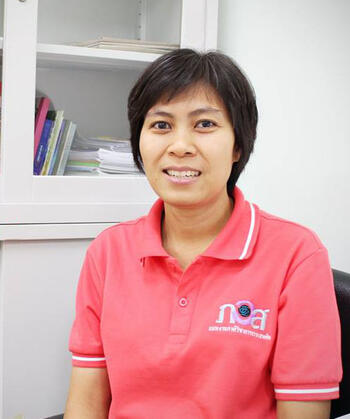
Darika Saingam
Saingam’s research interests are public health, substance abuse, drug policy and Southeast Asia. While at Shorenstein APARC, she will research the evolution of substance-abuse control measures and related policy in Thailand.
Saingam seeks to identify potentially effective policy directions suitable for Thailand, and other developing countries in Southeast and East Asia.
“There are a lot of lessons to be learned from substance abuse policy implementations in other countries…coping and dealing with substance abuse is a complex story and cannot respond successfully with only one strategy.”
Saingam completed her doctorate in epidemiology at the Prince of Songkla University in 2012, and has served as a researcher at the University’s epidemiology unit since, as well as a researcher at the Thailand Substance Abuse Academic Network since 2014.
Shorenstein APARC Postdoctoral Fellows
Image
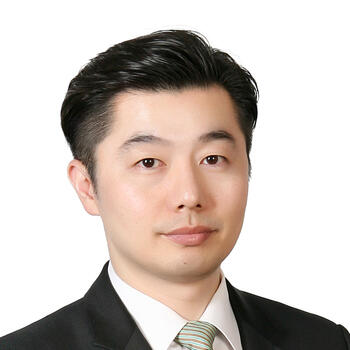
Booseung Chang
Chang’s research interests are comparative policy analysis and political institutions in East Asia, mainly South Korea and Japan. While at Shorenstein APARC, Chang will conduct research on how countries respond differently to the same external challenges, and how institutions are interpreted and applied in different ways.
His dissertation, which he seeks to build upon, is titled “The Sources of Japanese Conduct: Asymmetric Security Dependence, Role Conceptions, and the Reactive Behavior in response to U.S. Demands.” It is a qualitative comparative case study of how key U.S. allies in Asia – namely Japan and South Korea – and major powers in Europe - the United Kingdom and France responded to the U.S.-led Persian Gulf War and the Iraq War.
“East Asia is a treasure island of new theory building because some of the big challenges facing East Asia – finding a new role for Japan, denuclearization of North Korea, unification of the Korean peninsula, democratization of China and reconfiguration of its relations with the world, and development and integration of Southeast Asian countries – are truly new ones…”
Chang completed his doctorate in political science from the Paul H. Nitze School of Advanced International Studies at Johns Hopkins University in 2014.
Image
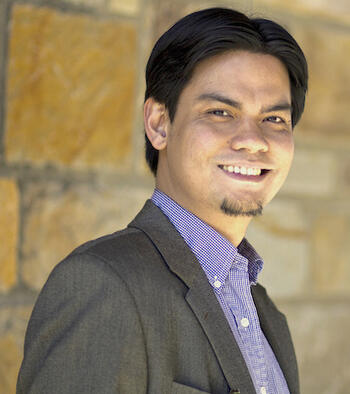
Nico Ravanilla
Ravanilla’s research interests are political economy and governance, comparative politics and Southeast Asia. While at Shorenstein APARC, Ravanilla will research how political selection impacts governance, and evaluate possible routes for incentivizing capable and virtuous citizens to run for public office.
His project titled “Nudging Good Politicians” looks at the case of the Sangguniang Kabataan, a governing body in the Philippines comprised of elected youth leaders. Ravanilla aims to apply his research to develop and scale up programs for politicians, especially those at the onset of their careers, which would include specialized leadership training and merit-based endorsement.
“If we could design a policy that screens-in and incentivizes competent and honest citizens to run for office, would it play a catalytic role in improving the quality of the political class, and ultimately, the quality of government?”
Ravanilla is also a Southeast Asia Research Group (SEAREG) Young Southeast Asia Fellow for 2015-16. He will complete his doctorate in political science and public policy from the University of Michigan in summer 2015.
Hero Image
View of Hoover Tower from Stanford's main quad. | Linda A. Cicero / Stanford News Service
Abstract: Scholars know quite a lot about U.S. nuclear war planning from the end of World War II to the end of the Cold War. We know a great deal about how nuclear deterrence was and is supposed to work. We know much less about how officers and others understood the circumstances and consequences if deterrence had failed and these plans had been used in war. What was it like to make very specific and workable plans for a war that, in President Ronald Reagan’s words, “cannot be won and must never be fought”—but nonetheless—might have been fought? This is a problem of understanding how organizations build complex technical and logistical routines, and how people in these organizations understood and made sense of the possibility that in some circumstances, nuclear weapons would be used. How did war planners imagine the circumstances? The scenarios of what might ensue? The consequences? It is one thing to say the whole situation was a paradox, or a conundrum; it is another to understand the many meanings of this situation for those involved. Explanation hinges on how people in organizations make plans, develop scenarios, and tell stories.
About the Speaker: Lynn Eden is Associate Director for Research at the Center for International Security and Cooperation, Freeman Spogli Institute for International Studies, Stanford University. Eden received her Ph.D. in sociology from the University of Michigan, held several pre- and post-doctoral fellowships, and taught in the history department at Carnegie Mellon before coming to Stanford.
In the area of international security, Eden has focused on U.S. foreign and military policy, arms control, the social construction of science and technology, and organizational issues regarding nuclear policy and homeland security. She co-edited, with Steven E. Miller, Nuclear Arguments: Understanding the Strategic Nuclear Arms and Arms Control Debates (Ithaca, N.Y.: Cornell University Press, 1989). She was an editor of The Oxford Companion to American Military History (New York: Oxford University Press, 2000), which takes a social and cultural perspective on war and peace in U.S. history. That volume was chosen as a Main Selection of the History Book Club.
Eden's book Whole World on Fire: Organizations, Knowledge, and Nuclear Weapons Devastation (Ithaca: Cornell University Press, 2004; New Delhi: Manas Publications, 2004) explores how and why the U.S. government--from World War II to the present--has greatly underestimated the damage caused by nuclear weapons by failing to predict damage from firestorms. It shows how well-funded and highly professional organizations, by focusing on what they do well and systematically excluding what they don't, may build a poor representation of the world--a self-reinforcing fallacy that can have serious consequences, from the sinking of the Titanic to not predicting the vulnerability of the World Trade Center to burning jet fuel. Whole World on Fire won the American Sociological Association's 2004 Robert K. Merton Award for best book in science, knowledge, and technology.
Eden has also written on life in small-town America. Her first book, Crisis in Watertown (Ann Arbor: University of Michigan Press, 1972), was her college senior thesis; it was a finalist for a National Book Award in 1973. Her second book, Witness in Philadelphia, with Florence Mars (Baton Rouge: Louisiana State University Press, 1977), about the murders of civil rights workers Schwerner, Chaney, and Goodman in the summer of 1964, was a Book of the Month Club Alternate Selection.
Lynn Eden is a Senior Research Scholar Emeritus. She was a Senior Research Scholar at Stanford University's Center for International Security and Cooperation until January 2016, as well as was Associate Director for Research. Eden received her Ph.D. in sociology from the University of Michigan, held several pre- and post-doctoral fellowships, and taught in the history department at Carnegie Mellon before coming to Stanford.
In the area of international security, Eden has focused on U.S. foreign and military policy, arms control, the social construction of science and technology, and organizational issues regarding nuclear policy and homeland security. She co-edited, with Steven E. Miller, Nuclear Arguments: Understanding the Strategic Nuclear Arms and Arms Control Debates (Ithaca, N.Y.: Cornell University Press, 1989). She was an editor of The Oxford Companion to American Military History (New York: Oxford University Press, 2000), which takes a social and cultural perspective on war and peace in U.S. history. That volume was chosen as a Main Selection of the History Book Club.
Eden's book Whole World on Fire: Organizations, Knowledge, and Nuclear Weapons Devastation (Ithaca: Cornell University Press, 2004; New Delhi: Manas Publications, 2004) explores how and why the U.S. government--from World War II to the present--has greatly underestimated the damage caused by nuclear weapons by failing to predict damage from firestorms. It shows how well-funded and highly professional organizations, by focusing on what they do well and systematically excluding what they don't, may build a poor representation of the world--a self-reinforcing fallacy that can have serious consequences, from the sinking of the Titanic to not predicting the vulnerability of the World Trade Center to burning jet fuel. Whole World on Fire won the American Sociological Association's 2004 Robert K. Merton Award for best book in science, knowledge, and technology.
Eden has also written on life in small-town America. Her first book, Crisis in Watertown (Ann Arbor: University of Michigan Press, 1972), was her college senior thesis; it was a finalist for a National Book Award in 1973. Her second book, Witness in Philadelphia, with Florence Mars (Baton Rouge: Louisiana State University Press, 1977), about the murders of civil rights workers Schwerner, Chaney, and Goodman in the summer of 1964, was a Book of the Month Club Alternate Selection.
Abstract: The Cold War rivalry between the United States and the Soviet Union lasted for much of the second half of the 20th Century. While the superpowers never engaged directly in full-scale armed combat, a nuclear arms race became the centerpiece of a doctrine of mutually assured destruction, and prompted a mass production of plutonium, and the designing, building, and testing of large numbers of nuclear weapons. In more than 50 years of operation, the Cold War battlefields created over 100 metric tons of plutonium, produced tens of thousands of nuclear warheads, oversaw more than 1000 detonations, and left behind a legacy of contaminated facilities, soils, and ground water.
The extent of long-term adverse health effects will depend on the mobility of plutonium and other actinides in the environment and on our ability to develop cost-effective scientific methods of removing or isolating actinides from the environment. Studying the complex chemistry of plutonium and the actinides in the environment is one of the most important technological challenges, and one of the greatest scientific challenges in actinide science today.
I will summarize our current understanding of actinide chemistry in the environment, and how that understanding was used in the decontamination and decommissioning of the Rocky Flats Site, where plutonium triggers for U.S. nuclear weapons were manufactured. At Rocky Flats, synchrotron radiation measurements made at the Stanford Synchrotron Radiation Laboratory were developed into a science-based decision-making tool that saved billions of dollars by focusing Site-directed efforts in the correct areas, and aided the most extensive cleanup in the history of Superfund legislation to finish one year ahead of schedule, ultimately resulting in billions of dollars in taxpayer savings.
About the Speaker: David L. Clark received a B.S. in chemistry in 1982 from the University of Washington, and a Ph.D. in inorganic chemistry in 1986 from Indiana University. His thesis work received the American Chemical Society’s Nobel Laureate Signature Award for the best chemistry Ph.D. thesis in the United States. Clark was a postdoctoral fellow at the University of Oxford before joining Los Alamos National Laboratory as a J. Robert Oppenheimer Fellow in 1988. He became a Technical Staff Member in the Isotope and Nuclear Chemistry Division in 1989. Since then he has held various leadership positions at the Laboratory, including program management for nuclear weapons and Office of Science programs, and Director of the Glenn T. Seaborg Institute for Transactinium Science between 1997-2009. He has served the DOE as a technical advisor for environmental stewardship including the Rocky Flats cleanup and closure (1995-2005), closure of High Level Waste tanks at the Savannah River Site (2011), and as a technical advisor to the DOE High Level Waste Corporate Board (2009-2011). He is currently the Program Director for the National Security Education Center at Los Alamos, a Fellow of the American Association for the Advancement of Science, a Laboratory Fellow, and Leader of the Plutonium Science and Research Strategy for Los Alamos. His research interests are in the molecular and electronic structure of actinide materials, applications of synchrotron radiation to actinide science, behavior of actinide and fission products in the environment, and in the aging effects of nuclear weapons materials. He is an international authority on the chemistry and physics of plutonium, and has published over 150 peer-reviewed publications, encyclopedia and book chapters.
Actinide Chemistry and The Battlefields of the Cold War
In attempts to complement the ongoing work on police use of violence and the pacification policy conducted by the Program on Poverty and Governance for the past three years (for this specific project, PovGov analyzed an extensive database on police work - including information on homicide rates and ammunition usage - applied a questionnaire to over 5,000 police officers, and conducted several interviews and case studies with police commanders and officers), we now aim to carry out a research project that can advance the understandin
Since 2008, Rio de Janeiro has implemented a new public security policy called the “Pacification”, a police strategy with full support from the Federal government that aims to improve the overall levels of security in the city and retake areas previously dominated by criminal organizations. Based on this new model of policing - that takes an approach on community policing initiatives – “Pacifying Police Units (UPPs)” are implemented in different poor communities in the city (shanty towns).
Police use of deadly force in Brazil is extraordinary compared to the US. According to the Forum on Public Safety, the police in Brazil killed more than 11,000 people between 2009 and 2013, while law enforcement institutions in the US killed 11,000 over the past 30 years.


 Marshall Burke and his wife rocking climbing with their two-year-old daughter at Joshua Tree.

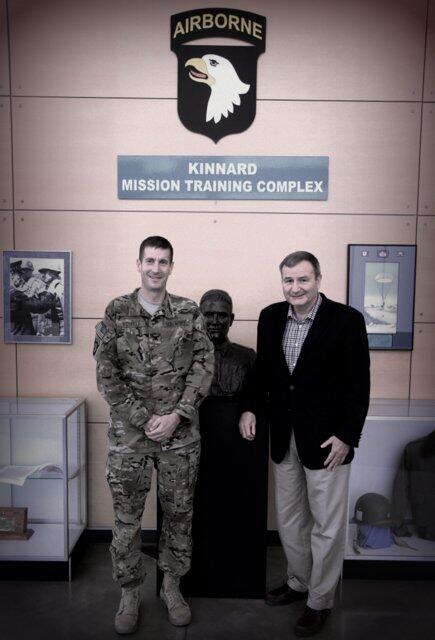 Former CISAC military fellow and U.S. Army Col. J.B. Vowell, left, and Ret. U.S. Army Lt. Gen. Karl Eikenberry, at Fort Campbell, Ky., on Jan. 13, 2015.
 Former CISAC Military Fellow Viet Luong, now a one-star general, teaches a simulation class during his 2011-2012 fellowship.