Security

FSI scholars produce research aimed at creating a safer world and examing the consequences of security policies on institutions and society. They look at longstanding issues including nuclear nonproliferation and the conflicts between countries like North and South Korea. But their research also examines new and emerging areas that transcend traditional borders – the drug war in Mexico and expanding terrorism networks. FSI researchers look at the changing methods of warfare with a focus on biosecurity and nuclear risk. They tackle cybersecurity with an eye toward privacy concerns and explore the implications of new actors like hackers.

Along with the changing face of conflict, terrorism and crime, FSI researchers study food security. They tackle the global problems of hunger, poverty and environmental degradation by generating knowledge and policy-relevant solutions. 

Authors
News Type
News
Date
Paragraphs

Whether it’s WikiLeaks and CIA documents or nuclear thieves, the danger from insiders in high-security organizations is escalating in our Internet age.

But many threats from within go unrecognized or misunderstood, according to Stanford professor Scott Sagan, who co-edited a new book Insider Threats with Matthew Bunn, a professor of practice at Harvard University. Their work analyzes the challenges that high-security organizations face in protecting themselves from employees who might betray them. Sagan, a core faculty member in Stanford's Center for International Security and Cooperation, and Bunn recently participated in an online discussion of the book’s key arguments. They will hold a talk and book signing at 3:30 p.m. on May 16 in the CISAC Central Conference Room.

Sagan and Bunn wrote, “Perhaps the most striking lesson we learned in working with scholars and officials who have dealt with this problem was the sheer scale of the red flags – from explicit statements of support for Osama bin Laden to behavior leading other staff to fear for their lives – that organizations are able to ignore.”

They found that organizations tend to have biases that cause them to downplay insider threats. In particular, organizations with high-security needs face significant risks from trusted employees with access to sensitive information, facilities, and materials. 

The researchers highlight "worst practices" from these past mistakes, suggesting lessons and insights that could improve the security situations at many workplaces. Amy Zegart, co-director of CISAC, has a chapter in Insider Threats that provides a detailed account of the organizational dysfunction that allowed Nidal Hasan to carry out his massacre at Fort Hood.

Other chapters include the following topics and authors:

  • An analysis of the similar problems that led Bruce Ivins, who probably carried out the anthrax attacks in 2001, to continue to have access to deadly pathogens (by Jessica Stern, then of Harvard and now at Boston University, and Ron Schouten, of Massachusetts General Hospital and Harvard Medical School);
  • An analysis of the rapid rise and subsequent fall of “green-on-blue” attacks in Afghanistan – that is, Afghan soldiers and police officers attacking Americans there to help them (by Austin Long of Columbia University); and 
  • An assessment of how casinos and pharmaceutical plants, with a profit incentive to protect against insiders, cope with the problem (by Bunn and Kathryn Glynn, then of IBM Global Business Services and now at the National Nuclear Security Administration). 

Another chapter examines the potential terrorist use of nuclear insiders, offering new data that shows that jihadist writings and postings contain only a modest emphasis on possible nuclear plots, and essentially no mention of the possibility of using nuclear insiders. However, the authors warn this is no reason for complacency – insiders have been largely responsible for past nuclear theft incidents.

MEDIA CONTACTS

Scott Sagan, Center for International Security and Cooperation: (650) 725-2715, ssagan@stanford.edu

Clifton B. Parker, Center for International Security and Cooperation: (650) 725-6488, cbparker@stanford.edu


Hero Image
gettyimages 540849924
CISAC's Scott Sagan writes in a new book that organizations tend to ignore the many red flags typically associated with insider threats.
xijian/Getty Images
All News button
1
News Type
News
Date
Paragraphs
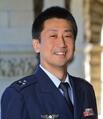
Lt. Col. Patrick Winstead, who is serving as the 2016-17 senior military fellow at the Shorenstein Asia-Pacific Research Center (APARC), will assume the position of vice wing commander of the U.S. Air Force’s 437th Airlift Wing, following completion of his fellowship at Stanford.
 
Based in Charleston, South Carolina, the 437th Airlift Wing flies and maintains one of the largest fleets of C-17A Globemaster III aircraft in the Air Force. The wing has 3,400 military and civilian personnel who work to support the Department of Defense’s worldwide airlift, tactical airdrop and aeromedical evacuation support missions.
 
“Patrick's selection as vice wing commander of the 437th Airlift Wing says volumes about his demonstrated leadership skills and potential,” said Oksenberg-Rohlen Fellow and U.S.-Asia Security Initiative Director Karl Eikenberry. “He's been an outstanding member of the Shorenstein Asia-Pacific Research Center over this past year and we wish him the very best at his next post.”
 
“This new assignment is an amazing opportunity to serve my country and serve the men and women of the 437th Airlift Wing while carrying out the nation’s call around the world,” said Winstead. “God blessed my family and I in coming to Stanford this year and we are blessed again to join the team in Charleston this summer.”
 
At Stanford, Winstead has been researching the strategic implications of unmanned systems operations in the Indo-Asia-Pacific region, as well as escalation control in a multi-lateral, multi-alliance security environment.
 
Prior to his fellowship at Shorenstein APARC, Winstead served in leadership roles on the staff of the U.S. Pacific Command Operations Directorate in Hawaii, and spent nearly a decade of his Air Force career stationed in the Asia-Pacific region.
Hero Image
winstead patrick Rod Searcey
All News button
1
News Type
News
Date
Paragraphs
Admiral Harry B. Harris, Jr., commander of U.S. Pacific Command (USPACOM), visited the Shorenstein Asia-Pacific Research Center last Friday. Throughout the day, he met with faculty, fellows and students and delivered a keynote speech to the broader Stanford community.
 
In his remarks titled Deterring Revisionist Powers, Harris described how the Indo-Asia-Pacific region fits in the context of the “global operating system,” a term used to illustrate the norms and standards that have defined the international system since the end of World War II. Harris also explained how USPACOM is ensuring continued international access to the shared domains of the Indo-Asia-Pacific, which include use of the air, sea and cyber domains.
 
Harris also led discussions on the strategic environment and security challenges that the United States faces. He engaged in an exchange with various audience members on current security dilemmas such as North Korea’s nuclear program, the South China Sea, and the state of U.S. alliances and partnerships in the Indo-Asia-Pacific region.
 
The Chatham House Rule applied to Harris’ public presentation, and his subsequent meetings were closed to the public and news media.
 
Harris was later featured at a meeting held at the Highly Immersive Classroom at the Graduate School of Business. Faculty and students at Stanford conversed by way of video teleconference with affiliates at Stanford Center at Peking University (SCPKU), Beijing. U.S.-Asia Security Initiative Director Karl Eikenberry and SCPKU Executive Director Josh Cheng moderated the dialogue.
 
Admiral Harris’ visit to Stanford was co-sponsored by Ambassador Eikenberry and Admiral Gary Roughead, Robert and Marion Oster Distinguished Military Fellow at the Hoover Institution.
Hero Image
2017march admharris visit online
Admiral Harry B. Harris, Jr., commander of U.S. Pacific Command, delivers remarks titled "Deterring Revisionist Powers" at the Bechtel Conference Center, March 3, 2017.
Debbie Warren
All News button
1
-

My Journey at the Nuclear Brink is a continuation of William J. Perry's efforts to keep the world safe from a nuclear catastrophe. Decades of experience and special access to top-secret knowledge of strategic nuclear options have given Perry a unique, and chilling, vantage point from which to conclude that nuclear weapons endanger our security rather than securing it. At this presentation to launch the Chinese translation of his book, Perry will talk about the future of nuclear competition in the face of US and Russia’s nuclear capability boost claims, North Korea’s nuclear development and the recent deployment of US and South Korea THAAD system against North Korea’s missile. 


REGISTRATION: http://eventbank.cn/event/8398


Stanford Center at Peking University

The Lee Jung Sen Building, Langrun Yuan, PKU


William Perry Director Preventive Defense Project, CISAC
Lectures
Authors
News Type
News
Date
Paragraphs

Rodney Ewing was elected to the National Academy of Engineering this week.

Ewing, a senior fellow at the Center for International Security and Cooperation, was recognized for his research on “the long-term behavior of complex ceramic materials to assess their suitability for engineered nuclear waste sequestration.” He is a professor of geological sciences at Stanford.

Membership in the academy is one of the highest academic distinctions in the field of engineering. It honors outstanding contributions to “engineering research, practice or education, including, where appropriate, significant contributions to engineering literature” and “the pioneering of new and developing fields of technology, making major advancements in traditional fields of engineering or developing/implementing innovative approaches to engineering education," according to the NAE.

The academy also honored two other Stanford professors: Andrea Goldsmith, professor of engineering, and Leonidas Guibas, professor of computer science. The three Stanford scholars among 84 new members joining NAE this year. In total, the academy has 2,281 members including 249 foreign members. The newly elected class will be formally inducted during a ceremony at the academy's annual meeting in Washington, D.C., on Oct. 8, 2017. 

Click here to read a Stanford News Service story on the selections of Ewing and his colleagues to the National Academy of Engineering.

Hero Image
22150905629 b919a2123f k Rod Searcey
All News button
1
-

Although the post-1989 world is the world that America and Europe made, it has now become the world that America and Europe have started to fear and sometimes even hate. Looking back across the turbulent decades since 1989, we are astounded by the speed with which yesterday's euphoric victory has turned into today's anxiety and distress. Explaining why and how it happened in the different parts of Europe, Russia, Turkey, Eastern Europe is the principal ambition of this lecture.


[[{"fid":"225445","view_mode":"crop_870xauto","fields":{"format":"crop_870xauto","field_file_image_description[und][0][value]":"","field_file_image_alt_text[und][0][value]":false,"field_file_image_title_text[und][0][value]":false,"field_credit[und][0][value]":"","field_caption[und][0][value]":"","thumbnails":"crop_870xauto"},"type":"media","field_deltas":{"1":{"format":"crop_870xauto","field_file_image_description[und][0][value]":"","field_file_image_alt_text[und][0][value]":false,"field_file_image_title_text[und][0][value]":false,"field_credit[und][0][value]":"","field_caption[und][0][value]":"","thumbnails":"crop_870xauto"}},"link_text":null,"attributes":{"style":"font-size: 13.008px; height: 320px; width: 320px; float: left; margin-right: 15px;","class":"media-element file-crop-870xauto","data-delta":"1"}}]]Ivan Krastev is the Chairman of the Centre for Liberal Strategies in Sofia and Permanent fellow at the Institute for Human Sciences, Vienna. He is a founding board member of the European Council on Foreign Relations, a member of the Board of Trustees of The International Crisis Group and is a Contributing Opinion Writer of The New York Times. His latest books in English are “Democracy Disrupted. The Global Politics on Protest” (UPenn Press, May 2014); “In Mistrust We Trust: Can Democracy Survive When We Don't Trust Our Leaders?” (TED Books, 2013). He is a co-author with Stephen Holmes of a forthcoming book on Russian politics.  His book “After Europe” is forthcoming in English (Penn Press, 2017) and in German (Suhrkamp, 2017).


THIS EVENT HAS REACHED FULL CAPACITY. PLEASE CONTACT MAGDALENA magdafb@stanford.edu TO GET ON THE WAITLIST. 

Ivan Krastev Chairman of the Center for Liberal Strategies Speaker
Lectures
Authors
Siegfried S. Hecker
News Type
News
Date
Paragraphs

On February 23, 1992, less than two months after the dissolution of the Soviet Union, I landed on the tarmac in Sarov, a city the government had removed from maps to keep secret its status as a nuclear weapons center. I was then director of the Los Alamos National Laboratory and­­ accompanied by two senior scientists from my own lab plus three colleagues from the Lawrence Livermore National Laboratory. The six of us were about to walk through the birthplace of the Soviet nuclear bomb, the technological and intellectual powerhouse behind the sophisticated arsenal that had been pointed at our country for the previous 40 years.

Shockingly, after an hour-long flight from Moscow, we stepped out of the Aeroflot turboprop into the open arms of our Russian hosts: Yuli Borisovich Khariton, the scientific leader of the Soviet nuclear program, and other senior lab staff who had waited in the chilly wind to welcome us. Just as remarkable was the fact that this wasn’t the first time we met our Russian counterparts. Two weeks earlier, directors of the Russian nuclear weapons labs, VNIIEF in Sarov and VNIITF in Snezhinsk, had for the first time in history set foot in our labs in Livermore and Los Alamos. This exchange of visits a quarter century ago marked a new turn in relations between the world’s two nuclear weapons superpowers.

The road to Sarov

Our first meeting on Russian soil would have been deemed improbable just a few months earlier. The encounter on the Sarov tarmac grew out of both persistence by determined individuals and larger historical forces. As the Soviet Union scrambled to adjust domestic and international policy in the face of mounting economic and social challenges in the late 1980s, Soviet leader Mikhail Gorbachev reached across the political divide to US President Ronald Reagan to take steps toward nuclear disarmament. One such step was the Joint Verification Experiment of 1988, in which the Soviet Union and the United States asked their nuclear weapons scientists to conduct parallel nuclear-explosion yield measurements at testing grounds in Nevada and Semipalatinsk, located in what is now Kazakhstan. The experiment helped overcome a stumbling block related to verification procedures needed to ratify the 1974 Threshold Test Ban Treaty (TTBT). The 1988 nuclear tests enabled the two sides to sign a new ratification protocol in Geneva in June 1990, and the TTBT entered into force in December 1990.

As history would have it, an unintended outcome of the TTBT ratification effort proved to be the most momentous. Viktor Mikhailov, head of the Soviet team that took part in the Joint Verification Experiment and later Russian minister of atomic energy, was right when he said that “the main result of the Joint Verification Experiment was not the development of procedures and extent of nuclear test monitoring of the joint development of technical verification means, but the chance for interpersonal communications with the American nuclear physicists.”

Indeed, it was working side by side at each other’s test sites that gave rise to deep-rooted affinity and built trust. Over the years, we had only caught glimpses of our Soviet nuclear scientist counterparts at a few international conferences where they disguised their institutional affiliations, saying they were part of the Soviet Academy of Sciences. It was through months of collaboration at our test sites that the contours of their true home institutions—the nuclear weapons labs VNIIEF and VNIITF—began to emerge. As we would discover eventually, these Soviet labs were remarkably similar to our own. We realized that in addition to nuclear weapons work, they were conducting outstanding fundamental science. We became consumed with curiosity to learn more about it first-hand. The Russians were curious about our work as well.

We were all interested in cooperation, but the Russians even more so because they sensed before we did just how dramatically the Soviet Union was changing. Lev D. Ryabev, who headed the atomic ministry at the time, told me years later that Russian nuclear weapons scientists were so eager to work with their American counterparts because “we arrived in the nuclear century all in one boat—movement by any one will affect everyone. We were doomed to work together.”

It was during a 1990 trip to Moscow by Los Alamos and Lawrence Livermore lab scientists for technical discussions supporting the Geneva test ban talks that Mikhailov extended an impromptu invitation to visit the USSR’s secret nuclear city Sarov (then called Arzamas-16) for the first time.

The American scientists returned with specific proposals from the VNIIEF director and his senior scientists for collaboration with the US labs, along with an invitation to Lawrence Livermore Director John Nuckolls and me to visit the secret Russian cities.

Convinced by my Los Alamos colleagues that this was a great opportunity to collaborate scientifically in important areas of research, I tried a number of avenues in Washington to get approval for exploring potential cooperation. I got little traction until the second half of 1991, after the Soviet Union had begun to disintegrate. As it did so, President George H.W. Bush became concerned that brain drain from the Soviet nuclear complex could lead to the spread of knowledge about how to build these weapons of mass destruction.

Driven by that concern, US Energy Secretary James D. Watkins approved my request for the laboratory directors’ exchange visits, and two months after Gorbachev’s formal dissolution of the Soviet Union on December 25, 1991, we entered the surreal world of the Soviet Los Alamos.

A tradition worth sustaining 

Our visits to Sarov and Snezhinsk shattered our Cold War preconceptions of the Soviet nuclear program. We were particularly impressed by the depth of scientific talent. Although they lacked modern computers and electronics, their computational achievements were remarkable, and their experimental facilities were innovative and functional. We found the scientists’ dedication to their mission deeply patriotic, and their attention to nuclear weapons safety reassuring. During our briefings and tours, Russian scientists described leading-edge research in the fundamental science that underpinned their nuclear weapons program. The visits convinced me that our US nuclear labs should collaborate with their Russian counterparts, not only to help solve immediate problems like proliferation and loose nukes, but also because in doing so we would benefit scientifically.

Our Russian colleagues were prepared with proposals for cooperation in a surprisingly broad range of areas. During a daylong session in Chief Weapon Designer Boris Litvinov’s office in Snezhinsk, watched by portraits of Lenin and Igor Kurchatov, one of the fathers of the Soviet Bomb, we hammered out a protocol for cooperation that we would take back to our governments. We came up with a long list problems we wanted to work on together. It included enhancing the security and safety of nuclear weapons during reduction and dismantlement; preventing the proliferation of nuclear weapons knowledge; promoting the conversion and diversification of nuclear facilities; preventing non-nuclear states and terrorists from obtaining nuclear weapons; developing joint mechanisms for emergency response; enhancing the safety of nuclear arsenals; preventing unauthorized use of remaining weapons; and promoting protection and cleanup of the environment at nuclear weapons facilities.

It turned out that we scientists were far ahead of what the US government was prepared to authorize at the time. We heard that when members of the National Security Council staff, which coordinated interagency government issues with Russia, received a copy of the protocol, they declared it did not exist and threw it in the waste paper basket. However, Nuckolls and I presented the protocol to Watkins and received approval to proceed, though only in fundamental science cooperation.

By May 1992, even though the US Energy and State Departments had only agreed to general principles, the former had provided us with the necessary financial support and the latter with the required permissions for travel to Russia. Just as importantly, we had defined what we wanted to do first in the collaboration we called lab-to-lab. We planned for joint experiments in high-energy-density physics and conferences on computer modeling and simulation.

In spite of the initial US government concerns, we would eventually end up cooperating in almost all the areas outlined in the initial protocol. A spirit of collaboration prevailed for nearly a quarter century, and was essential to successfully mitigating the dangers resulting from the dissolution of the Soviet Union. Unfortunately, that cooperation has all but come to an end during the past few years as relations between Moscow and Washington have soured. But the benefits of future cooperation are potentially enormous, as a new report from the Nuclear Threat Initiative makes clear. The US and Russian governments, as well as the two countries’ scientists, should seize any opportunities that arise to rekindle nuclear cooperation.

Hero Image
sarov9213
This picture shows the 1992 visit of U.S. nuclear weapon labs directors to the Russian nuclear weapons institutes in Sarov and Snezhinsk. On the left, in a white sweater is the Russian physicist Alexander Pavlovsky. Next to him is "Russia’s Oppenheimer" Yuly Khariton, almost 88 at that time. The second and third persons on the right are Sig Hecker, director of the Los Alamos National Laboratory, and John Nuckolls, director of the Lawrence Livermore National Laboratory.
Courtesy of Siegfried Hecker
All News button
1
News Type
News
Date
Paragraphs

A new book published by the Shorenstein Asia-Pacific Research Center (APARC) explores the future of China’s urbanization. Addressing the complex challenges facing Chinese cities will require updated institutions and unparalleled innovation, researchers say.

China’s growth in cities has been unprecedented over the past decade, and the urbanization policies the government put in place, while achieving notable successes, continue to face systemic obstacles that challenge the effectiveness of central and local governments. How the government will resolve the complex sets of conflicting interests will considerably shape Chinese society and politics for decades.
 
That is the premise of a new book co-edited by Karen Eggleston, senior fellow in Stanford’s Freeman Spogli Institute for International Studies; Jean C. Oi, the William Haas Professor in Chinese Politics; and Yiming Wang, deputy director general and senior research fellow at the State Council Development and Research Center.
 
In the book Challenges in the Process of China’s Urbanization, eleven chapters authored by 21 authors feature urbanization challenges ranging from property rights and affordable housing to food security and the environment.

[[{"fid":"225386","view_mode":"crop_870xauto","fields":{"format":"crop_870xauto","field_file_image_description[und][0][value]":"","field_file_image_alt_text[und][0][value]":false,"field_file_image_title_text[und][0][value]":false,"field_credit[und][0][value]":"","field_caption[und][0][value]":"","thumbnails":"crop_870xauto"},"type":"media","field_deltas":{"1":{"format":"crop_870xauto","field_file_image_description[und][0][value]":"","field_file_image_alt_text[und][0][value]":false,"field_file_image_title_text[und][0][value]":false,"field_credit[und][0][value]":"","field_caption[und][0][value]":"","thumbnails":"crop_870xauto"}},"link_text":null,"attributes":{"style":"margin-left: 15px; padding: 5px; font-size: 13.008px; float: right; width: 350px; height: 525px;","class":"media-element file-crop-870xauto","data-delta":"1"}}]]

“Urbanization is not merely a process of financial engineering or rational decision-making, but a complicated ‘dance’ of power and politics,” the editors write in the introductory chapter.
 
The book is one of two publications that emerged from a conference in May 2014 at the Stanford Center at Peking University, that was part of a joint five-year research initiative between the Shorenstein Asia-Pacific Research Center and the National Development and Reform Commission (NDRC) – a government agency in China that formulates and implements strategies of national economic and social development.  
 
Wang, who was the deputy chief of staff at the NDRC and executive director of its Institute of Macroeconomic Research, facilitated ongoing scholarly exchanges, including workshops and conferences as well as joint fieldwork in China. At one point, the NDRC came to the Bay Area to interview local government officials about urbanization and affordable housing policies.  
 
Eggleston and Oi responded to a few questions about the book.
 
What patterns are shaping urbanization in China?
Oi: A primary pattern shaping China’s urbanization is the movement of people from rural areas to megacities – Beijing, Shanghai and elsewhere.  There also is movement from poorer to richer areas within the countryside. Rural to urban migration has been taking place in China since the 1970s, but the difference now is that the government is encouraging it. The Chinese government has an officially sanctioned program that is advocating migration. A second pattern shaping China’s urbanization is administrative redistricting. Redistricting is a government-led process that changes the administrative makeup of a municipality. For example, areas originally designated as ‘rural’ can be redistricted to qualify as ‘urban.’ Additionally, smaller cities can become larger by absorbing surrounding areas. Counties can also be combined into districts.
 
Why are cities and counties pursuing redistricting?
Oi: One of the main factors driving redistricting in China is the perks and power that are linked to the size of an administrative unit. Government officials in charge of smaller cities or counties have incentives to become larger. The larger the municipality, the more power and resources the municipality has. Smaller cities that become larger cities gain resources; yet on the other hand, counties that become part of a district lose certain local-level rights. Municipalities are essentially competing with each other. The book dives into the incentive structures at play and other political economy issues embedded in the urbanization process.
 
What kind of disciplinary approaches are undertaken in the book?
Eggleston: One of the book’s strengths is its array of disciplinary approaches. Drawn primarily from the social sciences, the book includes theoretical and empirical analyses of evidence gathered from case studies and fieldwork. 
 
Oi: The book is a true collaboration of scholars from the United States and China. About half of the chapter authors are officials from the National Development and Reform Commission (NDRC), including our co-editor, Yiming Wang, who was NDRC deputy-secretary when we did the work for the volume. Each chapter attempts to offer a balanced perspective of the policy implications of China’s urbanization experience at both national and local levels.

Image
urbanization embed image 1

Karen Eggleston, FSI senior fellow and director of the Asia Health Policy Program, speaks on a panel about demographic change and health at the conference, "Challenges in Process of Urbanization: China in Comparative Perspective," Stanford Center at Peking University, May 2014.


What do you hope the book will achieve?

Oi: The book offers an analysis of the intricacies of and potential solutions to problems related to the process of China’s urbanization. We hope the book taken as a whole gives a sense of the magnitude of these problems, why there are no easy solutions, as well as what will be needed to address them going forward.  Some of the solutions are not just about money. 
 
Eggleston: The book aims to sketch an interesting picture of the varied aspects of China’s urbanization. Each chapter looks at a select issue, for example, land financing, spatial growth and housing security, and sets it in the broader context of urbanization. We purposely decided not to cover everything that falls under the banner of urbanization. Most of the topics could very well be made into a whole book alone. We hope the book will enliven conversation amongst scholars, policy influencers and China and urbanization enthusiasts.
 

What do “people-centered” solutions to urbanization challenges in China include?

Eggleston: “People-centered” is the term used in China’s official urbanization plan, the New National Urbanization Plan, published in 2014. We defined the term “people-centered” to include what makes life in urban areas attractive. “People-centered” urbanization emphasizes well-being and the factors that lead to a good livelihood, including access to public goods. For example, from a health perspective, cities around the world were historically less healthy locations to live in during the industrial revolution, before basic knowledge of how to control infectious disease with clean water and other population health measures. Now, cities can be healthier places to live in compared to rural areas. The Chinese government has a successful record of building basic infrastructure, but faces many challenges in harnessing the requisite resources to innovate and truly achieve people-centered development.


"In trying to reach a public goal like low-income housing, the Chinese government is trying to set up an incentive system so that the goal can be reached not just with taxpayer money but also by bringing in the private sector to build housing in a way that includes affordable units and doesn’t lead to segregation."  

     — Karen Eggleston; FSI senior fellow, Asia Health Policy Program director

 
An issue highlighted in the book is China’s household registration system. Why is it an issue and what is being done to address it?
Oi: Because China’s urbanization has been so rapid, institutions have not yet fully caught-up. There is a disjuncture between the institutions that exist and those that are actually necessary. One pressing example is the household registration system. Citizens who live in rural areas have a different kind of residency status than citizens in urban areas. Everyone has rights, but rights differ depending on where primary residence was originally listed. A Chinese citizen is only able to enjoy all of his or her rights where he or she is registered. So migrants tend to lose out as soon as they move away from their home locality. However, the central government has started to make changes to this system. For example, children of migrants now have access to public services such as primary education. Some localities have begun to implement a points-based system wherein families accumulate points over time and, after reaching a certain level, become eligible for citizenship in that place of residence.
 
Can you describe the state of housing in Chinese cities?
Eggleston: Affordable housing is a key issue of urbanization across the world, not just in China. So, the glass is half-full or half-empty depending on how you look at it. China has been remarkably successful in avoiding the development of large urban slums common in lower income countries with rapid urbanization. That said, problems associated with housing are not going to go away quickly. The macro nature of China’s population amplifies the problem, and coincides with a dramatic increase in housing prices. Continued government investment in affordable housing will help address scarcity, and could help tackle interrelated problems such as assisted living for the elderly population in China.
 
Oi: The central government began to offer affordable housing in 2007 with the intention of providing housing for the neediest portion of the population. In theory, it works, but in reality, it has faults. Supply and demand sometimes isn’t in sync. For example, quotas were used as a way to decide the location of its affordable housing, but some cities found that housing units remain unused. The local government builds a number of affordable housing units but then discovers no one wants them because commercial housing is less expensive or factories provide dormitory space. Part of this mismatch in supply and demand is rooted in the issue of resident permits. In most cases, the neediest portion of the population is typically migrants but they are not eligible for affordable housing in the cities where there is most need for low cost housing such as Beijing or Shanghai. As a result, migrants often live in inadequate housing in city centers – small, windowless spaces with many people living together in one room. 
 
One of the chapters in the book focuses on food security. As Chinese migrants continue to move from rural to urban areas, are fears of declining food security founded?
Eggleston: Food security is an important issue. In the book, one chapter written by 9 co-authors applies rigorous methods to understand whether urbanization threatens food security in China. They found that fear of declining food security is mostly overblown. Continued government investment in agricultural production such as irrigation systems can help address those fears, and help enable sustainable food production.

Image
urbanization embed image 2

Jean Oi, FSI senior fellow and director of the China Program, (Center), and Xueguang Zhou, FSI senior fellow and professor of sociology, (Left of Center), take a tour of housing developments during fieldwork with the National Development and Reform Commission in August 2012. Oi is speaking with one of the village leaders about a "new rural community" concept developed in a housing development in Chengdu, where this photo was taken.


Another chapter in the book references pollution. Beijing has faced unprecedented levels of air pollution lately. Does it coincide with urbanization?

Eggleston: Although issues of pollution and “green growth” merit separate book-length treatment and are not central to this book, pollution illustrates the broader issue of concentrations of industry and people living in one area. Everyone has to share public space. Both a migrant and someone working at the top levels of government in Beijing breathe the same air. Things that are less visible like water quality are avoidable by some of the population, but air pollution is not, and therefore, quickly reveals how hard it is for the government to efficiently fix a problem. Policies to mitigate pollution often take awhile to have an effect, and in the mean time, people begin to doubt government accountability. Local governments have made strides within the past few years in revising evaluation structures so that officials are incentivized to react to public problems like air pollution. Historically, an official’s performance was based largely if not solely on GDP growth of his or her municipality, but it has since expanded to include other factors such as health insurance enrollment.
 
Infrastructure spending has been a driver of China’s economic growth. Has China’s rush to build quickly come at the expense of safety?
Oi: Economic growth is intimately tied to the process of China’s urbanization. Growth of cities has been driven by the ambitions of local officials who want to see their municipalities expand. But the question remains over how they’re going to finance rising needs for and costs of public goods. Each municipality receives funding from the central government and it’s based on the quantity of citizens – a number that excludes migrants. Any migrant is then – administratively speaking – a burden on the system. Municipalities have to determine how they’re going to fund public goods. This is where fiscal politics comes in. China’s fiscal system is really the most important institution in need of reform. Each chapter of the book touches upon the issue of public funding in some way.
 
Eggleston: China is generally known for its investment in infrastructure projects, but the goal of rapid growth can seemingly clash with a concern for safety. One of the main themes of the book is to think carefully about the incentives that govern the process. I think that theme certainly rings true with regard to infrastructure and safety. Put simply: if officials and contractors do not have incentive to prioritize safety, then safety problems are going to arise. The Chinese government efforts to develop and improve specific regulatory structures should continue, as several authors point out in different chapters of the book.


"Economic growth is intimately tied to the process of China’s urbanization. Growth of cities has been driven by the ambitions of local officials who want to see their municipalities expand. But the question remains over how they’re going to finance rising needs for and costs of public goods."  

     — Jean C. Oi; Stanford professor of political science, China Program director

 
How can a balance be struck between public and private sector led projects that address urbanization challenges?
Oi: The Chinese government is increasingly looking to establish public-private partnerships as a way to deal with urbanization challenges. Affordable housing is one area that could experiment further with the public-private model. Instead of going to local governments, the central government is now talking directly with housing developers. They say to the developers “we’ll give you permission to develop a housing estate, but within that housing estate, you’re going to have to set aside ‘X’ number of units for affordable housing.” Depending on the city, this approach has had mixed effects. Some high-end housing developers don’t want to include affordable housing because the price per unit could drop as a result.
 
Eggleston: It’s critical to think about public-private partnerships in the context of urbanization-related policy goals. I think we’re bound to see them grow. The government has an opportunity to harness the innovation of the private sector through such partnerships.
Hero Image
beijing urbanization
A man pushes his bicycle past a construction site in the Central Business District in Beijing, China.
China Photos/Stringer
All News button
1
Subscribe to Security