International Relations

FSI researchers strive to understand how countries relate to one another, and what policies are needed to achieve global stability and prosperity. International relations experts focus on the challenging U.S.-Russian relationship, the alliance between the U.S. and Japan and the limitations of America’s counterinsurgency strategy in Afghanistan.

Foreign aid is also examined by scholars trying to understand whether money earmarked for health improvements reaches those who need it most. And FSI’s Walter H. Shorenstein Asia-Pacific Research Center has published on the need for strong South Korean leadership in dealing with its northern neighbor.

FSI researchers also look at the citizens who drive international relations, studying the effects of migration and how borders shape people’s lives. Meanwhile FSI students are very much involved in this area, working with the United Nations in Ethiopia to rethink refugee communities.

Trade is also a key component of international relations, with FSI approaching the topic from a slew of angles and states. The economy of trade is rife for study, with an APARC event on the implications of more open trade policies in Japan, and FSI researchers making sense of who would benefit from a free trade zone between the European Union and the United States.

-

*For fall quarter 2021, CISAC will be hosting hybrid events. Many events will offer limited-capacity in-person attendance for Stanford faculty, staff, fellows, visiting scholars, and students in accordance with Stanford’s health and safety guidelines, and be open to the public online via Zoom. All CISAC events are scheduled using the Pacific Time Zone.

REGISTRATION


About the Event: With the counter-recovery and countervailing nuclear-targeting strategies, the United States embraced a massive expansion of the roles for nuclear weapons. Simultaneously, however, an accuracy revolution has quietly imbued conventional weapons with vastly improved target-killing capability. This raises the question: how many targets in the nuclear-war plan could just as effectively be dealt with using conventional weapons? In the last decade, the Russian security establishment has expressed concern about emerging U.S. conventional capabilities while the U.S. military has downplayed their strategic import. In this talk I will report on the early stages of a new project to investigate exactly how and if conventional forces might execute a strategic strike akin to the U.S. nuclear war plan and, conversely, whether an adversary could threaten the United States with unacceptable damage without ever escalating to nuclear use. I will discuss several target categories, the expected performance of conventional weapons, system considerations, and the consequences that “conventional strategic strike” may have for the future of deterrence.


About the Speaker: R. Scott Kemp is the MIT Class of '43 Associate Professor of Nuclear Science and Engineering, and director of the MIT Laboratory for Nuclear Security and Policy. His research combines physics, politics, and history to help create more resilient societies. His work has focused primarily on problems arising from weapons of mass destruction. His current research includes securing vulnerabilities in U.S. critical infrastructure and the redefining of strategic defense. In 2010, Scott served as Science Advisor in the U.S. State Department's Office of the Special Advisor for Nonproliferation and Arms Control where he was responsible for developing the technical framework for what became the Iran Nuclear Deal. Scott received his undergraduate degree in physics from the University of California, Santa Barbara, and his Ph.D. in Public and International Affairs from Princeton University. He is a Fellow of American Physical Society and recipient of the Sloan Research Fellowship in Physics.


Only those with an active Stanford ID with access to William J Perry Conference Room in Encina Hall may attend in person. This event will not be livestreamed.

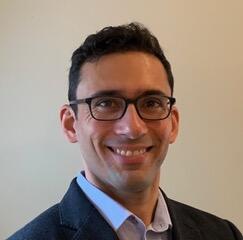
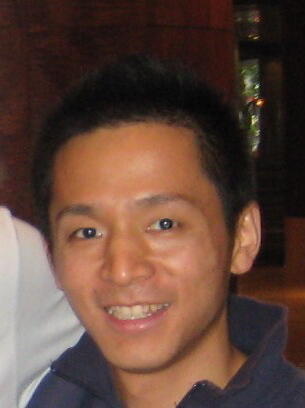
Scott Kemp MIT
Seminars
-

For fall quarter 2021, CISAC will be hosting hybrid events. Many events will offer limited-capacity in-person attendance for Stanford faculty, staff, fellows, visiting scholars, and students in accordance with Stanford’s health and safety guidelines, and be open to the public online via Zoom. All CISAC events are scheduled using the Pacific Time Zone. 

REGISTRATION


About the Event: In January 2017 and again during his presidential campaign, then-Vice President Biden said that “I believe that the sole purpose of the U.S. nuclear arsenal should be deterring—and, if necessary, retaliating against—a nuclear attack.” The Biden Administration is now undertaking its Nuclear Posture Review (NPR), in which it is possible that the United States would, for the first time, formally adopt such a “sole purpose” or perhaps even “no first use” policy for its nuclear weapons. Yet some former government officials, as well as press accounts, have publicly reported that the possibility of a biological weapons attack that might cause casualties comparable to a nuclear attack blocked the adoption of a no-first-use or a sole-purpose policy in previous administrations’ NPRs. Should it do so again? I will present a technical and policy analysis of this question, with the aspiration of helping to bring systematic attention to this issue in the ongoing Nuclear Posture Review.


About the Speaker: Christopher Chyba is a professor of astrophysical sciences and international affairs at Princeton University, and past director of the Program on Science and Global Security. As an associate professor of geological sciences at Stanford University before coming to Princeton, he co-directed the Center for International Security and Cooperation and held the Sagan Chair at the SETI Institute. He has been a Marshall Scholar and a MacArthur Fellow.

During President Clinton’s first term, Chyba served on the staffs of the National Security Council and Office of Science and Technology Policy at the White House, entering as a White House Fellow. He served for a decade as a member of the National Academy of Sciences' Committee on International Security and Arms Control, and on President Obama’s Council of Advisors on Science and Technology (PCAST) from April 2009 through January 2017, on which he co-chaired the working groups on antibiotic resistance and on biodefense. In late 2020 to early 2021, Chyba served on the national security and foreign policy team for the Biden-Harris transition. His current policy-relevant research focuses on possible pathways to nuclear weapons use (for the past two years, he has co-chaired a project of the American Academy of Arts and Sciences on this topic), nonproliferation and strategic arms control issues, and biodefense -- including as a member of the OPCAST pandemic response group. 

Chyba's scientific research ranges across planetary science and exobiology, as well as work in classical electrodynamics. His published work has included dynamical modeling of the Neptune-Triton system, the role of impacts on the origin of life on Earth, the Tunguska atmospheric explosion and planetary defense, radar, seismic, and magnetometer sounding of Europa's ice shell, bioenergetic models for possible ecosystems on Europa, electromagnetic heating of planetary satellites, and planetary protection. 

Only those with an active Stanford ID with access to William J Perry Conference Room in Encina Hall may attend in person. This event will not be livestreamed.

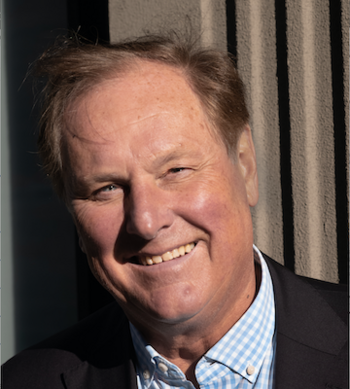
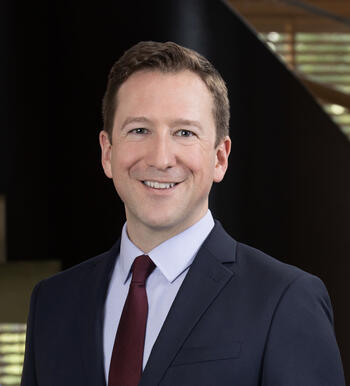
Christopher Chyba Professor Princeton University
Seminars
-
This is a virtual event. Please click here to register and generate a link to the event.
The link will be unique to you, please save it and do not share with others.
 

The Taliban’s shock takeover of Kabul in August 2021 has implications for South Asia far beyond Afghanistan’s borders. The Taliban does not have transnational political ambitions, but it is closely tied to the Pakistan security establishment, and its victory will resonate among other networks of terrorists. This webinar will explore the regional geopolitical consequences of the Taliban takeover. It will examine the Taliban victory’s impact on Pakistan’s regional strategy, on security in disputed Kashmir, on the role of China in the region, and on the trajectory of Islamist groups across the region.

Image
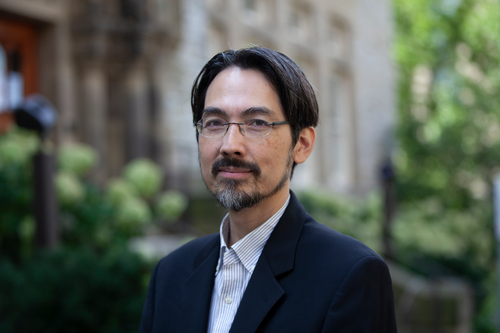
Javid Ahmad
Javid Ahmad is a senior fellow with the Atlantic Council and was, until recently, Afghanistan’s ambassador to the UAE. He was previously a nonresident fellow with the Modern War Institute at West Point and worked with U.S. defense contractors, where he provided counterterrorism/economic analysis to U.S. government and business clients on South Asia/Central Asia. He has worked for the Pentagon’s AfPak Hands, the German Marshall Fund in Washington, and NATO in Brussels. He has written for Wall Street Journal, Washington Post, Foreign Affairs, New York Times, Foreign Policy, The National Interest, The Hill, and CNN. He studied at Beloit College and Yale University.

Image
C Christine Fair
C. Christine Fair is a Professor in the Security Studies Program within Georgetown University’s Edmund A. Walsh School of Foreign Service. Her most recent book is In Their Own Words: Understanding Lashkar-e-Tayyaba (OUP, 2019).  She has authored or co-edited several books, inter aliaFighting to the End: The Pakistan Army’s Way of War (OUP, 2014); Pakistan’s Enduring Challenges (UPenn, 2015), Policing Insurgencies (OUP, 2014); Political Islam and Governance in Bangladesh (Routledge, 2010); Treading on Hallowed Ground: (OUP, 2008); The Cuisines of the Axis of Evil and Other Irritating States (GlobePequot, 2008).  She has a PhD from the University of Chicago, Department of South Asian Languages and Civilization. She causes trouble in Hindi, Urdu and Punjabi.

Image
Avinash Paliwal
Avinash Paliwal is Senior Lecturer in International Relations and Deputy Director of the SOAS South Asia Institute. He specialises in South Asian strategic affairs. He is author of the much-acclaimed book My Enemy’s Enemy - India in Afghanistan from the Soviet Invasion to the US Withdrawal (2017), and is currently authoring a strategic history of India's near east. Avinash holds an MA and PhD in International Relations from King’s College London, and a BA (Hons) in Economics from the University of Delhi.

Moderator:

Image
Arzan Tarapore
Arzan Tarapore is the South Asia research scholar at the Shorenstein Asia-Pacific Research Center at Stanford University, where he leads the newly-restarted South Asia research initiative. He is also a senior nonresident fellow at the National Bureau of Asian Research. His research focuses on Indian military strategy and contemporary Indo-Pacific security issues. He previously held research positions at the RAND Corporation, the Observer Research Foundation, and the East-West Center in Washington. Prior to his scholarly career, he served as an analyst in the Australian Defence Department, which included an operational deployment to Afghanistan. Arzan holds a PhD in war studies from King’s College London.


via Zoom webinar

Register:  https://bit.ly/2ZveaS8


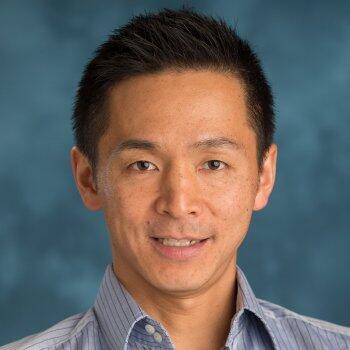
Javid Ahmad Senior Fellow Atlantic Council
C. Christine Fair Professor, Security Studies Program Georgetown University
Avinash Paliwal Senior Lecturer in Int'l Relations & Deputy Director SOAS South Asia Institute
Moderator: Arzan Tarapore South Asia Research Scholar, APARC Stanford University
Seminars

Download transcript of talk


This event is open to the public online via Zoom, and limited-capacity in-person attendance for Stanford affiliates may be available in accordance with Stanford’s health and safety guidelines.


The latest tensions between Europe and America in the wake of the Afghanistan pullout and the Australian submarine deal reflect more than just temporary friction, but rather may indicate profound shifts in the geopolitical order that could signal the dissipation of the Atlantic alliance three decades after the end of the Cold War and nearly eight decades after its birth.

Image
William Drozdiak

For more than four decades, William Drozdiak has been regarded as one of the most knowledgeable American observers of European affairs. During his tenure as foreign editor of the Washington Post, the newspaper won Pulitzer Prizes for its international reporting on the Israeli—Palestinian conflict and the collapse of the Soviet communist empire. He also served as the Post’s chief European correspondent, based at various times in Bonn, Berlin, Paris and Brussels, and covered the Middle East for Time magazine. He later became the founding executive director of the German Marshall Fund’s Transatlantic Center in Brussels and served for ten years as president of the American Council on Germany. Before becoming a journalist, he played professional basketball in the United States and Europe for seven years. His highly acclaimed book, “Fractured Continent: Europe’s Crises and the Fate of the West,” was selected by the Financial Times as one of the best political books of 2017. His latest book, “The Last President of Europe: Emmanuel Macron’s Race to Revive France and Save the World,” which focuses on France’s youthful president and his efforts to shape the future of Europe and a new world order, was published by Hachette and PublicAffairs in April 2020.


*If you need any disability-related accommodation, please contact Shannon Johnson at sj1874@stanford.edu. Requests should be made by October 18, 2021.

This event is co-sponsored by the Freeman Spogli Institute for International Studies.

Transcript of talk
Download pdf
William Drozdiak Global Europe Fellow speaker Woodrow Wilson International Center for Scholars in Washington D.C.
-

This is a virtual event. Please click here to register and generate a link to the talk. 
The link will be unique to you; please save it and do not share with others.

November 9, 4-5 p.m. California time/ November 10, 9-10 a.m. Japan time
(Note:  Daylight Saving Time in California ends November 7)

In April 2021, then Prime Minister Suga announced to the world that Japan will strive to achieve carbon neutrality by 2050, seemingly setting the country on a path toward accelerated energy transition primarily by renewables. Under Prime Minister Kishida, Japan’s commitment may be on a more shaky ground, as demands for steady energy supply by old industries gained more traction and calls for restarting nuclear power plants are becoming louder. In this new political environment, in which Japan’s energy policy seems to be in flux, what is the future of renewables, nuclear energy, and fossil fuels, and what is the best energy mix for Japan considering its unique geopolitical position?

Panelists 

Image
Photo of Phillip Lipscy
Phillip Lipscy is an associate professor of political science at the University of Toronto, the Chair in Japanese Politics and Global Affairs and the Director of the Centre for the Study of Global Japan at the Munk School of Global Affairs & Public Policy.  His research addresses substantive topics such as international cooperation, international organizations, the politics of energy and climate change, international relations of East Asia, and the politics of financial crises.  He has also published extensively on Japanese politics and foreign policy.  Lipscy's book from Cambridge University Press, Renegotiating the World Order: Institutional Change in International Relations, examines how countries seek greater international influence by reforming or creating international organizations.  Before arriving to the University of Toronto, Lipscy was assistant professor of political science and Thomas Rohlen Center Fellow at the Freeman Spogli Institute at Stanford University.  Lipscy obtained his Ph.D. in political science at Harvard University and received his M.A. in international policy studies and B.A. in economics and political science at Stanford University. 


Image
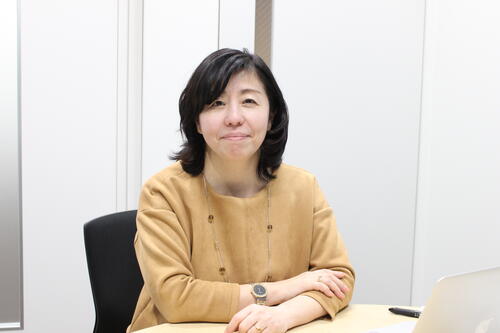
Photo of Mika Ohbayashi
Mika Ohbayashi is the Director at Renewable Energy Institute since its foundation in August 2011.  Before joining the Institute, she worked in Abu Dhabi for the International Renewable Energy Agency (IRENA) as Policy and Project Regional Manager for Asia Oceania. She is one of two founders of the Institute for Sustainable Energy Policies (ISEP) and served as Deputy Director for 8 years following its establishment in 2000. She also worked as Advisor for Climate Change Projects and Policies for UKFCO at the British Embassy to Japan. She started her career in the energy field by joining Citizens' Nuclear Information Center in 1992.  She was awarded the Global Leadership Award in Advancing Solar Energy Policy by the International Sola Energy Society (ISES) in 2017. 


Moderator

Image
Photo of Kiyo Tsutsui
Kiyoteru Tsutsui is the Henri H. and Tomoye Takahashi Professor, Professor of Sociology, Senior Fellow at the Freeman Spogli Institute for International Studies, and Deputy Director of the Walter H. Shorenstein Asia-Pacific Research Center, where he is also Director of the Japan Program. He is the author of Rights Make Might: Global Human Rights and Minority Social Movements in Japan (Oxford University Press, 2018), co-editor of Corporate Responsibility in a Globalizing World (Oxford University Press, 2016) and co-editor of The Courteous Power: Japan and Southeast Asia in the Indo-Pacific Era (University of Michigan Press, forthcoming 2021). 


Logo of Perfect Storm Fall webinar series


This event is part of the 2021 Fall webinar series, Perfect Storm: Climate Change in Asia, sponsored by the Walter H. Shorenstein Asia-Pacific Research Center.

Via Zoom Webinar
Register:  https://bit.ly/2YayEzo


Phillip Lipscy <br>Associate Professor of Political Science at the University of Toronto<br><br>
Mika Ohbayashi <br>Director of Renewable Energy Institute<br><br>
Kiyoteru Tsutsui <br>Director of the Japan Program and Professor of Sociology, Stanford University
Panel Discussions
-

Image
out of the rabbit hole event flyer with photo of becca lewis

PART OF THE FALL SEMINAR SERIES

Join us on October 5th at the Cyber Policy Center seminar from 12 PM - 1 PM PST featuring Becca Lewis, PhD Candidate in Communication at Stanford University. The session will be moderated by Kelly Born, Director of the Cyber Initiative at the William and Flora Hewlett Foundation. 

Conventional wisdom suggests that conspiracy theories and far-right propaganda thrive mainly at the end of algorithmic rabbit holes, in the deep, dark corners of the internet. This presentation will show that the opposite is true by explaining how in fact, harmful ideas gain traction through the charisma and popularity of internet celebrities in mainstream social media contexts. Through her extensive research on far-right YouTubers, Becca Lewis argues that instead of merely focusing our responses on the threat of algorithmic rabbit holes, we must also understand the power of amplification through thriving alternative media systems on- and offline.


REGISTER


Speaker Profile:

Becca Lewis is a Stanford Graduate Fellow and PhD candidate in Communication at Stanford University, as well as a research affiliate at Data & Society Research Institute and the University of North Carolina’s Center for Information, Technology, and Public Life. Her research has been published in the journals Society Media + Society, Television and New Media, and American Behavioral Scientist, and her public writing has appeared in outlets including The Guardian, New York Magazine, and Columbia Journalism Review. She holds an MSc in Social Science from the Oxford Internet Institute.


Becca Lewis Stanford Graduate Fellow and PhD candidate in Communication at Stanford University
Seminars
-

This is a virtual event. Please click here to register and generate a link to the talk. 
The link will be unique to you; please save it and do not share it with others.

October 18, 4-5:00 p.m. California time/ October 19, 8-9:00 a.m. Japan time

The recent LDP Presidential Election ended with Fumio Kishida defeating Taro Kono in the final round to become the LDP President and then Prime Minister of Japan, succeeding Yoshihide Suga, who stepped down amidst mounting political challenges dealing with COVID and its economic consequences. This was a closer election than most other LDP Presidential elections with a great deal of intrigue about how the publicly popular Kono might fare against Kishida, who the senior LDP leadership preferred. What does this election process tell us about Japanese politics today, and how will LDP fare in the upcoming House of Representatives Election? Will Kishida last longer than Suga as Prime Minister, and what do opposition parties have to do to stop the dominant LDP to change Japanese politics? In this webinar, two leading experts on the topic, Rieko Kage (University of Tokyo) and Dan Smith (Columbia University), address these questions, moderated by Kiyoteru Tsutsui, Deputy Director of the Walter H. Shorenstein Asia-Pacific Research Center, where he is also Director of the Japan Program.

Panelists

Image
Photo of Rieko Kage
Rieko Kage is Professor of Political Science at the University of Tokyo.  She graduated from the Faculty of Law at Kyoto University and earned her Ph.D. from the Department of Government, Harvard University.  She is the author of Civic Engagement in Postwar Japan (2011) and Who Judges? Designing Jury Systems in Japan, East Asia, and Europe (2010), both of which have been published from Cambridge University Press, and she has published broadly on issues relating to judicial politics, political participation, and public opinion.  Her most recent article, "War, Democratization, and Generational Cohort Effects on Participation in Japan" is forthcoming from Electoral Studies.


Image
Photo of Dan Smith

Daniel M. Smith is the Gerald L. Curtis Visiting Associate Professor of Modern Japanese Politics and Foreign Policy in the Department of Political Science and School of International and Public Affairs at Columbia University. He is the author of Dynasties and Democracy (Stanford University Press, 2018), and numerous articles on Japanese politics, party politics, and elections. He is also a co-editor of the Japan Decides election series. From 2012 to 2013, he was a postdoctoral fellow at the Walter H. Shorenstein Asia-Pacific Research Center (APARC) at Stanford University.


Moderator

Image
Kiyoteru Tsutsui
Kiyoteru Tsutsui is the Henri H. and Tomoye Takahashi Professor, Professor of Sociology, Senior Fellow at the Freeman Spogli Institute for International Studies, and Deputy Director of the Walter H. Shorenstein Asia-Pacific Research Center, where he is also Director of the Japan Program. He is the author of Rights Make Might: Global Human Rights and Minority Social Movements in Japan (Oxford University Press, 2018), co-editor of Corporate Social Responsibility in a Globalizing World (Oxford University Press, 2016) and co-editor of The Courteous Power: Japan and Southeast Asia in the Indo-Pacific Era (University of Michigan Press, forthcoming 2021). 

Via Zoom Webinar
Register: https://bit.ly/3icfq3j


Rieko Kage <br><i>Professor of Political Science at the University of Tokyo</i><br><br>
Dan Smith <br><i>Gerald L. Curtis Visiting Associate Professor of Modern Japanese Politics and Foreign Policy at Columbia University</i><br><br>
Kiyoteru Tsutsui <br><i>Director of the Japan Program and Deputy Director of Shorenstein APARC</i><br><br>
Seminars
Authors
News Type
News
Date
Paragraphs

The new AUKUS security partnership led to an immediate diplomatic fallout between France and the United States. But beyond the concerns about NATO and the Western alliance, or questions about great-power competition in the Pacific, some analysts see another worry: Will sharing nuclear submarine propulsion technology with Australia set back the nuclear nonproliferation regime?

What does this deal mean for nonproliferation? Have such transfers of nuclear submarine technology occurred in the past? Here are four things to know.

Read the rest at The Washington Post

Hero Image
group of people on a submarine
SYDNEY, AUSTRALIA - MAY 2: Australian Prime Minister Malcolm Turnbull (fourth left), President of France Emmanuel Macron (second left), Australian Minister for Defence Industry Christopher Pyne (centre left), Australian Minister for Defence Marise Payne (centre) and Australian Minister for Foreign Affairs Julie Bishop (right) are seen on the submarine HMAS Waller at Garden Island on May 2, 2018 In Sydney, Australia. Macron arrived in Australia on May 1 on a rare visit by a French president with the two sides expected to agree on greater cooperation in the Pacific to counter a rising China.
Brendan Esposito - Pool/Getty Images
All News button
1
Subtitle

The new AUKUS security partnership led to an immediate diplomatic fallout between France and the United States. But beyond the concerns about NATO and the Western alliance, or questions about great-power competition in the Pacific, some analysts see another worry: Will sharing nuclear submarine propulsion technology with Australia set back the nuclear nonproliferation regime?

-

All CISAC events are scheduled using the Pacific Time Zone. This event is part of the year-long initiative on “Ethics & Political Violence” jointly organized by the Center for International Security and Cooperation (CISAC) and The McCoy Family Center for Ethics in Society. This event is hosted by CISAC and is co-sponsored by McCoy Family Center for Ethics in Society.

SEMINAR RECORDING

WJP - Virtual to Public. Only those with an active Stanford ID with access to William J Perry Conference Room in Encina Hall may attend in person. 

Samuel Moyn Yale University
Seminars
Subscribe to International Relations