
International Relations

FSI researchers strive to understand how countries relate to one another, and what policies are needed to achieve global stability and prosperity. International relations experts focus on the challenging U.S.-Russian relationship, the alliance between the U.S. and Japan and the limitations of America’s counterinsurgency strategy in Afghanistan.

Foreign aid is also examined by scholars trying to understand whether money earmarked for health improvements reaches those who need it most. And FSI’s Walter H. Shorenstein Asia-Pacific Research Center has published on the need for strong South Korean leadership in dealing with its northern neighbor.

FSI researchers also look at the citizens who drive international relations, studying the effects of migration and how borders shape people’s lives. Meanwhile FSI students are very much involved in this area, working with the United Nations in Ethiopia to rethink refugee communities.

Trade is also a key component of international relations, with FSI approaching the topic from a slew of angles and states. The economy of trade is rife for study, with an APARC event on the implications of more open trade policies in Japan, and FSI researchers making sense of who would benefit from a free trade zone between the European Union and the United States.

-
Michele Gelfand seminar

Over the past century, we have explored the solar system, split the atom, and wired the Earth, but somehow, despite all of our technical prowess, we have struggled to understand something far more important: our own cultural differences. Using a variety of methodologies, our research has uncovered is that many cultural differences reflect a simple, but often invisible distinction: The strength of social norms. Tight cultures have strong social norms and little tolerance for deviance, while loose cultures have weak social norms and are highly permissive. The tightness or looseness of social norms turns out to be a Rosetta Stone for human groups. It illuminates similar patterns of difference across nations, states, organizations, and social class, and the template also explains differences among traditional societies. It’s also a global fault line: conflicts we encounter can spring from the structural stress of tight-loose tension. By unmasking culture to reveal tight-loose dynamics, we can see fresh patterns in history, illuminate some of today’s most puzzling trends and events, and see our own behavior in a new light. At a time of intense political conflict and rapid social change, this template shows us that there is indeed a method to the madness, and that moderation – not tight or loose extremes – has never been more needed.

ABOUT THE SPEAKER


Michele Gelfand is the John H. Scully Professor of Cross-Cultural Management and Professor of Organizational Behavior at the Stanford Graduate School of Business School and Professor of Psychology by Courtesy. Gelfand uses field, experimental, computational and neuroscience methods to understand the evolution of culture and its multilevel consequences. Her work has been published in outlets such as Science, the Proceedings of the National Academy of Sciences, Psychological Science, Nature Human behavior, the Journal of Personality and Social Psychology, Journal of Applied Psychology, Academy of Management Journal, among others. Gelfand is the founding co-editor of the Advances in Culture and Psychology series (Oxford University Press). Her book Rule Makers, Rule Breakers: How Tight and Loose Cultures Wire the World was published by Scribner in 2018. She is the Past President of the International Association for Conflict Management and co-founder of the Society for the Study of Cultural Evolution. She received the 2016 Diener award from SPSP, the 2017 Outstanding International Psychologist Award from the American Psychological Association, the 2019 Outstanding Cultural Psychology Award from the Society for Personality and Social Psychology, the 2020 Rubin Theory-to-Practice award from the International Association of Conflict Management, the 2021 Contributions to Society award from the Academy of Management, and the Annaliese Research Award from the Humboldt Foundation. Gelfand was elected to the American Academy of Arts and Sciences, the National Academy of Sciences, and the Council on Foreign Relations.

Virtual to Public. Only those with an active Stanford ID with access to Encina E008 in Encina Hall may attend in person.

Hesham Sallam
Hesham Sallam

Virtual to Public. Only those with an active Stanford ID with access to Encina E008 in Encina Hall may attend in person.

Stanford Graduate School of Business 
655 Knight Way 
Stanford, CA 94305 

650.497.4507
0
John H. Scully Professor in Cross-Cultural Management and Professor of Organizational Behavior, Stanford GSB
Professor of Psychology (by courtesy), School of Humanities and Sciences
michele_gelfand_author_photo.jpg

Michele Gelfand is a Professor of Organizational Behavior at the Stanford Graduate School of Business and Professor of Psychology by Courtesy at Stanford University. Gelfand uses field, experimental, computational, and neuroscience methods to understand the evolution of culture — as well as its multilevel consequences for human groups. Her work has been cited over 20,000 times and has been featured in the Washington Post, the New York Times, the Boston Globe, National Public Radio, Voice of America, Fox News, NBC News, ABC News, The Economist, De Standard, among other outlets.

Gelfand has published her work in many scientific outlets such as Science, the Proceedings of the National Academy of Sciences, Proceedings of the Royal Society B, Psychological Science, Nature Scientific Reports, PLOS 1, the Journal of Personality and Social Psychology, Organizational Behavior and Human Decision Processes, Academy of Management Review, Academy of Management Journal, Research in Organizational Behavior, Journal of Applied Psychology, Annual Review of Psychology, American Psychologist, Journal of Cross-Cultural Psychology, Current Opinion in Psychology, among others. She has received over 13 million dollars in research funding from the National Science Foundation, Department of Defense, and the FBI.

She is the author of Rule Makers, Rule Breakers: How Tight and Loose Cultures Wire the World (Scribner, 2018) and co-editor of the following books: Values, Political Action, and Change in the Middle East and the Arab Spring (Oxford University Press, 2017); The Handbook of Conflict and Conflict Management (Taylor & Francis, 2013); and The Handbook of Negotiation and Culture (2004, Stanford University Press). Additionally, she is the founding co-editor of the Advances in Culture and Psychology Annual Series and the Frontiers of Culture and Psychology series (Oxford University Press). She is the past President of the International Association for Conflict Management, past Division Chair of the Conflict Division of the Academy of Management, and past Treasurer of the International Association for Cross-Cultural Psychology. She has received several awards and honors, such as being elected to the National Academy of Sciences (2021) and the American Academy of Arts and Sciences (2019), the 2017 Outstanding International Psychologist Award from the American Psychological Association, the 2016 Diener Award from the Society for Personality and Social Psychology, and the Annaliese Research Award from the Alexander von Humboldt Foundation.

CDDRL Affiliated Faculty
Michele Gelfand
Seminars
Authors
Heather Rahimi
News Type
News
Date
Paragraphs

In early 2023 Professor Scott Rozelle, SCCEI Co-Director, was asked to participate in a Track Two diplomacy effort between the US and China focusing on the current state of scholarly exchange between the two countries.

There are many ways to build and maintain relationships between nations, the most official way being through track 1 diplomacy, when communication is directly between governments. However, geopolitical climates can make track 1 diplomacy challenging to achieve or even fruitless, if executed, which brings us to Track Two diplomacy. Track Two diplomacy is when people from one country meet with people from another country, in this case scholars from both the US and China, to talk about a specific issue affecting both nations: “Scholarly Exchange between the US and China.” The delegations typically have the blessing of the governments, and often have the ears of government officials after the meetings, but are not made up of government officials or direct government representatives. This encourages more open conversation and genuine camaraderie between the two delegations.

When we got together with our academic colleagues from China, we immediately bonded and opened up with a sense of camaraderie, we almost immediately knew we were facing the same challenges on both sides of the Pacific.
Scott Rozelle

In July 2023, Professor Rozelle joined a group of ten academics from the US, including both professors and think tank professionals, and traveled to China where they met with 12 scholars from China. The group spent three days at Peking University in discussion and went on several site visits around Beijing (to the Foreign Ministry; Xinhua New Agency; American Chamber of Commerce in Beijing; the US Embassy) where they furthered dialogue on the current state of scholarly exchange and how to improve it.

There were several key takeaways from the meetings:

Scholarly exchange is still occurring but at a much lower level compared with 5 to 10 years ago. 
Scholarly exchange is suffering collateral damage from the deteriorating US-China relations.

Challenges to scholarly exchange exist within both countries.
Rozelle remarked, “when we [the 10 academics from the US] got together with our academic colleagues from China, we immediately bonded and opened up with a sense of camaraderie, we almost immediately knew we were facing the same challenges on both sides of the Pacific.”

Through discussion, Rozelle documented 15 different issues that are inhibiting research efforts within China, (such as increased privacy laws, shutting off access to public databases, putting strict limits on access to archives, and more,) and 10 things in the US hindering research (such as, not issuing visas to engineering/biomedicine/science Ph.D students and post-docs from China). 

The biggest issue both sides face is the perception that scholarly exchange may compromise national security.
A small fraction of scholarly exchange is related to national security issues, the other share of scholarly exchange is much more related to positive outcomes in research, technology, and national growth. A secular decline of scholarly exchange is going to have large negative impacts on growth, equity and happiness in both countries as well as around the world.

Leaders in both countries need to define what types of scholarly exchange concern national security.
What can be done to improve scholarly exchange? Both countries have stated that scholarly exchange is related to national security, which is what has led to the decline (and prohibition, in some cases,) of scholarly exchange.

The challenge is that there has been no definition or clarification given of what types of scholarly exchange are sensitive to this matter. As a result, lower-level bureaucrats both in the United States and in China have taken risk-averse approaches in implementing these efforts by making it difficult to do almost all research. The two groups of scholars almost unanimously agreed that what is urgently needed is for upper-level leaders in the two countries to officially define what specific topic areas are national security concerns, and which are not.

What is urgently needed is for upper-level leaders in the two countries to officially define what specific topic areas are national security concerns, and which are not.

In early October 2023 the delegation from China will join the US delegation in Washington DC to continue the conversation and strategize on how to foster more scholarly exchange between the two nations.

Rozelle is currently working on producing a brief that will seek to demonstrate both the benefits of US-China scholarly exchange as well as the cost of the disruption. Once published, the brief will be part of the overall effort as well as being linked here.


Read More

Washington DC capital building
News

2023 China Business Conference: Washington’s View of China

SCCEI’s Impact Team attended the 13th Annual China Business Conference held in Washington, D.C. in May 2023. The team shares insights from the conference on issues raised surrounding the troubled U.S.-China relationship.
2023 China Business Conference: Washington’s View of China
tier_cities_feature.jpg
News

Experts Convene Roundtable to Discuss China’s Property Sector Slowdown

The Stanford Center on China’s Economy and Institutions and Asia Society Policy Institute’s Center for China Analysis co-organized a closed-door roundtable on the extent, causes, and implications of China’s current property sector slowdown and produced a summary report of the discussion.
Experts Convene Roundtable to Discuss China’s Property Sector Slowdown
All News button
1
Subtitle

SCCEI Co-Director Scott Rozelle joined a select group of ten academics from the U.S. to participate in a Track Two diplomacy effort between the U.S. and China. Together, they traveled to Beijing where they met with 12 scholars from China to discuss the current state of scholarly exchange between the two countries, as well as strategies to improve it.

-
Larry Diamond Seminar

In its 2023 "Freedom in the World" report, Freedom House detected signs of a possible "turning point" away from the steady trend of receding freedom over the past decade and a half. For the first time since 2006, about as many countries gained in freedom as declined, and the egregious mistakes of authoritarian regimes in Russia, China, Venezuela, and Iran exposed "the limits of [these] authoritarian models." Illiberal populists suffered electoral defeats in several European Countries, including the Czech Republic earlier this year, showing that this model can be beaten at the polls. Yet press freedom and civil liberties continue to recede in India, Erdogan has been "reelected" in Turkey, and democracy is under significant pressure from populist and other authoritarian forces in Latin America and Africa. How should we interpret these diverse trends? Is the world still in a "democratic recession"?

ABOUT THE SPEAKER


Larry Diamond is the William L. Clayton Senior Fellow at the Hoover Institution, the Mosbacher Senior Fellow in Global Democracy at the Freeman Spogli Institute for International Studies (FSI), and a Bass University Fellow in Undergraduate Education at Stanford University. He is also professor by courtesy of Political Science and Sociology at Stanford. He leads the Hoover Institution’s programs on China’s Global Sharp Power and on Taiwan in the Indo-Pacific Region. At FSI, he leads the Program on Arab Reform and Democracy, based at the Center on Democracy, Development and the Rule of Law, which he directed for more than six years. He also co-leads with (Eileen Donahoe) the Global Digital Policy Incubator, based at FSI’s Cyber Policy Center. He is the founding coeditor of the Journal of Democracy and also serves as senior consultant at the International Forum for Democratic Studies of the National Endowment for Democracy. His research focuses on democratic trends and conditions around the world and on policies and reforms to defend and advance democracy. His latest edited book (with Orville Schell), China's Influence and American Interests (Hoover Press, 2019), urges a posture of constructive vigilance toward China’s global projection of “sharp power,” which it sees as a rising threat to democratic norms and institutions. He offers a massive open online course (MOOC) on Comparative Democratic Development through the edX platform and is now writing a textbook to accompany it.

Virtual to Public. Only those with an active Stanford ID with access to Philippines Conference Room C330 in Encina Hall - Third Floor may attend in person.

Hesham Sallam
Hesham Sallam

Virtual to Public. Only those with an active Stanford ID with access to Philippines Conference Room C330 in Encina Hall - Third Floor may attend in person.

CDDRL
Stanford University
Encina Hall, C147
616 Jane Stanford Way
Stanford, CA 94305-6055

(650) 724-6448 (650) 723-1928
0
Mosbacher Senior Fellow in Global Democracy at the Freeman Spogli Institute for International Studies
William L. Clayton Senior Fellow at the Hoover Institution
Professor, by courtesy, of Political Science and Sociology
diamond_encina_hall.png MA, PhD

Larry Diamond is the William L. Clayton Senior Fellow at the Hoover Institution, the Mosbacher Senior Fellow in Global Democracy at the Freeman Spogli Institute for International Studies (FSI), and a Bass University Fellow in Undergraduate Education at Stanford University. He is also professor by courtesy of Political Science and Sociology at Stanford, where he lectures and teaches courses on democracy (including an online course on EdX). At the Hoover Institution, he co-leads the Project on Taiwan in the Indo-Pacific Region and participates in the Project on the U.S., China, and the World. At FSI, he is among the core faculty of the Center on Democracy, Development and the Rule of Law, which he directed for six and a half years. He leads FSI’s Israel Studies Program and is a member of the Program on Arab Reform and Development. He also co-leads the Global Digital Policy Incubator, based at FSI’s Cyber Policy Center. He served for 32 years as founding co-editor of the Journal of Democracy.

Diamond’s research focuses on global trends affecting freedom and democracy and on U.S. and international policies to defend and advance democracy. His book, Ill Winds: Saving Democracy from Russian Rage, Chinese Ambition, and American Complacency, analyzes the challenges confronting liberal democracy in the United States and around the world at this potential “hinge in history,” and offers an agenda for strengthening and defending democracy at home and abroad.  A paperback edition with a new preface was released by Penguin in April 2020. His other books include: In Search of Democracy (2016), The Spirit of Democracy (2008), Developing Democracy: Toward Consolidation (1999), Promoting Democracy in the 1990s (1995), and Class, Ethnicity, and Democracy in Nigeria (1989). He has edited or coedited more than fifty books, including China’s Influence and American Interests (2019, with Orville Schell), Silicon Triangle: The United States, China, Taiwan the Global Semiconductor Security (2023, with James O. Ellis Jr. and Orville Schell), and The Troubling State of India’s Democracy (2024, with Sumit Ganguly and Dinsha Mistree).

During 2002–03, Diamond served as a consultant to the US Agency for International Development (USAID) and was a contributing author of its report, Foreign Aid in the National Interest. He has advised and lectured to universities and think tanks around the world, and to the World Bank, the United Nations, the State Department, and other organizations dealing with governance and development. During the first three months of 2004, Diamond served as a senior adviser on governance to the Coalition Provisional Authority in Baghdad. His 2005 book, Squandered Victory: The American Occupation and the Bungled Effort to Bring Democracy to Iraq, was one of the first books to critically analyze America's postwar engagement in Iraq.

Among Diamond’s other edited books are Democracy in Decline?; Democratization and Authoritarianism in the Arab WorldWill China Democratize?; and Liberation Technology: Social Media and the Struggle for Democracy, all edited with Marc F. Plattner; and Politics and Culture in Contemporary Iran, with Abbas Milani. With Juan J. Linz and Seymour Martin Lipset, he edited the series, Democracy in Developing Countries, which helped to shape a new generation of comparative study of democratic development.

Download full-resolution headshot; photo credit: Rod Searcey.

Former Director of the Center on Democracy, Development and the Rule of Law
Faculty Chair, Jan Koum Israel Studies Program
Date Label
Larry Diamond
Seminars
-
Janka Deli

Over the past decade, several European Union member states have experienced a significant decline in their rule of law. This is especially so in Hungary and Poland that have been at the forefront of discussions revolving around the decline of the rule of law in Europe and the rise of populism and illiberal democracies. One question raised by this decline of rule of law is whether it has an economic impact. Theory and empirical research on the rule of law and economic growth have established a positive relationship between them. Implicit in that is the expectation that a rule of law decline would result in negative economic effects. However, if political regimes responsible for the erosion of the rule of law do not experience negative economic consequences to such conduct, they can be economically sustainable and, thus, more likely to politically sustain themselves as well. This study provides empirical evidence on the economic effects of rule of law decline.

ABOUT THE SPEAKER


Janka Deli is the Gerhard Casper Fellow in Rule of Law at CDDRL and a JSD Candidate at Stanford Law School. Prior to becoming a Fellow, she was a Data Science Scholar at Stanford Data Science for three years.

Janka conducts rule of law impact studies with a novel approach. Her current projects investigate how much the rule of law matters for firm value and international trade in the European Union, leveraging quantitative methods. Her knowledge in political science, economics, causal inference, and data science complements her comprehensive legal training.

Janka’s research has been generously supported by Stanford Data Science, the Office of the Vice Provost for Graduate Education, László Sólyom former Chief Justice of the Constitutional Court and former President of Hungary, the Rosztoczy Foundation, the American Association of University Women, the Hungary Initiatives Foundation, as well as the Dr. Elemér and Éva Kiss Scholarship Fund. As an acknowledgement of her outstanding academic performance at Stanford, she has received the Gerald J. Lieberman Fellowship and the Gerald Gunther Prize.

Janka received a JD degree along with a Certificate in Finance and Entrepreneurship from Pázmány Péter Catholic University in 2017 and obtained her JSM degree at Stanford in 2019.

Virtual to Public. Only those with an active Stanford ID with access to E008 in Encina Hall may attend in person.

Hesham Sallam
Hesham Sallam

Virtual to Public. Only those with an active Stanford ID with access to E008 in Encina Hall may attend in person.

Janka Deli
Seminars
-
2023 SU-DD Fellows
CDDRL's 2023 Strengthening Ukrainian Democracy and Development Fellows: (L to R) Halyna Yanchenko, Konstantyn Chyzhyk, Olena Kutsai, Anton Turupalov, Gulsanna Mamediieva, and Mykhailo Pavliuk. | Rod Searcey

Please join us on Monday, August 28, to meet CDDRL's six Strengthening Ukrainian Democracy and Development (SU-DD) Fellows. SU-DD is a 10-week training program for Ukrainian practitioners and policymakers. Launched in the fall of 2022, the program provides a unique opportunity for mid-career practitioners working on well-defined projects aimed at strengthening Ukrainian democracy, enhancing human development, and promoting good governance.

Meet our Ukrainian fellows and learn first-hand about what they have been working on during their time at Stanford. Hear about their respective projects, each focusing on actionable ways to support Ukraine’s recovery from Russia’s invasion, and find out more about how these practitioners and policymakers plan to launch their rebuilding efforts when they return to Ukraine in September.

This event is taking place in-person only. There will not be an online component.

AGENDA


12:30-12:35 — Introduction (Kathryn Stoner, Mosbacher Director of CDDRL)
12:35-12:55 — Olena Kutsai
1:00-1:20 — Mykhailo Pavliuk
1:25-1:45 — Gulsanna Mamediieva
1:45-2:00 — Break
2:00-2:20 — Konstantyn Chyzhyk
2:25-2:45 — Halyna Yanchenko
2:50-3:10 — Anton Turupalov


Reuben W. Hills Conference Room (Encina Hall East, 2nd floor)
616 Jane Stanford Way, Stanford, CA 94305

Panel Discussions
Date Label
Authors
Nora Sulots
News Type
Q&As
Date
Paragraphs

The Belt and Road Initiative (BRI), launched by China in 2013, is a sweeping and ambitious development strategy aimed at enhancing global connectivity through the construction of extensive infrastructure networks across Asia, Europe, Africa, and beyond. While heralded as a potential catalyst for economic growth and cooperation, the BRI has also attracted a spectrum of criticisms. Concerns range from worries about the debt burdens placed on participating countries due to large-scale infrastructure investments to questions about transparency in project agreements and financing terms. Additionally, the initiative's geopolitical implications, potential environmental impacts, and uneven distribution of benefits have sparked debates about its long-term viability and impact on recipient nations.

CDDRL researchers Francis Fukuyama, the Olivier Nomellini Senior Fellow at the Freeman Spogli Institute for International Studies (FSI), and Michael Bennon, a research scholar and program manager for CDDRL’s Global Infrastructure Policy Research Initiative, have written widely about BRI’s challenges. Their latest essay, “China’s Road to Ruin: The Real Toll of Beijing’s Belt and Road,” published today in the September/October issue of Foreign Affairs, explores the current state of the BRI, the challenges it has created, and the reforms needed to protect the World Bank and International Monetary Fund (IMF) from the fallout of the BRI debt crisis.

Below, Fukuyama and Bennon share their insights on the potential implications of the BRI on global development finance, as well as suggestions for reforms that could bolster the ability of international financial institutions to manage any potential debt crises arising from these projects.

What are the key factors contributing to the risk of debt crises stemming from the Belt and Road Initiative? How significant is this risk in your assessment?


It is clear that fears from a few years ago about China using “debt trap diplomacy” to gain access to strategic assets were overblown. The real problem is that poorly conceived Chinese projects have created a new round of sovereign debt crises for developing countries and put the burden of resolving them on international institutions like the IMF. This diverts time and resources away from activities that would contribute to the long-term development of many poor countries.

Assessments of the current emerging markets debt crisis have tended to focus on the amount of BRI debt that exists in aggregate or for a particular country since it is such a large initiative. A much more important factor is transparency regarding the debts associated with BRI projects and the key terms of those debts. Without considerable transparency efforts, loans to large infrastructure projects are naturally opaque. They include many contingent liabilities for borrowing governments. These are liabilities that may be the responsibility of the borrowing government if they materialize. A lack of transparency over BRI debt also undermines the trust needed when a restructuring is necessary if other lenders become concerned that other “hidden” bilateral debts are not participating. So a key difference is not simply the debt crisis itself but the lack of trust among key bilateral lenders.

The real problem is that poorly conceived Chinese projects have created a new round of sovereign debt crises for developing countries and put the burden of resolving them on international institutions like the IMF.
Francis Fukuyama and Michael Bennon

How have the dynamics of global development finance changed with the emergence of large-scale initiatives like the BRI? What challenges does this pose to established financial institutions such as the World Bank and the IMF?


The BRI has impacted the World Bank and the IMF in very different ways. For the World Bank, it simply represents a very viable alternative for countries in need of bilateral loans for large infrastructure projects. For decades, the World Bank has developed and improved its Environmental and Social safeguards for infrastructure projects. These are intended to improve project outcomes, but they also clearly impose costs in funding and project delays for borrowers. With the emergence of the BRI, borrowers had an alternative source of financing without the World Bank’s same safeguards.

For the IMF, the challenge is clearly on assisting countries in credit distress and managing the restructuring process, and this has been playing out over the last few years. The IMF has developed programs to lend into and then “referee” debt restructurings in the past, but the present situation is very unique both financially and geopolitically.

Are there lessons that can be drawn from historical cases of emerging market debt crises that could inform strategies to prevent or manage such crises in the context of the BRI?


Historically the best “solution” for an emerging market debt crisis is a fast, deep restructuring that gives the distressed borrower the headroom to resume economic growth. That is the opposite of what is happening for the initial restructurings in the current emerging market debt crisis. There is very little trust among lenders, and those restructurings that have been negotiated have been underwhelming. Geopolitically speaking, the emerging market debt crisis currently underway is a bit unique.

Hero Image
Construction on a building in Sri Lanka
COLOMBO, SRI LANKA - NOVEMBER 13: Construction is underway for the Ritz Carlton and the JW Marriott hotels, which is a Chinese-managed project seen on November 13, 2018, in Colombo, Sri Lanka. | Paula Bronstein/Getty Images
All News button
1
Subtitle

Francis Fukuyama and Michael Bennon share their insights on the potential implications of the Belt and Road Initiative (BRI) on global development finance, as well as suggestions for reforms that could bolster international stakeholders’ ability to manage any potential debt crises arising from BRI projects.

Authors
Noa Ronkin
News Type
News
Date
Paragraphs

This announcement was updated on October 6, 2023, to reflect the addition of two new fellowship offerings focused on contemporary Taiwan.


The Walter H. Shorenstein Asia-Pacific Research Center (APARC) is pleased to invite applications for a suite of fellowships in contemporary Asia studies to begin fall quarter 2024.

The Center offers postdoctoral fellowships that promote multidisciplinary research on Asia-focused health policy; contemporary Japan; contemporary Asia broadly defined; postdoctoral fellowships and visiting scholar positions as part of the new Stanford Next Asia Policy Lab; and a fellowship for experts on Southeast Asia. Learn more about each opportunity and its eligibility and specific application requirements:

Asia Health Policy Postdoctoral Fellowship

Hosted by the Asia Health Policy Program at APARC, the fellowship is awarded annually to one recent PhD undertaking original research on contemporary health or healthcare policy of high relevance to countries in the Asia-Pacific region, especially developing countries. Appointments are for one year beginning in fall quarter 2024. The application deadline is December 1, 2023.

Postdoctoral Fellowship on Contemporary Japan

Hosted by the Japan Program at APARC, the fellowship supports research on contemporary Japan in a broad range of disciplines including political science, economics, sociology, law, policy studies, and international relations. Appointments are for one year beginning in fall quarter 2024. The application deadline is December 1, 2023.  
 

Shorenstein Postdoctoral Fellowship on Contemporary Asia

APARC offers two postdoctoral fellowship positions to junior scholars for research and writing on contemporary Asia. The primary research areas focus on political, economic, or social change in the Asia-Pacific region (including Northeast, Southeast, and South Asia), or international relations and international political economy in the region. Appointments are for one year beginning in fall quarter 2024. The application deadline is December 1, 2023.  
 

Read More

Stanford Next Asia Policy Lab team members at Encina Hall, Stanford
News

New Stanford Next Asia Policy Lab to Tackle Emerging Challenges in Asia

Housed within the Walter H. Shorenstein Asia-Pacific Research Center, the lab will pioneer evidence-based policy research to help Asian nations forge pathways to a future characterized by social, cultural, economic, and political maturity and advance U.S.-Asia dialogue.
New Stanford Next Asia Policy Lab to Tackle Emerging Challenges in Asia
A pair of Kawasaki P-3, part of Japan's Maritime Self-Defense Force
Commentary

The Cost of the "Taiwan Contingency" and Japan's Preparedness

The ultimate choice that must be made.
The Cost of the "Taiwan Contingency" and Japan's Preparedness
Hero Image
Stanford architectural columns with text "Call for Applications: Fall 2024 Fellowships" and APARC logo.
All News button
1
Subtitle

The Center offers a suite of fellowships for Asia researchers to begin in fall quarter 2024. These include postdoctoral fellowships on Asia-focused health policy, contemporary Japan, and the Asia-Pacific region, postdoctoral fellowships and visiting scholar positions with the Stanford Next Asia Policy Lab, and fellowships for experts on Southeast Asia.

Authors
Nora Sulots
News Type
News
Date
Paragraphs

Last year, the Center on Democracy, Development and the Rule of Law announced the launch of a new 10-week training program for Ukrainian practitioners and policymakers. The Strengthening Ukrainian Democracy and Development (SU-DD) Program provides a unique opportunity for mid-career practitioners working on well-defined projects aimed at strengthening Ukrainian democracy, enhancing human development, and promoting good governance. It builds on some of the successes of the Center’s earlier Ukrainian Emerging Leaders Program, which hosted 12 Ukrainian fellows across four cohorts.

In May and June, our SU-DD inaugural cohort of six fellows met online with CDDRL faculty to discuss and define the scope of their respective projects, each focusing on actionable ways to support Ukraine’s recovery from Russia’s invasion.

One of the key components of the SU-DD program is for fellows to also participate in our three-week-long Fisher Family Summer Fellows Program. We were delighted to welcome them to campus in July for this opportunity to create connections and synergies and gain a deeper understanding of shared development problems and solutions from a variety of country contexts far beyond Ukrainian borders. Participating in this program also expanded the network for our Ukrainian fellows to draw upon as they continue their work and implement their projects when they leave Stanford on September 1.

During the final three weeks of the SU-DD program, our Ukrainian fellows are visiting Silicon Valley tech companies, meeting with local business experts, politicians, government officials, and Stanford faculty, and working on implementation plans for their projects.

Learn more about each of our fellows and their projects below, and join us on Monday, August 28, at 12:30 pm, to hear them present their ideas.

Meet the Fellows

Anton Turupalov

Anton Turupalov is a political consulting and government relations professional in Ukraine with extensive experience in public service. He has previously served as Deputy Mayor of Mykolayiv, Advisor to the Minister of Healthcare of Ukraine, and Advisor to the Head of the Parliament of Ukraine. Anton's expertise lies in regional policy and local administration. As a key advisor on regional policy to the former Prime Minister of Ukraine, he played a pivotal role in implementing groundbreaking system changes, including land and administrative reform. Anton organized Ukraine's first coronavirus isolation facility during the COVID-19 pandemic under challenging circumstances. Following the full-scale invasion of Ukraine by Russia in February 2022, Anton co-organized the Assistance Coordination Center in Warsaw, a hub for coordinating humanitarian aid between Ukrainian and Polish authorities, international donors, and organizations. Currently based in Warsaw, Anton serves as an advisor to the Minister of Agriculture and Food of Ukraine.

Project Description: Anton is spearheading the creation of the Ukrainian Endowment for Democracy (UED), a platform dedicated to protecting and developing democracy in Ukraine. The UED aims to promote the transformation of the political system, establish effective institutions, and introduce equal rules of the game to build sustainable democracy. The Endowment’s mission is to promote democratic institutions, foster economic development, and support the political system’s evolution. UED will bring together responsible businesses and experienced reformers to address systemic national problems, shape the national agenda, partner with international organizations, and work on two fronts: promoting democracy and building a strong economy. It will support the development of democratic institutions, political parties, civil society organizations, and independent media, and promote Ukraine as a regional leader of democracy, as well as support Ukraine’s integration with Europe and the West.

In addition to establishing the UED, Anton is working on a secondary project focused on improving the efficiency, transparency, and responsiveness of reconstruction and humanitarian aid efforts in Ukraine. The project aims to develop a one-stop-shop system connecting international donors, relevant national government ministries, agencies, and local actors (region, town, and community-level stakeholders). This platform will enable a more transparent, efficient, and responsive mechanism for coordinating aid efforts in Ukraine, reducing corruption, improving prioritization, lowering net costs, and facilitating communication of needs and systemic issues by local administrations.
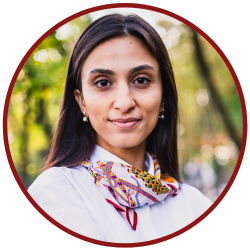


Gulsanna Mamediieva

Gulsanna ("Sanna") Mamediieva led strategic planning and European integration of the digital sector of Ukraine as Director General for EU Integration at the Ministry of Digital Transformation of Ukraine. She played a significant role in Ukraine’s integration into the EU Digital Single Market and the rapid digital transformation of Ukraine, including building the government ecosystem “Diia” (The State and Me), which makes it easy and secure for Ukrainians to obtain digital documents (driver’s licenses, passports, etc.), access public services online (such as paying taxes, business registration), developing digital skills, electronic communication and growth of ICT industry. This influence made Ukraine one of the world leaders in public innovation and, without exaggeration, European “digital tiger.” It also served as a backbone of Ukrainian resilience during the COVID-19 pandemic and wartime. Since February 2022, she has coordinated international technical assistance to support Ukraine’s digital resilience. Gulsanna also initiated exporting Ukrainian digital transformation experience to other countries. The first case is with Estonia, which will present its government state application, “Mrik,” which is based on Ukraine’s “Diia” app. Gulsanna currently serves as an Advisor to the Vice Prime Minister on Innovation, Technology and Education, and to the Minister of Digital Transformation of Ukraine. She is also Director for Programs and Partnerships at Digitally GovTech Center of Excellence, a member of the Council of Europe’s Committee on Artificial Intelligence, and Coordinator for Ukraine at Eastern Partnership Harmonization Digital Market initiative. She was a Visiting Fellow at the McCourt School for Public Policy at Georgetown University before arriving at Stanford this summer. She holds a Master’s degree in Information Technology Law from the University of Tartu, Estonia, and is pursuing a Ph.D. in Internet Law at Carleton University in Canada. Before her government role, Gulsanna worked as an IT lawyer at DLA Piper Ukraine, specializing in ICT and Intellectual Property.

Project Description: Sanna has a number of tech policy areas of interest. She would like to learn more about innovation strategy development, edTech, govTech, military tech, AI for public purpose, saving ecosystems, biotech and medtech, and innovation parks. She is also interested in developing solutions and learning about comparative practices for upskilling and reskilling displaced people, mostly women, with a specific focus on the ICT sector. She has been very involved in building Ukraine’s digital capacity and IT sector development. Sanna is also interested in helping to build further digital capacities for better governance at both the local and national levels. To achieve this, she is keen on connecting with individuals in California, including local government representatives, who are engaged in similar efforts. She is also eager to connect with women in the Bay Area who have participated in ICT-related retraining and reskilling initiatives.

Gulsanna is interested in technology around elections, blockchain, and security that would be involved in structuring a way in which all displaced Ukrainians might have the opportunity to vote in the next round of presidential and/or parliamentary and local elections. She endeavors to understand the risks and benefits of such a system and, thus, is interested in connecting with experts in technical/computer science who are conversant in blockchain and e-voting, if only to explain why these ideas may not work that well. She is also interested in digital diplomacy, promoting and sharing Ukrainian digital transformation experiences.
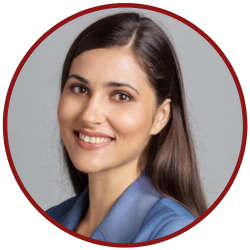


Halyna Yanchenko

Halyna Yanchenko was elected to the Ukrainian Verkhovna Rada (Parliament) in 2019 and is the Deputy Chair of Sluha Narodum “SN” (Servant of the People), a centrist, pro-European and anti-corruption Party. Shortly after her election, Ukraine’s president, Volodymyr Zelensky, tapped her to lead government investment efforts. In January 2022, she was appointed as a Secretary in the National Investment Council of Ukraine. In addition, she chairs the Temporary Special Commission of the Verkhovna Rada on protecting investor rights. Prior to being elected to the Verkhovna Rada of Ukraine, she led the Civil Oversight Council at the National Anti-Corruption Bureau of Ukraine. In 2014-2015 was a deputy of the Kyiv city council. Halyna earned a Master’s Degree in Sociology from the National University Kyiv-Mohyla Academy. She also studied for one year at Wichita Falls High School in Texas. 

Project Description: Halyna has many interests and was an important voice in the political process that led to the creation of “Diya” (a state cell phone application that has electronic IDs and provides public services to citizens and businesses) to make it easy and secure for Ukrainians to obtain digital drivers’ licenses, passports, health cards, and the like. This was very successful, and Ukrainians can now do all of this on their smartphones. Building on this success, Halyna is interested in using technology to assist in quickly employing veterans and returning displaced Ukrainians post-war. She is interested in engaging foreign investment for the recovery of Ukraine. She also wants to learn more about platforms and systems that can match skills with reconstruction priorities (as well as helping to map out those priorities). She would benefit from making connections in the private sector, including tech companies that could be helpful in these areas, as well as learning more from people who have worked in post-conflict zones on reconstruction priorities and organization. She also seeks to meet with emergency and disaster preparedness and recovery organizations at the state, federal and local levels or other contacts who may have experience in some of these areas.
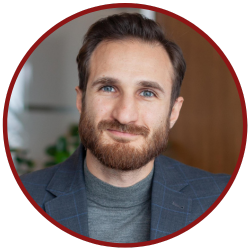


Konstantyn Chyzhyk

Konstantyn ("Kostya") Chyzhyk is a Partner at British-Ukrainian law and consultancy firm Hillmont Partners, helping international companies develop business in Ukraine and advising the government and the parliament on economic and judicial reforms. As Deputy Minister of Energy and Ecology, Konstantyn coordinated European integration, investments, digital transformation, and security, worked on renewable energy sector stabilization and reform, launched new auctions on gas extraction, and managed the largest sectoral loan and grant portfolio in the government of $1.2B. As Deputy Head and later as Head of the Investment Promotion Office under the President of Ukraine, Konstantyn unlocked and secured more than $1B of foreign direct investments. As Head of Communications and International Relations of the Ministry of Finance, he promoted IMF-backed reforms and managed cooperation with investors and the IMF, World Bank, EBRD, and EIB. 

Project Description: Kostya wants to use his time at Stanford to develop a new vision for ways in which to attract foreign direct investment to Ukraine. He is interested in learning more about strategic, sectoral, and institutional policy and regulatory frameworks that Ukraine would need to have in place in order to attract foreign capital post-war. He is keen on engaging with professionals from private equity and venture funds. Additionally, he seeks to connect with regional authorities, both at the state and local levels, if applicable, who are actively involved in economic development and the promotion of foreign direct investment (FDI). Kostya's intention is to gain insights from California's initiatives in this realm and also understand more about the factors that investors prioritize when considering investment in post-conflict areas.
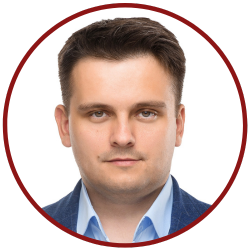


Mykhailo Pavliuk

Mykhailo Pavliuk is vice-chairman of the Chernivtsi Oblast (state) legislature in Ukraine. Among his central duties is the protection of the mutual interests of communities (known in Ukrainian as hromadas) and local governing bodies. His interests have long been focused on Euro-Atlantic integration, decentralization and deconcentration of authority in Ukraine, and the engagement of public and non-governmental organizations in policymaking. As acting Governor of the Chernivtsi Oblast State Administration in 2018-2019, Mykhailo focused on the creation of a successful administrative structure of new, capable, self-sufficient communities. In 2006-2010 shortly after his university graduation, he also organized long-term public discussions about the advantages for Ukraine of European Union and NATO membership. In his spare time, Mykhailo volunteers to deliver humanitarian aid to liberated areas of Ukraine and to the Armed Forces of Ukraine. He also supports internally displaced persons in Chernivtsi and coordinates their resettlement.

Project Description: Mykhailo’s project is about local self-governance — its decentralization, finalization, and implementation in the post-war period in Ukraine. He wants to learn more about checks and balances between executive and local self-governance in the United States, how to empower self-sufficient communities (hromadas in Ukrainian, which are literally community-based forms of governance) and enrich them with practices of good governance (transparent, responsive and efficient), and also ways in which to engage citizens in local public issues. During his time at Stanford, he is interested in meeting with local government representatives in Palo Alto, Menlo Park, and Mountain View, as well as state (California) government actors to understand better how (or whether) this works here.


Olena Kutsai

Olena Kutsai is a lawyer with more than 15 years of experience in the international corporate sector, including work for Chevron and Scorpio Real Estate corporations. Olena currently serves as a Member of the Secretariat of the Business Ombudsman Council of Ukraine and is a Member of the Peace Coalition. In the Business Ombudsman Council, Olena leads high-level dialogues focused on improving the business environment in Ukraine. She is responsible for strategic cooperation with a number of stakeholders, including the Ministry of Digital Transformation and the Ministry of Ecology and Natural Resources. Olena drives several special initiatives to support the reconstruction and recovery of Ukraine following Russia’s invasion in 2022. She also develops policy recommendations promoting good governance, sustainable development, and the rule of law in Ukraine, working with the Government of Ukraine, Verkhovna Rada (parliament), the Office of the President of Ukraine, business associations, non-governmental institutions, international financial institutions (World Bank, EBRD), and international development organizations such as USAID and Agriteam. Olena is an author and co-author of the Council’s educational webinars and training for the private and public sectors. She holds a Master’s of Public Administration from the Ukrainian Catholic University and a Master’s of Law from the Eastern European University. Olena is a graduate of the Center on Democracy, Development and the Rule of Law’s Leadership Academy for Development (Stanford University) and an advanced leadership course at Harvard Business School.

Project Description: Olena has an extensive background in business development and business advocacy. Her primary interest revolves around exploring effective strategies to reconstruct and revitalize the business community in Kherson, a region in southeastern Ukraine liberated from Russian occupation in the spring of 2022. Her overarching goal is to create models that can be scaled, adapted, and implemented in other parts of Ukraine.

Her past work has been focused on helping businesses forced to relocate from occupied or conflict-ridden areas of Ukraine. She helped these businesses secure new operational spaces, access essential services like electricity and internet, and rebuild disrupted supply chains to resume production. In Kherson, specific challenges arise due to the aftermath of flooding caused by the Russian military's destruction of the Khakovka Dam on June 6, 2023. Alongside her focus on business recovery, Olena also seeks to address the cleanup and restoration of vital services like electricity and internet, as well as the rebuilding of other infrastructure destroyed in the flooding.

Given the significant environmental damage in Kherson, Olena has found value in connecting with experts in food sustainability at Stanford, as well as climate and environmental scientists like David Lobell. She also seeks to engage with and learn from individuals with experience in disaster cleanup and recovery, both within California and on a national and international scale.

Read More

Fisher Family Summer Fellows Class of 2023
News

Announcing the Inaugural Fisher Family Summer Fellows Cohort

In July 2023, CDDRL will welcome a diverse cohort of 33 experienced practitioners from 21 countries who are working to advance democratic practices and economic and legal reform in contexts where freedom, human development, and good governance are fragile or at risk.
Announcing the Inaugural Fisher Family Summer Fellows Cohort
Michael McFaul moderates a panel with Oleksiy Honcharuk, Serhiy Leshchenko, Oleksandra Matviichuk, Oleksandra Ustinova on the one-year anniversary of the full-scale invasion of Ukraine.
News

Ukraine’s Fight for Democracy, One Year In

To commemorate the first year of the full-scale invasion of Ukraine, Ukrainian leaders joined a panel hosted by the Freeman Spogli Institute for International Studies to express their hopes for victory and their gratitude for Western support.
Ukraine’s Fight for Democracy, One Year In
Hero Image
2023 SU-DD Fellows
CDDRL's 2023 Strengthening Ukrainian Democracy and Development Fellows: (L to R) Halyna Yanchenko, Konstantyn Chyzhyk, Olena Kutsai, Anton Turupalov, Gulsanna Mamediieva, and Mykhailo Pavliuk. | Rod Searcey
All News button
1
Subtitle

Meet the six fellows selected to participate in the first cohort of the Center on Democracy, Development and the Rule of Law’s Strengthening Ukrainian Democracy and Development Program.

Encina Hall, Suite 052
616 Jane Stanford Way
Stanford, CA 94305-6055

0
Research Scholar
Research Manager, Democracy Action Lab
Poverty, Violence, and Governance Lab Research Affiliate, 2024-25
CDDRL Postdoctoral Fellow, 2023-24
maria_curiel_2024.jpg

María Ignacia Curiel is a Research Scholar at the Center on Democracy, Development and the Rule of Law and Research Affiliate of the Poverty, Violence and Governance Lab at Stanford University. Curiel is an empirical political scientist using experimental, observational, and qualitative data to study questions of violence and democratic participation, peacebuilding, and representation.

Her research primarily explores political solutions to violent conflict and the electoral participation of parties with violent origins. This work includes an in-depth empirical study of Comunes, the Colombian political party formed by the former FARC guerrilla, as well as a broader analysis of rebel party behaviors across different contexts. More recently, her research has focused on democratic mobilization and the political representation of groups affected by violence in Colombia, Mexico, and Venezuela.

Curiel's work has been supported by the Folke Bernadotte Academy, the Institute for Humane Studies, and the APSA Centennial Center and is published in the Journal of Politics. She holds a Ph.D. in Political Science and dual B.A. degrees in Economics and Political Science from New York University.

Date Label
-
1973 Yom Kippur War
Israeli paratroopers march October 25, 1973 along the Suez-Cairo road on the western bank of the Suez Canal during the Yom Kippur War. | Getty Images

Join the Visiting Fellows in Israel Studies Program at the Freeman Spogli Institute for International Studies for a discussion about the 1973 Yom Kippur War, its historic importance for Israel’s statehood and security as well as the country’s strategic and operational lessons from the war. 

The seminar, featuring guest speaker Professor (Emeritus) Meron Medzini of the Hebrew University of Jerusalem, Israel, is presented in cooperation with The Helen Diller Institute for Jewish Law and Israel Studies (U.C. Berkeley) and the Consulate General of the State of Israel to the Pacific Northwest. Promotional support is provided by the Stanford Jewish Alumni Network and Hillel at Stanford. 

Larry Diamond, the Mosbacher Senior Fellow in Global Democracy at the Freeman Spogli Institute for International Studies, will moderate the discussion.

About the Speakers:

Meron Medzini is Professor (emeritus) at Hebrew University of Jerusalem, Israel. In 1962 he was appointed Director of the Israel Government Press Office in Jerusalem and in that capacity he served as spokesman for Prime Ministers Levi Eshkol (1965-1969), Golda Meir (1973-1974) and Yitzhak Rabin (1974-1975). He was sent on many speaking missions for the Jewish Agency, the United Jewish Appeal and served as Scholar In Residence for the World Zionist Organization multiple times. From 1973- 2017 he taught courses on Israel, Zionism, Israeli politics and foreign policy at the Rothberg International School of the Hebrew University. His book Golda - A Political Biography (De Gruyters, Oldenburg, 2016) won the Israeli Prime Minister’s Award for books on Israeli leaders for the year 2010. He was the editor of the Series Israel’s Foreign Relations – Selected Documents, published by the Israel Foreign Ministry, 18 volumes were printed from 1997-2001. 

Ron E. Hassner is the Chancellor’s Professor of Political Science and Helen Diller Family Chair in Israel Studies at the U.C. Berkeley. He teaches courses on international conflict and religion. His research explores the role of ideas, practices, and symbols in international security with particular attention to the leadership between religion and violence. 

Or Rabinowitz, is an Associate Professor in the International Relations Department of the Hebrew University of Jerusalem, Israel. During the 2022-2023 she is a visiting associate professor at Stanford FSI’s Center for International Security and Cooperation. Her research interests focuses on nuclear proliferation, intelligence studies, and Israel-U.S. relations.

Gil-Ii Vardi is a Core Lecturer in the History Department of Stanford University. Her research examines the interplay between organizational culture, doctrine, and operational patterns in military organizations, and focuses on the incentives and dynamics of change in military thought and practice. 

Larry Diamond
Larry Diamond
Meron Medzini
Ron E. Hassner

Not in residence

0
Lecturer
Vardi,_Gil-li.jpg

Gil-li Vardi joined CISAC as a visiting scholar in December 2011. She completed her PhD at the London School of Economics in 2008, and spent two years as a research fellow at the Oxford Leverhulme Programme on the Changing Character of War at the University of Oxford, after which she joined Notre Dame university as a J. P. Moran Family Assistant Professor of Military History.

Her research examines the interplay between organizational culture, doctrine, and operational patterns in military organizations, and focuses on the incentives and dynamics of change in military thought and practice.

Driven by her interest in both the German and Israeli militaries and their organizational cultures, Vardi is currently revising her dissertation, "The Enigma of Wehrmacht Operational Doctrine: The Evolution of Military Thought in Germany, 1919-1941," alongside preparing a book manuscript on the sources of the Israeli Defence Forces’ (IDF) early strategic and operational perceptions and preferences.

Gil-li Vardi
0
Senior Research Scholar, FSI
Visiting Fellow in Israel Studies, 2022-2026
or-rabinowitz_headshot.jpg

Or (Ori) Rabinowitz  joined Stanford’s Freeman Spogli Institute for International Studies in summer 2026 as a Senior Research Scholar, with appointments at both CDDRL’s Jan Koum Israel Studies Program and CISAC. She arrives at Stanford following her time as a tenured Senior Lecturer (Associate Professor) in the Department of International Relations at the Hebrew University of Jerusalem.

A recipient of the British Foreign Office’s Chevening Scholarship, Rabinowitz completed her PhD in the Department of War Studies at King’s College London in 2011. Her first book, Bargaining on Nuclear Tests, was published by Oxford University Press in 2014. Her second book, Protecting the Nuclear Monopoly, forthcoming with Cambridge University Press, examines the evolution of U.S.–Israeli collaboration in countering nuclear proliferation in the Middle East. Rabinowitz has published widely in leading academic journals as well as in prominent policy and public-facing outlets. She is the recipient of multiple grants and distinctions, including two competitive personal grants from the Israel Science Foundation.

CV
Date Label
Or (Ori) Rabinowitz
Seminars
News Feed Image
yom_kippur_1973_getty_images.jpg
Subscribe to International Relations