International Relations

FSI researchers strive to understand how countries relate to one another, and what policies are needed to achieve global stability and prosperity. International relations experts focus on the challenging U.S.-Russian relationship, the alliance between the U.S. and Japan and the limitations of America’s counterinsurgency strategy in Afghanistan.

Foreign aid is also examined by scholars trying to understand whether money earmarked for health improvements reaches those who need it most. And FSI’s Walter H. Shorenstein Asia-Pacific Research Center has published on the need for strong South Korean leadership in dealing with its northern neighbor.

FSI researchers also look at the citizens who drive international relations, studying the effects of migration and how borders shape people’s lives. Meanwhile FSI students are very much involved in this area, working with the United Nations in Ethiopia to rethink refugee communities.

Trade is also a key component of international relations, with FSI approaching the topic from a slew of angles and states. The economy of trade is rife for study, with an APARC event on the implications of more open trade policies in Japan, and FSI researchers making sense of who would benefit from a free trade zone between the European Union and the United States.

-

Image
china under mao cover
Perspicacious scholarship by the preeminent American historical sociologist working on the People’s Republic of China. A balanced, critical account of events of baffling complexity, and a sophisticated analysis of uniquely solid empirical data. If reading is indeed the basics for all learning, then this is the book to read in order to learn why Mao in the end accomplished so little of what he had hoped to achieve after 1949 and why his legacy remains so controversial.”
—Michael Schoenhals, Lund University


China’s Communist Party seized power in 1949 after a long period of guerrilla insurgency followed by full-scale war, but the Chinese revolution was just beginning. China Under Mao narrates the rise and fall of the Maoist revolutionary state from 1949 to 1976—an epoch of startling accomplishments and disastrous failures, steered by many forces but dominated above all by Mao Zedong.

Mao’s China, Andrew Walder argues, was defined by two distinctive institutions established during the first decade of Communist Party rule: a Party apparatus that exercised firm (sometimes harsh) discipline over its members and cadres; and a socialist economy modeled after the Soviet Union. Although a large national bureaucracy had oversight of this authoritarian system, Mao intervened strongly at every turn. The doctrines and political organization that produced Mao’s greatest achievements—victory in the civil war, the creation of China’s first unified modern state, a historic transformation of urban and rural life—also generated his worst failures: the industrial depression and rural famine of the Great Leap Forward and the violent destruction and stagnation of the Cultural Revolution.

Misdiagnosing China’s problems as capitalist restoration and prescribing continuing class struggle against imaginary enemies as the solution, Mao ruined much of what he had built and created no viable alternative. At the time of his death, he left China backward and deeply divided.

Books will be available for purchase at the event

Andrew G. Walder, Author, has long specialized on the sources of conflict, stability, and change in communist regimes and their successor states. His publications on China have ranged from the political and economic organization of the Mao era to changing patterns of stratification, social mobility, and political conflict in the post-Mao era. Another focus of his research has been on the political economy of Soviet-type economies and their subsequent reform and restructuring. His current research focuses on popular political mobilization in late-1960s China and the subsequent collapse and rebuilding of the Chinese party-state.

Walder joined the Stanford faculty the fall of 1997. He received his PhD in sociology at the University of Michigan in 1981 and taught at Columbia University before moving to Harvard in 1987. As a professor of sociology, he served as chair of Harvard's MA Program on Regional Studies-East Asia for several years. From 1995 to 1997, he headed the Division of Social Sciences at the Hong Kong University of Science and Technology. From 1996 to 2006, as a member of the Hong Kong Government's Research Grants Council, he chaired its Panel on the Humanities, Social Sciences, and Business Studies.

Thomas P. Bernstein, Discussant, earned his PhD from Columbia University, 1970. He joined the faculty of the Department of Political Science and of the East Asian Institute in 1975, having previously taught at Yale and Indiana Universities. He retired in December 2007.  He is a specialist on comparative politics, with a focus on China as well as on communist systems generally. He has written on the collectivization of agriculture in the Soviet Union and China and on the two famines that each country experienced in the l930's and late l950's. Publications on China include a book on Chinese youth (Yale University Press, 1977), which was translated into China in 1993, as well as articles and  book chapters on the Mao era, China’s growth without political liberalization, prospects for democratization, and on education. His recent writings have focused on various aspects of state-peasant relations in China’s reform period. Together with Professor Xiaobo Lu, he co-authored Taxation without Representation in Contemporary Rural China (Cambridge University Press, 2003). In recent years, he has resumed work on Sino-Soviet relations and comparisons. In 2010, he published a co-edited book with Hua-yu Li, China Learns from the Soviet Union, 1949-Present (Lexington Book). And he has written on reform and authoritarian rule in contemporary China and Russia. Prior to retirement, he served on various editorial boards, including Comparative Politics and China Quarterly.  He has held various fellowships, including a Guggenheim. He served as Chair of the Department of Political Science from 1986-l989 and again from 1991 to l994.

Shorenstein APARC
Stanford University
Encina Hall E301
Stanford, CA 94305-6055

(650) 723-4560 (650) 723-6530
0
Senior Fellow at the Freeman Spogli Institute for International Studies
Denise O'Leary and Kent Thiry Professor
walder_2019_2.jpg PhD

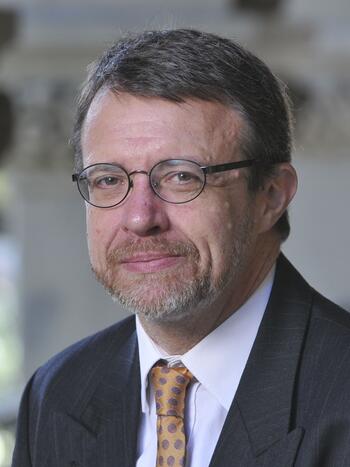
Andrew G. Walder is the Denise O'Leary and Kent Thiry Professor at Stanford University, where he is also a senior fellow in the Freeman Spogli Institute for International Studies. Previously, he served as Chair of the Department of Sociology, Director of the Walter H. Shorenstein Asia-Pacific Research Center, and Head of the Division of International, Comparative and Area Studies in the School of Humanities and Sciences.

Walder has long specialized in the sources of conflict, stability, and change in communist regimes and their successor states. His publications on Mao-era China have ranged from the social and economic organization of that early period to the popular political mobilization of the late 1960s and the subsequent collapse and rebuilding of the Chinese party-state. His publications on post-Mao China have focused on the evolving pattern of stratification, social mobility, and inequality, with an emphasis on variation in the trajectories of post-state socialist systems. His current research is on the growth and evolution of China’s large modern corporations, both state and private, after the shift away from the Soviet-inspired command economy.

Walder joined the Stanford faculty in 1997. He received his Ph.D. in sociology at the University of Michigan in 1981 and taught at Columbia University before moving to Harvard in 1987. From 1995 to 1997, he headed the Division of Social Sciences at the Hong Kong University of Science and Technology.

Walder has received fellowships and grants from the Guggenheim Foundation, the National Science Foundation, the National Academy of Sciences, the Henry Luce Foundation, the Ford Foundation, the Social Science Research Council, and the Center for Advanced Study in the Behavioral Sciences. His books and articles have won awards from the American Sociological Association, the Association for Asian Studies, and the Social Science History Association. He is an elected member of the American Academy of Arts and Sciences.

His recent and forthcoming books include  Fractured Rebellion: The Beijing Red Guard Movement  (Harvard University Press, 2009);  China Under Mao: A Revolution Derailed  (Harvard University Press, 2015);  Agents of Disorder: Inside China’s Cultural Revolution  (Harvard University Press, 2019); and  A Decade of Upheaval: The Cultural Revolution in Feng County  (Princeton University Press, 2021) (with Dong Guoqiang); and Civil War in Guangxi: The Cultural Revolution on China’s Southern Periphery (Stanford University Press, 2023).  

His recent articles include “After State Socialism: Political Origins of Transitional Recessions.” American Sociological Review  80, 2 (April 2015) (with Andrew Isaacson and Qinglian Lu); “The Dynamics of Collapse in an Authoritarian Regime: China in 1967.”  American Journal of Sociology  122, 4 (January 2017) (with Qinglian Lu); “The Impact of Class Labels on Life Chances in China,”  American Journal of Sociology  124, 4 (January 2019) (with Donald J. Treiman); and “Generating a Violent Insurgency: China’s Factional Warfare of 1967-1968.” American Journal of Sociology 126, 1 (July 2020) (with James Chu).
Director Emeritus of the Shorenstein Asia-Pacific Research Center
Director Emeritus of the Division of International, Comparative and Area Studies
Faculty Affiliate at the Stanford Center on China's Economy and Institutions
Faculty Fellow at the Stanford Center at Peking University, July to November of 2013
Graduate Seminar Instructor at the Stanford Center at Peking University, August to September of 2017
Senior Fellow at the Freeman Spogli Institute for International Studies, Denise O'Leary and Kent Thiry Professor of Sociology, Stanford University
Thomas P. Bernstein Professor Emeritus of Government, Columbia University
Seminars
Paragraphs

"'Critical Engagement': British Policy toward the DPRK" examines the United Kingdom's policy toward the Democratic People's Republic of Korea (DPRK). The policy known as "critical engagement" has been applied for over 14 years. 

"UK efforts are not going to have the immediate result we all want. However, they do show...that it is possible to carry out engagement and hopefully reduce the chasm between DPRK thinking and the rest of the world," author Mike Cowin writes. He suggests that the British approach is similar to that advised by a Stanford research team in Tailored Engagement.

Cowin wrote an earlier policy paper on relations between the DPRK and the European Union in March 2015.

Mike Cowin is the 2014-15 Pantech Fellow in the Korea Program at the Walter H. Shorenstein Asia-Pacific Research Center. Before coming to Stanford, he served as the deputy head of mission at the British Embassy in Pyongyang, North Korea. He has also served in the British embassies in Seoul from 2003 to 2007, and in Tokyo from 1992 to 1997.

All Publications button
1
Publication Type
Policy Briefs
Publication Date
Authors
Mike Cowin
News Type
News
Date
Paragraphs

North Korea fired off short-range missiles last Tuesday close to the arrival of U.S. Secretary of Defense Ashton Carter to the region. Carter, who was on his inaugural trip to Asia as the newly confirmed Secretary of Defense, said the launch was a sign of the region’s continued tensions.

The United States consistently expresses concern over North Korea’s nuclear and missile capabilities, yet attempts to resume the Six-Party Talks, the negotiations to denuclearize North Korea which began in 2003, have been unsuccessful. The United Kingdom, although not an official participant in the Talks, has had diplomatic relations with North Korea since 2000, setting itself apart from many in the West, and from Japan which do not have formal diplomatic ties with the country. 

In a new policy brief, Mike Cowin, the 2014-15 Pantech Fellow at the Walter H. Shorenstein Asia-Pacific Research Center (APARC), discusses lesser-known channels of engagement between the United Kingdom and North Korea. 

Image

Cowin is the former deputy head of mission at the British Embassy Pyongyang, and implemented many of the programs he describes in the paper, "Critical Engagement": British Policy Towards the DPRK.

Typically small-scale and led largely in collaboration with European NGOs, the Embassy’s initiatives span from humanitarian aid – providing water supplies and sewage systems – to exchanges – hosting visiting delegations of North Korean paralympic athletes and English teachers.

The Embassy also works to build a stronger understanding of modern Britain in North Korea. They have shown films such as Wallace and Grommit and Philomena at the Pyongyang International Film Festival, and supplemented reading materials in the Grand People’s Study House, a central library in Pyongyang.

Cowin says that it’s not easy to construct these exchanges, but if established, they provide small steps in the right direction, and help set the stage for critical engagement in the future. The United Kingdom’s approach shares commonalities with the suggestions made by a Stanford research team in Tailored Engagement, he says.

“The United Kingdom’s efforts are not going to have the immediate result we all want. However, they do show that the DPRK is not completely isolated from the Western world and that it is possible to carry out engagement,” he says.

Cowin is also the author of an earlier policy brief on relations between North Korea and the European Union.

Hero Image
pyongyang international film festival
Presenters on stage at the 13th annual Pyongyang International Film Festival in North Korea.
Mike Cowin
All News button
1
-

Image
20140604usun400x464

Ambassador David Lane was nominated by President Barack Obama to serve as the U.S. Representative to the United Nations Agencies for Food and Agriculture and confirmed by the U.S. Senate on May 24, 2012.

Ambassador Lane has more than twenty years of experience working in leadership positions across sectors.  Before coming to Rome, he served at the White House as Assistant to the President and Counselor to the Chief of Staff. 

Prior to joining the Obama Administration, he served as President and CEO of the ONE Campaign, a global advocacy organization focused on extreme poverty, development, and reform.  Before that, as Director of Foundation Advocacy and the East Coast Office of the Bill & Melinda Gates Foundation, he helped lead that organization’s advocacy and public policy efforts. 

During the Clinton Administration, he served as Executive Director of the National Economic Council at the White House and Chief of Staff to the U. S. Secretary of Commerce.  He served as Vice-Chair of Transparency International USA, and he is a member of the Council on Foreign Relations

Ambassador Lane earned his B.A. from the University of Virginia and his M.P.A. from the Princeton University Woodrow Wilson School of Public and International Affairs.   


Sponsored by the Center on Democracy, Development and the Rule of Law (CDDRL) and the Center on Food Security and the Environment (FSE). Supported in part by Zachary Nelson ('84) and Elizabeth Horn.

Ambassador David Lane, United States Representative to UN Agencies in Rome United States Representative to UN Agencies in Rome Speaker
Lectures
News Type
News
Date
Paragraphs

Tannis Thorlakson, a first-year PhD candidate in the Emmett Interdisciplinary Program in Environment and Resources (E-IPER) in Stanford's School of Earth, Energy and Environmental Science, has won a three-year grant from the National Science Foundation to support coursework and research on the palm oil industry in Indonesia. Thorlakson's proposed project, "Is Certification Enough? The socio-economic and environmental impacts of certified palm oil in Indonesia," was one of 2,000 awards selected from a pool of 16,000 applications. 

Thorlakson's research interests include the interactions between farmers and the firms that buy their produce, as well as how firms' supply chain sourcing strategies impact socio-economic and environmental outcomes in the agriculture sector. 

"I am thrilled, though not surprised, that the NSF selected Tannis for this prestigious award," said Professor Roz Naylor, one of Thorlakson's faculty advisors. "Her research on how multinational companies can make palm oil and other major agricultural commodities more environmentally sustainable is important and timely. It is a welcome addition to the work being done by many at Stanford to tackle the big social, economic and environmental questions about the fast-growing palm oil sector."

Thorlakson will spend the summer of 2015 in Cape Town, South Africa, working with a food retailer to understand the impacts of the company's sustainability initiative on the farmers in the retailers supply chain. 


Hero Image
thorlakson picture
All News button
1
Authors
News Type
Commentary
Date
Paragraphs

The Program on Human Rights welcomed Pamela Merchant and Kristen Myles to Stanford on March 4 as final speakers in the winter course U.S. Human Rights NGOs and International Human Rights. Ms. Merchant has served for the past nine years as executive director of the Center for Justice & Accountability, the leading U.S.-based organization that pursues international human rights abusers through litigation in U.S. courts. Formerly a federal prosecutor, Ms. Merchant has frequently testified on human rights issues before the U.S. Congress; currently serves on the Advisory Council for the ABA Center on Human Rights; and is a director of the Foundation for Sustainable Rule of Law Initiatives. Ms. Myles is a litigation partner in the San Francisco office of Munger, Tolles & Olson and is repeatedly named among California's “top women lawyers” by the Daily Journal. In her practice of complex business litigation, Ms. Myles filed a “friend of the court” brief in the 2014 case of Shell Oil vs. Kiobel which in the U.S. Supreme Court decided that U.S. corporations could not be sued in U.S. courts under the Alien Torts Statute for alleged human rights abuses abroad.

Ms. Merchant’s strongly held view is that some human rights violations are so egregious that they should be litigated in any court system, even if they occurred outside the country in which the case is argued. Ms. Merchant argued that courts create a record of truth about human rights violations, and that shedding the light of truth on these terrible events will make the world a less violent place. The Center for Justice and Accountability has provided legal advice for human rights victims to pursue their claims of human rights abuses in U.S. courts when abuses occurred in countries such at El Salvador, Nigeria, South Africa, and Myanmar, using U.S. federal legislation of the Alien Torts Statute and the Torture Victims Prevention Act. The CJA’s position is that the Nuremberg Trials of the World War II genocide atrocities created an obligation for all nation states to pursue justice in their courts under the international law principle of universal jurisdiction that holds that egregious human rights abuses are the concern of all humanity, wherever they have taken place.

Ms. Myles has represented U.S. corporations against whom human rights victims allege were directly or indirectly the instigators of their violations by virtue of pursuing corporate economic interests abroad in collusion with corrupt officials who resort to violence, such as by pushing people off their land or working in industrial settings in sub-standard conditions. Ms. Myles pointed that U.S. corporate executives do not instruct their overseas operators to be violent; instead, they are working through long chains of delegated authority in their off-shore operations, and these off-shore people act beyond their corporate mandate. Most importantly, the international legal principle of universal jurisdiction is the “law of nations” so it is directed to national governments and not to private corporations.

After Ms. Merchant and Ms. Myles summarized their individual positions, they engaged in dialogue with Professor Helen Stacy, director of the Program on Human Rights. Discussion covered the pros and cons of using the U.S. court system for transnational issues, given that such cases are lengthy and expensive; whether the high visibility of such cases had a deterrent effect on violators abroad, or may lead to the deportation of a violator who had subsequently settled in the U.S., or would prevent an alleged perpetrator’s application to emigrate to the U.S.; the success of victims being paid money from their perpetrator under a civil damages award ordered by a U.S. court; whether this U.S. litigation poses a diplomatic problem for the U.S. in its international operations; how standards on corporate social responsibility can be raised beyond litigating past practices in lengthy and expensive civil court proceedings; and the ethics of imposing higher standards of U.S. corporate standards in countries with lower standards and very high needs to improve economic conditions for their population.

Helen Stacy, Executive Director, Program on Human Rights


Hero Image
dsc 0440
Pamela Merchant and Kirsten Myles speak on international human rights litigation
Dana Phelps
All News button
1
News Type
News
Date
Paragraphs

Fei Yan, a postdoctoral fellow at the Walter H. Shorenstein Asia-Pacific Research Center, has been awarded a prize from the China and Inner Asia Council (CIAC) for his paper on political rivalries during China’s Cultural Revolution. The award aims to recognize emerging scholarship and foster intellectual exchange among experts working on China and Inner Asia topics, according to the award website.

Yan was presented the award at the Association for Asian Studies Annual Conference on March 27. CIAC released the following statement:

“In his paper, Fei Yan offers a new interpretation of the factional rivalries that wracked China's provinces during the early years of the Cultural Revolution. His focus is on the dispute between the so-called ‘radical’ Red Flag faction and the so-called ‘conservative’ East Wind faction that came to a head in Guangzhou in 1967. Making use of previously unavailable archival sources, he offers a meticulous and detailed description of the extent to which this split was based less on deep ideological differences and more on intense power rivalries and disagreements over tactics.”

Yan specializes in Chinese politics and political culture, and comparative social policy within transitional economies and authoritarian settings. He will join the Department of Political Science at Tsinghua University as an assistant professor this fall.

Hero Image
fei yan Rod Searcey
All News button
1
News Type
News
Date
Paragraphs

Each year the Walter H. Shorenstein Asia-Pacific Research Center offers fellowship opportunities to recent graduates to further their research and engage with scholars at Stanford. Postdoctoral fellows have the opportunity to develop their dissertations for publication, present their research to the Stanford community, and participate in Center activities.

Fellows often go on to pursue teaching positions and advisory roles at top universities and research organizations around the world. Into the future, they remain engaged with the Center and continue to contribute to Shorenstein APARC publications, conferences and related activities.

Shorenstein APARC is pleased to welcome three postdoctoral fellows for the 2015-16 academic year:

Asia Health Policy Fellow

Image
darika profile
Darika Saingam

Saingam’s research interests are public health, substance abuse, drug policy and Southeast Asia. While at Shorenstein APARC, she will research the evolution of substance-abuse control measures and related policy in Thailand.

Saingam seeks to identify potentially effective policy directions suitable for Thailand, and other developing countries in Southeast and East Asia.

“There are a lot of lessons to be learned from substance abuse policy implementations in other countries…coping and dealing with substance abuse is a complex story and cannot respond successfully with only one strategy.”

Saingam completed her doctorate in epidemiology at the Prince of Songkla University in 2012, and has served as a researcher at the University’s epidemiology unit since, as well as a researcher at the Thailand Substance Abuse Academic Network since 2014.

Shorenstein APARC Postdoctoral Fellows

Image
chang profile
Booseung Chang

Chang’s research interests are comparative policy analysis and political institutions in East Asia, mainly South Korea and Japan. While at Shorenstein APARC, Chang will conduct research on how countries respond differently to the same external challenges, and how institutions are interpreted and applied in different ways.

His dissertation, which he seeks to build upon, is titled “The Sources of Japanese Conduct: Asymmetric Security Dependence, Role Conceptions, and the Reactive Behavior in response to U.S. Demands.” It is a qualitative comparative case study of how key U.S. allies in Asia – namely Japan and South Korea – and major powers in Europe - the United Kingdom and France responded to the U.S.-led Persian Gulf War and the Iraq War.

“East Asia is a treasure island of new theory building because some of the big challenges facing East Asia – finding a new role for Japan, denuclearization of North Korea, unification of the Korean peninsula, democratization of China and reconfiguration of its relations with the world, and development and integration of Southeast Asian countries – are truly new ones…”

Chang completed his doctorate in political science from the Paul H. Nitze School of Advanced International Studies at Johns Hopkins University in 2014.

Image
rnico profile
Nico Ravanilla

Ravanilla’s research interests are political economy and governance, comparative politics and Southeast Asia. While at Shorenstein APARC, Ravanilla will research how political selection impacts governance, and evaluate possible routes for incentivizing capable and virtuous citizens to run for public office.

His project titled “Nudging Good Politicians” looks at the case of the Sangguniang Kabataan, a governing body in the Philippines comprised of elected youth leaders. Ravanilla aims to apply his research to develop and scale up programs for politicians, especially those at the onset of their careers, which would include specialized leadership training and merit-based endorsement.

“If we could design a policy that screens-in and incentivizes competent and honest citizens to run for office, would it play a catalytic role in improving the quality of the political class, and ultimately, the quality of government?”

Ravanilla is also a Southeast Asia Research Group (SEAREG) Young Southeast Asia Fellow for 2015-16. He will complete his doctorate in political science and public policy from the University of Michigan in summer 2015.

Hero Image
hoover quad
View of Hoover Tower from Stanford's main quad.
Linda A. Cicero / Stanford News Service
All News button
1
News Type
Q&As
Date
Paragraphs

In conversation with Shorenstein APARC, Takeo Hoshi, Stanford professor and director of the Japan Program, discusses his intial draw to studying the Japanese economy, and its intersections with finance and public policy. Hoshi highlights some of his recent research and the Japan Program's upcoming activities, including a new student course focused on innovation-based economic growth in Silicon Valley and Japan.

What led you to study the Japanese economy?

I majored in social sciences as an undergrad at the University of Tokyo. I was especially intrigued by macroeconomics – the study of the aggregate economy (GDP growth, inflation, unemployment, etc.).  I came to the United States to pursue graduate studies at the Massachusetts Institute for Technology. In the 1980s, Japan’s economy was growing relatively fast and performing better than the United States and other advanced economies. Japan was boring for a macroeconomist. But soon after I got my doctorate in economics, Japan started to encounter some economic problems and became interesting, so this is what I started to investigate. I shifted my focus from theoretical work to empirical work, and began to look at the Japanese economy, especially its financial aspects.

Can you tell us more about your current research focus?

I have continued to do research on Japan’s financial system. I have just completed two papers on this subject. One examines financial regulatory changes in Japan after the global financial crisis, and the second studies the development of capital market regulations in Japan, again focusing on the period after the global financial crisis. I also have a research project on institutional foundations for innovation-based economic growth. I work with Kenji Kushida, also at Shorenstein APARC, and Richard Dasher, at the U.S.-Asia Technology Management Center, for this project. We study the economy seen in Silicon Valley, perhaps the best example of innovation-based economic growth, and examine what Japan needs to do to achieve similar growth. For example, here in Silicon Valley, venture capital plays a very important role in providing capital to startups. In Japan, the role and size of venture capital is much smaller. We’ve been researching to find out why this is. Good ideas always exist in a society, but depending on the condition of the economy and policies created, entrepreneurs may find barriers to getting them anywhere without access to capital. It’s about connecting capital to the right ideas at the right time.

What’s ahead for the Japan Program this year?

The Japan Program has several events coming up. In April, an event will focus on international terrorism and how Japan faces newer security threats such as the Islamic State. Given the recent killings of the Japanese hostages, the threat of international terrorism is evident to people in Japan. For U.S. citizens, it’s been apparent for awhile, but for Japanese citizens it is a more recent realization. The Japan Program also has an upcoming project that highlights the 70th anniversary of World War II, which is being commemorated this year. At the 50th and 60th anniversaries of the War, the prime minister of Japan gave a short statement reflecting on Japan’s past actions and reinforcing its pacifist vision for the future. The current leader Shinzo Abe will also do this. Colleagues from Shorenstein APARC and the Freeman Spogli Institute for International Studies have been asked to write a short statement that they would give if they were in the Prime Minister’s shoes. A broad cross section of faculty authors coming from different disciplines are participating and will provide diverse views. The collection of statements will be compiled into a report (in both English and Japanese).

This spring, you’re teaching a new course Innovation Based Economic Growth. What makes this course unique?

I’m very excited to be back teaching again. Since arriving at Stanford in 2011, I haven’t yet taught a course, so it’s a great opportunity. It’s a project-based course focused on innovation policy in Japan. Students will form groups and perform research on several policies aimed at encouraging innovations in Japanese businesses. Students will then analyze those policies once they are implemented. In the process, students will develop a framework for policy evaluation. And for some of those policies, we may be able to collaborate with a part of the Japanese government to implement a policy evaluation framework.

Tell us something we don’t know about you.

I am a devote San Diego Chargers fan. And, as a child, my dream job was to own a hardware store.

Hero Image
Headshot of Takeo Hoshi Rod Searcey
All News button
1
Subscribe to International Relations