International Relations

FSI researchers strive to understand how countries relate to one another, and what policies are needed to achieve global stability and prosperity. International relations experts focus on the challenging U.S.-Russian relationship, the alliance between the U.S. and Japan and the limitations of America’s counterinsurgency strategy in Afghanistan.

Foreign aid is also examined by scholars trying to understand whether money earmarked for health improvements reaches those who need it most. And FSI’s Walter H. Shorenstein Asia-Pacific Research Center has published on the need for strong South Korean leadership in dealing with its northern neighbor.

FSI researchers also look at the citizens who drive international relations, studying the effects of migration and how borders shape people’s lives. Meanwhile FSI students are very much involved in this area, working with the United Nations in Ethiopia to rethink refugee communities.

Trade is also a key component of international relations, with FSI approaching the topic from a slew of angles and states. The economy of trade is rife for study, with an APARC event on the implications of more open trade policies in Japan, and FSI researchers making sense of who would benefit from a free trade zone between the European Union and the United States.

-
 
Two CDDRL honor students will present their theses at this week's CDDRL Research Seminar on Thursday, May 25, from 12-1:30.
 
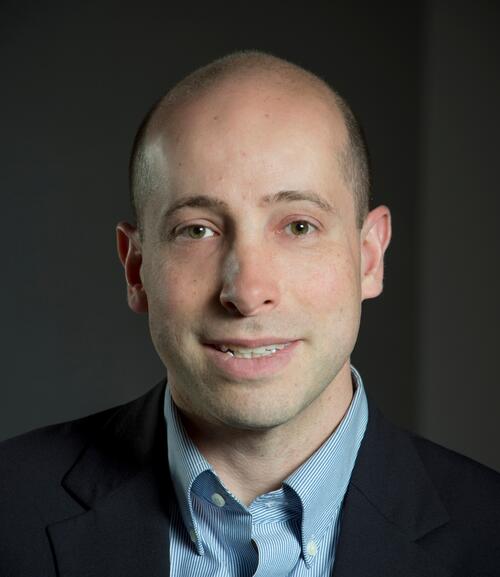
Whitney McIntosh's thesis, "France and the Internationalization of Security: A Conceptual History of Security During the Interwar Years (1919-1933)" will receive a Firestone Medal, given to the top 10% of all honors theses.

Image
whitney
About Whitney: Whitney McIntosh is from Melbourne, Australia. At Stanford, she studied International Relations and English before pursuing an interdisciplinary honors thesis through CDDRL. Her thesis explores the way that the conception of ‘security’ rose to prominence over the 20th century, gathering new referents and meanings with changes to the international order. The term ‘security’ came into common parlance following World War I, specifically through the experience of France who felt threatened by potential German aggression. This research reflects general interests in intellectual history, post-conflict reconstruction, and French culture and politics. Outside of her studies, Whitney volunteers with kids with special needs through Kids with Dreams and is the Managing Editor of Liminal Magazine. After Stanford, Whitney hopes to pursue graduate studies in Political Science, before a career in academia.


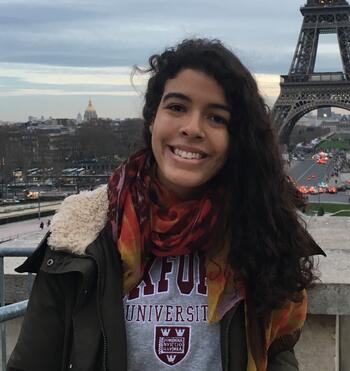
Sofia Filippa's thesis, "NGO Family Planning Programs and Indigenous Women's Motivations for Collective Action: A Case Study of Solola, Guatemala ," will receive the CDDRL Award for Outstanding Thesis.

Image
honor jpeg
About Sofia:  Sofia was born in Washington, D.C. and grew up in Buenos Aires, Argentina. As she prepares to graduate, she is looking for ways to get involved with organizations that work to advance women's reproductive rights in Latin America or in the U.S. Writing her thesis has definitely been the driving inspiration behind this decision, and so she is very thankful for having had this opportunity!

Whitney McIntosh CDDRL Honors Student
Sofia Filippa CDDRL Honors Student
Seminars
-

Image
Michael Chase

This event is co-sponsored by the Taiwan Democracy Project and the U.S.-Asia Security Initiative.


Abstract

Taiwan's defense policy faces several daunting challenges. President Tsai has inherited a complex security situation from her predecessors. The DPP's defense policy blue papers, published prior to Taiwan's January 2016 election, and Taiwan's newly published Quadrennial Defense Review (QDR) outline President Tsai's plans for Taiwan's defense policy. Some of the major defense policy issues Taiwan must face under President Tsai include uncertainties about US Asia policy and Trump's approach to handling relations with China, growing Chinese military capabilities and increasing Chinese air and naval activities around Taiwan, defense budget constraints, and problems associated with Taiwan's attempt to transition to an all-volunteer military. Taiwan's proposed responses as outlined in the 2017 QDR include a defense strategy of "Resolute defense, multi-domain deterrence" and strengthening the island's domestic defense industries, a project that has both defense policy and economic implications. This presentation will assess Taiwan's approach and consider the implications for US policy in Asia.


Bio

Michael S. Chase is a senior political scientist at RAND, a professor at the Pardee RAND Graduate School, and an adjunct professor in the China Studies and Strategic Studies Departments at Johns Hopkins University's School of Advanced International Studies (SAIS) in Washington, D.C.

A specialist in China and Asia-Pacific security issues, he was previously an associate professor at the U.S. Naval War College (NWC) in Newport, Rhode Island, where he served as director of the strategic deterrence group in the Warfare Analysis and Research Department and taught in the Strategy and Policy Department. Prior to joining the faculty at NWC, he was a research analyst at Defense Group Inc. and an associate international policy analyst at RAND. He is the author of the book Taiwan's Security Policy and numerous chapters and articles on China and Asia-Pacific security issues. His work has appeared in journals such as Asia Policy, Asian Security, China Brief, Survival, and the Journal of Strategic Studies.

His current research focuses on Chinese military modernization, China's nuclear policy and strategy and nuclear force modernization, Taiwan's defense policy, and Asia-Pacific security issues. Chase holds a Ph.D. in international affairs and M.A. in China Studies from SAIS and a B.A. in politics from Brandeis University. In addition, he studied Chinese at the Hopkins-Nanjing Center in Nanjing, China.

Goldman Room, 4th Floor

Encina Hall

616 Serra St.

Michael S. Chase Professor Pardee RAND Graduate School
Lectures
Authors
News Type
News
Date
Paragraphs

While the United States has no peers in conventional military power, it is especially vulnerable – as a free and democratic society – to cyber misinformation campaigns, a Stanford scholar says.

Herbert Lin, a senior research scholar for cyberpolicy and security at Stanford’s Center for International Security and Cooperation (CISAC), is the co-author of a new draft working paper that spells out the perilous risks facing democratic, wired-up countries around the world.

America’s adversaries are seeking “asymmetric” methods for social disruption, rather than direct military conflict, Lin said.

“Cyber warfare is one asymmetric counter to Western (and especially U.S.) military advantages that depend on the use of cyberspace,” wrote Lin and his co-author Jackie Kerr, a research fellow at the Lawrence Livermore National Laboratory.

This new type of cyber aggression is aimed at winning – and confusing – hearts and minds, the very control centers of human existence, Lin said.

As a result, “information/influence warfare and manipulation,” or IIWAM as Lin describes it, poses profound implications for Western democracies, even though much of it may not be illegal under international law. This approach is based on the deliberate use of information by one party on an adversary to confuse, mislead, and ultimately to influence the choices and decisions that the adversary makes.

A recent example in point would be the 2016 Russian hacking of the U.S. presidential election and the surge of so-called “fake news.”

Lin points out that while misinformation campaigns are not new, the technology to spread it far and wide globally is. He noted that the patron saint of distorting reality for war-like purposes is Sun Tzu, who wrote that, “The supreme art of war is to subdue the enemy without fighting.”

While traditional cyber attacks typically hit hard targets like computer systems, cyber “influence” campaigns are conducted over longer periods of time and rely on soft power – propaganda, persuasion, culture, social forces, confusion and deception, Lin said. 

Words and images

How does it work? Lin explains:

“Victory is achieved by A when A succeeds changing B’s political goals so that they are aligned with those of A.  But such alignment is not the result of B’s 'capitulation' or B’s loss of the ability to resist – on the contrary, B (the losing side) is openly willing.”  That is, such victory shares the focus on subverting the opponent’s will, though not on destroying his military forces.

The ammunition in these cyberspace battles are “words and images,” the kind that persuade, inform, mislead, and deceive so that the adversary cannot respond militarily. In the example of a “fake news” story, they often take place below legal thresholds of “use of force” or “armed attack,” and at least in an international legal sense, do not trigger a military response.

The target is the “adversary’s perceptions,” which reside in the “cognitive dimension of the information environment.” In other words, such cyber warfare focuses on “damaging knowledge, truth, and confidence, rather than physical or digital artifacts,” according to Lin. It is the “brain-space.”

Additionally, IIWAM injects fear, anger, anxiety, uncertainty, and doubt into the adversary’s decision making processes, he added.  Success is defined as altering such perceptions so the target makes choices favoring the aggressor.

“Sowing chaos and confusion is thus essentially operational preparation of the information battlefield – shaping actions that make the information environment more favorable for actual operations should they become necessary,” the researchers wrote.

These cyber manipulations often prey upon cognitive and emotional biases present in the psychological and mental makeup of human beings, Lin said. 

For example, media channels such as Fox News play to “confirmation bias” for individuals with a right-of-center orientation, and similarly for MSNBC for those with a left-of-center, orientation, he wrote. Confirmation bias is the tendency to interpret new evidence as confirmation of one's existing beliefs or theories.

Countering misinformation

“Naming and shaming” is probably ineffective against many nation states conducting cyber disinformation campaigns, Lin said. And the idea that a government like the U.S. can quickly respond to misinformation created in the private sphere is unlikely to be effective as well.

What, then, might work? Lin suggests new tactics are needed, as no existing approach seems adequate. For example, Facebook is deploying a new protocol for its users to flag questionable news sites.  Google has banned fake news web sites from using its online advertising service. Twitter, YouTube, and Facebook shut down accounts that they determine are promoting terrorist content.  He noted that a recent Facebook letter from CEO Mark Zuckerberg states that, “Our approach will focus less on banning misinformation and more on surfacing additional perspectives and information, including that fact checkers dispute an item's accuracy.”

But such measures are unlikely to stem the “rising tide of misinformation conveyed” through cyber warfare, Lin said, because they mostly require users to do additional mental work.  

Wired world riskier

Today’s Internet-driven Western world offers countless opportunities for cyber influence mischief, Lin wrote.

“Democracy has rested on an underlying foundation of an enlightened, informed populace engaging in rational debate and argument to sort out truth from fiction and half-truth in an attempt to produce the best possible policy and political outcomes,” Lin wrote.

Cyber manipulators have exploited an arguable gap between ideals and reality in democratic systems – “rendered it much more questionable” – through the tremendous reach and speed of misinformation, he said. Many countries cannot deal with the onslaught of such focused efforts. This serves to make the democratic process look weak and unstable in the eyes of its citizens. The same dynamic does not apply equally around the world.

“Cyber weapons pose a greater threat to nations that are more advanced users of information technology than to less-developed nations,” Lin wrote.

He said that less developed or authoritarian countries do not have much Internet infrastructure or that wield control over expression – North Korea is an example.

MEDIA CONTACTS

Herbert Lin, Center for International Security and Cooperation: (650) 497-8600, herbert.s.lin@stanford.edu

Clifton B. Parker, Center for International Security and Cooperation: (650) 725-0224, cbparker@stanford.edu



Hero Image
gettyimages 597931354
Stanford cybersecurity expert Herb Lin says a new brand of cyber warfare aims to destabilize Western democracies through misinformation and even changing the way people think about reality.
Getty Images/Vertigo3d
All News button
1
News Type
Commentary
Date
Paragraphs

Shorenstein Asia-Pacific Research Center (APARC) Director Gi-Wook Shin spoke with Yonhap News about the situation on the Korean Peninsula, following a visit to U.S. Pacific Command with a delegation of scholars from the Freeman Spogli Institute for International Studies.

While there, U.S. officials conveyed that the United States has the capability to strike North Korea should the president make that call.

U.S. officials said that North Korea had already moved into the “red zone,” and that the Trump administration has the view that it cannot miss a window of opportunity to stop the nuclear and missile program before it advances further.

Shin also said he believed that the Trump administration holds a view that the policy of “strategic patience” failed under the Obama administration, and that growing tensions on the Peninsula have compelled the Trump administration to consider – with greater plausibility – the option of a preemptive military strike.

Regional tensions have risen in the midst of impending political shifts in South Korea, where a new president will assume office following a snap election this May, and in China, where the Party Congress will meet to appoint new senior leadership of the Chinese Communist Party this fall.

Whoever becomes president in South Korea should place relations with North Korea at the top of the agenda and consider sending an envoy early on to meet its leader Kim Jong-un in-person, Shin said.

The Yonhap interview can be viewed in Korean, and a shorter version, in English. A related analysis piece is also available on MK News (in Korean).

Hero Image
north korea hydrogen bomb test
Korea Meteorological Administration (KMA) staff check a screen showing seismic waves from North Korea at the KMA center on Jan. 6, 2016, in Seoul, South Korea.
Chung Sung-Jun/Getty Images News
All News button
1
Authors
News Type
News
Date
Paragraphs

Anna Péczeli, a Stanton Nuclear Security Fellow at CISAC, wrote the following op-ed for the Bulletin of the Atomic Scientists:

What does the future hold for the US nuclear posture under President Trump? The last Nuclear Posture Review occurred in April 2009, when a 12-month review process was conducted to translate President Obama’s vision into a comprehensive nuclear strategy for the next five to 10 years. The review addressed several major areas: the role of nuclear forces, policy requirements, and objectives to maintain a safe, reliable, and credible deterrence posture; the relationship between deterrence policy, targeting strategy, and arms control objectives; the role of missile defense and conventional forces in determining the role and size of the nuclear arsenal; the size and composition of delivery capabilities; the nuclear weapons complex; and finally the necessary number of active and inactive nuclear weapons stockpiles to meet the requirements of national and military strategies.

Clearly, changes are afoot. On January 27, 2017, President Trump issued a presidential memorandum that mandated “a new Nuclear Posture Review to ensure that the United States nuclear deterrent is modern, robust, flexible, resilient, ready, and appropriately tailored to deter 21st-century threats and reassure our allies.” 

Looking ahead, the new administration should conduct this review through a broad, inter-agency process, involving the State and Energy departments, and allies as well. This approach offers several valuable benefits by broadening the focus from deterrence to non-proliferation, reassurance, and nuclear security.

The main role of the Nuclear Posture Review, or NPR, is to assess the threat environment, outline nuclear deterrence policy and strategy for the next 5 to 10 years, and align the country’s nuclear forces accordingly. Since the end of the Cold War, each administration has conducted its own NPR, but the process and the scope of the reviews were different in all three cases. 

The first NPR was conducted by the Clinton administration in 1994, and even though important senior positions have still not been appointed by the Trump White House, Trump's mandate suggests that their review might use it as a template for 2017. It was a bottom-up review, initiated by the Department of Defense, mostly focusing on a set of force structure decisions—such as the right size and composition of US nuclear forces, including the size of the reserve or so-called “ hedge” force. That review lasted for 10 months, and the Pentagon was in charge of the entire process, mainly focusing on deterrence requirements. 

In contrast, the 2001 NPR of the Bush administration was mandated by Congress, and it addressed a broader set of issues, including all components of the deterrence mix—nuclear and non-nuclear offensive strike systems, active and passive defenses, and the defense infrastructure. The Defense Department took the lead in this case just as before, but this time the Energy Department and the White House were also engaged in the process. As a result, the Bush NPR’s force structure requirements—how to size and sustain the country’s forces—were driven by four factors: assuring allies, deterring aggressors, dissuading competitors, and defeating enemies. 

The Obama administration’s 2010 NPR was also mandated by Congress, but the Defense Department was specifically tasked to conduct an inter-agency review. Besides the unprecedented level of such cooperation, a bipartisan Congressional commission also laid out a number of recommendations for the review process, many of which became part of the final text of the Obama review. Officials from State, Energy, and the Joint Chiefs of Staff were involved, as well as US allies who were regularly briefed during the different stages of the review. 

In the final phase of the 2010 NPR, the White House leadership made the decisions on the actual content of the nuclear posture. While the Clinton and the Bush reviews were largely conducted behind the scenes and only short briefing materials were published on the outcome, the Obama administration released an unprecedentedly long report on its nuclear posture review. 

These cases offer two models for a review process: It can be conducted by a small group of people in the most highly classified manner, or it can be a larger, relatively transparent inter-agency process. In the former approach, the final decisions are typically presented to the secretary of defense, the president, Congress, and allies. The problem is that this tends to be a one-sided approach, putting the main focus on deterrence and modernizations. 

Though it is effective and fast, the implementation of a Nuclear Posture Review requires all stakeholders to be on board with the new strategy. One of the most painful lessons of the Bush review was that because the White House and Defense failed to explain their new approach to the public, the military, and Congress, there was effectively a loss of leadership—which made procurement extremely difficult and caused major problems in the implementation of their strategy. 

On the other hand, involving all stakeholders and providing a balanced approach to nuclear strategy would support the goals of not just deterrence, but those of reassurance, non-proliferation, and nuclear security as well. Due to the involvement of the State Department, the 2010 NPR, for example, emphasized a number of policies which supported non-proliferation objectives and strengthened US negotiating positions at global arms control forums. One of these policies was the “negative security assurance,” which stated that the United States would not use or threaten to use nuclear weapons against non-nuclear weapon states that are party to the NPT and in compliance with their nuclear nonproliferation obligations. 

The other policy that was advocated by senior State Department officials was the so called sole-purpose posture—which means that nuclear weapons only serve to deter or respond to a nuclear attack, and they no longer play a role in non-nuclear scenarios. Although the sole purpose posture was eventually dropped and it was set only as a long-term objective, the Obama administration still reduced the role of nuclear weapons with the new negative security assurance, and it signaled its intent to continue this process with the promise of sole purpose. These steps supported US leadership at the 2010 Nuclear Non-Proliferation Treaty Review Conference and they contributed to the adoption of a consensual final document at the conference. 

This broader scope strengthens inter-agency cooperation, and ensures that all the departments that are affected by the NPR are on board with the strategy, which eases the implementation of the decisions. Besides, it also strengthens alliance relations by regular consultations. The Trump administration’s mandate did not include a specific timeline or format; consequently it will be mainly the responsibility of Defense Secretary James Mattis to decide on the framework. Though the presidential memorandum did not require an inter-agency process, it would be wise to conduct one.

Compared to 2010, the security environment has dramatically deteriorated: renewed tensions between NATO and Russia since the annexation of Crimea, China’s building of military bases in what had previously been international waters, significant military modernization efforts by both these states, and North Korea’s increasingly bellicose nuclear threats. All of these developments have created a serious deterrence and security challenge for the United States and its allies. Only a broader approach can address all relevant threats and create the necessary internal consensus for the funding and creation of a modern, robust, flexible, resilient, ready, and appropriately tailored nuclear arsenal.

Hero Image
gettyimages 632782096
CISAC fellow Anna Péczeli suggests that the Trump Administration conduct a broad Nuclear Posture Review that includes the State Department, which in the last such review in 2009 emphasized a number of policies that supported non-proliferation objectives and strengthened U.S. negotiating positions at global arms control forums.
Getty Images/Win McNamee
All News button
1
News Type
News
Date
Paragraphs

The U.S.-Asia Security Initiative at the Shorenstein Asia-Pacific Research Center has selected two Stanford students for its inaugural summer internships in partnership with The Asia Foundation and the Freeman Spogli Institute for International Studies. The two students, Kar Mun Nicole Wong and Vivan Malkani, will intern at The Asia Foundation offices in Jakarta, Indonesia, or Washington, D.C., and pursue separate projects focused on international policy.

In Jakarta, Wong will help document a case study focused on Indonesia’s marginalized communities, and in the District of Columbia, Malkani will research topics such as the role of civil society in development and U.S. policy on countering violent extremism.

Brief bios of the selected students are listed below:


Interning at the Jakarta office

Image
nicole wong
Kar Mun Nicole Wong is a junior at Stanford from Singapore, majoring in international relations with a minor in art history. Her departmental specializations are international history and culture, and East and South Asia. She is currently writing an honors thesis on the relationship between China and the Middle East and its effects on China’s Muslim populations.

Much of Wong’s Stanford career has been dedicated to pursuing her interests in social organization and increasing inclusion of marginalized communities. As a freshman, Wong served as a research assistant for the Rural Education Action Program, a research organization dedicated to discovering the causes of, and solutions to, poverty in rural China. In 2016, Wong was also selected to serve as the Stanford delegate to the Vienna International Christian-Islamic Summer University, a program dedicated to religious inclusion through discourse between Christian and Muslim perspectives of students and academics from all over the world.

Through her internship with The Asia Foundation in Jakarta, Wong hopes to not only gain a better understanding of Indonesia and Southeast Asia as a whole, but also to continue her passion for social inclusion through her work with the Peduli program.


Interning at the Washington, D.C., office

Image
vivan malkani

Vivan Malkani is an undergraduate student at Stanford from the class of 2019. He is currently a sophomore, majoring in political science with a focus on political philosophy and data science. His other academic interests include earth systems, computer science and Mandarin Chinese.

Born and raised in Mumbai, India, Malkani attended the Cathedral and John Connon School for his high school education. He came to Stanford in 2015, undertaking the Structured Liberal Education program, a yearlong course of study that examines the evolution of Western philosophy, religion and political structures. This experience prompted him to pursue coursework in history and political science, including Chinese history and politics by learning Mandarin Chinese.

In the summer of 2016, Malkani was a research assistant at the Stanford Political Science Summer Research College, working for Professor Lisa Blaydes on her project on Middle Eastern state development. The project examined the role of different economic institutions in the political development of 13th-15th century Mamluk Egypt, examining cadastral records and building geospatial visualizations of the data.

Outside of the classroom, Malkani is an active member of Stanford in Government. He is also a writer for the Stanford Political Journal and member of the Ethics Bowl Society.

Hero Image
driving in indonesia
Tricolor motion blur of a rickshaw in Jakarta, Indonesia.
Getty Images
All News button
1
News Type
Commentary
Date
Paragraphs

Uncertainty about U.S. intentions in Northeast Asia has increased fear that events could spin out of control in the region due to American disengagement. That engagement cannot be taken for granted, Shorenstein Fellow Thomas Fingar writes on the Stanford University Press blog, and it remains to be seen just how well regional political leaders adjust to the Trump administration’s evolving foreign policy.

The blog post highlights themes from his book Uneasy Partnerships: China’s Engagement with Japan, the Koreas, and Russia in the Era of Reform (Stanford, April 2017).

Hero Image
tillerson beijing
U.S. Secretary of State Rex Tillerson meets with Chinese Foreign Minister Wang Yi during a bilateral meeting in Beijing, China, on March 18, 2017.
Flickr/U.S. Department of State
All News button
1
-

South Koreans will elect a new president on May 9 after months of political turmoil that led to the impeachment of their most recent president, Park Geun-hye. This panel will discuss Korea's politics and economics, and foreign policy under the new administration.

Panelists:

Daniel Sneider, Associate Director for Research, Shorenstein Asia-Pacific Center, Stanford University

Yong Suk Lee, Center Fellow, FSI; Deputy Director of the Korea Program, Shorenstein Asia-Pacific Research Center, Stanford University

Gi-Wook Shin, Professor of Sociology; Director, Shorenstein Asia-Pacific Research Center, Stanford University

Kathleen Stephens, William J. Perry Fellow, Shorenstein Asia-Pacific Research Center, Stanford University; former U.S. Ambassador to South Korea


Paragraphs

Two events - the U.S. airstrike on an airbase in Syria following the regime's chemical weapons attack and the leaked reports about tensions between White House staff - shifted the agenda of the summit between U.S. President Donald Trump and Chinese President Xi Jinping, and sidelined, at least for now, talk of a trade war between China and the United States.

All Publications button
1
Publication Type
Commentary
Publication Date
Journal Publisher
Toyo Keizai Online (Tokyo Business Today)
Authors
Daniel C. Sneider
News Type
News
Date
Paragraphs

This talk was given during the Stanford's "Disruption: Challenges of a New Era" conference organized by Fundacion RAP,  in March 2017. Beatriz Magaloni, a Senior Fellow at the Freeman Spogli Institute for International Studies, presents results of her work on social order and violence in Latin America, with a focus on her research in Brazil and Mexico.


Production: Roger Winkelman, Freeman Spogli Institute for International Studies, Stanford. 


Hero Image
magaloni
All News button
1
Subscribe to International Relations