International Relations

FSI researchers strive to understand how countries relate to one another, and what policies are needed to achieve global stability and prosperity. International relations experts focus on the challenging U.S.-Russian relationship, the alliance between the U.S. and Japan and the limitations of America’s counterinsurgency strategy in Afghanistan.

Foreign aid is also examined by scholars trying to understand whether money earmarked for health improvements reaches those who need it most. And FSI’s Walter H. Shorenstein Asia-Pacific Research Center has published on the need for strong South Korean leadership in dealing with its northern neighbor.

FSI researchers also look at the citizens who drive international relations, studying the effects of migration and how borders shape people’s lives. Meanwhile FSI students are very much involved in this area, working with the United Nations in Ethiopia to rethink refugee communities.

Trade is also a key component of international relations, with FSI approaching the topic from a slew of angles and states. The economy of trade is rife for study, with an APARC event on the implications of more open trade policies in Japan, and FSI researchers making sense of who would benefit from a free trade zone between the European Union and the United States.

News Type
Commentary
Date
Paragraphs

Moon Jae-in was elected South Korea’s president on a pledge to address domestic inequality and to renew dialogue with North Korea. In the midst of Tuesday’s vote, Shorenstein APARC scholars offered insight to local and international media outlets.

Gi-Wook Shin, professor of sociology and director of Shorenstein APARC’s Korea Program, provided comment to The Economist about the challenges facing an administration led by Moon, a progressive candidate who is assuming power when an active conservative camp remains. He is also cited in an article in the New York Times focused on Moon's economic agenda and featured in a video from a Korea Society event that examines next steps for the new president.

Rennie Moon, the Koret Fellow in the Korea Program, co-authored an analysis piece on the East Asia Forum with Shin analyzing recent polls and the Moon administration's economic and security agenda.

Daniel Sneider, associate director for research at Shorenstein APARC, wrote an analysis piece for The National Bureau of Asian Research. In the piece, he explores how the election could impact the U.S.-Republic of Korea alliance amid escalating tensions on the Korean Peninsula.

Kathleen Stephens, the William J. Perry Fellow at Shorenstein APARC, appeared in a live interview on CNBC. In the taping, she discusses the significance of the vote and the new administration’s priorities as Moon swiftly takes office following the removal of his predecessor.

Hero Image
moon election
South Korean presidential candidate Moon Jae-in of the Democratic Party of Korea, is greeted by his supporters during a presidential election campaign on May 4, 2017, in Goyang, South Korea.
Chung Sung-Jun/Getty Images
All News button
1

Encina Hall
616 Jane Stanford Way
Stanford, CA 94305-6055

(650) 721-5345 (650) 724-2996
0
eileen_head_shot_2024.jpeg

Eileen Donahoe is the co-founder and an affiliated scholar at the Global Digital Policy Incubator (GDPI) at Stanford University's Center on Democracy, Development and the Rule of Law. (Previously, she served as GDPI’s executive director.) GDPI is a global multi-stakeholder collaboration hub for the development of policies that reinforce human rights and democratic values in a digitized society. Current research priorities include: international trends in AI governance, technical methods for aligning AI with democratic norms and standards, evolution of digital authoritarian policies and practices, and emerging blockchain and AI-enabled tools to support democracy.

Eileen served in the Biden administration as US Special Envoy for Digital Freedom at the Department of State. She also served in the Obama administration as the first US Ambassador to the UN Human Rights Council in Geneva during a period of significant institutional reform and innovation. After the Obama administration, she joined Human Rights Watch as Director of Global Affairs, where she represented the organization worldwide on human rights foreign policy, with special emphasis on digital rights, cybersecurity, and internet governance. Earlier in her career, she was a technology litigator at Fenwick & West in Silicon Valley.

Eileen serves as Vice Chair of the National Endowment for Democracy Board of Directors; on the Carnegie Endowment for International Peace Board of Directors; and on the Dartmouth College Board of Trustees. She is a member of the Global Network Initiative (GNI), the World Economic Forum AI Governance Alliance, and the Resilient Governance and Regulation working group. Previously, she served on the Transatlantic Commission on Election Integrity, the University of Essex Advisory Board on Human Rights, Big Data and Technology, the NDI Designing for Democracy Advisory Board, and the Freedom Online Coalition Advisory Network. Degrees: BA, Dartmouth; J.D., Stanford Law School; MA East Asian Studies, Stanford; M.T.S., Harvard; and Ph.D., Ethics & Social Theory, GTU Cooperative Program with UC Berkeley. She is a member of the Council on Foreign Relations.

CDDRL Affiliated Scholar
Date Label
-

- This event is jointly sponsored by the Center for International Security and Cooperation and the Walter H. Shorenstein Asia-Pacific Research Center -

As tensions rise between the U.S. and North Korea, a panel of Stanford experts will convene in Encina Hall on Tuesday, May 30 to assess the issues involved. Panelists will include:

  • Kathleen Stephens, former U.S. ambassador to the Republic of Korea, William J. Perry Fellow in the Korea Program at the Walter H. Shorenstein Asia-Pacific Research Center (APARC). She will talk about the South Korean leadership’s thinking and position on North Korea in the context of its U.S. relationship.
  • James Person, director of the Hyundai Motor-Korea Foundation, Center for Korean History and Public Policy. He offers a perspective on the North Korean leadership in the current crisis, including a broader historical context, as well as thoughts on the China-North Korea relationship.
  • Katharina Zellweger, visiting scholar at the Center for International Security and Cooperation. She will discuss the impact of the current crisis on the North Korean people., and how sanctions and changes in Chinese trade are affecting them.
  • Gi-Wook Shin, director of the Shorenstein Asia-Pacific Research Center, director of the Korea Program, senior Fellow at the Freeman Spogli Institute for International Studies (FSI) and professor of sociology, will moderate the session.
Kathleen Stephens APARC
James Person Wilson Center
CISAC
Gi-Wook Shin APARC, Korea Program
Panel Discussions
News Type
News
Date
Paragraphs

Fellows will arrive at Stanford in July to begin the three-week academic training program taught by Stanford faculty, policymakers and thought-leaders in the technology sector.


Image
collagewebsite2


Stanford's Center on Democracy, Development, and the Rule of Law is proud to announce the 2017 class of Draper Hills Summer Fellows, which is composed of 28 leaders – selected from among hundreds of applications – advancing democratic development in some of the most challenging corners of the world.

In Bahrain, Burma, Rwanda and Sudan our fellows are working on peace-building initiatives to create more tolerant and inclusive societies. Judges and lawyers are holding government and criminals accountable and reforming the rule of law in Argentina, Guatemala and the Philippines. Gender rights activists are creating new tools and programs to protect the safety and freedom of women and girls in India, Kuwait and Papua New Guinea.

In Egypt, Morocco, Pakistan, Serbia and Ukraine, our fellows are serving inside the government as members of Parliament and senior civil servants to advance reform and new policy agendas. Business leaders in Jordan and India launched initiatives to support more inclusive economic growth and social development.

CDDRL is excited to launch another powerful network of leaders determined to advance change in their communities. They will emerge with new tools, frameworks and connections to enhance their work and deepen their impact on democratic reform.

The 2017 class will mark the 13th cohort of the Draper Hills Summer Fellows Program and the fellows will join the Omidyar Network Leadership Forum, an alumni community of over 300 alumni in 75 countries worldwide.

Hero Image
collagewebsite2
All News button
1
Authors
News Type
News
Date
Paragraphs

This is the eighth and last in a series of interviews by the Korea Times on North Korea. CISAC's Siegfried Hecker is featured in this story below by Kim Jae-kyoung:


NK estimated to have ability to produce 7 nuclear bombs a year

By Kim Jae-kyoung

A world-renowned nuclear scientist said that U.S. President Donald Trump must to talk to North Korean leader Kim Jong-un by sending an envoy to Pyongyang to avoid a nuclear catastrophe.

"I believe the first talks should be bilateral and informal by a presidential envoy talking directly to Kim Jong-un," said Siegfried S. Hecker, a senior fellow at the Center for International Security and Cooperation (CISAC) at Stanford University, in an interview.

"I believe both Seoul and Beijing would support such talks. These talks may then also help to build the foundation for renewed multilateral negotiations, which, first and foremost must involve South Korea, as well as China," he added.

Hecker, the co-director of CISAC from 2007 to 2012, has visited North Korea several times to assess the plutonium program at the Yongbyon Nuclear Scientific Research Center since 2004.

He stressed that it is most important to convey the message that nuclear weapons cannot be used under any circumstances.

"There is no such thing as a limited nuclear war. Any explosion of a nuclear device on the Korean Peninsula is a catastrophe of indescribable proportions," he said.

The internationally recognized expert in plutonium science, global threat reduction and nuclear security said that the Trump administration and the new South Korean government face the challenge of avoiding a nuclear detonation on the Korean Peninsula.

He believes that such an incident could result from a miscalculation or overconfidence by the Kim Jong-un regime as well as an accident with the nuclear weapons in the North.

"A conventional confrontation may turn nuclear with an inexperienced leader in charge," he said. "Or, in the case of instability in the North, who will control the nuclear weapons? These are serious concerns that must be addressed now," he added.

Hecker, who served as the director of the Los Alamos weapons laboratory in New Mexico, the birthplace of the atomic bomb, from 1986 to 1997, estimated that North Korea, although he is uncertain, may have sufficient material for 20 to 25 nuclear weapons.

NK's nuclear capabilities evolving 

He explained that the size of its nuclear arsenal depends primarily on how much plutonium and highly enriched uranium North Korea has produced.

"The sophistication of the arsenal depends primarily on nuclear testing. With five nuclear tests conducted over 10 years, North Korea is likely able to produce nuclear devices small enough to fit on missiles that can reach all of South Korea and Japan," he said.

He also estimated that the totalitarian country can produce sufficient plutonium and highly enriched uranium for six to seven bombs per year.

"However, all estimates are uncertain because we know little about the North's capacity to produce highly enriched uranium since it is not possible to monitor such facilities from afar," he said.

In his view, the world does not have to accept the reclusive country as a "nuclear weapons state," but it must be treated as a country with a nuclear arsenal.

"Whether we like it or not, North Korea is a country with nuclear weapons," he said. "The final aim is to have a denuclearized Korean Peninsula, but that will take time. It will have to be done in sequence of halt, roll back and then eliminate."

However, Hecker dismissed North Korea's claim that it has the capability to fire an intercontinental ballistic missile (ICBM) all the way to the U.S. mainland.

"I do not believe North Korea is capable of reaching the U.S. mainland with a nuclear-tipped missile today. It is working on developing such a capability, but it will likely take another five years or so," he said.

Hecker explained that it has not demonstrated all the aspects of necessary rocket technology or the ability to make a nuclear warhead small enough to be able to survive atmospheric reentry.

"Besides, to actually launch a nuclear warhead on an ICBM you must have complete confidence that it will not blow up on the launch pad," he added. "They cannot have such confidence based on their missile launch history."

Hero Image
gettyimages 503569580
In 2016, South Korean officials check seismic waves from North Korea to confirm a hydrogen bomb test in that country the prior year.
Getty Images
All News button
1
-

Speaker(s) Bio:

Image
zandanshatar
Zandanshatar Gombojav, Member of Parliament, having recently served as the General Secretary of the Mongolian People's Party, Mongolia's largest party by membership. From 2004 until 2012, he was a Member of the Parliament of Mongolia, and from 2009 to 2012, he was Mongolia's Minister of Foreign Affairs and Trade. Before his appointment as Foreign Minister, during which he had many foreign policy accomplishments from renewing the country's foreign policy concept to adopting new trade agreements with several partners, he had a successful career in Mongolia's banking sector, working at the Agricultural Bank, Khan Bank, and the Central Bank of Mongolia. He also served as the Deputy Minister of Agriculture, before being elected to Parliament. After graduating from the State Institute of Finance in Russia, he began his career as a Lecturer on Economics and Finance at Mongolia's Institute of Commerce and Industry. His current research interest focuses on issues related to the democratic and political development of Mongolia given its geostrategic situation. At Stanford, he will be working on a larger research project encompassing regional democratic and political development from Mongolia's unique perspective. He has published extensively on various banking issues and also on topics regarding the international relations process in refereed journals and different conference proceedings. He has been a strong supporter of the reform process, being actively involved in the organisation of youth development.


Image
fishkin 2
James S. Fishkin holds the Janet M. Peck Chair in International Communication at Stanford University, where he is Professor of Communication and (by courtesy) Professor of Political Science. He is also Director of Stanford’s Center for Deliberative Democracy. He is the author of Democracy and Deliberation (Yale 1991), When the People Speak: Deliberative Democracy and Public Consultation (Oxford 2009) and other books. He is a Guggenheim Fellow, a Fellow of the American Academy of Arts and Sciences, and a fellow at the Center for Advanced Study in the Behavioral Sciences, Stanford, California.


Co-sponsors:

Center for Deliberative Democracy

Stanford Global Studies


Member of Parliament

Encina Hall, E102
616 Jane Stanford Way
Stanford, CA 94305

(650) 723-4611
0
Janet M. Peck Professor of International Communication
Professor of Political Science (by courtesy)
Senior Fellow, Freeman Spogli Institute for International Studies
fishkin_2.jpg PhD

James S. Fishkin holds the Janet M. Peck Chair in International Communication at Stanford University, where he is a Professor of Communication and Professor of Political Science (by courtesy). He is also Director of the Deliberative Democracy Lab at CDDRL (formerly the Center for Deliberative Democracy).

He is the author of a number of books, including Democracy and Deliberation: New Directions for Democratic Reform (Yale University Press, 1991), The Dialogue of Justice (Yale University Press, 1992 ), The Voice of the People: Public Opinion and Democracy (Yale University Press 1995). With Bruce Ackerman, he is the co-author of Deliberation Day (Yale University Press, 2004). And more recently, When the People Speak: Deliberative Democracy and Public Consultation (Oxford University Press, 2009 and Democracy When the People Are Thinking (Oxford University Press, 2018).

He is best known for developing Deliberative Polling® — a practice of public consultation that employs random samples of the citizenry to explore how opinions would change if they were more informed. Professor Fishkin and his collaborators have conducted Deliberative Polls in the US, Britain, Australia, Denmark, Bulgaria, China, Greece, Mongolia, Uganda, Tanzania, Brazil,  and other countries.

Fishkin has been a Visiting Fellow Commoner at Trinity College, Cambridge, as well as a Fellow of the Center for Advanced Study in the Behavioral Sciences at Stanford, a Guggenheim Fellow, and a Fellow of the American Academy of Arts and Sciences.

Fishkin received his B.A. from Yale in 1970 and holds a Ph.D. in Political Science from Yale as well as a second Ph.D. in Philosophy from Cambridge.

Director, Deliberative Democracy Lab
Professor, Political Science
Seminars
Paragraphs

President-elect Moon has gained office riding a wave of demand for social justice and a reform of democratic governance in South Korea. These are the issues that are certain to consume his attention and that of voters. U.S. policymakers need to be mindful that the domestic factors that led to this shift in power in South Korea will remain paramount. That said, the return to power of South Korea’s progressives augurs a significant shift in several areas of policy that will have a clear impact on alliance relations with the United States.

All Publications button
1
Publication Type
Commentary
Publication Date
Journal Publisher
The National Bureau of Asian Research
Authors
Daniel C. Sneider
News Type
Commentary
Date
Paragraphs

Northeast Asia relations are increasingly under strain as South Korea and China await shifts in political leadership and the threat of a sixth nuclear test by North Korea looms large. Scholars from the Shorenstein Asia-Pacific Research Center (APARC) have offered comment and analysis to media outlets about the evolving environment.

Gi-Wook Shin, director of Shorenstein APARC’s Korea Program, recognized in an interview with the Christian Science Monitor that, while threats posed by North Korea’s nuclear and missile program aren’t new, it is best practice to always be prepared for the possibility of conflict.

“I’m someone who believes that you have to get ready for the worst-case scenario. If something does happen, the consequences will be huge,” said Shin, who recalled the air-raid drills of his youth in the Seoul metropolitan area, which is centered 35 miles from the border of North Korea.

Shin also spoke with Yonhap News about positions held by the Trump administration, which, he said, includes the view that the policy of “strategic patience” has failed and that tensions in Northeast Asia have led the administration to consider – with greater plausibility – the option of a preemptive military strike.

Addressing China’s relationship with North Korea, Shorenstein APARC Associate Director for Research Daniel Sneider wrote an analysis piece for Tokyo Business Today. He argued that, despite President Trump’s tense rhetoric, U.S. policy toward North Korea could so far be described as “‘let China do it.’”

“The ‘let China let do it’ policy is hardly new,” Sneider wrote in the piece, available in English and Japanese.

“Why does the Trump administration believe this will work now? In part, the answer is the same as under the two previous administration – there are no better options available.”

Last month, Kathleen Stephens, the William J. Perry Fellow at Shorenstein APARC, spoke at length about North Korea policy on PBS NewsHour following Secretary of State Rex Tillerson’s remarks in Seoul, where he acknowledged, “all options are on the table.”

Asked about the significance of Tillerson’s remarks, Stephens said his speech would be "closely listened to and heard throughout the region, as well as [in the United States]."

“One thing that did strike me about Secretary Tillerson’s remarks was that he was quite specific and categorical in saying now is not the time for talks,” Stephens said in the interview. “I actually would have liked to have seen him keep the door a little bit ajar on that, because I think, when you do have a new administration in Washington…that's a good argument for trying to climb that mountain one more time and seeing what’s possible diplomatically.”

Hero Image
us south korea bilateral exercise
The USS Wayne E. Meyer underway alongside the Republic of Korea's Wang Geon during a bilateral exercise.
U.S. Navy / Flickr
All News button
1
-

Image

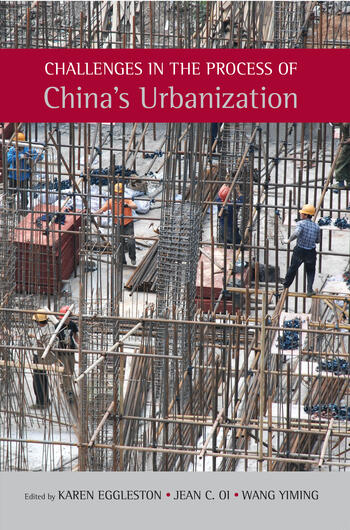
The same institutions that enabled China’s massive urbanization and spurred its economic growth now require further reform and innovation.

To address the issues facing the next phase of the nation’s transformation, the National New Urbanization Plan (2014–20) set ambitious targets for sustainable, human-centered, and environmentally friendly urbanization. This volume explores the key institutional and governance challenges China will face in reaching those goals. Its policy-focused contributions from leading social scientists in the United States and China explore aspects of urbanization ranging from migration and labor markets to agglomeration economies, land finance, affordable housing, and education policy. Subjects covered in the eleven chapters include:


    * Institutional problems leading to fiscal pressures on local governments and unequal provision of social    services to migrant families   

   * The history of land financing and threats to its sustainability

    * The difficulty of sorting out property rights in rural China

    * How administrative redistricting has allowed the urbanization of geographical administrative places to     outpace the urbanization of populations within those areas

    * How the hukou system may not be the sole, or even primary, mechanism restricting migrants from      public goods, such as their childrens’ education

    * Whether the nation’s food security is threatened by its ongoing urbanization

    * The current state of the provision of low-income housing, and future challenges

Professor Jean Oi is Director of the China Program, William Haas Professor of Chinese Politics, Stanford University; Lee Shau Kee Director of the Stanford Center, Peking University. Her work focuses on comparative politics, with special expertise on political economy and the process of reform in transitional systems.  Oi has written extensively on China's rural politics and political economy. Her State and Peasant in Contemporary China (University of California Press, 1989) examined the core of rural politics in the Mao period—the struggle over the distribution of the grain harvest—and the clientelistic politics that ensued. Her Rural China Takes Off (University of California Press, 1999) examined the property rights necessary for development and showed how "local state corporatism" facilitated rapid growth of rural industry.  Recent publications include Growing Pains: Tensions and Opportunity in China's Transformation (Brookings Institution Press, 2010), co-edited with Scott Rozelle and Xueguang Zhou; and “Development Strategies and Poverty Reduction in China,” in Yusuf Bangura, ed., The Developmental Road to Poverty Reduction, (2015); and “Rural Development,” in David S. Goodman, ed., Handbook of the Politics of China (Edward Elgar Publishing, 2015).

Professor Karen Eggleston is Director of the Asia Health Policy Program; Deputy Director, Shorenstein Asia-Pacific Research Center. She joined the Walter H. Shorenstein Asia-Pacific Research Center (APARC) in the summer of 2007. She is also a fellow at Stanford's Center for Health Policy/Primary Care and Outcomes Research (CHP/PCOR), and a Faculty Research Fellow of the National Bureau of Economic Research (NBER). Her research focuses on comparative healthcare systems and health reform in Asia, especially China; government and market roles in the health sector; payment incentives; healthcare productivity; and the economics of the demographic transition. Eggleston teaches through Stanford's East Asian studies program and is also affiliated with Stanford's public policy program.

Professor Klaus Desmet is Altshuler Centennial Interdisciplinary Professor at Southern Methodist University; Research Fellow at the Centre for Economic Policy Research. He holds an MSc in Business and Engineering from the Université Catholique de Louvain and a Ph.D. in Economics from Stanford University. He previously was professor at Universidad Carlos III de Madrid and has held visiting positions at a number of institutions, including the University of Illinois, Stanford University and the Bank of Spain. His research focuses on regional economics, international trade, economic growth and diversity.

Books will be available for sale. Cash or check only.


Department of Political Science
Stanford University
616 Serra Street
Stanford, CA 94305-26044

(650) 723-2843 (650) 725-9401
0
Senior Fellow at the Freeman Spogli Institute for International Studies
William Haas Professor in Chinese Politics
jean_oi_headshot.jpg PhD

Jean C. Oi is the William Haas Professor of Chinese Politics in the department of political science and a Senior Fellow of the Freeman Spogli Institute for International Studies at Stanford University. She is the founding director of the Stanford China Program at the Walter H. Shorenstein Asia-Pacific Research Center. Professor Oi is also the founding Lee Shau Kee Director of the Stanford Center at Peking University.

A PhD in political science from the University of Michigan, Oi first taught at Lehigh University and later in the Department of Government at Harvard University before joining the Stanford faculty in 1997.

Her work focuses on comparative politics, with special expertise on political economy and the process of reform in transitional systems. Oi has written extensively on China's rural politics and political economy. Her State and Peasant in Contemporary China (University of California Press, 1989) examined the core of rural politics in the Mao period—the struggle over the distribution of the grain harvest—and the clientelistic politics that ensued. Her Rural China Takes Off (University of California Press, 1999 and Choice Outstanding Academic Title, 1999) examines the property rights necessary for growth and coined the term “local state corporatism" to describe local-state-led growth that has been the cornerstone of China’s development model. 

She has edited a number of conference volumes on key issues in China’s reforms. The first was Growing Pains: Tensions and Opportunity in China's Transformation (Brookings Institution Press, 2010), co-edited with Scott Rozelle and Xueguang Zhou, which examined the earlier phases of reform. Most recently, she co-edited with Thomas Fingar, Fateful Decisions: Choices That Will Shape China’s Future (Stanford University Press, 2020). The volume examines the difficult choices and tradeoffs that China leaders face after forty years of reform, when the economy has slowed and the population is aging, and with increasing demand for and costs of education, healthcare, elder care, and other social benefits.

Oi also works on the politics of corporate restructuring, with a focus on the incentives and institutional constraints of state actors. She has published three edited volumes related to this topic: one on China, Going Private in China: The Politics of Corporate Restructuring and System Reform (Shorenstein APARC, 2011); one on Korea, co-edited with Byung-Kook Kim and Eun Mee Kim, Adapt, Fragment, Transform: Corporate Restructuring and System Reform in Korea (Shorenstein APARC, 2012); and a third on Japan, Syncretism: The Politics of Economic Restructuring and System Reform in Japan, co-edited with Kenji E. Kushida and Kay Shimizu (Brookings Institution, 2013). Other more recent articles include “Creating Corporate Groups to Strengthen China’s State-Owned Enterprises,” with Zhang Xiaowen, in Kjeld Erik Brodsgard, ed., Globalization and Public Sector Reform in China (Routledge, 2014) and "Unpacking the Patterns of Corporate Restructuring during China's SOE Reform," co-authored with Xiaojun Li, Economic and Political Studies, Vol. 6, No. 2, 2018.

Oi continues her research on rural finance and local governance in China. She has done collaborative work with scholars in China, including conducting fieldwork on the organization of rural communities, the provision of public goods, and the fiscal pressures of rapid urbanization. This research is brought together in a co-edited volume, Challenges in the Process of China’s Urbanization (Brookings Institution Shorenstein APARC Series, 2017), with Karen Eggleston and Wang Yiming. Included in this volume is her “Institutional Challenges in Providing Affordable Housing in the People’s Republic of China,” with Niny Khor. 

As a member of the research team who began studying in the late 1980s one county in China, Oi with Steven Goldstein provides a window on China’s dramatic change over the decades in Zouping Revisited: Adaptive Governance in a Chinese County (Stanford University Press, 2018). This volume assesses the later phases of reform and asks how this rural county has been able to manage governance with seemingly unchanged political institutions when the economy and society have transformed beyond recognition. The findings reveal a process of adaptive governance and institutional agility in the way that institutions actually operate, even as their outward appearances remain seemingly unchanged.

Selected Multimedia

Director of the China Program
Lee Shau Kee Director of the Stanford Center at Peking University
Faculty Affiliate at the Stanford Center on China's Economy and Institutions
Date Label
<i>Stanford University</i>

Shorenstein APARC
Stanford University
Encina Hall E301
Stanford, CA 94305-6055

(650) 723-9072 (650) 723-6530
0
Senior Fellow at the Freeman Spogli Institute for International Studies
Center Fellow at the Center for Health Policy and the Center for Primary Care and Outcomes Research
Faculty Research Fellow of the National Bureau of Economic Research
Faculty Affiliate at the Stanford Center on China's Economy and Institutions
karen-0320_cropprd.jpg PhD

Karen Eggleston is a Senior Fellow at the Freeman Spogli Institute for International Studies (FSI) at Stanford University and Director of the Stanford Asia Health Policy Program at the Shorenstein Asia-Pacific Research Center at FSI. She is also a Fellow with the Center for Innovation in Global Health at Stanford University School of Medicine, and a Faculty Research Fellow of the National Bureau of Economic Research (NBER). Her research focuses on government and market roles in the health sector and Asia health policy, especially in China, India, Japan, and Korea; healthcare productivity; and the economics of the demographic transition.

Eggleston earned her PhD in public policy from Harvard University and has MA degrees in economics and Asian studies from the University of Hawaii and a BA in Asian studies summa cum laude (valedictorian) from Dartmouth College. Eggleston studied in China for two years and was a Fulbright scholar in Korea. She served on the Strategic Technical Advisory Committee for the Asia Pacific Observatory on Health Systems and Policies and has been a consultant to the World Bank, the Asian Development Bank, and the WHO regarding health system reforms in the PRC.

Director of the Asia Health Policy Program, Shorenstein Asia-Pacific Research Center
Stanford Health Policy Associate
Faculty Fellow at the Stanford Center at Peking University, June and August of 2016
CV
Date Label
<i>Stanford University</i>
Klaus Desmet <i>Southern Methodist University</i>
Seminars
Subscribe to International Relations