International Relations

FSI researchers strive to understand how countries relate to one another, and what policies are needed to achieve global stability and prosperity. International relations experts focus on the challenging U.S.-Russian relationship, the alliance between the U.S. and Japan and the limitations of America’s counterinsurgency strategy in Afghanistan.

Foreign aid is also examined by scholars trying to understand whether money earmarked for health improvements reaches those who need it most. And FSI’s Walter H. Shorenstein Asia-Pacific Research Center has published on the need for strong South Korean leadership in dealing with its northern neighbor.

FSI researchers also look at the citizens who drive international relations, studying the effects of migration and how borders shape people’s lives. Meanwhile FSI students are very much involved in this area, working with the United Nations in Ethiopia to rethink refugee communities.

Trade is also a key component of international relations, with FSI approaching the topic from a slew of angles and states. The economy of trade is rife for study, with an APARC event on the implications of more open trade policies in Japan, and FSI researchers making sense of who would benefit from a free trade zone between the European Union and the United States.

News Type
News
Date
Paragraphs

Former U.S. ambassador to South Korea Kathleen Stephens spoke on "Bloomberg Daybreak: Asia" about President Trump's Asia trip on the eve of his arrival in China.

Stephens noted that in canceling a trip to the DMZ--more or less a presidential tradition on visits to Korea--Trump did the "right thing" by instead focusing on the "must-do" on this first trip of reassuring South Koreans on the U.S. commitment to its alliance with the Republic of Korea.

Both North Korean and Trump administration rhetoric seems to have cooled off in recent days; Stephens noted that Trump seems to have "gotten the message" about the importance of the relationship with South Korea and the level of nervousness in the country. 

Ambassador Stephens commented on the feasibility of beginning talks with North Korea and what additional pressure might be required to get the North to the table. She noted that if denuclearizing were a precondition for talks, they wouldn't happen.

She speculated on what President Trump might ask the Chinese to do to up the pressure on North Korea, for example, cutting off oil exports. She also suggested that when it comes to talking about trade, the emphasis might be on announcing deals and Trump might act as "salesman-in-chief."

The full interview is available on Bloomberg TV.

All News button
1
Authors
Beth Duff-Brown
News Type
News
Date
Paragraphs


Paul Wise watched as children ran around a playground attached to a health clinic at a displaced persons camp on the outskirts of Mosul — the northern city in Iraq once controlled by the Islamic State but now back in the hands of the Iraqi government.

The children had survived the Battle of Mosul, which had fallen to ISIS in 2014 but was retaken by the government forces and allied militias during a nine-month military campaign that ended in July. Many of the children suffer from physical and mental wounds and Wise wondered how they would recover with so little medical infrastructure.

Wise was part of a small delegation of physician-academics asked to evaluate a World Health Organization-led system to treat civilians injured in the Mosul fighting. Wise and his colleagues recently slipped into Mosul to visit field hospitals, review health care on the ground and determine whether there is a better way to distribute medical aid during armed conflict.

The visit left the Stanford Medicine professor of pediatrics and senior fellow at the Freeman Spogli Institute for International Studies with questions about health care, humanitarian ethics, and conduct of war: Are there better ways to deliver emergency medical care during the height of battle? How do relief workers maintain neutrality when embedded with government security forces? Has the system of financing humanitarian interventions — one that was essentially created during the Cold War — become dangerously outdated?

Answering these questions is the mission of a new health-and-security initiative at Stanford led by Wise, a core faculty member at Stanford Health Policy who has spent 40 years working to improve the health of children impacted by conflict. Much of his work has been in Guatemala through his Children in Crisis project, the first university-based program to address the needs of children in areas of unstable governance and civil war.

“In talking with the groups that are running these humanitarian efforts in Mosul, there was this uneasiness, this kind of disorientation with the way things are now,” said Wise. “It was a kind of recognition that humanitarian norms are changing, the health personnel and facilities are at greater risk; the financial gap between humanitarian need and humanitarian capability is growing; and the old way of financing humanitarian intervention is inadequate, archaic.”


An Interdisciplinary Approach

Wise believes academics are well suited to help resolve these humanitarian conundrums.

“So we are going to move ahead and try to bring all the players together to reconsider this global challenge. Here at Stanford, we have the capacity to draw upon remarkable resources,” he said.

The new biosecurity initiative led by Stanford Medicine physician and FSI senior fellow, David Relman, together with world-renowned political scientists, security specialists, computer scientists and health policy experts will “attempt to craft new strategies for the provision of critical services to populations affected by conflict and political stability.”

The initiative will collaborate with other institutions such as Johns Hopkins, UCSF, Harvard, and the American Academy of Arts and Sciences. It will also seek the engagement of partners committed to providing humanitarian services, including WHO, the U.N. High Commissioner for Refugees, Doctors Without Borders and the International Committee of the Red Cross.

“The voice of communities impacted by war should also be an essential element in this ambitious effort,” Wise said. “To break new ground, we’re going to have to do things differently; the health strategies need to take into consideration fundamental understanding of the political dynamics. But we have a special opportunity here at Stanford because we take an interdisciplinary approach.”

Children of War

Most of the children Wise saw will never be the same, he said, nor the humanitarian workers who risked their lives to treat them, their families, and fighters from all sides of the battle to oust the Islamic extremists from the city on the Tigris River.

“I look at these little kids with horrendous emotional trauma and PTSD, and I think to myself, it’s the collision of all these questions playing out within a 50-square-meter little playground,” he said. “It’s these broader, strategic and ethical questions that are really profound. And as a pediatrician who is dedicating the last phase of my career to these questions of security and the political dimensions — I have to engage on all of these levels. That’s not easy.”

Wise traveled with WHO officials, as well as Paul Spiegel, a physician who leads the Center for Humanitarian Health at Johns Hopkins Bloomberg School of Public Health; Adam Kushner, a trauma surgeon affiliated with Johns Hopkins; and Kent Garber, a surgical resident at UCLA and research associate at Johns Hopkins.


Image
mosul bike


Spiegel also believes academics are uniquely positioned to help assess the current system of responding to medical crises during conflict.

“I believe that we can bring objectivity and rigor to analyzing and evaluating important and innovative responses, such as the trauma response by WHO and others in Mosul,” Spiegel said. “Humanitarian organizations are often busy responding quickly to rapidly changing situations; they don’t always have the luxury of time to do what academic humanitarians can do.”

Making the two-hour drive from Erbil to Mosul in armored, bulletproof SUVs provided by the United Nations, they slipped into field hospitals to meet with Iraqi physicians and medical teams with the humanitarian agencies.

Wise, who was able to take a few photos and video on his smartphone, described the devastation on the ground, noting that not since the siege of Leningrad has a city of this size experienced such street-by-street fighting. In large parts of the city, virtually every building was bombed or bulleted. It will take years to clear the rubble and rebuild.

“It’s just a remarkable story of tragedy and resilience,” he said.

Image

Since the city was not long ago controlled by ISIS, the field hospitals are still surrounded by massive concrete barricades and tactical trucks stationed outside with mounted machine guns.

The team found that at the height of the battle for Mosul, there was tremendous pressure to treat injured civilians and discharge patients very quickly, due to the lack of medical infrastructure and personnel and the continuous wave of new injuries coming in.

“The charge for us was to evaluate the system and how well it worked, what ways could it be improved, how many lives that it saved,” Wise said. “One of the concerns, for example, was that in order to put in medical people that close to the frontline, you have to give them some kind of security. This raised issues among the humanitarians about their need for independence and neutrality, since you’re essentially embedding them with Iraqi security forces.”

Epidemiology and Ethics


“We are looking at the technical issues and the epidemiologic issues, but also dealing with the ethical issues and their implications,” he said.

They intend to write an internal report and then publish their findings in a major medical journal, to get the word out about the issue and gain support for ongoing collaborative work. They’re looking to partners like the American Academy of Arts and Sciences, which recently devoted an entire issue of its journal, Daedalus, to the factors and influences of contemporary civil war. One of the essays in that issue by Wise and his Stanford colleague, Dr. Michele Barry, who directs the Center for Innovation in Global Health, talks about the threat of a global pandemic as a potential byproduct of the 30 ongoing civil wars around the world.

“We’re trying to get the report completed quickly because the model of trauma care for civilians in Mosul is a new model and could be implemented in other combat areas, like the fighting in Syria and other places in Iraq,” Wise said.

Wise worries some see Stanford University as an insulated Silicon Valley institution in a beautiful setting and not always engaged in the real world.

“Well, this is about as engaged in the real world as you can get — this is Stanford moving and doing things out there, not just sitting around in seminar rooms. Sometimes you need to get close to the front lines to save lives,” he said.

When asked what surprised him during this trip to Mosul, Wise smiled.

“I’m sort of old and I’ve seen a lot of the world and not a lot surprises me anymore,” he said. “But it was a reminder of how desperate are the lives of millions of people — that we could do so much more. It’s a reminder of just how fragile physical security really is in this world."

Image
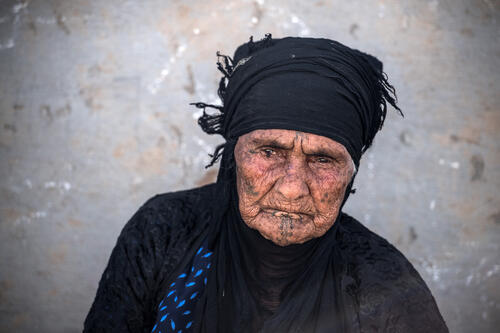
mosul old woman


Hero Image
mosul health
ERBIL, IRAQ — A Red Cross nurse from Sweden applies a dressing to a 3-year-old boy who was injured after an improvised explosive device (IED) detonated near him in Mosul on April 17, 2017.
Carl Court/Getty Images
All News button
1
Authors
News Type
News
Date
Paragraphs

The Center for International Security and Cooperation now has more than 46 podcasts, dating all the way back to Oct. 19, 2016. Listen to them on the CISAC page on the iTunes website. Simply mouse over the title and click play. Open iTunes to download and subscribe to CISAC podcasts. Seminars and events at CISAC are routinely audiotaped for use as podcasts. Also, the Freeman Spogli Institute for International Relations offers the World Class podcast series, featuring scholars and experts from FSI, CISAC and beyond.

Hero Image
gettyimages 513740370 Getty Images/Blackzheep
All News button
1
Authors
News Type
News
Date
Paragraphs

CISAC's Siegfried Hecker this week won the Dwight D. Eisenhower award from the American Nuclear Society. He received the honor, along with former Senator Richard Lugar (R-IN) and former Senator Sam Nunn (D-GA), for his "historic achievements in the advancement of nuclear nonproliferation, arms control, and peaceful uses of nuclear energy." The annoucement from the American Nuclear Society noted:

"Dr. Siegfried Hecker, an international expert in plutonium metallurgy, is being recognized for his nuclear non–proliferation efforts during and following his tenure as the Director of the Los Alamos National Laboratory. Dr. Hecker was part of a historic visit by a U.S. delegation to Sarov, Russia, known as Arazamas-16 during the Cold War.  This was the first visit to the closed city by the U.S., and it laid the foundation for a series of programs aimed at securing nuclear materials in Russia and all of its former republics. Dr. Hecker’s current research at Stanford University’s Center for International Security and Cooperation is focused on reducing the risks of nuclear terrorism worldwide, the nuclear challenges in India, North Korea, Pakistan, and the nuclear aspirations of Iran."

Hero Image
26183981372 1cabdb35f7 k Courtesy of CISAC
All News button
1
News Type
News
Date
Paragraphs

CISAC co-director Amy Zegart wrote the following essay in the Oct. 25 online edition of The Atlantic:

Pity the professionals. In the past month, President Trump has sideswiped certification of the Iran nuclear deal, sandbagged his own secretary of state’s diplomatic efforts with North Korea, and even provoked the ever-careful Senate Foreign Relations Committee Chairman, Bob Corker, to uncork his deepest fears in a series of bombshell interviews. “The volatility, is you know, to anyone who has been around, is to a degree alarming,” Corker told the Times earlier this month, revealing that many in the administration were working overtime to keep the president from “the path to World War III.” He doubled down on those comments a few weeks later, declaring that Trump, among other things, was “taking us on a path to combat” with North Korea and should “leave it to the professionals for a while.”

The professionals sure have their hands full. So far, the Trump Doctrine in foreign policy appears to consist of three elements: baiting adversaries, rattling allies, and scaring the crap out of Congress. The administration has injected strategic instability into world politics, undermining alliances and institutions, hastening bad trends, and igniting festering crises across the globe. “America first” looks increasingly like “America alone.” The indispensable nation is becoming the unreliable one. Even without a nuclear disaster, the damage inflicted by the Trump presidency won’t be undone for years, if ever.

But it’s also important to understand that today’s foreign-policy challenges— whether it’s Iran’s hegemonic ambitions in the Middle East, North Korea’s breakneck nuclear breakout, China’s rise, Russia’s nihilism, Europe’s populism and fragmentation, Syria’s civil war, or transnational terrorism and cyber threats—did not start with Trump. This is the most challenging foreign-policy environment any White House has confronted in modern history.

Three swirling complexities explain why.

Threat complexity

Take a look at any of the annual threat assessments issued by the Director of National Intelligence over the past few years. They will make your head spin. They are filled with rising states, declining states, weak states, rogue states, terrorists, hackers, and more. Bad actors don’t just threaten physical space these days. Adversaries are working on ways to cripple America in cyberspace and even outer space—by compromising all those satellite systems on which its digital society depends. In this threat landscape, the number, identity, magnitude, and velocity of dangers facing America are all wildly uncertain. Exactly how many principal adversaries does the United States have? Who are they and what do they want? What could they do to us? How are these threats changing and how can we keep up without spending ourselves into oblivion or leaving ourselves vulnerable to other nasty surprises? These are fundamental questions. There are no consensus answers. Uncertainty is what fuels America’s foreign-policy anxieties today.

The Cold War was different. Then, certainty was what fueled American foreign-policy anxieties. It was clear to all that the U.S. faced a single principal adversary. The Soviet Union had territory on a map and soldiers in uniforms. Thanks to U.S. intelligence, Soviet intentions and capabilities were fairly well understood. The threat landscape was deadly but slower-moving: Communists never met a five-year plan they didn’t like. And while superpower nuclear dangers were terrifying, they were also constraining in a helpful but insane sort of way. In 1961, President Kennedy invoked the specter of a “nuclear sword of Damocles, hanging by the slenderest of threads” over the earth. Every American foreign-policy decision had to consider the question: What would Moscow think of that? Today, the nuclear sword of Damocles is still hanging—indeed, China, India, Pakistan, and North Korea have all successfully tested nuclear devices since 1961—but no singular threat guides U.S. foreign policy as the Soviet Union once did.

Organizational complexity

As threats have grown more complex, organizational arrangements to deal with them have, too. Coordinating Soviet policy was one thing. Developing coherent U.S. foreign policy in the face of so much uncertainty across so many issues is quite another. Little wonder special advisers, envoys, commissions, boards, initiatives, czars, and new agencies have been growing like mushrooms. This may not sound so bad. But it is. Every new agency or czar or special arrangement says, “the regular process here ain’t working.” The crux of the problem is that bureaucracies are notoriously hard to kill or change. Ronald Reagan famously quipped that bureaucracy is the closest thing to immortal life on earth. Whenever a crisis hits, the natural response is to add a new organization and stir. But if today’s chief challenge is developing coherent, coordinated policy in the face of complexity, creating more organizations to coordinate doesn’t get you very far. Over time, the whole bureaucratic universe just keeps growing bigger, filled with obsolete organizations alongside new organizations; fragmented jurisdictions, overlapping jurisdictions, and unclear jurisdictions; and silos so specialized that nobody can see across all the key issues easily.

Cognitive complexity

Humans are not superhuman. Research finds that most people can remember at most seven items at a time, fewer as they grow older. Even the biggest brains have limits. In 2001, Peter Pronovost of Johns Hopkins noticed that highly trained medical teams at the university’s medical center were screwing up insertions of central line catheters, causing infections in critically ill patients at alarming rates. Why? Because they often forgot one of just five simple steps (like washing their hands) before starting the procedure. (Pronovost instituted a checklist that has since become widely used and is credited with saving thousands of lives.)

In foreign policy, too, the stakes are high and humans are frequently overloaded by complexity, resulting in catastrophic errors that nobody ever intended. One of the chief findings of the 9/11 Commission, for example, was that many inside the FBI simply didn’t know or couldn’t remember all the legal requirements and rules for sharing intelligence and law-enforcement information. Even the Bureau’s own 1995 guidelines were “almost immediately misunderstood and misapplied,” the commission concluded. As a result, clues to the terror plot emerged weeks before 9/11 but were marooned in different parts of the bureaucracy.

In 1935, an advanced bomber nicknamed “the Flying Fortress” crashed during a test flight. The Army Air Corps investigation found that the machine worked fine. The problem was the human. The airplane was so sophisticated, flying required the pilot to remember too many things, and he forgot one of them: unlocking the rudder and elevator controls during takeoff. It was “too much airplane for one man to fly,” one reporter later wrote. That crash sparked the invention of pilot checklists which have been used for nearly a century, transforming global aviation.

U.S. foreign policy is becoming too much airplane for one person to fly. “The professionals” surrounding Trump—Secretaries James Mattis and Rex Tillerson, Chief of Staff John Kelly, National-Security Adviser H.R. McMaster, and others—are trying to keep the whole thing from crashing with a pilot who has never flown before. Let’s hope they can.

America’s approach to the world is a complicated mess, for reasons that predate the current president.

Amy Zegart is co-director of the Center for International Security and Cooperation and professor of political science, by courtesy. She is also the Davies Family Senior Fellow at the Hoover Institution and directs the Cyber Policy Program. She wrote this essay as a contributing editor to The Atlantic.


Hero Image
gettyimages 600691942 Getty Images/tzahiV
All News button
1
-

Join us for a conversation with FSI Director, Michael McFaul, as he showcases all the ways to get involved in student programs at FSI. Learn about FSI's centers, programs, and opportunities for students.


Light refreshments will be served.


RSVP Here.

Director
Seminars
News Type
Commentary
Date
Paragraphs

Joan Ramon Resina, professor of Iberian and Latin American Cultures, and Comparative Literature, and the director of The Europe Center's Iberian Studies Program, shares his perspective on the October 1st Catalonia referendum in a recent opinion piece written for The Hill.  

Resina's article, "American influence will help Catalonia win independence", can be read on The Hill's website.

All News button
1
Authors
News Type
News
Date
Paragraphs

If the U.S. abandoned the Iran nuclear deal, it would harm America’s credibility on nonproliferation issues and make it more difficult to solve the North Korean crisis, Stanford scholars say.

The Trump administration is soon expected to “decertify” or send the Iran nuclear agreement to Congress for reconsideration. Signed in 2015, the nuclear deal framework is between Iran and what is known as the “P5+1” group of world powers: the United States, United Kingdom, France, China, Russia and Germany.

Advocates of the deal say it helped avert a possible war with Iran and a Middle Eastern nuclear arms race. Critics say it will only delay Iran’s march toward a nuclear bomb. The agreement aims to limit Iran’s ability to create nuclear weapons; in return, Iran received relief from economic penalties and sanctions.

The Stanford News Service spoke with two experts about the deal.

If the U.S. cancels the Iran nuclear deal, could Iran follow a similar path that North Korea has taken? 

Hecker: An important lesson the Trump administration should learn is from what happened in October 2002 when the Bush administration couldn’t wait to walk away from the Clinton administration’s “Agreed Framework” deal with Pyongyang. That led to North Korea withdrawing from the Nuclear Nonproliferation Treaty, expelling the international inspectors and building a nuclear bomb. Walking away from the Iran deal now could similarly open the doors for Tehran to build a nuclear bomb.

How might this change our relationships with other countries and nuclear powers?

Hecker: The other parties that signed the Iran deal are all strongly in favor of keeping the deal, so it will leave the U.S. even more isolated than it has already become. It is not clear what the effect would be in Israel where Prime Minister Benjamin Netanyahu opposes the deal, but where many voices favor it.

Are the inspection standards in this deal rigorous? 

Hecker: The deal has more stringent inspection regimes and rights than previous nuclear agreements. Some in the U.S. call for even more intrusive inspections, such as to defense sites, that essentially no country is willing to have inspected. I think the agreement was able to get more than I ever thought possible.

How is the deal perceived in Iran?

Milani: I think the critical point to know is that there is not one voice or view that reflects the hopes and aspirations of Iran. The radical conservatives among the clergy and the Islamic Revolutionary Guard Corps were critical of the deal. They condemned it as the most “shameful” agreement in modern Iranian history. They lambasted Foreign Minister Mohammad Javad Zarif and President Hassan Rouhani for having made far too many concessions. Ali Khamenei, the Supreme Leader, tried to keep a safe distance from the deal – lest he antagonize his badly needed and shrinking radical conservative base – and yet, at every major turn, endorsed it.

For the regime, faced with calamitous economic challenges, having the deal and ending the sanctions was an existential must. For the same reason, the vast majority of Iranians, facing the drudgeries of a dying economy, favored the deal. They also hoped that the deal would usher in new relations with the world and the U.S. – a possible harbinger for a more free Iran.

How would Iran likely react to a strict enforcement approach often urged by the Trump administration?

Milani: It is not clear what the Trump administration means by a more “strict enforcement.” The agreement has placed fairly rigorous limits on Iran’s nuclear activity given the unique abilities of the International Atomic Energy Agency (IAEA) to monitor the program. Might Iran cheat? It might, but no “strict” enforcement can eliminate such a possibility.

There are, moreover, areas that have by all accounts been consciously left ambiguous in the deal. Is, for example, Iran required to curtail its missile program or contain its regional activities? Iran is adamant that these provisions were never part of the deal. Finally, the Trump administration’s notion that Iran is not abiding by the “spirit” of the deal is hard to enforce. One side’s perceived spirit might be deemed by the other side as nothing but wishful thinking.

Are there ways the deal could be strengthened and Iran’s regional ambitions checked?

Milani: There surely are ways to strengthen any deal.  The first step is, by clear indication, that all sides will abide by it. The U.S. is now the only country in the agreement that has indicated its desire to abrogate the deal. You can’t strengthen a deal you no longer are a part of.

It will be a bonanza for the radical conservatives if the U.S. unilaterally walks away from the deal. Khamenei’s mantra that the U.S. can never be trusted will be confirmed, Iran will harvest the economic benefits of the end of sanctions and radical conservatives will be able to blame their own failed management on U.S. sanctions.

MEDIA CONTACTS

Siegfried Hecker, Center for International Security and Cooperation: (650) 725-6468, shecker@stanford.edu

Abbas Milani, Iranian Studies: (650) 721-4052, amilani@stanford.edu

Clifton B. Parker, Center for International Security and Cooperation: (650) 725-6488, cbparker@stanford.edu

Read this story on the Stanford News Service web site.

Hero Image
gettyimages 489871004
CISAC's Siegfried Hecker says the other signatories to the Iran deal are all strongly in favor of keeping it, so abandoning the agreement will leave the U.S. even more isolated than it has already become.
liorpt / Getty Images
All News button
1
-

Join Amb. Karl Eikenberry, Prof. Stephen Krasner, and FSI senior scholars for a discussion of the new volume of Daedalus, the journal of the American Academy of Arts and Sciences and a product of the Academy's Civil Wars, Violence and International Responses Project.

More than 30 countries around the world today are engulfed in civil wars, and the consequences are global. From policy to pandemics, the impacts of internal conflict reverberate across oceans and generations.

To introduce the latest volume of Daedalus, co-edited by Amb. Eikenberry and Prof. Krasner, the Freeman Spogli Institute for International Studies is pleased to join the Academy in hosting a panel discussion featuring seven of the eight FSI co-authors on the volume. FSI director Michael McFaul, former US ambassador to Russia, will introduce the panel.

A reception will follow the panel at 5:30 p.m.

Featuring:

Ambassador Michael McFaul (Director of the Freeman Spogli Institute for International Studies, Stanford University), Opening
Dr. Michele Barry (Senior Associate Dean for Global Health, Stanford School of Medicine), Featured Author
Ambassador Karl W. Eikenberry (Oksenberg-Rohlen Distinguished Fellow, Shorenstein Asia-Pacific Research Center at Stanford; Freeman Spogli Institute for International Studies; Center for International Security and Cooperation; Faculty Member, Stanford University), Featured Author
Professor James D. Fearon (Theodore and Frances Geballe Professor in the School of Humanities and Sciences, Stanford University), Featured Author
Dr. Francis Fukuyama (Olivier Nomellini Senior Fellow, Freeman Spogli Institute for International Studies), Featured Author
Professor Stephen D. Krasner (Graham H. Stuart Professor of International Relations, Stanford University; Senior Fellow, Hoover Institution, Stanford University), Featured Author
Professor Stephen Stedman (Senior Fellow, Freeman Spogli Institute for International Studies, Stanford University), Featured Author
Dr. Paul Wise (Richard E. Behrman Professor of Child Health and Society, Stanford University), Featured Author

The Stanford Faculty Club, The Gold Lounge
439 Lagunita Drive
Stanford, CA

Encina Hall
616 Jane Stanford Way
Stanford, CA 94305-6055

0
Senior Fellow, Freeman Spogli Institute for International Studies
Ken Olivier and Angela Nomellini Professor of International Studies, Department of Political Science
Peter and Helen Bing Senior Fellow, Hoover Institution
mcfaul_headshot_2025.jpg PhD

Michael McFaul is the Ken Olivier and Angela Nomellini Professor of International Studies in Political Science, Senior Fellow at the Freeman Spogli Institute for International Studies, and the Peter and Helen Bing Senior Fellow at the Hoover Institution, all at Stanford University. He joined the Stanford faculty in 1995 and served as FSI Director from 2015 to 2025. He is also an international affairs analyst for MSNOW.

McFaul served for five years in the Obama administration, first as Special Assistant to the President and Senior Director for Russian and Eurasian Affairs at the National Security Council at the White House (2009-2012), and then as U.S. Ambassador to the Russian Federation (2012-2014).

McFaul has authored ten books and edited several others, including, most recently, Autocrats vs. Democrats: China, Russia, America, and the New Global Disorder, as well as From Cold War to Hot Peace: An American Ambassador in Putin’s Russia, (a New York Times bestseller) Advancing Democracy Abroad: Why We Should, How We Can; and Russia’s Unfinished Revolution: Political Change from Gorbachev to Putin.

He is a recipient of numerous awards, including an honorary PhD from Montana State University; the Order for Merits to Lithuania from President Gitanas Nausea of Lithuania; Order of Merit of Third Degree from President Volodymyr Zelenskyy of Ukraine, and the Dean’s Award for Distinguished Teaching at Stanford University. In 2015, he was the Distinguished Mingde Faculty Fellow at the Stanford Center at Peking University.

McFaul was born and raised in Montana. He received his B.A. in International Relations and Slavic Languages and his M.A. in Soviet and East European Studies from Stanford University in 1986. As a Rhodes Scholar, he completed his D. Phil. in International Relations at Oxford University in 1991. 

CV
Date Label

CISAC
Stanford University
Encina Hall
Stanford, CA 94305-6165

(650) 725-1314
0
Senior Fellow at the Freeman Spogli Institute for International Studies
Theodore and Frances Geballe Professor in the School of Humanities and Sciences
Professor of Political Science
rsd26_013_0052a.jpg PhD

James Fearon is the Theodore and Frances Geballe Professor in the School of Humanities and Sciences and a professor of political science. He is a Senior Fellow at FSI, affiliated with CISAC and CDDRL. His research interests include civil and interstate war, ethnic conflict, the international spread of democracy and the evaluation of foreign aid projects promoting improved governance. Fearon was elected to the National Academy of Sciences in 2012 and the American Academy of Arts and Sciences in 2002. Some of his current research projects include work on the costs of collective and interpersonal violence, democratization and conflict in Myanmar, nuclear weapons and U.S. foreign policy, and the long-run persistence of armed conflict.

Affiliated faculty at the Center for International Security and Cooperation
Affiliated faculty at the Center on Democracy, Development, and the Rule of Law
CV
Date Label

Encina Hall, C148
616 Jane Stanford Way
Stanford, CA 94305

0
Olivier Nomellini Senior Fellow at the Freeman Spogli Institute for International Studies
Director of the Ford Dorsey Master's in International Policy
Research Affiliate at The Europe Center
Professor by Courtesy, Department of Political Science
yff-2021-14290_6500x4500_square.jpg

Francis Fukuyama is the Olivier Nomellini Senior Fellow at Stanford University's Freeman Spogli Institute for International Studies (FSI), and a faculty member of FSI's Center on Democracy, Development and the Rule of Law (CDDRL). He is also Director of Stanford's Ford Dorsey Master's in International Policy, and a professor (by courtesy) of Political Science.

Dr. Fukuyama has written widely on issues in development and international politics. His 1992 book, The End of History and the Last Man, has appeared in over twenty foreign editions. His book In the Realm of the Last Man: A Memoir will be published in fall 2026.

Francis Fukuyama received his B.A. from Cornell University in classics, and his Ph.D. from Harvard in Political Science. He was a member of the Political Science Department of the RAND Corporation, and of the Policy Planning Staff of the US Department of State. From 1996-2000 he was Omer L. and Nancy Hirst Professor of Public Policy at the School of Public Policy at George Mason University, and from 2001-2010 he was Bernard L. Schwartz Professor of International Political Economy at the Paul H. Nitze School of Advanced International Studies, Johns Hopkins University. He served as a member of the President’s Council on Bioethics from 2001-2004. He is editor-in-chief of American Purpose, an online journal.

Dr. Fukuyama holds honorary doctorates from Connecticut College, Doane College, Doshisha University (Japan), Kansai University (Japan), Aarhus University (Denmark), the Pardee Rand Graduate School, and Adam Mickiewicz University (Poland). He is a non-resident fellow at the Carnegie Endowment for International Peace. He is a member of the Board of Trustees of the Rand Corporation, the Board of Trustees of Freedom House, and the Board of the Volcker Alliance. He is a fellow of the National Academy for Public Administration, a member of the American Political Science Association, and of the Council on Foreign Relations. He is married to Laura Holmgren and has three children.

(October 2025)

CV
Date Label

CDDRL
Stanford University
Encina Hall
Stanford, CA 94305-6055

(650) 723-0676 (650) 724-2996
0
Senior Fellow at the Freeman Spogli Institute for International Studies, Emeritus
Graham H. Stuart Professor of International Relations
Senior Fellow at the Hoover Institution, Emeritus
krasner.jpg MA, PhD

Stephen Krasner is the Graham H. Stuart Professor of International Relations. A former director of CDDRL, Krasner is also an FSI senior fellow, and a fellow of the Hoover Institution.

From February 2005 to April 2007 he served as the Director of Policy Planning at the US State Department. While at the State Department, Krasner was a driving force behind foreign assistance reform designed to more effectively target American foreign aid. He was also involved in activities related to the promotion of good governance and democratic institutions around the world.

At CDDRL, Krasner was the coordinator of the Program on Sovereignty. His work has dealt primarily with sovereignty, American foreign policy, and the political determinants of international economic relations. Before coming to Stanford in 1981 he taught at Harvard University and UCLA. At Stanford, he was chair of the political science department from 1984 to 1991, and he served as the editor of International Organization from 1986 to 1992.

He has been a fellow at the Center for Advanced Studies in the Behavioral Sciences (1987-88) and at the Wissenschaftskolleg zu Berlin (2000-2001). In 2002 he served as director for governance and development at the National Security Council. He is a fellow of the American Academy of Arts and Sciences and a member of the Council on Foreign Relations.

His major publications include Defending the National Interest: Raw Materials Investment and American Foreign Policy (1978), Structural Conflict: The Third World Against Global Liberalism (1985), Sovereignty: Organized Hypocrisy (1999), and How to Make Love to a Despot (2020). Publications he has edited include International Regimes (1983), Exploration and Contestation in the Study of World Politics (co-editor, 1999),  Problematic Sovereignty: Contested Rules and Political Possibilities (2001), and Power, the State, and Sovereignty: Essays on International Relations (2009). He received a BA in history from Cornell University, an MA in international affairs from Columbia University and a PhD in political science from Harvard.

CV

CDDRL
Encina Hall, C152
616 Jane Stanford Way
Stanford, CA 94305-6055

(650) 725-2705 (650) 724-2996
0
Senior Fellow at the Freeman Spogli Institute for International Studies
Professor, by courtesy, of Political Science
Stedman_Steve.jpg PhD

Stephen Stedman is a Senior Fellow at the Freeman Spogli Institute for International Studies (FSI) and the Center on Democracy, Development and the Rule of Law (CDDRL), an affiliated faculty member at CISAC, and professor of political science (by courtesy) at Stanford University. He is director of CDDRL's Fisher Family Honors Program in Democracy, Development and Rule of Law, and will be faculty director of the Program on International Relations in the School of Humanities and Sciences effective Fall 2025.

In 2011-12 Professor Stedman served as the Director for the Global Commission on Elections, Democracy, and Security, a body of eminent persons tasked with developing recommendations on promoting and protecting the integrity of elections and international electoral assistance. The Commission is a joint project of the Kofi Annan Foundation and International IDEA, an intergovernmental organization that works on international democracy and electoral assistance.

In 2003-04 Professor Stedman was Research Director of the United Nations High-level Panel on Threats, Challenges and Change and was a principal drafter of the Panel’s report, A More Secure World: Our Shared Responsibility.

In 2005 he served as Assistant Secretary-General and Special Advisor to the Secretary- General of the United Nations, with responsibility for working with governments to adopt the Panel’s recommendations for strengthening collective security and for implementing changes within the United Nations Secretariat, including the creation of a Peacebuilding Support Office, a Counter Terrorism Task Force, and a Policy Committee to act as a cabinet to the Secretary-General.

His most recent book, with Bruce Jones and Carlos Pascual, is Power and Responsibility: Creating International Order in an Era of Transnational Threats (Washington DC: Brookings Institution, 2009).

Director, Fisher Family Honors Program in Democracy, Development and Rule of Law
Director, Program in International Relations
Affiliated faculty at the Center for International Security and Cooperation
Date Label
0
Richard E. Behrman Professor of Child Health and Society
Senior Fellow, Freeman Spogli Institute for International Studies
rsd15_081_0253a.jpg MD, MPH

Dr. Paul Wise is dedicated to bridging the fields of child health equity, public policy, and international security studies. He is the Richard E. Behrman Professor of Child Health and Society and Professor of Pediatrics, Division of Neonatology and Developmental Medicine, and Health Policy at Stanford University. He is also co-Director, Stanford Center for Prematurity Research and a Senior Fellow in the Center on Democracy, Development, and the Rule of Law, and the Center for International Security and Cooperation, Freeman Spogli Institute for International Studies, Stanford University. Wise is a fellow of the American Academy of Arts and Sciences and has been working as the Juvenile Care Monitor for the U.S. Federal Court overseeing the treatment of migrant children in U.S. border detention facilities.

Wise received his A.B. degree summa cum laude in Latin American Studies and his M.D. degree from Cornell University, a Master of Public Health degree from the Harvard School of Public Health and did his pediatric training at the Children’s Hospital in Boston. His former positions include Director of Emergency and Primary Care Services at Boston Children’s Hospital, Director of the Harvard Institute for Reproductive and Child Health, Vice-Chief of the Division of Social Medicine and Health Inequalities at the Brigham and Women’s Hospital and Harvard Medical School and was the founding Director or the Center for Policy, Outcomes and Prevention, Stanford University School of Medicine. He has served in a variety of professional and consultative roles, including Special Assistant to the U.S. Surgeon General, Chair of the Steering Committee of the NIH Global Network for Women’s and Children’s Health Research, Chair of the Strategic Planning Task Force of the Secretary’s Committee on Genetics, Health and Society, a member of the Advisory Council of the National Institute of Child Health and Human Development, NIH, and the Health and Human Secretary’s Advisory Committee on Infant and Maternal Mortality.

Wise’s most recent U.S.-focused work has addressed disparities in birth outcomes, regionalized specialty care for children, and Medicaid. His international work has focused on women’s and child health in violent and politically complex environments, including Ukraine, Gaza, Central America, Venezuela, and children in detention on the U.S.-Mexico border.  

Core Faculty, Center on Democracy, Development and the Rule of Law
Affiliated faculty at the Center for International Security and Cooperation
Date Label
Panel Discussions
-

Indonesia has not signed the 1951 Refugee Convention and does not offer legal pathways for the permanent integration of refugees into its society. Rohingya refugees fleeing Myanmar across the Andaman Sea to Aceh in 2015 did, nevertheless, receive “hospitality” in the form of a humanitarian welcome by local non-state actors. Indonesian authorities have argued that this “Aceh model” deserves emulation by other countries experiencing emergency in-migrations. Since the crisis, academics and policymakers in Indonesia and elsewhere have debated the merits of the model compared with state-funded refugee-protection schemes.

Dr. Missbach will examine the reactions of the Indonesian hosts towards the Rohingya through the conceptual lens of “hospitality.” The diverging motivations of the different stakeholders and groups who provided hospitality, she will argue, were not always as altruistic as claimed. By documenting the tensions inherent in hospitality practices, Dr. Missbach will reveal a subtle instrumentalization of hospitality by non-state actors for non-refugee related purposes, and thus question the effectiveness of such ad hoc approaches when it comes to ensuring basic refugee rights. Privately offered hospitality alone, traditional or religious, cannot resolve migration crises in ways that respect those rights. Accordingly, in Indonesia and Southeast Asia generally, the state should take more responsibility for helping refugees seeking safety.

Image
antje missbach
Antje Missbach is a senior lecturer and research fellow at the School of Social Sciences in Monash University (Melbourne). Among her books are Troubled Transit: Asylum Seekers Stuck in Indonesia (2015) and Politics and Conflict in Indonesia: The Role of the Acehnese Diaspora (2011). Her many other writings include a prize-winning piece on people-smuggling, fishermen, and poverty on Rote island in eastern Indonesia (“Perilous Waters”) that appeared in the Dec. 2016 Pacific Affairs. In addition to migration, her research interests include irregular migration, anti-trafficking efforts, diaspora politics, and long-distance nationalism. She obtained her PhD from the Australian National University in 2010.

Antje Missbach 2017-18 Lee Kong Chian NUS-Stanford Fellow on Contemporary Southeast Asia
Seminars
Subscribe to International Relations