International Relations

FSI researchers strive to understand how countries relate to one another, and what policies are needed to achieve global stability and prosperity. International relations experts focus on the challenging U.S.-Russian relationship, the alliance between the U.S. and Japan and the limitations of America’s counterinsurgency strategy in Afghanistan.

Foreign aid is also examined by scholars trying to understand whether money earmarked for health improvements reaches those who need it most. And FSI’s Walter H. Shorenstein Asia-Pacific Research Center has published on the need for strong South Korean leadership in dealing with its northern neighbor.

FSI researchers also look at the citizens who drive international relations, studying the effects of migration and how borders shape people’s lives. Meanwhile FSI students are very much involved in this area, working with the United Nations in Ethiopia to rethink refugee communities.

Trade is also a key component of international relations, with FSI approaching the topic from a slew of angles and states. The economy of trade is rife for study, with an APARC event on the implications of more open trade policies in Japan, and FSI researchers making sense of who would benefit from a free trade zone between the European Union and the United States.

Encina Hall 
616 Jane Stanford Way
Stanford, CA 94305-6055

0
Director, Freeman Spogli Institute for International Studies
Steven C. Házy Senior Fellow, Freeman Spogli Institute for International Studies
Professor, by courtesy, of Political Science
colin_kahl_2025_sq.jpg

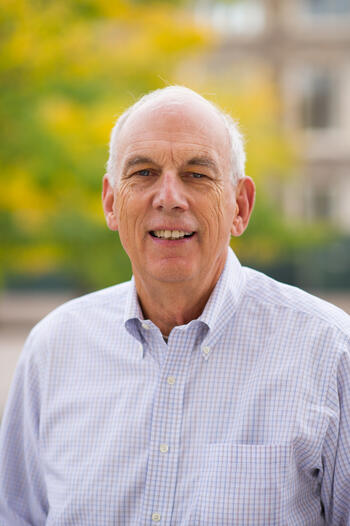
Colin Kahl is director of the Freeman Spogli Institute for International Studies and the Steven C. Házy Senior Fellow. He is also the faculty director of CISAC’s Program on Geopolitics, Technology, and Governance, and a professor of political science (by courtesy).

From April 2021-July 2023, Dr. Kahl served as the under secretary of defense for policy at the U.S. Department of Defense. In that role, he was the principal adviser to the secretary of defense for all matters related to national security and defense policy and represented the department as a standing member of the National Security Council Deputies’ Committee. He oversaw the writing of the 2022 National Defense Strategy, which focused the Pentagon’s efforts on the “pacing challenge” posed by the PRC, and he led the department’s response to Russia’s invasion of Ukraine and numerous other international crises. He also led several other major defense diplomacy initiatives, including an unprecedented strengthening of the NATO alliance; the negotiation of the AUKUS agreement with Australia and the United Kingdom; historic defense force posture enhancements in Australia, Japan, and the Philippines; and deepening defense and strategic ties with India. In June 2023, Secretary of Defense Lloyd Austin III awarded Dr. Kahl the Department of Defense Distinguished Public Service Medal, the highest civilian award presented by the secretary of defense.

During the Obama Administration, Dr. Kahl served as deputy assistant to President Obama and national security advisor to Vice President Biden from October 2014 to January 2017. He also served as deputy assistant secretary of defense for the Middle East from February 2009 to December 2011, for which he received the Outstanding Public Service Medal in July 2011.

Dr. Kahl is the co-author (along with Thomas Wright) of Aftershocks: Pandemic Politics and the End of the Old International Order (New York: St. Martin’s Press, 2021) and the author of States, Scarcity, and Civil Strife in the Developing World (Princeton, NJ: Princeton University Press, 2006). He has also published numerous article on U.S. national security and defense policy in Foreign Affairs, Foreign Policy, International Security, the Los Angeles Times, Middle East Policy, the National Interest, the New Republic, the New York Times, Politico, the Washington Post, and the Washington Quarterly, as well as several reports for the Center for a New American Security (CNAS), a non-partisan think tank in Washington, DC.

Dr. Kahl previously taught at Georgetown University and the University of Minnesota, and he has held fellowship positions at Harvard University, the Council on Foreign Relations, CNAS, and the Penn Biden Center for Diplomacy and International Engagement.

He received his B.A. in political science from the University of Michigan (1993) and his Ph.D. in political science from Columbia University (2000).
Date Label
-

Abstract:

Foreign intervention sometimes enters by domestic invitation. Recently, the Malian government asked international actors to send troops to help stabilize and strengthen its rule of law, specifically as it faltered after the country’s coup. In this case, explanations for the intervention by invitation tend to revolve around the relative strength of the government, which was weak compared to the somewhat sophisticated militants that opposed it. Such an explanation, however, is unlikely shed much light on the situation since there are many weak governments with faltering or failing rule of law that do not request or receive such governance assistance, at least as far as reporting on these cases suggests. As the United States and its allies withdraw from the major conflicts of the past decade, the focus of international intervention in conflict and post-conflict contexts is likely to occur in cooperation with host states. This project examines an important set of arrangements for weak states: it identifies and explains when states invite other states to intervene for governance assistance—agreements between sovereign entities—specifically with regard to the security sector. These illustrations and tests draw on new quantitative and qualitative data.


Speaker Bio:

Image
aila matancok
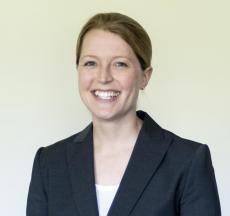
Aila M. Matanock is an Assistant Professor of Political Science at the University of California, Berkeley. Her research addresses the ways in which international actors engage in conflicted and weak states. She uses case studies, survey experiments, and cross-national data in this work. She has conducted fieldwork in Colombia, Central America, the Pacific, Southeast Asia, and elsewhere. She has received funding for these projects from many sources, including the National Science Foundation (NSF), the Minerva Research Initiative, the National Center for the Study of Terrorism and the Response to Terrorism (START), and the Center for Global Development (CGD). Her 2017 book, Electing Peace: From Civil Conflict to Political Participation, was published by Cambridge University Press. It is based on her dissertation research at Stanford University, which won the 2013 Helen Dwight Reid award from the American Political Science Association. Her work has also been published by Governance, International Security, the Journal of Politics, and elsewhere. She has worked at the RAND Corporation before graduate school, and she has held fellowships at the Hoover Institution at Stanford University and the Institute on Global Conflict and Cooperation at UCSD since. She received her Ph.D. in political science from Stanford University and her A.B. magna cum laude from Harvard University.

Aila Matanock Assistant Professor of Political Science, UC Berkeley
Seminars
News Type
Commentary
Date
Paragraphs

In advance of talks between North Korea and South Korea, APARC’s Daniel Sneider says the most immediate threat on the peninsula actually comes from the latter.

In a piece for The Hill, Sneider writes that by embracing North Korea’s offer for dialogue, South Korean President Moon Jae-in—who seeks a peaceful Olympic Games, good relations with China, and reduced tensions with the North—risks diminishing America’s presence in the region.

The challenge for the U.S. administration, accordng to Sneider, is to afford South Korea freedom to explore opportunities for dialogue, while ensuring that such freedom does not result in driving the United States off the peninsula.

The full article is available at The Hill


Hero Image
  Joint Security Area;  Panmunjom, DPRK (North Korea) Flickr/John Pavelka
All News button
1
-

Abstract: Rising powers often seek to reshape the world order, triggering confrontations with those who seek to defend the status quo. In recent years, as international institutions have grown in prevalence and influence, they have increasingly become central arenas for international contestation. In this seminar, Phillip Lipscy will describe the main findings from his book, which examines how international institutions evolve as countries seek to renegotiate the international order. He offers a new theory of institutional change and explains why some institutions change flexibly while others successfully resist or fall to the wayside. The book uses a wealth of empirical evidence - quantitative and qualitative - to evaluate the theory from international organizations such as the International Monetary Fund, World Bank, European Union, League of Nations, United Nations, the International Telecommunications Satellite Organization, and Internet Corporation for Assigned Names and Numbers. The book will be of particular interest to scholars interested in the historical and contemporary diplomacy of the United States, Japan, and China.

Speaker bio: Phillip Y. Lipscy is the Thomas Rohlen Center Fellow at the Freeman Spogli Institute for International Studies and Assistant Professor of Political Science at Stanford University. His fields of research include international and comparative political economy, international security, and the politics of East Asia, particularly Japan.

Lipscy’s book from Cambridge University Press, Renegotiating the World Order: Institutional Change in International Relations, examines how countries seek greater international influence by reforming or creating international organizations. His research addresses a wide range of substantive topics such as international cooperation, the politics of energy, the politics of financial crises, the use of secrecy in international policy making, and the effect of domestic politics on trade. He has also published extensively on Japanese politics and foreign policy.

Lipscy obtained his PhD in political science at Harvard University. He received his MA in international policy studies and BA in economics and political science at Stanford University. Lipscy has been affiliated with the Reischauer Institute of Japanese Studies and Weatherhead Center for International Affairs at Harvard University, the Institute of Social Science at the University of Tokyo, the Institute for Global and International Studies at George Washington University, the RAND Corporation, and the Institute for International Policy Studies.

For additional information such as C.V., publications, and working papers, please visit Phillip Lipscy's homepage.

Phillip Lipscy Thomas Rohlen Fellow Walter H. Shorenstein Asia-Pacific Research Center
Seminars
-
Abstract: This paper explores Iraqi signaling after the 1991 Gulf War. The conventional wisdom argues that Iraq sent mixed signals to the outside world due to Saddam’s desire to balance deterrence and compliance with Security Council resolutions. Drawing on Iraqi primary sources, I explore how Iraqi officials debated their options, crafted signals, and how they interpreted the reception of these signals in the outside world. I argue that Iraqi regime was more rational, but also more dysfunctional, than previous work suggests.
  
Speaker bio: Målfrid Braut-Hegghammer is Associate Professor of Political Science at the University of Oslo. She has previously been a Junior Faculty Fellow at CISAC, Stanford University, and a pre- and post-doctoral fellow at the Belfer Center, Harvard University. She received her doctoral degree from London School of Economics in 2009, which received the Michael Nicholson Thesis Prize from BISA in 2010. She recently published Unclear Physics: Why Iraq and Libya failed to build nuclear weapons (Cornell University Press, 2016), which was reviewed in The New York Review of Books, Foreign Affairs, Survival, International Affairs, HDiplo, Babylon, and Internasjonal Politikk. Her work has been published in International Security, The Middle East Journal, the New York Times (online), International Herald Tribune, Monkey Cage and War on the Rocks.

Not in residence

0
Affiliate
Braut-Hegghammer,_Malfrid.jpg

Målfrid Braut-Hegghammer is an Associate Professor of Political Science at the University of Oslo. She first joined CISAC as a visiting associate professor and Stanton nuclear security junior faculty fellow in September 2012, and was a Stanford MacArthur Visiting Scholar between 2013-15. Between 2008 and 2010 she was a predoctoral and postdoctoral fellow at Harvard University's Belfer Center for Science and International Affairs. Braut-Hegghammer received her PhD, entitled “Nuclear Entrepreneurs: Drivers of Nuclear Proliferation” from the London School of Economics in 2010. She received the British International Studies Association’s Michael Nicholson Thesis Prize that same year for her work.


CV
Associate Professor of Political Science University of Oslo
Seminars
-

Abstract: In the fifty years following World War II, Argentina and Brazil constructed advanced nuclear energy programs that far outpaced those of other countries in Latin America. However, their more memorable and lasting contribution to nuclear energy history may well be diplomatic, rather than technical. Beginning in 1974 with an Argentine delegation’s tour of carefully selected Brazilian nuclear facilities, and vice versa, the two countries – under military rule and in a centuries-long competition for regional influence and dominance – began a rapprochement around nuclear energy as gradual as it was unlikely. A watershed presidential summit in 1980 pledged the neighbors to cooperation in specific areas of nuclear energy. It took until 1991, however, for a growing system of informal inspections to coalesce into the world’s only bilateral nuclear safeguards organization, known as ABACC. This talk will focus primarily on the contributions of the scientific and technical communities, and their close work with the two foreign ministries, within this delicate seventeen-year process.

Speaker bio: Chris Dunlap is a Nuclear Security Postdoctoral Fellow at CISAC. His research is funded by the MacArthur Foundation. His book project, developed from his dissertation, focuses on the fundamental role of nuclear energy technology and diplomacy in shaping modern Brazil and Argentina and their bilateral relationship. The paths taken to develop nuclear energy in the South American neighbor countries also illustrate the impact that these nations and their key actors, often left out of global energy history, made upon the physical, legal, and diplomatic structures of the Atomic Age. By 1995, both nations had ceased early-stage efforts toward a nuclear explosion, accepted full safeguards and international verification of all fuel cycle activities, and transformed the "imported magic" of nuclear technology into their own. How this happened, and why, is the history at the heart of the parallel power play that defined Brazil and Argentina's engagement with Atomic Age diplomacy and technology.  

Chris received his Ph.D. in history from the University of Chicago in 2017, and also holds a B.A. in history with high distinction, B.S. in biochemistry, and M.A. in history from the University of Virginia.
Christopher Dunlap CISAC Nuclear Security Postdoctoral Fellow
Seminars
-

Abstract:

My presentation will not be of an academic paper but of a proposal for a research project. The Balzan Prize for International Relations, which I was recently awarded, provides funding that I intend to use to stimulate the development of a subfield in which political science has lagged: the comparative politics of climate change policy. The project is designed to be comparative in method, simultaneously theoretical and empirical, and deeply collaborative. I also hope that the project will stimulate new thinking in comparative politics and international relations. Causal inference on the basis of observational data is weak in contemporary comparative politics, but new methodological innovations have not consistently been focused on substantively important issues. Perhaps innovating in an understudied field will also facilitate a combination of rigor and relevance. My presentation will be designed to stimulate theoretical, empirical, and methodological suggestions.


Speaker Bio:

Image
robert keohane
Robert O. Keohane (PhD Harvard 1966) is Professor of Public and International Affairs (Emeritus) in the Woodrow Wilson School at Princeton University. He has served as Editor of International Organization and as President of the International Studies Association and the American Political Science Association. He is a member of the American Academy of Arts and Sciences, the American Academy of Political and Social Science, the American Philosophical Society, and the National Academy of Sciences; and he is a Corresponding Fellow of the British Academy. He has been a recipient of the Balzan Prize: International Relations: History Theory, 2016; the James Madison Award, American Political Science Association, 2014, for lifetime achievement; the Centennial Medal, Harvard Graduate School of Arts and Sciences, 2012; the Skytte Prize from the Johan Skytte Foundation, Uppsala Sweden, 2005; the Grawemeyer Award for Ideas Improving World Order, 1989, and two honorary doctorates. His publications include Power and Interdependence (with Joseph S. Nye, Jr., originally published in 1977), After Hegemony: Cooperation and Discord in the World Political Economy (1984), Designing Social Inquiry (with Gary King and Sidney Verba, 1994), and Power and Governance in a Partially Globalized World (2002). His current work focuses on the international and comparative politics of climate change policy.

Robert O Keohane Visiting Fellow at CDDRL
Seminars
News Type
Commentary
Date
Paragraphs

"As authoritarian states like China double down on strategic investments and project their “sharp power” abroad, the United States may finally be reaching a new Sputnik moment," writes Larry Diamond, Senior Fellow at the Freeman Spogli Institute for International Studies in his latest for The American Interest. Read here

Hero Image
gettyimages 865650864
All News button
1
-

This event is now full, and we are no longer able to accept reservations.
Please send an email to sj1874@stanford.edu if you would like to be added to the wait list.


Shaun Walker provides new insight into contemporary Russia and its search for a new identity, telling the story through the country's troubled relationship with its Soviet past. Walker not only explains Vladimir Putin's goals and the government's official manipulations of history, but also focuses on ordinary Russians and their motivations. He charts how Putin raised victory in World War II to the status of a national founding myth in the search for a unifying force to heal a divided country, and shows how dangerous the ramifications of this have been.

The book explores why Russia, unlike Germany, has failed to come to terms with the darkest pages of its past: Stalin's purges, the Gulag, and the war deportations. The narrative roams from the corridors of the Kremlin to the wilds of the Gulags and the trenches of East Ukraine. It puts the annexation of Crimea and the newly assertive Russia in the context of the delayed fallout of the Soviet collapse.
 
The Long Hangover is a book about a lost generation: the millions of Russians who lost their country and the subsequent attempts to restore to them a sense of purpose. Packed with analysis but told mainly through vibrant reportage, it is a thoughtful exploration of the legacy of the Soviet collapse and how it has affected life in Russia and Putin's policies.
 

Image
Shaun Walker

Shaun Walker is Moscow Correspondent for The Guardian and has reported from Russia for more than a decade. He studied Russian and Soviet history at Oxford University, and has worked as a journalist in Moscow for more than a decade.

 
Copies of this book will be on sale at the event.
Shaun Walker Speaker
Lectures
Subscribe to International Relations